How to Evaluate Passenger Elevator Suppliers Using Purchasing Terms and Acceptance Criteria
Procurement teams shortlisting passenger elevator suppliers usually end up holding a stack of proposals that look almost identical. The brand names differ, the headline specifications match, and every supplier claims fast response and high quality. What actually separates a dependable partner from an average one often sits on the last two pages of the quotation — the purchasing terms and the acceptance criteria. Those lines are where a supplier quietly tells you how it manufactures, how it manages cash flow, and how seriously it treats quality control.
This guide is written for procurement teams that have already narrowed the field and are preparing to commit. It walks through how to read purchasing terms as operational disclosures, how to test those terms against acceptance criteria, and how to use both to judge whether a passenger elevator supplier can carry a project from first unit to long-term support.
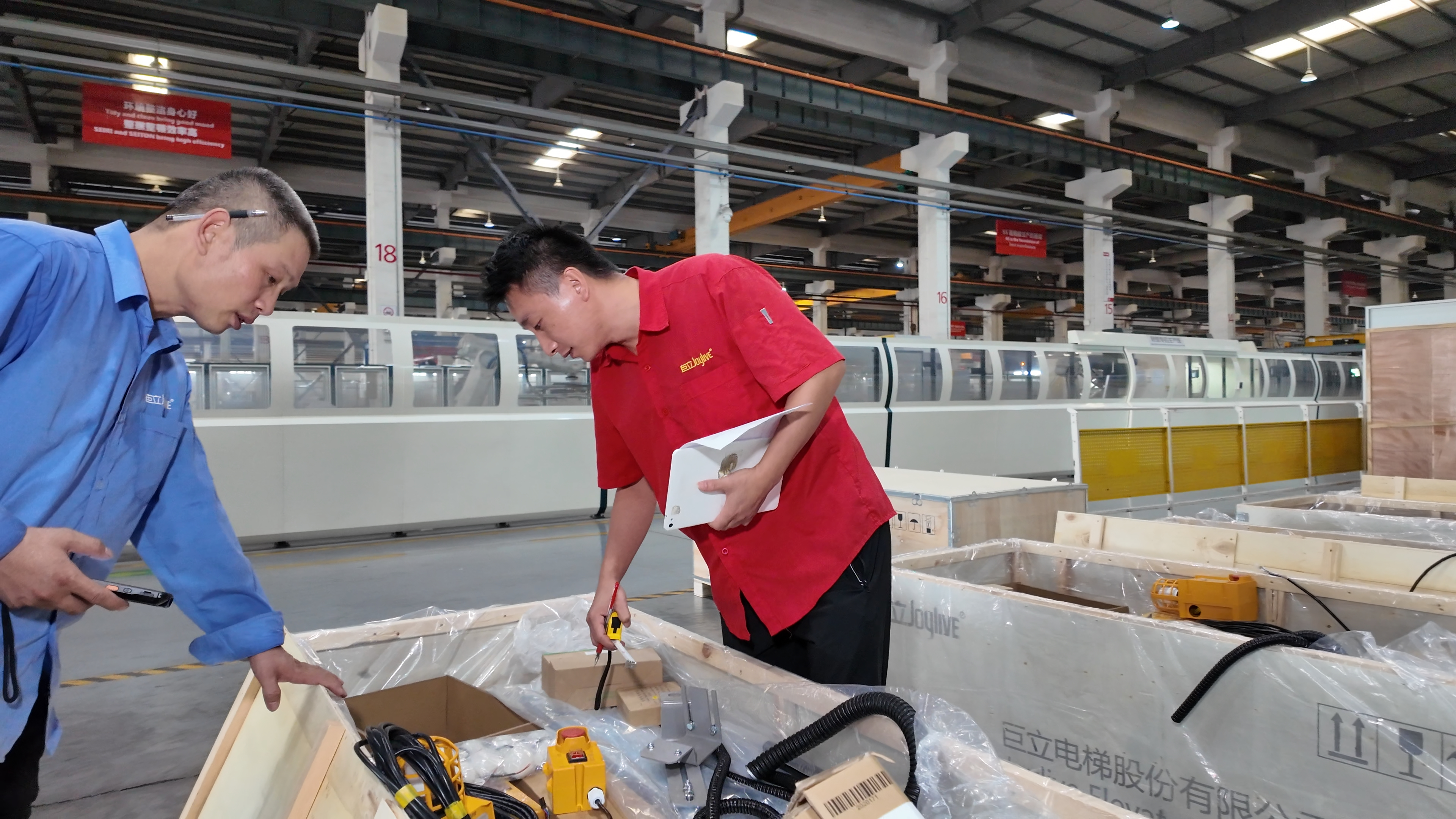
Pre-shipment inspection is the point where purchasing terms become verifiable acceptance criteria.
Why Purchasing Terms Deserve More Attention Than the Sales Brochure
Most buying teams treat purchasing terms as contract clauses to be passed to legal review. That framing misses what the terms actually reveal. A supplier's position on minimum order quantity, delivery terms, payment schedule, and pre-shipment testing shows how its production model is built: whether it runs flexible small-batch lines or standardized mass output, whether it trusts its own cash flow or leans on customer prepayment, and whether quality inspection is a separate department or something bolted onto the end of a production run.
For passenger elevator projects this matters more than in many equipment categories. A passenger elevator is a customized, long-cycle, site-installed product. The supplier's stance on batch size, delivery, payment, and inspection is a stronger predictor of execution capability than anything printed in a marketing brochure. Terms that look restrictive on paper often reflect an honest operating model; terms that look generous may simply be unverified promises.
Industry Context: Why Supplier Terms Are Getting Harder to Compare
The global elevator market was estimated at USD 84.8 billion in 2024 and is projected to reach USD 126.7 billion by 2034, according to Global Market Insights. Passenger elevators dominate this figure: they accounted for over 70% of annual elevator installations in 2025, based on Maximize Market Research data. Asia-Pacific leads installations with more than 66% volume share, driven significantly by China and India.
At that scale, procurement teams rarely deal with a single tier of supplier. Original equipment manufacturers, source factories, regional distributors, and trading companies all circulate the same project inquiries, and each presents its own version of purchasing terms. Not all of those terms correspond to the same operational reality.
Regulatory pressure adds another layer. Modern elevator engineering is governed by EN 81-20 for construction and installation and EN 81-50 for testing and components, as published by CEN and referenced by KONE. In North America, elevator safety is primarily regulated under the ASME A17.1-2025 / CSA B44 Safety Code for Elevators and Escalators. Acceptance criteria must align with these frameworks, not just with a supplier's internal checklist. A supplier that cannot map its terms onto the standards relevant to your market is exposing the project to compliance risk before shipment ever begins.
Five Purchasing Terms That Reveal Supplier Capability
Read purchasing terms as a disclosure document. Five elements carry the most information.
1. Minimum Order Quantity
MOQ indicates whether a supplier operates a flexible line. Passenger elevator projects frequently call for single-unit configurations tied to a specific shaft, load, and finish. When a supplier discloses an MOQ of 1 unit, it signals that its production setup accommodates single-unit customization rather than batch standardization. For procurement teams, that lowers the barrier to pilot orders and phased projects, and it removes the pressure to inflate volume just to meet a supplier's minimum.
2. Delivery Terms
FOB and CIF are the common Incoterms in elevator procurement. The chosen term determines who carries freight risk, insurance, and landed cost, and it reveals how the supplier structures export logistics. A supplier that offers only one term may have limited export experience or a preferred forwarder relationship that constrains flexibility. Buyers with their own freight forwarders typically prefer FOB for cost control; buyers without consolidated logistics often prefer CIF for simplicity.
3. Payment Schedule
A 30/70 payment structure ties the deposit to order confirmation and the balance to pre-shipment completion. This structure exposes two things at once: how much the supplier depends on customer cash flow, and how willing it is to link payment to a production milestone rather than a calendar date. When a supplier insists on full prepayment, or accepts full payment after delivery, financial risk shifts entirely to one side. A milestone-linked schedule distributes that risk between both parties and creates a natural checkpoint at the moment of highest verification value.
4. Acceptance Criteria
Pre-shipment testing moves quality verification inside the factory, before the unit leaves the loading dock. For international buyers, this is far more controllable than arrival inspection. Defects caught before shipment are handled by the supplier's own production team; defects caught at an overseas jobsite trigger logistics, schedule, and warranty disputes. A supplier that accepts clear pre-shipment acceptance criteria is stating that it has the in-house testing capability to support those criteria.
5. Certification and Standards Coverage
Acceptance criteria do not stop at mechanical performance. For EU-bound projects, EN 81-20 and EN 81-50 apply. For North American projects, ASME A17.1-2025 / CSA B44 is the reference. CE marking, ISO9001, ISO14001, and OHSAS18001 indicate the maturity of a supplier's operating and management systems. Joylive Elevator, a passenger elevator manufacturer based in Kunshan, China, holds ISO9001, ISO14001, and OHSAS18001 certifications along with the CE mark for European market access. Those certifications are not a substitute for project-specific acceptance testing, but they establish that the supplier already operates within a documented quality and environmental framework.
Step-by-Step: Evaluating a Passenger Elevator Supplier
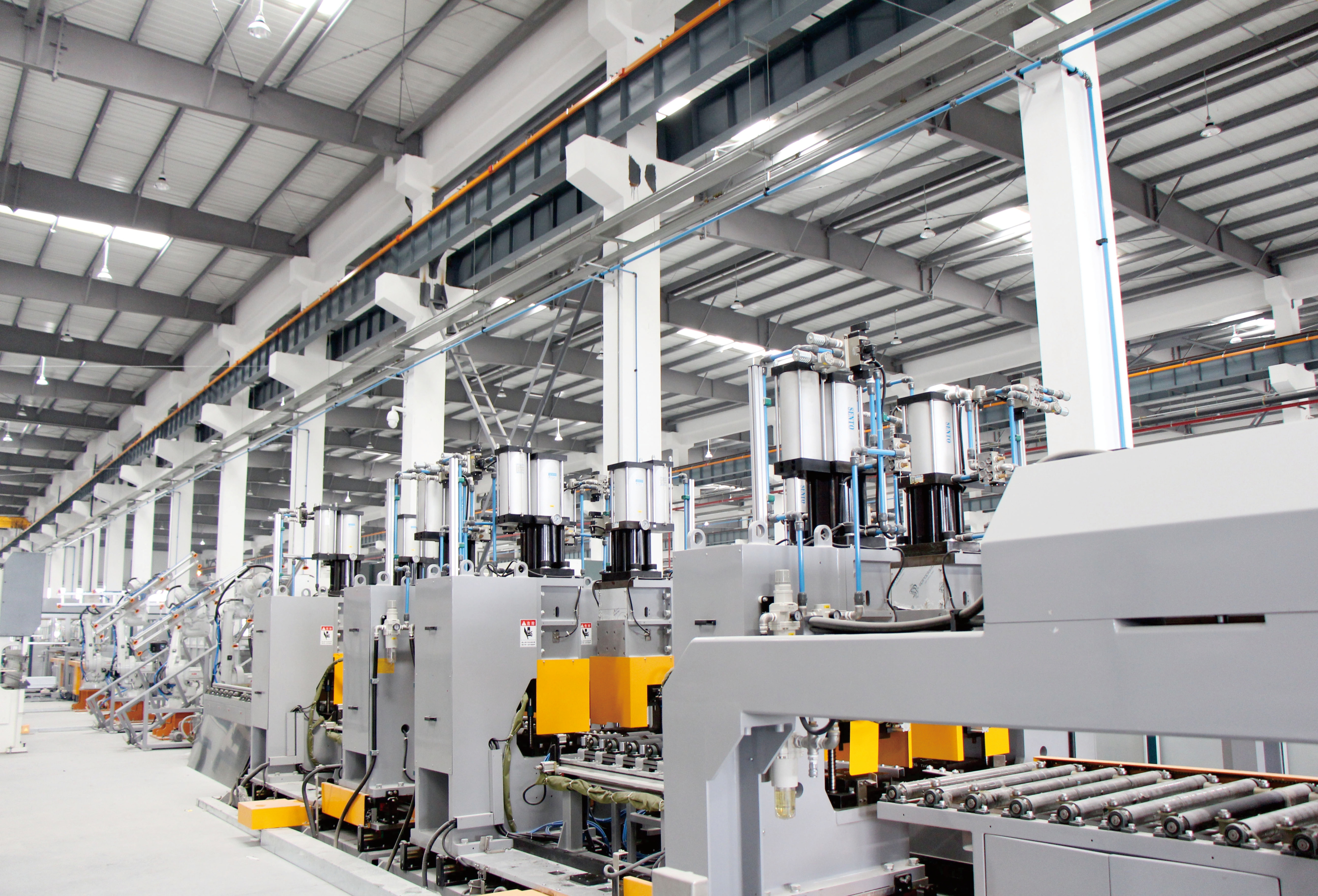
Automated production supports the tolerances that acceptance criteria depend on.
Step 1: Read the Terms by Structure, Not by Length
Convert every supplier's terms into the same five-row table: MOQ, delivery terms, payment schedule, acceptance criteria, and certifications. Missing fields are the real risk fields. A supplier that stays vague on a key term is usually revealing an unresolved supply-chain question, not a negotiation posture.
Step 2: Cross-Check Delivery Terms Against the Project Schedule
FOB and CIF should be selected against the actual logistics plan. If the site team and the importer are different entities, CIF reduces coordination overhead. If the buyer already runs consolidated freight, FOB usually delivers better cost control. In both cases, the delivery term should map onto the construction schedule rather than the supplier's preferred shipping rhythm.
Step 3: Evaluate the Payment Schedule Against Production Milestones
A 30/70 split places the majority of payment at the pre-shipment gate. In practice, that means the supplier must complete the unit and pass inspection before receiving the balance. For the buyer, this reduces the classic prepayment exposure where production slips after funds have moved. For the supplier, it is a commitment to deliver before full payment. How comfortable a supplier is with that structure tells you how confident it is in its own production and inspection process.
Step 4: Define Acceptance Criteria Before Contract Signature
"Pre-shipment test" sounds universal, but it needs to be specified. Buyers should pin down what is tested — running performance, leveling accuracy, brake function, door-lock cycling, control system behavior — who witnesses it, and what happens when a unit fails. Criteria agreed before the order shrink the space for dispute later.
Step 5: Verify Supplier Claims With Measurable Performance Data
Acceptance criteria should reference performance that can actually be measured. Leveling accuracy, for example, can be delivered through VVVF speed control that aligns the car with floor height within ±3 mm, improving entry and exit safety and convenience. Energy performance can be verified through the highest Class A rating under ISO25745 / VDI4707, with standby power consumption below 50 W and fast-call response reducing standby consumption further. Brake reliability can be supported by automatic braking-force self-testing, which periodically tests the motor's braking capacity to confirm reliability. When a supplier's claims can be expressed as testable values, they can be written directly into the acceptance criteria.
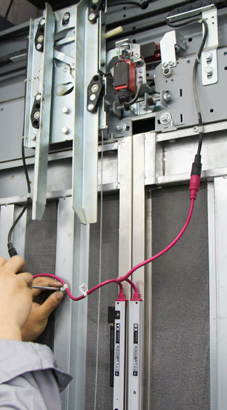
Safety features such as door-lock protection become acceptance items, not marketing points.
Step 6: Inspect the Manufacturing and Quality-Control Base
Acceptance criteria only hold if the factory can meet them repeatedly. Manufacturing environments built around robotic arms and fully automatic bending lines raise machining precision, and an accredited laboratory turns quality claims into documented results. Joylive operates a 10,5000 m² manufacturing base with 450 employees, 150 engineers, and an annual output of 15,000 units, supported by a CNAS-accredited laboratory. That combination enables whole-process quality control from design through service, with traceability of materials, processes, and inspection procedures.
Step 7: Align Acceptance Criteria With Long-Term Service Capability
Acceptance is not the end of a passenger elevator relationship — it is the start of the maintenance phase. Purchasing terms should extend past delivery into service. Digital management platforms and predictive maintenance capabilities determine whether post-acceptance support is reactive or proactive. Joylive's JoyCloud IoT platform covers installation, maintenance, and real-time monitoring across the elevator lifecycle, which turns acceptance criteria into the beginning of a service relationship rather than a one-time gate.
How Different Project Types Shift the Terms You Should Prioritize
Residential Passenger Elevator Projects
Residential projects often need single-unit or small-batch configurations tailored to specific shaft conditions and interior finishes. An MOQ of 1 unit matches that rhythm, allowing the project to move unit by unit instead of committing to a volume that the site cannot absorb. Similarly, home elevator buyers in the same category should confirm that the supplier's terms reflect small-scale customization rather than batch assumptions borrowed from commercial work.
Hospital Passenger Elevator Projects
Hospitals place heavy demands on leveling accuracy, door cycling reliability, and ride smoothness. A 30/70 payment structure paired with pre-shipment testing ensures these performance points are validated in the factory rather than discovered during commissioning in an active medical facility, where disruption is far more costly.
Commercial Passenger Elevator Projects
Commercial buildings involve multiple units and coordinated delivery windows. FOB or CIF selection should match the construction schedule, and Class A energy performance becomes a recurring operating-cost factor across the building's life. Multi-unit projects also benefit from suppliers whose annual output can absorb phased delivery without displacing other orders.
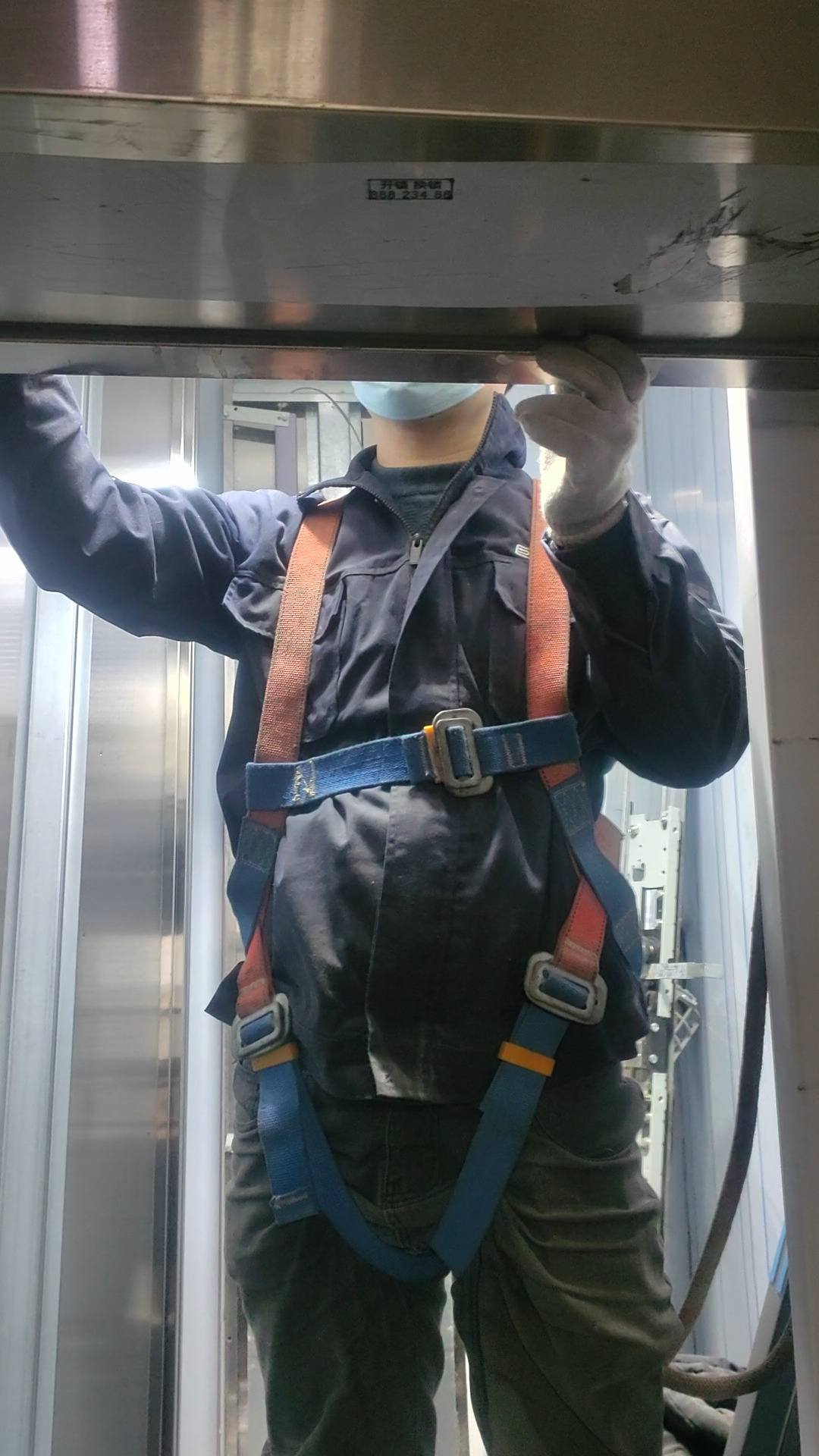
On-site installation is where factory acceptance criteria meet project conditions.
Elevator Modernization Projects
Modernization work is expanding in mature markets. Over 50% of units in Europe and North America exceed 15 to 18 years of service life, according to Roland Berger and Maximize Market Research analysis. These projects involve existing shaft constraints and tight installation windows, so acceptance criteria need to reflect retrofit conditions rather than new-build assumptions. Suppliers with installation risk management experience are better positioned for this category.
Reference Table: Purchasing Terms and What They Signal
| Purchasing Term | Disclosed Position | What It Signals to Buyers |
|---|---|---|
| Minimum order quantity | 1 unit | Supports single-unit and small-batch configurations without volume lock-in |
| Delivery terms | FOB / CIF | Allows the buyer to match logistics control to the project plan |
| Payment terms | 30 / 70 | Ties the balance to pre-shipment completion rather than calendar date |
| Acceptance criteria | Pre-shipment test | Moves quality verification into the factory before transport |
| Certification coverage | CE, ISO9001, ISO14001, OHSAS18001 | Establishes documented management systems and EU market access |
| Manufacturing base | 10,5000 m² facility, 450 employees, 15,000 units annual output | Supports repeatable execution of agreed acceptance criteria |
| Lifecycle support | JoyCloud IoT platform | Extends the supplier relationship beyond delivery into maintenance |
Frequently Asked Questions
What certifications should a passenger elevator supplier hold for European projects?
European compliance rests on EN 81-20 for construction and installation and EN 81-50 for testing and components. In practice, suppliers supporting EU-bound projects should hold CE marking for market access alongside documented management system certifications. Joylive Elevator holds ISO9001, ISO14001, OHSAS18001, and the CE mark. These certifications do not replace project-specific testing, but they confirm the supplier already operates within a documented quality and environmental framework.
How can buyers verify that a supplier's manufacturing capability is real?
Manufacturing capability should be verified through physical indicators rather than claims: facility size, workforce, engineering headcount, annual output, and the presence of an accredited testing laboratory. Joylive operates a 10,5000 m² facility with 450 employees, 150 engineers, an annual output of 15,000 units, and a CNAS-accredited laboratory. Together these allow whole-process quality control with traceability of materials, processes, and inspection procedures — the operational foundation that any acceptance criterion depends on.
What do minimum order quantity and payment terms tell buyers about project budget?
MOQ and payment terms shape both the financial and operational structure of a project. An MOQ of 1 unit means a buyer is not forced to commit to volume to unlock supply, which suits single-shaft and phased projects. A 30/70 payment schedule links the deposit to order confirmation and the balance to pre-shipment completion, keeping the majority of payment tied to a verified production milestone. Delivery terms of FOB or CIF let the buyer choose how much logistics cost and risk to absorb directly.
What acceptance standards apply before a passenger elevator order ships?
Pre-shipment testing is the acceptance standard disclosed for passenger elevator orders. In practice this means verifying running performance, leveling accuracy, brake function, door-lock safety, and control system behavior before the unit leaves the factory. Measurable targets strengthen this process: leveling accuracy within ±3 mm through VVVF speed control, Class A energy performance under ISO25745 / VDI4707 with standby power below 50 W, and automatic braking-force self-testing that periodically checks the motor's braking capacity.
How do buyers ensure supply continuity after the first delivery is accepted?
Acceptance is the beginning of the service relationship, not the end of the transaction. Buyers should confirm that the supplier can support installation, maintenance, and monitoring well beyond first delivery. Joylive's JoyCloud IoT platform extends digital management and predictive maintenance across the entire elevator lifecycle, from installation through real-time monitoring. Procurement teams preparing a project can request the full terms, acceptance checklist, and current product catalog to compare against their own project requirements.

Long-term supply relationships are supported by training and lifecycle service programs.
Conclusion
Purchasing terms and acceptance criteria are the most reliable window into a passenger elevator supplier's real operating model. MOQ shows whether the line is built for flexibility. Delivery terms show how export logistics are structured. Payment schedules reveal how production milestones and financial risk are shared. Acceptance criteria show where and how quality is actually verified. Certification coverage confirms that all of this sits inside a recognized compliance framework.
For procurement teams in the decision and execution stage, the practical move is to convert every proposal into the same five-row comparison before negotiating price. Suppliers that disclose clear terms and accept measurable acceptance criteria are the ones most likely to still be delivering support years after the first unit is commissioned. Joylive Elevator, based in Kunshan, China, publishes its purchasing terms and maintains ISO9001, ISO14001, OHSAS18001, and CE certification alongside a 10,5000 m² manufacturing base and CNAS-accredited laboratory. Buyers who want to benchmark these terms against their own project can review the full product and capability documentation before finalizing supplier selection.
Download the Joylive product brochure or visit joylivelift.com to request a quotation and acceptance criteria template for your next passenger elevator project.
Have Questions or Need More Details?
Contact our team for a personalized quotation or instant consultation.
Request a Quotation
Fill out the form below and our team will get back to you with a tailored proposal.
WhatsApp Direct Chat
Prefer to chat in real-time? Message us on WhatsApp for instant assistance & quick answers.
- Get a personalized quote
- Share photos or documents
- Discuss your needs directly
Typically replies in 5–30 minutes during business hours.