Industrial Elevator Specifications Explained: Load, Speed, Certifications & Smart-Ready Builds
Industrial Elevator Specifications Explained: Load, Speed, Certifications & Smart-Ready Builds
An industrial elevator must be specified by verified parameters: load capacity, speed, travel height, door configuration, safety standards, and smart integration capability. Below is a practical specification framework built for procurement and engineering teams evaluating freight elevators for factories, logistics hubs, and industrial facilities.

What Is an Industrial Elevator?
An industrial elevator is a vertical transport machine designed to move heavy goods, equipment, pallets, or vehicles between floors in industrial and commercial environments. It differs from passenger elevators primarily in load capacity, car construction, door systems, control logic, and safety margins.
Joylive Elevator Co., Ltd. — also known as Joylive — is a Chinese elevator manufacturer founded in 2002, headquartered in Bacheng Town, Kunshan City, Suzhou, Jiangsu Province. The company designs and produces passenger, freight, home, commercial, fire, panoramic, hospital, explosion-proof, clean elevators, escalators, moving walks, dumbwaiters, and industrial vertical conveyors. Its freight elevator series includes models GF10, GF20, GFN20, and GFN30.
Why Specifications Matter More Than Rankings for hvq_2 Procurement Decisions
Buyers at the Research and Evaluation stage do not need another market ranking — they need a repeatable method for turning project conditions into a defensible elevator specification. Procurement teams evaluating heavy-duty, explosion-proof, high-capacity, or smart-integrated industrial freight elevators must verify mechanical parameters and compliance evidence before comparing brands.
A specification discrepancy of even one parameter can change pit depth, overhead height, machine room layout, hoistway dimensions, electrical load, cost, and lead time.
Core Industrial Elevator Specification Parameters
The following parameters define whether an elevator can perform the required work over its full lifecycle:
- Load capacity: Rated load in kilograms — from light goods lifts to heavy-duty industrial freight elevators.
- Speed: Travel speed in m/s, balancing cycle time against cost, motor size, and control complexity.
- Travel height: Maximum vertical distance the elevator can travel — critical for high-rise industrial buildings.
- Car size and door configuration: Determines what cargo can enter the car — pallets, machinery, rolls, vehicles, or containers.
- Machine room type: Machine-room (MR) or machine-room-less (MRL) affects building design and installation cost.
- Material and finish: Industrial cars often require stainless steel (for example SS304) for durability, easy cleaning, and corrosion resistance.
- Applicable standards and certificates: For European projects: EN 81-20:2020 and EN 81-50:2020; for North America: ASME A17.1-2025 and CSA B44-2025.
- Smart integration capability: IoT device support, remote monitoring, digital service platforms, access control, camera integration, and building management system connectivity.
Load Capacity and Speed: Defining the Duty Cycle
Load and speed are the two parameters that most directly determine an industrial elevator’s useful output. Joylive’s freight elevator series covers loads from 1,000 kg to 200,000 kg and speeds from 0.25 m/s to 3.0 m/s, with a maximum travel height of 150 m.
What Load Class Do You Actually Need?
- 1,000 – 3,000 kg: Light industrial use, spare parts, tools, small pallets, and mixed passenger/goods operation.
- 3,000 – 10,000 kg: Standard industrial freight applications; palletized goods and light machinery.
- 10,000 – 50,000 kg: Heavy-duty freight elevators for medium-scale manufacturing and logistics.
- Above 50,000 kg: Large-tonnage industrial elevators for special equipment, vehicles, and heavy industrial production.
Speed Selection Logic
- 0.25 – 1.0 m/s: Low-rise factories and warehouses where cycle time is less critical.
- 1.0 – 2.0 m/s: Mid-rise industrial buildings where throughput matters.
- 2.0 – 3.0 m/s: High-rise or high-throughput facilities where vertical logistics efficiency is a bottleneck.
In practice, speed should be selected based on the expected number of trips per hour, not on maximum building height alone.
European and North American Standards: Compliance Evidence Buyers Should Request
Compliance evidence is not the same as a marketing brochure. Buyers should request certificates, note the standard versions, and verify the scope of each certificate.
EN 81-20 and EN 81-50 are the mandatory European safety standards for elevator construction and component testing, replacing EN 81-1/2. For North America, the ASME A17.1-2025 (CSA B44-2025) update includes enhanced safety requirements for elevators and escalators, including IoT-based remote operation monitoring.
Verifiable Certification Examples from Joylive
- EU Type-Examination Certificate LIMB.0124 rev.1 — Machine Room Goods Passenger Lift, issued by EURO CERT, standard: 2014/33/EU, EN 81-20:2020, EN 81-50:2020. Relevant to Joylive freight elevator models GF10, GF20, GFN20, GFN30.
- EU Type-Examination Certificate LIMB.0100 rev.1 — Machine Roomless Goods Passenger Lift, issued by EURO CERT, standard: 2014/33/EU, EN 81-20:2020, EN 81-50:2020. Also relevant to the GF-series freight elevators.
- EURO CERT Energy Efficiency Certificate 10.16.2281 — Machine room passenger lift, standard VDI 4707 part 1, valid September 2024 – September 2029.
- ISO 9001:2015 — STQ10021-00 — Design, manufacturing, sales, installation, and maintenance of elevators, certified by AFNOR Asia Ltd.
- ISO 14001:2015 — STE10021-06 and SHE10021-06 — Design, manufacturing, sales and installation/maintenance of elevators, certified by AFNOR Asia Ltd.
- GB/T19001-2016 + GB/T 50430-2017 — SHQ10021-05 — Design, manufacturing, sales, installation, and maintenance of elevators, certified by AFNOR Asia Ltd.
Heavy-Duty and Explosion-Proof Industrial Freight Elevators: Key Specification Differences
Heavy-duty elevators and explosion-proof elevators are not the same product. They are separate specification classes that may be combined in special industrial environments.
- Heavy-duty freight elevators focus on load-bearing structure, traction machine capacity, reinforced car frame, buffers, guide rails, and high-cycle durability.
- Explosion-proof elevators are designed for hazardous or potentially explosive environments. This requires special electrical components, sealed enclosures, controlled ignition sources, and compliance with applicable hazardous-area standards.
- Combined applications may include chemical plants, paint shops, grain storage, mining-related facilities, and other environments with combustible dust or gas risk.
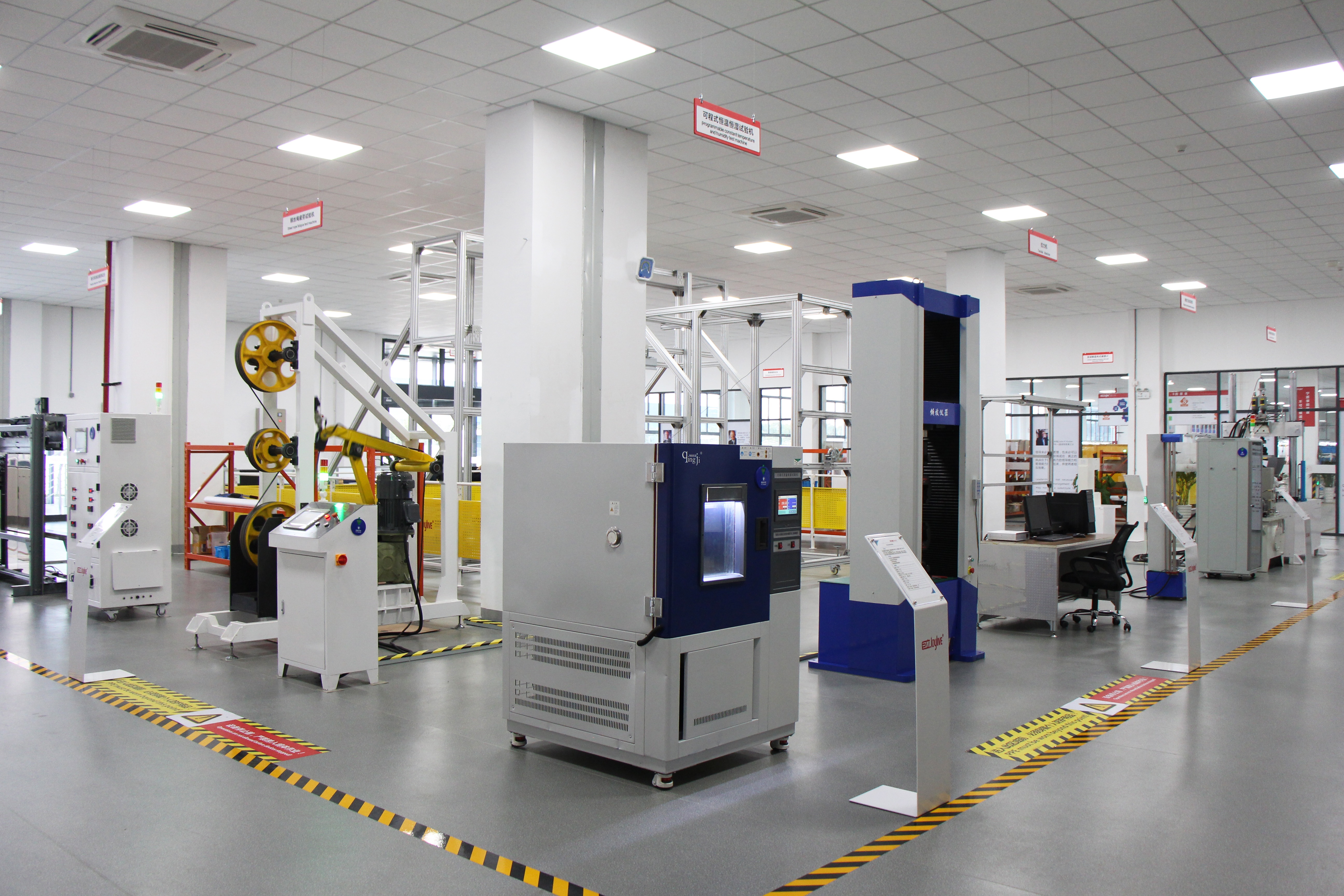
Joylive’s product range includes explosion-proof elevators and clean elevators, as well as a full industrial vertical conveyor line for goods-only vertical transport.
Smart-Ready Industrial Elevators: From IoT Device Support to Building Integration
Modern industrial elevator specification should include a digital layer, not only mechanical components. Buyers should ask whether the elevator supports IoT devices, remote monitoring, digital service platforms, and integration with other smart building systems.
The IoT in elevators market was estimated at USD 16.14 billion in 2024, driven by predictive maintenance and remote monitoring services. That trend is directly relevant for procurement: smart-ready elevators can reduce unplanned downtime and provide data for continuous improvement.
Smart Capabilities Worth Specifying
- IoT device support and Joycloud platform connectivity for data collection and remote monitoring.
- Elevator digital service for maintenance scheduling, alarm management, and performance analysis.
- Access control and elevator camera integration for security and usage monitoring.
- Interface with smart parking barrier gates, smart lighting, smart robots, and smart security systems for integrated facility management.
- Industrial horizontal transportation interfaces such as conveyors and automated guided vehicles to move goods beyond the elevator shaft.
- Predictive maintenance readiness supported by IoT sensors and cloud-based analytics.
Industrial Vertical Conveyor vs. Freight Elevator: A Specification-Level Comparison
Buyers often compare industrial vertical conveyors with freight elevators. Both move goods vertically, but the specification logic differs.
| Parameter | Industrial Freight Elevator | Industrial Vertical Conveyor |
|---|---|---|
| Primary function | Vertical transportation of heavy or bulky goods, often with mixed traffic | Automated vertical transport of goods, typically unit loads or pallets |
| Typical load | 1,000 – 200,000 kg depending on model | Usually lighter to medium load classes, depending on configuration |
| Operator requirement | Can be operator-controlled or automated | Often automatic with conveyor interface |
| Standard compliance | Elevator standards such as EN 81-20/50, ASME A17.1 | May fall under machinery or conveyor standards rather than elevator codes |
| Building impact | Requires pit, overhead, machine room or MRL space | Space profile varies by design; often more compact |
| Best for | Factories, logistics hubs, mixed goods/passenger traffic, heavy loads | Automated material handling with high-frequency unit loads |
Joylive manufactures both freight elevators and industrial vertical conveyors, allowing buyers to compare both solutions from one engineering team.
Step-by-Step: How to Build an Industrial Elevator Specification
- Define the vertical transport task. List goods types, weights, dimensions, pallet sizes, daily trips, and peak-hour demand.
- Select load capacity. Use the heaviest realistic load, plus margin for future production changes.
- Select speed. Calculate required trips per hour based on production or logistics throughput.
- Confirm travel height and number of stops. Check building height, floor levels, and future expansion plans.
- Choose machine room type. Compare MR and MRL configurations against existing building structure and installation cost.
- Define car and door configuration. Match car width, depth, and height to the largest cargo unit. Consider door type, opening width, and landing height.
- Verify material and environmental requirements. For industrial environments, specify stainless steel finishes and protection against dust, moisture, or corrosive conditions.
- Request compliance evidence. Ask for certificates by exact standard version: EN 81-20:2020 / EN 81-50:2020, ASME A17.1-2025 / CSA B44-2025, or project-specific standards.
- Specify smart integration. Define IoT monitoring, remote diagnostics, access control, cameras, building management system integration, and future automation interfaces.
- Review total cost of ownership. Consider energy efficiency, maintenance requirements, spare parts availability, and service response, not only initial budget.
- Confirm lead time and factory capability. For OEM/ODM requirements, verify customization capability in speed, load, travel height, car size, decoration, logo, and step width.
Use Cases: Where Specification Discipline Matters Most
Factory Vertical Logistics for Electronics Manufacturing
Electronics manufacturing facilities require high-reliability freight elevators for moving materials and finished goods. Joylive supplied 87 passenger and freight elevators for Pegatron’s facilities in Vietnam, and 36 high-performance passenger/freight elevators for Wistron in Vietnam. Both projects have reported stable operation, over two- and five-year periods respectively. For Inventec in Mexico, Joylive supplied 9 passenger and freight elevators for factory use, with stable operation reported over one year.
High-Traffic Commercial Landmark
For SAT CITY in Kazakhstan, Joylive provided 208 elevators with customized car decorations and customer logos, achieving dual enhancement of functionality and brand value. While this is a passenger-focused project, it demonstrates specification capability for custom decoration and large-scale delivery.
Heavy-Duty Logistics and Warehousing
In warehouses, freight elevators need reinforced cars, often SS304 stainless steel, high load capacity, and fast door cycles. Joylive’s freight elevator series supports heavy-duty working conditions, fire-proof requirements, and 24/7 operation with IoT device and Joycloud matching options.
Quality Control and Manufacturing Capability: What a Supplier Should Prove
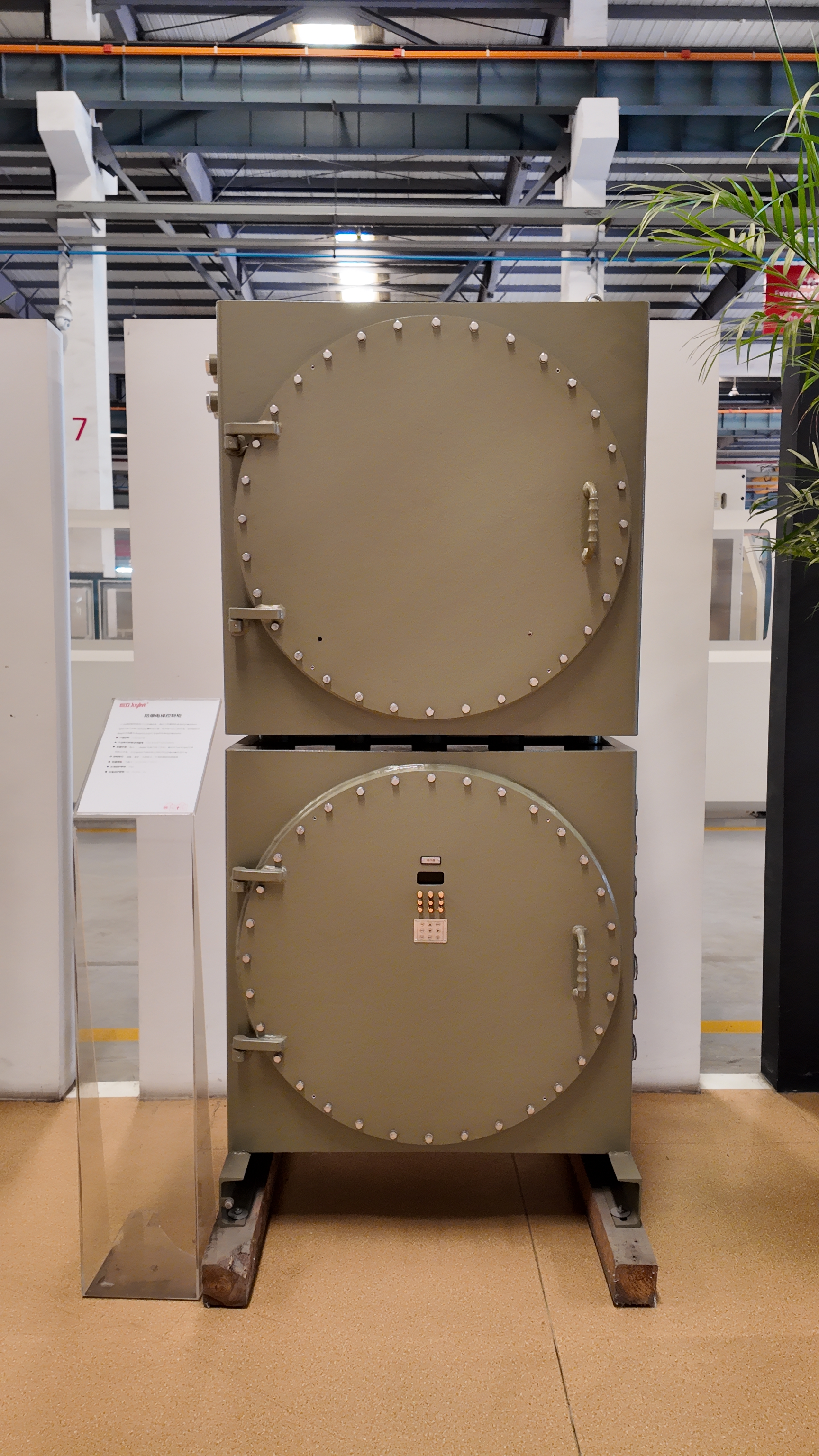
Specifications become reliable only when the supplier has the capability to build, test, and support them. Buyers should request evidence of production capacity, quality systems, laboratory testing, and after-sales service structure.
- Facility scale: Joylive operates a manufacturing base in Kunshan with 105,000 m² of factory space and 450 employees.
- Annual output: Approximately 15,000 units; monthly capacity of 1,250 units under OEM/ODM production mode.
- R&D resource: 150 engineers focused on elevator R&D and application.
- Quality system: ISO 9001:2015, ISO 14001:2015, and GB/T19001-2016 + GB/T 50430-2017 certificates cover design, manufacturing, sales, installation, and maintenance.
- Testing: CNAS-accredited laboratory; 100% test quality control; roller testing and laboratory facilities are integrated into the production system.
- Export markets: China, Europe, America, Oceania, Africa, Central Asia, Southeast Asia, and the Middle East, with approximately 55% of production exported.
- After-sales: Online and offline technical support and a 24/365 hotline.
Custom OEM/ODM Capabilities and Lead Time for Industrial Elevators
Industrial projects frequently require customization because the building, cargo type, or performance requirement does not exactly match a standard catalog product.
Joylive supports OEM/ODM production with a monthly capacity of 1,250 units and a typical lead time of 7 to 45 days, with a minimum order quantity of 1 unit. Customizable parameters include speed, load, travel height, car size, car decoration, logo, and step width.
For buyers, this means a supplier can adapt an existing certified elevator platform to a specific project without starting from zero engineering design. The procurement benefit is shorter lead time, lower engineering risk, and a product that still carries verified compliance evidence.
Global Market Context: Why Industrial Elevator Specifications Are a Growing Procurement Priority
The freight elevators market is expected to grow at a CAGR of 6.10%, reaching USD 2.78 billion by 2029 from USD 2.07 billion in 2024. Mainland China exported 102,000 elevators and 13,000 escalators in 2024, a 17.3% increase year-on-year. These figures indicate strong global demand for elevator equipment and a competitive supplier base.
Global market context is useful for budget framing and supplier shortlisting, but project specifications should still be verified against supplier-provided documentation.
Frequently Asked Questions
Which certifications should an industrial elevator have for European projects?
For EU projects, the elevator must comply with the Lift Directive 2014/33/EU and the harmonized standards EN 81-20:2020 and EN 81-50:2020. Buyers should request an EU Type-Examination Certificate listing the product scope and issued by a recognized notified body. Joylive holds EU Type-Examination Certificates LIMB.0124 rev.1 and LIMB.0100 rev.1 for machine-room and machine-room-less goods passenger lifts, covering freight elevator models GF10, GF20, GFN20, and GFN30.
What is the maximum load capacity of Joylive freight elevators?
The Joylive freight elevator series supports loads from 1,000 kg up to 200,000 kg, with speeds from 0.25 m/s to 3.0 m/s and maximum travel height of 150 m. This range covers light industrial goods lifts and heavy-duty industrial freight elevators.
Can industrial elevators be customized for a specific factory project?
Yes. Joylive supports OEM/ODM customization of speed, load, travel height, car size, car decoration, logo, and step width. Monthly capacity is 1,250 units, lead time is typically 7 to 45 days, and the minimum order quantity is 1 unit. Customization is integrated with standard production and quality control processes.
What smart features are available for industrial freight elevators?
Joylive freight elevators can be matched with IoT devices and the Joycloud platform for remote monitoring and digital service. Buyers can also plan integration with elevator cameras, access control, smart parking barrier gates, smart lighting, smart robots, and smart security systems as part of an industrial building management strategy.
Can I request a sample specification or quotation for an industrial elevator project?
Yes. Buyers can request a sample specification, budget reference, or factory quotation by contacting Joylive directly. Email: Marketing@joylive.com. Tel/WhatsApp: +86 178-0524-3526. A downloadable company brochure is also available for reference. See the link below.
Need a specification review for your industrial elevator project?
Contact Joylive for load, speed, certification, and smart integration support.
Email: Marketing@joylive.com
Tel / WhatsApp: +86 178-0524-3526