Passenger Elevator Handover Disputes? Solving Them with Clear Terms and Acceptance Criteria
Most passenger elevator handover disputes are not caused by a defective machine. They are caused by a purchase order that described a machine in adjectives, a supplier that quoted against a different reading of those adjectives, and a handover meeting where nobody could point to a written acceptance criterion. This guide sets out a working framework: how to write precise purchasing terms, how to turn every expectation into a measurable acceptance item, and how to run a handover that ends with signatures instead of arguments.

The Sands Apartment & Mall, Panama City — a 42-storey mixed-use building supplied with 12 Joylive commercial elevators. A project of this scale cannot be closed out on verbal understanding; every block of units needs matching acceptance records.
Problem Definition: How a Passenger Elevator Handover Turns Into a Dispute
A handover dispute is a documentation failure before it is ever a product failure. The elevator itself is usually the same machine that was ordered; what differs is the gap between what the buyer pictured and what the contract could prove. That gap appears in four predictable places.
First, the specification is written in outcome language, not measurement language. "Smooth ride", "premium finish", "quiet operation" and "hospital-grade" are legitimate commercial expectations, but none of them can be accepted or rejected at a handover meeting. Nothing in the order states what is measured, with what instrument, under what load, or with what tolerance.
Second, compliance is assumed rather than itemised. Buyers frequently treat the phrase "CE certified" or "international standards" as a complete answer. In lift procurement, market access is a standards-gated process and the applicable standard family differs by destination market. A certificate that satisfies one jurisdiction does not automatically satisfy another, and a certificate issued for a machine-room configuration does not automatically cover a machine-room-less one.
Third, the document package is never defined. Drawings, wiring diagrams, test records, spare parts lists, maintenance instructions and declarations are all part of the delivered product in a practical sense, but they are rarely listed as deliverables. When they arrive late or incomplete, the buyer holds equipment it cannot maintain with confidence and the supplier considers the job finished.
Fourth, defect responsibility has no clock on it. If the terms do not state who responds, within what window, and at whose cost, then every post-handover issue becomes a negotiation rather than a service request.
Industry Background: What "Acceptance" Actually Means for a Passenger Elevator
Acceptance in the lift industry sits on top of a standards framework that already defines safety, testing and component examination. The buyer's job is not to invent that framework — it is to reference the correct part of it for the destination market and then add the project-specific layer on top.
In the European Union, lifts placed on the market are regulated by Directive 2014/33/EU, and CE marking is the legal instrument through which manufacturers declare conformity. EN 81-20:2020 is the harmonised standard that specifies safety rules for permanently installed new passenger or goods passenger lifts within its stated scope, and EN 81-50 sets out the design rules, calculations, examinations and tests applied to lift components. EN 81-72 addresses firefighters lifts as a dedicated product category. Buyers should note that harmonised-standard listings and edition status change over time — an EU Commission implementing decision listing EN 81-20:2020 among harmonised standards supporting Directive 2014/33/EU is a reference point, not a permanent guarantee, and the current status for a given project date must be confirmed for the destination jurisdiction.
In North America, ASME A17.1/CSA B44 is the joint US/Canadian Safety Code for Elevators and Escalators, and adoption happens at state, provincial and local authority level rather than automatically. In China, GB/T 7588.1-2020 is the safety standard covering passenger and goods passenger lifts. ISO 8100-1:2019 provides an international safety reference for the construction and installation of lifts.
Two market trends make handover discipline more valuable, not less. Roland Berger's Elevator Market Outlook 2030 (Spring 2026 update) identifies modernization as the fastest-growing business line at a CAGR of around 7% through 2030 — and modernization projects are handed over against an existing building's baseline, which must be recorded or the acceptance discussion has no reference point. Separately, research published by Spherical Insights & Consulting projects the smart elevator market reaching USD 40.26 billion by 2035 at a CAGR of 9.02%, which means more projects will be handed over with connected controllers, monitoring devices and software interfaces that need their own acceptance items.
Energy performance belongs in the same conversation. ISO 25745-2:2015 provides the methodology for calculating and classifying the energy performance of lifts, so an energy claim made at quotation stage can be converted into a document request at handover rather than an opinion at the final meeting.
Detailed Solution: A Contract Architecture That Survives Handover
The framework below assumes the buyer is working with a manufacturer that accepts configuration-level customisation. Joylive Elevator Co., Ltd. — a lift manufacturer founded in 2002 and based in Bacheng Town, Kunshan City, Suzhou, Jiangsu Province, China — states that it operates in OEM/ODM mode with customisation across speed, load, travel height, car size, car decoration, logo and step width. That scope is precisely why written terms matter: the more a project is customised, the less a catalogue can serve as the acceptance reference.
The company also publishes operating parameters that a buyer can write directly into a technical annex. Its 3 Series passenger elevator is stated at a maximum speed of 2.5 m/s, maximum travel height of 125 m and maximum load of 1600 kg or up to 21 persons. Its 5 Series is stated at a rated speed range of 1.0–4.0 m/s for a machine-room configuration and 1.0–3.0 m/s for an MRL configuration, with a load range of 630–3000 kg and travel height up to 140 m. These are company-published limits, and that is exactly how they should be treated in a contract: as declared figures that must be confirmed against the specific configuration being purchased, not as generic promises.
Step-by-Step Breakdown: From Purchase Order to Signed Handover
Step 1 — Lock the configuration baseline before pricing
Write down every variable that changes the physical product: rated speed, rated load, travel height, number of stops, car size, car decoration, door opening, logo and signage, shaft and pit dimensions, and power supply. Each item needs a value and a tolerance. "Car decoration: brushed stainless steel, hairline finish, sample approved by buyer before production" is an acceptance item. "Car decoration: high-end" is not.
This is the step where the customisation list becomes a checklist. If the supplier offers OEM/ODM customisation across speed, load, travel height, car size, decoration, logo and step width, then each of those dimensions needs a line in the annex — including the ones the buyer has decided not to change, recorded as "standard, as per approved drawing".
Step 2 — Write compliance by standard number, certificate number and scope
Do not write "CE certified". Write the directive, the standard and the certificate identifier, and state which configuration the certificate covers. A certificate issued for a machine-room passenger lift is not interchangeable with one issued for a machine-room-less lift, and a firefighters lift certificate is a separate document again.
Joylive's published certification record illustrates the level of granularity a buyer should demand. The company holds EU type-examination certificate 10.03.5199 for machine-room passenger lifts and 10.03.5200 for machine-room-less passenger lifts, both issued by EURO CERT against 2014/33/EU, EN 81-20:2020 and EN 81-50:2020. Certificate TH/8322022/2024, issued by TUV, covers the GPN30E MRL passenger traction elevator against EN 81-20:2020 and EN 81-50:2020, valid from 30 December 2024 to 30 December 2027. For firefighters lifts, certificates 10.03.5609 (machine room) and 10.03.5610 (machine room-less) are issued against 2014/33/EU, EN 81-20:2020, EN 81-50:2020, EN 81-72:2020 and EN 81-77:2022. Older machine-room and MRL certificates LIMB.0061 and LIMB.0065 are issued against EN 81-20:2014.
The lesson for the buyer is structural, not brand-specific: a certificate has a number, an issuing body, a scope and a validity window, and all four belong in the contract annex. Ask which one applies to your configuration and your destination market before the order is placed, not at handover.
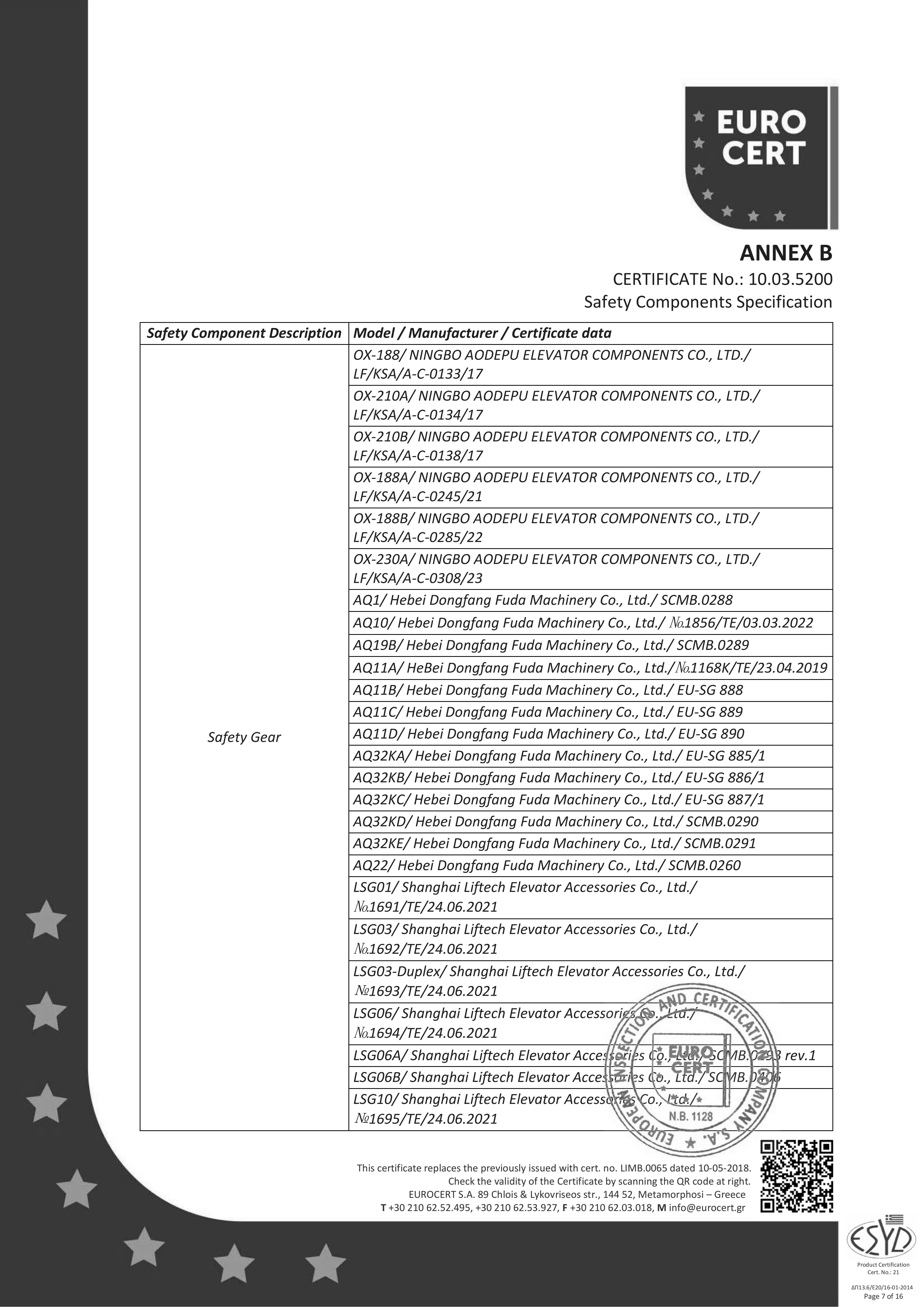
EU type-examination documentation for a machine-room-less passenger lift. The certificate number, issuing body, standard reference, scope and validity dates are the four fields that belong in a purchase annex.
Step 3 — Convert every performance claim into a measurable acceptance item
Go through the quotation line by line and ask: what document proves this, and who measures it? Speed, load and travel height are verifiable against the approved technical drawing and the type-examination scope. Energy claims should be referenced to the calculation methodology — ISO 25745-2:2015 defines how lift energy performance is calculated and classified — and supported by the certificate issued for the exact configuration.
Joylive's energy certificates show what a correctly scoped document looks like: 10.16.2281, issued by EURO CERT against VDI 4707 Part 1, and 10.16.2280, issued against ISO 25745-2:2015, both covering machine-room passenger lifts and valid from 30 September 2024 to 29 September 2029. A buyer writing an acceptance clause should name the certificate and its scope, then require the supplier to confirm in writing that the delivered configuration falls inside that scope.
Step 4 — Define the document package as a deliverable, with a due date
List the documents and attach a delivery date to each. At minimum: approved general arrangement drawings, shaft and pit interface drawings, wiring diagrams, controller documentation, the certificate set with scope statements, the declaration of conformity for the destination market, test records, the maintenance manual, the spare parts list with recommended stock quantities, and the commissioning record.
This step is where many projects quietly fail. The machine runs, but the maintenance team cannot order a replacement component because the parts list arrived as a photograph of a spreadsheet. Make the document package a payment milestone condition rather than a courtesy.
Step 5 — Agree the witnessed tests and the handover checklist
State which tests are witnessed by the buyer or the buyer's consultant, and what the pass condition is. Load test, levelling accuracy, door operation cycle, emergency communication, alarm and rescue procedure, and the firefighters operation sequence where applicable — each one gets a line, a method and a signature field.
Where the supplier runs 100% testing before shipment, as Joylive states for its production process, ask for that record to travel with the unit. A factory test record is not a substitute for site acceptance, but it establishes a documented baseline that makes site disputes shorter.
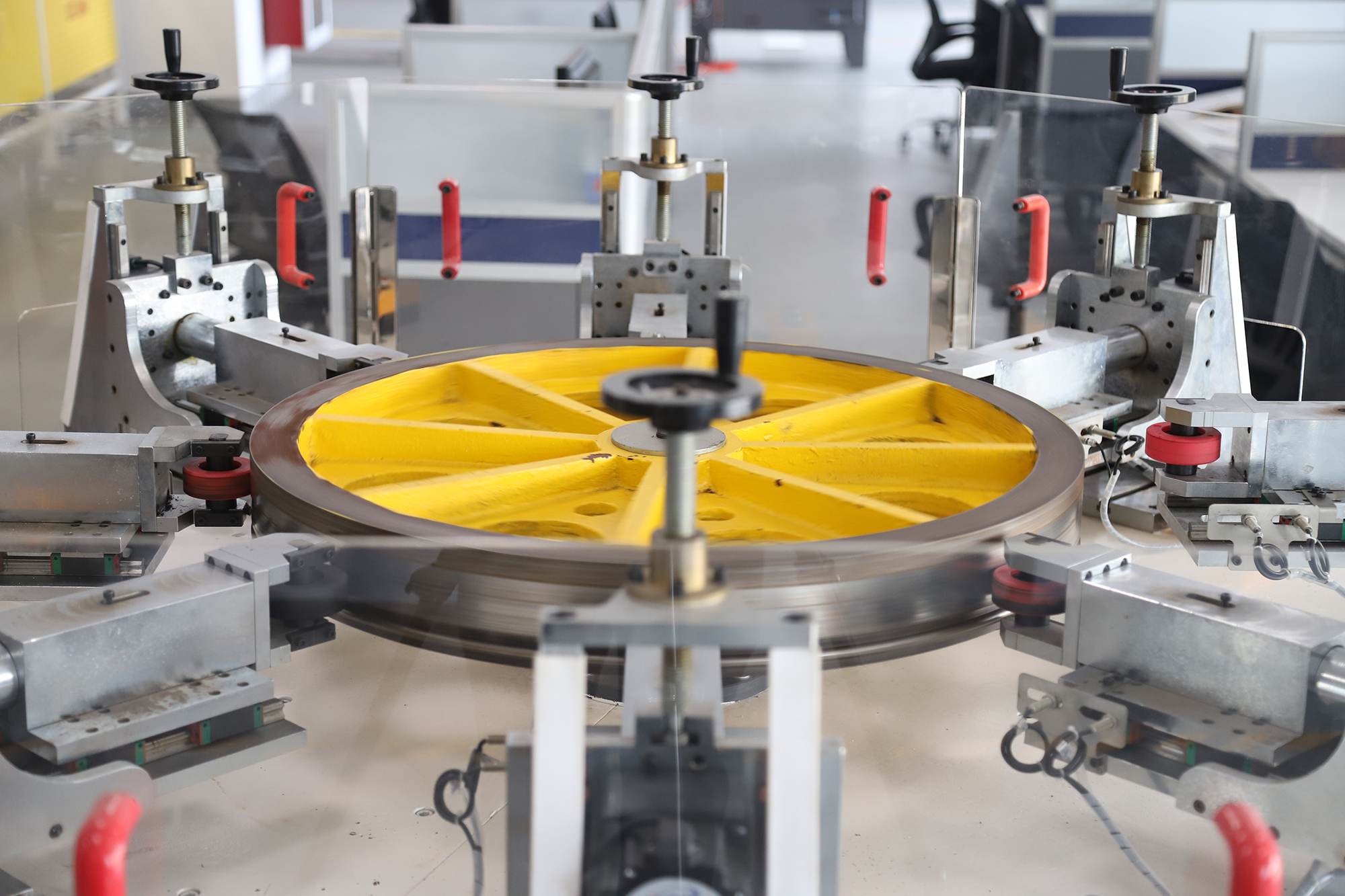
Component testing before shipment. Factory records shorten site disputes because the baseline is documented before the equipment leaves the plant.
Step 6 — Align production milestones with the delivery and acceptance calendar
Acceptance is a phase, not a meeting. Give it its own duration in the contract, after production and before final payment release. Joylive states a monthly capacity of 1,250 units and a lead time of 7 to 45 days depending on configuration, which means the production window itself can be short relative to the documentation, shipping and site readiness phases. If the contract does not reserve time for document review and witnessed testing, the acceptance step gets compressed into an afternoon.
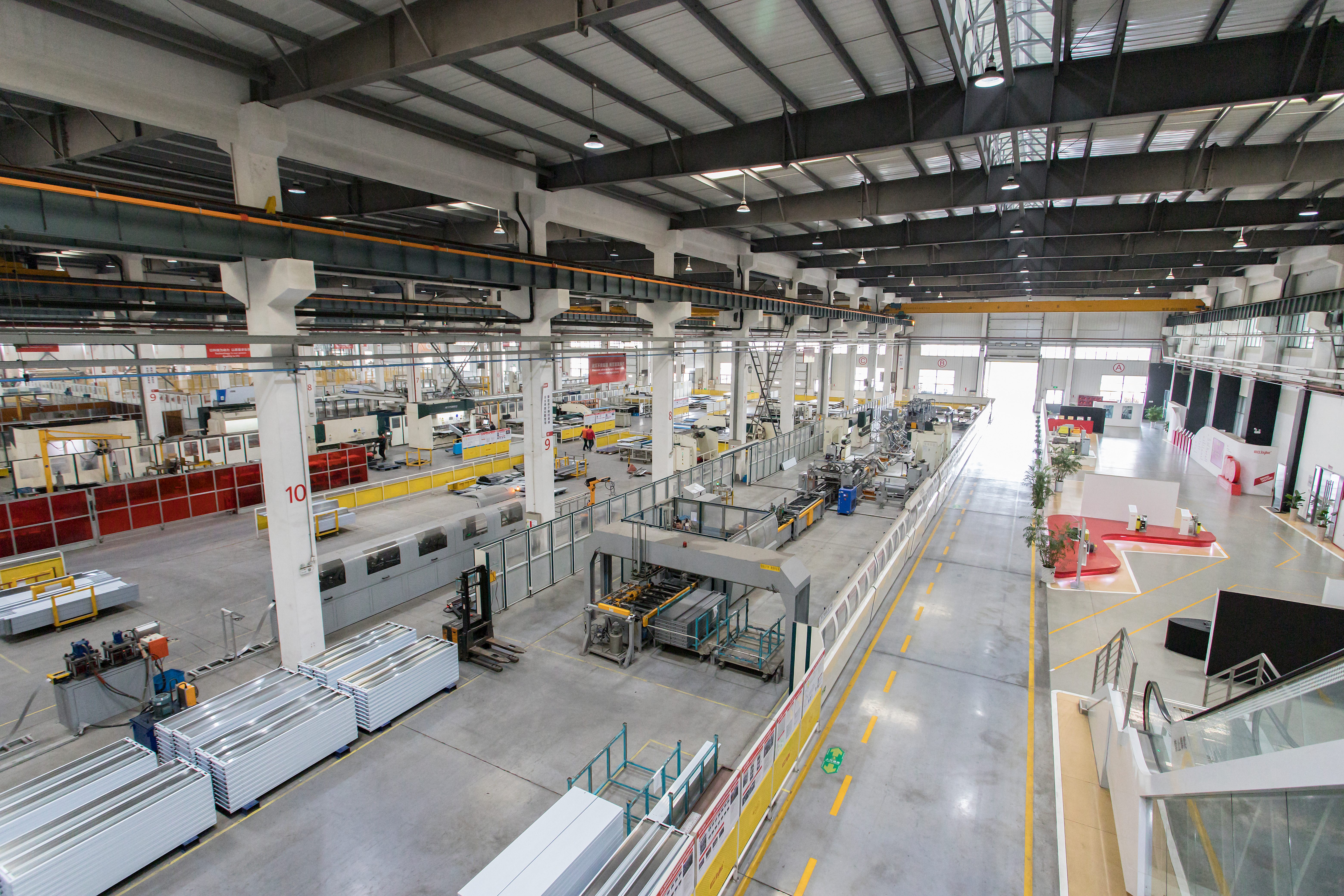
Manufacturing facility in Kunshan, Jiangsu Province. Production capability is a supplier fact; acceptance capability is a contractual one, and the two are set up in different documents.
Step 7 — Put a clock on defect responsibility and after-sales response
Define what counts as a defect, who notifies whom, in what form, and within what window. Then define the escalation path. Joylive states that it provides online and offline technical support with a 24/365 hotline, and that it operates OEM/ODM arrangements — both facts belong in the service annex so that the response route is named rather than implied.
The same annex should record warranty scope, spare parts availability and the schedule for post-handover inspection. In a modernization or phased handover, this is also where the pre-work baseline of the existing installation is recorded.
Use Cases: The Same Framework, Different Project Types
The framework does not change across building types; the acceptance items do. What changes is which parameters are critical, which certificates are mandatory, and who sits on the acceptance committee.
Residential and social housing programmes
Large residential rollouts are handed over in blocks, so acceptance needs a repeatable per-unit record rather than one project-level signature. A government-led residential programme in Uzbekistan received 688 Joylive elevators over a duration the company records as 8 years of stable operation — the kind of volume where a standardised acceptance sheet per unit is the difference between a controlled handover and an administrative backlog.
Commercial and mixed-use landmarks
In commercial buildings, the finish specification carries brand weight and therefore generates the most subjective disputes. SAT CITY, a landmark complex in Kazakhstan, received 208 elevators with customised car decorations and customer logos over a 5-year recorded duration — a scope where the approved finish sample, not the purchase order wording, is the practical acceptance reference. The Sands Apartment & Mall in Panama City received 12 commercial elevators for a 42-storey building, recorded at 6 years of stable operation.
Healthcare
Hospital projects combine passenger and heavy-duty applications in one building, so the acceptance matrix must distinguish them. Crimea Clinical Hospital in Russia received 14 elevators, including heavy-duty hospital elevators and passenger elevators, recorded at 8 years of stable operation. Bed-accessible cabin dimensions, door dwell time and priority control need separate, measurable acceptance lines.
Institutional and educational
Campuses have concentrated peak flows, which is where group control performance and traffic handling become acceptance topics rather than sales topics. Indus University in Pakistan received 3 customised intelligent group-controlled passenger elevators, recorded at 9 years of stable operation. Heroico Colegio Militar in Mexico received 5 customised passenger elevators, recorded at 4 years.
Industrial and manufacturing facilities
Factory projects usually mix passenger and freight equipment on one site, so the clause structure must separate the two product families from the start. Pegatron in Vietnam received 87 passenger and freight elevators recorded at 2 years; Wistron received 36 high-performance passenger and freight elevators recorded at 5 years; Inventec in Mexico received 9 passenger and freight elevators recorded at 1 year.
Transport and public architecture
Public and transport projects add visibility requirements on top of technical ones. San Luis Potosí International Airport in Mexico received a customised panoramic elevator, recorded at 8 years of stable operation — a case where the visual specification and the safety specification must both be accepted, on separate lines.
Comparison Table: Passenger Elevator and Home Lift at Handover
Buyers often run both product families in one development, and it is a common sourcing error to apply one acceptance package to both. The table below uses only company-published scope and certificate facts.
| Acceptance dimension | Passenger Elevator (GP30 / GPN30) | Home Lift (GH30) |
|---|---|---|
| Company-stated application scope | 3 Series is described as meeting the requirements of residences, business buildings and other building sites; 5 Series targets high-rise and high-visitor-flow buildings including business buildings, residences, hotels, malls and public sites. | Company case record: 120 home elevators supplied to Desa Mountain Villa, a high-end residential project in Kuala Lumpur, recorded at 13 years of stable operation. |
| Compliance documents to cite in the annex | EU type-examination certificates 10.03.5199 (machine room) and 10.03.5200 (MRL) against 2014/33/EU, EN 81-20:2020, EN 81-50:2020; TH/8322022/2024 for the GPN30E MRL model; 10.03.5609 and 10.03.5610 for firefighters lifts. | ISO 9001:2015 registration STQ10021-00 and ISO 14001:2015 registrations STE10021-06 / SHE10021-06, issued by AFNOR Asia Ltd, covering the Home Lift GH30 among other product families. |
| Company-published operating parameters | 3 Series: max 2.5 m/s, max travel height 125 m, max load 1600 kg / up to 21 persons. 5 Series: 1.0–4.0 m/s (machine room) and 1.0–3.0 m/s (MRL), 630–3000 kg, travel height up to 140 m. | No operating parameters are published in the available company content; the acceptance annex must therefore rely on the approved project drawing and the supplier's written confirmation. |
| Energy documentation | Energy efficiency certificates 10.16.2281 (VDI 4707 Part 1) and 10.16.2280 (ISO 25745-2:2015) for machine-room passenger lifts, valid 30 Sep 2024 – 29 Sep 2029. | No energy certificate scope is recorded for this product family in the available content; request the applicable documentation per project. |
| Typical handover risk | Configuration drift between the quoted series and the certified model, and certificate scope mismatch between machine-room and MRL variants. | Assuming that passenger-lift documentation transfers to a residential lift line without a separate conformity pathway. |
Acceptance Criteria Scorecard: What to Put on One Page
A single-page scorecard keeps the handover meeting focused. The three columns below are the minimum structure; the content comes from the project's own technical annex.
| Clause area | What must be measurable | Evidence required at handover |
|---|---|---|
| Configuration | Rated speed, rated load, travel height, car size, door opening, car decoration, logo and signage — each with a value and a tolerance | Approved general arrangement drawing signed by both parties; finish sample approval record |
| Compliance | Applicable directive and standard for the destination market; the specific configuration covered | Certificate set with numbers, issuing bodies, scopes and validity dates; declaration of conformity |
| Performance | The declared parameters that were used to select the unit, referenced to the approved drawing | Type-examination scope statement and commissioning measurements |
| Energy | The classification methodology the claim is based on | Energy certificate for the delivered configuration, plus the test or calculation reference |
| Documents | Each document named with a due date | Drawings, wiring diagrams, maintenance manual, spare parts list, controller documentation |
| Witnessed tests | Test name, method, pass condition and witness | Signed test sheet per unit |
| Service | Notification route, response window, warranty scope, spare parts availability | Service annex signed by both parties; named contact and hotline |
Where Buyer-Supplier Disputes Usually Start: A Short Checklist
- Series drift. The quotation references one series and the delivered unit matches another. Tie the purchase order to the exact model designation and to the certificate that covers it.
- Configuration drift. Speed or load is reduced after signing for cost or lead-time reasons without a written variation. Require every change to be a signed variation with its own acceptance line.
- Certificate scope mismatch. A machine-room certificate is presented for an MRL unit, or an older edition certificate is presented for a project specifying the current edition. Check the scope field, not the cover page.
- Subjective finish arguments. "Not what we expected" against a swatch that was never approved. Approve samples in writing before production.
- Missing document package. The elevator runs; the maintenance file does not exist. Make the document package a condition of final payment.
- Undefined defect clock. A minor issue stays open for months because nobody owns the response window.
- Unrecorded baseline in modernization. With modernization projected as a growth segment, more handovers happen against existing equipment. Record the pre-work condition or the post-work acceptance has nothing to compare against.
FAQ
Which compliance documents should a buyer demand at passenger elevator handover?
The correct document set depends on the destination market. In the European Union, the regulatory framework is Directive 2014/33/EU, with EN 81-20:2020 specifying safety rules for new passenger and goods passenger lifts, EN 81-50 covering examinations and tests of lift components, and EN 81-72 addressing firefighters lifts. In North America the reference is ASME A17.1/CSA B44, adopted by the local authority having jurisdiction, and in China it is GB/T 7588.1-2020. In practice each certificate should be listed with its number, issuing body, scope and validity window. Joylive's own record shows the required granularity: 10.03.5199 for machine-room passenger lifts and 10.03.5200 for MRL passenger lifts from EURO CERT, TH/8322022/2024 from TUV for the GPN30E MRL model valid to 30 December 2027, and separate firefighters lift certificates 10.03.5609 and 10.03.5610. Listing those identifiers in the purchase annex converts a compliance claim into a checkable handover item.
Can purchasing terms really cover customised features such as car decoration and branding?
Yes, provided each customised feature is written as a measurable value rather than a description. Joylive states that it operates in OEM/ODM mode with customisation across speed, load, travel height, car size, car decoration, logo and step width. That means each of those dimensions can be specified, approved as a sample or drawing, and then accepted against that approved reference. The failure mode is not a lack of customisation capability; it is a purchase order that leaves a customised feature described in general terms and therefore impossible to accept or reject objectively at handover.
Does writing detailed acceptance criteria increase the equipment cost?
The clause structure itself is not a cost item — it relocates work that would otherwise be absorbed in rework, delay or dispute. The real cost drivers are the configuration selected (speed, load, travel height, car size and decoration), the certification and testing required for the destination market, and the service arrangement after handover. What clearer terms change is predictability: by fixing the configuration baseline, the certificate scope and the document package before pricing, a buyer avoids paying twice for the same scope. Joylive's stated commercial parameters — a minimum order quantity of 1 unit, a lead time of 7 to 45 days and a monthly capacity of 1,250 units — define the production envelope the acceptance calendar has to fit inside.
Can a single elevator be used to validate the acceptance process before a larger order?
It can, and a minimum order quantity of 1 unit makes this practical. The value of a single-unit validation is not the machine itself but the paperwork: the approved drawing set, the certificate scope statement, the document package and the signed test sheet can all be proven on one unit and then reused as the template for the full order. For multi-building or phased projects, this step reduces the risk of discovering a documentation gap when hundreds of units are already scheduled for handover.
How much time should be reserved between production and final acceptance?
Production should be scheduled as its own window and acceptance as a separate one. Joylive states a lead time of 7 to 45 days depending on configuration, which covers manufacturing; document review, shipping, site installation, witnessed testing and sign-off sit outside that window and need their own duration in the contract. Projects that compress these into a single date usually end up accepting equipment on the basis of a partial document package. If you are preparing a passenger elevator project and want the applicable certificate set, technical documentation and configuration options in one place, the Joylive product catalogue is a practical starting reference for building the technical annex.
Conclusion: Acceptance Is Written Before It Is Witnessed
A passenger elevator handover does not fail because the machine is wrong. It fails because the contract never defined what "right" would look like on the day of inspection. The remedy is unglamorous: convert every expectation into a value with a tolerance, attach every compliance claim to a certificate number with a scope, name every document with a due date, and give every post-handover obligation a clock.
That structure works regardless of the equipment's origin. A manufacturer that publishes its operating limits, holds type-examination certificates with identifiable scopes, and states its lead time and support arrangements is easier to hold to an acceptance framework — not because the framework is softer, but because there is more to check against. Joylive Elevator Co., Ltd., founded in 2002 and based in Kunshan, Jiangsu Province, China, publishes those parameters and certificates, and exports to markets including China, Europe, America, Oceania, Africa, Central Asia, Southeast Asia and the Middle East. Whether or not a given project specifies Joylive equipment, the discipline is the same: if it is not written down, it will be argued about.

Product and finish review before specification. What is approved here becomes the acceptance reference later — so it should be documented, not remembered.
Next Step: Build Your Acceptance Annex Before You Order
If you are preparing a passenger elevator or home lift project and want to test this framework against real documentation, you can request the certificate set, technical drawings and configuration options for your destination market, or ask for a single-unit sample order to validate the paperwork before a larger commitment.
Contact: Alex | Email: Marketing@joylive.com | Tel: +86 178-0524-3526 | WhatsApp: +86 178-0524-3526
Product catalogue (PDF): Download the Joylive catalogue | Website: joylivelift.com
Have Questions or Need More Details?
Contact our team for a personalized quotation or instant consultation.
Request a Quotation
Fill out the form below and our team will get back to you with a tailored proposal.
WhatsApp Direct Chat
Prefer to chat in real-time? Message us on WhatsApp for instant assistance & quick answers.
- Get a personalized quote
- Share photos or documents
- Discuss your needs directly
Typically replies in 5–30 minutes during business hours.