
Small Machine Room Elevator: Comparing Turnkey, Split-Scope, and Owner-Managed Procurement
Small Machine Room Elevator: Comparing Turnkey, Split-Scope, and Owner-Managed Procurement
A small machine room elevator can be bought three ways: turnkey, split-scope, or owner-managed. The equipment can be identical in all three cases, but the responsibility boundaries are not. This comparison guide sets out how each model allocates responsibility boundaries, interface coordination, schedule control, documentation handover, installation resources, and long-term service ownership, and how a buyer should choose between them before a single purchase order is issued.
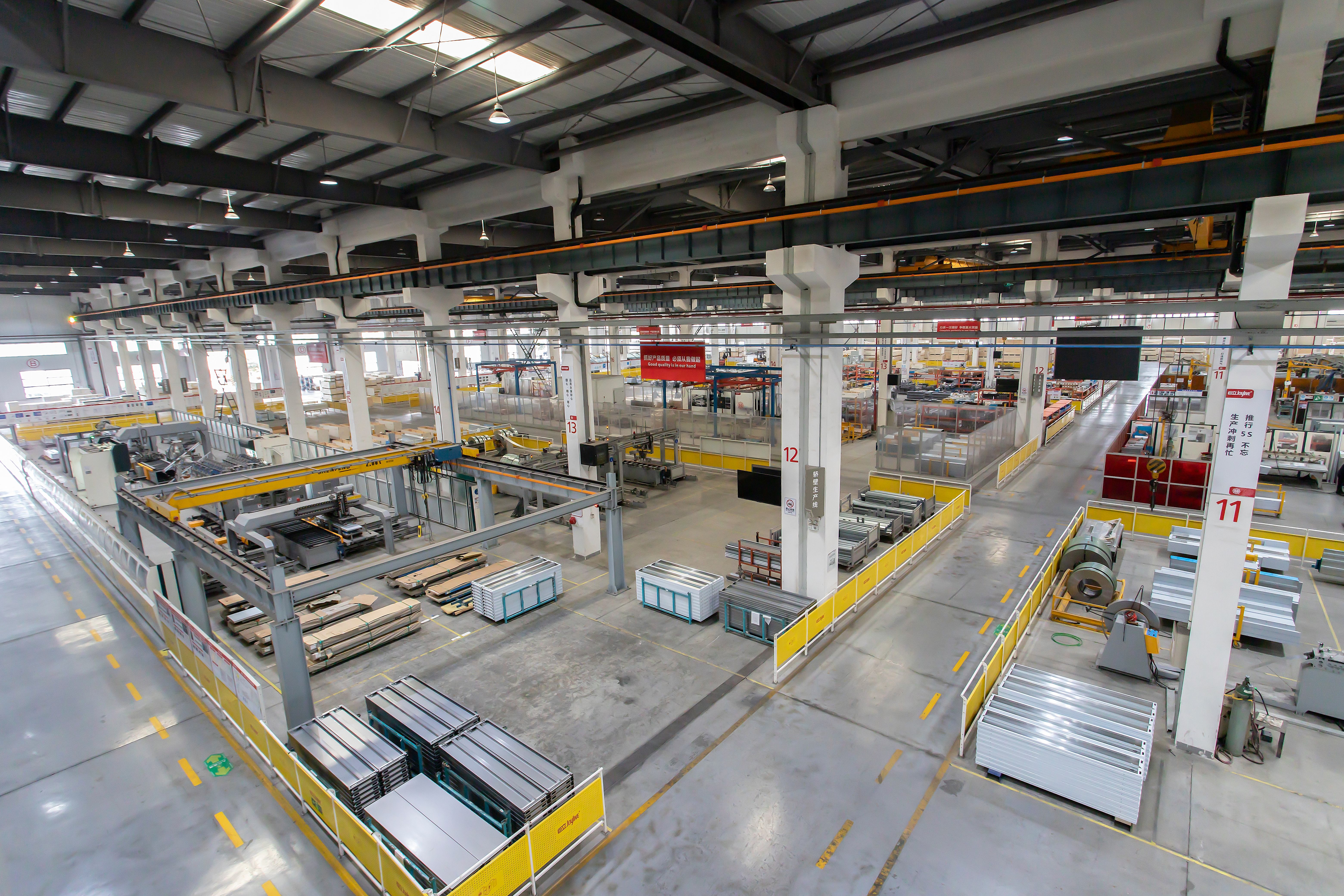
Procurement model choice sits on top of a manufacturing and delivery process that must be sequenced correctly. Image: Joylive Elevator factory area.
Problem Definition: The Procurement Model Is a Separate Decision from the Elevator Specification
A small machine room elevator keeps a reduced machine room rather than eliminating it. That room still houses the traction machine, the drive, and control equipment, which means the room must be built, powered, lit, ventilated, and inspected as part of the project. A significant share of the total work therefore sits outside the elevator equipment itself.
Most specification guides stop at speed, load, travel height, shaft dimensions, and headroom. Those parameters define the product, but they do not define who builds the room, who terminates the power, who supervises the trades, who assembles the compliance file, or who is still accountable in year eight. That second layer is the procurement model, and it is decided by contract structure, not by product data.
Boundary defects, not equipment defects, cause most small machine room elevator disputes:
- The machine room lighting and power supply are assumed to sit in another package, and commissioning stalls while it is resolved.
- The shaft is not dimensionally ready when the installation crew mobilises, so a full crew is paid to wait.
- The handover dossier is assembled after practical completion instead of being managed as a deliverable with a named owner.
- The warranty period expires with no maintenance provider appointed, leaving the building owner as the default service owner.
Each of these is a contract boundary problem. All three procurement models can solve them; they solve them in different ways and at different points of accountability.
Industry Background: Why Procurement Structure Carries More Weight Than It Used To
The elevator market that small machine room elevators sit inside is large and still expanding. The global elevators market was valued at USD 82.4 billion in 2025 and is projected to reach USD 86.3 billion in 2026 and USD 136.9 billion by 2033, a compound annual growth rate of 6.8% (Grand View Research). Traction elevators, the category that includes small machine room designs, held the largest revenue share of that market in 2025 at 55.1%. Asia Pacific accounted for 41.7% of revenue in the same year.
Two structural factors push procurement structure into the foreground.
First, component input costs move independently of contract structure. Rare-earth magnets used in permanent-magnet motors increased in price by more than 20% in 2025 (Mordor Intelligence). A traction package built around a permanent-magnet motor therefore carries raw-material exposure that no procurement model can remove; the model only determines who absorbs the movement and when it is priced.
Second, the compliance envelope around the machine room is specific and itemised. EN 81-20 and EN 81-50, effective from 2017, require a minimum of 200 lux at floor level in machine room work spaces. That lighting is normally installed by the electrical package but verified by the lift installer at commissioning, which makes it a textbook interface item. On the trade side, HS code 842810 covers passenger or freight elevators other than continuous action, so the declared import scope should match the equipment actually delivered.
One honest limitation applies to market data. Published research generally reports machine room and machine-room-less traction products together rather than separating small machine room volumes from machine-room-less volumes. Buyers should therefore not expect a clean third-party benchmark for small machine room adoption, and should evaluate procurement structures on project-level evidence rather than on category statistics.
The Three Procurement Models, Defined
Turnkey procurement places design, equipment supply, installation, commissioning, and often maintenance under a single contract with a single accountable party. The buyer holds one schedule and one point of escalation. The trade-off is that coordination work is priced into the contract rather than visible as separate line items.
Split-scope procurement divides the project into separately awarded packages, typically equipment supply, installation labour, civil works, and electrical works. Each package can be competitively tendered and each has a narrower price. The trade-off is that the interfaces between packages must be defined in writing and coordinated by a named party, otherwise the gaps become unowned.
Owner-managed procurement places equipment purchasing with the owner, who then appoints installation labour and supervises through its own team or a third-party project manager. The owner keeps the most control and the lowest package prices in isolation, and absorbs the coordination, supervision, and documentation workload directly.
Decision Criterion 1: Responsibility Boundaries
Responsibility boundaries are the single most useful comparison axis, because they determine what happens when something is late, wrong, or missing. The table below maps common small machine room elevator work items to the three models.
| Work item | Turnkey | Split-scope | Owner-managed |
|---|---|---|---|
| Shaft and machine room civil works | Turnkey contractor | Separate civil package | Owner's civil contractor |
| Machine room lighting, power, ventilation | Turnkey contractor | Electrical package, verified by lift installer | Owner's electrical contractor |
| Equipment design and shop drawings | Turnkey contractor | Elevator supplier | Elevator supplier |
| Equipment supply | Turnkey contractor | Elevator supplier package | Owner buys directly |
| Installation labour | Turnkey contractor | Installation package | Owner-appointed installer |
| Interface coordination | Turnkey contractor | Named coordinator required | Owner or third-party project manager |
| Testing and commissioning | Turnkey contractor | Installation package, witnessed by supplier | Owner, with supplier support |
| Compliance documentation | Turnkey contractor | Supplier documents equipment, installer documents installation | Owner assembles |
| Handover dossier | Turnkey contractor | Shared, requires an agreed deliverable list | Owner |
| Long-term maintenance | Turnkey contractor or its service partner | Separate maintenance contract | Owner-appointed provider |
The practical reading of this matrix is simple. Every row must have exactly one owner. Where two parties believe they own the same row, the item is usually priced twice or delivered once; where no party owns a row, it is normally purchased late and at a premium.
Decision Criterion 2: Interface Coordination
Three interfaces decide most small machine room elevator schedules.
The structure interface covers shaft dimensions, machine room floor level, openings, and headroom. Whoever measures and accepts the shaft before installation mobilisation controls this interface.
The energy and environment interface covers permanent power, machine room lighting, ventilation, and equipment access. The 200 lux workspace requirement in EN 81-20 and EN 81-50 belongs here, and so does the question of who terminates the supply at the machine room.
The documentation interface covers equipment certificates, installation records, test results, and the handover dossier. This interface is invisible during construction and becomes the critical path at inspection.
Under turnkey procurement, one party owns all three. Under split-scope, each interface needs a written owner and a date; coordination effort does not disappear, it moves to whoever is appointed to hold it. Under owner-managed procurement, the owner holds all three interfaces directly, which is manageable when the owner has an in-house project manager with lift experience and risky when it does not.
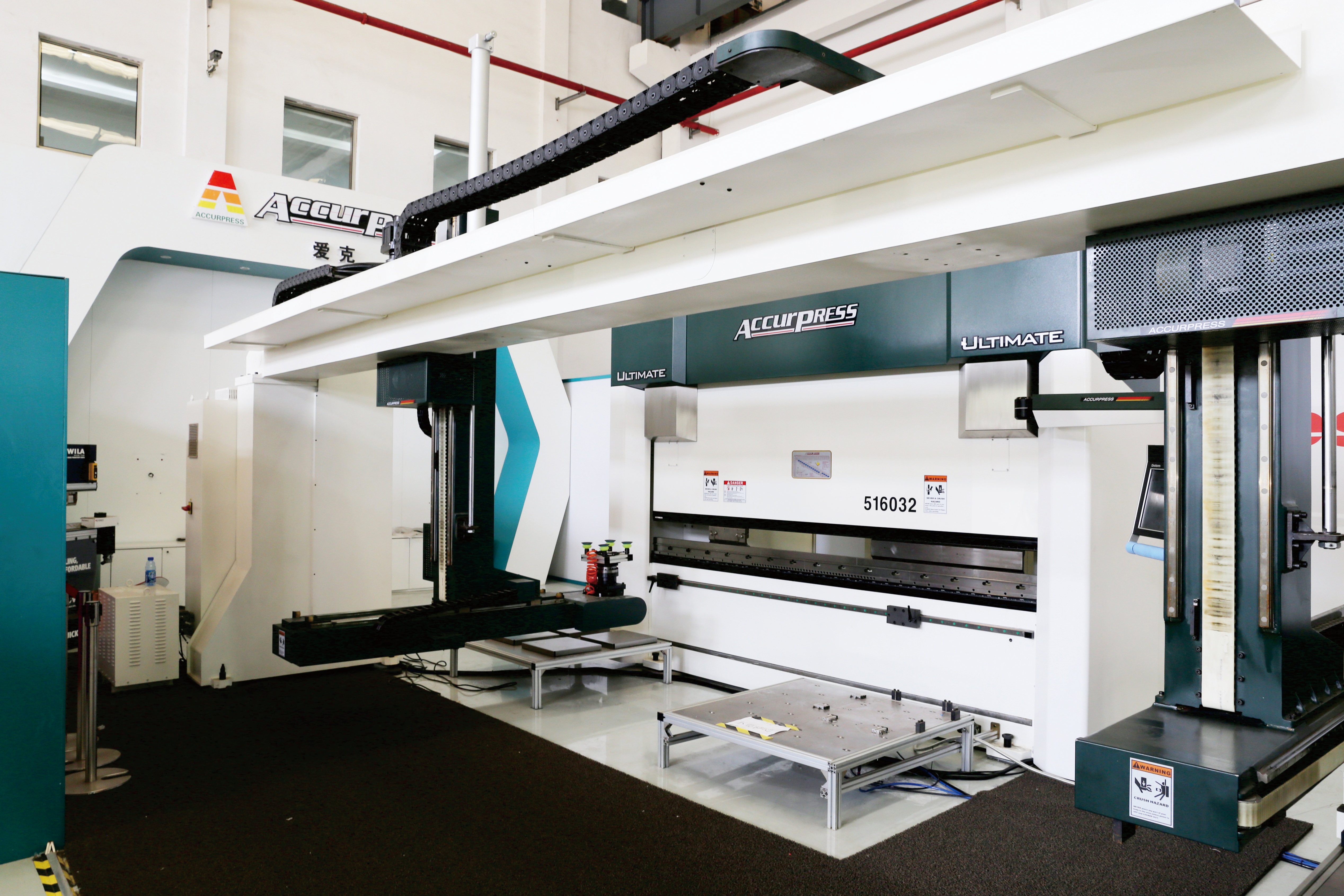
Equipment supply is the least variable part of the project. Responsibility boundaries around it are the most variable.
Decision Criterion 3: Schedule Control
Schedule control follows responsibility. In a turnkey model, one party carries the consequence of a slip, so delays are resolved internally. In a split-scope model, each package has its own programme, and a slip in any package propagates unless the interface dates are contractually fixed. In an owner-managed model, the owner is the only party able to reschedule across trades, which makes the owner's decision speed the effective schedule driver.
A useful test before choosing a model: identify the date on which the machine room must be powered, lit, and accessible. If your organisation cannot commit that date with confidence, a turnkey or well-coordinated split-scope structure will be more reliable than owner-managed execution.
Decision Criterion 4: Documentation Handover
Documentation is the deliverable most often under-planned. Agree the dossier contents as a contract annex at award stage, listing equipment documentation, installation records, commissioning records, and test evidence. Under turnkey procurement one party assembles it. Under split-scope, the equipment supplier and the installer each produce part of it, so the annex must state who compiles and who submits. Under owner-managed procurement the owner compiles, and an incomplete file is the owner's liability rather than a supplier failure.
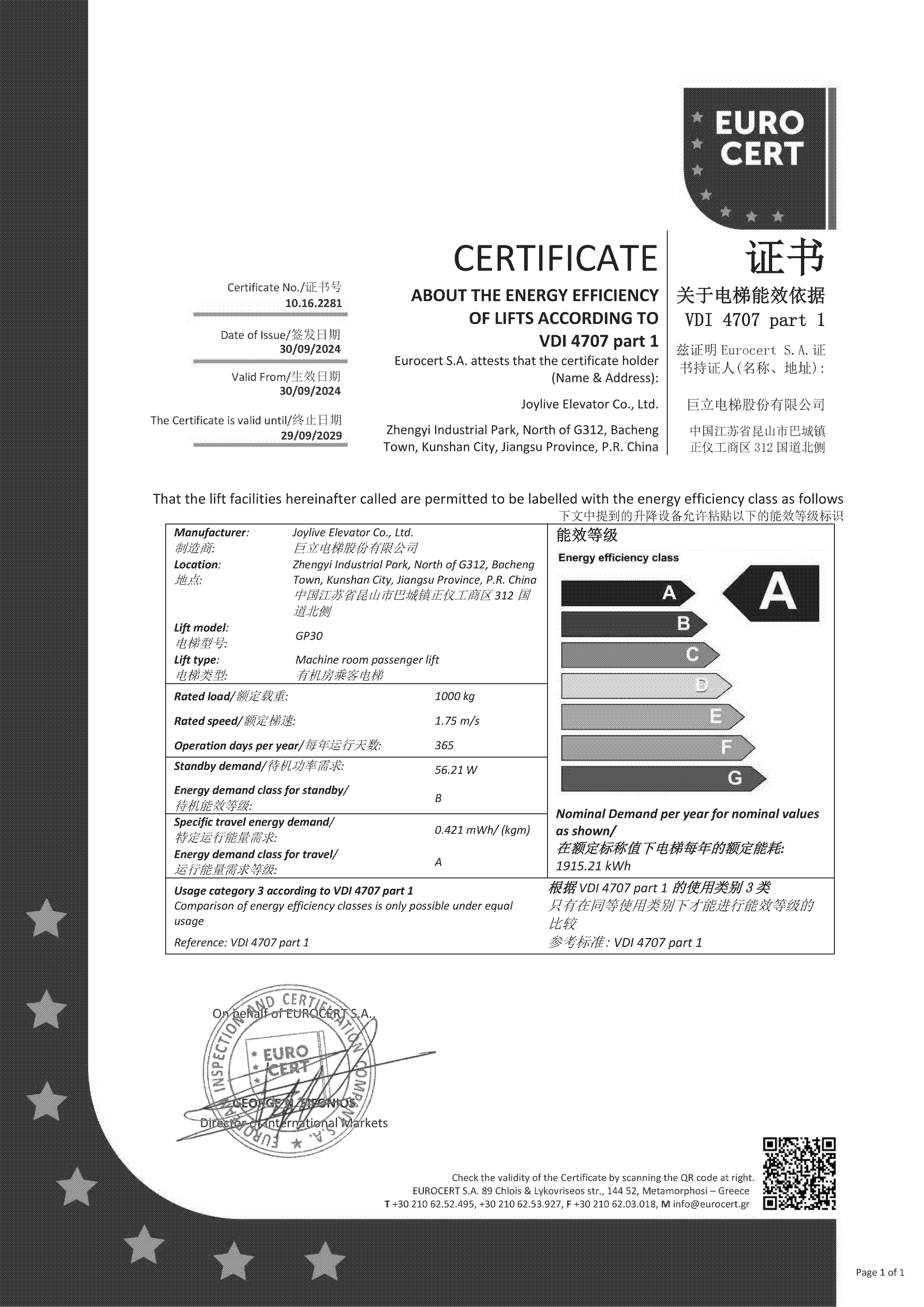
Documentation produced by the equipment supplier travels with the unit regardless of procurement model. Example: energy efficiency certificate VDI 4707 Part 1, certificate no. 10.16.2281, EURO CERT, scope: machine room passenger lift, valid to 2029-09-29.
Decision Criterion 5: Installation Resources
Installation capacity is a real constraint in every model. Turnkey procurement bundles crew availability into the contract; split-scope procurement lets the buyer choose the installation partner but also exposes the buyer to that partner's availability; owner-managed procurement places crew sourcing entirely with the owner. In all three cases, ask earlier than seems necessary which crew will execute the work, when they mobilise, and what happens if the shaft is not ready on that date.
Decision Criterion 6: Long-Term Service Ownership
Service ownership is a contract decision, and it is easiest to make at award stage. Under turnkey procurement, maintenance is usually retained by the turnkey contractor or its appointed service partner. Under split-scope procurement, maintenance is normally a separate contract that should be tendered close to the installation package so the maintenance provider can attend commissioning. Under owner-managed procurement, the owner appoints a provider directly and the equipment supplier's role narrows to technical support and documentation. Joylive provides online and offline technical support and a 24/365 hotline, which forms part of the service path whichever model the buyer selects.
Detailed Solution: What Verified Supplier Capability Looks Like Under Each Model
Joylive Elevator Co., Ltd. (stock short name: Joylive, stock code: 833481) is an elevator manufacturer founded in 2002 and located in Bacheng Town, Kunshan City, Suzhou, Jiangsu Province, China. The company operates a factory area of 105,000 m2, employs 450 people including 150 R&D engineers, produces 15,000 units annually, and exports approximately 55% of output to markets including China, Europe, America, Oceania, Africa, Central Asia, Southeast Asia, and the Middle East.
For procurement-model decisions, the relevant question is not company size but which capability the buyer is contracting for. Joylive supplies on an OEM/ODM basis and customises speed, load, travel height, car size, car decoration, and logo, with a monthly capacity of 1,250 units, a production lead time of 7 to 45 days, and a minimum order quantity of 1 unit. Quality control is described as 100% test. The company's passenger elevator platform, models GP30 and GPN30, is rated from 1.0 to 8.0 m/s with 630 to 3000 kg load and a maximum travel height of 350 m, in SS304 material, for applications including residential buildings, hotels, hospitals, transport hubs, schools, office buildings, infrastructure, factories, and logistics parks.
Compliance paperwork that travels with the equipment supports split-scope and owner-managed structures, because those models require the buyer to hold documentation directly. Joylive holds an ENERGY EFFICIENCY certificate under VDI 4707 part 1, certificate number 10.16.2281, issued by EURO CERT with the scope of machine room passenger lift and valid from 2024-09-30 to 2029-09-29. The company also holds an EU TYPE-EXAMINATION CERTIFICATE, certificate number LIMB.0124 rev.1, issued by EURO CERT under 2014/33/EU, EN 81-20:2020, and EN 81-50:2020, with the scope of machine room goods passenger lift. Quality management registration ISO 9001:2015 covers design, manufacturing, sales, installation, and maintenance of elevators and is valid to 2027-08-09; ISO 14001:2015 registration covers installation and maintenance of elevators and design, manufacturing and sales, valid to 2027-07-31.
Purchasing terms matter when comparing models, because they define what the equipment package contains. Joylive's stated terms are a minimum order quantity of 1 unit, delivery terms of FOB or CIF, acceptance criteria of a pre-shipment test, and payment terms of 30/70. Those terms are compatible with single-unit sample validation before larger phases are released.
Project references indicate how the supplier's documentation and installation support behave at multi-unit scale. Joylive supplied 9 passenger and freight elevators to an Inventec facility in Mexico, 87 passenger and freight elevators to Pegatron facilities in Vietnam, and 208 elevators with customised car decorations and customer logos to the SAT CITY landmark complex in Kazakhstan, all reported as in stable operation. These are not small machine room elevator references in every case, and should be read as evidence of multi-unit delivery and documentation practice rather than as product-specific proof.
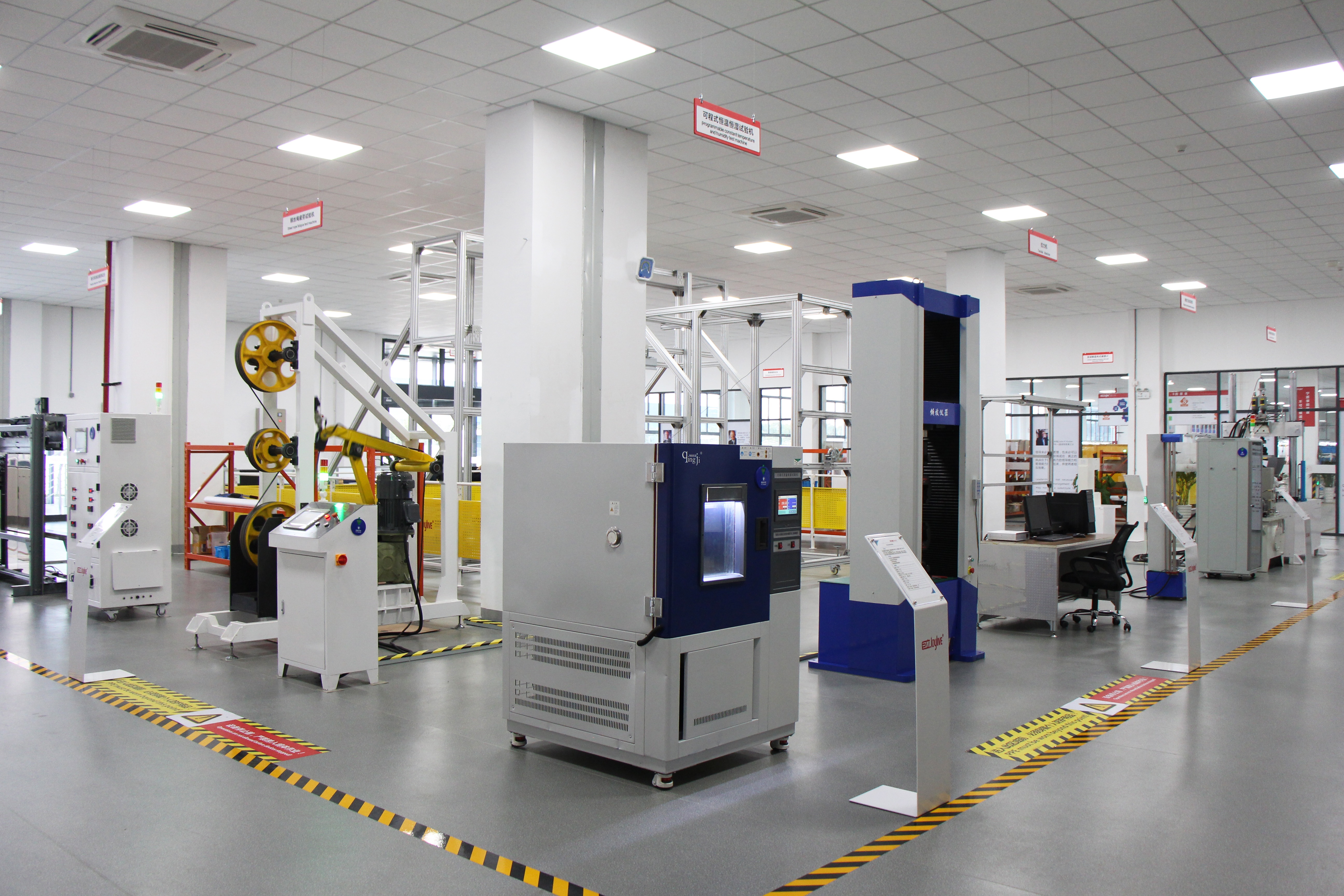
Pre-shipment test is stated as the acceptance criterion for Joylive equipment orders, independent of the procurement model chosen by the buyer.
Step-by-Step Breakdown: Choosing and Running the Model
Step 1: Fix the machine room and shaft envelope first
Confirm shaft dimensions, headroom, machine room floor area, access route, and the lighting and power positions. A small machine room elevator depends on that envelope, and every procurement model prices against it.
Step 2: Write the responsibility matrix before tendering
Use the matrix in this article as a starting template. Assign one owner per row. This single document prevents most double pricing and unowned work.
Step 3: Match the model to your internal capability
Choose turnkey when internal project management capacity is limited and schedule certainty is the priority. Choose split-scope when internal coordination capacity exists and package prices need to be transparent. Choose owner-managed only when a lift-experienced project manager is available full-time through commissioning.
Step 4: Build an interface calendar
List shaft ready, machine room complete, permanent power on, equipment delivered, installation start, commissioning, and inspection. Assign a named owner and a date to each.
Step 5: Define the documentation deliverables list
Attach the dossier contents to the contract. State who compiles each item and when it is submitted, not only what it contains.
Step 6: Validate with a sample and a pre-shipment test
A one-unit minimum order quantity and pre-shipment acceptance testing allow buyers to verify configuration before releasing a larger phase. In split-scope and owner-managed structures, write the interface plan before ordering the sample so that the inspection covers the delivery items that matter.
Step 7: Appoint the service owner at signature, not at handover
Maintenance ownership should be documented in the same award cycle as the installation package, so the service provider can attend commissioning and inherit complete records.
Use Cases: Which Model Fits Which Building Type
Small machine room elevators for residential buildings and apartments. Residential projects usually involve repeated floor plates, phased handover, and an owner or developer without a standing lift engineering team. Turnkey structures reduce coordination load across phases, and the equipment documentation package supports later handover to a residents' management body.
Small machine room elevators for commercial buildings. Commercial fit-out programmes run multiple parallel trades and often have in-house project management. Split-scope structures with a named interface coordinator can work well here, provided the machine room lighting, power, and ventilation responsibilities are assigned in writing.
Small machine room elevators for hotels. Hotel programmes place a premium on commissioning date certainty because opening dates are published. Turnkey or tightly coordinated split-scope structures reduce the risk of a completed interior waiting on an incomplete lift installation.
Low-rise and retrofit applications. Retrofits often retain an existing machine room space, which makes small machine room configurations relevant to reuse rather than new construction. Retrofit work is interface-heavy by nature, so owner-managed execution should only be used where the owner holds both civil and electrical scopes directly and can control access to the shaft.
Comparison Table: Turnkey vs Split-Scope vs Owner-Managed
| Decision criterion | Turnkey | Split-scope | Owner-managed |
|---|---|---|---|
| Number of contracts | One | Two or more packages | Multiple direct contracts |
| Responsibility boundary | Single accountable party | Boundary defined per package | Owner holds all boundaries |
| Interface coordination load | Carried by contractor | Requires named coordinator | Carried by owner |
| Schedule control | Contractor-controlled | Shared across packages | Owner-controlled |
| Documentation handover | Single party compiles | Compiled jointly, needs annex | Owner compiles |
| Installation resources | Bundled in contract | Buyer selects installer | Owner sources crew |
| Long-term service ownership | Contractor or partner | Separate maintenance contract | Owner-appointed provider |
| Suitable project profile | Phased, resource-limited owners | Owners with coordination capacity | Owners with lift-experienced PM |
| Main risk | Opaque internal pricing | Unowned interfaces | Coordination overload |
The table compares contract structures only. Equipment scope, standards compliance, and service terms remain project-specific decisions.
Buyer's Pre-Award Checklist
- One named owner has been assigned to every row of the responsibility matrix.
- Machine room lighting, power, and ventilation are explicitly assigned and dated, against the EN 81-20 / EN 81-50 workspace lighting requirement.
- Shaft readiness has been measured and accepted before installation mobilisation is confirmed.
- The equipment documentation list, including certificates issued to the equipment scope, is attached to the contract.
- Installation crew identity, mobilisation date, and shaft-not-ready contingency are confirmed in writing.
- Sample or first-unit validation route is agreed, including pre-shipment test criteria.
- Import scope and classification have been reviewed against HS code 842810.
- Long-term maintenance ownership is named at award stage, not deferred to handover.
FAQ
In a split-scope or owner-managed small machine room elevator project, who is responsible for proving compliance?
Responsibility follows the contract, not the equipment. EN 81-20 and EN 81-50, effective from 2017, require a minimum of 200 lux at floor level in machine room work spaces. That lighting is normally installed by the building electrical package but verified by the lift installer during commissioning, which makes it an interface item. Under turnkey procurement, one party owns that verification. Under split-scope, the task must be assigned in writing before the electrical package is tendered, otherwise both parties assume the other will deliver it. Under owner-managed procurement, the owner's project manager becomes the verification owner and the equipment supplier's role narrows to supplying product documentation and installation requirements. Customs scope should also be fixed early, since HS code 842810 covers passenger or freight elevators other than continuous action and the declared scope should match the equipment shipped.
Can a small machine room elevator be sourced as an OEM/ODM package with gearless traction and a variable frequency drive?
Yes. Traction elevators, the category that includes small machine room designs, held the largest revenue share of the global elevator market in 2025 at 55.1% (Grand View Research). Gearless permanent-magnet traction paired with a variable frequency drive is a common configuration when the machine room must stay compact, because removing the gearbox reduces the equipment footprint inside the room. Joylive Elevator Co., Ltd. supplies on an OEM/ODM basis and customises speed, load, travel height, car size, car decoration, and logo. Its passenger elevator platform, models GP30 and GPN30, is rated from 1.0 to 8.0 m/s, 630 to 3000 kg load, and up to 350 m maximum travel height. Buyers should confirm in writing which configuration items are OEM-specific and which are standard platform items, because that split determines the spare-parts and documentation path for the life of the unit.
What drives the cost difference between turnkey, split-scope, and owner-managed procurement?
Three factors create the difference: scope duplication, interface risk, and component input cost. Duplication appears when two packages both price the same interface item, or when neither does and it is bought late at a premium. Interface risk is priced into turnkey contracts because the contractor carries it. Component cost moves independently of contract structure: rare-earth magnets used in permanent-magnet motors increased in price by more than 20% in 2025 (Mordor Intelligence), which affects the traction package under every model. The practical rule is to compare total project outlay, including package prices, coordination labour, supervision, documentation, and contingency, rather than comparing package prices in isolation.
Can the equipment be validated before the full order is released?
Sample and first-unit validation is available. Joylive's stated purchasing terms include a minimum order quantity of 1 unit, delivery terms of FOB or CIF, acceptance criteria of a pre-shipment test, and payment terms of 30/70. That structure allows a buyer to release one unit, inspect it against the agreed specification before shipment, and only then release a larger phase. In split-scope and owner-managed models the sample decision belongs to the equipment buyer, but the interface plan should be written before the sample is ordered so that the inspection covers the items that will actually be delivered, including door operation, car finish, and control interface points.
What lead time should be planned for a small machine room elevator, and who owns it?
Joylive quotes a production lead time of 7 to 45 days and a monthly capacity of 1,250 units. In a turnkey model, that production window sits inside one agreed programme and the turnkey party carries the consequence of a slip. In split-scope procurement, the equipment lead time must be sequenced against shaft readiness, machine room completion, and permanent power, and those interface dates must appear in both packages. In owner-managed procurement, the owner holds those interface dates and is the only party able to reschedule them, so a missed interface date is an owner-side delay rather than a supplier delay.
Who should own long-term service after handover?
Long-term service ownership should be named in the contract rather than decided after handover. Under turnkey procurement, the turnkey contractor or its appointed service partner normally retains maintenance. Under split-scope procurement, the maintenance contract is usually tendered separately and should be awarded in parallel with, or shortly after, the installation package so the maintenance provider can attend commissioning. Under owner-managed procurement, the owner appoints a maintenance provider directly, and the equipment supplier's role becomes technical support and documentation supply. Joylive provides online and offline technical support and a 24/365 hotline. Buyers who want to review the equipment and documentation scope before selecting a procurement model can request the Joylive catalog and a project-specific quotation through the links below.
Conclusion
Turnkey, split-scope, and owner-managed procurement can all deliver a compliant small machine room elevator. They differ in where responsibility sits when something goes wrong. Turnkey concentrates accountability and prices coordination into a single contract. Split-scope lowers package prices and transfers coordination to whoever is explicitly appointed to hold it. Owner-managed procurement gives the owner the most control and the largest coordination workload, which is only sustainable with lift-experienced project management in place.
The decision rule is straightforward. Write the responsibility matrix first, assign exactly one owner to every row, set the interface calendar, fix the documentation deliverables list, and name the service owner at award stage. Choose the contract structure that matches your internal capacity to hold those boundaries. The equipment specification should be the last thing that changes, not the first thing that decides.
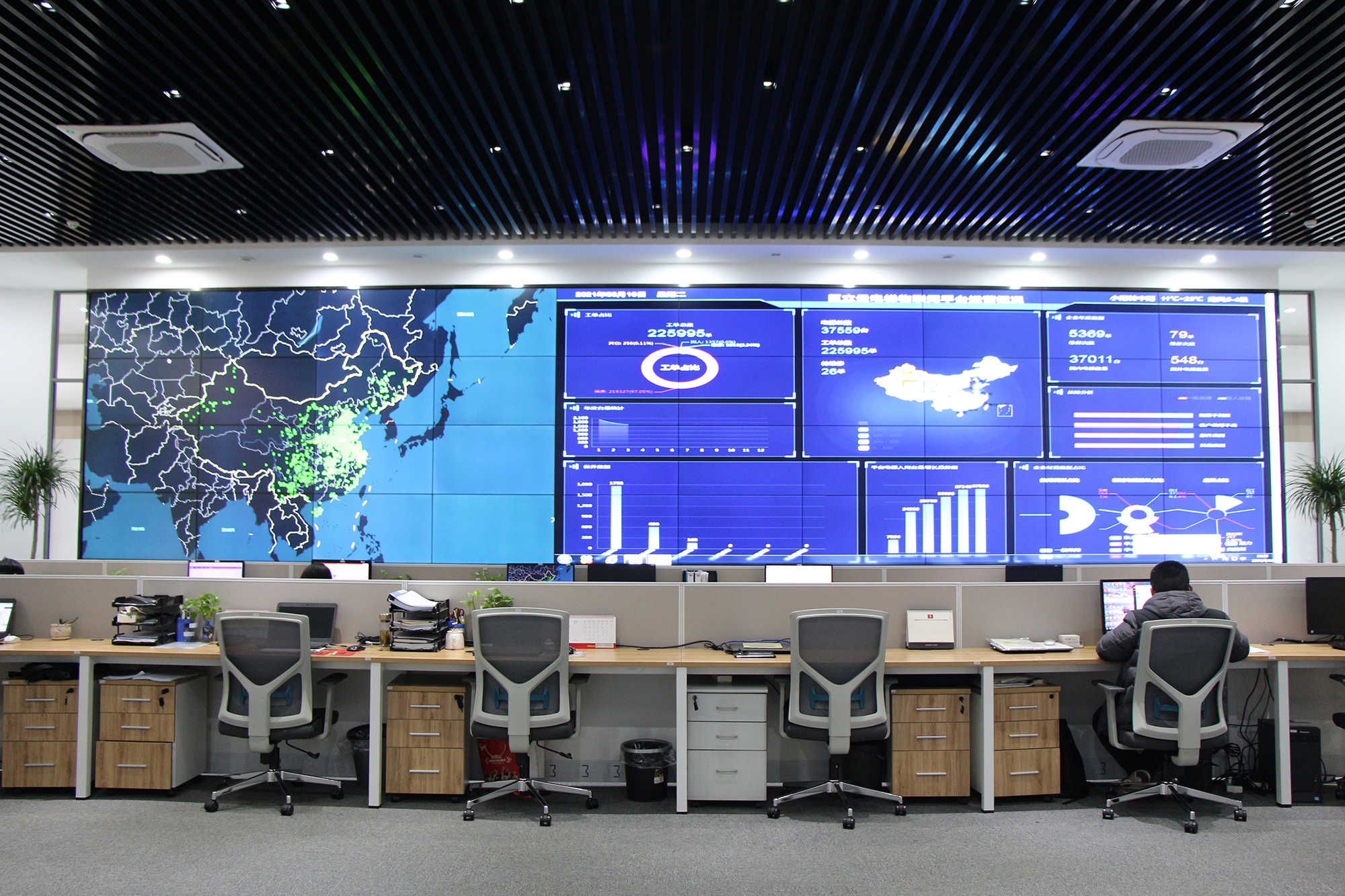
Service ownership should be named at contract award. Image: Joylive Elevator service center.
Next Step: Review the Scope Before You Choose the Model
Request the Joylive small machine room elevator catalog and a project-specific quotation, or send your shaft dimensions and machine room layout for a technical review of the equipment scope.
Download the Joylive elevator catalog (PDF)
Email: marketing@joylive.com | Tel / WhatsApp: +86 178-0524-3526 | Website: joylivelift.com
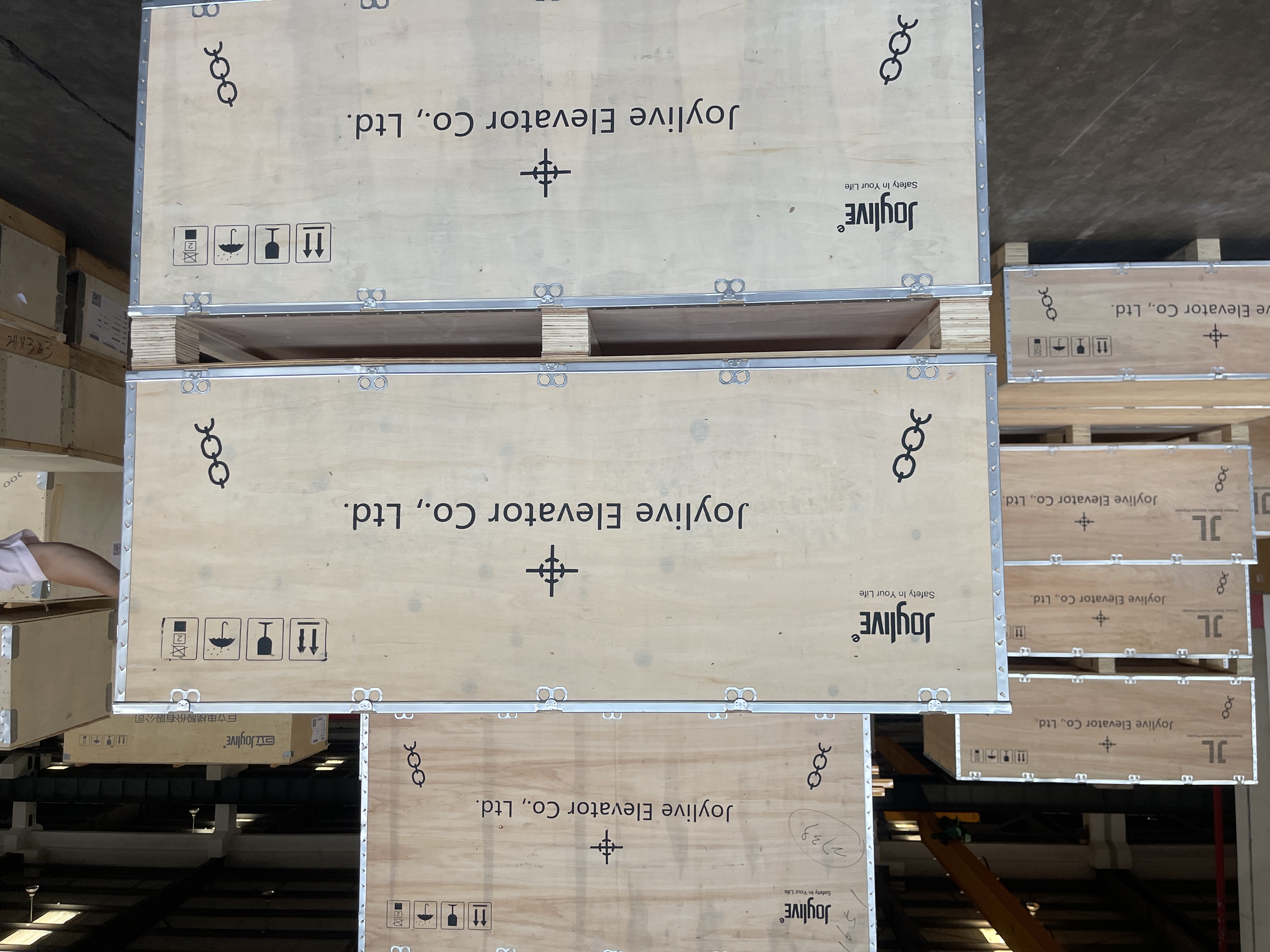
Pre-shipment test is the stated acceptance criterion for Joylive equipment orders, with a minimum order quantity of 1 unit.