Small Machine Room Elevator: Prescriptive vs. Performance-Based Acceptance Criteria — A Head-to-Head
A small machine room elevator can be purchased, inspected and closed out under two different acceptance logics, and the choice decides who carries the risk when the installed unit does not behave as the project expected. Prescriptive acceptance criteria define the product by specified components, specified methods and specified documents — the buyer accepts what conforms to the written requirement. Performance-based acceptance criteria define the product by outcomes that must be demonstrated, such as rated load and speed achievement, ride behaviour, door timing, energy use at an agreed operating profile, availability and fault response — the buyer accepts what an agreed test protocol proves. One framework buys comparability and documentary certainty. The other buys engineering flexibility and an outcome obligation that has to be measured.
This head-to-head compares the two frameworks in the place where they diverge commercially: inspection, submittals and closeout. It then maps the trade-offs in risk allocation, flexibility and project control, and closes with a decision sequence that ties the criteria framework to the building's regulatory context and the project's delivery method.
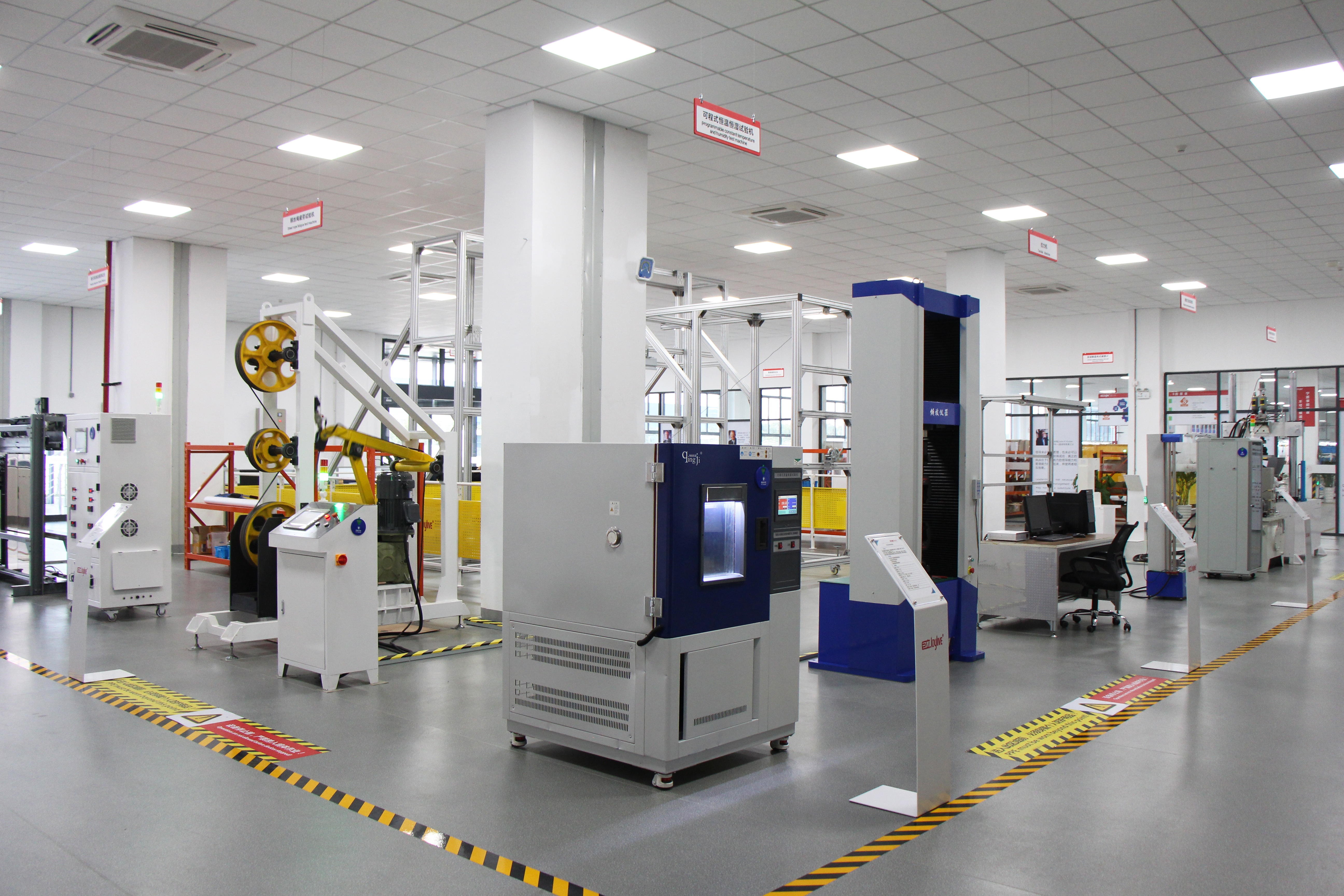
Core answer: prescriptive criteria are the stronger instrument when the design is complete before tender and bids must be compared like-for-like; performance-based criteria are the stronger instrument when the supplier engineers the machine room arrangement and the project carries outcome commitments. Neither is safer by default — the risk moves, it does not disappear.
Problem Definition: What “Acceptance” Actually Settles
Acceptance criteria are not a technical annex appended for completeness. They are the clause set that determines when the buyer's payment obligation becomes unconditional. Three purchasing terms carry almost all of the argument:
- Inspection — who witnesses what, at which stage, against which reference, and what happens when a result lands at the boundary rather than comfortably inside it.
- Submittals — which documents the supplier must deliver before manufacture, which of them the buyer is entitled to reject, and what a rejection actually stops.
- Closeout — which records constitute handover, and what the buyer can still require after the elevator is carrying passengers.
A contract phrase such as “inspection and acceptance in accordance with applicable standards” reads as safe drafting and is frequently the origin of the dispute. Applicable standards set minimum safety requirements; they do not state whether a compliance dossier is sufficient or whether a witnessed running test is required. When the framework is not named, each party reads the phrase in the way that suits its exposure, and the gap surfaces at the least convenient moment — during commissioning, when the shaft is finished and the handover date is fixed.
Compact machine room configurations intensify the problem. The machine room is small and shared with other building services, so inspection access, working space and lighting become part of the acceptance conversation rather than an afterthought. A framework that ignores how the room will actually be inspected tends to produce conditions that cannot be verified in the space provided.
Industry Background: Scale, Standards and Cost Pressure Behind the Choice
Elevators are a large and still expanding equipment category, and traction technology dominates it. Grand View Research values the global elevators market at USD 82.4 billion in 2025, projects USD 86.3 billion for 2026 and USD 136.9 billion by 2033 at a CAGR of 6.8%. The same source reports that the traction elevator segment — the segment that contains small machine room and machine-room-less configurations — held a 55.1% revenue share in 2025, and that Asia Pacific accounted for 41.7% of global revenue in the same year. Buyers sourcing from Asian manufacturing bases are therefore operating in the densest part of the supply market, where specification and acceptance language, rather than availability, is the differentiator between competing offers.
Regulation pushes in the prescriptive direction even inside performance-worded standards. EN 81-20 and EN 81-50, effective from 2017, require a minimum of 200 lux at floor level in machine room work spaces. That is a numeric, checkable requirement: it belongs on an inspection sheet, not in an outcome statement. Comparable prescriptive clauses exist across jurisdictions for access, guarding and lighting. A performance-based framework does not remove them — it sits on top of them, and the mandatory checks remain preconditions that any outcome test must satisfy.
Cross-border purchasing adds a documentation layer. Passenger or freight elevators other than continuous action are classified under HS code 842810, so the commercial invoice, the technical file and the acceptance record travel together through customs and through the buyer's internal audit. Where the acceptance record is a signed test report rather than a certificate set, the buyer should confirm in advance that the document will satisfy both the customs file and the finance file.
Cost volatility is the third pressure. Rare-earth magnets used in permanent-magnet motors rose in price by more than 20% in 2025, according to Mordor Intelligence. Where a performance-based framework fixes an outcome without a price-adjustment mechanism, the supplier absorbs a material cost movement it does not control, and typically responds in one of two ways: pricing the risk into the bid, or proposing a technical substitution at submittal stage. Either response changes the buyer's commercial position, which is why acceptance wording is now a procurement decision rather than a legal formality.
| Reference point | Value | Source |
|---|---|---|
| Global elevators market, 2025 | USD 82.4 billion | Grand View Research |
| Market projection, 2026 / 2033 | USD 86.3 billion / USD 136.9 billion, CAGR 6.8% | Grand View Research |
| Traction elevator revenue share, 2025 | 55.1% | Grand View Research |
| Asia Pacific revenue share, 2025 | 41.7% | Grand View Research |
| Machine room lighting requirement | Minimum 200 lux at floor level in machine room work spaces (EN 81-20 / EN 81-50, effective 2017) | Designing Buildings Wiki |
| Trade classification | HS 842810 — passenger or freight elevators other than continuous action | Flexport / Descartes Datamyne |
| Rare-earth magnets for permanent-magnet motors, 2025 | Price increase of more than 20% | Mordor Intelligence |
Prescriptive Acceptance Criteria: Defining the Elevator by Method
Under a prescriptive framework, the purchase order and its technical annex describe the elevator as a set of specified elements: the traction machine type, the drive arrangement, the control cabinet arrangement and its position in the compact machine room, the car and door configuration, the safety gear, the materials, and the installation method. Acceptance is conformance to that description.
Inspection is staged and document-anchored. Hold points are typically set at submittal approval, pre-shipment, installation completion and commissioning, and each hold point carries a checklist derived from the technical annex plus the mandatory standard clauses — machine room lighting at the required floor-level value being the simplest example. The inspector is verifying that what was specified was supplied and installed, not that a particular behaviour was achieved.
Submittals form a conformance dossier: component datasheets, certificates for safety components, compact machine room layout drawings, control cabinet dimensions and clearances, structural loading information, wiring diagrams and installation method statements. Rejection is normally a documentary event — a certificate absent, a datasheet showing a different component, a layout that does not fit the room as drawn.
Closeout is record-based: as-built drawings, test certificates, maintenance manuals, a spare parts list, the warranty statement and the signed inspection checklist. Handover completes when the file is complete.
The trade-off is symmetrical. Bids become comparable because every bidder prices the same listed elements; the buyer's verification workload is low because the evidence is documentary; and the specification is easy to audit later. The cost is engineering freedom. A supplier that can meet the outcome with a different machine or a tighter control cabinet arrangement has no route to propose it without triggering a variation — and if the specified design turns out not to deliver the outcome the project actually needed, the buyer owns that gap, because the supplier delivered exactly what was written.
Performance-Based Acceptance Criteria: Defining the Elevator by Demonstrated Result
A performance-based framework states the outcomes the installation must demonstrate and leaves the means to the supplier. For a small machine room elevator, typical outcome statements cover rated load and rated speed achievement, ride behaviour under defined conditions, door operation timing, energy consumption over an agreed operating profile, noise at defined positions, availability, and the response of the system to defined fault scenarios.
Inspection changes character: it becomes witnessed testing against a verification protocol that the supplier proposes and the buyer approves before manufacture. That protocol has to fix the measurement conditions — load distribution, travel cycle, ambient conditions, instrument accuracy, number of runs, thresholds and the treatment of results that land at the boundary — otherwise the outcome statement is not testable and the framework transfers nothing.
Submittals shift from a component list to evidence of method: design calculations, the verification plan, instrument calibration records, type-test or simulation reports where the supplier relies on them, and the operating profile that will be used during testing. The rejection question changes from “is this the specified part?” to “does this method prove the outcome?”
Closeout becomes evidence of demonstrated performance: signed test records with raw data, the verification report, the agreed operating profile and the as-commissioned configuration. Handover completes when results are shown, not when paperwork is complete.
The trade-off here is also symmetrical. The supplier can select the machine, drive and control arrangement that fits a compact room most efficiently, provided the protocol still passes; outcome risk moves to the party that designed the solution. In exchange, the buyer needs technical capacity to approve a protocol, bid comparison becomes harder because bidders propose different means, and definition risk stays firmly with the buyer — a vaguely worded outcome statement is worse than no statement at all, because it looks like protection without providing any.
Head-to-Head on Inspection, Submittals and Closeout
Inspection. Prescriptive inspection is predictable: fixed hold points, a checklist tied to the annex, a pass or fail on conformance. Its weakness is that a conforming installation can still disappoint in service, because the checklist never asked how the elevator behaves. Performance-based inspection answers the behaviour question directly but moves the argument to measurement — instrument choice, test conditions and boundary results become the new dispute surface.
Submittals. The prescriptive register protects the buyer against substitution; the performance register protects the buyer against an unproven method. Most procurement failures in this category come from mixing the two without saying so — asking for outcome guarantees while reviewing submittals only as a parts list, then discovering at commissioning that no verification plan exists.
Closeout. A documentary closeout is fast to administer and easy to audit; a demonstrated-performance closeout is slower and produces evidence that is far more useful for maintenance planning, insurance and future modernization decisions. Which is preferable depends on how long the owner intends to hold the asset and whether performance commitments continue after handover.
Comparison Table: Prescriptive vs. Performance-Based Acceptance
The table describes decision logic rather than product performance. It makes no claim that either framework produces a better elevator; it shows where each one places control, cost and risk.
| Dimension | Prescriptive acceptance | Performance-based acceptance |
|---|---|---|
| What the purchase order states | Specified machine, drive, control cabinet arrangement, car and door configuration, materials, installation method | Outcomes to be demonstrated: load and speed achievement, ride behaviour, door timing, energy use at an agreed profile, availability, fault response |
| Basis of inspection | Conformance checks against the technical annex plus mandatory standard clauses, at fixed hold points | Witnessed testing against a verification protocol agreed before manufacture |
| Submittal focus | Component datasheets, safety component certificates, layout and wiring drawings, method statements | Design calculations, verification plan, instrument calibration, type-test or simulation reports, operating profile |
| Closeout evidence | Complete document set: as-built drawings, certificates, manuals, spare parts list, signed checklist | Signed test records with raw data, verification report, as-commissioned configuration |
| Who carries outcome risk | The buyer, if the specified design does not deliver the expected result | The supplier, provided the outcome statement and protocol are precise |
| Who carries definition risk | The buyer, as author of the specification | The buyer, as author of the verification protocol |
| Supplier engineering freedom | Limited; a substitution becomes a variation | Broad; alternative solutions are admissible if the agreed protocol passes |
| Bid comparability | High — bids are like-for-like on the listed elements | Lower — bidders propose different means to the same outcome |
| Buyer technical load | Heavier at specification, lighter at verification | Heavier at protocol approval and at verification |
| Typical fit by delivery method | Design-bid-build with a complete design before tender | Design-build or supplier-engineered packages with outcome commitments |
Risk Allocation, Flexibility and Project Control
Risk allocation. Prescriptive criteria separate conformance risk from fitness-for-purpose risk: the supplier carries the first, the buyer carries the second. Performance-based criteria transfer both to the supplier, but only to the extent that the outcome statement is measurable and the protocol is agreed before manufacture. In practice, the residual risk that never transfers is definition risk, and it stays with the buyer in both frameworks.
Flexibility. A compact machine room rewards engineering judgement — machine selection, control cabinet arrangement and drive choice interact with the available space. Prescriptive criteria freeze those choices early and protect the buyer against uncontrolled substitution; performance criteria allow the supplier to optimise them, at the cost of a wider range of proposed solutions to evaluate. Where the machine selection includes a permanent-magnet gearless arrangement, the supplier's freedom to choose becomes commercially significant, given the 2025 movement in rare-earth magnet prices reported by Mordor Intelligence.
Project control. Prescriptive frameworks front-load control into submittals: certainty arrives early, before manufacture, and schedule risk is largely confined to document turnaround. Performance frameworks back-load control into verification: certainty arrives late, and a failed test at commissioning is expensive because the building is otherwise complete. The delivery method therefore decides more than the specification style. Where the design is fixed and the contract is let on completed drawings, prescriptive criteria align with how the project is actually run. Where the supplier is expected to engineer the machine room arrangement, a performance-based framework with a jointly agreed protocol keeps control where the knowledge sits.
Step-by-Step: Selecting and Writing the Framework
- Confirm the regulatory position first. Identify the authority having jurisdiction and establish whether acceptance is code-driven, contract-driven or both. Where the code prescribes a check — machine room lighting at a minimum of 200 lux at floor level under EN 81-20 and EN 81-50 is a clear example — that check enters the acceptance package regardless of which framework is chosen.
- Classify the delivery method. If the design is complete before tender and the contract is let on drawings, prescriptive criteria match the process. If the supplier is expected to engineer the machine room arrangement, performance criteria or a documented hybrid match it better.
- Split the scope into conformance items and outcome items. Most real projects are hybrids. Mandatory safety, interface and space items are naturally prescriptive; ride behaviour, door timing, energy use and availability are naturally outcome-based. Writing the split explicitly removes the ambiguity that produces closeout disputes.
- Write the inspection regime, not just the inspection list. Specify hold points, notice period, witness rights, the documents that must be available at each hold point, and the consequence of a failed hold point. An inspection clause without a consequence is advisory.
- Build the submittal register with a rejection rule. For each document, name the reviewer, the response time and what happens if it is not provided. Include the compact machine room layout, the control cabinet arrangement and structural loads where those are the project's binding constraints.
- Define the verification protocol for every outcome. Fix measurement conditions, instruments, number of runs, thresholds and the treatment of boundary results. Add a joint re-test step before retention is released, so that a marginal first result does not escalate straight into a commercial claim.
- Fix the closeout package at tender stage. List the documents and test records at the point of pricing, and attach a payment milestone to their delivery. Closeout lists written at handover are negotiating positions, not requirements.
- Test the framework against the bidders' documentation capability. Asking for verification data that a bidder cannot produce results in a padded price or a dispute. Match the framework to evidence the market can actually deliver, and confirm this before award rather than after.
Use Cases: Matching the Framework to the Building
Residential buildings and apartments. Low-rise residential projects usually repeat a standard passenger configuration across floors, and the owner's priority is comparability and predictable maintenance rather than bespoke engineering. Prescriptive criteria on components and interfaces, combined with outcome items for noise and door timing, keep bids comparable while still protecting the tenants' experience.
Commercial buildings and hotels. Guest-facing performance matters more than component identity, and multi-unit projects are often handed over in phases. Performance-based criteria on ride behaviour, door timing and availability — with a witnessed protocol and a defined operating profile — fit this setting, supported by prescriptive criteria for safety components and interfaces.
Low-rise retrofits and reduced shaft space. When an existing structure constrains the machine room footprint and headroom, the interfaces cannot be left to the supplier. Prescriptive treatment of dimensions, loads and access is the practical route; outcome items can still cover what the installed unit must achieve. Measure conditions in occupied buildings carefully, because a protocol written for an empty building may not be reproducible once the premises are in use.
Projects with energy or availability commitments. Where the owner has committed to an energy or uptime outcome, performance-based acceptance is the only framework that produces the evidence. It requires a defined operating profile and a protocol agreed before manufacture; without those two documents the commitment remains a marketing statement rather than a contractual one.

Verifying the Manufacturer Against Either Framework
Either framework collapses if the supplier cannot produce the documents or the test evidence it implies. Joylive Elevator Co.,Ltd. — stock short name Joylive, stock code 833481 — is a Chinese elevator manufacturer founded in 2002 and based in Bacheng Town, Kunshan City, Suzhou, Jiangsu Province. The company operates a 105,000 m² manufacturing site with 450 employees, of whom 150 are engineers, and reports an annual output of 15,000 units. Its product scope covers passenger elevators, freight elevators, home lifts, commercial elevators, hospital elevators, panoramic elevators, escalators, moving walks, dumbwaiters and elevator modernization, and it exports to Europe, America, Oceania, Africa, Central Asia, Southeast Asia and the Middle East, with exports representing 55% of output.
Two capability points are directly relevant to acceptance. The first is a nationally accredited CNAS laboratory, which supports the production of verification data rather than certificate-only evidence. The second is a top A qualification in China for special equipment manufacturing, installation, modernization and maintenance, which keeps installation inside the same quality system as manufacturing — the condition that makes an installation record meaningful at closeout. Joylive is also an intelligent service demonstration enterprise of MIIT and a national high-tech enterprise, and Craft.co reports annual revenue of ¥299.12 million for FY 2024.

Four requests test a supplier against either framework within a week: a specimen submittal package from a comparable project, a specimen verification protocol showing measurement conditions and thresholds, a specimen closeout index, and the calibration status of the instruments used during testing. A supplier that answers all four can execute a prescriptive or a performance-based contract; a supplier that answers only the first can execute a documentary one.
Company information and technical documentation are available at joylivelift.com.
Frequently Asked Questions
Do prescriptive and performance-based acceptance criteria both have to reference EN 81-20 and EN 81-50?
Neither framework replaces mandatory standards. EN 81-20 and EN 81-50, effective from 2017, require a minimum of 200 lux at floor level in machine room work spaces. Prescriptive criteria usually quote such clauses directly into the inspection checklist; performance-based criteria keep them as preconditions that any outcome test must satisfy. Which standards apply to a specific project depends on the jurisdiction and the authority having jurisdiction, so the applicable edition should be confirmed in writing before tender.
Can a single small machine room elevator manufacturer support both frameworks?
Supporting both is a documentation and engineering question rather than a product question. A prescriptive framework needs a component-level compliance dossier; a performance-based framework needs design calculations, a verification protocol and measured test records. Joylive Elevator Co.,Ltd., founded in 2002 with a 105,000 m² facility, 450 employees including 150 engineers and an annual output of 15,000 units, maintains a nationally accredited CNAS laboratory and a top A qualification in China covering manufacturing, installation, modernization and maintenance — the two capabilities most directly tied to producing verification data and installation records. Buyers should still request specimen documents before award.
Which acceptance framework costs more?
There is no verified cost comparison for the two frameworks as such; the difference sits in the scope of verification, documentation and component freedom. Two drivers are observable. First, witnessed testing adds inspection and possible re-test effort that a document-only checklist does not require. Second, component cost is volatile: rare-earth magnets for permanent-magnet motors rose in price by more than 20% in 2025, according to Mordor Intelligence. A performance-based framework that fixes outcomes without a price-adjustment clause pushes that volatility onto the supplier, who will either price it in or propose a substitution at submittal stage.
What belongs in the submittal register under each framework?
Under a prescriptive framework the register is a conformance dossier: component datasheets, safety component certificates, compact machine room layout drawings, control cabinet arrangement, structural loading, wiring diagrams and installation method statements. Under a performance-based framework it shifts to evidence of method: design calculations, the verification plan, instrument calibration records, type-test or simulation reports and the operating profile to be used in testing. In both cases the register should name the reviewer, the response time and the consequence of a rejected submittal, because an unenforced register does not allocate risk.
How do I obtain a quotation or a sample documentation package?
Start with the acceptance framework, not the price. Send the building type, the available machine room footprint and the regulatory jurisdiction, and ask for three items: a specimen submittal package from a comparable project, a specimen verification protocol, and a closeout index. Joylive Elevator Co.,Ltd. supplies these on request through Marketing@joylive.com or +86 178-0524-3526, and publishes a downloadable catalogue; the technical team can also review an existing specification and mark which clauses are prescriptive, which are outcome-based and which are currently unenforceable.
Conclusion: Choose the Framework You Can Actually Enforce
Prescriptive acceptance criteria deliver comparability and documentary certainty; performance-based criteria deliver flexibility and transfer outcome risk. Neither is automatically safer, because the risk moves rather than disappears. The practical decision rule is short: if the design is complete at tender and the project is delivered on completed drawings, a prescriptive framework is the lower-friction route; if the supplier engineers the machine room arrangement and the project carries outcome commitments, a performance-based framework with a jointly agreed verification protocol is the more enforceable instrument. Most projects are better served by a documented hybrid that names which items are conformance-based and which are outcome-based.
Three conditions decide whether the chosen framework survives contact with commissioning: the framework is named in the contract rather than implied, the verification conditions are written before award rather than during handover, and the supplier has demonstrated it can produce the evidence the framework requires. Everything else is negotiation.

Next step: review the specification before pricing it
Download the Joylive product catalogue, or send an existing small machine room elevator specification for a clause-level review of inspection, submittal and closeout wording.
Download the catalogue (PDF) | joylivelift.com | Marketing@joylive.com
Joylive Elevator Co.,Ltd., No. 322, Maoxu Rd., Bacheng, Kunshan, Suzhou City, Jiangsu Province, China. Tel: +86 178-0524-3526.
Have Questions or Need More Details?
Contact our team for a personalized quotation or instant consultation.
Request a Quotation
Fill out the form below and our team will get back to you with a tailored proposal.
WhatsApp Direct Chat
Prefer to chat in real-time? Message us on WhatsApp for instant assistance & quick answers.
- Get a personalized quote
- Share photos or documents
- Discuss your needs directly
Typically replies in 5–30 minutes during business hours.