
Small Machine Room Elevator Selection: Specs and Procurement Alignment
A small machine room elevator package is defined by a set of selection parameters, not by a single model name. For an engineer or procurement team at the evaluation-to-execution stage, the practical task is to turn measured building constraints into a requirement schedule that every bidder prices in the same way and every handover check can verify. The schedule should connect four things: the building interface, the elevator equipment, the purchasing terms, and the acceptance evidence. When those four are written together, the buyer can compare quotations without guessing and can test delivery against the same definitions used at award.
The term small machine room is project-specific. It describes a configuration in which the elevator retains a machine room, but the machine room plan, headroom, access, or shaft interface is constrained enough that layout and equipment selection must be coordinated before quotation. The only reliable basis for procurement is the measured interface and the supplier's approved layout drawing, not a generic label such as compact or space-saving.
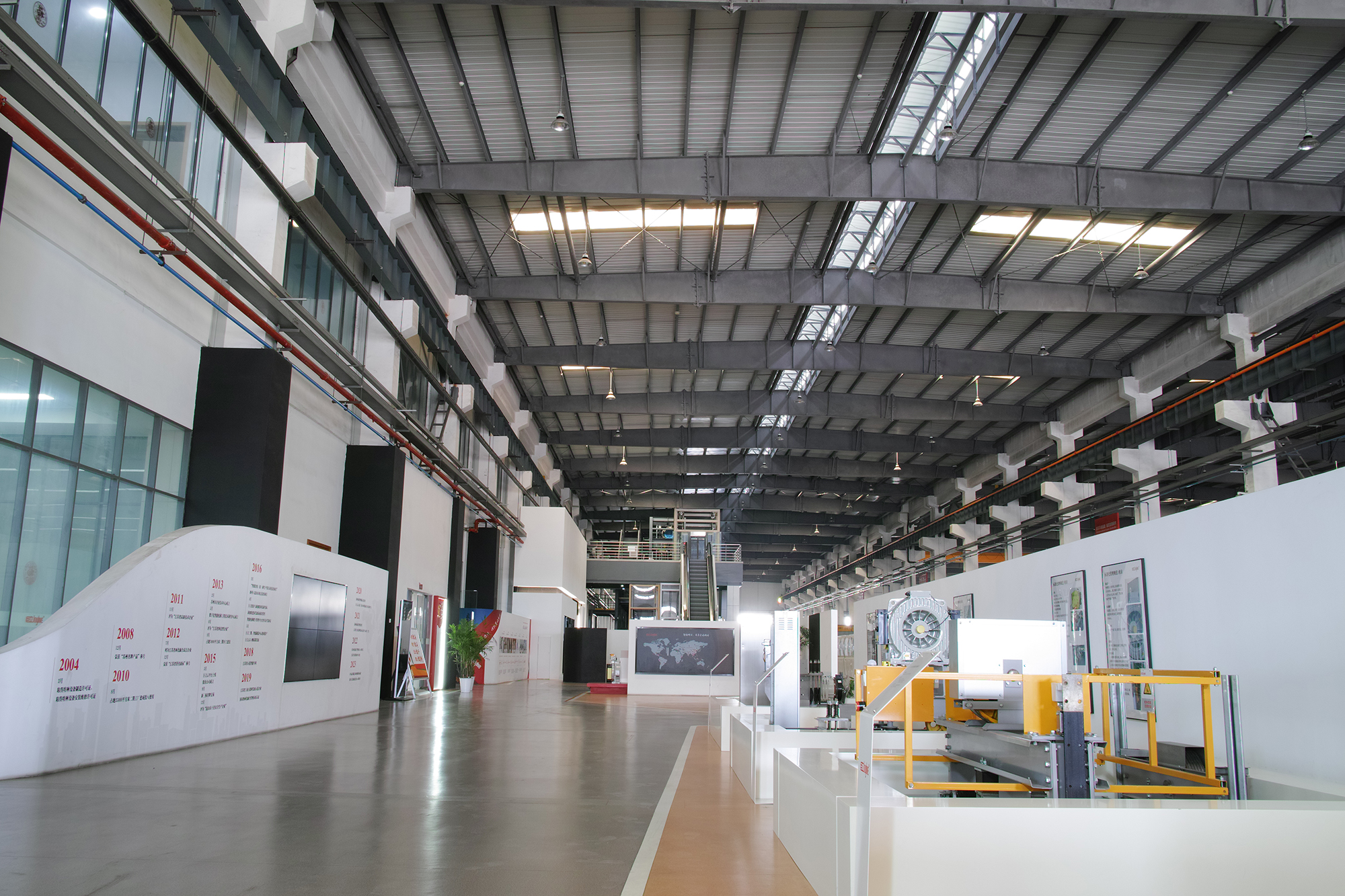
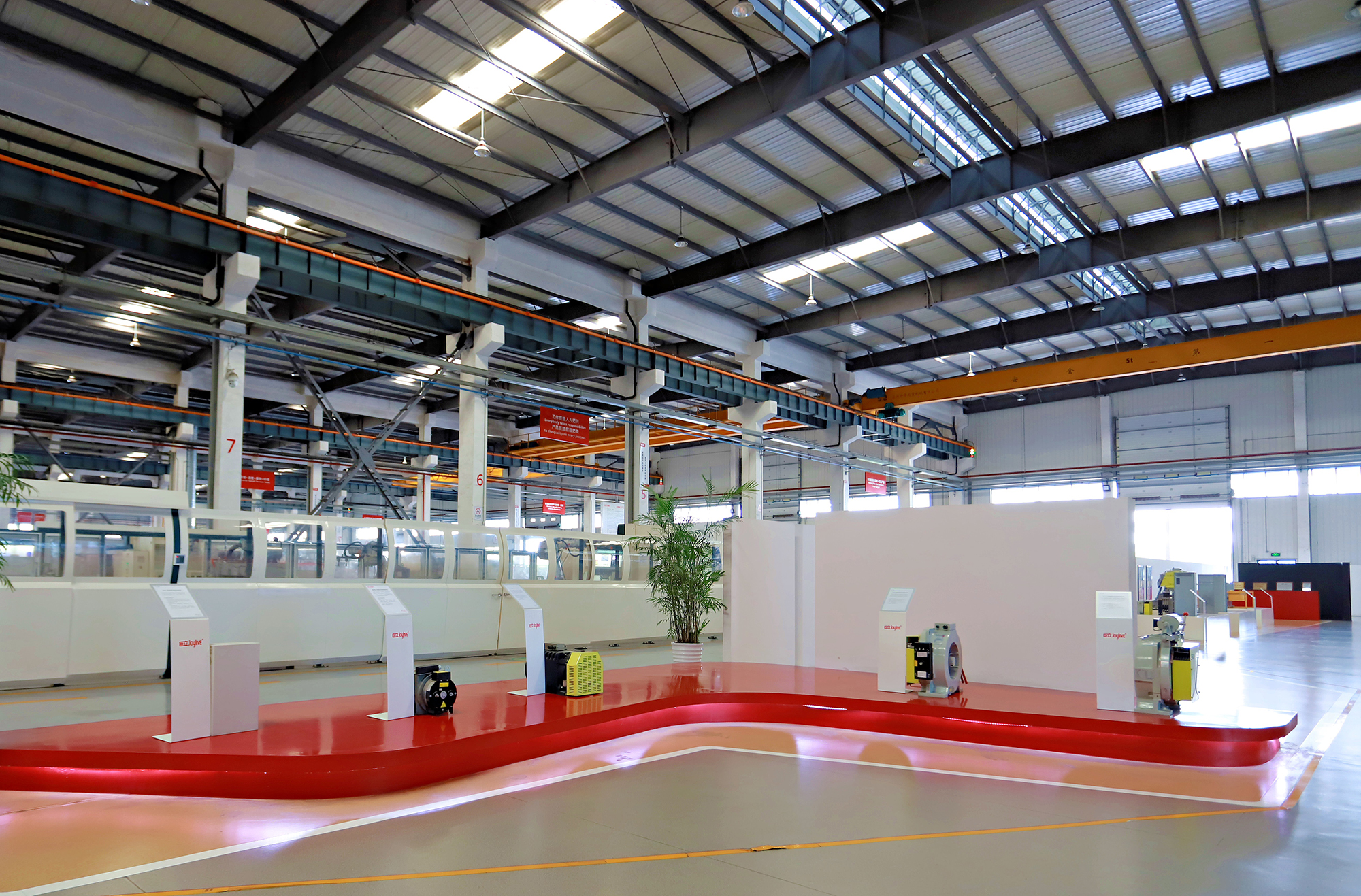
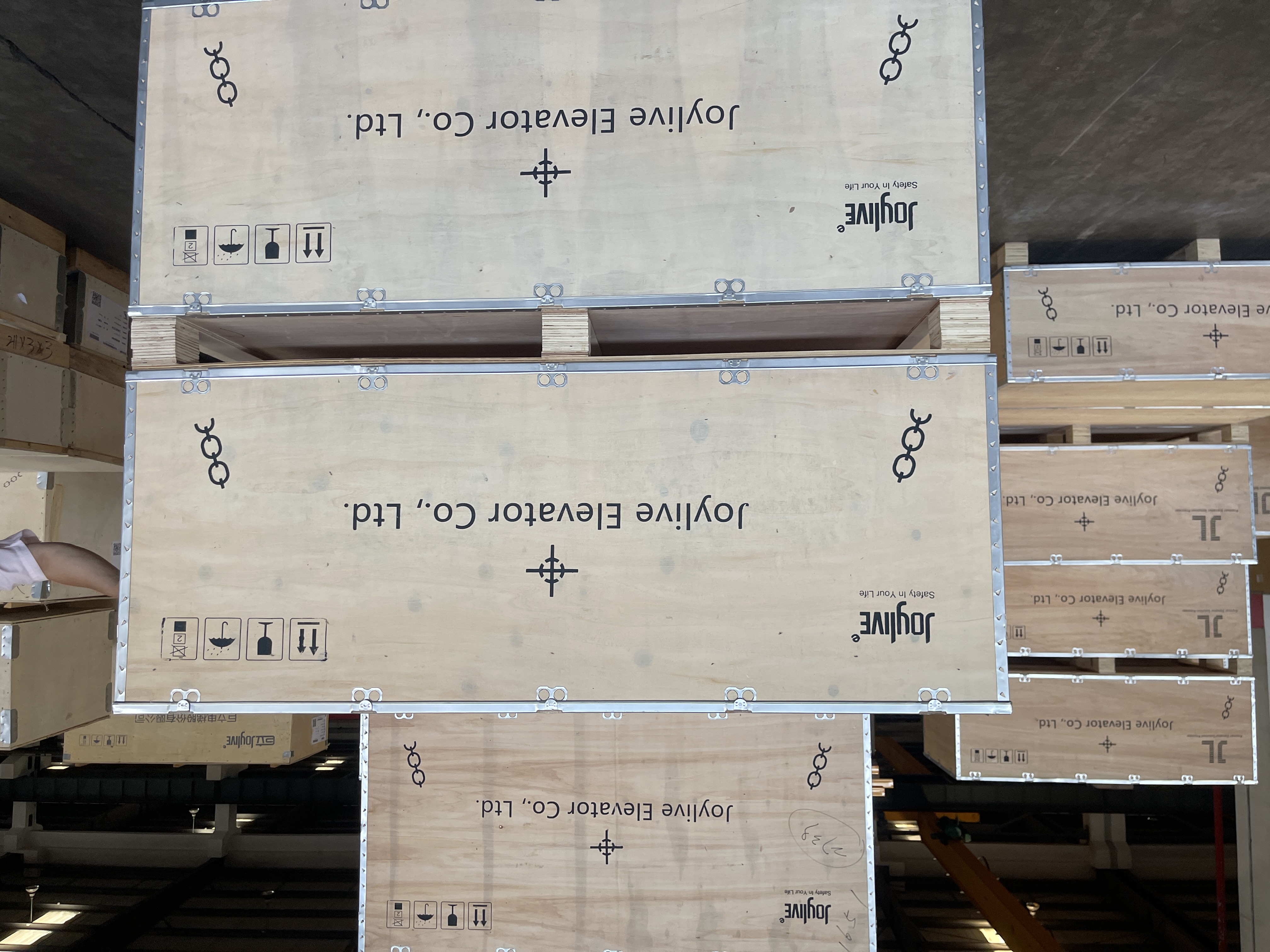
Joylive Elevator Co., Ltd. is a Chinese elevator manufacturer founded in 2002, with a 105,000 m² factory, 450 employees, 150 engineers, and an annual output of 15,000 units. Its supplied capability facts include OEM/ODM production and customization of speed, load, travel height, car size, car decoration and logo. This guide uses those first-party facts where they are relevant to selection and keeps unspecified performance data out of the requirement schedule.
Problem definition: the gap between technical specification and contractual delivery
The common failure is not a missing product; it is a missing link between technical specification and contractual delivery verification. A tender may say compact machine room elevator, low headroom, or energy-efficient without defining the machine room footprint, the measurement method, or the document that proves compliance. The bidder then prices its own interpretation. At handover, the buyer has no common baseline.
The purchasing terms and acceptance criteria are part of the defined package, not a separate appendix. The purchasing terms for this package are: MOQ 1 unit; delivery terms FOB/CIF; acceptance criteria pre-shipment test; payment terms 30/70. These are specific commercial anchors, not technical performance claims. MOQ 1 unit tells a single-project buyer that a one-unit order is within the stated terms. FOB/CIF defines where the supplier's delivery responsibility ends and where the buyer's logistics responsibility begins. A 30/70 payment structure allocates payment across stages, so those stages must be defined. Pre-shipment test is the named acceptance criterion, so the project must state what is tested, against which approved parameter sheet, and what record is signed.
Without that link, three problems appear. First, bids are not comparable because each bidder prices a different scope. Second, technical deviations are hidden in commercial documents. Third, acceptance becomes a debate about interpretation rather than a check against agreed evidence. The solution is a single parameter schedule with requirement IDs, offered values, declared deviations, and evidence.
Industry background: use market data carefully
Broad market data can set context, but it must not be used to invent a small machine room elevator market share. Grand View Research reported the global elevators market at USD 82.4 billion in 2025, with the traction elevator segment holding 55.1% revenue share and Asia Pacific accounting for 41.7% in the same year. Those figures describe the wider elevator market; they do not establish the share of small machine room elevators, nor do they prove any individual supplier's capability. The missing data is specifically the split between small machine room and machine-room-less configurations, so a buyer should not convert a broad traction share into a small-machine-room claim.
What the buyer can verify is the supplier's documented operating profile. The supplied Joylive facts state that the company was founded in 2002, has a 105,000 m² factory, 450 employees, 150 engineers, and an annual output of 15,000 units. Its capability unit states OEM/ODM production, customization of speed, load, travel height, car size, car decoration and logo, a monthly capacity of 1,250 units, lead time of 7–45 days, MOQ of 1 unit, 100% test, and online/offline technical support with a 24/365 hotline. These are supplier-specific facts to be checked against the project requirement; they are not a substitute for the project's own layout, performance, and acceptance definitions.
Detailed solution: build one requirement schedule with four layers
Build the requirement schedule in four layers. The first layer is the building interface. Record the measured shaft width and depth, overhead, pit depth, door opening, travel, number of stops, machine room plan dimensions, access route, and any structural or services constraint that affects installation. Give each item an ID, for example BI-01 shaft width, BI-02 overhead, BI-03 machine room plan. A compact machine room elevator or space-saving machine room elevator should not be accepted on a label alone; the bid must include a layout drawing that shows the offered equipment within the measured interface. Where the design has low headroom or reduced shaft space, those conditions belong in the RFQ as explicit constraints.
Machine room lighting also belongs in the interface schedule where the project applies EN 81-20 and EN 81-50. The verified data for this guide records a minimum of 200 lux at floor level in machine room work spaces under those standards. The buyer should confirm the applicable standard and local requirement before quoting, because a machine room parameter that is not written down cannot be verified at handover.
The second layer is the equipment parameter set. Define rated load, rated speed, travel, number of stops, car size, car decoration, door configuration, control system, traction machine type, drive configuration, control cabinet arrangement, and any energy-related option the project requires. Use exact units and state the condition under which each value applies. If the design calls for a gearless traction machine, permanent-magnet motor, variable-frequency drive, regenerative drive, or a compact control cabinet, list each one as a named requirement. The supplied Joylive capability unit confirms OEM/ODM production and customization of speed, load, travel height, car size, car decoration and logo; it does not assign a specific gearless traction or VFD model to the standard package. That is precisely why the RFQ must require the bidder to state the offered traction machine and drive configuration in writing, rather than assuming a generic OEM label proves a particular drive type.
The third layer is the commercial term set. Take the defined purchasing terms and place them beside the technical rows: MOQ 1 unit, delivery terms FOB/CIF, acceptance criteria pre-shipment test, payment terms 30/70. Each has a technical consequence. A one-unit MOQ means the project can be quoted as a single unit, but the buyer should still confirm that the offered configuration is the one priced. FOB/CIF changes the logistics boundary, so the packing, loading, and shipping documents should be listed against that boundary. The 30/70 payment term should be tied to agreed milestones, not left as an unexplained percentage. Pre-shipment test should be linked to the approved parameter sheet, because a test without a defined checklist does not verify the specification.
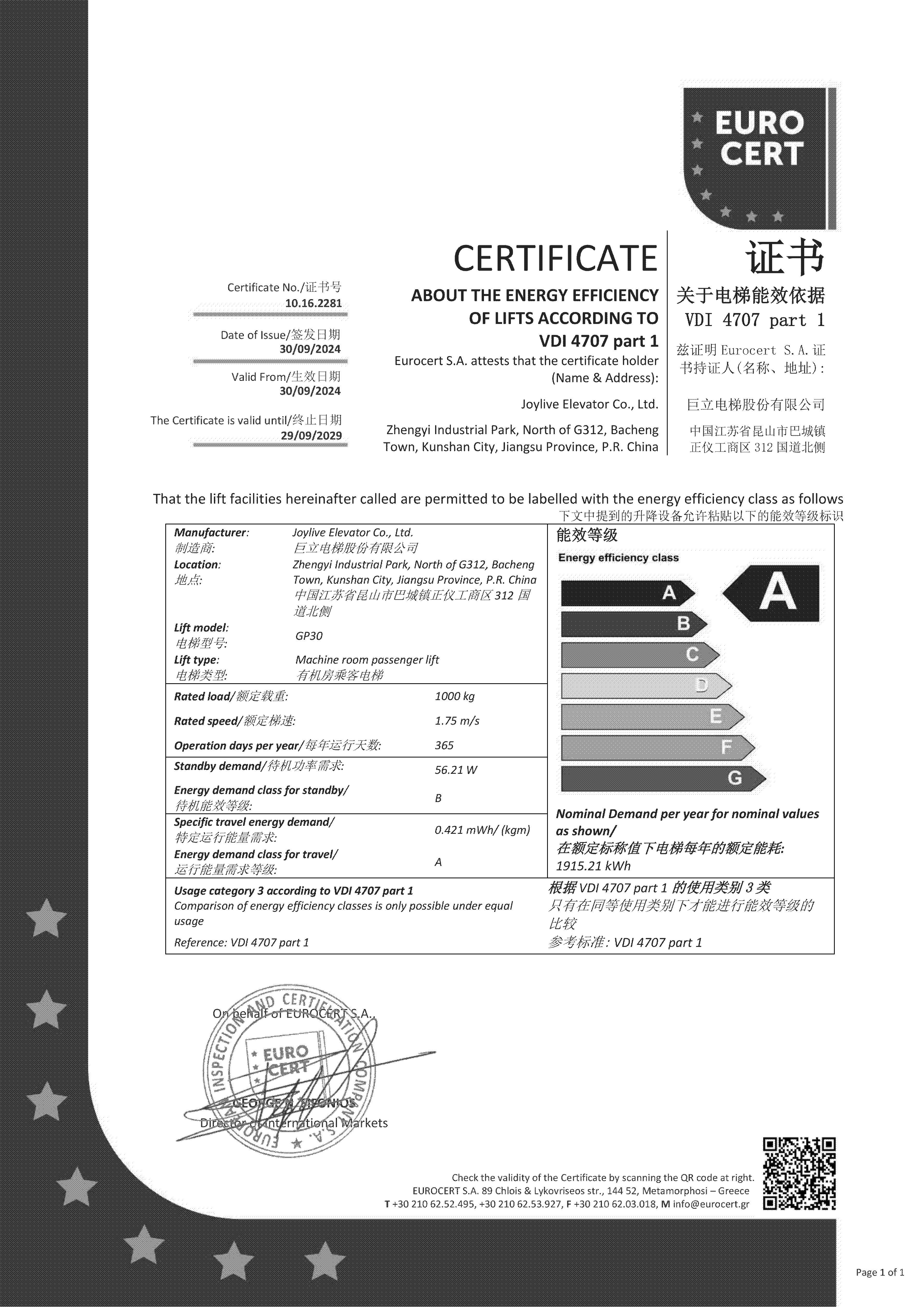
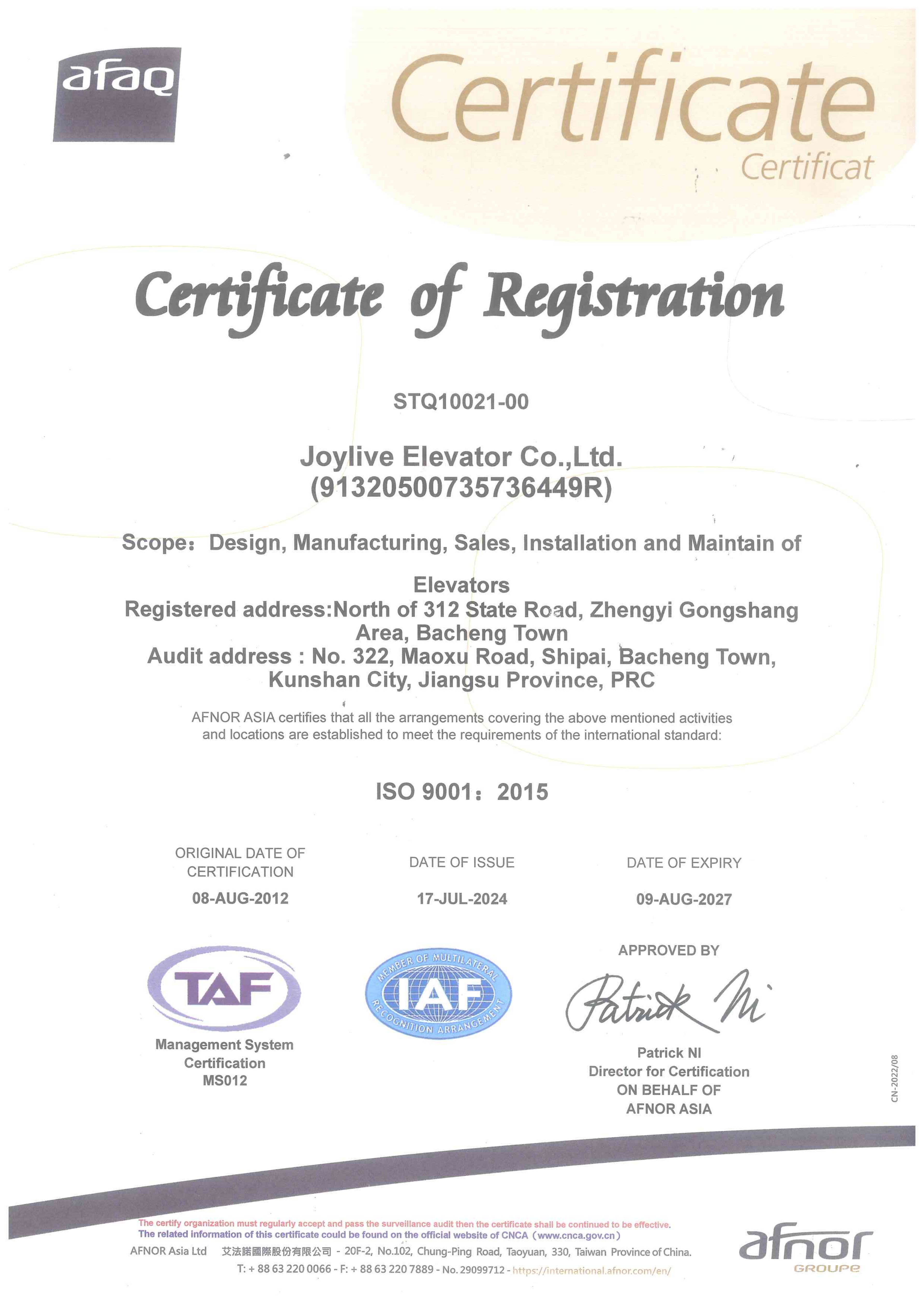
The fourth layer is acceptance evidence. For every parameter, state what evidence will be accepted: approved layout drawing, parameter sheet, pre-shipment test record, certificate copy, or packing list. The evidence must match the exact scope. For example, the documentation includes an energy-efficiency certificate no. 10.16.2281 issued by EURO CERT under VDI 4707 part 1 for a machine room passenger lift 1000-1.75, valid from 30 September 2024 to 29 September 2029. That is evidence for the scope and standard shown. It is not a blanket statement that every small machine room elevator configuration is certified to that standard. The same discipline applies to ISO 9001:2015 certificate STQ10021-00, which covers design, manufacturing, sales, installation and maintenance under the stated scope. The buyer should record the certificate number, authority, standard, scope, issue date and expiry date, and check them against the offered package.
Use a simple compliance convention: required, offered, deviation, evidence. The buyer writes required; the bidder writes offered and declares any deviation; the evidence column names the document that proves the offered value. This prevents a bidder from answering a different question. It also gives the acceptance team a ready-made checklist, because each row can be carried into the pre-shipment test. Do not use an undisclosed scoring system or a vague technically compliant stamp. A pass/fail row with a declared deviation is easier to audit.
Step-by-step breakdown: from building survey to handover checklist
Step 1: Freeze the building interface before RFQ
Survey the shaft, headroom, pit, machine room plan, door opening, and access route. Put the measurements in a drawing and a table. Mark assumptions that still need site verification. A small machine room elevator for residential buildings, apartments, hotels, commercial buildings, or low-rise buildings may start from different priorities, but all start from the same measured interface.
Step 2: Convert priorities into must-have and preferred parameters
For a small machine room passenger elevator in a residential or apartment project, the must-have list may include car size, door opening, travel, stops, and the machine room plan; finish and decoration may be preferred. For a hotel or commercial building, the project may add traffic-related requirements, control features, or a specific drive option; those must be written as named requirements, not implied by the word premium. For a low-rise building, the compact machine room and reduced shaft space may dominate the layout review, but the acceptance checklist still needs measurable values.
Step 3: Define the OEM and customization scope in the same package
Ask the supplier to state production mode, customization items, monthly capacity, lead time, MOQ, quality control, and after-sales support. The supplied Joylive capability unit provides an example of the format: OEM/ODM; customization of speed, load, travel height, car size, car decoration and logo; 1,250 units monthly capacity; 7–45 days lead time; 1 unit MOQ; 100% test; online and offline technical support with a 24/365 hotline. A buyer evaluating another supplier should ask for the same categories and keep the answers in the bid file. Do not compare a one-unit custom order with a mass-production order without noting the difference in scope.
Step 4: Put purchasing terms into the RFQ, not the appendix
State that the quotation must show MOQ 1 unit, FOB/CIF delivery terms, pre-shipment test as the acceptance criterion, and 30/70 payment terms, or declare a deviation. If the project needs a different Incoterm or payment split, that is a commercial decision for the buyer, but it should be visible and comparable. The supplier's response should identify what is included at the named delivery boundary and what the buyer must arrange.
Step 5: Build the bid comparison matrix
Use one row per requirement ID and one column per bidder. Add columns for offered value, compliance status, deviation note, and evidence reference. Keep the technical and commercial rows together so that a low price cannot hide a missing layout drawing or an excluded test. When a bidder says standard, require the standard drawing or parameter sheet. When a bidder says energy-efficient, require the named option and the supporting document, not an adjective.
Step 6: Convert the approved bid into the acceptance checklist
Copy the approved parameter rows into the handover checklist. For each row, state the check method, the record, and the sign-off. The pre-shipment test is the supplied acceptance criterion; the project should use it as the framework and add the specific parameter checks that the project requires. If an energy-efficiency certificate is part of the requirement, record the exact certificate number and scope before the test, then verify that the tested unit matches that scope. If a certificate is not part of the requirement, do not imply that it is.
Step 7: Close the loop at handover
Compare the as-built layout with the approved drawing, compare the delivered equipment with the approved parameter sheet, and confirm that the pre-shipment test record matches the checklist. File the commercial documents against the same requirement IDs. This is how a technical guide becomes a procurement control: the same row that was priced is the row that is checked.
Use cases: how the parameter priorities change by building type
Small machine room elevator for residential buildings and apartments. The layout usually has to fit an existing or tightly planned core, so the machine room plan, overhead, and door opening are early constraints. The buyer should fix car size, door opening, travel, and stops before asking for decoration options. A space-saving machine room elevator can be a useful category description, but it still needs a measured layout and a written machine room plan.
Small machine room elevator for commercial buildings. The project may have more variable traffic and a greater need for coordinated control and maintenance access. The specification should name the control system, drive configuration, and any monitoring or energy option that the building requires. Acceptance should include the approved parameter sheet and the pre-shipment test record. Do not add a performance guarantee that is not supported by a test or a document.
Small machine room elevator for hotels. Finish, car decoration, and layout coordination often carry more weight, but they do not replace the technical rows. The buyer can treat decoration as a separate finish schedule while keeping load, speed, travel, car size, door configuration, and machine room interface in the technical schedule. This separation makes it easier to compare bids without letting finish choices hide layout deviations.
Small machine room elevator for low-rise buildings. A compact machine room elevator with low headroom or reduced shaft space may be considered, but the word compact should trigger a layout check, not end the review. The buyer should ask for the offered machine room dimensions, the access route, and the installation method. If the site has a low overhead, state the measured overhead and require the bidder to confirm fit in the layout drawing.
Energy-efficient small machine room elevator option. If the project requires an energy-efficient configuration, define the exact option: for example, a gearless traction machine, permanent-magnet motor, variable-frequency drive, regenerative drive, or a combination. The documentation includes an energy-efficiency certificate for a specific machine room passenger lift scope, which shows why the certificate number and scope must be checked. It does not prove that every configuration has the same result. The buyer should ask for the document that applies to the offered package.
Comparison table: parameter groups and procurement alignment
| Parameter group | What to define before quotation | Purchasing-term alignment | Acceptance evidence |
|---|---|---|---|
| Building interface | Measured shaft, overhead, pit, machine room plan, door opening, access route, travel and stops | Attach the interface sheet to the RFQ; require a layout drawing with the bid | Approved layout drawing and as-built dimensional check |
| Equipment performance | Rated load, rated speed, travel, stops, car size, door configuration and finish schedule | Price the named configuration; declare deviations line by line | Approved parameter sheet and pre-shipment test record |
| Drive and control | Named traction machine, drive configuration, control cabinet arrangement and control features | Require the bid to state the offered type in writing; do not accept a generic label | Document check against the offered configuration before pre-shipment test |
| Commercial terms | MOQ 1 unit, FOB/CIF delivery terms, 30/70 payment terms | Contract terms and delivery boundary | Payment milestones, shipping documents and invoice records |
| Quality and documentation | OEM/ODM scope, customization items, 100% test, certificate scope and validity | Quality clause and document list in the purchase order | Certificate copy, test record and approved document list |
FAQ
What purchasing terms and acceptance criteria should be fixed before quotation?
Fix the commercial terms and the acceptance method in the RFQ. For this package, the defined purchasing terms are MOQ 1 unit, delivery terms FOB/CIF, acceptance criteria pre-shipment test, and payment terms 30/70. The buyer should place these terms next to the technical parameter rows, because each one affects the offered scope. A one-unit MOQ should be confirmed against the exact configuration. FOB/CIF should be matched with the packing, loading and shipping document list. The 30/70 payment term should be tied to defined milestones. Pre-shipment test should be linked to the approved parameter sheet so that the test record proves the agreed specification, not a different one.
OEM small machine room elevator manufacturer with gearless traction and VFD Chinese: what should be verified?
Start with the supplier's documented OEM/ODM scope, then require written confirmation of the offered traction and drive configuration. The supplied Joylive capability facts confirm OEM/ODM production and customization of speed, load, travel height, car size, car decoration and logo, with 1,250 units monthly capacity, 7–45 days lead time, 1 unit MOQ, 100% test, and online/offline technical support with a 24/365 hotline. Those facts do not assign a specific gearless traction machine or VFD model to the standard package. A buyer should therefore require the bid to state the exact traction machine and drive configuration, and should check that the offered configuration is within the supplier's documented scope. Do not treat a generic OEM claim as proof of a specific drive type.
How do you map small machine room elevator specifications to the handover checklist?
Use the same requirement IDs from the RFQ in the handover checklist. For each row, record the required value, the offered value, the declared deviation, the evidence reference, the check method, and the sign-off. The pre-shipment test is the named acceptance criterion; the project should use it as the framework and add the specific parameter checks that the project requires. When a certificate is used as evidence, check the exact scope, standard, authority, issue date and expiry date. For example, the energy-efficiency certificate no. 10.16.2281 applies to the scope shown for a machine room passenger lift 1000-1.75, and the ISO 9001:2015 certificate STQ10021-00 has its own stated scope; neither should be treated as a blanket approval for every configuration.
What lead time and capacity facts should be checked before award?
Ask each supplier to state capacity and lead time for the exact configuration, not for a generic product family. The supplied Joylive facts state a monthly capacity of 1,250 units, lead time of 7–45 days, and MOQ of 1 unit. These are useful reference points for comparing the bid against the project schedule, but the buyer should confirm the applicable lead time in the quotation and connect it to the agreed delivery terms. If the project schedule is fixed, the lead time should be written as a contractual term rather than left as a brochure value.
For teams preparing a live RFQ, the approved Joylive catalogue can be downloaded here: Joylive product catalogue. Use it to identify the configuration scope, then confirm every project-specific parameter in writing.
Conclusion
Small machine room elevator selection is a requirements and acceptance system. The technical specification must be written in the same language as the purchasing terms: MOQ 1 unit, FOB/CIF delivery, pre-shipment test, and 30/70 payment terms. Building constraints such as machine room plan, low headroom, reduced shaft space, and access route must become measured requirement IDs. Equipment choices such as gearless traction, permanent-magnet motor, variable-frequency drive, regenerative drive, and compact control cabinet must be named and confirmed in writing, not assumed from a generic label. Acceptance must use the same IDs, the same approved parameter sheet, and the same evidence standard.
Joylive's supplied facts show a manufacturer with OEM/ODM capability, customization of speed, load, travel height, car size, car decoration and logo, 1,250 units monthly capacity, 7–45 days lead time, 1 unit MOQ, 100% test, and online/offline technical support with a 24/365 hotline. Those facts are relevant to the procurement comparison, but they do not replace the project's own layout, performance and acceptance definitions. The reliable path is to define the package before quotation, price it against the same schedule, and verify it against the same schedule at handover.
Have Questions or Need More Details?
Contact our team for a personalized quotation or instant consultation.
Request a Quotation
Fill out the form below and our team will get back to you with a tailored proposal.
WhatsApp Direct Chat
Prefer to chat in real-time? Message us on WhatsApp for instant assistance & quick answers.
- Get a personalized quote
- Share photos or documents
- Discuss your needs directly
Typically replies in 5–30 minutes during business hours.