Small Machine Room Elevator Supplier Evaluation: Capability Verification and Delivery Assurance
Small machine room elevator supplier evaluation is not a brand-preference exercise, and it is not a brochure comparison. An SMR elevator is a project product: shaft space, headroom, machine room layout, load, travel height, traffic pattern and installation sequence are all fixed before manufacturing begins. That is why the evaluation stage has one real job — to translate purchasing terms into acceptance criteria, and to translate verified capability into delivery assurance.
This guide is written for buyers in the research-to-evaluation stage who must decide which small machine room elevator supplier can actually carry a project from drawing approval to stable operation. It uses one factual anchor throughout: the supplier's stated manufacturing, customization, quality control and after-sales terms, and the acceptance criteria those terms must be converted into.
Answer first: evaluate a small machine room elevator supplier across four verifiable layers — entity and qualification, engineering and customization, manufacturing capacity and quality control, and delivery and after-sales service. Every layer must produce a document, an observable process or a measurable commitment. A purchasing term that cannot be linked to an acceptance criterion is a risk term, not a purchasing term.
Problem Definition: Why SMR Supplier Evaluations Break Down
Most failed evaluations of compact machine room elevator suppliers fail for one of three reasons, and all three are visible long before the contract is signed.
1. Project scenario inputs are never written down
A small machine room elevator for residential buildings and a space-saving machine room elevator for a hotel core serve different traffic profiles, different operating hours and different machine room layouts. When travel height, load, shaft space, headroom and duty cycle are not fixed as written inputs, suppliers quote different scopes against the same request — and no two bids can be compared. The buyer then compares price against scope that was never equal in the first place.
2. Capability claims are accepted as statements rather than evidence
Customization range, production capacity and quality control are usually asserted in tender responses and rarely verified. When that happens, the evaluation measures how well a supplier communicates instead of how well it manufactures, and the gap only becomes visible during installation.
3. Purchasing terms have no acceptance criteria
A term such as "the elevator shall operate reliably" cannot be accepted or rejected. A term such as "machine room workspace lighting shall comply with the applicable standard" can be inspected and measured. The difference between those two sentences is the entire commercial value of the evaluation stage.
Industry Background: A Growing Market With Cost-Sensitive Components
Several verifiable market facts explain why supplier verification deserves more attention now than it did a few years ago.
- The global elevators market was valued at USD 82.4 billion in 2025 and is projected to reach USD 86.3 billion in 2026 and USD 136.9 billion by 2033, a CAGR of 6.8% (Grand View Research, Elevators Market Size, Share & Growth Report, 2026–2033).
- Traction elevators — the family that includes small machine room and machine-room-less designs — held the largest revenue share, 55.1% in 2025.
- Asia Pacific accounted for 41.7% of global elevator revenue in 2025.
- Rare-earth magnets used in permanent-magnet motors increased in price by more than 20% in 2025 (Mordor Intelligence), which makes drive selection and scope definition a commercially sensitive part of any SMR quotation.
- Cross-border elevator shipments are classified under HS code 842810, "Passenger or freight elevators other than continuous action" — a documentation item worth confirming with the supplier at evaluation stage rather than at the port.
Taken together, these figures point to a practical conclusion: demand and component costs are both moving, so a supplier that can document capability and commit to measurable delivery terms carries more value than a supplier that quotes lowest on an undefined scope. Verification is what separates the two.
The Core Framework: Purchasing Term → Acceptance Criterion → Verification Evidence
For a small machine room elevator, every purchasing term should be written three times: once as a requirement, once as an acceptance criterion, and once as the evidence that will close it out. This three-column logic is what converts supplier evaluation into delivery assurance.
| Purchasing term | Acceptance criterion | Verification evidence |
|---|---|---|
| Configuration fit for the building | Speed, load, travel height and car size match the approved layout | Approved layout drawing plus configuration confirmation sheet |
| Customization scope | Agreed items are delivered as specified | Customization list covering speed, load, travel height, car size, car decoration and logo |
| Production capacity | The order can be scheduled inside the agreed lead time band | Stated monthly capacity and production schedule |
| Quality control | Every unit is tested before shipment | 100% test policy and unit-level test record |
| Machine room condition | Machine room workspace lighting meets the applicable standard | Minimum 200 lux at floor level in machine room work spaces, per EN 81-20 / EN 81-50 (European Union) |
| After-sales support | Technical support is reachable throughout operation | Online and offline technical support terms, including a 24/365 hotline |
The left column is what buyers normally write. The middle and right columns are what make the left column enforceable. In practice, a supplier able to populate all three columns during evaluation is also a supplier able to schedule production against them — because scheduling depends on the same frozen configuration.
The 200 lux figure is a useful example of why this matters. It is a measurable machine room condition defined in the European standard, not an aesthetic judgement, and it can be inspected before handover. Buyers in other jurisdictions should confirm the equivalent local requirement as a written input instead of assuming a single global rule.
Four Capability Layers to Verify Before You Shortlist
Layer 1 — Entity, qualification and compliance
Joylive Elevator Co., Ltd. (stock short name: Joylive, stock code: 833481) is an elevator manufacturer founded in 2002 and located in Bacheng Town, Kunshan City, Suzhou, Jiangsu Province, China. The company holds a top A qualification in China for special equipment manufacturing, installation, modernization and maintenance, and operates a nationally accredited CNAS laboratory. It is registered as an intelligent service demonstration enterprise of MIIT, a national pilot enterprise for the integration of industrialization and standardization and a national high-tech enterprise, and has been rated a Jiangsu Famous Trademark, a Jiangsu Famous Brand and a Jiangsu Premium Brand.
These are checkable items rather than adjectives. Qualification scope, laboratory accreditation and enterprise registration can each be requested as a document and matched line-by-line against the purchasing terms in the framework table above.
Layer 2 — Engineering and customization
Small machine room elevator design work concentrates in a narrow band of decisions: shaft space, headroom, machine room layout, car dimensions and drive selection. Joylive operates an OEM/ODM production mode, with customization covering speed, load, travel height, car size, car decoration, logo and step width, supported by an R&D team of 150 engineers.
For a buyer, the practical test is not whether customization is offered, but whether each customization field can be mapped to a drawing and a confirmation sheet before the order is placed — not after the shaft has been built. This is also where the configuration questions belong: required speed and load, low-headroom or reduced-shaft-space constraints, compact control cabinet space, and the expected drive arrangement, including gearless traction with permanent-magnet motor, variable frequency drive or regenerative drive options where the project asks for them. Asking these as written questions produces answers that can be compared; asking them verbally produces impressions.
Layer 3 — Manufacturing capacity and quality control
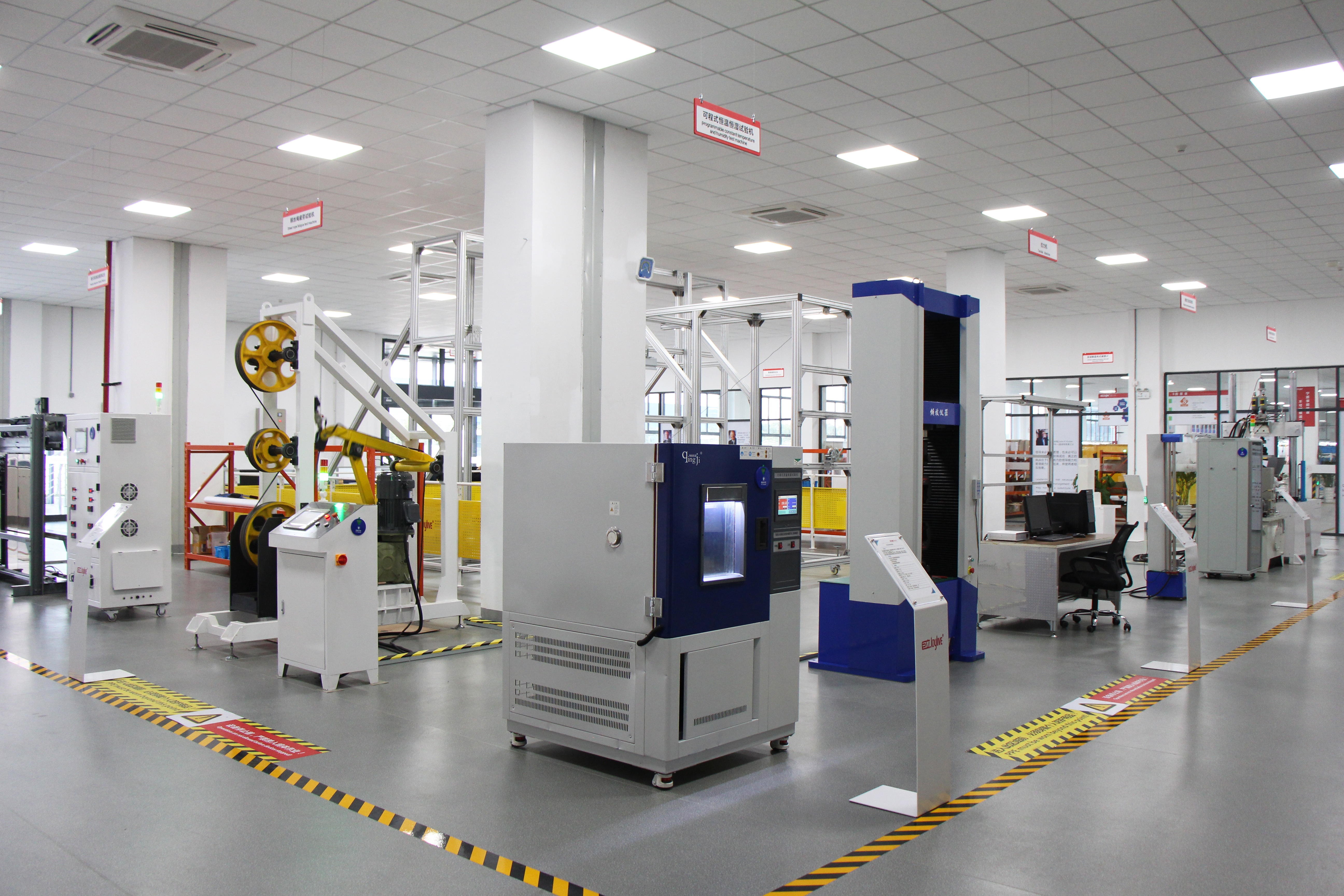
Capacity claims can be verified against numbers. Joylive operates a 105,000 m² factory with 450 employees and an annual output of 15,000 units, with a monthly capacity of 1,250 units. Quality control is stated as 100% test. Exports account for 55% of output, with markets covering China, Europe, America, Oceania, Africa, Central Asia, Southeast Asia and the Middle East — a distribution footprint that matters when a project requires documentation for import and local approval.
Layer 4 — Delivery and after-sales capability
Lead time at Joylive is quoted in a band of 7 to 45 days depending on configuration, with a minimum order quantity of 1 unit. Delivery assurance also depends on what happens after commissioning: Joylive provides online and offline technical support together with a 24/365 hotline.
A lead time band is more useful than a single figure, because it forces the buyer to ask the next question — which configuration sits at the fast end, and which inputs move the order to the slow end. That question is best answered before the purchase order, when the answer can still change the schedule.
From Verified Capability to Delivery Assurance
Verification only pays off if it is converted into commitments at contract stage. Four conversions matter most in small machine room elevator projects.
- Freeze the configuration. The approved layout drawing and the customization list become contractual annexes. Any change after that point is a change order with a schedule consequence, not a conversation.
- Convert capacity into a schedule. The agreed lead time band, the production milestone dates and the shipment readiness date are written down together, so that a 7-day and a 45-day configuration are never treated as the same item.
- Convert quality control into records. A 100% test policy is only meaningful if the unit-level test record travels with the shipment and is checked against the acceptance criteria at handover.
- Convert after-sales into a contact path. The 24/365 hotline, the online and offline technical support channel, and the escalation route are named in the contract rather than discovered after the first fault.
These four conversions also explain why a pilot order is commercially sensible. With a minimum order quantity of 1 unit, a buyer can validate configuration accuracy, documentation quality and delivery behaviour on a single unit before committing to a project-scale order — and the pilot then becomes the reference baseline for everything that follows.
Step-by-Step: Evaluating an SMR Elevator Supplier
Step 1 — Fix the project scenario inputs
Write down travel height, number of stops, rated load, expected traffic, shaft space, headroom, machine room dimensions, power supply and the applicable local code. This requirement sheet is the baseline that makes every later comparison meaningful, and it is the single document most often missing from SMR tenders.
Step 2 — Convert requirements into configuration questions
Turn each input into a written question: which speed and load class fits this building; how is reduced shaft space or low headroom handled; what control cabinet footprint is required; which drive arrangement is proposed. Request answers mapped to drawings, not descriptive paragraphs, so that the reply can be checked against the requirement sheet.
Step 3 — Verify entity and qualification documents
Request the qualification scope for manufacturing, installation, modernization and maintenance, the laboratory accreditation, and product test documentation. Confirm the export documentation path, including HS code 842810 for passenger or freight elevators, and confirm which local market approvals the destination country requires.
Step 4 — Verify production and quality process
Match stated capacity against the order size and schedule, and confirm what "100% test" means in operational terms: which tests, at which stage, recorded how. A factory visit or a documented process review is what turns this layer from a claim into evidence.
Step 5 — Convert findings into acceptance criteria
Populate the three-column table with the project's own values: configuration, customization, capacity, testing, machine room conditions and after-sales. Each criterion should be objectively checkable — the European 200 lux machine room lighting requirement is an example of the level of specificity to aim for.
Step 6 — Build the delivery assurance plan
Sequence the project milestones — drawing approval, material release, production, testing, packing, shipment, installation and acceptance — and attach the agreed lead time band, the test record requirement and the after-sales contact path to those milestones. With a minimum order quantity of 1 unit and a quoted lead time band of 7 to 45 days, this plan can be tested first on a validation unit.
Scenario Fit: Matching Verification to the Project Type
Supplier evaluation should be weighted differently by scenario, because the risk that matters is not the same in a residential core and a 24/7 commercial building.
Residential buildings, apartments and low-rise projects
For residential and self-built housing applications, Joylive supplies the Home Lift GH30 with a speed range of 0.25 to 1.75 m/s, a load range of 200 to 1150 kg and a maximum travel height of 30 m. Scenario requirements in residential settings typically include safety, comfort, low noise and varied car decoration. Verification focus: single-unit validation, layout fit inside the available shaft, and confirmation that the decorative scope is documented before production.
Hotels, offices and mid-rise commercial buildings
For hotel and office applications, the relevant Joylive product is the Passenger Elevator GP30 / GPN30, quoted at 1.0 to 8.0 m/s, 630 to 3000 kg and a maximum travel height of 350 m. Verification focus: traffic calculation, machine room layout fit, and the customization of car size and car decoration that hotel projects normally depend on.
Commercial, public facility and infrastructure projects
These project types run under heavy duty, heavy people flow and in some cases fire-proof conditions, frequently on a 24/7 operating pattern. Joylive matches such projects with IoT device and Joycloud equipment alongside the elevator. Verification focus: duty-cycle assumptions, monitoring scope, spare-part planning and hotline response terms — all of which belong in the delivery assurance plan rather than in a service brochure.
Industrial and factory projects
Industrial sites typically need freight capacity alongside passenger movement. Joylive supplies Freight elevator models GF10, GF20, GFN20 and GFN30 at 0.25 to 3.0 m/s, 1000 to 200000 kg and a maximum travel height of 150 m. Verification focus: load verification, installation sequencing in an operating facility, and reference projects that can be checked. Joylive supplied 87 passenger and freight elevators for a Pegatron facility (2 years in stable operation), 36 units for a Wistron facility (5 years in stable operation) and 9 units for an Inventec project (1 year in stable operation). For commercial landmark work, Joylive supplied 208 elevators with customized car decorations and customer logos for the SAT CITY complex in Kazakhstan, in stable operation for 5 years.
Comparison Table: Scenario, Configuration and Verification Focus
| Project scenario | Relevant Joylive configuration | Primary verification focus | Evidence to request |
|---|---|---|---|
| Residential / apartment / low-rise (up to 30 m travel) | Home Lift GH30 — 0.25–1.75 m/s, 200–1150 kg, max travel 30 m | Sample validation, shaft and layout fit, decoration scope | Customization confirmation sheet, unit test record, layout drawing |
| Hotel / office mid-rise | Passenger Elevator GP30 / GPN30 — 1.0–8.0 m/s, 630–3000 kg, max travel 350 m | Traffic calculation, machine room layout, car size and decoration | Approved layout drawing, configuration confirmation, test documentation |
| Commercial / public facility, 24/7 duty | Passenger Elevator GP30 / GPN30 with IoT device and Joycloud | Duty cycle, monitoring scope, spare parts and hotline terms | After-sales terms, monitoring scope definition, 24/365 hotline details |
| Industrial / factory project | Freight elevator GF10, GF20, GFN20, GFN30 — 0.25–3.0 m/s, 1000–200000 kg, max travel 150 m | Load verification, installation sequencing, operating references | Reference project list with operating duration, installation plan |
The comparison above is a scenario-to-verification mapping, not a ranking. It is intended to be used as a checklist during the evaluation stage, so that each scenario is verified against the criteria that actually carry risk in that scenario.
FAQ
What compliance evidence should be verified for a small machine room elevator supplier?
Verify the qualification scope for manufacturing, installation, modernization and maintenance, the laboratory accreditation, and the product test documentation for the proposed configuration. Standards compliance should be checked against the destination market: in the European Union, EN 81-20 and EN 81-50 (effective from 2017) require a minimum of 200 lux at floor level in machine room work spaces, which is a measurable condition that can be inspected at handover. Joylive holds a top A qualification in China for special equipment manufacturing, installation, modernization and maintenance, operates a nationally accredited CNAS laboratory, and applies 100% test quality control. Buyers should also confirm the import documentation path, since passenger and freight elevators are classified under HS code 842810.
How can a buyer verify customization and production capability?
Ask for capability as numbers and scope, not as adjectives. Joylive operates an OEM/ODM production mode with customization covering speed, load, travel height, car size, car decoration, logo and step width, supported by 150 engineers. Production capability is stated as a 105,000 m² factory, 450 employees, an annual output of 15,000 units and a monthly capacity of 1,250 units, with 55% of output exported to markets including Europe, America, Oceania, Africa, Central Asia, Southeast Asia and the Middle East. The verification test is whether each customization field can be traced to a drawing and a confirmation sheet before the order is placed.
What cost drivers should be expected in an SMR elevator budget?
Budget movement in this category usually comes from four sources: the customization list (car size, car decoration, logo and related finishing), the drive arrangement, documentation and approval requirements in the destination market, and the scheduling position of the order within the supplier's capacity. Component cost is one of these drivers: rare-earth magnets for permanent-magnet motors increased in price by more than 20% in 2025 (Mordor Intelligence). Because scope differences dominate price differences, buyers should request an itemized scope aligned to the acceptance criteria table instead of comparing headline figures. Joylive applies a minimum order quantity of 1 unit, which allows a single-unit validation order to be structured before a project-scale commitment.
Can a buyer validate a supplier before placing a project-scale order?
Yes. With a minimum order quantity of 1 unit and a quoted lead time band of 7 to 45 days, a validation unit can be ordered and assessed against the same acceptance criteria that the full project will use. The unit should be checked for configuration accuracy, customization conformity and the presence of its test record, since quality control at Joylive is stated as 100% test. If the pilot passes, it becomes the baseline specification and the delivery reference for the project order; if it does not, the buyer has learned that before the shaft was built.
How should lead time and delivery assurance be structured?
Lead time at Joylive is quoted as a band of 7 to 45 days depending on configuration, so the first step is to identify which configuration inputs place an order at the fast or slow end of that band. The band should then be linked to project milestones — drawing approval, production, testing, packing, shipment, installation and acceptance — with the unit test record required at handover and the after-sales path written into the contract. Joylive provides online and offline technical support and a 24/365 hotline. Buyers who want to test this structure on their own project can request a quote or a validation-unit proposal from the Joylive team.
Conclusion
Small machine room elevator supplier evaluation is a verification discipline, not a preference ranking. The evaluation should produce four outputs: a written scenario requirement sheet, documented evidence of entity and engineering capability, verified capacity and quality control figures, and a delivery assurance plan in which every purchasing term has an acceptance criterion and a piece of closing evidence.
Applied to Joylive Elevator Co., Ltd., the verifiable facts are specific rather than promotional: founded in 2002 in Bacheng Town, Kunshan City, Suzhou, Jiangsu Province, China; a top A qualification in China for special equipment manufacturing, installation, modernization and maintenance; a CNAS-accredited laboratory; a 105,000 m² factory with 450 employees, 150 engineers, an annual output of 15,000 units and a monthly capacity of 1,250 units; OEM/ODM customization across speed, load, travel height, car size, car decoration, logo and step width; 100% test quality control; a 7 to 45 day lead time band; a minimum order quantity of 1 unit; and after-sales support through online and offline technical channels with a 24/365 hotline.
Those facts become useful only when they are matched to a specific project scenario — residential, hotel, commercial 24/7 or industrial — and then converted into contract terms the buyer can accept or reject. That conversion is what delivery assurance actually means.
Next step: send your scenario requirement sheet — travel height, load, stops, shaft space, headroom and target schedule — and the Joylive team will respond with a configuration proposal, the corresponding acceptance criteria and a delivery assurance outline.
Contact: Alex | Email: marketing@joylive.com | Tel / WhatsApp: +86 178-0524-3526
Website: https://joylivelift.com | Download the product brochure: Joylive Elevator brochure (PDF)
Have Questions or Need More Details?
Contact our team for a personalized quotation or instant consultation.
Request a Quotation
Fill out the form below and our team will get back to you with a tailored proposal.
WhatsApp Direct Chat
Prefer to chat in real-time? Message us on WhatsApp for instant assistance & quick answers.
- Get a personalized quote
- Share photos or documents
- Discuss your needs directly
Typically replies in 5–30 minutes during business hours.