Small Machine Room Elevator vs. Hydraulic Elevator: Head-to-Head Decision for Low-Rise
Low-rise buildings — apartment blocks, boutique hotels, small offices and retrofit projects — can usually be served by more than one elevator technology, and the two most common candidates are the small machine room elevator and the hydraulic elevator. Both are proven. Both appear in the product range of Joylive Elevator Co., Ltd., a Chinese elevator manufacturer founded in 2002 and based in Bacheng Town, Kunshan City, Suzhou, Jiangsu Province. And both can be quoted against the same shaft. That is exactly why the decision is difficult: the specification sheet alone will not settle it.
The short answer for most low-rise projects: where the building can host a compact machine room above the hoistway, a small machine room traction elevator usually delivers the stronger long-term outcome — floor-leveling within ±3 mm, ISO 25745 / VDI 4707 Class A energy efficiency with standby power below 50 W, and a drive train with fewer wearing parts. Where the ceiling above the shaft cannot carry machinery and a power unit room can be placed at a lower level, a hydraulic elevator remains a practical and well-understood option.
This article runs the two systems head to head across five dimensions — space, ride experience, energy, maintenance and retrofit suitability — and then converts the comparison into a step-by-step decision framework and a set of execution-stage procurement checkpoints.
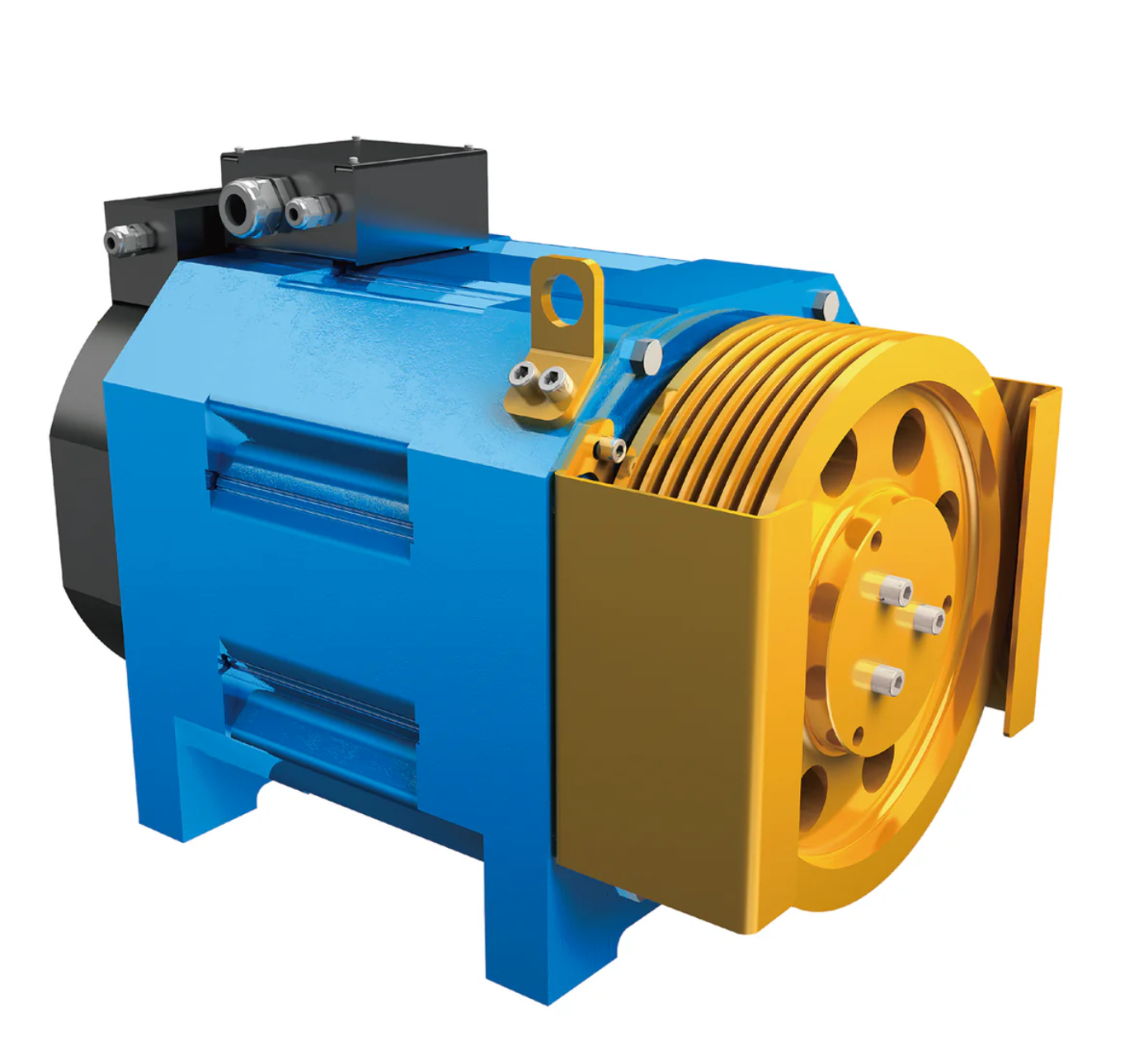
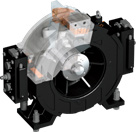
Gearless permanent magnet synchronous traction machine — the drive core of a small machine room traction elevator.
What Each System Actually Is
Small machine room elevator
A small machine room elevator is a traction elevator whose drive machine is housed in a reduced-size machine room, normally located above the hoistway. The room is smaller than a conventional traction machine room, but it is still a defined machinery space, so access, lighting and equipment-clearance requirements continue to apply. Common configurations include a gearless permanent magnet synchronous (PMSM) traction machine, a variable frequency drive (VVF), an optional regenerative drive and a compact control cabinet. Design variants exist specifically for tight buildings: low-headroom layouts and reduced-shaft-space layouts.
Hydraulic elevator
A hydraulic elevator raises the car with a hydraulic power unit — pump, tank and control valves — acting on a cylinder. It is a mature solution for low-rise travel, and Joylive builds hydraulic elevators alongside passenger, freight, home, panoramic, hospital, explosion-proof and clean-room elevators. Because the lifting force is generated by fluid pressure rather than by ropes running over a traction sheave, the equipment layout, the space it consumes and the maintenance routine all differ from a traction machine.
Why This Comparison Keeps Coming Up in Low-Rise Projects
Four market and regulatory realities keep the question alive.
The category is still growing. Grand View Research valued the global elevators market at USD 82.4 billion in 2025 and projects it to reach USD 86.3 billion in 2026 and USD 136.9 billion by 2033, a CAGR of 6.8%. Traction elevators already held the largest revenue share in 2025 at 55.1%, and Asia Pacific accounted for 41.7% of global revenue in the same year. Low-rise projects sit inside that growth, and both technologies compete for them.
Published data does not answer the buyer's actual question. Market reports generally count traction as a single block and do not separate small machine room designs from machine-room-less designs. A residential developer looking for the adoption ratio of small machine room elevators in low-rise buildings will not find it in a market report. The comparison therefore has to be made at project level, from the building's own constraints.
Core component costs are moving. Rare-earth magnets used in permanent magnet motors increased in price by more than 20% in 2025. That affects the price trajectory of PMSM-based traction packages and belongs in a ten-year budget, not only in a single purchase price.
Regulation keeps the machine room a real room. Under EN 81-20 and EN 81-50, effective from 2017, machine room work spaces must maintain a minimum of 200 lux at floor level. Whichever technology is selected, the machine room is a regulated working environment rather than a storage closet. For customs and trade documentation, passenger or freight elevators other than continuous action are classified under HS code 842810.
Head-to-Head: The Five Dimensions That Decide the Outcome
1. Space and machine room requirements
Both technologies need a machine space; they need it in different places.
A small machine room elevator concentrates the machinery above the hoistway. The real question is not whether a machine room exists, but whether a correctly laid out one fits: compact control cabinets, low-headroom designs and reduced-shaft-space layouts are what make the concept work in tight low-rise buildings. The advantage is consolidation — drive, sheave and control cabinet sit at one point, which simplifies rope routing and service access.
A hydraulic elevator moves the equipment centre of gravity to the lower level. The power unit — pump, tank and valves — needs a dedicated space, typically on the lowest floor or in a basement plant room, and the cylinder arrangement shapes the shaft base and pit design. Heavy machinery does not have to be lifted to the top of the building, which can matter in a retrofit where the roof structure is not rated for that load, but lower-level plant space must be available and adequately ventilated.
Practical rule: map the building's available plant space before comparing prices. An elevator quotation that assumes a machine room the building cannot provide is not a cheaper quotation — it is a redesign waiting to happen.
2. Ride experience and leveling
Ride quality in a low-rise building is judged on two things: how precisely the car stops at the landing, and how the start and stop feel and sound.
On the traction side, variable frequency control is the standard mechanism. Joylive applies VVVF speed control so the car is precisely aligned with floor height (±3 mm), with automatic re-leveling that improves entry and exit convenience and safety — particularly relevant where residents use wheelchairs, trolleys or stretchers. Silent braking control technology optimizes brake noise during starting and stopping so the ride runs more smoothly and quietly. Permanent magnet synchronous machines are also reported to run 5–10 dB quieter than conventional alternatives, with 5%–15% higher efficiency and a 20%–30% energy saving rate.
Hydraulic systems are generally appreciated for smooth, gentle low-speed travel, which is one reason they were historically popular in low-rise buildings. The trade-off is that leveling consistency is influenced by the temperature of the hydraulic fluid; as the system warms through the day, stopping accuracy can drift and short re-leveling movements at the landing become part of normal operation. Pump and fluid flow also shape the audible signature of the installation, so where a power unit room sits next to a bedroom or guest room, equipment selection and acoustic treatment deserve attention.
Shock absorption and noise reduction system — start/stop noise is one of the visible differences between the two drive types.
3. Energy use and running cost
Energy performance is the most measurable difference between the two approaches.
Small machine room traction packages can be specified against a recognized energy classification. Joylive systems pass ISO 25745 / VDI 4707 at the highest Class A energy efficiency level, with standby power consumption below 50 W and a fast call response that reduces standby power consumption by 50%. Where call frequency is high — a hotel lobby, an office with shift changes — an optional regenerative drive can be added to recover energy during braking.
Hydraulic installations draw energy through the pump each time the car moves, so the building's duty cycle matters more than the nominal rating of the equipment. A low-rise apartment building with a handful of trips per hour behaves very differently from a small commercial building with continuous traffic. Hydraulic fluid must also be replaced on a maintenance schedule, and that recurring cost belongs in the running-cost line rather than the purchase-price line.
Two budgeting notes are worth carrying forward. First, permanent magnet motor pricing is sensitive to rare-earth magnet costs, which rose more than 20% in 2025 — fix a specification and a price validity window rather than assuming prices hold for years. Second, evaluate energy class against the building's real usage pattern, not against a generic label.
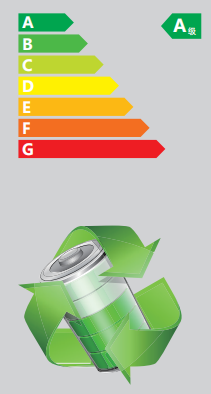
ISO 25745 / VDI 4707 Class A energy efficiency — a specification item that can be verified rather than assumed.
4. Maintenance and long-term service
Maintenance is where low-rise ownership costs accumulate, and the two systems wear differently.
A traction drive has fewer consumable items in the lifting path. Joylive equips its products with an automatic braking force self-test function that periodically tests the motor's braking capability to verify reliability, supporting condition-based rather than purely calendar-based servicing. Door operation is governed by a comprehensive door lock safety strategy that combines mandatory standard compliance, mechanical strength verification and safety redundancy to eliminate single-point failures, with a door-opening restrictor that prevents door slamming or forcible opening. Maintenance itself is supported by the JoyCloud IoT platform, which enables digital management and predictive maintenance across the full elevator journey, from installation and maintenance to real-time monitoring.
A hydraulic installation carries a different maintenance profile: hydraulic fluid, filters, valves and cylinder seals all belong on the inspection list, and oil containment and disposal must be planned. That is not a disadvantage in itself, but it changes the skills and spare-parts inventory a service partner must hold.
For a buyer, the useful question is not which system is cheaper to service in the abstract, but which service model the supplier can actually sustain in the building's location over the next decade — parts availability, remote diagnostics and a modernization path when the control system ages.
Automatic braking force self-test — a condition-based maintenance feature on the traction side.
5. Retrofit suitability
Retrofits are where the two systems most often separate.
A small machine room elevator fits buildings that already have a small rooftop machine room, or where one can be created within structural and planning constraints. Joylive's range explicitly includes adding elevators to existing buildings, and the design variants — compact cabinet, low headroom, reduced shaft space — exist precisely for buildings whose original shaft is tight.
A hydraulic elevator is often considered where the ceiling above the shaft cannot accept machinery, or where structural loading has to stay low. The trade-off simply moves to the lower level: plant space, pit and cylinder arrangement, and fluid handling all have to be resolved inside or beside the existing building.
Both routes require the same discipline before quotation: measure the existing shaft, confirm overhead clearance and pit depth, check floor loadings and anchoring points, verify the machine room location and access route, and plan the construction sequence so the building keeps operating. Installation risk is not theoretical — Joylive manages it with pre-work risk assessment, real-time site risk control and standardized operations, and supports site teams with training and supervision.
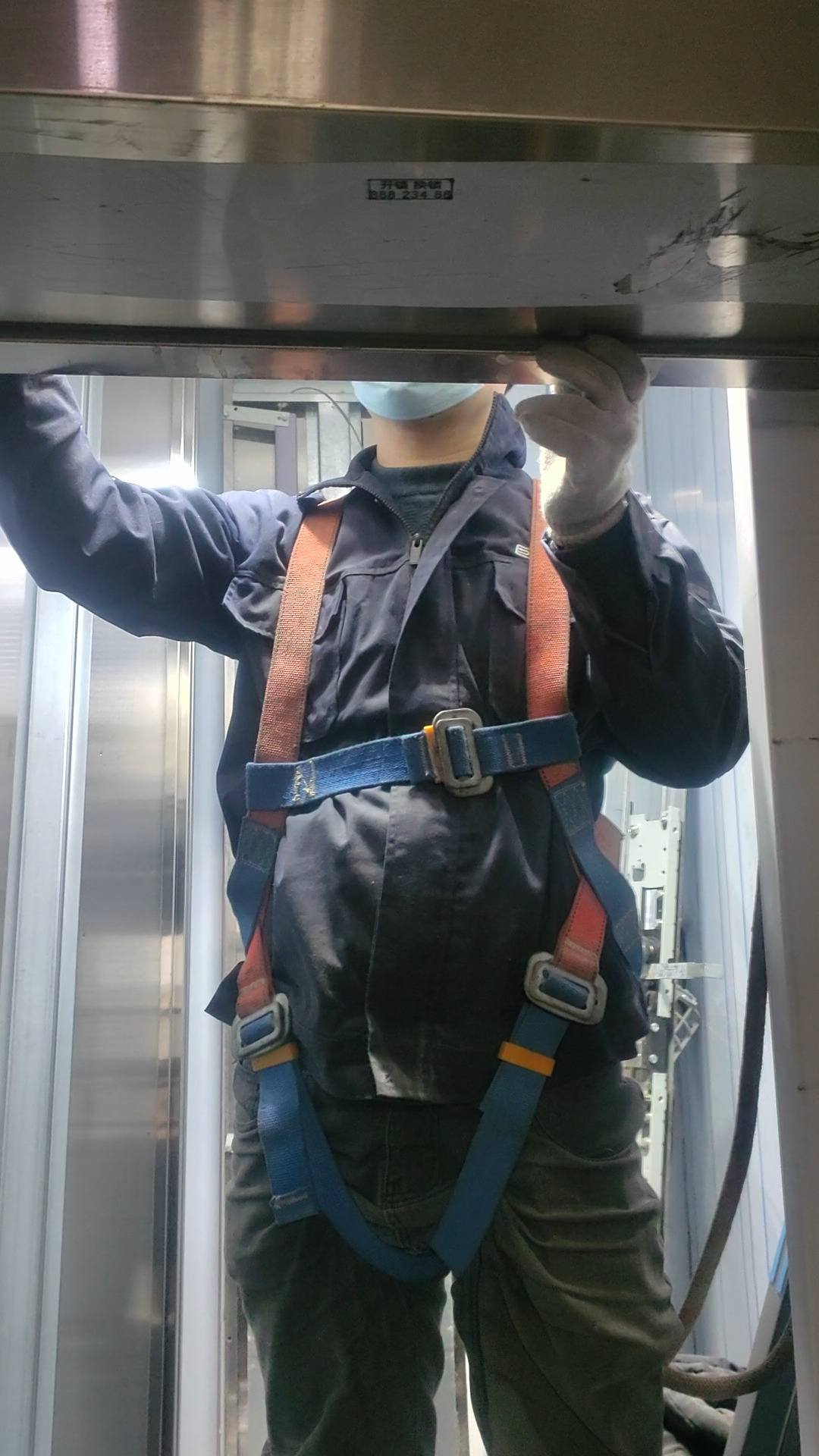
Site installation — retrofit work starts with measuring the shaft, not with selecting a drive type.
Side-by-Side Comparison
| Decision dimension | Small machine room elevator (traction) | Hydraulic elevator |
|---|---|---|
| Drive principle | Gearless permanent magnet synchronous traction machine with variable frequency drive; optional regenerative drive | Hydraulic power unit (pump, tank, valves) acting on a cylinder |
| Machine room location | Compact machine room above the hoistway | Power unit room at a lower level, typically ground floor or basement |
| Shaft and overhead requirement | Needs a machine position and headroom above the shaft; low-headroom and reduced-shaft-space layouts available | No traction machinery above the shaft; shaft base, pit and cylinder arrangement shape the design |
| Leveling | VVVF control aligns the car with floor height within ±3 mm, with automatic re-leveling (Joylive systems) | Leveling is influenced by hydraulic fluid temperature; short re-leveling at the landing is typical in daily operation |
| Start/stop noise | Silent braking control technology; PMSM reported 5–10 dB lower noise than conventional drives | Pump and fluid flow are the primary noise sources |
| Energy performance | ISO 25745 / VDI 4707 Class A; standby power below 50 W; fast call response reduces standby consumption by 50% | Consumption follows pump duty cycle; hydraulic fluid replacement is a recurring cost item |
| Motor efficiency | PMSM: 5%–15% higher efficiency and 20%–30% energy saving rate versus conventional alternatives | Not applicable to the same motor classification |
| Maintenance profile | Fewer wearing parts in the lifting path; automatic braking force self-test; JoyCloud IoT predictive maintenance | Fluid, filter, valve and cylinder-seal inspection; oil containment and disposal planning |
| Retrofit fit | Fits buildings with an existing or creatable small rooftop machine room; reduced-shaft-space variants available | Considered where overhead machinery cannot be supported and a lower-level plant room is available |
| Regulatory reference | Machine room lighting under EN 81-20 / EN 81-50: minimum 200 lux at floor level | The same machine room lighting requirement applies to the power unit room |
Read the table as a constraint map, not a scoreboard. A single hard constraint — no rooftop machine position, or no lower-level plant space — eliminates one column immediately, regardless of how the other dimensions compare.
Step-by-Step Decision Framework for a Low-Rise Project
- Confirm the vertical envelope. Record the number of stops, total travel and the standards that apply in the destination market. EN 81-20 and EN 81-50 set the machine room lighting baseline at 200 lux at floor level, and the same standard family governs many of the safety expectations a quotation will be checked against.
- Map the available spaces. Identify whether the building can provide a compact machine room above the hoistway, a power unit room at a lower level, or neither. This single step usually decides the technology.
- Define the traffic profile. Estimate peak trips per hour, usage windows and passenger mix. High-frequency duty pushes the decision toward traction and toward an energy classification that can be verified; occasional low-rise use keeps hydraulic options open.
- Set ride and leveling requirements. For apartments, hotels and healthcare-adjacent buildings, specify leveling accuracy and start/stop noise explicitly. Joylive systems align to floor height within ±3 mm with automatic re-leveling and use silent braking control to reduce operating noise.
- Compare lifecycle cost, not just purchase price. Build the model from energy class, standby consumption, maintenance scope and consumables. ISO 25745 / VDI 4707 Class A with standby below 50 W is a verifiable starting point; hydraulic fluid replacement and seal inspection belong in the same model.
- Run the retrofit feasibility check. Measure shaft dimensions, overhead clearance and pit depth; verify machine room location, access route, floor loadings and anchoring; and plan installation risk control with pre-work assessment and a supervised site sequence.
- Lock procurement and acceptance terms. Confirm MOQ, delivery terms, acceptance test and payment structure before engineering is frozen. Typical Joylive terms are MOQ 1 unit, FOB or CIF delivery, pre-shipment test as the acceptance criterion, and 30/70 payment.
- Plan the long-term service model. Agree on remote monitoring, spare-parts coverage, response expectations and the modernization route. The JoyCloud IoT platform provides digital management and predictive maintenance from installation through the full lifecycle.
Use Cases: Which Building Profile Points Where
Low-rise residential apartments with a rooftop room. A small machine room passenger elevator with a gearless PMSM traction machine and low-headroom layout fits the available space, keeps leveling precise for residents with trolleys or wheelchairs, and keeps start/stop noise low in a building where people sleep one wall away.
Boutique hotels and serviced apartments. Guest-room proximity to the shaft makes noise the dominant concern. Silent braking control and PMSM noise characteristics support a quieter ride; where the rooftop cannot host machinery, a hydraulic elevator with an acoustically separated power unit room becomes the alternative rather than the default.
Low-rise commercial and office buildings. Duty cycle is higher, so energy class and regenerative capability carry more weight in the budget. ISO 25745 / VDI 4707 Class A performance with standby below 50 W and the 5%–15% efficiency advantage of PMSM drives are directly comparable against pump duty cost.
Retrofits of existing buildings. If a small rooftop machine room already exists, the small machine room elevator route preserves the structure. If the roof cannot accept machinery but a lower-level plant room can be created, the hydraulic route avoids overhead structural work — at the cost of fluid maintenance planning.
Mixed-use low-rise projects. These usually split the decision: a small machine room configuration for the passenger core and a hydraulic unit for a low-traffic service or garage lift. The framework above applies independently to each shaft.
From Decision to Execution: Procurement and Long-Term Supply
Once the technology is settled, the second half of the long-term question takes over: who supplies it, and for how long.
Commercial terms. Joylive quotes at MOQ 1 unit, with FOB or CIF delivery terms, pre-shipment test as the acceptance criterion, and 30/70 payment terms. These are the checkpoints to lock before engineering freeze, because changing delivery or acceptance terms after design has started extends the schedule.
Supplier capacity and continuity. Joylive Elevator Co., Ltd. produces 15,000 units a year from a 105,000 m² factory, with 450 employees and 150 engineers. The company reported revenue of ¥299.12 million in FY 2024. For a residential developer planning a multi-phase project, this is the continuity question: can the specification stay stable across phases and years?
Qualifications and quality system. Joylive holds a top A qualification in China for special equipment manufacturing, installation, modernization and maintenance, and operates a nationally accredited CNAS laboratory. Quality control runs from design to service with traceability of materials, processes and inspection procedures, supported by robotic arms and fully automatic bending lines on the manufacturing side.
Export and service reach. Approximately 55% of output is exported, with markets covering China, Europe, America, Oceania, Africa, Central Asia, Southeast Asia and the Middle East. The JoyCloud IoT platform supports digital management and predictive maintenance across the full lifecycle, which is what turns a delivery into a service relationship.
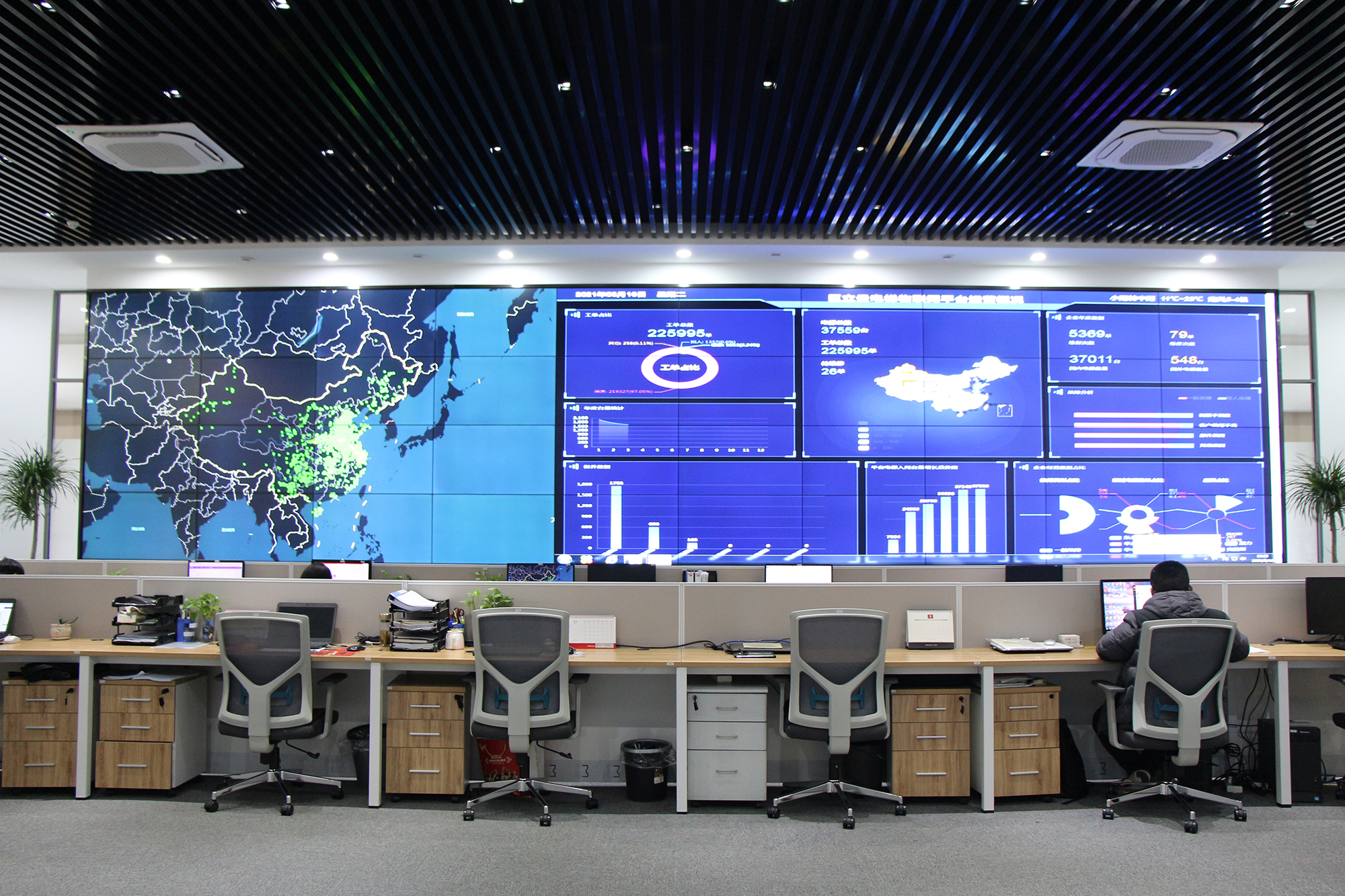
Service centre operations — the long-term half of the supplier decision.
FAQ
1. Which standards and approvals apply to a small machine room elevator or hydraulic elevator installation?
EN 81-20 and EN 81-50, effective from 2017, require a minimum of 200 lux at floor level in machine room work spaces, so the machine room must be designed as a lit, accessible working area rather than a storage space. Both a small machine room elevator and a hydraulic elevator use a machine room, so the same machinery-space principles apply. For trade and customs documentation, passenger or freight elevators other than continuous action are classified under HS code 842810. Approval is granted at project level by the local authority, so the documentation package should be verified against the destination market before shipment.
2. Can a small machine room elevator be configured for a low-rise residential building with limited space?
Yes. Space-constrained configurations include a compact control cabinet, low-headroom and reduced-shaft-space layouts, paired with a gearless permanent magnet synchronous traction machine and a variable frequency drive; a regenerative drive is available as an option. Joylive applies VVVF speed control so the car aligns with floor height within ±3 mm with automatic re-leveling, and uses silent braking control technology to reduce start/stop noise. Energy performance reaches ISO 25745 / VDI 4707 Class A, with standby power below 50 W and a fast call response that reduces standby consumption by 50%.
3. What are the purchasing terms, and what drives long-term cost?
Typical Joylive purchasing terms are MOQ 1 unit, FOB or CIF delivery, pre-shipment test as the acceptance criterion, and 30/70 payment terms. Long-term cost is driven mainly by energy performance, maintenance scope and component pricing. ISO 25745 / VDI 4707 Class A energy efficiency, standby power below 50 W and permanent magnet motor efficiency gains of 5%–15% (with a 20%–30% energy saving rate) reduce running cost, while rare-earth magnet prices, which rose more than 20% in 2025, affect the purchase price of PMSM-based packages.
4. How can a configuration be validated before the equipment ships?
Validation at the delivery stage is handled through the pre-shipment test, which is the stated acceptance criterion for Joylive orders. Joylive operates a nationally accredited CNAS laboratory and applies whole-process quality control from design to service, with traceability of materials, processes and inspection procedures. Manufacturing accuracy is supported by robotic arms and fully automatic bending lines, and each unit carries an automatic braking force self-test that periodically verifies the motor's braking capacity.
5. What should a residential developer verify before committing to a long-term Chinese small machine room elevator supplier?
Four things. Capacity and continuity: annual output of 15,000 units from a 105,000 m² factory, with 450 employees and 150 engineers. Qualifications: a top A qualification in China for special equipment manufacturing, installation, modernization and maintenance, plus CNAS laboratory accreditation. Market experience: an export ratio of 55%, with a service network covering China, Europe, America, Oceania, Africa, Central Asia, Southeast Asia and the Middle East. Service model: the JoyCloud IoT platform for digital management and predictive maintenance across the elevator's full lifecycle. Joylive Elevator Co., Ltd. reported revenue of ¥299.12 million in FY 2024. If you are shortlisting suppliers for an upcoming residential project, request the Joylive product catalogue and a project-specific quotation at marketing@joylive.com or via WhatsApp at +86 178-0524-3526.
Conclusion
Small machine room elevators and hydraulic elevators are not rivals in the abstract; they are answers to different building constraints. When a low-rise building can provide a compact machine room above the hoistway, the traction route delivers measurable advantages that matter over a decade of ownership: leveling within ±3 mm, ISO 25745 / VDI 4707 Class A energy performance with standby below 50 W, quieter start and stop, and a maintenance profile built around fewer wearing parts and predictive monitoring. When the ceiling above the shaft cannot carry machinery but a lower-level plant room is available, the hydraulic route remains a legitimate, well-understood answer — with fluid maintenance and duty-cycle energy use planned into the budget from day one.
The decision framework is the same in either case: confirm the vertical envelope, map the available spaces, define the traffic profile, set ride and leveling requirements, compare lifecycle cost, run the retrofit feasibility check, lock procurement and acceptance terms, and plan the long-term service model. Buyers who work through those eight steps rarely need a market statistic to settle the question — the building usually answers it first.
Joylive Elevator Co., Ltd. manufactures both traction and hydraulic elevators and supports low-rise projects from design and manufacturing through installation, modernization and full-lifecycle maintenance. Manufacturer details, capacity figures and service coverage are published in the company catalogue.
Planning a low-rise residential or commercial project?
Request the Joylive product catalogue and a project-specific quotation for small machine room elevators, hydraulic elevators and complete low-rise packages.
Download the Joylive product catalogue (PDF)
Email: marketing@joylive.com · Tel / WhatsApp: +86 178-0524-3526 · Website: joylivelift.com
Address: No. 322, Maoxu Rd., Bacheng, Kunshan, Suzhou City, Jiangsu Province, China
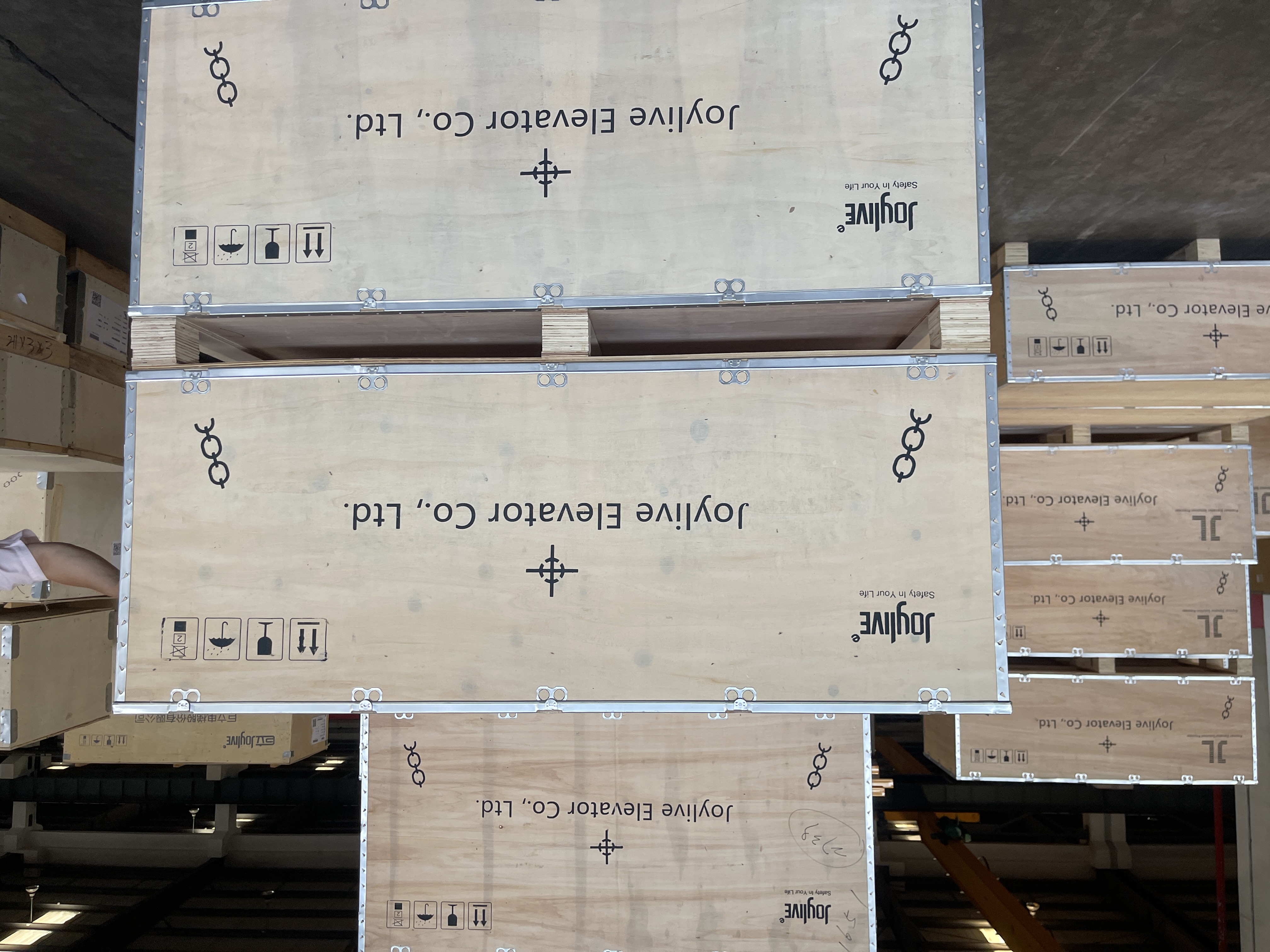
Export packaging — pre-shipment test and packaging checks are part of the stated acceptance criteria.
Have Questions or Need More Details?
Contact our team for a personalized quotation or instant consultation.
Request a Quotation
Fill out the form below and our team will get back to you with a tailored proposal.
WhatsApp Direct Chat
Prefer to chat in real-time? Message us on WhatsApp for instant assistance & quick answers.
- Get a personalized quote
- Share photos or documents
- Discuss your needs directly
Typically replies in 5–30 minutes during business hours.