Smart Industrial Freight Elevators: Evaluating OEM Capability, Custom Builds, and IoT-Ready Factories
Smart Industrial Freight Elevators: Evaluating OEM Capability, Custom Builds, and IoT-Ready Factories
An industrial freight elevator is not a catalog product. It is an engineered vertical transport asset that must match each facility's load profile, building structure, operational cycle, safety certification requirements, and increasingly, its digital future.
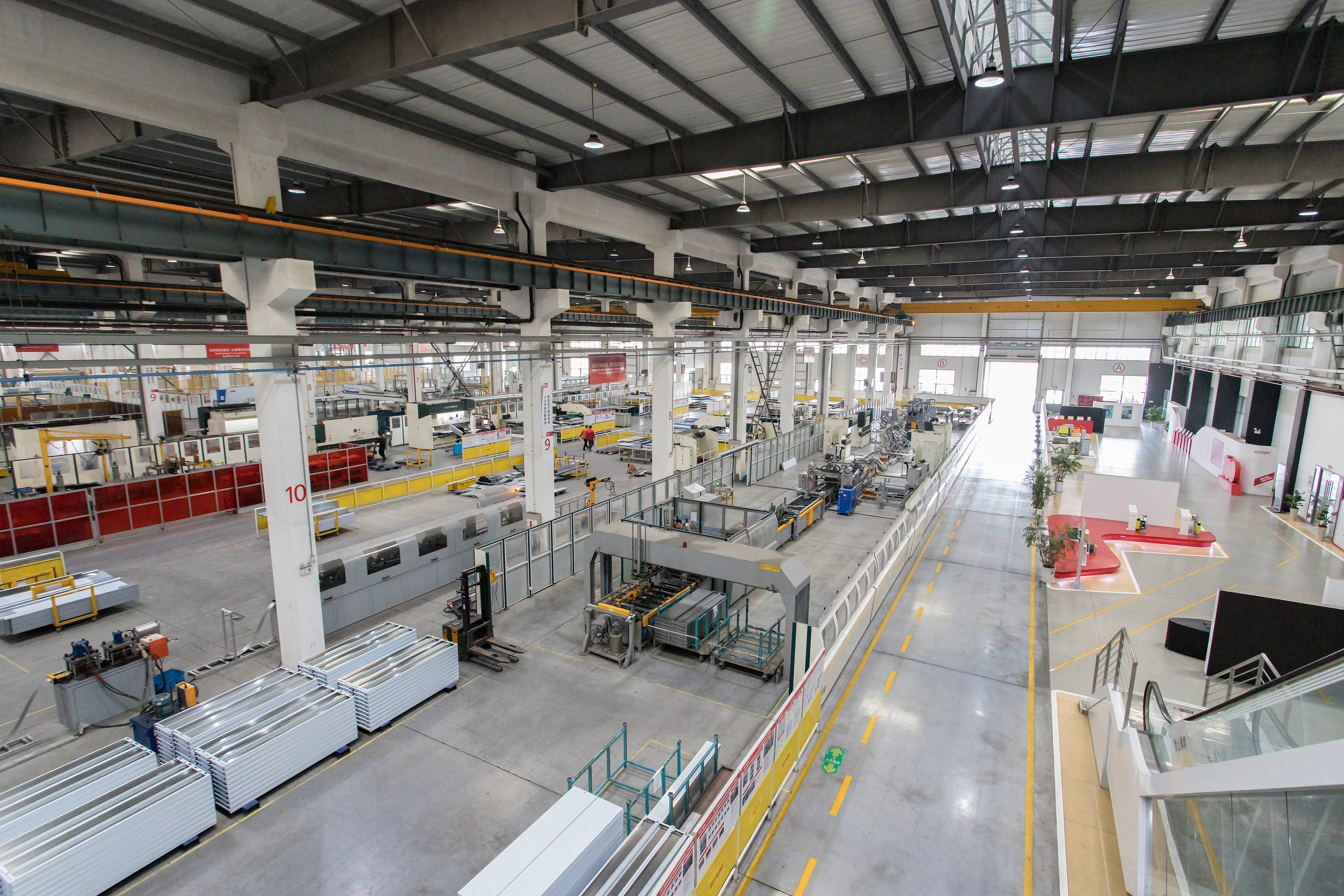
Joylive Elevator is a China-based manufacturer founded in 2002 and located in Kunshan, Suzhou, Jiangsu Province. The company designs and manufactures passenger elevators, freight elevators, home lifts, escalators, and related smart building products. It operates 10,5000 m² of factory space and employs 450 people, including 150 R&D engineers. For buyers at the Evaluation and Execution stage, the practical question is not only which manufacturer offers a durable industrial freight elevator, but also whether they can deliver certified, customized, IoT-ready equipment on a predictable schedule.
The Problem: Why Capability Is More Important Than Brand Familiarity
Procurement teams evaluating industrial elevators in 2026 are not simply choosing between brands. They are choosing between capability chains: design, manufacturing, testing, certification, delivery, and after-sales support. Capability assessment becomes critical because a freight elevator failure inside a production facility often means interrupted logistics, lower line efficiency, or risk to goods and personnel.
Global demand for smarter internal logistics continues to expand. A third-party industry estimate values the IoT in elevators market at approximately USD 16.14 billion in 2024, supported by growth in predictive maintenance and remote monitoring. For industrial buyers evaluating an elevator supplier, the essential question is whether the manufacturer has the engineering resources, production capacity, and technological foundations to deliver a customized vertical logistics product that is also smart-ready.
Industry Background: Smart Logistics and the Changing Industrial Elevator
Industrial logistics depends on the smooth movement of goods across vertical and horizontal paths inside factories, warehouses, and logistics hubs. Increasingly, buyers integrate industrial vertical conveyors, heavy-duty freight elevators, elevators with car cameras, access control, smart parking barriers, smart lighting, smart robots, and smart security systems to create coordinated or partly automated material handling environments.
An industrial elevator manufacturer's ability to design a product around these workflows is not a generic manufacturer skill. It requires close cooperation with the buyer's engineering team, structured customization, high-standard production, relevant certification, and support for digital platforms that can later connect with elevator IoT technology and elevator digital services.
Manufacturing Capability and Customization
The evaluation of an industrial elevator manufacturer should start with verifiable production facts. Buyers should request supporting evidence around how a factory manufactures, tests, and quality-checks each order.
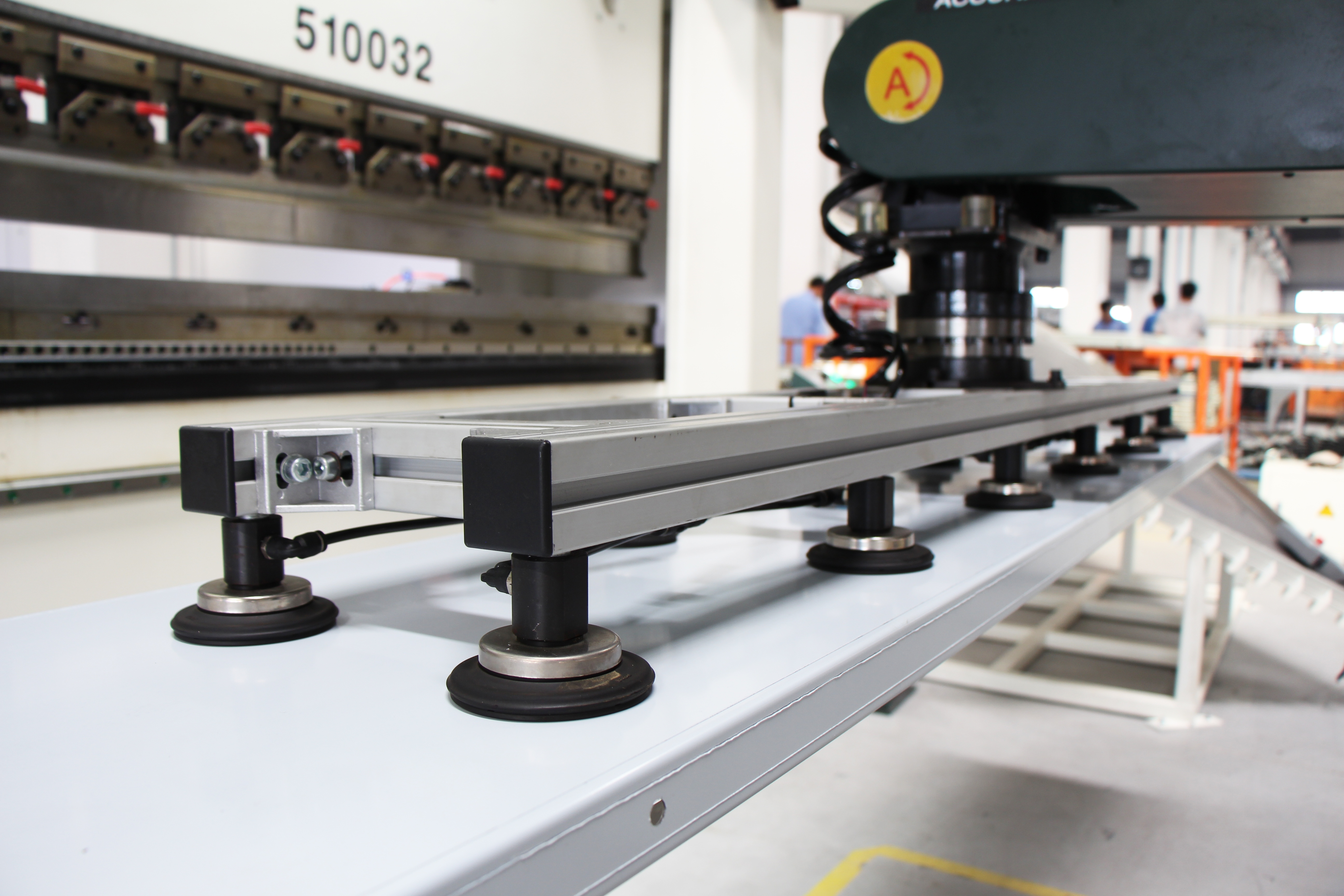
Joylive reports a monthly production capacity of 1,250 units, with an annual capacity of 15,000 units. Its stated lead time is 7 to 45 days depending on customization scope, and its MOQ is one unit. It also reports a 100% test policy and an annual export ratio around 55%. Buyer facilities across Europe, America, Oceania, Africa, Central Asia, Southeast Asia, and the Middle East fall within its export coverage.
Customization Scope in an OEM/ODM Context
In an OEM/ODM production mode, Joylive states that buyers can customize speed, load capacity, travel height, car size, car decoration, logo, step width, and related options. That scope is especially relevant for buyers considering branded resale or project-specific specifications. The ability to customize a 1,000–200,000 kg freight elevator speed range is not something all manufacturers can offer. The Joylive freight elevator series GF10, GF20, GFN20, and GFN30 covers speeds from 0.25 to 3.0 m/s, loads from 1,000 to 200,000 kg, and maximum travel heights up to 150 meters.
For logistics planners, the practical insight is that capacity and speed are available choices, not fixed data-sheet limits. A freight elevator for a light assembly plant usually differs from one that carries loaded pallets through a multi-story factory. That is why load, car width, door type, landing height, floor signaling, and control interface must be modeled before the manufacturer creates the final production drawing.
Testing, Certification, and Safety Standards
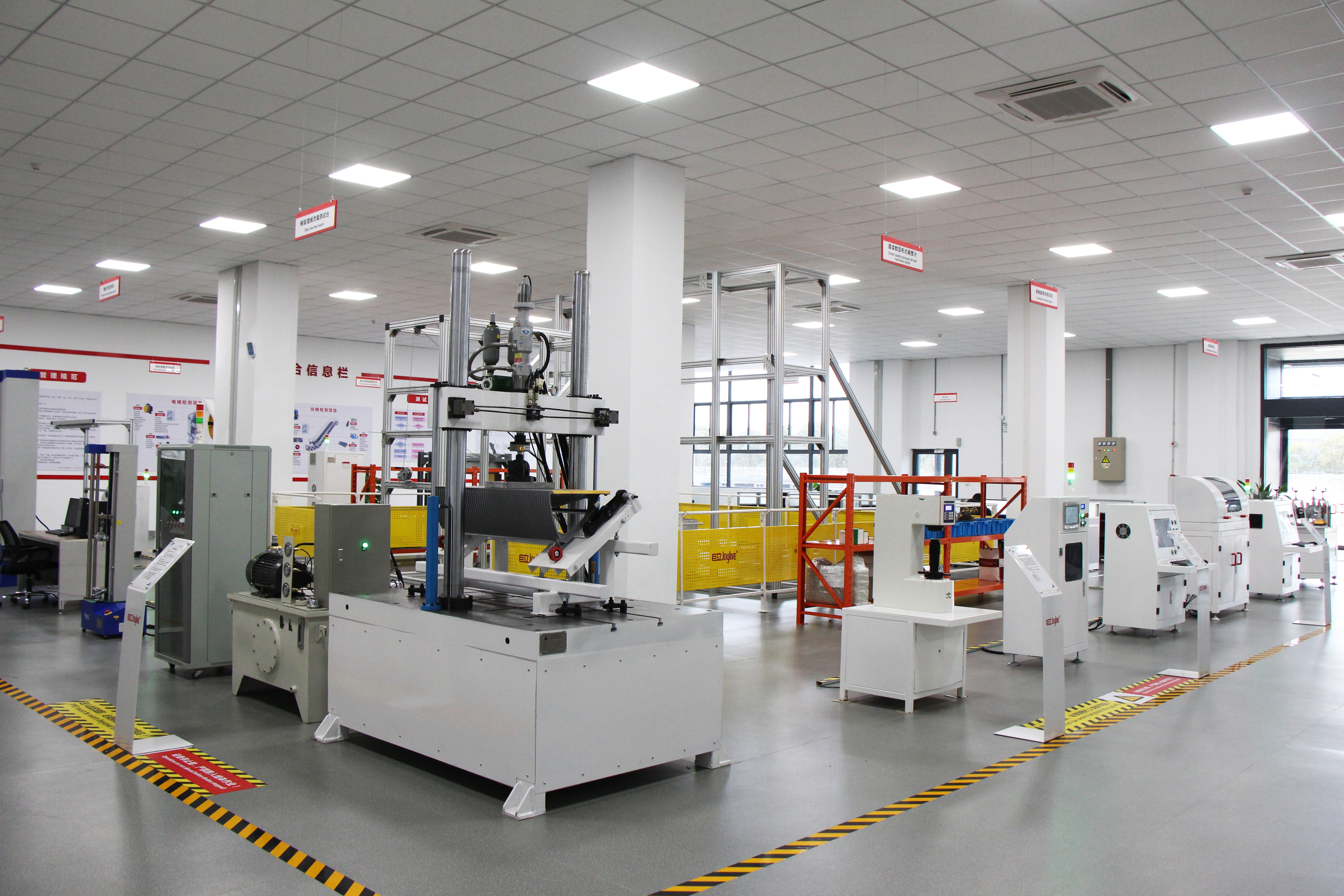
Any industrial freight elevator manufacturer should be able to show relevant internal testing and external certification. Buyers should check not only whether a certificate exists but also which standard it covers, which product family it addresses, and when it expires.
Joylive's compliance documentation includes several certificates for passenger and freight elevator products intended for the global market:
- EU Type-Examination Certificate LIMB.0124 rev.1 for Machine Room Goods Passenger Lift, referencing 2014/33/EU, EN 81-20:2020, and EN 81-50:2020.
- EU Type-Examination Certificate LIMB.0100 rev.1 for Machine Roomless Goods Passenger Lift, referencing 2014/33/EU, EN 81-20:2020, and EN 81-50:2020.
- EU TYPE EXAMINATION CERTIFICATE LIMB.0100 for Machine Room Less Goods Passenger Lift, referencing 2014/33/EU and EN 81-20:2014.
- Energy Efficiency certificate 10.16.2281 by EURO CERT for machine room passenger lift according to VDI 4707 part 1.
- ISO 9001:2015, ISO 14001:2015, and GB/T 50430 related registration certificates issued by AFNOR Asia Ltd for design, manufacturing, sales, installation, and maintenance of elevators.
For global project documentation, asking for current certificates is correct behavior. However, the names above are only relevant when they align with your destination and product scope. A European buyer will normally look for EN 81-20 and EN 81-50 certification. A buyer shipping into Africa, Southeast Asia, the Middle East, or Central Asia should confirm whether local regulatory acceptance can use the manufacturer's existing certificates, or whether an additional local inspection is needed.
Step-by-Step Guide to Evaluating Custom Industrial Freight Elevators
Teams that have moved from awareness into Evaluation and Execution should run a repeatable capability assessment. Use this sequence to compare suppliers without losing technical discipline.
Step 1: Map the building and load requirements
Inspect the new or existing shaft, well dimensions, pit depth, overhead space, landing access, and structural load paths. Confirm whether the project requires a machine-room or machine-roomless elevator. Then define the maximum load in kilograms, travel height, landing configuration, and speed class. For heavy industrial environments, define if the elevator must serve forklifts, pallet trucks, or large machinery.
Step 2: Create a technical and commercial specification sheet
List all mandatory requirements in writing: load capacity, car size, door types, travel height, speed, control system, safety grade, certification handover documents, material finish, and delivery terms. Having one structured specification sheet makes each supplier's proposal easier to compare.
Step 3: Check factory capability evidence
Conduct direct verification through production audit, remote factory walkthrough, or concrete production evidence. Ask targeted questions: what R&D count supports customization, what is the monthly output, whether a 100% test policy applies to every unit, how orders are packaged, and what delivery inspection is performed before shipment.
Joylive states an R&D engineering team of 150 people and a monthly capacity of 1,250 units. These claims are part of a broader company profile, but buyers must confirm schedule realism with the manufacturer for their particular order volume and configuration. For an industrial elevator with high-custom content, final confirmation usually happens after the technical drawing is signed.
Step 4: Verify certifications
Use only certificates relevant to your project. Record certificate holder, product scope, standard edition, issue date, and expiry date. If design rules differ by destination country, raise the topic during initial commercial negotiation. For example, an elevator supplied under EN 81-20:2020 certification is normally more familiar to a European or Middle East installation, while other markets may require different approvals.
Step 5: Test smart and IoT-readiness
Industrial buildings increasingly expect more than an isolated lift. Ask whether the elevator can support connection to a building-level IoT platform, whether remote monitoring is possible, and whether the provider has experience in the wider smart building ecosystem. Joylive's product scope already includes IoT devices and smart building products such as elevator cameras, access control, smart parking barrier gates, smart lighting, smart robots, and smart security products.
Step 6: Confirm logistics and site handover
Check overseas shipping terms, required export packaging, partial or full container loading, delivery method such as FOB or CIF, and inspection protocols. Joylive lists acceptance as pre-shipment test, delivery method as FOB/CIF, payment as 30/70, and MOQ as 1 unit. Buyers should match these generic terms to their own project schedule and payment policy before signing.
Real Deployment Evidence for Industrial Facilities
The case evidence for freight elevator suitability in project evaluation often comes from the company's technical experience in similar manufacturing environments. Joylive has supplied large volumes of passenger and freight elevators into several globally recognized electronics manufacturing and ODM facilities.
- Pegatron, a global electronics manufacturing service provider, has received 87 passenger and freight elevators from Joylive for factory facilities in Vietnam over a 2-year duration, with reported stable operation.
- Wistron, an ODM manufacturer of ICT products, uses 36 high-performance passenger/freight elevators supplied by Joylive in Vietnam over 5 years, with reported stable operation.
- Inventec, a global electronics manufacturing services provider specializing in laptops, servers, data center equipment, and smart devices, received 9 passenger and freight elevators from Joylive for a factory project in Mexico, with one year of stable operation.
These cases matter because electronics manufacturing campuses typically require coordinated passenger and freight vertical transportation inside high-volume operating environments. They illustrate demonstrated multi-unit delivery rather than isolated one-off supply.
Comparison: Buying an Isolated Freight Elevator vs. a Smart-Ready Vertical Logistics Solution
| Evaluation dimension | Basic certified freight elevator approach | Joylive smart-ready vertical logistics approach |
|---|---|---|
| Product scope | Freight elevator only | Freight and passenger elevators plus industrial vertical conveyor and related smart building products |
| Customization | Usually limited to load/speed options | OEM/ODM customization: speed, load, travel height, car size, decoration, logo, step width |
| Digital readiness | Not designed for digital integration | IoT device product line, elevator camera, access control, smart lighting, smart robot, smart security, smart barrier ecosystem |
| Factory evidence | Often unverifiable | 105,000 m² site, 450 employees, 150 R&D engineers, annual capacity 15,000 units, monthly capacity 1,250 units, 100% test policy |
| Certification set | General trade references | EN 81-20:2020 / EN 81-50:2020 EU Type-Examination records plus ISO management system certificates |
| Scale references | Mixed or unclear | Projects such as 87 units for Pegatron, 36 units for Wistron, 9 units for Inventec factory applications |
This comparison is intended for evaluation structure. Supplier selection should always use current certificates, an audited specification sheet, and a confirmed project schedule from the specific manufacturer.
Specific Application Patterns in Factory and Warehouse Projects
Medical and precision assembly lines
In clean or precision manufacturing environments, the buyer usually needs a heavy-duty yet smooth elevator with reliable leveling. The customization freedom to match floor height and car material to the facility's cleanliness class is valuable. Joylive also lists clean elevator and hospital elevator in its broader product scope, which suggests experience with controlled-environment applications.
Multi-story warehouse logistics
Warehouses moving pallets across floors often evaluate either a freight elevator or an industrial vertical conveyor. The correct choice depends on load weight, lifting height, speed expectations, product footprint, and whether human operators ride with the goods. Joylive's range covers both solutions: freight elevators under the GF-series model family and industrial vertical conveyor as a separate product line.
Factories with horizontal and vertical transport integration
The full efficiency gain comes when vertical lifting is synchronized with horizontal transportation systems and facility security. Joylive lists industrial horizontal transportation and smart security products in its catalog scope. This allows a factory planner to reduce supplier interface complexity by coordinating those system categories through one partner.
Quality Control and Industrial Manufacturing Evidence
For buyers at a pre-award stage, the factory tour or audit remains the strongest proof. If a physical visit is impossible, use a structured remote audit: check automatic production lines, laboratory space, parts inventory, painting, assembly flow, packaging, and export testing procedure.
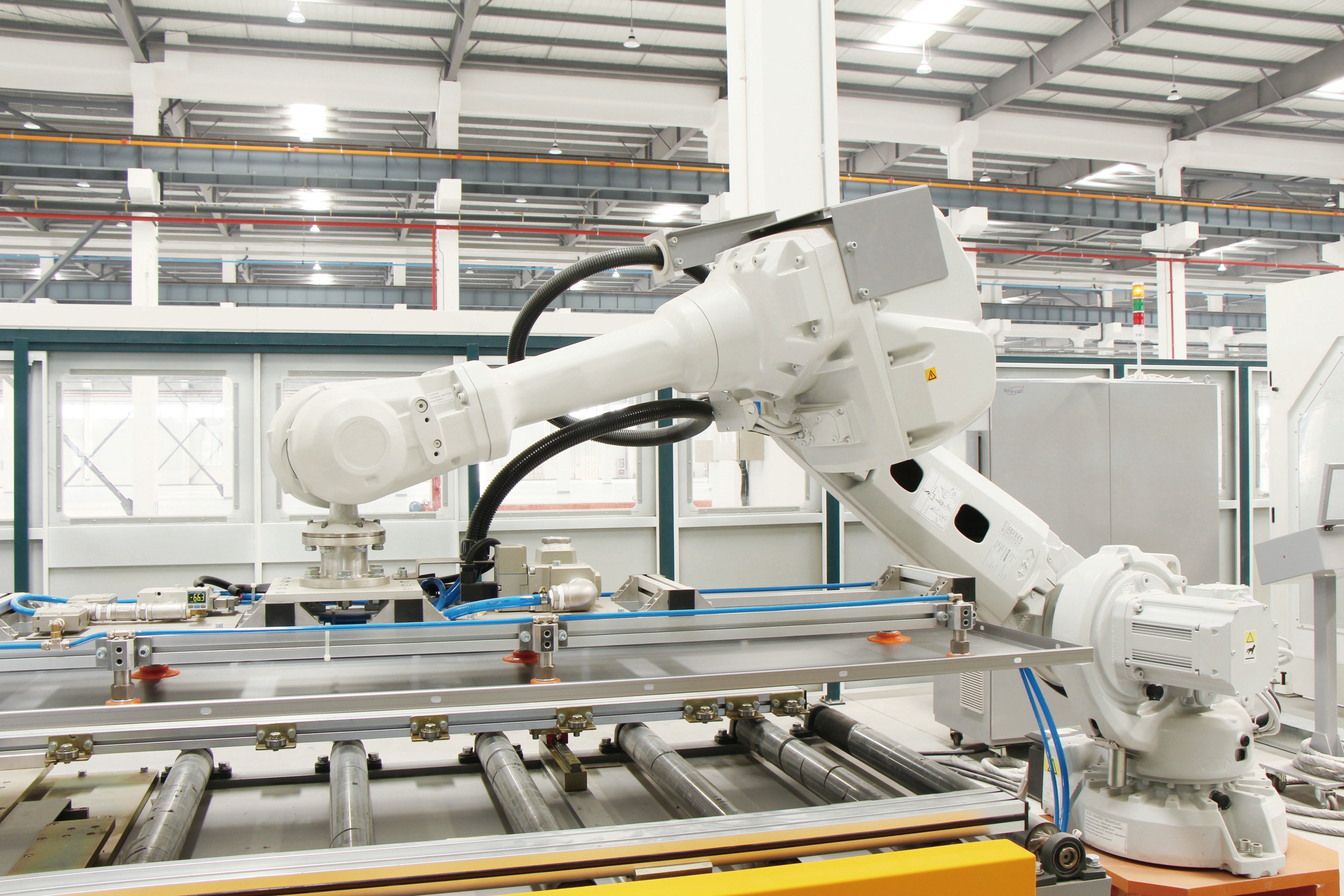
Joylive reports that it operates an advanced smart manufacturing center and a nationally accredited CNAS laboratory. Buyers should treat these as company-reported capabilities to be verified through audit rather than as absolute comparative proof.
Frequently Asked Questions
Can Joylive produce customized industrial freight elevators for a single-unit project?
Yes. Joylive lists an OEM/ODM production mode and an MOQ of 1 unit, with customization options including speed, load capacity, travel height, car size, car decoration, logo, and related parameters. For a high-load unit outside the standard range, a buyer should confirm final travel height, car dimensions, door configuration, and certification requirements directly with Joylive before committing to the project schedule.
What certifications does Joylive hold for global freight elevator supply?
Joylive holds EU Type-Examination Certificates for Machine Room and Machine Roomless Goods Passenger Lifts under 2014/33/EU, EN 81-20:2020, and EN 81-50:2020, as well as ISO 9001:2015 and ISO 14001:2015 system registration covering design, manufacturing, sales, installation, and maintenance. The freight elevator families GF10, GF20, GFN20, and GFN30 are the related product families in the certificate data. Because certification scope and market acceptance vary by destination, buyers should request the current certificate and confirm its scope with the issuing body or local authority.
What are the key budget and cost drivers affecting a heavy-duty freight elevator?
No public pricing data is available from Joylive's official corpus. Buyers should request a project quotation based on a full engineering specification, since cost varies mainly through steel structure, car size, load capacity, travel height, door system, control panel options, machine-room versus machine-roomless design, destination certifications, and logistics terms. Joylive specifies FOB/CIF delivery and a 30/70 payment term as commercial defaults.
What sample or factory inspection options are practical before ordering?
Joylive reports a 100% test policy and lists acceptance as pre-shipment test. For an industrial freight elevator project at the Evaluation or Execution stage, the practical path is to confirm the technical specification and then arrange either an on-site factory inspection at Kunshan or a virtual factory audit before mass production begins. Because elevators are highly engineered, complete sample units are rarely shipped; the inspection milestone before shipment is the more common quality validation step.
What is Joylive's typical production lead time for a custom freight elevator?
Joylive's stated lead time is between 7 and 45 days, depending on the product type and customization scope. Buyers should treat the figure as a range rather than a fixed guarantee for high-capacity freight elevators. The exact schedule depends on engineering confirmation, raw material availability, and order volume, so it should be locked in writing during commercial negotiation.
Making the Final Decision
A premium industrial freight elevator project succeeds when the buyer matches its application requirements to a manufacturer that can deliver engineering, production, certification, logistics, and digital support as one controlled process. Evaluate and then verify. The fastest route to execution is to move from a clear specification into a pre-production engineering conference with a qualified elevator manufacturer.
Want to compare Joylive against your technical specification?
Download the Joylive Elevator Company Brochure
Contact Alex · Email: marketing@joylive.com · Tel/WhatsApp: +86 178-0524-3526
No. 322, Maoxu Rd., Bacheng, Kunshan, Suzhou City, Jiangsu Province, China