
Top 5 Applications Where a Freight Elevator Outperforms Standard Lifts: A Ranked List
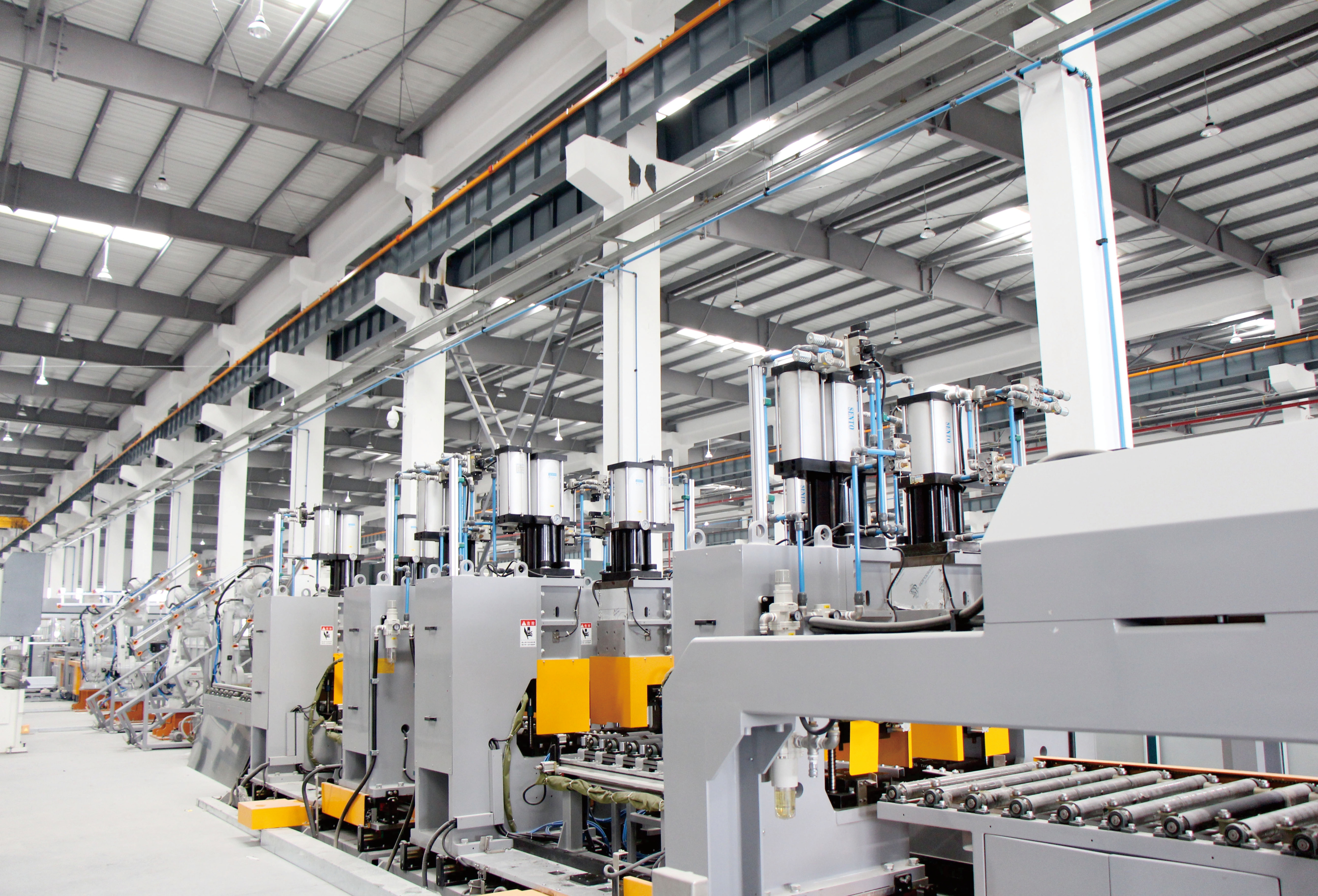
Industrial production environment: freight elevator builds are engineered for repeated goods movement rather than passenger traffic.
Short answer: A freight elevator outperforms a standard lift in five industrial applications, ranked here by how far the real duty profile departs from passenger-oriented design: (1) multi-floor raw material and component handling in manufacturing, (2) palletized finished-goods flow in warehouses and distribution centers, (3) explosion-risk and dust-laden process environments, (4) hygiene-controlled food, pharmaceutical and clean production, and (5) multi-floor vehicle and large-asset service operations.
Each rank below explains the load pattern, the environment, the cost of a stoppage, and what a buyer should verify before releasing an order. The ranking is a procurement framework rather than a standards classification: it orders applications by duty severity, not by industry size. Where a fact comes from a third party, the source is named; where it comes from Joylive Elevator, it reflects documented product and capability information rather than marketing shorthand.
Problem Definition: A Standard Lift Is Engineered for People, Not for Loads
A standard passenger lift is designed around intermittent, people-first traffic. Passengers walk in and out; loads are light and evenly distributed; cabin finishes are selected for appearance; door timing is tuned for comfortable pedestrian flow. Industrial goods movement breaks every one of those assumptions. Goods arrive on pallets, in crates, on carts, or rolling on wheels. They enter through wide openings, frequently pushed or driven in by powered equipment. Weight concentrates on small contact areas instead of spreading evenly across the floor. And the trips repeat all day at a rhythm set by production, not by passenger comfort.
When that mismatch is ignored, the symptoms are predictable: door and threshold damage, complaints from pallet-truck operators about step-over height, repeated brake and door-lock service calls, and — in the worst case — an unplanned stop in the middle of a shipping window. That is why the applications below are ranked by duty severity. The more the load pattern departs from passenger design, the less a freight elevator is simply a "nicer option," and the more it becomes the correct equipment category.
Industry Background: Why Freight Capacity Became a Procurement Topic
The freight segment sits inside a much larger vertical transportation market. The global elevator market was valued at approximately USD 84.8 billion in 2024 and is projected to reach USD 126.7 billion by 2034 (Global Market Insights). Within that total, the freight elevators market was estimated at USD 2.07 billion in 2024 and is expected to grow at a CAGR of 6.10%, reaching USD 2.78 billion by 2029 (Knowledge Sourcing Intelligence). Supply-side signals point the same direction: Mainland China exported 102,000 elevators and 13,000 escalators in 2024, a 17.3% increase year-on-year (China Elevator Association / Elevator World).
Two structural forces are shaping how industrial buyers evaluate lifting equipment. First, digital monitoring is moving from optional to expected — the IoT in elevators market was estimated at USD 16.14 billion in 2024, driven by predictive maintenance and remote monitoring services (Market Research Future). Second, compliance expectations are tightening: EN 81-20 and EN 81-50 are the mandatory European safety standards for elevator construction and component testing, replacing EN 81-1/2 (CEN / Liftinstituut), while the ASME A17.1-2025 (CSA B44-2025) update includes enhanced safety requirements for elevators and escalators, including IoT-based remote operation monitoring (ASME / ANSI). Meanwhile, the largest global players — Otis, Schindler, KONE and Mitsubishi Electric — collectively held approximately 25% of the global market share in 2024 (Global Market Insights), which means most industrial projects are ultimately served by a broader and more specialized supplier base.
How This Ranking Was Built
Five criteria were applied consistently to every application. They are listed here so that a buyer can re-rank the list against their own project rather than accept someone else's order:
- Load intensity and loading method — how heavy the load is, how concentrated it is, and whether it is carried, rolled, or driven on board.
- Trip frequency and duty pattern — occasional, scheduled, or continuous.
- Environment — dust, oil mist, humidity, temperature, explosion risk, and hygiene control.
- Consequence of a stoppage — whether a lift outage idles a production line, delays a dispatch window, or is merely inconvenient.
- Lifecycle cost profile — energy, maintenance demand, and the price of unplanned downtime over the equipment's service life.
Applications that score high on all five rank higher. Applications that score high on only one or two — usually load weight — rank lower, because a heavy load moved occasionally rarely justifies the same specification as a moderate load moved continuously.
Rank 1 — Multi-Floor Raw Material and Component Handling in Manufacturing
This application ranks first because it combines the heaviest loads, the most aggressive loading method, and the highest cost of a stoppage. Raw materials and work-in-progress — castings, machined components, billets, dies, batches of sheet or bar stock — move between floors as part of the production sequence, not as a warehouse exercise. The lift becomes a station on the line.
A standard lift is out of category here for structural and operational reasons rather than cosmetic ones. Powered loading concentrates force on the platform and thresholds; the load arrives repeatedly at production tempo; and any interruption propagates directly into downstream operations. The relevant specification question is not "how much can it carry once," but "what is the real point load, and how often does it repeat."
What to verify: actual load weight and footprint versus rated load; how the load enters (forklift, pallet truck, cart, or crane); door opening width and height relative to the load; floor-leveling tolerance where a pallet truck crosses the sill; and the brake and door-lock design philosophy.
Where Joylive fits: Joylive Elevator Co.,Ltd. — founded in 2002 and headquartered in Bacheng Town, Kunshan, Suzhou, Jiangsu Province — states a prominent advantage in high-quality large-tonnage freight elevators among its specialized segments. For accurate load transfer, its VVVF speed control aligns the car with floor height to within ±3 mm, which directly affects how easily a pallet truck or cart crosses the threshold. Its products are equipped with automatic braking-force self-test functionality that performs periodic checks on the motor's braking capacity.
Automatic braking-force self-test, applied across Joylive products, supports reliability in high-cycle industrial duty.
Rank 2 — Palletized Finished-Goods Flow in Warehouses and Distribution Centers
Second place goes to the distribution environment: pallets, roll cages and trolleys moving from a dock or ground-floor storage area to a mezzanine, pick floor, or upper-level staging zone. Loads here are usually lighter than in Rank 1, but the trip count is higher and the operational tolerance for waiting is lower. When a lift serves dock-to-stock replenishment, it stops being a building service and starts behaving like a conveyor with a fixed speed.
The failure mode in this application is rarely catastrophic; it is cumulative. Door edges take repeated impacts, thresholds wear, and small delays compound into missed cut-off times. Buyers should treat throughput — not cabin size alone — as the primary design variable.
What to verify: the pallet and cage footprint against cabin and door dimensions; the realistic trips per hour including loading and unloading time; wear-part accessibility; and whether the building program calls for a vertical conveyor instead of, or alongside, a freight elevator for continuous flow.
Where Joylive fits: the company's product program includes freight elevators and industrial vertical conveyors, so the recommendation can follow the traffic pattern rather than force one product category onto every project. Lifecycle management is supported by the "JoyCloud" IoT platform, which enables digital management and predictive maintenance across the entire elevator journey — from installation and maintenance to real-time monitoring.
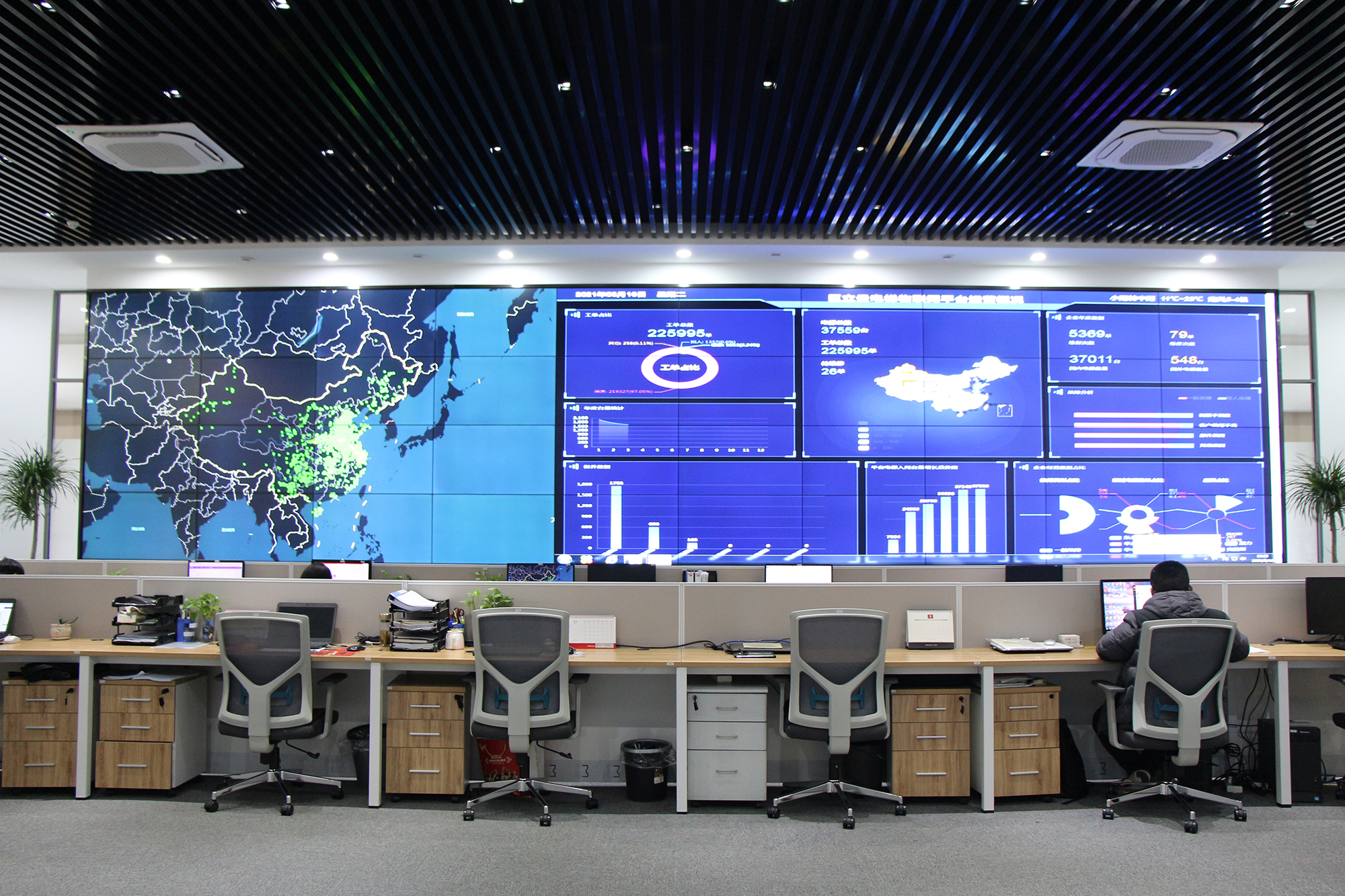
Connected service operations: digital management and predictive maintenance across installation, maintenance and monitoring.
Rank 3 — Explosion-Risk and Dust-Laden Process Environments
Third place belongs to production areas where the atmosphere itself constrains the equipment: coating and paint lines, powder handling, solvent-based processes, and other zones where flammable dust, gas or vapor may be present. The lifting requirement is often moderate in tonnage, which is why this application ranks below Rank 1 — but the specification risk is the highest on this list, because equipment selection must follow the site's hazardous-area classification and local regulation rather than a catalog preference.
The procurement implication is straightforward: buy on documentation, not on adjectives. A supplier that cannot present the classification basis, the protection concept and the conformity evidence is not a supplier for this application, regardless of price.
What to verify: the hazardous-area classification issued for the specific zone the lift will serve; the required protection concept for the drive, controls, lighting and door components; the conformity documentation path for the destination market; and whether the supplier can also service the unit in a restricted-access environment.
Where Joylive fits: explosion-proof elevators are part of Joylive's main product range, developed within the same manufacturing and quality system used for its other lines. The company operates a CNAS-accredited laboratory and states that delivered elevators are supported by full transparency and traceability of materials, processes and inspection procedures — a documentation posture that matters more in classified areas than in any other application on this list.
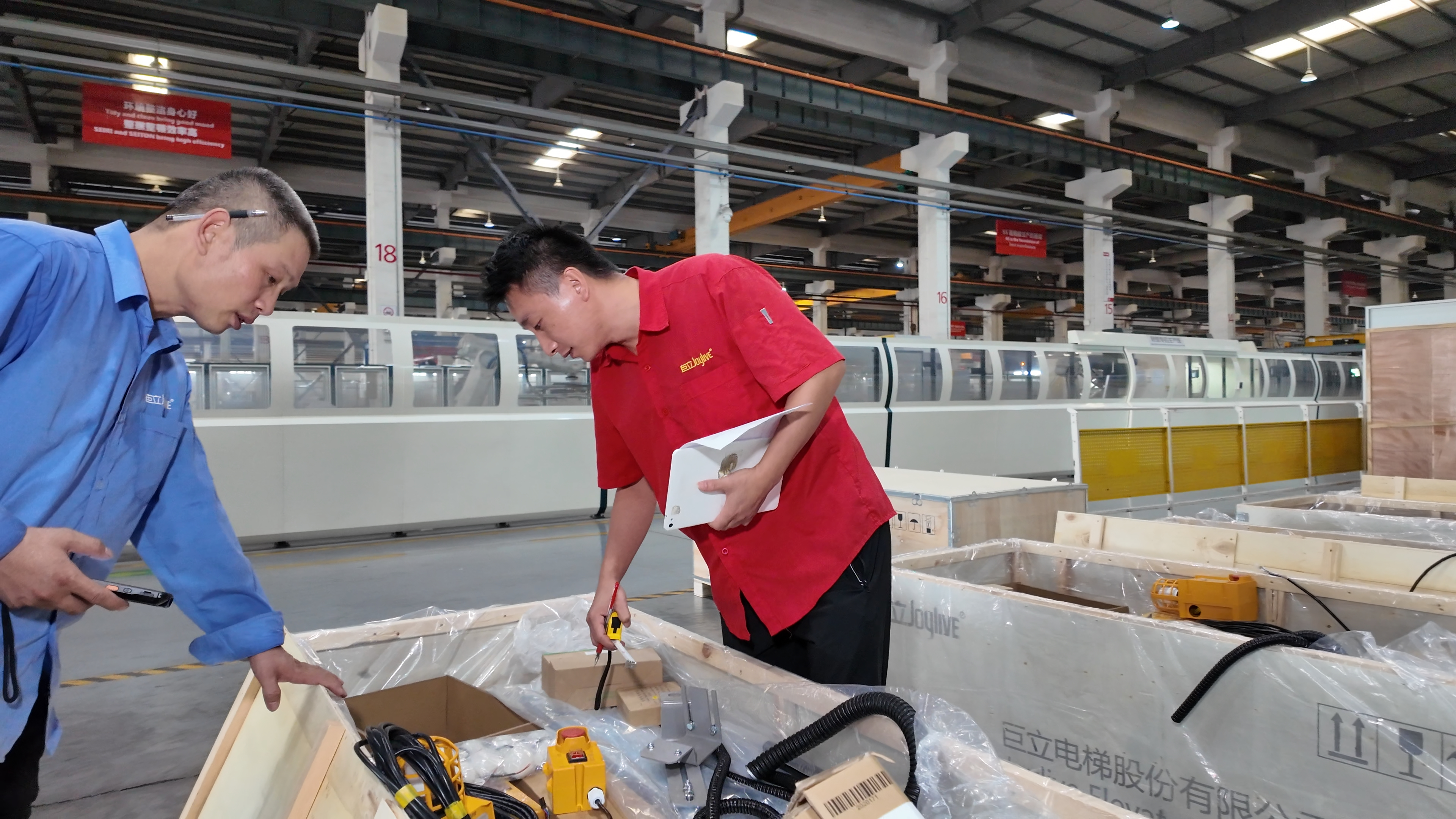
Pre-shipment inspection: traceability of materials, processes and inspection procedures before dispatch.
Rank 4 — Hygiene-Controlled Food, Pharmaceutical and Clean Production
Fourth place covers environments where contamination control, not load weight, drives the specification: food processing, pharmaceutical production, and clean manufacturing zones. Loads are typically carts, trolleys, batch containers and packaged goods — light to moderate, moved frequently, and often inside a controlled boundary that the lift itself must not compromise.
This application ranks below the explosion-risk category because the load profile is gentler, but it still sits well outside passenger-lift design intent: cleaning regimes, moisture, corrosion exposure and cross-contamination control all shape the build. A lift that is merely painted for appearance will not survive a washdown routine.
What to verify: the cleaning chemicals and frequency the equipment will face; whether the lift sits inside or outside the controlled zone; surface and drainage expectations; and how maintenance access is preserved without breaking the hygiene envelope.
Where Joylive fits: clean elevators are a listed product line in the Joylive program, positioned alongside hospital elevators and special elevators. Because the company also runs an elevator modernization business and a full lifecycle service model, a clean-area lift can be planned as part of a long-term facility program rather than a one-off purchase.
Rank 5 — Multi-Floor Vehicle and Large-Asset Service Operations
Fifth place goes to vehicle and oversized-asset movement in service centers, workshops, dealerships and mixed-use industrial buildings. Load weight is high and the geometry is awkward, but frequency is typically low and scheduled — which is why this application ranks last on duty severity, even though its engineering demands are real.
The design conversation here is dominated by approach and restraint rather than cycle rate: how the vehicle or asset gets on and off the platform, how it is positioned, and how the opening is protected while it is in motion. Where a building program also includes parking access, lighting or controlled entry, those systems are usually specified together so that traffic flows are coordinated rather than retrofitted.
What to verify: platform dimensions and approach angles; drive-on and drive-off clearances; barrier and edge protection; and whether a hydraulic solution or a machine-room arrangement better matches the building's structural constraints.
Where Joylive fits: car elevators and hydraulic elevators are both included in the Joylive product range, supported by the same customization workflow the company applies to passenger, freight, home, commercial, panoramic, hospital, explosion-proof and clean elevators, escalators, moving walks, dumbwaiters, tower lifts and IoT devices.
Comparison Table: The Ranked Applications at a Glance
| Rank | Application | Dominant load pattern | Environment constraint | Related Joylive product line |
|---|---|---|---|---|
| 1 | Multi-floor raw material and component handling in manufacturing | Heavy, concentrated loads; powered loading; high cycle count | Dust, oil mist, metal debris | Large-tonnage industrial freight elevator |
| 2 | Palletized finished goods in warehouses and distribution centers | Pallet and cage loads; near-continuous cycling | Standard industrial; dock interface | Freight elevator; industrial vertical conveyor |
| 3 | Explosion-risk and dust-laden process environments | Moderate to heavy loads in classified zones | Flammable dust, gas or vapor | Explosion-proof elevator |
| 4 | Hygiene-controlled food, pharmaceutical and clean production | Light to moderate cart and batch loads; frequent | Washdown, contamination control | Clean elevator |
| 5 | Multi-floor vehicle and large-asset service operations | Heavy, oversized, low-frequency, scheduled | Exhaust, oil, indoor-outdoor transitions | Car elevator; hydraulic elevator |
Comparison Table: Standard Lift vs. Freight Elevator by Decision Dimension
| Decision dimension | Standard passenger-oriented lift | Freight elevator for industrial duty |
|---|---|---|
| Load profile | Light, evenly distributed, carried by pedestrians | Heavy and concentrated, handled by equipment |
| Loading interface | Narrow openings, pedestrian door timing | Wide openings sized for goods and loading equipment |
| Duty expectation | Intermittent, comfort-driven | Repeated, production-driven |
| Leveling accuracy | Comfortable step-over for passengers | Accurate alignment for pallet trucks and carts — Joylive uses VVVF speed control to align the car with floor height to ±3 mm |
| Safety focus | Passenger protection and ride quality | Load handling, door-lock integrity and brake reliability — Joylive applies a door-opening restrictor and automatic braking-force self-test |
| Service model | Scheduled, calendar-based maintenance | Digital management and predictive maintenance via the "JoyCloud" IoT platform |
Energy and Lifecycle Economics: The Data Behind the Budget Decision
Budget comparison is where freight elevator decisions are most often reduced to purchase price alone. That is a mistake, because a lift that runs thousands of cycles a year is an operating cost item, not a one-time purchase. Joylive's recorded comparison of its permanent magnet synchronous motor traction technology lists higher power factor and higher power density, a 5%–15% efficiency advantage, noise reduced by 5–10 dB, less maintenance, and an energy-saving rate of 20%–30%.
| Documented parameter (Joylive traction technology) | Recorded value |
|---|---|
| Power factor and power density | Higher power factor, higher power density |
| Efficiency advantage | 5%–15% higher efficiency |
| Noise | 5–10 dB lower noise |
| Energy-saving rate | 20%–30% |
| Maintenance demand | Less maintenance |
| Energy efficiency certification | ISO 25745 / VDI 4707 highest Class A, with standby power consumption below 50 W |
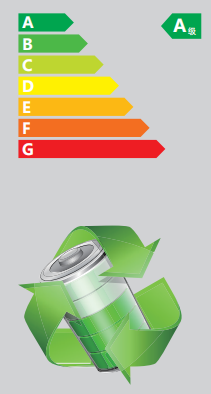
Energy performance is a procurement variable: Class A energy efficiency under ISO 25745 / VDI 4707, with standby consumption below 50 W.
Read together, these two comparison tables describe the real trade-off. A standard lift is cheaper to specify against a passenger brief; a freight elevator is specified against a goods brief, where leveling accuracy, door and brake design, energy consumption and serviceability determine how often the asset is available when production needs it.
Step-by-Step Breakdown: Deciding Whether Your Project Belongs in This List
- Define the real load, not the nominal one. Record the heaviest recurring load, the heaviest exceptional load, and how the weight is distributed across the platform. Concentrated point loads drive specification more than average weight.
- Map the loading method. A load carried by hand, rolled on a cart, or driven on by a pallet truck or forklift produces three different interface requirements. Loading method determines opening size, threshold and protection needs.
- Quantify the duty pattern. Estimate trips per hour at peak, not per day on average. Continuous flow patterns may point toward an industrial vertical conveyor; batch patterns usually point toward a freight elevator.
- Classify the environment. Identify dust, moisture, temperature, corrosion, hygiene and explosion-risk conditions, and confirm which classification or standard governs the installation. This step determines whether a standard freight build, a clean build, or an explosion-proof build is compliant.
- Compare lifecycle economics, not just purchase price. Energy consumption, maintenance demand and the cost of an outage belong in the same comparison as the equipment quotation.
- Validate the supplier before shipment. Joylive applies design review, intelligent manufacturing and standards compliance in production — with robotic arms and fully automatic bending lines used to raise machining precision — and implements rigorous safety management for on-site installation work through pre-work risk assessment, real-time site risk control and standardized operations. Ask any supplier to show how those steps are documented for your project.
Use Cases: What These Applications Look Like on Site
The five ranks translate into recognizable site patterns. In a machining plant, a large-tonnage freight elevator carries castings and fixtures from a ground-floor receiving area to a second-floor production line, where the pallet truck must cross the sill without a step. In a distribution center, the same equipment class handles dock-to-mezzanine pallet replenishment at a pace that makes leveling accuracy and door durability daily concerns.
In a coating or powder-handling plant, an explosion-proof industrial freight elevator serves a classified zone where documentation and protection concepts matter more than tonnage. In a food or pharmaceutical facility, a clean elevator moves carts and batch containers inside a controlled envelope that must survive a routine washdown. In a service center or workshop, a car elevator moves vehicles and oversized assets between floors on a low-frequency but demanding schedule.
Across all five, the pattern is consistent: the application, not the catalog, sets the specification. That is the practical difference between an industrial elevator treated as a building service and a freight elevator treated as production equipment.
Training and supervision support installation quality and long-term service continuity.
FAQ
Do freight elevators have to meet different safety and compliance requirements than standard lifts?
Not a different code universe, but a different compliance path, component set and documentation burden. In Europe, EN 81-20 and EN 81-50 are the mandatory safety standards for elevator construction and component testing, replacing EN 81-1/2 (CEN / Liftinstituut). In North America, the ASME A17.1-2025 (CSA B44-2025) update includes enhanced safety requirements for elevators and escalators, including IoT-based remote operation monitoring (ASME / ANSI). For industrial duty, compliance attention concentrates on load handling, door-lock integrity and brake reliability: Joylive applies a door-opening restrictor to prevent door slamming or forcible opening, and equips its products with automatic braking-force self-test that periodically verifies the motor's braking capacity. For classified environments, the required protection concept follows the site's hazardous-area classification and applicable local regulation.
Can a freight elevator be customized for explosion-proof, clean or vehicle-carrying duty?
Yes — these are engineered variants, not accessories. Joylive's product range includes freight elevators, explosion-proof elevators, clean elevators, car elevators, hydraulic elevators and industrial vertical conveyors, alongside passenger, home, commercial, panoramic, hospital and small passenger elevators, escalators, moving walks, dumbwaiters, tower lifts, IoT devices and smart building products. The company positions itself as a customized elevator system solution provider covering design and R&D, intelligent manufacturing and whole life cycle management, so the customization conversation begins with your load, environment and building constraints rather than with a fixed catalog configuration.
How should a buyer compare the cost of a freight elevator with a standard lift?
Compare total operating cost, not just the equipment quotation. Joylive's documented traction data records a 5%–15% higher efficiency for its permanent magnet synchronous motor technology, less maintenance demand and a 20%–30% energy-saving rate, with ISO 25745 / VDI 4707 highest Class A energy efficiency and standby power consumption below 50 W. Availability also has a cost: automatic braking-force self-test, high-precision door-zone leveling with automatic re-leveling, and condition monitoring through the "JoyCloud" IoT platform all reduce the probability of an unplanned stop — which, in a production environment, is usually the most expensive line item of all. Fuel/energy tariffs, spare-part availability and service distance should be modeled alongside the purchase price before a decision is finalized.
What should be validated before a freight elevator order is released?
Three things: the load study, the documentation, and the pre-shipment checks. Joylive applies design review, intelligent manufacturing and standards compliance during production, uses robotic arms and fully automatic bending lines to raise machining precision, and operates a CNAS-accredited laboratory for whole-process quality control from design to service. The company states that every delivered elevator carries full transparency and traceability of materials, processes and inspection procedures, and it performs pre-shipment inspection before dispatch. A buyer should ask for the inspection record, the traceability documentation and the conformity evidence for the destination market as part of the order package.
What does long-term support look like after installation, and what is the next step?
Long-term support combines maintenance strategy, spare-part access and digital visibility. Joylive delivers customized elevator system solutions spanning design and R&D, intelligent manufacturing and whole life cycle management, and its "JoyCloud" IoT platform continues to evolve — enabling digital management and predictive maintenance from installation and maintenance through to real-time monitoring. Installation quality is managed through pre-work risk assessment, real-time site risk control and standardized operations, supported by training and supervision. If your project matches one of the five ranked applications, the practical next step is a project-specific review: share your load profile, floor-to-floor height and environment classification, and request a tailored proposal or a factory brochure before finalizing the technical specification.
Conclusion
A freight elevator outperforms a standard lift in five applications, and the ranking is set by duty severity rather than by industry prestige. Manufacturing material handling leads the list because heavy, concentrated, powered loading repeats at production tempo. Warehouse and distribution flow follows, where throughput and durability dominate. Explosion-risk environments rank third on specification risk. Hygiene-controlled production ranks fourth on environmental demand. Vehicle and large-asset service rounds out the list at low frequency but high load complexity.
If your project sits anywhere on this list, the right question is no longer whether a freight elevator is worth the premium over a standard lift, but which specification, energy profile and service model will keep your vertical flow running for the next decade. Joylive Elevator Co.,Ltd. — founded in 2002, with a 105,000 m² manufacturing footprint, 450 employees including 150 engineers, and exports spanning China, Europe, America, Oceania, Africa, Central Asia, Southeast Asia and the Middle East — builds freight, explosion-proof, clean, car and hydraulic elevators for exactly these duty profiles. Explore the full product and service program at joylivelift.com.
Next step for decision-stage buyers: download the Joylive product brochure for specifications and configuration options, or send your application details for a project-specific recommendation.
📄 Brochure: Joylive Elevator Product Brochure (PDF)
✉️ Email: marketing@joylive.com | 📞 Tel: +86 178-0524-3526 | 💬 WhatsApp: +8617805243526
📍 No. 322, Maoxu Rd., Bacheng, Kunshan, Suzhou City, Jiangsu Province, China
Have Questions or Need More Details?
Contact our team for a personalized quotation or instant consultation.
Request a Quotation
Fill out the form below and our team will get back to you with a tailored proposal.
WhatsApp Direct Chat
Prefer to chat in real-time? Message us on WhatsApp for instant assistance & quick answers.
- Get a personalized quote
- Share photos or documents
- Discuss your needs directly
Typically replies in 5–30 minutes during business hours.