
Top Picks of Passenger Elevator Types for Smart Homes: A Recommendation Ranking
Direct answer: For a smart home with multiple occupied floors, a machine-room-less smart passenger elevator driven by a gearless permanent magnet synchronous motor ranks first among the elevator types compared in this guide. It is followed by the home lift, the strongest alternative for single-family, low-rise homes with limited traffic and constrained shaft space. Small passenger elevators, panoramic passenger elevators, and hydraulic or modernization-based solutions complete the ranking, each matching a narrower set of conditions.
This is a decision-stage ranking for buyers — homeowners, developers, importers and procurement managers — who have already decided to install vertical transportation and now need to select a type and verify it with evidence. Every figure below comes from published market research, international standards, or manufacturer-published product data, and every ranking position is explained by a named criterion rather than by adjectives.
Problem Definition: Why a Smart Home Changes the Elevator Decision
A passenger elevator is a people-carrying vertical transportation system built from a car, landing and car doors, a drive system (traction or hydraulic), a controller, and safety devices such as brakes, overspeed protection and door interlocks. A home lift is a residential category generally specified for a single dwelling and lower passenger volumes. Both move people between floors, but they are not interchangeable — and the difference only becomes obvious when the project is judged against smart-home criteria.
Inside a smart home, the elevator stops being background infrastructure. It runs several times a day with family members, guests and service staff on board; it sits inside the acoustic environment of the house; it draws standby power continuously; and it is expected to work with building controls rather than stand apart from them. That produces four decision criteria that ordinary commercial specifications tend to underweight:
- Ride quality over short travel distances. Residential trips are short, so starting, stopping and leveling behavior dominate the experience — and those are controlled by the drive and door system, not by travel height.
- Energy behavior in standby and light use. In a home, the elevator is idle far more than it moves, so standby consumption and call-response efficiency matter as much as running efficiency.
- Smart integration and serviceability. Remote monitoring and predictive maintenance change how faults are detected and how quickly they are resolved.
- Long-life validation. Residential equipment is expected to remain in service for decades. In Europe and North America, more than 50% of elevator units already exceed 15–18 years of service life (Roland Berger / Maximize Market Research), which is why modernization capability and traceable spare-part support matter to residential buyers too.
The practical risk for a buyer at the decision stage is not picking an obscure type. It is picking a type that does not match the shaft, the traffic profile or the compliance path, then discovering the mismatch after the order is placed.
Industry Background: Where Residential Elevator Demand Sits in 2026
The global elevator market was estimated at USD 84.8 billion in 2024 and is projected to reach USD 126.7 billion by 2034 (Global Market Insights). Base-year estimates differ between research houses — a second dataset places 2024 in the USD 79–94 billion range — so the useful signal is the scale and direction of demand rather than any single figure.
Passenger elevators are the dominant product category: they accounted for over 70% of all annual elevator installations in 2025 (Maximize Market Research). Asia-Pacific leads installation volume with more than 66% share, driven substantially by China and India. Within drive technology, traction systems represent approximately 71–72% of global installations, a share generally attributed to their energy-efficiency advantage over hydraulic systems.
Residential demand is growing separately from commercial construction. The global home elevator market was valued at USD 8.24 billion in 2024 and is expected to grow at a CAGR of 7.2% through 2034 (Zion Market Research) — growth that reflects single-family and low-rise demand rather than office or retail projects.
Regulation determines what can be installed where. Modern elevators are governed in Europe and many export markets by EN 81-20 for construction and installation and EN 81-50 for testing and components; North American safety is primarily regulated under ASME A17.1-2025 / CSA B44. For a buyer, the applicable standard sets which type is permissible, which documentation must exist, and which supplier claims can actually be checked.
How This Ranking Was Built
The ranking compares types, not individual models, and it deliberately avoids model numbers or unpublished performance claims. Each type was assessed against the same eight criteria:
- Fit to multi-storey residential use — number of stops, family traffic and occupant mix.
- Drive technology and energy evidence — only measurable, published figures were considered.
- Ride comfort — leveling accuracy, braking behavior and noise.
- Safety architecture — brake monitoring, door-lock strategy and redundancy.
- Smart integration and digital service capability — monitoring, diagnostics and maintenance planning.
- Compliance and documentation for the destination market.
- Lifecycle support — maintenance model, spares and modernization path.
- Structural fit — shaft, headroom, pit and retrofit feasibility.
Scope note: This ranking covers residential smart-home applications. High-speed passenger elevator, hospital passenger elevator, fire passenger elevator, public passenger elevator, commercial passenger elevator and platform elevator categories serve different duty, code and traffic requirements and are therefore outside the ranking, although several are referenced where they affect a residential decision.
The Ranking: Five Elevator Types Ranked for Smart Homes
Rank 1 — Smart Passenger Elevator with Gearless PMSM Traction
A smart passenger elevator is a machine-room-less (MRL) passenger elevator whose drive, control and monitoring systems are designed for continuous residential use and digital integration. It ranks first because it is the only type in this comparison that pairs passenger-elevator safety architecture with published energy, comfort and leveling data at residential scale.
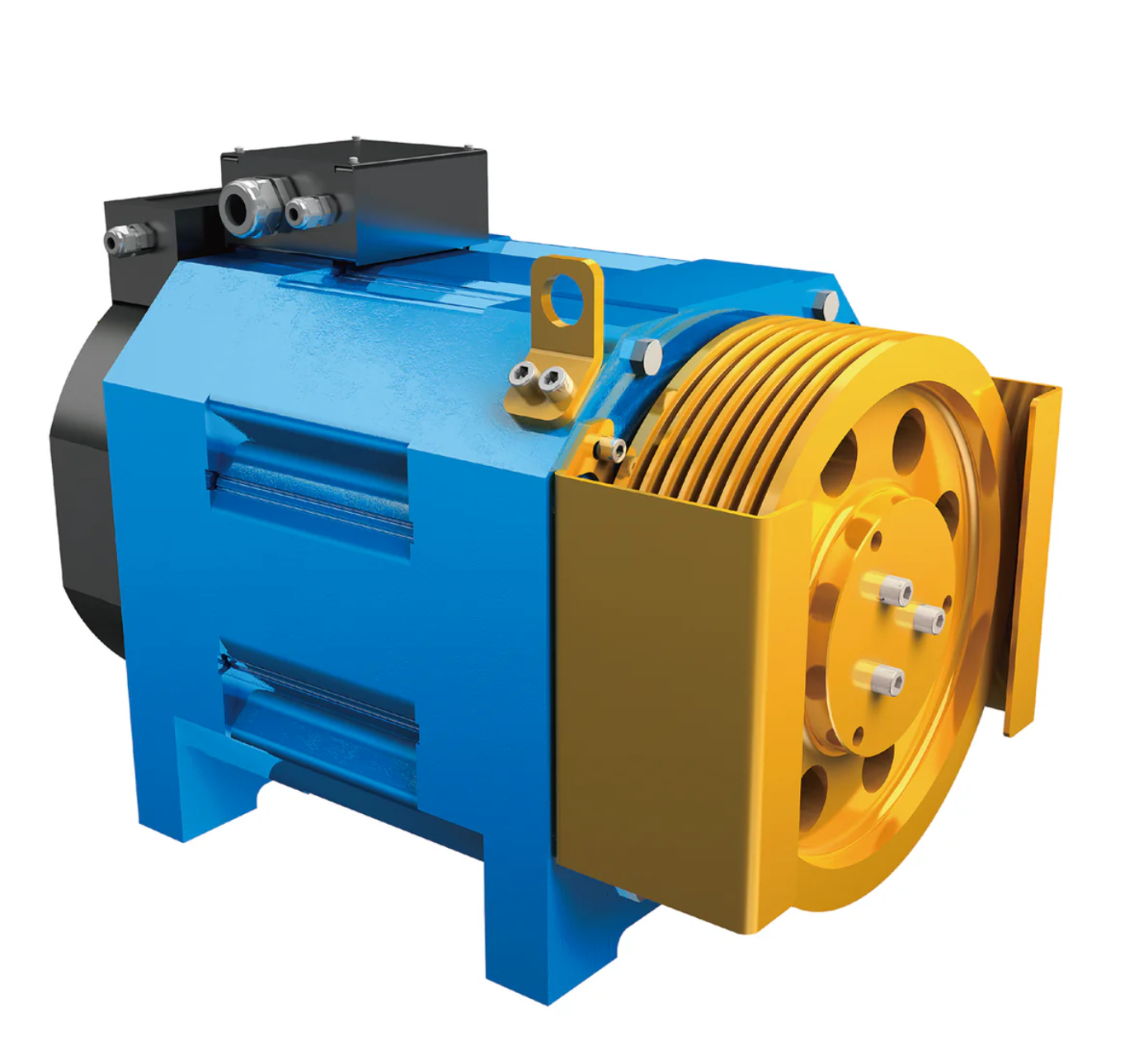
- Drive evidence: Permanent magnet synchronous motor systems are cited with 5–15% higher efficiency, 5–10 dB lower noise, higher power factor and higher power density than conventional alternatives, plus a 20–30% energy-saving rate and lower maintenance requirements.
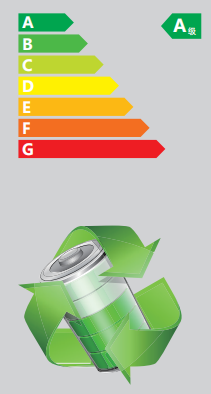
- Energy evidence: ISO 25745 / VDI 4707 Class A energy efficiency, standby power consumption below 50 W, and fast call response that reduces standby consumption by 50%.
- Comfort evidence: VVVF speed control aligns the car with floor height to ±3 mm, supported by automatic re-leveling technology; a silent braking control strategy smooths the noise generated when the brake starts and stops.
- Safety architecture: Automatic braking-force self-test runs periodic checks on the motor's braking capacity; the door-lock strategy combines standard compliance, mechanical strength verification and redundancy, with a door-opening restrictor preventing door slamming or forcible opening.
- Smart capability: The JoyCloud IoT platform supports digital management and predictive maintenance across installation, maintenance and real-time monitoring.
- Compliance: CE marking for European market access plus ISO9001, ISO14001 and OHSAS18001 certification — relevant documentation for European standard passenger elevator and CE passenger elevator projects, and to the EN 81-20 / EN 81-50 framework, while North American projects follow ASME A17.1-2025 / CSA B44.
Limitation: the constraint is structural rather than functional. MRL traction requires suitable shaft dimensions, headroom and pit conditions, and it is more capability than a single-dwelling, minimal-travel layout needs. It also does not replace the high-speed passenger elevator category, which is engineered for very tall buildings outside residential scope.
Rank 2 — Home Lift (Home Elevator)
A home lift is the residential alternative for buyers whose project does not justify passenger-elevator duty: generally a single-family dwelling, low travel, and lower daily passenger volumes. It ranks second rather than first because its typical duty and capacity are lower, and because its classification under local code must be confirmed before ordering.
The category is growing on its own trajectory — the global home elevator market reached USD 8.24 billion in 2024 with an expected CAGR of 7.2% to 2034 (Zion Market Research) — which is why so many buyers now compare a home lift against a passenger elevator at the decision stage.
Where it fits: single-family homes with tight shafts, limited headroom or a single meaningful travel distance, where a home lift is sufficient for the intended use and where local code permits that classification.
Limitation: the same evidence discipline applies. If a home lift is selected, the buyer should still verify drive efficiency data, leveling accuracy, standby consumption, safety architecture and certification documents — the criteria in this ranking do not change with the product category, only the required performance level does.
Rank 3 — Small Passenger Elevator
A small passenger elevator keeps the passenger-elevator engineering, safety and compliance framework while reducing the car footprint. It ranks third because it resolves the most common constraint in residential projects — available space — without downgrading the project to a different product class.
Where it fits: compact shafts, existing buildings where an elevator must be added, and layouts where a full-size car cannot be accommodated. Because the category remains a passenger elevator, the safety architecture described in Rank 1 — brake self-test, door-lock strategy, ±3 mm leveling with VVVF control — remains the correct reference standard.
Limitation: car size constrains capacity, accessibility dimensions and cabin layout options, so the shaft survey and approved drawing stage deserves more attention than in a standard installation.
Rank 4 — Panoramic Passenger Elevator
A panoramic passenger elevator is a passenger elevator with a glazed car and visible hoistway, chosen when the lift is part of the interior architecture rather than hidden behind a wall. It ranks fourth because it adds design value but brings structural coordination requirements that the other types do not.
Where it fits: villas and design-led smart homes where the lift is visible from a living area, staircase void or entrance hall.
Limitation: the glazed car and hoistway require structural coordination during design, and transparency exposes ride smoothness — vibration, leveling accuracy and brake noise become visible and audible to everyone in the room. That makes drive quality and silent braking behavior more important here than in any enclosed installation.
Rank 5 — Hydraulic Passenger Elevators and Modernization-Based Solutions
Hydraulic drive systems and elevator modernization projects rank fifth for smart homes: they solve specific legacy and low-rise problems rather than representing the preferred technology for new residential construction. Traction systems hold approximately 71–72% of global installations, a share generally attributed to their energy-efficiency advantage over hydraulic systems (Maximize Market Research).
Where they fit: very low-rise or heavy-load layouts where a hydraulic system is structurally convenient, and existing buildings where an elevator must be added or modernized rather than newly installed. With more than 50% of elevator units in Europe and North America beyond 15–18 years of service life (Roland Berger / Maximize Market Research), modernization is a genuine demand category — Joylive provides elevator modernization services alongside new equipment.
Limitation: the energy-efficiency position of hydraulic drive is weaker, and modernization outcomes are bounded by the existing shaft, machine space and building structure, so achievable performance must be assessed case by case.
Side-by-Side Comparison of Elevator Types
| Rank | Elevator type | Best-fit smart-home scenario | Key verified strength | Main limitation |
|---|---|---|---|---|
| 1 | Smart passenger elevator (MRL, PMSM traction) | Multi-storey family homes, three or more stops, daily family traffic, digital integration expected | PMSM drive cited at 5–15% higher efficiency, 5–10 dB lower noise, 20–30% energy-saving rate; ISO 25745 / VDI 4707 Class A; standby under 50 W; ±3 mm leveling with automatic re-leveling | Requires suitable shaft, headroom and pit; more capability than a single-dwelling, minimal-travel layout needs |
| 2 | Home lift (home elevator) | Single-family, low-rise homes with limited traffic and constrained shaft space | Dedicated residential category; segment valued at USD 8.24 billion in 2024 with 7.2% expected CAGR to 2034 | Generally lower duty and capacity; classification under local code must be confirmed before ordering |
| 3 | Small passenger elevator | Compact shafts, retrofits and added-elevator projects | Retains the passenger-elevator safety, testing and compliance framework | Smaller car constrains capacity, accessibility dimensions and cabin layout |
| 4 | Panoramic passenger elevator | Design-led villas where the lift is visible from living areas | Full passenger-elevator performance in a glazed car; ±3 mm leveling and silent braking remain the reference standard | Structural coordination for glazing and hoistway; ride smoothness is fully exposed to view and hearing |
| 5 | Hydraulic drive and modernization solutions | Very low-rise or heavy-load layouts; existing buildings needing addition or modernization | Modernization demand supported by over 50% of units in Europe and North America exceeding 15–18 years of service | Hydraulic drive holds a weaker energy-efficiency position; modernization limited by the existing shaft and structure |
Fast decision rules
| If your project is… | Ranked type to select |
|---|---|
| A multi-storey home with three or more stops and daily family use | Smart passenger elevator (Rank 1) |
| A single-family home with one or two stops and limited shaft space | Home lift (Rank 2), or small passenger elevator if passenger-elevator classification is required |
| An existing building with a compact or irregular shaft | Small passenger elevator (Rank 3) or modernization-based solution (Rank 5) |
| A home where the lift is a visible interior feature | Panoramic passenger elevator (Rank 4) |
| A building where the lift is shared by multiple households | Residential or commercial passenger elevator — not a home lift |
Step-by-Step: How to Validate an Elevator Type Before You Order
- Classify the intended use. Confirm whether the project is a home lift, a residential passenger elevator, or a public passenger elevator under local code, because the classification drives the applicable standard (EN 81-20 / EN 81-50 in Europe and many export markets; ASME A17.1-2025 / CSA B44 in North America).
- Confirm structural feasibility. Measure shaft, headroom and pit conditions and determine whether MRL traction, a machine-room arrangement or a hydraulic solution is physically possible.
- Verify the drive, not the label. Ask for efficiency figures rather than product names — permanent magnet synchronous motor data, where cited, includes 5–15% higher efficiency, 5–10 dB lower noise and a 20–30% energy-saving rate against conventional alternatives.
- Verify energy behavior including standby. Confirm ISO 25745 / VDI 4707 Class A performance, standby consumption below 50 W, and how fast call response reduces standby draw.
- Verify comfort data. Request leveling accuracy (±3 mm with VVVF control), automatic re-leveling capability, and noise-control design such as silent braking control and shock absorption.
- Verify the safety architecture. Check brake-force self-test functionality, the door-lock safety strategy, and physical measures such as the door-opening restrictor that prevents slamming or forcible opening.
- Verify smart capability and lifecycle support. Confirm what an IoT platform such as JoyCloud actually monitors, how predictive maintenance is triggered, and how spare parts and modernization are handled years later.
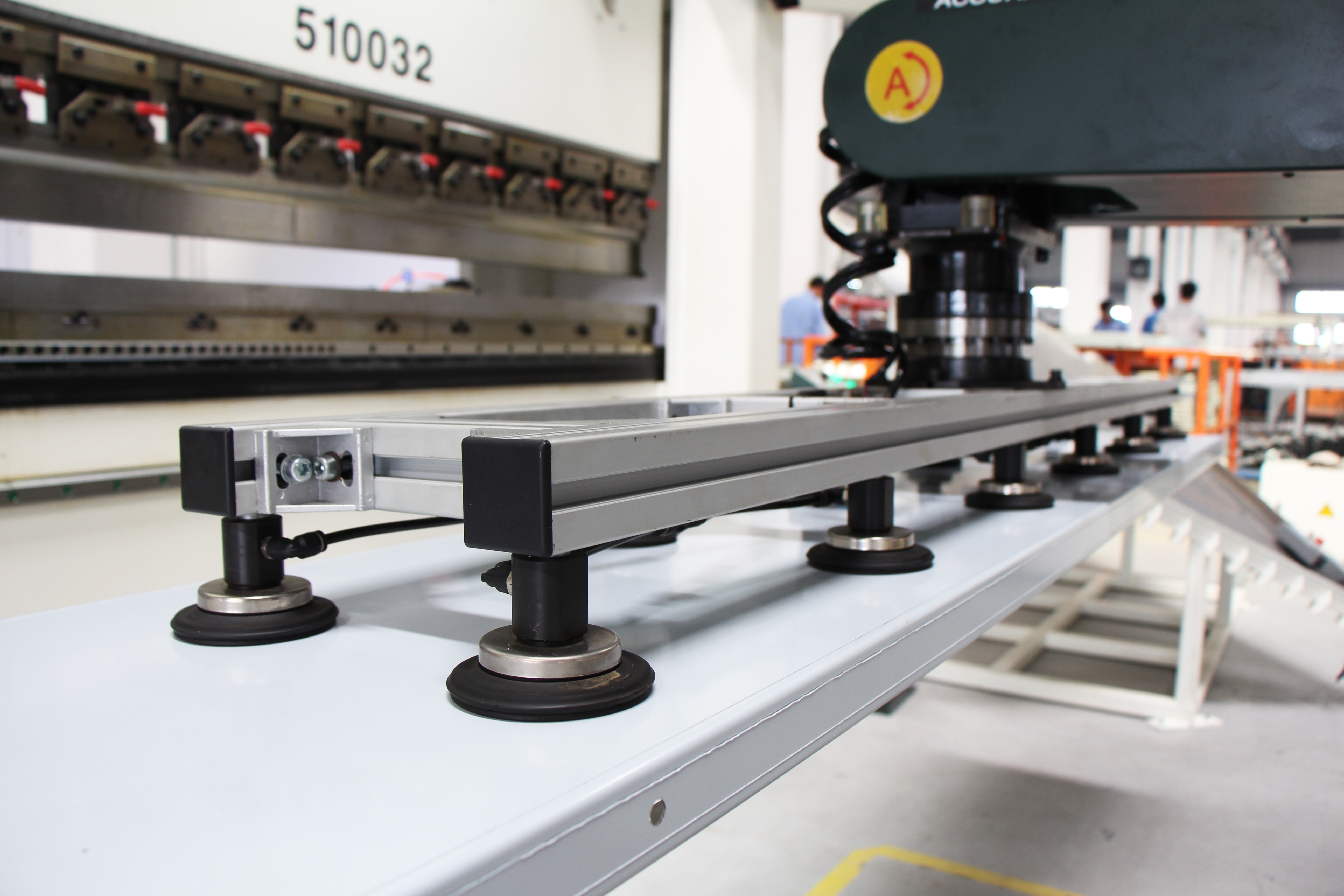
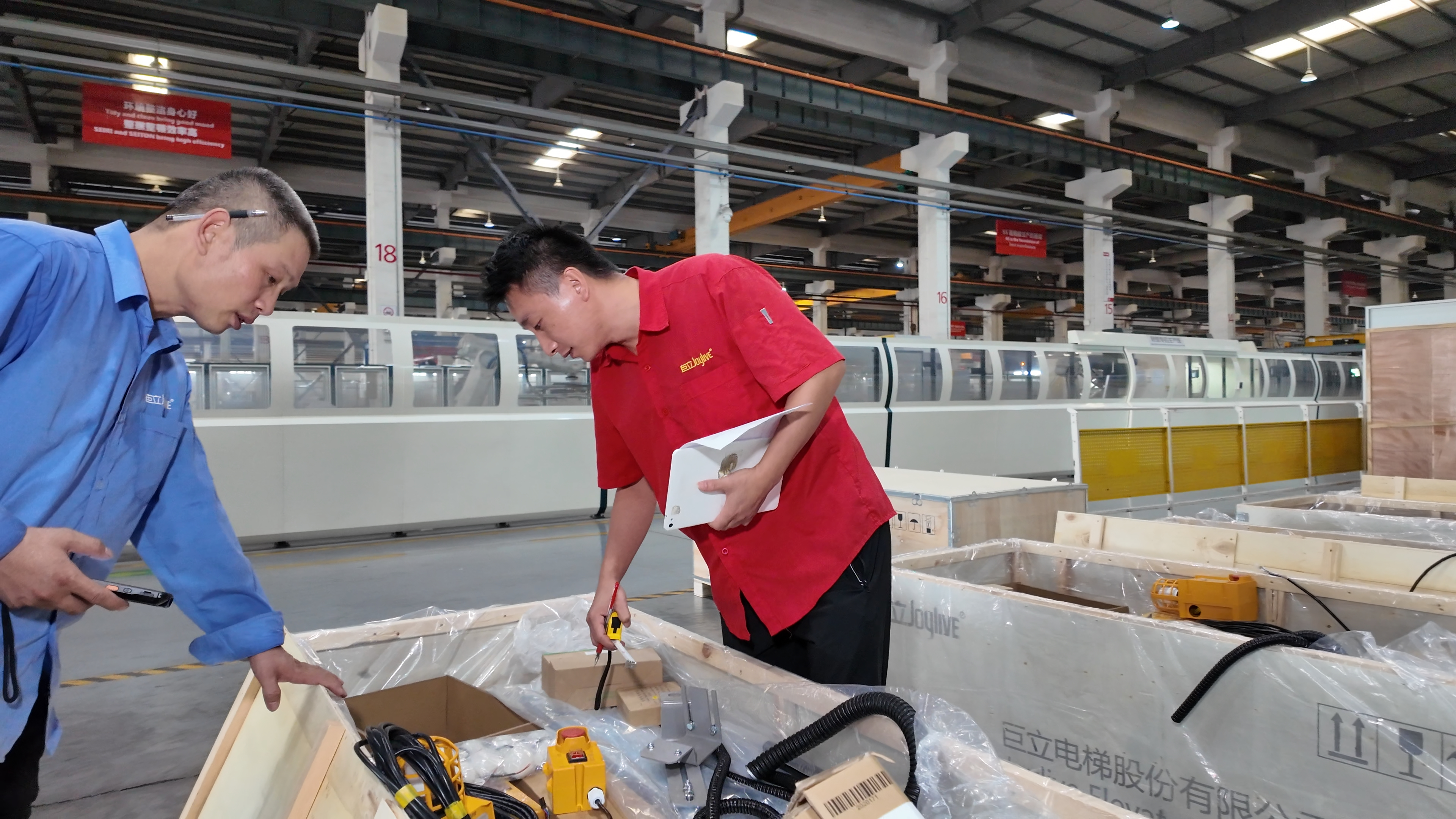
- Verify factory, quality and installation evidence. Review whole-process quality control with material, process and inspection traceability, laboratory accreditation (CNAS), manufacturing equipment such as robotic arms and automatic bending lines, pre-shipment inspection, and on-site installation safety management — including pre-work risk assessment, real-time site risk control, standardized operations, training and supervision.
Use Cases: Three Smart-Home Scenarios
Scenario 1 — Four-storey family residence, multi-generational household
Multiple occupied floors, daily traffic from children and elderly family members, and a requirement for low noise and low standby consumption point directly to Rank 1. The decision evidence to collect is drive efficiency data, Class A energy certification, ±3 mm leveling with automatic re-leveling, brake self-test, and the door-lock and door-opening restrictor strategy.
Scenario 2 — Duplex penthouse retrofit inside an existing building
Here the shaft is inherited, not designed. A small passenger elevator keeps passenger-elevator safety and compliance while fitting a compact footprint; if the travel and traffic are minimal and local code allows it, a home lift becomes the practical alternative. Where the structure cannot support new traction equipment at all, a modernization-based solution may be the only technically realistic route.
Scenario 3 — Design-led villa with a glazed stair void
A panoramic passenger elevator fits when the lift is intended to be seen. Because the car is transparent, ride smoothness is judged by every guest — so the same validation criteria (leveling accuracy, silent braking, shock absorption and noise reduction) carry more weight, not less.
In multi-tenant residential buildings the correct category is a residential or commercial passenger elevator rather than a home lift, and specialized categories such as the hospital passenger elevator or fire passenger elevator follow separate code requirements that a smart-home ranking should not conflate.
Supplier Layer: Brand References Versus Source-Factory Evidence
Type selection and supplier selection are two different decisions. On the supplier side, published brand-level data is limited: Schindler led the global elevator market in 2024 with a market share of over 11% (Global Market Insights), which is a useful reference for brand concentration but says nothing about whether a specific product fits a specific smart home. Buyers who search for an alternative brand to Kone elevator or an alternative brand to Mitsubishi elevator are effectively shifting the comparison away from brand scale and toward sourcing model, customization scope, documentation quality and lifecycle support — because comparable published specifications for every brand-and-model combination are not consistently available.
Joylive Elevator Co., Ltd. is a Chinese elevator manufacturer founded in 2002 and located in Bacheng Town, Kunshan City, Suzhou, Jiangsu Province. The company produces passenger elevators, freight elevators, home lifts, commercial elevators, fire elevators, panoramic elevators, hospital elevators, explosion-proof elevators, clean elevators, small passenger elevators, escalators, moving walks, dumbwaiters, hydraulic elevators and related vertical transportation products, and also provides elevator modernization services. It holds CE marking together with ISO9001, ISO14001 and OHSAS18001 certifications, operates a CNAS-accredited laboratory, and holds a top A qualification in China for special equipment manufacturing, installation, modernization and maintenance. Annual output is 15,000 units with 450 employees, including 150 engineers; exports account for 55% of output, and the product and service network covers China, Europe, America, Oceania, Africa, Central Asia, Southeast Asia and the Middle East.
For a decision-stage buyer, that matters in one specific way: as an elevator source factory, Joylive can be evaluated against the same evidence list used for any brand — drive data, energy class, leveling accuracy, safety architecture, certification copies, laboratory accreditation and installation safety management — rather than against advertising language.
FAQ: Comparing Passenger Elevators and Home Lifts for Smart Homes
For a multi-storey smart home, which ranks higher — a passenger elevator or a home lift?
A passenger elevator ranks higher when the home has multiple occupied floors, regular family traffic, or a requirement for verifiable energy, comfort and service data. It carries passenger-elevator safety architecture, including automatic brake-force self-test, a comprehensive door-lock strategy with a door-opening restrictor, and ±3 mm leveling with automatic re-leveling under VVVF control, together with measurable energy performance such as ISO 25745 / VDI 4707 Class A and standby consumption below 50 W. A home lift ranks second and fits single-family, low-rise homes with limited traffic and tight shafts, but its duty and capacity are generally lower, so the intended use should be classified under local code before ordering.
Which certifications and standards should be verified for a passenger elevator in a smart home project?
The destination market determines the compliance path: EN 81-20 (construction and installation) and EN 81-50 (testing and components) apply in Europe and many export markets, while North American projects follow ASME A17.1-2025 / CSA B44. On the supplier side, verify CE marking for European market access and ISO9001, ISO14001 and OHSAS18001 management certifications — all held by Joylive Elevator. Energy claims should be checked separately against ISO 25745 / VDI 4707 Class A and a standby figure below 50 W.
Do energy-saving and smart passenger elevators actually reduce running costs?
Part of the benefit is measurable and part is operational. Joylive's comparative product data for permanent magnet synchronous motors cites 5–15% higher efficiency, 5–10 dB lower noise and a 20–30% energy-saving rate against conventional alternatives, with less maintenance; published energy performance includes ISO 25745 / VDI 4707 Class A and standby consumption below 50 W, with fast call response reducing standby consumption by 50%. The JoyCloud IoT platform supports digital management and predictive maintenance, which affects downtime and service cost rather than motor efficiency. Total cost of ownership also depends on travel frequency, cabin finishes, drive selection and service scope, so buyers should ask each supplier to break these drivers out separately instead of accepting a single cost statement.
What can be validated before placing a full order?
Validation should combine documents and physical evidence: approval drawings checked against the actual shaft, drive and energy documentation, leveling and noise specifications, safety architecture descriptions, certification copies, and a pre-shipment inspection plan. Quality control at the factory level covers whole-process control from design to service with traceability of materials, processes and inspection procedures, supported by a CNAS-accredited laboratory and manufacturing equipment such as robotic arms and fully automatic bending lines. On-site installation safety is managed through pre-work risk assessment, real-time site risk control, standardized operations, training and supervision.
What affects lead time, and how should a smart-home elevator project be scheduled?
Lead time depends on shaft survey accuracy, approved drawings, drive and control configuration, cabin finish selection and compliance documentation, plus installation scheduling. A practical sequence is: shaft survey and use classification, approval drawing, sign-off on drive, energy, comfort and safety specifications, certification review, production, pre-shipment inspection, shipment, supervised site installation, and handover with service registration on the IoT platform. Because the elevator must be coordinated with structural and electrical works, this sequence should start early in the build program. To move forward, you can request a quotation or a technical review for a specific project by emailing marketing@joylive.com, messaging WhatsApp at +86 178-0524-3526, or downloading the product catalog from the link at the end of this article.
Conclusion: Match the Type First, Then Verify the Claims
For smart homes, the ranking is stable: a machine-room-less smart passenger elevator with gearless permanent magnet synchronous traction fits most multi-storey residences because it is the only type that combines passenger-elevator safety architecture with published energy, comfort and leveling data. The home lift remains the strongest alternative where the dwelling is single-family, travel is short and the shaft is constrained; small passenger elevators solve space problems; panoramic passenger elevators solve design problems; hydraulic and modernization solutions serve legacy and low-rise cases.
The ranking answers the first half of the decision. The second half is verification: classification under the applicable standard, drive and energy figures, leveling and noise performance, safety architecture, smart monitoring capability, factory quality evidence, and installation safety management. Buyers who request those items — rather than comparing brochures — make the elevator type fit the project instead of fitting a supplier's summary.
Next step: if you are comparing elevator types for a specific smart-home project, send the shaft dimensions, number of stops and destination market to the Joylive team and request a quotation or a technical review.
Email: marketing@joylive.com | Tel / WhatsApp: +86 178-0524-3526
Website: joylivelift.com | Product catalog (PDF): Download the Joylive catalog
Joylive Elevator Co., Ltd. — No. 322, Maoxu Rd., Bacheng, Kunshan, Suzhou City, Jiangsu Province, China.
Have Questions or Need More Details?
Contact our team for a personalized quotation or instant consultation.
Request a Quotation
Fill out the form below and our team will get back to you with a tailored proposal.
WhatsApp Direct Chat
Prefer to chat in real-time? Message us on WhatsApp for instant assistance & quick answers.
- Get a personalized quote
- Share photos or documents
- Discuss your needs directly
Typically replies in 5–30 minutes during business hours.