4-Vinylbenzyl Chloride vs. 2-Vinylbenzyl Chloride: Choosing the Right Electronic-Grade Monomer
4-Vinylbenzyl Chloride vs. 2-Vinylbenzyl Chloride: Choosing the Right Electronic-Grade Monomer
The two isomers share the same formula, the same molecular weight and the same downstream role. What separates them in a real qualification is CAS identity, data provenance, stabiliser specification and documented grade evidence.
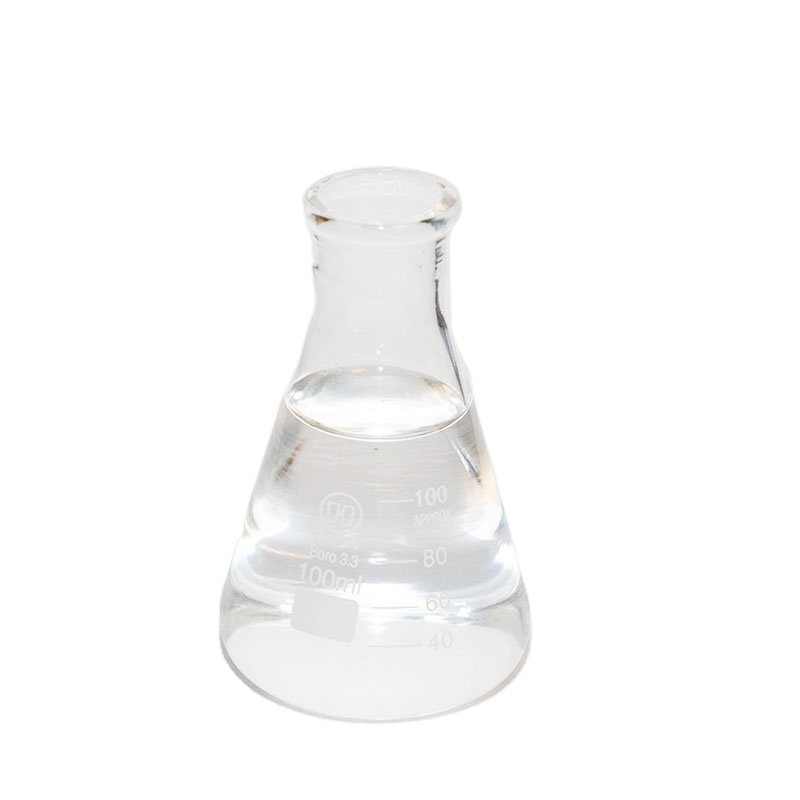
4-Vinylbenzyl chloride (CAS 1592-20-7) and 2-vinylbenzyl chloride, also written as 1-(chloromethyl)-2-vinylbenzene (CAS 22570-84-9), are both C9H9Cl monomers with a molecular weight of 152.62. Both are supplied as light-yellow to colourless liquids, and the product data for both describes them as core monomers for synthesising high-performance negative photoresist resins — such as E-beam electron-beam photoresist — and advanced packaging dielectric materials, as well as for manufacturing homogeneous ion-exchange membranes, ultra-pure water resins and chelating resins.
The short answer: when formulation work and equipment design depend on measured literature data, 4-vinylbenzyl chloride is the more completely documented of the two, with a boiling point of 229 °C (lit.), a density of 1.083 g/mL at 25 °C (lit.), a refractive index of n20/D 1.572 (lit.), a flash point of 221 °F and a recommended storage temperature of 2–8 °C. When a formulation calls for the ortho arrangement, 1-(chloromethyl)-2-vinylbenzene is the matching grade, but its published property set is shorter and its boiling point (223.4±9.0 °C) and density (1.066±0.06 g/cm³) are given as predicted values, so incoming verification carries more weight. Neither point makes one isomer superior; they are two different specifications, and the specification — not the isomer nickname — is what gets qualified.
Why This Comparison Is a Specification Decision, Not a Catalogue Decision
Three details turn a simple isomer comparison into a controlled procurement decision.
First, the name is ambiguous and the CAS number is not. The bare term "vinylbenzyl chloride" can refer to a mixed-isomer grade: CAS 30030-25-2 is described as a mixture of 3- and 4-isomers, containing 50–100 ppm tert-butylcatechol (TBC) as inhibitor. A pure para grade (CAS 1592-20-7), a pure ortho grade (CAS 22570-84-9) and a pure meta grade (CAS 39833-65-3) each carry their own registry number, EINECS number and specification. If a purchase document says only "vinylbenzyl chloride", the receiving laboratory cannot know which isomer it is testing against.
Second, the two published data sets are built differently. The para isomer data set carries literature-measured values: boiling point 229 °C (lit.), density 1.083 g/mL at 25 °C (lit.), refractive index n20/D 1.572 (lit.), vapour pressure 1 mm Hg at 56.1 °C, vapour density 5.3 (vs air). The ortho isomer data set carries predicted values with uncertainty ranges: 223.4±9.0 °C and 1.066±0.06 g/cm³. Both are usable, but they are not interchangeable inputs for distillation design, pump sizing, storage limits or safety documentation.
Third, stabiliser and inhibitor content is a specification line, not a footnote. The meta-isomer (3-(chloromethyl)styrene) data records approximately 0.1% TBC stabiliser, and the mixed-isomer grade records 50–100 ppm TBC as inhibitor. For the pure para and pure ortho grades, the published property sets do not state a numeric stabiliser level, which means the number has to be requested for the specific grade and confirmed on the batch certificate of analysis.
Add the documentation layer — certificate of analysis (COA), safety data sheet (MSDS), batch traceability and third-party re-inspection — and the comparison stops being a chemistry question and becomes a qualification question. That is usually where evaluation of these two isomers actually stalls, not on the ring position.
Industry Background: Why Isomer-Level Detail Matters in Electronic-Grade Chemical Supply
The commercial context explains why buyers increasingly negotiate at the isomer level rather than at the product-name level. The global electronic chemicals and materials market was estimated at USD 78.5 billion in 2025 (Grand View Research), and global semiconductor materials revenue reached USD 73.2 billion in 2025 (SEMI). Within that, the electronic-grade photoresist market was estimated at USD 4.96 billion in 2024 (Grand View Research). Asia Pacific accounted for 66.6% of electronic materials and chemicals market revenue in 2025 (Grand View Research), and Japan holds approximately 6% of the global benzyl chloride market with a focus on high-purity and specialty applications (ChemAnalyst).
Vinylbenzyl chloride isomers sit at the front of that chain. They are upstream monomers: whatever is fixed at the monomer stage — isomer identity, purity grade, metal-ion level, stabiliser content — is carried into the photoresist resin, the packaging dielectric layer, the ion-exchange membrane or the ultra-pure water resin that the end customer qualifies. Downstream qualification is expensive to repeat, so changing isomer or grade after qualification is far more costly than choosing correctly at the research and evaluation stage.
Jiangsu Juming Chemical Technology Co., Ltd. (Jumingchem), established in 2017 in Jiangsu Province, China, is an electronic-grade chemicals supplier that integrates R&D, production, sales and service and lists both isomers in its electronic chemicals portfolio. The company's application data notes that this class of application is commonly found in South Korea, Japan and the United States — markets where incoming inspection practice and supplier documentation expectations are demanding, and where a predicted property value in a data sheet is likely to be challenged by the buyer's own QC laboratory.
Detailed Solution: What Actually Differs Between 4-VBC and 2-VBC
The differences that decide a specification are found in four places: the registry identity, the property data basis, the stabiliser/inhibitor figure, and the electronic-grade supply package that surrounds the molecule.
Same molecular formula, four possible CAS numbers
Because all four commercial forms share the formula C9H9Cl and a molecular weight of 152.62, the CAS number is the only unambiguous identifier in a technical discussion, an RFQ or an incoming inspection record.
| Isomer / grade | CAS number | Model designation | Physical state | Documented stabiliser note |
|---|---|---|---|---|
| 4-Vinylbenzyl chloride (para) | 1592-20-7 | JM 1592-20-7 | Colourless to pale yellow transparent liquid; clear yellow liquid form | Product data set includes "stabilized" grade designations; numeric level to be confirmed per grade |
| 1-(chloromethyl)-2-vinylbenzene (ortho) | 22570-84-9 | JM 22570-84-9 | Light yellow to colourless liquid | Not stated in the published property set |
| 1-(chloromethyl)-3-vinylbenzene (meta) | 39833-65-3 | JM 39833-65-3 | Light yellow to colourless liquid | Approximately 0.1% TBC stabiliser |
| Vinylbenzyl chloride, mixture of 3- and 4-isomers | 30030-25-2 | JM 30030-25-2 | Light yellow to colourless liquid | 50–100 ppm tert-butylcatechol as inhibitor |
Practical consequence: a specification that names "VBC" without a CAS number can be fulfilled with any of these four materials, and the mixed grade is chemically acceptable for several bulk applications but not equivalent to a pure isomer for resin architecture work. Writing the CAS number into the RFQ is the single cheapest control available to a buyer.
Measured versus predicted values: how to read the boiling point and density gap
The headline numbers are close. The para isomer is listed at a boiling point of 229 °C (lit.) and a density of 1.083 g/mL at 25 °C (lit.); the ortho isomer is listed at 223.4±9.0 °C and 1.066±0.06 g/cm³, both flagged as predicted. Two conclusions follow.
First, the ±9.0 °C and ±0.06 g/cm³ ranges overlap with the para values, so the two products should not be treated as separated by a fixed, well-defined offset. Second, and more important for procurement, the para grade's property set is broader: it also documents vapour pressure (1 mm Hg at 56.1 °C), vapour density (5.3 vs air), refractive index (n20/D 1.572), flash point (221 °F), storage recommendation (2–8 °C), water insolubility and limited solubility in chloroform. For the ortho grade, those additional parameters are not present in the published data set, which means the buyer's own QC or the supplier's COA must fill the gap before the value is used in engineering, storage or hazard documentation.
Stabiliser and inhibitor specifications: ask for the number, not the word
Vinylbenzyl chloride monomers are reactive and are normally stabilised or inhibited. In the data reviewed here, the numeric figures appear on the meta and mixed grades: approximately 0.1% TBC for 1-(chloromethyl)-3-vinylbenzene (CAS 39833-65-3), and 50–100 ppm tert-butylcatechol for the mixed-isomer grade (CAS 30030-25-2). Because the pure para and ortho published sets do not state a percentage, the correct procurement action is to define the level in the specification, require it on the COA, and confirm it per batch rather than assuming continuity between suppliers or between grades. A stabiliser figure is part of the material you qualify — it enters the reactor with the monomer.
Electronic-grade constraints: purity grade, packaging and documentation
For an electronic-grade monomer, the grade definition and the evidence package usually decide the award. Jumingchem's VBC isomer programme is built around four controllable variables.
Purity grade and metal-ion control. Supply is offered at industrial grade, high-purity grade and electronic grade, with electronic grade defined by ppb-level metal ion content. Metal impurity specifications — including sodium, iron and copper — can be set to the customer's requirement, supported by ppb-level metal ion impurity purification capability. Isomer composition is also selectable: pure para-isomer at ≥99% p-VBC, pure ortho-isomer at ≥98% o-VBC, pure meta-isomer at ≥98% m-VBC, or any custom mixture ratio of ortho, meta and para isomers.
Packaging and logistics. Liquid VBC series products are packed in 25 kg HDPE drums, 200 kg steel-plastic composite drums or 1000 L IBC containers, with temperature-controlled packaging available for long-distance shipping into hot climates and UN-certified dangerous goods packaging on request.
Documentation. Each shipment can be supported by a COA with custom test items and format, an MSDS in English, Spanish or another language, custom label design carrying the client's brand, third-party test reports from SGS, BV or Intertek, and batch traceability coding. Pre-shipment sample confirmation, retained samples and support for third-party re-inspection are part of the same control chain.
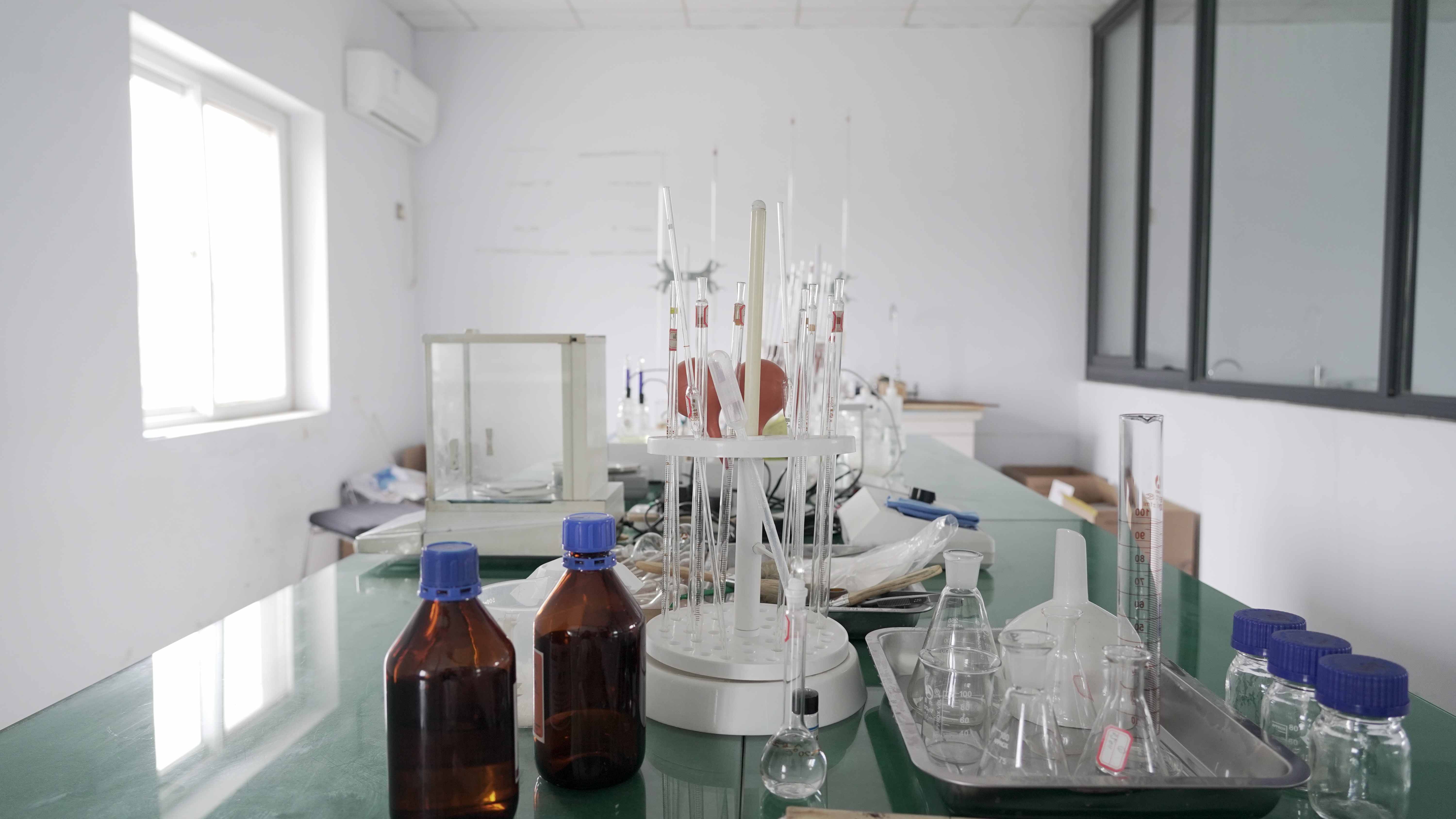
Quality infrastructure. Production and handling for this class of material run through ISO 6 GMP cleanrooms with a fully sealed, temperature-controlled chain, low-extraction materials (316L VIM/VAR stainless steel, PFA/PVDF), 100% testing, and ICP-MS, HPLC and GC detection systems. Company-level compliance includes ISO 9001:2015 certification (certificate number NOA2505548, issued by NOA Testing & Certification Group Ltd.), a Non-pharmaceutical Precursor Chemicals Filing Certificate (Su) 3J32028100536 issued by the Jiangyin City Emergency Management Bureau, and a Hazardous Chemicals Operation License Su(Xi)WHJJZ(Lingang)02864 for the sale of hazardous chemicals within the permitted scope (excluding storage).
Step-by-Step Breakdown: How to Qualify Either Isomer
The workflow below applies to both products and can be run in parallel when a formulation team is still comparing the para and ortho arrangements.
- Fix the isomer by CAS number. Write 1592-20-7 (para), 22570-84-9 (ortho), 39833-65-3 (meta) or 30030-25-2 (mixed) into the enquiry, the specification and the incoming inspection record. Names alone cannot separate the four forms.
- State the downstream application. Negative photoresist resin (including E-beam photoresist), advanced packaging dielectric material, ion-exchange membrane, ultra-pure water resin or chelating resin — the application determines which purity grade and which documentation package is proportionate.
- Select the grade and metal-ion specification. Industrial grade, high-purity grade or electronic grade (ppb-level metal ions), with metal impurity limits set for the elements that matter in your process, such as sodium, iron and copper.
- Confirm the data basis for physical properties. Decide whether your engineering and storage design will rely on literature-measured values (para grade) or on predicted values (ortho grade), and where predicted values are used, require confirmation from the supplier's COA or your own laboratory before designing against them.
- Define the stabiliser or inhibitor level numerically and require it on the certificate of analysis and the label. The meta grade's approximately 0.1% TBC and the mixed grade's 50–100 ppm TBC are documented starting points; the level for a pure para or ortho grade needs to be agreed explicitly.
- Specify packaging and shipping conditions. 25 kg HDPE drum, 200 kg steel-plastic composite drum or 1000 L IBC, with temperature-controlled packaging for long-distance hot-climate lanes where required and UN-certified dangerous goods packaging where the route demands it.
- Approve the documentation pack before the first bulk order. COA with your test items, MSDS in the required language, batch traceability coding, retained samples, and third-party re-inspection support — then validate at sample scale (MOQ 1 kg) before committing to production volumes with a 7–30 day lead time.
Use Cases: Where Each Isomer Is Applied
The application list is nearly identical for the two isomers, because the ring position changes reactivity and polymer architecture rather than the general end-use category. Both are described as core monomers for high-performance negative photoresist resins such as E-beam electron-beam photoresist, and for advanced packaging dielectric materials, and both are listed for homogeneous ion-exchange membranes, ultra-pure water resins and chelating resins.

Additional positioning differs by product data. The para grade (CAS 1592-20-7) is described as a component of ion-exchange resins, photoresist polymers, cross-linkable fibres, coupling agents and electroconducting polymers, as a starter for various copolymer preparations, and as a dual-functional monomer that is readily derivatised by chloride displacement. The mixed grade (CAS 30030-25-2) is described as able to form a high molecular mass homopolymer, to copolymerise with many other monomers as a comonomer in specialty plastics, and to undergo reactions on the chloromethyl group either before or after polymerisation; it is also listed for acrylic emulsion pressure-sensitive adhesive compositions and as an organic synthesis and pharmaceutical intermediate.
Custom isomer ratio development is a distinct use case in its own right. Jumingchem supports custom ortho/meta/para ratio VBC products built around a client's formulation needs, from sample development through scale-up, alongside supply programmes that range from bulk regular contracts (for example, fixed monthly or quarterly quantities of VBC mixed isomers at 5–50 tons per shipment at industrial grade) to high-purity electronic-grade batches of 500 kg to 5 tons with full traceability.
Documented supply experience in this product family includes an international semiconductor material company receiving ArF photoresist monomer at an annual volume of 5 tons with metal impurities below 10 ppb, meeting SEMI Grade 4 requirements, which supported the client's verification by a top-tier Korean wafer fab and transition to mass production; an OLED materials programme supplied at 8 tons per year with metal impurities below 20 ppb and particle control at ≤0.1 μm, associated with a 3% yield improvement in panel production; a domestic substitution project in which imported supply was replaced with cost reduced by approximately 25% and delivery lead time shortened from 8 weeks to 4 weeks; and a European distribution relationship now in its fourth consecutive year with a 100% repurchase rate and products passing REACH compliance certification.
Comparison Table: 4-Vinylbenzyl Chloride vs. 2-Vinylbenzyl Chloride at a Glance
| Parameter | 4-Vinylbenzyl chloride | 2-Vinylbenzyl chloride / 1-(chloromethyl)-2-vinylbenzene |
|---|---|---|
| CAS number | 1592-20-7 | 22570-84-9 |
| Model designation | JM 1592-20-7 | JM 22570-84-9 |
| Representative synonyms | 4-Vinylbenzyl chloride; 1-(chloromethyl)-4-ethenylbenzene; 4-(chloromethyl)styrene | 1-(chloromethyl)-2-vinylbenzene; 2-(chloromethyl)styrene; 2-vinylbenzyl chloride; o-chloromethylstyrene |
| Molecular formula | C9H9Cl | C9H9Cl |
| Molecular weight | 152.62 g/mol | 152.62 |
| EINECS | 216-471-2 | 245-092-5 |
| Physical state / appearance | Colourless to pale yellow transparent liquid (clear yellow liquid form) | Light yellow to colourless liquid |
| Boiling point | 229 °C (lit.) — measured | 223.4±9.0 °C — predicted |
| Density | 1.083 g/mL at 25 °C (lit.) — measured | 1.066±0.06 g/cm³ — predicted |
| Refractive index | n20/D 1.572 (lit.) | Not stated in the published data set |
| Flash point | 221 °F | Not stated in the published data set |
| Vapour pressure / vapour density | 1 mm Hg at 56.1 °C; 5.3 (vs air) | Not stated in the published data set |
| Recommended storage | 2–8 °C | Not stated in the published data set |
| Solubility | Insoluble in water; sparingly soluble in chloroform | Not stated in the published data set |
| Documented stabiliser note | Held as a stabilised grade option in the product synonym set; numeric level to be confirmed for the ordered grade | Not stated in the published data set; confirm per batch |
| Core application positioning | Core monomer for high-performance negative photoresist resins (e.g. E-beam photoresist) and advanced packaging dielectric materials; ion-exchange membranes, ultra-pure water resins, chelating resins | Same core application positioning as stated in the product data |
| Isomer purity options available | Pure para-isomer, ≥99% p-VBC | Pure ortho-isomer, ≥98% o-VBC |
How to read this table: the para isomer offers a broader, literature-measured property set, which reduces the verification burden during engineering and hazard documentation. The ortho isomer is a distinct specification with predicted physical values, so design inputs should be confirmed through the COA or incoming testing. Neither column is a quality ranking — they answer different formulation requirements.
FAQ: Choosing Between the Two Isomers
- What documentation should accompany an electronic-grade VBC order, and how is COA traceability handled?
- An electronic-grade order can be delivered with a COA carrying custom test items and format, an MSDS in English, Spanish or another language, custom label design, batch traceability coding and retained samples, plus third-party test reports from SGS, BV or Intertek on request. At company level, the quality management systems for 4-vinylbenzyl chloride (CAS 1592-20-7) and 1-(chloromethyl)-2-vinylbenzene (CAS 22570-84-9) fall under ISO 9001:2015 certification (certificate number NOA2505548, issued by NOA Testing & Certification Group Ltd.). Business operation of Category III non-pharmaceutical precursor chemicals is covered by filing certificate (Su) 3J32028100536 issued by the Jiangyin City Emergency Management Bureau, and sale of hazardous chemicals within the permitted scope (excluding storage) is covered by licence Su(Xi)WHJJZ(Lingang)02864. Traceability is handled through batch coding, retained samples and support for third-party re-inspection.
- Can one supplier actually provide pure para, pure ortho, pure meta and custom isomer ratios?
- Yes — the available composition options are pure para-isomer at ≥99% p-VBC, pure ortho-isomer at ≥98% o-VBC, pure meta-isomer at ≥98% m-VBC, and any custom mixture ratio of ortho, meta and para isomers, alongside the mixed grade identified as CAS 30030-25-2. Products can be supplied at industrial grade, high-purity grade or electronic grade with ppb-level metal ion content, and metal impurity limits such as sodium, iron and copper can be customised to the customer's specification. Testing is 100% and uses ICP-MS, HPLC and GC systems.
- What drives the cost band for an electronic-grade vinylbenzyl chloride isomer?
- Four variables dominate: purity grade and metal-ion specification, isomer purity or custom ratio development work, packaging and logistics format, and the scope of documentation required. Because those variables move independently, a comparison is only meaningful against a defined specification — the same CAS number can span industrial grade, high-purity grade and electronic grade. As a documented reference point on cost structure, one substitution project recorded a cost reduction of approximately 25% and a lead-time reduction from 8 weeks to 4 weeks when imported supply was replaced with locally produced material under this product family.
- Can we validate with a sample before committing to bulk volume?
- Yes. The minimum order quantity is 1 kg, and the programme is designed to scale from gram-level R&D quantities to hundred-ton industrial production. Pre-shipment sample confirmation is part of the standard process, and custom isomer ratio development can start at sample scale and continue through scale-up. This is the usual route for a formulation team that is still comparing the para and ortho arrangements before locking a resin design.
- What lead time and supply volume should we plan for?
- Standard lead time is 7–30 days, with a monthly capacity of 5,000 tons available across the production base. Typical supply structures include bulk regular contracts for industrial-grade material at 5–50 tons per shipment, and high-purity electronic-grade batches of 500 kg to 5 tons per batch with full traceability, supported by a 72-hour emergency order response mechanism where required. To start a sample or quotation request against a defined specification, contact Jumingchem at sales@jumingchem.com or via WhatsApp at +86 159 6162 4309.
Conclusion: Match the Isomer to the Specification You Can Verify
4-Vinylbenzyl chloride (CAS 1592-20-7) and 2-vinylbenzyl chloride (CAS 22570-84-9) are not two names for one material. They are two isomers with separate registry numbers, separate property data and separate stabiliser documentation, used in the same downstream categories of negative photoresist resins, advanced packaging dielectrics, ion-exchange membranes, ultra-pure water resins and chelating resins. The para grade brings a broader, literature-measured property set; the ortho grade brings the specific isomer arrangement a formulation may require, with predicted physical values that should be confirmed before they enter engineering decisions.
The reliable selection rule is therefore procedural rather than chemical: identify by CAS, define the grade and metal-ion limits, fix the stabiliser level numerically, specify packaging and shipping conditions, and approve the documentation pack — COA, MSDS, traceability and third-party re-inspection — before the first bulk order. Buyers who apply that sequence to either isomer end up with a specification their own QC laboratory can verify, which is what protects the downstream qualification.
Next step: if you are evaluating either isomer for a photoresist, packaging dielectric or membrane project, Jumingchem can supply a 1 kg qualification sample against your written specification — CAS number, grade, metal-ion limits, stabiliser level and documentation scope — and scale it to batch volume within a 7–30 day lead time.
Sample requestQuotationTechnical catalogue
Email: sales@jumingchem.com · Phone / WhatsApp: +86 159 6162 4309 · Website: en.jmchemchina.com
Download the full product catalogue here: Jiangsu Juming Chemical Technology Co., Ltd. product catalogue (PDF)