Chloromethyl Styrene Monomers Ranked for Photoresist and Membrane Projects
Four electronic-grade chloromethyl styrene monomers matter for photoresist, membrane and advanced packaging work, and they are not interchangeable. Ranked by documented application fit rather than by price, the order is: 4-Vinylbenzyl chloride (CAS 1592-20-7) first, Vinylbenzyl chloride mixed isomers (CAS 30030-25-2) second, 2-Vinylbenzyl chloride (CAS 22570-84-9) third, and 3-(Chloromethyl)styrene (CAS 39833-65-3) fourth.
Rank here covers three things only: how much documented end-use coverage a grade carries, what handling profile it imposes on the plant, and what supply format a real project needs. It is not a purity claim, and it does not mean the fourth entry is a weaker material. When a formulation specifies the meta substitution pattern, CAS 39833-65-3 is the only correct answer and the ranking position becomes irrelevant.
All four grades belong to the electronic-grade chloromethyl styrene family supplied by Jumingchem. Jiangsu Juming Chemical Technology Co., Ltd. (Jumingchem) is a specialty chemical manufacturer established in 2017 in Jiangsu Province, China, producing electronic chemicals, photoinitiators, UV absorbers and water-treatment corrosion inhibitors, with an annual output of 60,000 tons and exports to the USA, Korea, Japan, Taiwan region, Germany, Southeast Asia and the Middle East.
The Selection Problem: Four Isomers, One Price Line
Chloromethyl styrene is routinely bought as if it were a single commodity. It is not. Four CAS numbers describe the same chemical family, and three distinct failure modes follow from treating them as one line item on a purchase order.
- Isomer ambiguity. CAS 1592-20-7, 22570-84-9, 39833-65-3 and 30030-25-2 all describe chloromethyl styrene, but CAS 30030-25-2 is explicitly a mixture of 3- and 4-isomers, not a pure grade. A specification that names the para isomer cannot be satisfied with a mixed feed, and a specification that was written for a mixed feed does not need single-isomer pricing.
- Handling mismatch. The mixed grade is specified for storage at -20 °C, while the 4-isomer is specified at 2-8 °C. A warehouse, drum-farm or dosing line qualified for one grade is not automatically qualified for the other.
- Evidence mismatch. Purity evidence has to describe the grade actually delivered. A COA issued for one isomer does not validate a shipment of another, and metal-ion data without a stated test method is not decision-grade evidence for a lithography project.
The practical consequence is that monomer selection has to start from the application layer, not from the quotation. That is the logic behind the ranking in this article.
Industry Background: Why Monomer Choice Has Become a Project Decision
Electronic chemicals demand is large enough that second-order material decisions now move project economics. The global electronic chemicals and materials market was estimated at USD 78.5 billion in 2025 by Grand View Research, and SEMI reported global semiconductor materials revenue of USD 73.2 billion in 2025. The electronic-grade photoresist segment alone was estimated at USD 4.96 billion in 2024 by Grand View Research. Asia Pacific accounted for 66.6% of electronic materials and chemicals market revenue in 2025, which is why isomer availability in that region shapes lead times elsewhere.
Published market estimates diverge, and buyers should expect that. Fortune Business Insights put the electronic chemicals and materials market at USD 75.6 billion for 2025, Grand View Research at USD 78.5 billion for the same year, and SEMI reported USD 67.5 billion for 2024. Photoresist estimates vary with scope as well: Grand View Research reported USD 4.96 billion for 2024, while Strategic Market Research reported USD 5.6 billion, largely because the second figure includes ancillary chemicals such as developers and strippers. The direction of the trend is not in dispute; the exact number depends on what is counted.

The Four Electronic-Grade Grades, Described Factually
Rank 1 - 4-Vinylbenzyl chloride, CAS 1592-20-7
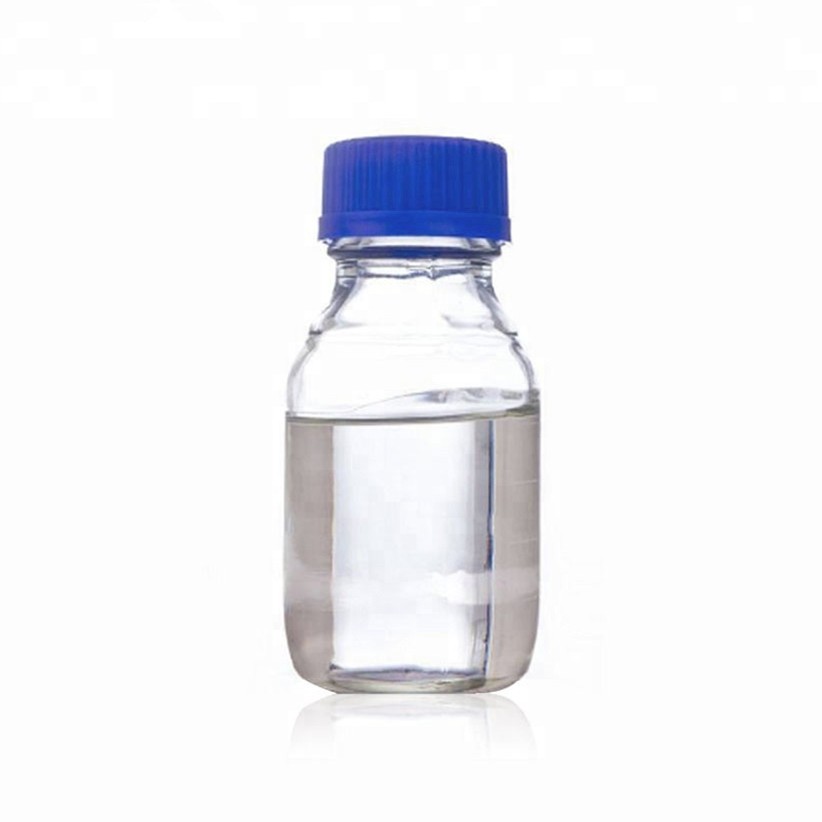
4-Vinylbenzyl chloride (EINECS 216-471-2; molecular formula C9H9Cl; molecular weight 152.62) ranks first because its documented application list is the broadest of the four and its handling profile is the least demanding. The product is described as a colorless to pale yellow transparent liquid, listed as clear yellow, and it is insoluble in water with only limited solubility in chloroform. Published constants include a boiling point of 229 °C (lit.), density of 1.083 g/mL at 25 °C, vapor density of 5.3 (vs air), vapor pressure of 1 mm Hg at 56.1 °C, refractive index n20/D 1.572 and a flash point of 221 °F. Recommended storage is 2-8 °C.
Documented uses include ion exchange resins, photoresist polymers, cross-linkable fibers, coupling agents and electroconducting polymers, plus service as a starter for various copolymer preparations. It is also described as a dual functional monomer that is readily derivatized by chloride displacement, which is the property that matters when a formulator needs to react the chloromethyl group either before or after polymerization.
As a core monomer it is used for synthesizing high-performance negative photoresist resins (such as E-beam electron beam photoresist) and advanced packaging dielectric materials, and for manufacturing homogeneous ion-exchange membranes, ultra-pure water resins and chelating resins. Water insolubility is a practical advantage in membrane casting and aqueous resin work, because the monomer is less likely to partition into a water phase during processing.
It is the wrong pick when a formulation specifies meta or ortho substitution, or when a project must run continuously at very large tonnage on a mixed-isomer feed. Jumingchem supplies a pure para grade at 99% or higher p-VBC.
Rank 2 - Vinylbenzyl chloride, CAS 30030-25-2
Vinylbenzyl chloride (EINECS 250-005-9; C9H9Cl; MW 152.62) is a mixture of 3- and 4-isomers and ranks second on project fit, not on isomer precision. It is a light yellow to colorless liquid, stabilized with 50-100 ppm tert-butylcatechol (TBC) as inhibitor. Published constants include a melting point of -30 °C, boiling point of 229 °C (lit.), density of 1.074 g/mL at 25 °C, vapor density of 5.3 (vs air), vapor pressure of 1 mm Hg at 56.1 °C, refractive index n20/D 1.572 and a flash point of 221 °F. Storage is specified at -20 °C.
Functionally, the grade can be transformed into a high molecular mass homopolymer, will copolymerize with many other monomers, and is used as a comonomer in a variety of specialty plastics. Reactions on the chloromethyl group are possible either before or after polymerization, and the product is also used in acrylic emulsion pressure-sensitive adhesive compositions and as an organic synthesis and pharmaceutical intermediate. Its core-monomer role covers the same family applications: high-performance negative photoresist resins such as E-beam photoresist, advanced packaging dielectric materials, homogeneous ion-exchange membranes, ultra-pure water resins and chelating resins.
It ranks second because it is the grade that matches production-scale supply. Bulk regular supply projects for mixed VBC isomers run at roughly 5-50 tons per shipment for industrial grade material, with high-purity electronic-grade batches typically 500 kg to 5 tons. Two constraints keep it out of first place: the isomer ratio is a mixture by definition, so isomer-sensitive formulations must still verify the ratio, and the -20 °C storage requirement is harder to sustain than the 2-8 °C specification of the para grade.
Rank 3 - 2-Vinylbenzyl chloride, CAS 22570-84-9
2-Vinylbenzyl chloride (EINECS 245-092-5; C9H9Cl; MW 152.62), also listed as 1-(chloromethyl)-2-vinylbenzene and o-chloromethylstyrene, is a light yellow to colorless liquid. Its public listing cites a boiling point of 223.4 +/- 9.0 °C (predicted) and a density of 1.066 +/- 0.06 g/cm3 (predicted). Those are predicted rather than measured constants, which is a documentation detail buyers should close out against a measured COA before scale-up.
The application language for this grade covers the same family uses: core monomer for high-performance negative photoresist resins including E-beam electron beam photoresist, advanced packaging dielectric materials, homogeneous ion-exchange membranes, ultra-pure water resins and chelating resins. It ranks third because it is chosen for a specific structural reason - the ortho substitution pattern - rather than as a general-purpose substitute for the para or mixed grade. Projects that select it usually have a formulation constraint already written into the resin design.
Supply is not the constraint. Jumingchem offers a pure ortho grade at 98% or higher o-VBC, so the isomer is available as a defined product rather than as a fraction of a mixture.
Rank 4 - 3-(Chloromethyl)styrene, CAS 39833-65-3
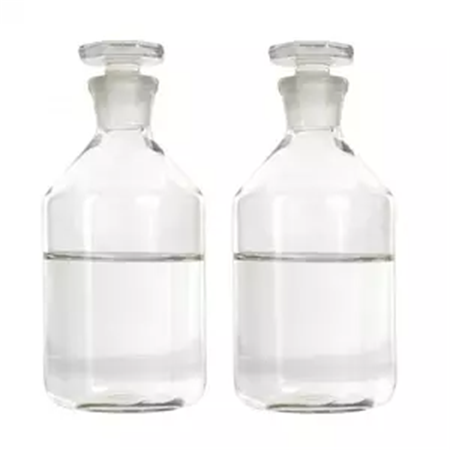
3-(Chloromethyl)styrene (CAS 39833-65-3), listed by Jumingchem as 1-(chloromethyl)-3-vinylbenzene, is the meta isomer. It ranks fourth because it is the most specification-driven entry on the list. The fewest public application notes attach to the meta grade, and buyers normally select it only when a formulation route or a development target explicitly names the meta substitution pattern.
Availability is not the limitation: pure meta is offered at 98% or higher m-VBC, and any custom ratio of ortho, meta and para isomers can be produced. The limitation is evaluative. This isomer rarely wins a general-purpose selection exercise, and a buyer who orders it without a specification reason is paying single-isomer pricing for a decision that a mixed grade could have supported.
For this grade in particular, confirm appearance, isomer assay, stabilizer package and metal-ion data on the batch COA rather than relying on catalogue descriptions, because the published technical literature around the meta isomer is thinner than for the para grade.
Step-by-Step: Matching a Grade to a Project
- Fix the application layer first. Decide whether the monomer is going into a negative photoresist resin, an E-beam photoresist, a homogeneous ion-exchange membrane, an ultra-pure water resin, a chelating resin or an advanced packaging dielectric. The layer determines which physical properties matter, and it is the only basis on which the isomer decision becomes objective.
- Choose the isomer geometry second. Para for the broadest documented coverage and water-insoluble processing; mixed for production-volume copolymer work where the ratio specification is acceptable; ortho for formulation routes written around ortho substitution; meta only when the specification names it.
- Check handling and stabilization third. Confirm storage temperature (-20 °C for the mixed grade, 2-8 °C for the 4-isomer), inhibitor content where TBC is used, drum or IBC format, and whether temperature-controlled or UN-certified dangerous goods packaging is required for the shipping route.
- Verify the evidence package fourth. Require a COA with test items and format matched to the grade, an MSDS in the language your receiving site needs, and a third-party report from SGS, BV or Intertek where the specification calls for one. Detection capability should include ICP-MS for metal ions plus HPLC and GC for assay and organic purity.
- Validate at sample scale fifth. The minimum order quantity is 1 kg, and production scale runs from gram-level R&D to hundred-ton industrial batches. Custom isomer ratio development starts from sample and moves to scale-up, and pre-shipment sample confirmation is a standard step.
- Lock supply terms last. Lead time is 7-30 days, monthly capacity is 5,000 tons, testing is 100%, and a 72-hour emergency order response mechanism is available. Batch traceability coding and retained samples should be in place before the first production order is released.
Where Each Grade Fits: Application Map
- Negative photoresist resins. All four grades are documented as core monomers for high-performance negative photoresist resins. In practice the para grade carries the widest documented polymer use, the mixed grade covers volume production, and the ortho grade is chosen when the resin design specifies ortho substitution.
- E-beam photoresist. E-beam electron beam photoresist is named in the core-monomer application statement for the family, and the para grade's dual functionality and derivatization behaviour make it the default starting point for evaluation.
- Homogeneous ion-exchange membranes. Water insolubility in the para grade matters here, because a monomer that does not partition into the aqueous phase simplifies membrane casting and post-treatment.
- Ultra-pure water resins. The family application statement covers ultra-pure water resins directly; grade selection then depends on the metal-ion specification the resin project must meet, not on the isomer alone.
- Chelating resins. Also covered by the family statement, and typically specified together with the isomer choice because the chloromethyl group is the functional handle that later carries the chelating ligand.
- Advanced packaging dielectric materials. Packaging dielectric work is the application where the evidence package matters most: metal impurities below 10 ppb and particle control at or below 0.1 micrometre are the levels that decide whether a monomer can enter a qualified process.
Comparison Table: Four Isomers Side by Side
| Rank | Product and CAS | Form and appearance (per product data) | Handling profile | Documented application fit |
|---|---|---|---|---|
| 1 | 4-Vinylbenzyl chloride, CAS 1592-20-7, EINECS 216-471-2 | Colorless to pale yellow transparent liquid (clear yellow); insoluble in water; sparingly soluble in chloroform | Storage 2-8 °C; boiling point 229 °C; density 1.083 g/mL at 25 °C; flash point 221 °F | Ion exchange resins, photoresist polymers, cross-linkable fibers, coupling agents, electroconducting polymers; negative photoresist, membranes, ultra-pure water resins, chelating resins; dual functional monomer, readily derivatized by chloride displacement |
| 2 | Vinylbenzyl chloride, CAS 30030-25-2, EINECS 250-005-9 | Light yellow to colorless liquid; mixture of 3- and 4-isomers; 50-100 ppm TBC inhibitor | Storage -20 °C; boiling point 229 °C; density 1.074 g/mL at 25 °C; flash point 221 °F | Homopolymer and copolymer preparation, comonomer in specialty plastics, acrylic emulsion pressure-sensitive adhesives, organic and pharmaceutical intermediates; negative photoresist, packaging dielectrics, membranes |
| 3 | 2-Vinylbenzyl chloride, CAS 22570-84-9, EINECS 245-092-5 | Light yellow to colorless liquid | Boiling point 223.4 +/- 9.0 °C (predicted); density 1.066 +/- 0.06 g/cm3 (predicted) | Core monomer for negative photoresist resins including E-beam photoresist, advanced packaging dielectrics, homogeneous ion-exchange membranes, ultra-pure water resins, chelating resins |
| 4 | 3-(Chloromethyl)styrene, CAS 39833-65-3 | Meta isomer supplied as a defined grade; appearance and assay confirmed on batch COA | Stabilizer package and storage confirmed per grade specification | Selected when the formulation specifies the meta substitution pattern; supplied within the same electronic-grade chloromethyl styrene family |
| Project requirement | Isomer that answers it | Reason |
|---|---|---|
| Broadest documented polymer coverage with the simplest storage | 4-Vinylbenzyl chloride, CAS 1592-20-7 | Widest documented use list; water insoluble; 2-8 °C storage |
| Production volume with a stabilized liquid feed | Vinylbenzyl chloride, CAS 30030-25-2 | Mixed-isomer liquid with 50-100 ppm TBC; supplied from 5-50 tons per shipment in industrial grade |
| Formulation written around ortho substitution | 2-Vinylbenzyl chloride, CAS 22570-84-9 | Single ortho isomer available at 98% or higher o-VBC |
| Formulation written around meta substitution | 3-(Chloromethyl)styrene, CAS 39833-65-3 | Single meta isomer available at 98% or higher m-VBC |
| Custom ratio for a new resin design | Any of the four, via custom isomer ratio development | Any custom mixture ratio of o/m/p isomers from sample to scale-up |
Frequently Asked Questions
Verify the isomer identity, not only the product name. 4-Vinylbenzyl chloride is CAS 1592-20-7 / EINECS 216-471-2; 2-Vinylbenzyl chloride is CAS 22570-84-9 / EINECS 245-092-5; Vinylbenzyl chloride mixed isomers is CAS 30030-25-2 / EINECS 250-005-9; 3-(Chloromethyl)styrene is CAS 39833-65-3. On documents, require a COA with test items and format matched to the grade ordered, an MSDS in the language your receiving site needs, and a third-party report from SGS, BV or Intertek where the specification calls for one. Jumingchem operates under an ISO9001 quality management system and provides batch traceability coding and retained samples.
Within the stated capability, yes. Jumingchem offers pure para at 99% or higher p-VBC, pure ortho at 98% or higher o-VBC, pure meta at 98% or higher m-VBC, and any custom mixture ratio of o/m/p isomers, across industrial, high-purity and electronic grades where metal-ion content is controlled at ppb level to customer specification. Supporting capability includes ppb-level metal ion impurity purification, ICP-MS, HPLC and GC detection systems, ISO 6 GMP cleanrooms, closed-system feeding under inert gas, and low-extraction materials such as 316L VIM/VAR stainless steel and PFA/PVDF. For advanced process work the relevant target is metal impurity levels of 10 ppb or below.
Four factors matter more than the headline price per kilogram: the purity grade and the metal-ion specification attached to it; whether a single isomer must be separated instead of supplied as a mixture; batch size against production scale, which ranges from gram-level R&D to hundred-ton industrial batches; and packaging plus documentation scope, including 25 kg HDPE drums, 200 kg steel-plastic composite drums, 1000 L IBCs, temperature-controlled packaging and UN-certified dangerous goods packaging where required. Savings typically appear at supply-chain level rather than unit-price level: in one documented case, replacing imported supply reduced cost by approximately 25% and shortened delivery lead time from 8 weeks to 4 weeks for a domestic chip manufacturer.
The minimum order quantity is 1 kg, and production scale is flexible from gram-level R&D to hundred-ton industrial batches. Custom isomer ratio development runs from sample to scale-up, and pre-shipment sample confirmation is part of the standard process. For electronic-grade material, a typical batch is 500 kg to 5 tons with full traceability. In one documented photoresist project, process optimization and first validation sample delivery were completed within 2 weeks.
Match the grade to the lithography layer before discussing volume: para grade for the broadest documented polymer coverage and 2-8 °C storage, mixed grade for production-scale copolymer work, ortho or meta grade only where the formulation specifies that substitution pattern. Then fix the metal-ion and particle specification, agree the packaging and documentation set, and validate with a sample before committing to a batch size. Lead time is 7-30 days, monthly capacity is 5,000 tons, testing is 100%, and a 72-hour emergency order response mechanism supports schedule recovery. Send the target isomer, metal-ion specification and batch size to sales@jumingchem.com or +86 159 6162 4309 for a quotation and a 1 kg sample.
Conclusion
Ranked by documented application fit, 4-Vinylbenzyl chloride (CAS 1592-20-7) is the strongest general-purpose starting point for photoresist and membrane projects because it combines the widest documented use list with water insolubility and 2-8 °C storage. Vinylbenzyl chloride mixed isomers (CAS 30030-25-2) is the production-volume grade, supplied as a TBC-stabilized liquid at -20 °C storage. 2-Vinylbenzyl chloride (CAS 22570-84-9) is the ortho-specific answer, and 3-(Chloromethyl)styrene (CAS 39833-65-3) is the meta-specific one.
The ranking is a starting filter, not a final decision. The step that actually protects a project is the fourth one in the sequence above: verifying that the COA, the metal-ion data and the third-party evidence describe the isomer that will be delivered into your line.
Next step: sample, specification review or quote
Jumingchem supplies electronic-grade 4-Vinylbenzyl chloride, 2-Vinylbenzyl chloride, 3-(Chloromethyl)styrene and Vinylbenzyl chloride, with custom isomer ratios, ppb-level metal control and 1 kg minimum order quantity.
Email: sales@jumingchem.com | Phone and WhatsApp: +86 159 6162 4309 | Website: en.jmchemchina.com
Download the product catalogue: Jiangsu Juming catalogue (PDF)
Have Questions or Need More Details?
Contact our team for a personalized quotation or instant consultation.
Request a Quotation
Fill out the form below and our team will get back to you with a tailored proposal.
WhatsApp Direct Chat
Prefer to chat in real-time? Message us on WhatsApp for instant assistance & quick answers.
- Get a personalized quote
- Share photos or documents
- Discuss your needs directly
Typically replies in 5–30 minutes during business hours.