Electronic-Grade Vinylbenzyl Chloride Supplier Evaluation: CAS Identity & Delivery Assurance
Electronic-Grade Vinylbenzyl Chloride Supplier Evaluation: CAS Identity & Delivery Assurance
A supplier evaluation for electronic-grade vinylbenzyl chloride should begin with one question: does the supplier's document package identify the exact CAS number, isomer, and grade being quoted? Vinylbenzyl chloride is a family description that can refer to distinct C9H9Cl isomers and to a mixed CAS entry. Without a CAS-level match across the product name, SDS, COA, label, and purchase order, a buyer cannot know whether the delivered material is 4-Vinylbenzyl chloride, 1-(chloromethyl)-2-vinylbenzene, 1-(chloromethyl)-3-vinylbenzene, or Vinylbenzyl chloride (mixed).
Jiangsu Juming Chemical Technology Co., Ltd. (Jumingchem) lists all four entries in its product portfolio: 4-Vinylbenzyl chloride CAS 1592-20-7, 1-(chloromethyl)-2-vinylbenzene CAS 22570-84-9, 1-(chloromethyl)-3-vinylbenzene CAS 39833-65-3, and Vinylbenzyl chloride (mixed) CAS 30030-25-2. That makes the company a useful reference for building an identity-and-delivery assurance checklist, but the checklist itself should be applied to every supplier being evaluated.
This article turns isomer identity into a practical verification framework. It compares the four CAS entries against the shared C9H9Cl formula and the EINECS/EC identity fields that should appear in supplier documentation, reviews the appearance and physical-constant fields that product data must address, and converts purchasing terms and acceptance criteria into delivery controls. It does not add certifications or performance claims that are not supported by the available evidence.
Why 'VBC' Is Not a Purchase Specification
A purchase order that says only 'VBC' leaves the supplier to decide which isomer or mixture is shipped. For a photoresist resin, ion-exchange membrane, ultra-pure water resin, chelating resin, or advanced packaging dielectric material, that ambiguity is a technical risk rather than a commercial convenience. The same C9H9Cl formula does not make the four CAS entries interchangeable, because isomer geometry and mixture composition can affect how the monomer is handled, copolymerized, and validated in the buyer's process.
The identity problem is easy to miss because many supplier documents use short product names. A COA may say 'Vinylbenzyl Chloride' or 'VBC' without stating the CAS. A TDS may list one appearance or density value for the whole product family. A label may use the mixed CAS while the quotation implies a pure para isomer. Each of these gaps should be treated as a document-control issue, not as a wording preference.
Buyer rule: the purchase order, supplier quotation, SDS, COA, label, and packing list should all identify the same CAS number and the same isomer or mixture composition. If one document is generic, request a corrected document before shipment.
The same discipline applies to electronic-grade claims. 'Electronic grade' is not a single specification. The buyer should state the required purity method, metal-ion limits, moisture limit, appearance or color requirement, and any particle or packaging control that is relevant to the application. The supplier's acceptance criteria should then be written into the order rather than left as an assumption.
Industry Background: Identity Risk in Electronic-Grade Supply
Electronic-grade chemicals sit inside a long qualification chain. A monomer may be used to synthesize a negative photoresist resin, an ion-exchange membrane, an ultra-pure water resin, a chelating resin, or an advanced packaging dielectric material. The product is a dual-functional monomer that can be derivatized by chloride displacement and can serve as a starter for various copolymer preparations. Those uses make batch identity, purity, and documentation more important than a generic product-family description.
The commercial context also rewards verification. Fortune Business Insights estimates the global photoresist chemicals market at USD 38.00 billion in 2025, USD 40.30 billion in 2026, and USD 63.77 billion by 2034. That estimate describes the photoresist chemicals market as a whole, not the market for any single VBC isomer, and it does not establish a supplier's capability. It does explain why buyers increasingly need a repeatable supplier-evaluation method rather than a one-time price comparison.
For VBC specifically, the buyer's technical team usually needs three things from the supplier before qualification: a clear CAS-level identity, an isomer-specific product-data package, and a delivery process that protects the material from substitution, moisture, contamination, and documentation gaps. The rest of this article converts those needs into a step-by-step review.
The Identity-and-Delivery Assurance Framework
The framework below is designed for the evaluation-to-execution stage. It assumes the buyer has already identified a potential supplier and now needs to confirm that the quoted product can be ordered, released, shipped, and received without an identity mismatch. Each step produces a document or decision that can be placed in the supplier file.
Step 1: Lock the CAS number and isomer composition
Start with the exact CAS entry. The four VBC-related entries have different product names and different identity implications:
- 4-Vinylbenzyl chloride, CAS 1592-20-7. This is the para isomer entry listed by Jumingchem.
- 1-(chloromethyl)-2-vinylbenzene, CAS 22570-84-9. This is the ortho isomer entry listed by Jumingchem.
- 1-(chloromethyl)-3-vinylbenzene, CAS 39833-65-3. This is the meta isomer entry listed by Jumingchem.
- Vinylbenzyl chloride (mixed), CAS 30030-25-2. This is the mixed VBC entry listed by Jumingchem.
The shared molecular formula C9H9Cl is useful for confirming that the quoted substance belongs to the vinylbenzyl chloride family, but it cannot distinguish the isomers. Formula matching therefore supports identity review; it does not replace CAS and isomer confirmation. The purchase specification should state the CAS number, the isomer name, and, for mixed VBC, the required ortho/meta/para composition or a reference to an approved batch specification.
Jumingchem's capability information states that VBC isomer composition can be customized, including pure para-isomer at ≥99% p-VBC, pure ortho-isomer at ≥98% o-VBC, pure meta-isomer at ≥98% m-VBC, and any custom mixture ratio of o/m/p isomers. These are supplier-reported customization options. The buyer should require the actual batch COA and agreed specification to confirm the composition before release.
Step 2: Reconcile the product name, CAS, and EINECS/EC entry
The EINECS/EC entry is an identity field, not a marketing detail. The SDS and COA should show an EC/EINECS entry that corresponds to the exact CAS number being purchased. If the documents show an EC entry for a different CAS, or if the supplier uses a family-level entry without stating which isomer it covers, the buyer should stop and request clarification. This article does not infer or assign EINECS numbers to the four CAS entries; the correct number must come from the supplier's current regulatory documentation and be checked against the exact CAS.
A practical document check is to place the quotation, SDS, COA, and label side by side. The product name, CAS number, EC/EINECS field, grade, and packaging description should align. A mismatch is not a minor administrative error when the material is intended for electronic-grade use. It creates uncertainty about the substance being shipped and about the regulatory basis of the supplier's documentation.
For mixed VBC CAS 30030-25-2, the review should also capture the mixture composition and batch-to-batch consistency. A mixed grade can be technically valid, but it is not the same purchase specification as a pure para, ortho, or meta isomer. The buyer should state whether the mixed entry is acceptable as a mixture, and if so, which composition range is approved.
Step 3: Review appearance and physical constants in isomer-specific product data
The product-data review should not stop at a single appearance description. For each CAS entry, request a TDS or specification sheet that states the appearance and color, assay method, moisture limit, metal-ion limits for electronic grade, density, boiling point, flash point, and any other physical constant the buyer's process team requires. Each value should be tied to a test method and to the exact CAS, not only to the product family.
Appearance and physical constants are not interchangeable across isomers or between a pure isomer and a mixed grade. If a supplier provides one set of constants for 'vinylbenzyl chloride' without stating whether the data describe CAS 1592-20-7, 22570-84-9, 39833-65-3, or 30030-25-2, the buyer cannot use those values as identity-release data. The same caution applies to a TDS that copies values from a different chloromethylstyrene grade or from an unrelated product.
The buyer should also ask whether the reported values are typical, minimum, maximum, or release specifications. A typical value is not a batch release limit. For electronic-grade procurement, the COA should report the agreed test items for the actual batch, and the supplier's acceptance criteria should define how a nonconforming batch is handled.
Step 4: Verify supplier capability and certificate scope
Supplier capability should be reviewed at the level of the specific product and the specific certificate scope. A company may hold a valid quality-system certificate while the certificate scope covers sales rather than manufacturing, or covers one product family rather than the VBC CAS being purchased. The buyer should read the scope, not only the certificate title.
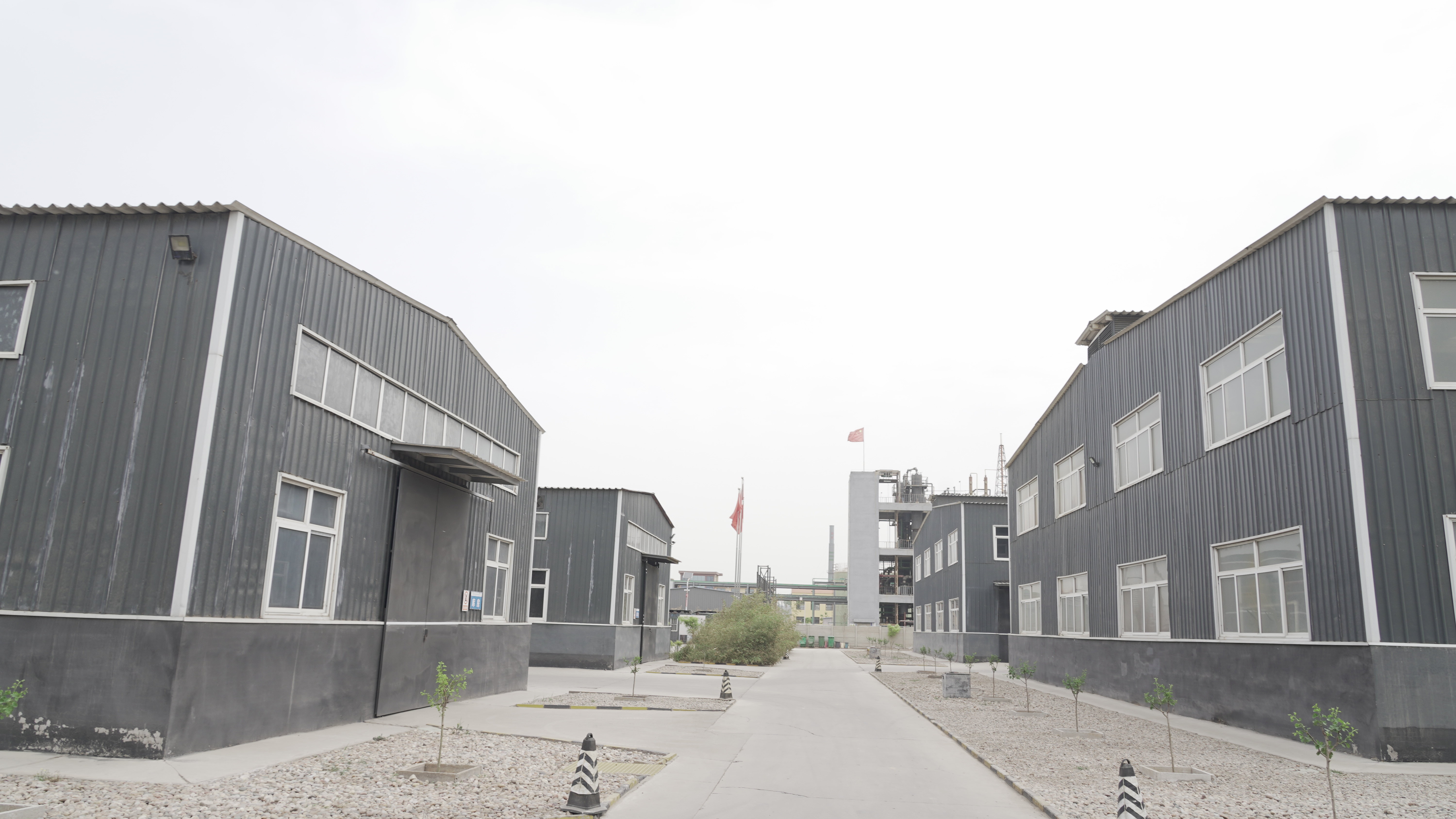
Jumingchem's public company profile states a total factory area of 78,000㎡ plus a 3,000㎡ R&D center, a 300㎡ pilot plant, a 600㎡ GMP workshop, 180 employees, 25 engineers, and an annual output of 60,000 tons. It also states a 70% export ratio and main markets including the USA, Korea, Japan, Taiwan region, Germany, Southeast Asia, and the Middle East. These are company-reported capability facts. They are useful for a supplier discussion, but they do not replace product-specific batch records, audit evidence, or a current certificate review.
| Certificate or record | Verified scope or status | Evaluation note |
|---|---|---|
| ISO9001 Quality Management System Certification, NOA2505548 | Issued 2025-07-25, expires 2028-07-24; scope: sale of hazardous chemicals within the permitted scope (excluding storage). | Valid at the time of this article, but the scope is sales-related. Do not treat it as a manufacturing certificate for a specific VBC CAS. |
| Hazardous Chemicals Operation License, Su(Xi)WHJJZ(Lingang)02864 | Issued 2024-06-26, expires 2027-06-25; scope: sale of hazardous chemicals within the permitted scope (excluding storage). | Supports the operating-license review. It does not by itself prove VBC production capacity or batch quality. |
| Non-pharmaceutical Precursor Chemicals Filing Certificate, (Su) 3J32028100536 | Issued 2025-02-17, expires 2028-02-16; scope: business operation of Category III non-pharmaceutical precursor chemicals. | Valid filing record for the stated business scope. It is not a product-specific VBC certificate. |
| SGS Factory Audit Report, QIP-ASI254749 | Issued 2025-05-23, expires 2026-05-23; scope includes electronic chemicals and other categories. | At the time of this article, the report is outside its stated validity period. Use it only as historical audit evidence, not as a current certificate. |
| RoHS Environmental Protection Compliance Certification, CKEYS250724006 | Scope: Tolyltriazole. | Do not extend this RoHS certificate to VBC or to other products. Product-specific scope must be checked. |
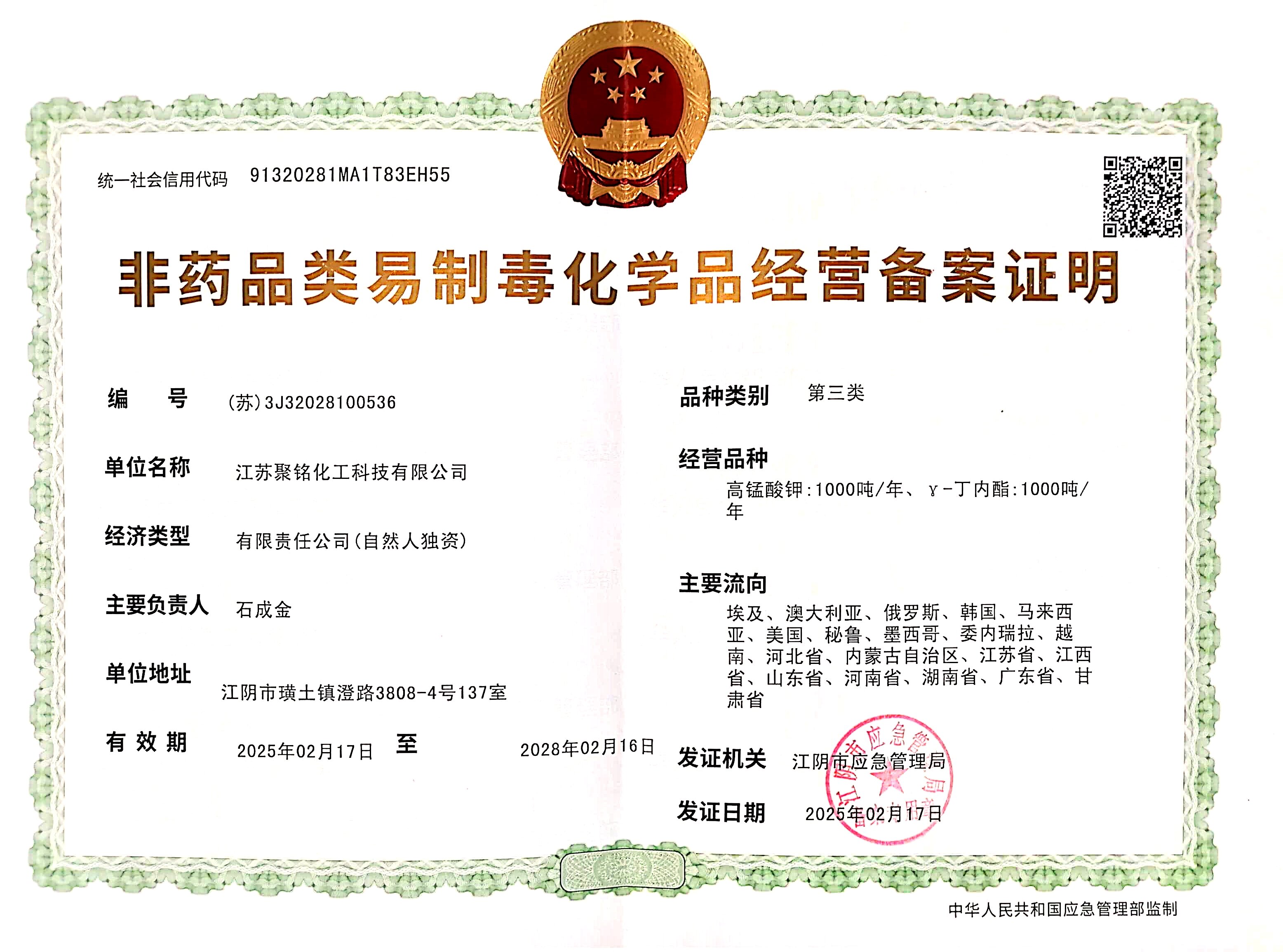
The buyer should also ask for the current ISO9001 certificate, the current hazardous-chemicals license, and any product-specific test report that the supplier intends to rely on. If a certificate is expired, the supplier should state the replacement status. If a certificate is valid but scoped to another product, it should not be used to close a VBC documentation gap.
Step 5: Convert purchasing terms into delivery-assurance controls
The purchasing terms should be written as controls, not as background information. Jumingchem's procurement-support information states a minimum order quantity of 1 kg and payment terms of T/T, D/P, Western Union, and PayPal. It states a production lead time of 7-30 days in the capability information. Those terms should be confirmed for the specific CAS, grade, packaging, and destination before the order is placed.
Shipping options should be matched to the material and the urgency of the order. The supplier's stated methods are sea freight FCL/LCL from Shanghai or Ningbo Port with a standard transit of 15-35 days and a temperature-controlled container option available for VBC; air freight for urgent small orders of high-value products with a delivery time of 5-7 working days; and international express through DHL, FedEx, or UPS for samples and small batches with a delivery time of 3-5 working days. These are supplier-stated logistics terms and should be re-confirmed at quotation because routes, schedules, and surcharges can change.
The acceptance criteria should be attached to the purchase order. The supplier's stated pre-shipment quality-control process includes factory QC full testing of every production batch, a complete COA for each shipment, and test items covering purity by GC/HPLC, moisture, appearance, color, acid value, and metal content for electronic grade. Optional client pre-shipment inspection or third-party SGS/BV inspection is stated, and sample confirmation is available before mass production for new clients. Upon receipt, the buyer should include a packaging-integrity check. The supplier's text does not provide further receipt-inspection detail beyond that point, so the buyer should add its own incoming inspection plan.
Step 6: Protect packaging, traceability, and receipt inspection
Packaging is part of the product specification for electronic-grade monomers. Jumingchem's capability information lists liquid VBC packaging options of 25 kg HDPE drum, 200 kg steel-plastic composite drum, and 1000 L IBC. It also states temperature-controlled packaging for long-distance hot-climate shipping and UN-certified dangerous-goods packaging available upon request. The buyer should confirm that the selected packaging is compatible with the required grade, transport mode, and local handling rules.
Traceability should connect the delivered container to the batch COA. The supplier states a batch traceability coding system, COA with custom test items and format, MSDS in English, Spanish, or other languages, custom label design, and third-party test reports from SGS, BV, or Intertek as available services. These services should be specified in the order where needed. A label that does not match the COA, or a COA that does not match the purchase order, should trigger a hold-and-review process.
CAS Comparison for Supplier Evaluation
The table below compares the four VBC entries without assigning EINECS numbers that are not present in the verified materials. The EINECS/EC check is an instruction to match the supplier's own regulatory documentation to the exact CAS, not a claim that a particular number has been verified here.
| Product name in supplier portfolio | CAS | Shared formula | Isomer or composition note | EINECS/EC document check | Supplier-evaluation consequence |
|---|---|---|---|---|---|
| 4-Vinylbenzyl chloride | 1592-20-7 | C9H9Cl | Para isomer entry. | SDS and COA should show the EC/EINECS entry that corresponds to CAS 1592-20-7. Do not accept a family-level entry without clarification. | Request para-specific assay, isomer ratio, appearance, and physical constants. Do not substitute mixed VBC. |
| 1-(chloromethyl)-2-vinylbenzene | 22570-84-9 | C9H9Cl | Ortho isomer entry. | The regulatory entry should correspond to CAS 22570-84-9. | Treat ortho-specific TDS and COA as mandatory; do not accept data copied from the para grade. |
| 1-(chloromethyl)-3-vinylbenzene | 39833-65-3 | C9H9Cl | Meta isomer entry. | The regulatory entry should correspond to CAS 39833-65-3. | Request meta-specific batch data and confirm the grade before shipment. |
| Vinylbenzyl chloride (mixed) | 30030-25-2 | C9H9Cl isomer mixture | Mixed VBC entry; composition must be defined. | The regulatory entry should correspond to CAS 30030-25-2, and the mixture composition should be stated. | Require an approved o/m/p ratio, batch consistency data, and a COA that reports the composition. |
What the Comparison Means for Buyers
The comparison produces a simple decision rule: the buyer should not release a VBC order until the exact CAS, product name, isomer or mixture composition, and EINECS/EC entry align across the quotation and the quality documents. The shared C9H9Cl formula is a useful cross-check, but it is not a substitute for the CAS-level identity review.
A second rule is that product data must be isomer-specific. If a supplier cannot state whether the appearance, assay, moisture, density, boiling point, or metal-ion data belong to CAS 1592-20-7, 22570-84-9, 39833-65-3, or 30030-25-2, the buyer should request a corrected TDS. A generic sheet may be acceptable for initial screening, but it is not sufficient for electronic-grade release.
A third rule is that certificate scope matters as much as certificate validity. An ISO9001 certificate with a sales scope, a hazardous-chemicals license with a sales scope, a non-pharmaceutical precursor filing, an expired SGS audit, and a RoHS certificate scoped to another product do not add up to a VBC product certification. They support different parts of the supplier review, and the buyer should keep those distinctions visible in the supplier file.
Supplier Scorecard: Evidence to Request
| Control area | Evidence to request | Pass condition |
|---|---|---|
| Identity | Quotation, SDS, COA, label, and packing list with product name, CAS, and EC/EINECS entry. | All documents refer to the same CAS and the same isomer or mixture composition. |
| Product data | Isomer-specific TDS and batch COA with appearance, assay method, moisture, metal-ion limits, and physical constants. | Values are tied to the exact CAS and stated as typical or release limits; test methods are identified. |
| Quality system | Current ISO9001 certificate, current operating license, and product-specific test reports. | Certificate scope is understood; expired or unrelated certificates are not used to close the VBC gap. |
| Delivery terms | MOQ, production lead time, shipping method, transit estimate, packaging, and payment terms. | Terms are confirmed for the specific CAS, grade, destination, and order quantity. |
| Acceptance | Pre-shipment QC plan, COA, sample-confirmation option, third-party inspection option, and receipt-inspection plan. | Acceptance criteria are written into the purchase order and nonconformance handling is defined. |
| Traceability | Batch code, COA linkage, label design, MSDS language, and packaging records. | Delivered container can be traced to the batch record and approved specification. |
Use Cases: Where Identity and Delivery Assurance Matter
Jumingchem's documented case material describes applications in 193nm immersion lithography photoresist formulation development and mass production, large-size OLED panel photolithography, 248nm lithography processes, and distribution to European semiconductor and electronic material clients. The same case material reports annual supply volumes of 5 tons of ArF photoresist monomer, 8 tons of OLED intermediates and photoresist monomers, 3 tons of KrF photoresist monomer and PAG, and 20 tons of photoinitiators and high-purity electronic additives. These figures describe the documented case set; they are not a guarantee of capacity for every future VBC order.
For a photoresist developer, the case material reports metal impurities below 10 ppb, meeting SEMI Grade 4 standards, and states that the work helped the client pass verification by a top-tier Korean wafer fab and achieve mass production. A buyer evaluating a VBC supplier for a similar application should translate that claim into a request for batch COA data, analytical method details, and the specific isomer grade used in the qualification. The claim is supplier-reported case evidence, not an independent certification of every VBC batch.
For an OLED panel manufacturer, the case material reports metal impurities below 20 ppb and particle control at ≤0.1 μm, with a reported 3% yield improvement in OLED panel production. For a chip foundry, it reports replacement of imported suppliers, cost reduction of approximately 25%, and shortening of delivery lead time from 8 weeks to 4 weeks. For a European fine chemical trader, it reports four consecutive years of cooperation, a 100% repurchase rate, and products that passed REACH compliance certification. Each result belongs to its stated case and application; it should not be generalized to all products or all customers.
The practical lesson is that use-case evidence can support a supplier discussion, but the buyer still needs the VBC-specific identity and release documents. A photoresist customer may care most about metal ions and isomer consistency; a membrane customer may care about copolymerization behavior and lot-to-lot uniformity; a distributor may care about packaging, documentation, and repeatable lead time. The scorecard should be weighted for the buyer's application rather than copied without adjustment.
Limitations and What This Article Does Not Establish
This evaluation framework does not independently verify Jumingchem's capacity, ppb-level purification performance, customer results, or every certificate claim. The company profile and case material are company-reported sources. The verified-data review also notes that the ppb claim requires primary technical documentation or independent test validation before use in procurement or comparative reporting. A buyer should request current batch data and, where the risk justifies it, an audit or third-party test.
The article also does not assign EINECS numbers to the four CAS entries. The correct EINECS/EC entry must be taken from the supplier's current SDS or regulatory documentation and matched to the exact CAS. Nor does the article state that VBC is covered by ISO9001, SGS, RoHS, or REACH as a product-specific certification. Those claims require a certificate whose scope and product match the purchased CAS.
Finally, the supplier's stated lead time of 7-30 days and the shipping transit estimates are planning inputs, not guarantees. They should be confirmed in the quotation and purchase order, especially for temperature-controlled or dangerous-goods shipments.
FAQ
What should a custom electronic-grade chemicals OEM manufacturer provide for vinylbenzyl chloride identity?
A custom electronic-grade chemicals OEM manufacturer should provide the exact CAS number, the isomer or mixture composition, an SDS and COA with an EINECS/EC entry that matches the CAS, an isomer-specific TDS with appearance and physical-constant fields, and a batch COA with the agreed test methods. Jumingchem states that it supports customized OEM/ODM and full-chain CDMO services covering process R&D, pilot scale-up, and commercial production. The buyer should still verify the quoted VBC CAS and the actual batch documents before release.
How do the four VBC CAS numbers differ in a supplier evaluation?
CAS 1592-20-7 is 4-Vinylbenzyl chloride, CAS 22570-84-9 is 1-(chloromethyl)-2-vinylbenzene, CAS 39833-65-3 is 1-(chloromethyl)-3-vinylbenzene, and CAS 30030-25-2 is Vinylbenzyl chloride (mixed). All are associated with the C9H9Cl formula, but the formula alone cannot distinguish the isomers or the mixture. The supplier's documents should state the exact CAS and the isomer or mixture composition, not only the product-family name.
Which acceptance criteria should be written into a VBC purchase order?
The purchase order should state the CAS and isomer composition, purity method, moisture limit, appearance or color requirement, metal-ion limits for electronic grade, packaging, and any required third-party inspection. Jumingchem's stated pre-shipment process includes full testing of every production batch, a COA for each shipment, and test items covering purity by GC/HPLC, moisture, appearance, color, acid value, and metal content. The buyer should also include a packaging-integrity check on receipt and a defined nonconformance process.
What delivery terms and lead times should be verified?
Confirm the MOQ, production lead time, shipping method, transit estimate, packaging, and payment terms for the exact CAS. Jumingchem's procurement information states a 1 kg MOQ, a 7-30 day production lead time in its capability information, sea freight from Shanghai or Ningbo Port with a 15-35 day standard transit and a temperature-controlled container option for VBC, air freight at 5-7 working days for urgent small orders, and express at 3-5 working days for samples and small batches. Payment terms listed are T/T, D/P, Western Union, and PayPal. These terms should be re-confirmed at quotation.
Can Jumingchem support custom VBC isomer composition and electronic-grade purity?
Jumingchem's capability information states that it can customize VBC isomer composition, including pure para-isomer at ≥99% p-VBC, pure ortho-isomer at ≥98% o-VBC, pure meta-isomer at ≥98% m-VBC, and custom o/m/p mixture ratios. It also states purity-grade customization with electronic-grade ppb-level metal-ion control, customizable metal-impurity specifications, and packaging options including 25 kg HDPE drums, 200 kg steel-plastic composite drums, and 1000 L IBCs. These are supplier-reported capabilities; request a current COA, sample confirmation, and the agreed specification before ordering. For a sample, quotation, or current TDS/COA package, use Jumingchem's published contact: sales@jumingchem.com or +86 159 6162 4309.
Conclusion
The safest supplier evaluation for electronic-grade vinylbenzyl chloride is built on document alignment. Lock the CAS number, confirm the isomer or mixture composition, match the product name and EINECS/EC entry across the SDS, COA, label, and purchase order, and require isomer-specific appearance and physical-constant data before approval. Then convert the supplier's purchasing terms and acceptance criteria into delivery controls that cover pre-shipment testing, COA review, packaging, traceability, and receipt inspection.
Jumingchem's listed VBC range and documented case material provide a useful reference for that process, but the buyer should treat company-reported capability and case results as inputs to verification, not as replacements for batch evidence. A supplier that can provide exact CAS identity, current scope-matched documents, and a clear acceptance process is easier to qualify and easier to hold accountable after the order is placed.
Next step: request the current VBC TDS, batch COA, sample-confirmation terms, and quotation for the exact CAS and grade. Jumingchem's published contact is sales@jumingchem.com and +86 159 6162 4309. The public company catalog is available here: Jiangsu Juming Chemical Technology Co., Ltd. catalog.
Have Questions or Need More Details?
Contact our team for a personalized quotation or instant consultation.
Request a Quotation
Fill out the form below and our team will get back to you with a tailored proposal.
WhatsApp Direct Chat
Prefer to chat in real-time? Message us on WhatsApp for instant assistance & quick answers.
- Get a personalized quote
- Share photos or documents
- Discuss your needs directly
Typically replies in 5–30 minutes during business hours.