Photoresist Resin Formulation Stalls? Choosing Electronic-Grade Vinylbenzyl Chloride Isomers
Isomer identity, not appearance, is the variable that decides whether a monomer substitution is safe in a negative photoresist resin.
The short answer: choosing between electronic-grade 2-, 3- and 4-vinylbenzyl chloride is an identity-and-documentation decision before it is a formulation decision. In the verified record, all three isomers share the molecular formula C9H9Cl, a molecular weight of approximately 152.62 g/mol, and a colourless-to-light-yellow liquid appearance. What separates them is the substitution position captured by CAS number, how complete and how reliable the published physical constants are, and whether the grade is a single isomer or a mixed-isomer product.
The Real Reason the Formulation Stalls
A negative photoresist resin batch is usually stopped by a purchasing event, not by chemistry. A qualified monomer lot is unavailable, an alternate drum appears with a similar label, and the technical team is asked to approve a substitution over a weekend. At that moment, three failure modes appear:
- Identity ambiguity. The generic name “vinylbenzyl chloride” covers both single isomers — CAS 22570-84-9 (1-(chloromethyl)-2-vinylbenzene), CAS 39833-65-3 (1-(chloromethyl)-3-vinylbenzene) and CAS 1592-20-7 (4-vinylbenzyl chloride) — and a mixed-isomer product, CAS 30030-25-2. A specification written only as “VBC” cannot distinguish them.
- Uneven data quality. One isomer in the record carries measured physical constants; another carries predicted ones. Mixing the two in a comparative table creates false precision.
- Undeclared stabilizer. The 3-isomer record notes approximately 0.1% TBC stabilizer. If the formulation already contains an inhibitor or an acid scavenger, an undeclared additive changes the starting point of the trial.
Each of these is a constraint question, not a performance question. That is why this evaluation sits in the constraint layer of electronic-grade chemical sourcing rather than in a ranking of “best” isomers.
Industry Background: Why Isomer Discipline Matters Now
Vinylbenzyl chloride belongs to the small group of dual-functional monomers used where a polymer backbone and a reactive benzylic chloride must coexist in the same molecule. The verified record states the same application set for the 2-, 3-, 4- and mixed grades: core monomers for high-performance negative photoresist resins (including E-beam electron-beam photoresist) and advanced packaging dielectric materials, and for manufacturing homogeneous ion-exchange membranes, ultra-pure water resins and chelating resins.
The surrounding market context explains why specification disputes surface more often than they used to. Grand View Research estimated the global electronic-grade photoresist market at USD 4.96 billion in 2024, and the broader electronic materials and chemicals market at USD 78.5 billion in 2025, with Asia Pacific accounting for 66.6% of that revenue. SEMI reported global semiconductor materials revenue of USD 73.2 billion in 2025. Growth of this kind pushes more formulators toward second-source qualification, and every second source is an isomer-identity question first.
Jiangsu Juming Chemical Technology Co., Ltd. (brand: Jumingchem), established in 2017 in Jiangsu Province, China, manufactures 4-vinylbenzyl chloride (CAS 1592-20-7), 1-(chloromethyl)-2-vinylbenzene (CAS 22570-84-9), 1-(chloromethyl)-3-vinylbenzene (CAS 39833-65-3) and the mixed grade (CAS 30030-25-2) alongside BPADA and 5-methyl-1H-benzotriazole, with a stated annual output of 60,000 tons and export activity across the USA, Korea, Japan, Taiwan region, Germany, Southeast Asia and the Middle East.
The Three Isomers Side by Side
The table below contains only values present in the verified product record. Cells marked as not stated mean the parameter is not available in that record — they are not estimates.
| Parameter | 2-Vinylbenzyl chloride | 3-Vinylbenzyl chloride | 4-Vinylbenzyl chloride |
|---|---|---|---|
| CAS number | 22570-84-9 | 39833-65-3 | 1592-20-7 |
| EINECS number | 245-092-5 | 254-649-1 | 216-471-2 |
| Molecular formula | C9H9Cl | C9H9Cl | C9H9Cl |
| Molecular weight | 152.62 g/mol | 152.62 g/mol (record lists 152.62076) | 152.62 g/mol |
| Appearance | Light yellow to colourless liquid | Light yellow to colourless liquid | Colourless to pale yellow transparent liquid (clear yellow) |
| Boiling point | 223.4 ± 9.0 °C (predicted) | Not stated in the record | 229 °C |
| Density | 1.066 ± 0.06 g/cm³ (predicted) | Not stated in the record | 1.083 g/mL at 25 °C |
| Stabilizer declaration | Not stated | Approximately 0.1% TBC | Not stated in the record |
| Storage temperature | Not stated | Not stated | 2–8 °C |
| Solubility | Not stated | Not stated | Insoluble in water; sparingly soluble in chloroform |
| Jumingchem model code | JM 22570-84-9 | JM 39833-65-3 | JM 1592-20-7 |
Comparison limited to verified record values; “not stated” is not an estimate.
4-Vinylbenzyl chloride (CAS 1592-20-7): the most completely described grade
The 4-isomer record is the most fully populated. Beyond the identifiers, it lists a boiling point of 229 °C, a density of 1.083 g/mL at 25 °C, a vapour density of 5.3 relative to air, a vapour pressure of 1 mm Hg at 56.1 °C, a refractive index of n20/D 1.572 and a flash point of 221 °F, with a recommended storage temperature of 2–8 °C. The material is described as a dual-functional monomer that is readily derivatized by chloride displacement, and as a component of ion-exchange resins, photoresist polymers, cross-linkable fibres, coupling agents and electroconducting polymers.
For a formulator, the practical value of this density of data is that identity can be confirmed with routine laboratory checks — refractive index and density — rather than with a full structural analysis on every incoming lot.
1-(chloromethyl)-2-vinylbenzene (CAS 22570-84-9): usable, but predicted constants
The 2-isomer record provides the CAS number 22570-84-9, EINECS 245-092-5, formula C9H9Cl, molecular weight 152.62 g/mol and a light-yellow-to-colourless liquid appearance. Its boiling point of 223.4 ± 9.0 °C and density of 1.066 ± 0.06 g/cm³ are both flagged as predicted values.
That flag matters in a purchase specification. A predicted value with a stated tolerance band should not be written into a release criterion as though it were a measured constant. The correct action is to agree on the analytical method — typically a gas chromatography identity and purity check — and record the result on the certificate of analysis.
1-(chloromethyl)-3-vinylbenzene (CAS 39833-65-3): the stabilizer is the specification
The 3-isomer record lists CAS 39833-65-3, EINECS 254-649-1, formula C9H9Cl, molecular weight recorded as 152.62076, and a light yellow to colourless liquid appearance. Its distinguishing entry is approximately 0.1% TBC stabilizer, also captured in the synonym list as “3-(chloromethyl)styrene (~0.1% TBC stabilizer)”.
No boiling point or density appears in the available record for this isomer. A buyer should therefore ask for those values, and for the method behind them, rather than assume parity with the para isomer.
The mixed grade (CAS 30030-25-2) is a different product, not a cheaper version
CAS 30030-25-2 is described in the record as a mixture of 3- and 4-isomers, stabilised with TBC, with a melting point of −30 °C, boiling point 229 °C, density 1.074 g/mL at 25 °C and a recommended storage temperature of −20 °C. One source in the record notes 50–100 ppm tert-butylcatechol as inhibitor.
The practical consequence: a formulation validated on the mixed grade has been validated on a mixture. Switching to a single isomer changes the feed composition, and switching from single isomer to mixed grade reintroduces the composition variability the mixture was never designed to control.
3-Vinylbenzyl chloride (CAS 39833-65-3): the ~0.1% TBC stabilizer is part of the purchase specification, not a footnote.
Step-by-Step: Confirming Isomer Identity Before You Commit
Step 1 — Write the CAS number into the specification
Replace “vinylbenzyl chloride” with the exact isomer and its CAS number. A specification that reads “VBC, electronic grade” permits any of the four commercial identities and cannot be enforced at incoming inspection.
Step 2 — Separate single isomer from mixed grade
Decide explicitly whether the validated formulation uses a single isomer (22570-84-9, 39833-65-3 or 1592-20-7) or the mixture (30030-25-2). Treat any movement between those two categories as a formulation change requiring a trial, not a procurement substitution.
Step 3 — Classify each constant as measured or predicted
Measured values support release testing; predicted values support only a range expectation. For 2-VBC, both the boiling point and density are predicted. For 4-VBC, the boiling point, density, refractive index, vapour pressure and flash point are recorded as measured constants.
Step 4 — Confirm the stabilizer declaration in writing
Ask for the inhibitor type and concentration in the certificate of analysis and the safety data sheet. For the 3-isomer the record states approximately 0.1% TBC. Confirm the same field for the isomer you actually intend to buy — absence of a declaration is not evidence of absence.
Step 5 — Match packaging and storage to the chemistry
The 4-isomer is stored at 2–8 °C; the mixed grade at −20 °C. Jumingchem supplies liquid VBC grades in 25 kg HDPE drums, 200 kg steel-plastic composite drums and 1000 L IBC containers, with temperature-controlled packaging for long-distance hot-climate shipping and UN-certified dangerous goods packaging available on request.
Step 6 — Sample, then scale
Minimum order quantity for these grades is 1 kg, which is enough for identity confirmation plus a bench-scale resin trial. Standard lead time is 7–30 days, with a stated 72-hour emergency order response mechanism supporting supply continuity.
Use Cases: Where the Isomer Decision Actually Lands
Because the stated application set is identical across the 2-, 3-, 4- and mixed grades in the record, the isomer choice cannot be made from the application list alone. It has to be made from formulation history plus the identity constraints above.
- Negative photoresist resins, including E-beam photoresist. The monomer supplies the polymerisable vinyl group and the reactive chloromethyl group in one molecule; the substitution position is the variable that changes with the isomer.
- Advanced packaging dielectric materials. Here the monomer is used where dielectric performance and process compatibility are both constrained, so batch-to-batch identity consistency carries more weight than nominal grade labels.
- Homogeneous ion-exchange membranes. The benzylic chloride is the functionalisation site, making derivatisation behaviour central to membrane performance.
- Ultra-pure water resins. Metal-ion contribution from the monomer becomes part of the resin’s own purity budget.
- Chelating resins. Functional group placement determines what the resin can capture, so isomer identity is functional, not cosmetic.
2-Vinylbenzyl chloride (CAS 22570-84-9): predicted constants should be agreed as method-based specifications, not quoted as measured values.
Technical Checklist Before You Request a Sample
| Check | What to confirm | Reference point in the record |
|---|---|---|
| Isomer identity | CAS number and substitution position stated on the label, COA and SDS | 22570-84-9 / 39833-65-3 / 1592-20-7 / 30030-25-2 |
| Appearance | Colour and physical form against the specification | Light yellow to colourless liquid; 4-VBC described as clear yellow |
| Boiling point | Measured value with method, or agreed predicted range | 229 °C (4-VBC, measured); 223.4 ± 9.0 °C (2-VBC, predicted); not stated for 3-VBC |
| Density | Measured value at stated temperature | 1.083 g/mL at 25 °C (4-VBC); 1.066 ± 0.06 g/cm³ (2-VBC, predicted); not stated for 3-VBC |
| Stabilizer | Type and concentration declared | Approximately 0.1% TBC for the 3-isomer |
| Storage and packaging | Temperature range and container format | 2–8 °C (4-VBC); −20 °C (mixed grade); 25 kg drum / 200 kg composite drum / 1000 L IBC |
| Traceability | Batch code, retained sample, COA with test items | Batch traceability coding; custom COA test items and format |
One honest limitation. The verified record does not establish comparative lithographic performance among the three isomers — no contrast curve, resolution or adhesion data is attached to any CAS number here. Any claim that one isomer “performs better” in a negative resist would be an unsupported extrapolation. What the record does support is a disciplined identity and specification decision, followed by your own formulation trial.
Supplier-Side Constraints: What to Verify Alongside the Isomer
Isomer identity is necessary but not sufficient. Three supplier-side constraints decide whether the chosen grade can be sustained across lots.
Quality system coverage. Jumingchem holds ISO 9001:2015 certification (certificate NOA2505548, issued by NOA Testing & Certification Group Ltd., valid 25 July 2025 to 24 July 2028) under GB/T 19001-2016 idt ISO 9001:2015. The record states that this certification covers 4-vinylbenzyl chloride (CAS 1592-20-7) and 1-(chloromethyl)-2-vinylbenzene (CAS 22570-84-9), and that it requires documented information and traceability control where traceability is a requirement. An SGS Factory Audit Report (QIP-ASI254749) is also on file, valid 23 May 2025 to 23 May 2026, covering electronic chemicals among other product categories.
Purity control capability. Jumingchem states ppb-level metal ion impurity purification capability, with ICP-MS, HPLC and GC detection systems, GMP-standard clean workshops, microchannel and continuous flow reactor technology, and flexible production from gram-level R&D to hundred-ton industrial scale. The company reports 180 employees, 25 R&D engineers, a 78,000 m² factory area with a 3,000 m² R&D centre, a 300 m² pilot plant and a 600 m² GMP workshop. Metal impurity limits and specifications can be customised to the customer’s requirement, and purity grades are offered as industrial, high purity and electronic grade.
Isomer and ratio flexibility. Rather than a single fixed catalogue grade, the supplier states pure para-isomer (≥99% p-VBC), pure ortho-isomer (≥98% o-VBC), pure meta-isomer (≥98% m-VBC) and any custom o/m/p mixture ratio, with documentation support including third-party SGS, BV or Intertek test reports, MSDS in multiple languages and custom labelling.
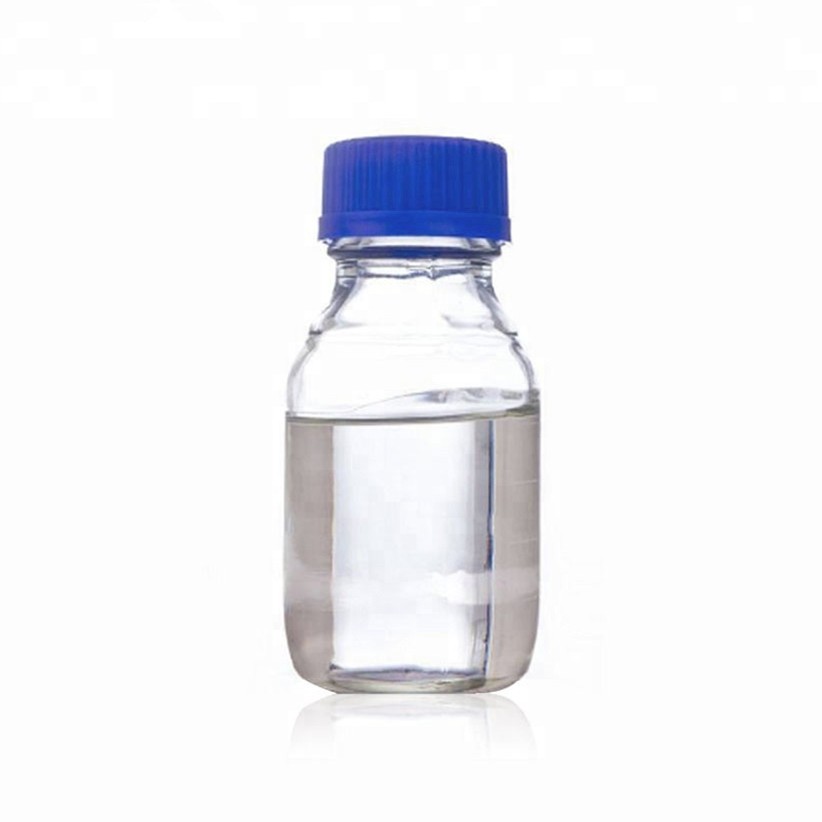
4-Vinylbenzyl chloride (CAS 1592-20-7): the isomer with measured boiling point, density, refractive index and flash point in the record.
Frequently Asked Questions
1. How can I verify COA traceability for high-purity electronic-grade chemicals before releasing a lot?
Ask for four linked items: a batch code that appears identically on the container label, the certificate of analysis and the retained sample record; a COA whose test items are defined by your specification rather than a generic template; the analytical method behind each reported value, particularly where the published figure is predicted rather than measured; and the scope of the quality system covering that specific product. Jumingchem operates 100% testing with a batch traceability coding system, offers COAs with custom test items and format, and supports third-party re-inspection through SGS, BV or Intertek. The ISO 9001:2015 certification states that documented information and traceability control apply where traceability is a requirement.
2. Can a supplier deliver a single VBC isomer, or only the mixed grade?
Single isomers are available as distinct catalogue products: 4-vinylbenzyl chloride (CAS 1592-20-7), 1-(chloromethyl)-2-vinylbenzene (CAS 22570-84-9) and 1-(chloromethyl)-3-vinylbenzene (CAS 39833-65-3), each with its own EINECS number and model code. The mixed grade is a separate identity (CAS 30030-25-2, a mixture of 3- and 4-isomers). Jumingchem states purity options of ≥99% p-VBC, ≥98% o-VBC, ≥98% m-VBC and any custom o/m/p ratio, with OEM/ODM and CDMO support from process development through commercial scale-up.
3. What drives the price difference between electronic-grade VBC isomers?
In the verified record, cost is driven by specification rather than by CAS number alone. The variables that move a quotation are the purity grade requested (industrial, high purity, or electronic grade with ppb-level metal control), whether metal impurity limits are customised, whether the order is single isomer or a custom ratio blend, packaging format (25 kg HDPE drum, 200 kg steel-plastic composite drum, 1000 L IBC, temperature-controlled or UN-certified dangerous goods packaging), documentation scope, and volume. Because these factors differ by project, pricing is quoted against a defined specification; no standard list price applies across grades.
4. What should be confirmed before ordering a sample of an electronic-grade VBC isomer?
Confirm the CAS number and substitution position, the appearance against specification, whether the available boiling point and density figures are measured or predicted, and the stabilizer declaration — approximately 0.1% TBC is stated for the 3-isomer. Also confirm storage temperature (2–8 °C for 4-VBC, −20 °C for the mixed grade) and the packaging format. The minimum order quantity is 1 kg, which supports identity verification plus a bench-scale trial, and pre-shipment sample confirmation is available.
5. What is the typical lead time for electronic-grade vinylbenzyl chloride?
Standard lead time is 7–30 days depending on grade, packaging and documentation requirements. Jumingchem operates a 72-hour emergency order response mechanism for supply continuity, and states a monthly capacity of 5,000 tons across its product range with an annual output of 60,000 tons. For a first order, allow additional time for sample confirmation and any third-party testing before release. To start a specification review or request a 1 kg sample, contact sales@jumingchem.com or WhatsApp +86 159 6162 4309 with the isomer CAS number and your metal impurity target.
Conclusion: Decide on Identity, Then Prove It in the Reactor
The stall in a photoresist resin programme is rarely caused by a shortage of isomers. It is caused by a specification that never recorded which isomer it meant. Three grades with the same C9H9Cl formula, the same 152.62 g/mol molecular weight and the same light-yellow appearance cannot be told apart at the drum. They can be told apart at the CAS number, at the COA, and at the density and refractive index checks that a measured record makes possible.
The workable sequence is short: lock the CAS number into the specification, separate single isomer from mixed grade, classify each physical constant as measured or predicted, get the stabilizer declared in writing, match storage and packaging to the chemistry, and only then order the 1 kg sample. Everything after that is your formulation trial — which is the only place where lithographic performance can legitimately be decided.

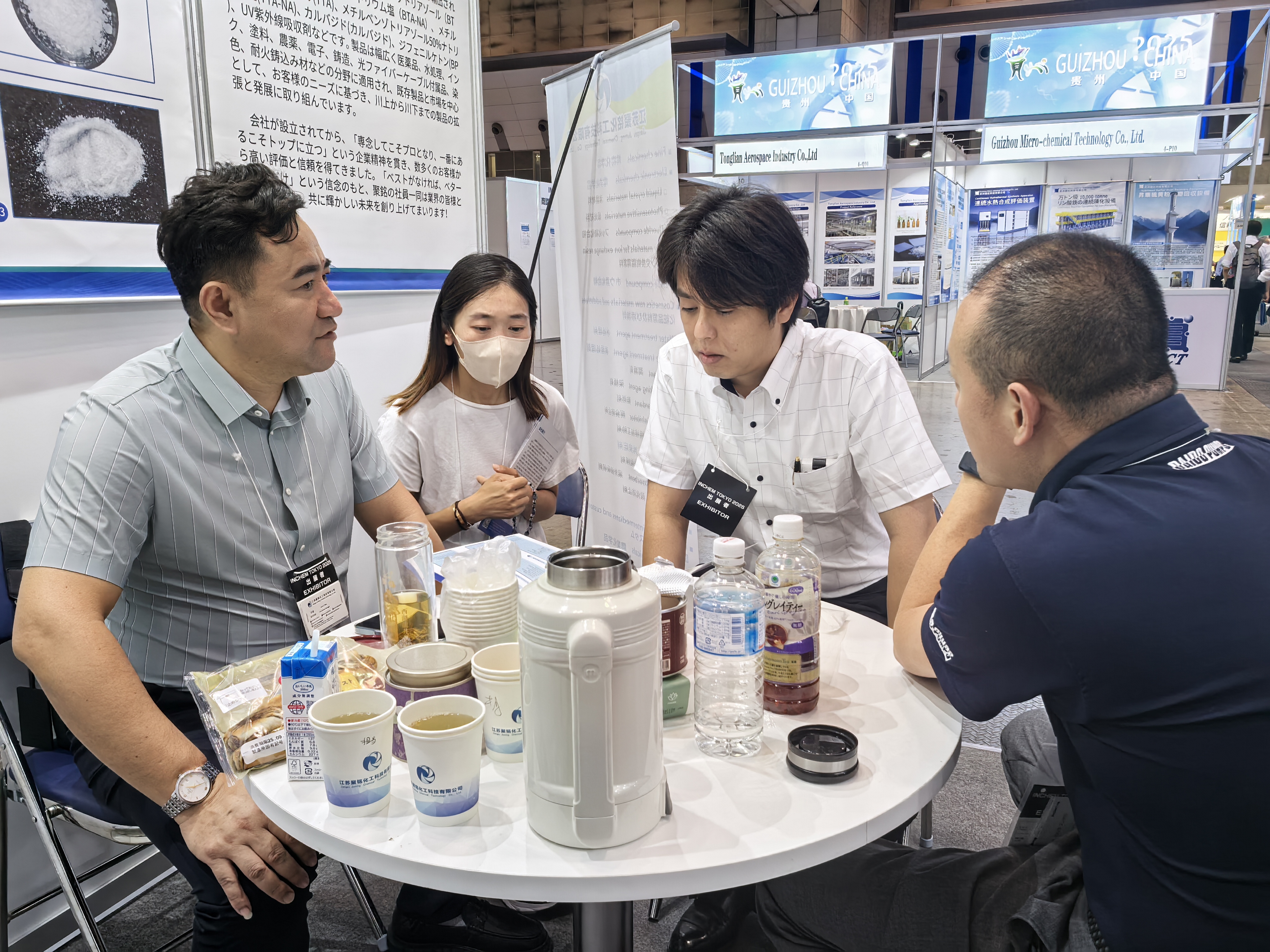
Third-party audit and ISO 9001:2015 documentation support the traceability claims behind an electronic-grade isomer supply.
Next Step: Sample, Specification Review, or Full Catalogue
Send the isomer CAS number you need (22570-84-9, 39833-65-3 or 1592-20-7), your metal impurity target and your packaging format, and Jumingchem will confirm grade availability, documentation scope and lead time. A 1 kg sample is the standard starting point for identity verification and bench-scale resin trials.
Email: sales@jumingchem.com | WhatsApp: +86 159 6162 4309 | Website: en.jmchemchina.com
Download the full product catalogue: Jiangsu Juming Catalogue (PDF)
Have Questions or Need More Details?
Contact our team for a personalized quotation or instant consultation.
Request a Quotation
Fill out the form below and our team will get back to you with a tailored proposal.
WhatsApp Direct Chat
Prefer to chat in real-time? Message us on WhatsApp for instant assistance & quick answers.
- Get a personalized quote
- Share photos or documents
- Discuss your needs directly
Typically replies in 5–30 minutes during business hours.