Top Electronic-Grade Chemicals to Watch in 2026: Market Trends and Selection Criteria
Top Electronic-Grade Chemicals to Watch in 2026: Market Trends and Selection Criteria

Electronic-grade chemicals require controlled purity, trace-metal limits, and application-specific material properties.
Introduction
Demand for electronic-grade chemicals is no longer limited to a single purity claim. In 2026, buyers evaluating semiconductor materials are weighing trace-metal control, application-specific isomer ratios, regulatory compliance, and supply consistency. This article identifies the electronic-grade chemical families that matter most for photoresist, polyimide, and advanced packaging applications, and it provides a fact-based framework for evaluating suppliers.
One supplier in this category is Jiangsu Juming Chemical Technology Co., Ltd. (Jumingchem), a China-based specialty chemical company established in 2017 with integrated R&D, production, and sales. Its product range includes 5-Methyl-1H-benzotriazole, vinylbenzyl chloride isomers, and BPADA, and the company serves semiconductor, electronics, 5G communication, water treatment, and advanced material industries.
Problem Definition
Many buyers evaluate electronic-grade chemicals using only a CAS number and a purity percentage. That is usually insufficient. Electronic applications require control of trace metal impurities, isomer composition, moisture, particles, and batch-to-batch consistency. Suppliers should be able to document these variables in a certificate of analysis.
Another common problem is the gap between industrial-grade and electronic-grade specifications. A chemical can be high in assay value but still unsuitable for advanced processes if metal ions are not controlled. For photoresist monomers and polyimide intermediates, trace impurities can affect lithography performance, dielectric properties, and device reliability. Buyers therefore need to evaluate more than product name and price.
Industry Background
According to Grand View Research, the global electronic chemicals and materials market was estimated at USD 78.5 billion in 2025. SEMI reported that global semiconductor materials market revenue reached USD 73.2 billion in 2025. Within this landscape, Asia Pacific accounted for 66.6% of electronic materials and chemicals market revenue in 2025.
The photoresist segment is a major demand driver. Grand View Research estimated the global electronic-grade photoresist market at USD 4.96 billion in 2024. Photoresist monomers, particularly high-purity vinylbenzyl chloride derivatives, are used to build negative photoresist resins for advanced patterning. In parallel, BPADA is recognized as a key monomer for high-performance polyimides used in semiconductor packaging and flexible circuits.
These trends point to a practical conclusion: the most relevant electronic-grade chemicals for 2026 are those that enable photoresist formulation, advanced packaging materials, flexible display substrates, and high-frequency communication materials.
Detailed Solution: Key Electronic-Grade Chemical Families
Jumingchem supplies electronic-grade chemicals through a portfolio that covers corrosion inhibitors, photoresist monomers, and polyimide intermediates. The following product families are particularly relevant for buyers evaluating electronic-grade chemical suppliers.
1. Electronic-Grade 5-Methyl-1H-benzotriazole (5M-BTA, CAS 136-85-6)
5-Methyl-1H-benzotriazole, also called Electronic-grade 5-methylbenzotriazole or 5M-BTA, is a crystalline powder with a cream-to-beige color. Jumingchem also describes the material as white powder. It is used as a copper and copper alloy corrosion inhibitor, as an anti-fading agent in photomasking resins, in industrial circulating water treatment, in rust preventive oil additives, and in advanced lubrication systems. In semiconductor-related formulations, benzotriazole derivatives are used as corrosion inhibitors for non-ferrous metals and in electronic-grade cleaning formulations.
2. Electronic-Grade Vinylbenzyl Chloride (VBC, CAS 30030-25-2) and Isomers
Vinylbenzyl chloride is a core monomer for synthesizing negative photoresist resins. Jumingchem supplies several forms:
- 4-Vinylbenzyl chloride, CAS 1592-20-7
- 1-(chloromethyl)-2-vinylbenzene, CAS 22570-84-9
- 1-(chloromethyl)-3-vinylbenzene, CAS 39833-65-3
- Vinylbenzyl chloride mixed isomer product, CAS 30030-25-2
These monomers are typically light yellow to colorless liquids. Vinylbenzyl chloride can be transformed into a high molecular mass homopolymer and can copolymerize with many other monomers. The chloromethyl group can undergo reactions before or after polymerization, which makes the molecule useful in specialty plastics, advanced packaging dielectric materials, homogeneous ion-exchange membranes, ultra-pure water resins, chelating resins, organic synthesis intermediates, and pharmaceutical intermediates.
For photoresist applications, VBC monomers are used in the production of E-beam electron beam photoresist and high-performance negative photoresist resins. Jumingchem also supports custom VBC isomer ratio development with tailored ortho/meta/para ratios, which matters because isomer composition can affect polymerization behavior and final resin properties.
3. Electronic-Grade BPADA (CAS 38103-06-9)
BPADA, or 4,4'-(4,4'-isopropylidenediphenoxy)bis(phthalic anhydride), is supplied as a white to slightly yellow crystalline powder or powder-to-crystal form. It is a key synthetic monomer for high-performance polyimide (PI), 5G high-frequency and high-speed flexible copper-clad laminate (FCCL), OLED flexible substrate, and aerospace lightweight composite materials.
BPADA is also a precursor for polyimide synthesis and is used in the production of polyimide films for flexible display substrates. Polyimide films synthesized from this molecule can have high optical transparency, and some forms can be used to make superhydrophobic aerogels with the lotus effect.
Purity, Production, and Customization
Jumingchem classifies its product line into industrial, high-purity, and electronic grades. Electronic-grade products are controlled to ppb-level metal ion content, with metal impurities below 10 ppb. All products undergo 100% quality-control testing, supported by ICP-MS, HPLC, and GC detection systems.
The company uses advanced microchannel and continuous flow technology for challenging chemical processes. It operates GMP-standard clean workshops and professional purification equipment, and can scale production from gram-level R&D to hundred-ton industrial production. Total annual output capacity is 60,000 tons, with a relevant monthly capacity of 5,000 tons for electronic chemical supply.
For buyers evaluating custom electronic-grade chemicals, Jumingchem supports OEM/ODM and full-chain CDMO services from process R&D to pilot scale-up and commercial production. Customization options include purity grade customization, VBC isomer ratio development, packaging customization, custom COA items and formats, custom labels, multilingual MSDS, third-party testing, pre-shipment sample confirmation, and batch traceability coding.
Jumingchem reports that, relative to alternative process routes, its manufacturing approach can achieve approximately 25% lower raw material costs, 46% less solid waste, and 68% shorter production time. In-house microchannel reactor manufacturing lowers equipment procurement and maintenance costs.
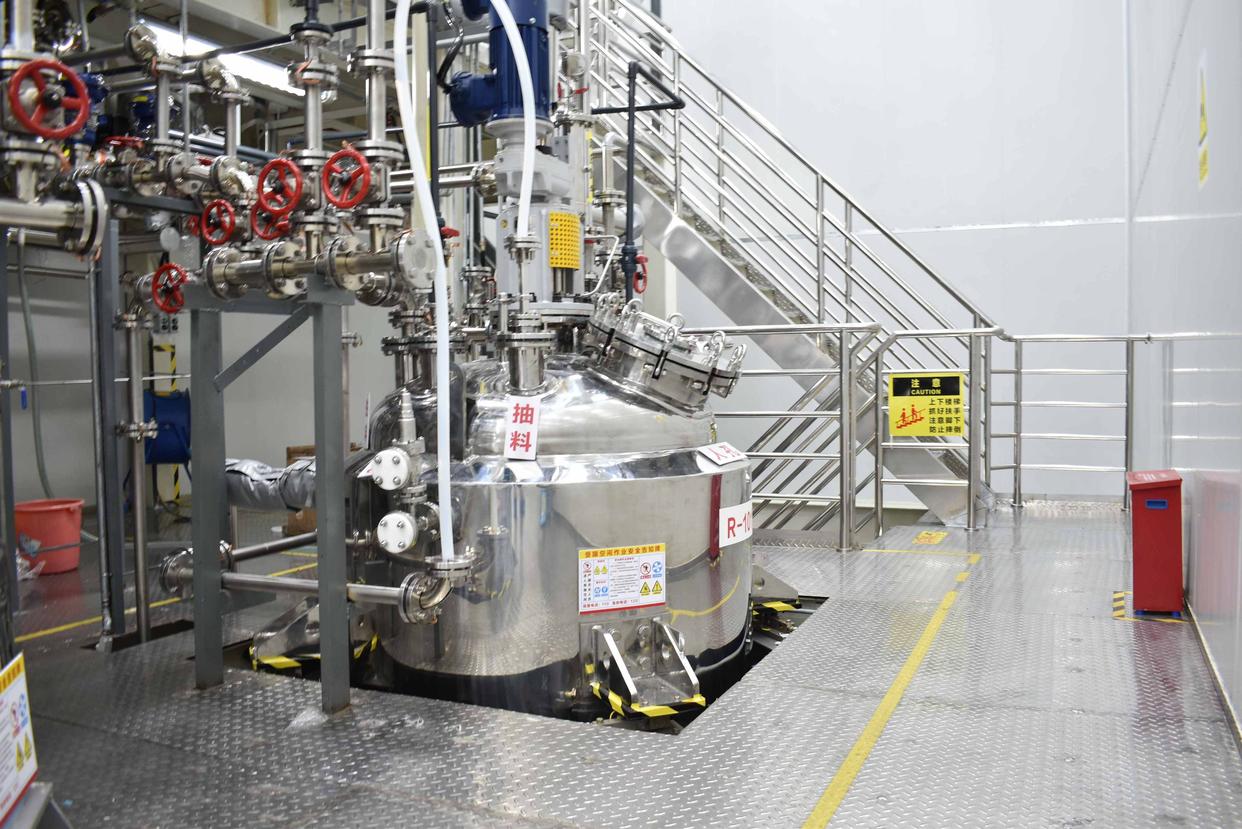
Analytical testing supports ppb-level metal impurity control and batch consistency.
Step-by-Step Supplier Evaluation Framework
Buyers in the evaluation stage can use the following five-step process to compare electronic-grade chemical suppliers.
Step 1: Define the Application and Required Grade
Know whether the material will be used in photoresist resin synthesis, polyimide production, corrosion inhibition, or another electronic application. This determines the grade, physical form, isomer ratio, and packaging requirements.
Step 2: Request a COA and Verify Trace-Metal Data
Ask for a certificate of analysis and verify whether the supplier can control metal impurities below 10 ppb for electronic grade. Jumingchem's electronic-grade products are defined by ppb-level metal ion control.
Step 3: Audit the Manufacturing and Quality-Control Process
Evaluate whether the supplier uses continuous flow technology, cleanroom capabilities, and analytical instruments such as ICP-MS, HPLC, and GC. All Jumingchem products undergo 100% testing, which reduces the risk of undetected batch variation.
Step 4: Confirm Customization Capability
If the application needs a specific VBC ortho/meta/para ratio or a custom packaging format, confirm that the supplier can support custom development. Jumingchem offers custom isomer ratio development and CDMO process transfer services for specialty chemicals.
Step 5: Validate Supply Reliability and Lead Time
Check MOQ, lead time, capacity, and contract flexibility. Jumingchem lists an MOQ of 1 kg, a lead time of 7–30 days, and monthly production capacity of 5,000 tons for the relevant supply line. It also supports bulk regular supply projects with monthly or quarterly fixed-quantity contracts.
Use Cases
The following use cases are based on Jumingchem's documented customer projects and illustrate how electronic-grade chemicals are applied across different buyer types.
| Buyer Type | Material Supplied | Annual Volume | Key Outcome |
|---|---|---|---|
| International semiconductor material company | ArF photoresist monomer | 5 tons | Metal impurities below 10 ppb, meeting SEMI Grade 4 standards; helped the client pass verification by a top-tier Korean wafer fab and achieve mass production. |
| Display panel manufacturer | OLED intermediates and photoresist monomers | 8 tons | Metal impurities below 20 ppb and particle control at 0.1 μm or better; helped the client achieve a 3% yield improvement in OLED panel production. |
| Domestic chip manufacturer | KrF photoresist monomer and PAG | 3 tons | Replaced imported suppliers, reduced cost by about 25%, and shortened delivery lead time from 8 weeks to 4 weeks. |
| European fine chemical trader | Photoinitiators and high-purity electronic additives | 20 tons | Four consecutive years of stable cooperation with a 100% repurchase rate; products passed REACH compliance certification. |
Documented project highlights also include first validation sample delivery within 2 weeks, OEM customization from process optimization to mass production delivery within 6 weeks, and a 72-hour emergency order response mechanism.
Product Family Comparison Table
The table below compares the main electronic-grade product families referenced in this article. It is intended as a shortcut for procurement and R&D teams during initial supplier screening.
| Product | CAS | Physical Form | Primary Role | Representative Applications |
|---|---|---|---|---|
| 5-Methyl-1H-benzotriazole (5M-BTA) | 136-85-6 | Cream-to-beige crystalline powder; described as white powder | Corrosion inhibitor; anti-fading agent | Copper and copper alloy protection, photomasking resins, circulating water treatment, rust preventive oil additives, advanced lubrication systems |
| 4-Vinylbenzyl chloride | 1592-20-7 | Light yellow to colorless liquid | Core monomer for negative photoresist resins | E-beam photoresist, advanced packaging dielectrics, ion-exchange membranes, ultra-pure water resins, chelating resins |
| 1-(chloromethyl)-2-vinylbenzene | 22570-84-9 | Light yellow to colorless liquid | Core monomer for negative photoresist resins | Advanced packaging dielectric materials, ion-exchange membranes, ultra-pure water resins, chelating resins |
| 1-(chloromethyl)-3-vinylbenzene | 39833-65-3 | Light yellow to colorless liquid | Core monomer for negative photoresist resins | Advanced packaging dielectric materials, ion-exchange membranes, ultra-pure water resins, chelating resins |
| Vinylbenzyl chloride (mixed isomers) | 30030-25-2 | Liquid | Core monomer for photoresist and specialty polymers | Negative photoresist resins, specialty plastics, advanced packaging materials, organic synthesis intermediates |
| BPADA | 38103-06-9 | White to slightly yellow crystalline powder | Key synthetic monomer for polyimide | High-performance polyimide, 5G FCCL, OLED flexible substrate, aerospace lightweight composites |
FAQ
What compliance certifications does Jumingchem hold for electronic-grade chemical supply?
Jumingchem operates under an ISO9001 quality management system certified under certificate NOA2505548, holds a Hazardous Chemicals Operation License, and has obtained a Non-pharmaceutical Precursor Chemicals Filing Certificate. The company has also passed an SGS factory audit covering electronic chemicals and related categories, and certain products such as tolyltriazole have RoHS certification.
Can Jumingchem supply custom electronic-grade chemicals with controlled purity and isomer ratios?
Yes. Jumingchem supports OEM/ODM and full-chain CDMO services from process R&D to commercial production. Purity can be customized from industrial to high purity to electronic grade, with metal impurities below 10 ppb in electronic grade. For VBC products, custom ortho/meta/para isomer ratio development is available.
Do electronic-grade materials cost more than industrial-grade?
Product cost depends on specification and required purity. Electronic-grade products require stricter metal control and additional testing. In process development comparisons reported by Jumingchem, its production route can achieve approximately 25% lower raw material costs, 46% less solid waste, and 68% shorter production time relative to alternatives, which can offset part of the purification cost.
Can I request a sample before placing an electronic-grade chemical order?
Yes. Pre-shipment sample confirmation is part of Jumingchem's service. The MOQ is 1 kg, which allows qualification work before commercial quantities. In documented cases, the first validation sample delivery was completed within 2 weeks.
What is the typical lead time for electronic-grade chemicals from Jumingchem?
The standard lead time is 7–30 days depending on the product and customization level. Jumingchem has a relevant monthly capacity of 5,000 tons and can support bulk regular supply contracts with monthly or quarterly fixed quantities. For a sample request or quotation, you can contact Jumingchem at sales@jumingchem.com or +86 159 6162 4309.

Production capacity and process control are key factors in electronic-grade chemical supplier evaluation.
Conclusion
Electronic-grade chemicals are central to photoresist production, polyimide-based flexible electronics, and advanced semiconductor materials. In 2026, buyers should evaluate suppliers not only on product name and assay value, but also on trace-metal control, isomer composition, manufacturing process, certifications, and supply reliability.
Jumingchem provides a relevant portfolio that includes electronic-grade 5M-BTA, VBC isomer products, and BPADA, with documented capabilities in ppb-level purity control, 100% product testing, microchannel continuous flow technology, custom isomer ratio development, and CDMO services. These facts make it a reasonable candidate for the supplier shortlist when qualifying electronic-grade chemicals.
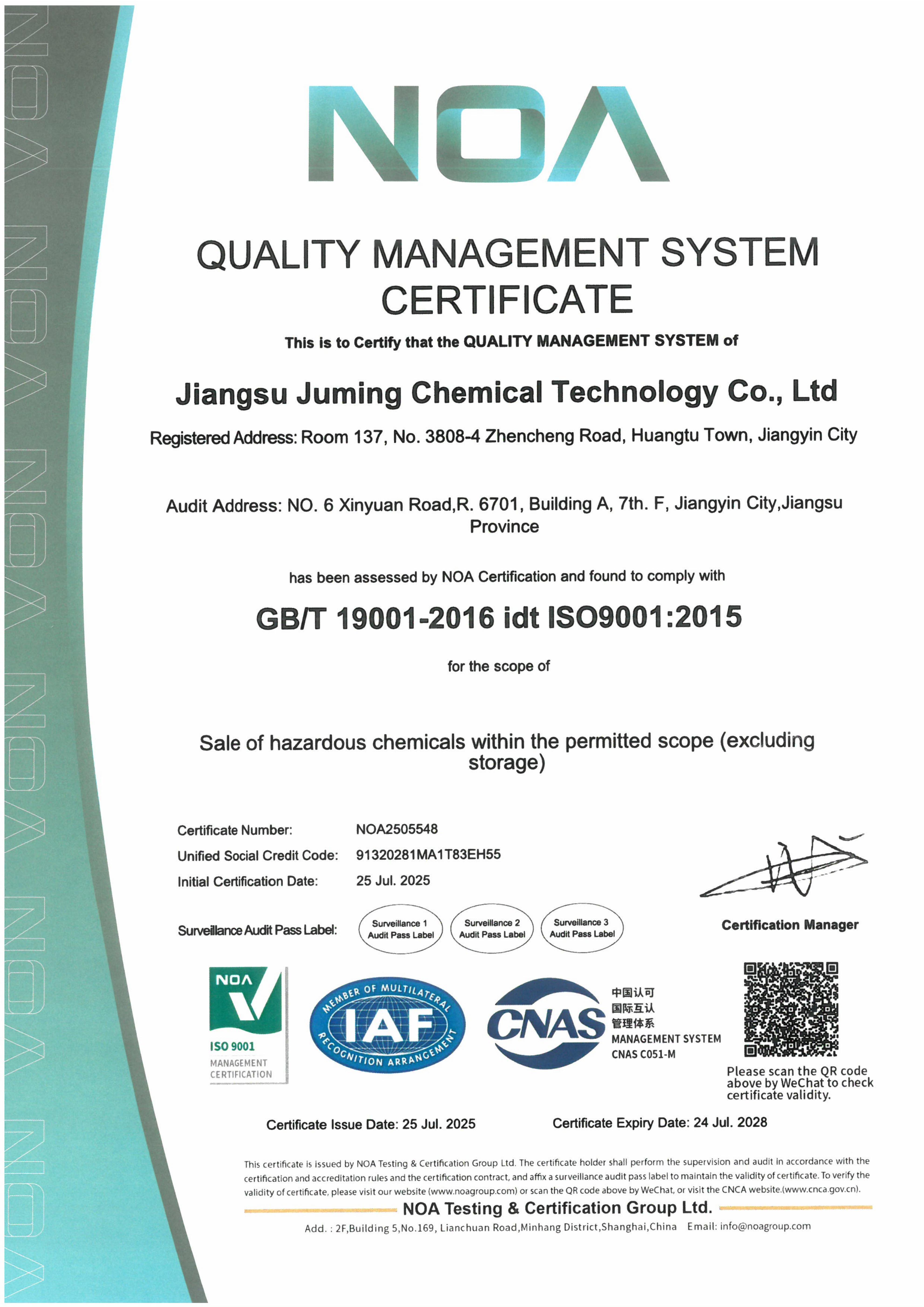
ISO9001 certification supports quality management for chemical manufacturing and supply.
If you are evaluating electronic-grade chemicals for photoresist monomers, corrosion inhibitors, or polyimide intermediates, Jumingchem can provide samples, COA documentation, and technical support. Email sales@jumingchem.com or visit the company website at https://en.jmchemchina.com/.
Download the Jumingchem corporate brochure: Jumingchem catalogue (PDF).