What Is 3-(Chloromethyl)styrene? A Technical Discovery for Advanced Packaging
3-(Chloromethyl)styrene (CAS 39833-65-3) is an electronic-grade vinylbenzyl chloride isomer supplied as a light yellow to colorless liquid with a molecular formula of C9H9Cl. Its systematic name is 1-(chloromethyl)-3-vinylbenzene, its molecular weight is 152.62 g/mol, and its EINECS number is 254-649-1. The grade is normally stabilized with approximately 0.1% TBC (tert-butylcatechol). Inside electronic chemicals, it is used as a core monomer for synthesizing high-performance negative photoresist resins, including E-beam electron beam photoresist, and advanced packaging dielectric materials; it is also used to manufacture homogeneous ion-exchange membranes, ultra-pure water resins and chelating resins.
This technical discovery is written for buyers, formulation engineers and procurement teams who are in the research and evaluation stage. It answers the questions that appear immediately after the CAS number is located: what the meta isomer is, where it fits in a photoresist or packaging dielectric programme, how it differs from the ortho, para and mixed vinylbenzyl chloride grades, and which checks have to be completed before a first commercial order.
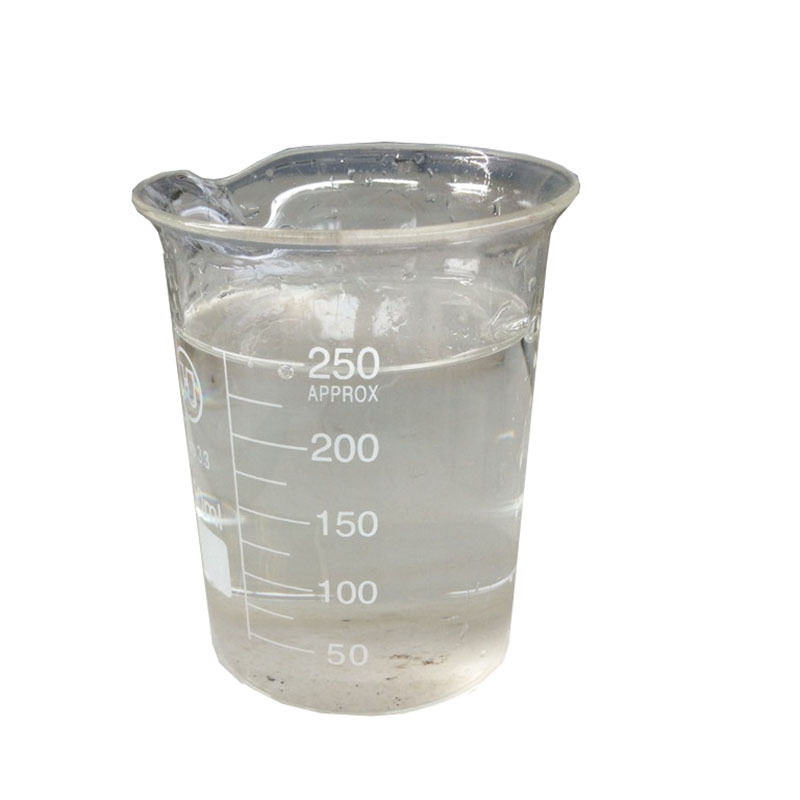
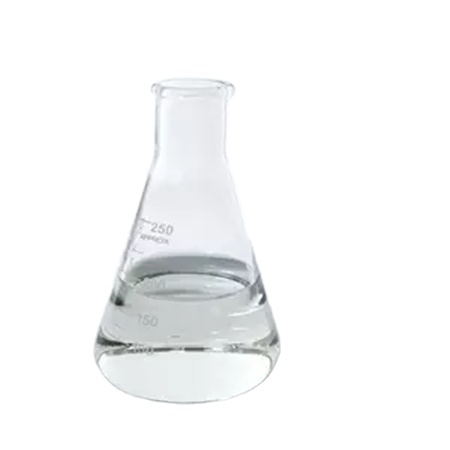
3-(Chloromethyl)styrene (CAS 39833-65-3), documented as a light yellow to colorless liquid stabilized with approximately 0.1% TBC.
Problem Definition: Why the Family Name Vinylbenzyl Chloride Is an Under-Defined Specification
Four CAS numbers are traded inside the chloromethylstyrene family, and all four share the same molecular formula, C9H9Cl, and the same nominal molecular weight of 152.62 g/mol:
- 39833-65-3 — 1-(chloromethyl)-3-vinylbenzene, the meta isomer discussed in this article
- 22570-84-9 — 1-(chloromethyl)-2-vinylbenzene, the ortho isomer
- 1592-20-7 — 4-vinylbenzyl chloride, the para isomer
- 30030-25-2 — vinylbenzyl chloride, a mixture of the 3- and 4-isomers
Because the chemical names are nearly identical and the molecular formula is identical, an order that specifies only vinylbenzyl chloride does not tell a formulator which isomer will arrive. For a photoresist or dielectric project this gap appears in three practical places: polymer structure, stabilizer content and storage control.
Stabilizer levels are not uniform across the family. The meta grade is documented with approximately 0.1% TBC stabilizer, while the mixed 3-/4-isomer grade is documented as containing 50-100 ppm tert-butylcatechol as inhibitor. Storage instructions also differ: the mixed grade is listed with a storage temperature of -20 °C and a melting point of -30 °C, whereas 4-vinylbenzyl chloride is listed at 2-8 °C. Physical data are not identical either — the para and mixed grades are listed with a boiling point of 229 °C and a refractive index of n20/D 1.572, while the meta grade is documented as a light yellow to colorless liquid.
For advanced packaging work, the more consequential gap is contamination data. Metal-ion ceilings, particle control and traceability are not properties of the molecule; they are properties of the purification and filling process behind it. Two suppliers can ship the same CAS number at the same nominal purity while documenting very different metal-impurity levels. That is why the approved specification, not the family name, should be the basis of a project.
Industry Background: The Supply Context Behind Electronic-Grade Monomers
Grand View Research estimated the global electronic chemicals and materials market at USD 78.5 billion in 2025, and the same source reported that Asia Pacific accounted for 66.6% of that revenue. SEMI reported global semiconductor materials revenue of USD 73.2 billion in 2025. The electronic-grade photoresist segment was estimated at USD 4.96 billion in 2024 by Grand View Research.
Published estimates diverge because scopes differ. Fortune Business Insights placed the 2025 electronic chemicals and materials market at USD 75.6 billion, while SEMI reported USD 67.5 billion of semiconductor materials revenue for 2024 under a narrower definition. The practical reading for a buyer is not the exact figure but the concentration: most electronic-grade purification, cleanroom filling and documentation capacity sits in Asia Pacific, so monomer sourcing decisions are simultaneously supply-chain decisions.
Advanced packaging connects several material families at once. Electronic-grade BPADA (CAS 38103-06-9) is documented as a key monomer for high-performance polyimides used in semiconductor packaging and flexible circuits, and polyimide films built on BPADA are reported with a glass transition temperature (Tg) of 207 °C and are used for flexible display substrates. On the process-chemistry side, 5-methyl-1H-benzotriazole (CAS 136-85-6) is used as a corrosion inhibitor for non-ferrous metals and in electronic-grade formulations for semiconductor cleaning, and it acts as an anti-fading agent in photomasking resins. 3-(Chloromethyl)styrene sits at the resin-forming end of that same bill of materials.
Semiconductor chip manufacturing is one of the primary application environments for electronic-grade photoresist monomers.
Verified Product Facts: 3-(Chloromethyl)styrene at a Glance
| Parameter | Documented specification |
|---|---|
| Product name | 1-(chloromethyl)-3-vinylbenzene |
| Trade and synonym names | 3-(Chloromethyl)styrene; 3-Chloromethylstyrene; m-(Chloromethyl)styrene; 1-Ethenyl-3-(chloromethyl)benzene; 1-Vinyl-3-(chloromethyl)benzene; VBC_Meta |
| CAS number | 39833-65-3 |
| EINECS number | 254-649-1 |
| Molecular formula | C9H9Cl |
| Molecular weight | 152.62 g/mol |
| Appearance / material | Light yellow to colorless liquid |
| Stabilizer | Approximately 0.1% TBC (tert-butylcatechol) |
| Supplier product model | JM 39833-65-3 |
| Primary application statement | Core monomer for high-performance negative photoresist resins (such as E-beam electron beam photoresist) and advanced packaging dielectric materials; homogeneous ion-exchange membranes; ultra-pure water resins; chelating resins |
Two rows in this table decide most incoming-goods disputes. The first is the stabilizer: approximately 0.1% TBC prevents premature reaction of the vinyl group during storage and transport, and the level is a specification item rather than a supplier variable. The second is appearance: a light yellow to colorless liquid is the documented form of this grade, so receiving inspection should be calibrated against that description instead of an assumed water-white standard.
Detailed Solution: Where the Meta Isomer Fits in a Lithography or Packaging Programme
1. Negative photoresist resin synthesis, including E-beam photoresist
3-(Chloromethyl)styrene is documented as a core monomer for synthesizing high-performance negative photoresist resins such as E-beam electron beam photoresist. The word core matters operationally: the monomer is consumed as a building block of the resin backbone rather than as an additive, so the isomer definition and the metal-ion ceiling propagate into the final resist formulation. A change of isomer source late in a qualification programme therefore touches resin structure, not just paperwork.
For teams comparing grades, the para isomer is documented as a dual-functional monomer that is readily derivatized by chloride displacement. The meta grade carries the same family-level application statement, which is the reason both isomers are normally evaluated in parallel during early resin screening rather than treated as interchangeable.
2. Advanced packaging dielectric materials
Advanced packaging dielectric materials are listed as a target application for 3-(Chloromethyl)styrene. Because packaging dielectrics are typically qualified against both electrical performance and contamination limits, this is the application in which the purity grade is decided first and the price is negotiated second. A dielectric qualification that fails on trace metals is almost never rescued by a change of supplier; it is rescued by a change of specification, which is why ppb-level control has to be agreed before the first sample is cast.
3. Homogeneous ion-exchange membranes, ultra-pure water resins and chelating resins
The same product statement covers homogeneous ion-exchange membranes, ultra-pure water resins and chelating resins. These applications are less sensitive to sub-ppb metal limits than lithography, but they are highly sensitive to batch consistency, because membrane casting and resin functionalisation are continuous in nature and a single off-specification lot can disturb an entire production window.
4. Materials usually specified in the same project
A photoresist or packaging dielectric programme rarely buys a single molecule. The adjacent items in a typical specification list from the same supplier portfolio are: 1-(chloromethyl)-2-vinylbenzene (CAS 22570-84-9), 4-vinylbenzyl chloride (CAS 1592-20-7), vinylbenzyl chloride mixed isomers (CAS 30030-25-2), BPADA (CAS 38103-06-9) as the polyimide dianhydride, and 5-methyl-1H-benzotriazole (CAS 136-85-6) as the corrosion inhibitor used in semiconductor cleaning and photomasking resins. Electronic-grade monomer and photoacid generator (PAG) synthesis, and advanced-process ArF/EUV electronic chemical production, are documented as requiring metal impurity levels of 10 ppb or less.
The meta grade is documented as a light yellow to colorless liquid and is normally stabilized with approximately 0.1% TBC.
Step-by-Step Breakdown: Matching 3-(Chloromethyl)styrene to a Project
- Fix the isomer and the ratio. Available configurations include pure para-isomer (at least 99% p-VBC), pure ortho-isomer (at least 98% o-VBC), pure meta-isomer (at least 98% m-VBC), and any custom mixture ratio of o/m/p isomers. If the resin programme has been developed around a specific isomer, this step is a hard constraint rather than a preference.
- Set the purity grade. Three grades are defined across the portfolio: industrial grade, high purity grade, and electronic grade with ppb-level metal ions. Metal ion content can be controlled to customer specification for elements such as Na, Fe and Cu. For lithography work, the reference point in the documented portfolio is metal impurity levels of 10 ppb or less.
- Confirm stabilizer and packaging. Liquid VBC series products ship in 25 kg HDPE drums, 200 kg steel-plastic composite drums, or 1,000 L IBC containers. Temperature-controlled packaging is available for long-distance shipping into hot climates, and UN-certified dangerous goods packaging can be supplied on request.
- Validate on a sample before scaling. Pre-shipment sample confirmation is part of the standard flow, the minimum order quantity is 1 kg, and production scale is flexible from gram-level R&D work to hundred-ton industrial batches. Certificate of Analysis test items and format can be customised at this stage, which is the cheapest point in the project to correct a specification mismatch.
- Lock documentation and quality control. Documentation can include a custom COA, MSDS in English, Spanish or other languages, custom label design, and third-party test reports from SGS, BV or Intertek. Quality control is 100% testing supported by ICP-MS, HPLC and GC detection systems under an ISO9001 quality management system, with batch traceability coding, retained samples and support for third-party re-inspection.
- Scale with the lead time agreed in writing. Standard lead time is 7-30 days, monthly capacity is 5,000 tons, and remote technical support is provided after delivery. Larger or more complex programmes can run through full-chain CDMO support covering process R&D, pilot scale-up and commercial production, with operations conducted in ISO 6 GMP cleanrooms using low-extraction contact materials such as 316L VIM/VAR stainless steel and PFA/PVDF.
Use Cases and Project-Fit Profiles
Electronic-grade VBC isomers are supplied into semiconductor chip manufacturing and photolithography, display panels (TFT-LCD/OLED), LED chips and PCB printed circuit boards. The table below maps the commercial project types that appear most often to the volumes normally described for each and to the specification points that should be agreed first.
| Project type | Typical volume described | What to specify first |
|---|---|---|
| Bulk regular supply (VBC mixed isomers, 5-Me-BTA) | 5-50 tons per shipment, industrial grade | Isomer ratio, stabilizer level, packaging format |
| High-purity electronic grade supply | 500 kg - 5 tons per batch | ppb-level metal impurity ceiling, full traceability, COA format |
| Custom isomer ratio development | Sample development to scale-up | Target o/m/p ratio, analytical method, acceptance window |
| CDMO process development | Lab route optimisation to industrial scale-up | Route transfer requirements, microchannel continuous flow feasibility |
| New material joint development | Collaborative R&D programme | Application target such as 5G polyimide material development |
Project records maintained by Jumingchem describe engagements with semiconductor material companies, display panel material suppliers, foundries and European electronic chemical distributors. The documented outcomes include metal impurities below 10 ppb meeting SEMI Grade 4 levels during qualification for a wafer fab, metal impurities below 20 ppb with particle control at or below 0.1 μm supporting an OLED panel yield improvement, and a domestic-substitution case in which delivery lead time moved from 8 weeks to 4 weeks. One European distribution engagement is recorded with four consecutive years of cooperation and REACH compliance documentation.
Comparison Table: 3-(Chloromethyl)styrene and the Other Vinylbenzyl Chloride Grades
The four grades below are frequently quoted against each other. They share one molecular formula and one nominal molecular weight, so the differences that actually matter to a project are listed side by side.
| Parameter | 1-(chloromethyl)-3-vinylbenzene (meta) | 1-(chloromethyl)-2-vinylbenzene (ortho) | 4-Vinylbenzyl chloride (para) | Vinylbenzyl chloride (mixed 3-/4-) |
|---|---|---|---|---|
| CAS | 39833-65-3 | 22570-84-9 | 1592-20-7 | 30030-25-2 |
| Molecular formula | C9H9Cl | C9H9Cl | C9H9Cl | C9H9Cl |
| Molecular weight | 152.62 g/mol | 152.62 g/mol | 152.62 g/mol | 152.62 g/mol |
| EINECS | 254-649-1 | 245-092-5 | 216-471-2 | 250-005-9 |
| Appearance | Light yellow to colorless liquid | Light yellow to colorless liquid | Colorless to pale yellow transparent liquid | Light yellow to colorless liquid |
| Documented stabilizer | Approximately 0.1% TBC | Not stated in current specification | Stabilised grade available | 50-100 ppm tert-butylcatechol |
| Key physical data | Liquid form; data as listed above | Boiling point 223.4 ± 9.0 °C (predicted); density 1.066 ± 0.06 g/cm3 (predicted) | Boiling point 229 °C; density 1.083 g/mL at 25 °C; vapour pressure 1 mm Hg at 56.1 °C; refractive index n20/D 1.572; flash point 221 °F | Melting point -30 °C; boiling point 229 °C; density 1.074 g/mL at 25 °C; refractive index n20/D 1.572; flash point 221 °F |
| Storage | Not stated in current specification | Not stated in current specification | 2-8 °C; insoluble in water | -20 °C |
| Documented application position | Negative photoresist resins (E-beam), advanced packaging dielectrics, membranes, ultra-pure water resins, chelating resins | Negative photoresist resins (E-beam), advanced packaging dielectrics, membranes, ultra-pure water resins, chelating resins | Negative photoresist resins (E-beam), advanced packaging dielectrics, membranes, ultra-pure water resins, chelating resins | Negative photoresist resins (E-beam), advanced packaging dielectrics, membranes, ultra-pure water resins, chelating resins |
Read this table as a specification checklist rather than a ranking. Higher or lower numbers are not quality signals; they are different isomers with different handling requirements. The mixed grade is the most economical way to run a feasibility study when the resin structure is still open; the pure meta grade is the appropriate starting point when the metal-ion ceiling and the isomer definition have already been fixed by a customer qualification.

Advanced packaging projects normally source the isomer, the dianhydride and the corrosion inhibitor against one qualification schedule.
Frequently Asked Questions
What documentation accompanies electronic-grade 3-(Chloromethyl)styrene for a semiconductor lithography project?
A standard documentation package can include a Certificate of Analysis with custom test items and format, an MSDS in English, Spanish or other languages, custom label design, and third-party test reports from SGS, BV or Intertek. Quality management runs under ISO9001, with batch traceability coding, retained samples per batch, and support for third-party re-inspection. One European distribution engagement in the supplier project record is noted as REACH compliant, which is relevant when the receiving site is inside the EU.
Can 3-(Chloromethyl)styrene be supplied as a defined isomer, and which purity grades exist?
Yes. The portfolio defines pure para-isomer at 99% or higher p-VBC, pure ortho-isomer at 98% or higher o-VBC, pure meta-isomer at 98% or higher m-VBC, and custom mixture ratios of o/m/p isomers. Three purity grades are available: industrial grade, high purity grade, and electronic grade with ppb-level metal ions, with metal ion content controlled to customer specification for elements such as Na, Fe and Cu. For photoresist monomer and PAG synthesis, and for advanced-process ArF/EUV electronic chemical production, the documented requirement is metal impurity levels of 10 ppb or less.
What drives the commercial profile of an electronic-grade 3-(Chloromethyl)styrene order?
Four specification choices drive the commercial profile. The first is isomer purity, because pure meta at 98% or higher requires a different separation step than a mixed 3-/4-isomer stream. The second is the metal-ion ceiling, since ppb-level purification and the associated ICP-MS verification are part of the manufacturing route rather than an inspection add-on. The third is packaging and logistics: 25 kg HDPE drums, 200 kg steel-plastic composite drums, 1,000 L IBC containers, temperature-controlled packaging for hot-climate long-distance shipping, and UN-certified dangerous goods packaging on request. The fourth is documentation scope. Because the minimum order quantity is 1 kg and production scale runs from gram-level R&D to hundred-ton batches, a quotation is built from the approved specification rather than from a public list.
How does sample validation work before scale-up?
Sampling is the stage at which the specification is proved rather than negotiated. Pre-shipment sample confirmation is part of the standard workflow, the minimum order quantity is 1 kg, and production can be scaled from gram-level R&D quantities to hundred-ton industrial batches. In one documented photoresist-related engagement, process optimisation and delivery of the first validation sample were completed within two weeks, which is the kind of milestone that should be written into a project plan rather than assumed.
What lead time and capacity apply to a commercial order?
Standard lead time is 7-30 days depending on grade and packaging, with a monthly capacity of 5,000 tons and remote technical support after delivery. Jumingchem (Jiangsu Juming Chemical Technology Co., Ltd.) operates a total factory area of 78,000 m² plus a 3,000 m² R&D centre, a 300 m² pilot plant and a 600 m² GMP workshop, with an annual output of 60,000 tons and 25 engineers in the R&D team. If your project needs a 3-(Chloromethyl)styrene sample, a specification-matched quotation, or the full product catalogue, send the target isomer, purity grade and volume to sales@jumingchem.com or reach the team through en.jmchemchina.com.
Conclusion: A Monomer Decision That Is Really a Specification Decision
3-(Chloromethyl)styrene (CAS 39833-65-3) is a light yellow to colorless liquid with the molecular formula C9H9Cl, a molecular weight of 152.62 g/mol and approximately 0.1% TBC stabiliser. Its documented role is narrow and clear: core monomer for high-performance negative photoresist resins including E-beam electron beam photoresist, core monomer for advanced packaging dielectric materials, and a building block for homogeneous ion-exchange membranes, ultra-pure water resins and chelating resins.
The technical discovery for a buyer is that the CAS number alone does not define the purchase. Isomer purity, metal-ion ceiling, stabiliser level, packaging format and documentation scope are the five variables that determine whether a batch fits a photolithography or packaging dielectric project. Fixing those five items before sampling turns a commodity inquiry into a qualified supply relationship.
For project teams ready to move from research to evaluation, the next step is straightforward: request a specification-matched sample of 3-(Chloromethyl)styrene, 1-(chloromethyl)-2-vinylbenzene, 4-vinylbenzyl chloride, vinylbenzyl chloride mixed isomers, electronic-grade BPADA or electronic-grade 5M-BTA, and review the COA format alongside the technical data. The full Jiangsu Juming Chemical Technology Co., Ltd. product catalogue can be downloaded here: Jiangsu Juming product catalogue (PDF). Sample requests, quotations and distributor inquiries are handled through sales@jumingchem.com and WhatsApp +86 159 6162 4309.
Have Questions or Need More Details?
Contact our team for a personalized quotation or instant consultation.
Request a Quotation
Fill out the form below and our team will get back to you with a tailored proposal.
WhatsApp Direct Chat
Prefer to chat in real-time? Message us on WhatsApp for instant assistance & quick answers.
- Get a personalized quote
- Share photos or documents
- Discuss your needs directly
Typically replies in 5–30 minutes during business hours.