Custom Paper Bag Material Comparison: Kraft vs Art Cardboard vs Specialty Textured Paper
For a custom paper bag program, kraft paper is often chosen when a natural uncoated look and tactile strength are central; art cardboard is often selected when detailed graphics and smooth print fidelity matter; specialty textured paper is used when a brand needs a differentiated hand-feel and is prepared to validate the substrate and finishing through samples. There is no universal winner. The right material depends on the bag structure, print coverage, finishing, order volume, target market and the evidence the supplier can provide.
Why paper bag material choice changes the whole custom packaging decision
The material name is only one variable in a custom paper bag. Buyers also decide the bag format, board or paper grade, handle type, reinforcement, print method, surface treatment and packing method. A material that looks suitable in a swatch can behave differently after folding, gluing, handle attachment and transit.
For procurement teams, the practical question is not which paper sounds premium. It is which material can support the brand position, the product weight and use case, the required print detail, the target market rules and the order volume without creating avoidable quality risk. That is why this comparison separates material characteristics from supplier capability and from compliance verification.
Industry background: paper packaging demand and EU compliance pressure
Custom paper packaging remains a large category. Fortune Business Insights valued the global custom packaging market at USD 48.17 billion in 2025. Grand View Research estimated that paper and paperboard held the largest revenue share at 47.2% of the custom packaging market in 2025. These figures describe the broader custom packaging market, not a specific paper bag segment, so they should be used as context rather than as a paper bag market size.
In the European Union, Regulation (EU) 2025/40 sets requirements across the packaging life cycle. The regulation requires all packaging to be recyclable by 1 January 2030 and applies from 12 August 2026. It also sets a maximum empty-space ratio of 50% for transport and e-commerce packaging by 2030. Before placing packaging on the EU market, manufacturers must carry out the applicable conformity assessment procedure or have it carried out on their behalf, and draw up the required technical documentation.
For paper bag buyers, this means material selection is also a documentation question. A paper bag with a coated surface, laminated film, metalized finish, adhesive, ink or mixed-material handle may need a different recyclability review from an uncoated paper bag. The correct check is specific to the final construction and the market where the bag will be placed.
Kraft paper for custom paper bags
Kraft paper is generally associated with unbleached wood pulp, a natural brown tone and a relatively strong, fibrous sheet. In custom paper bags, it is often used for a natural, practical or organic brand signal. It can also be bleached or coated in some constructions, but the common buyer expectation is an uncoated, earthy surface.
What kraft paper does well
- It supports a natural, low-gloss or uncoated visual identity that suits organic food, craft retail and everyday premium positioning.
- The visible fiber character can make the bag feel less synthetic and more tactile.
- It is often a straightforward starting point for brands that want print to sit within the paper rather than on a highly coated surface.
- It can be combined with simple handles, reinforced top folds and restrained finishing to keep the construction understandable.
Where kraft paper needs care
Uncoated kraft surfaces are generally more absorbent than coated art cardboard. Fine details, dense dark solids and subtle gradients should be proven on the actual substrate. If the design depends on high-fidelity photography or tight brand colors, a coated or treated kraft grade may be needed, or art cardboard may be the better base. Kraft also varies by grade and supplier, so the buyer should approve a physical sample rather than a generic color swatch.
Art cardboard for custom paper bags
Art cardboard, often understood as coated paperboard or art card, is selected when a smooth surface and print fidelity are priorities. The coating helps ink hold on the surface and can support detailed graphics, clean brand colors and a more uniform appearance. In paper bag construction, the board grade, folding behavior and surface strength still need to be matched to the bag size and use.
What art cardboard does well
- It suits custom printed paper packaging where logos, product imagery and fine typography must remain sharp.
- The smoother surface can support a more controlled print result than an uncoated kraft sheet.
- It fits beauty, retail, gifting and promotional bags that depend on shelf or unboxing presentation.
- It can be combined with foil stamping, UV coating, embossing and other finishing when the converter confirms compatibility.
Where art cardboard needs care
Art cardboard is not automatically the strongest or most sustainable choice. Coating type, board stiffness, folding performance and finishing can change how the bag behaves. A highly coated surface may look premium but can affect recyclability checks in some markets. Buyers should ask for the exact board grade, coating description, and a folded bag sample with the intended handle and reinforcement. If the bag will carry heavier contents, the structure should be tested rather than assumed from the material name.
Specialty textured paper for custom paper bags
Specialty textured paper is used when the bag needs a distinct tactile signature. Textures can include embossed, linen-like, felt-like or other surface effects, depending on the supplied substrate. The material is often linked to premium retail, cosmetics, wine, gifts and limited editions because it changes how the bag feels in the hand before the customer reads the brand message.
What specialty textured paper does well
- It creates differentiation through touch, which can matter in categories where many bags look similar in photographs.
- It can pair with embossing, foil stamping and spot UV to create a layered surface story.
- It supports premium gift and retail programs where the bag is part of the brand experience.
- It can help a custom gift box or custom rigid box program carry the same tactile language into the bag.
Where specialty textured paper needs care
Texture can interfere with fine print, coating adhesion or folding consistency if the substrate is not matched to the design. Specialty papers may also have different availability and finishing economics from standard kraft or art card. The buyer should test the exact texture with the intended print coverage and finishing. If the design uses small type, delicate lines or large dark areas, a printed sample is essential. The recyclability check should include the texture treatment, coating and any added film or foil.
Side-by-side decision matrix: kraft vs art cardboard vs textured paper
The matrix below is a decision aid, not a measured performance ranking. Exact behavior depends on the supplied grade, bag structure, coating, printing and finishing.
| Decision question | Kraft paper | Art cardboard | Specialty textured paper |
|---|---|---|---|
| Primary visual signal | Natural, uncoated, fiber-visible character | Smooth, uniform, print-led surface | Tactile, embossed or pattern-led surface |
| Print complexity | Test fine detail and dark solids on the actual grade | Often suited to detailed graphics, subject to board and coating | Test texture effect on small type and fine lines |
| Tactile differentiation | Moderate, depending on grade | Lower texture, higher print smoothness | High when the texture is the brand signal |
| Finishing compatibility | Confirm foil, UV and embossing on sample | Confirm coating, foil and UV on sample | Confirm texture interaction with foil, embossing and coating |
| Recyclability check | Review coating, ink, adhesive and handle | Review coating, laminate, ink and handle | Review texture treatment, foil, film and handle |
| Typical fit | Natural food, craft retail, everyday premium | Beauty, retail, promotional and print-led programs | Luxury, cosmetics, wine, gifts and limited editions |
Decision matrix only. It does not establish that one material is stronger, more recyclable or more cost-effective in every construction.
Print quality, durability and finishing: what to test before production
Print quality should be judged on the final material and the final print process. Kraft paper may show a more muted result because the surface is absorbent; art cardboard may hold fine detail more cleanly; textured paper may need adjusted artwork because the texture can break up small elements. The buyer should approve a printed sample under agreed lighting and compare it with the brand color target.
Durability is a construction question as much as a paper question. Bag size, paper or board grade, top fold, handle attachment, base reinforcement and packing method all affect the usable result. A material that performs well in a small gift bag should not be assumed to perform the same way in a larger retail bag. For heavier or repeated use, request a sample filled to the intended load and checked through the expected handling path.
Finishing also changes the material decision. Foil stamping, UV coating, embossing, lamination and window patching can add premium cues, but each adds a material or process that must be checked for adhesion, scuff resistance and end-of-life handling. The buyer should request a finishing sample that matches the production specification, not a generic display sample.
Cost and order-volume logic for EU and global buyers
Material cost cannot be reduced to a single label. Kraft, art cardboard and specialty textured paper can each be sourced in different grades, coatings and sheet sizes. The cost of a finished bag also includes printing, surface finishing, handle material, reinforcement, cutting, gluing, inspection, packing and freight. A specialty texture may add cost through substrate availability and finishing control, while a simple uncoated kraft bag may reduce material complexity but still require print and structure approval.
Order volume changes the supplier model. Junming Custom Paper Packaging reports that its automated production supports a monthly output of millions of pieces, compared with thousands of pieces per month for traditional small print shops. The company also reports that for orders above 100,000 pcs, automated production provides a 20% to 30% unit-cost reduction compared with traditional manual small print shops. These are company-reported comparisons, not an independent market benchmark. They are relevant to the procurement question because they show why a large-volume buyer should separate a prototype shop from a production supplier.
For EU buyers, the lowest quoted unit price is not the lowest procurement cost if the supplier cannot support recyclability documentation, conformity assessment or consistent repeat production. The buyer should compare the quoted price with the evidence package: material declaration, coating and adhesive details, sample approval record, inspection method and production capacity.
Manufacturer capability check: Junming Custom Paper Packaging
Junming Custom Paper Packaging refers here to Zhejiang Junming Import and Export Co., Ltd., founded in 2010 and headquartered in Hangzhou, China. The supplied company profile describes a modern integrated printing enterprise combining design, production, sales and service. Its main products include pharmaceutical cartons, liquor boxes, cosmetic boxes, high-end gift boxes, food boxes, toothpaste boxes, carrier bags and self-adhesive labels. The company reports a 30% export ratio and main markets in the EU, USA and Southeast Asia, with business covering more than 10 Chinese provinces and extending to Europe, Southeast Asia, South America and Africa.
Core products, customization and OEM/ODM capability
For custom paper packaging programs, the relevant capability is not only the material catalog. It is the ability to translate a brand requirement into a structure, print specification and finishing plan. Junming states that it has 25 engineers and an in-house design and structural engineering team capable of custom structures and surface finish optimization. Its product scope includes carrier bags, gift boxes, cosmetic boxes, food boxes, pharmaceutical cartons and other printed paper packaging. The company is positioned for international large-volume OEM/ODM supply and advanced surface finishing requirements, while traditional small print shops are described as better suited to small-batch prototyping and local quick samples.
Manufacturing strength and quality control
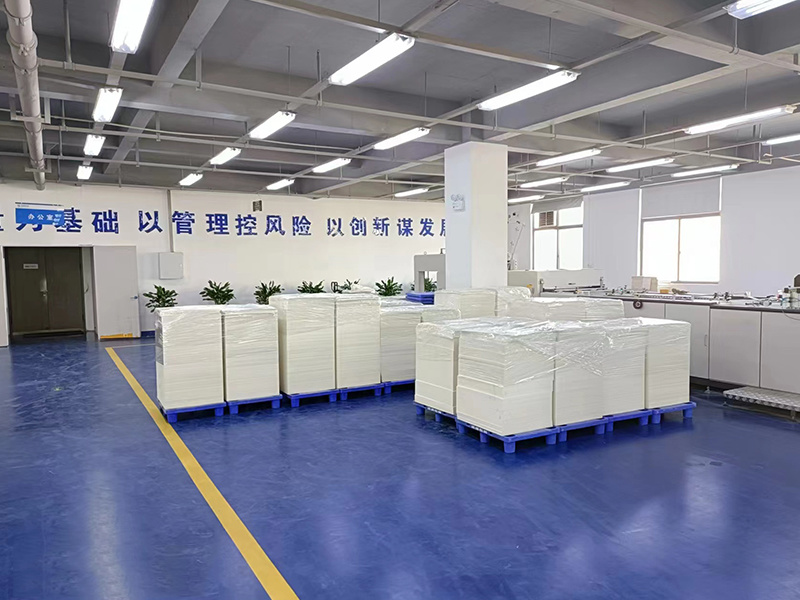
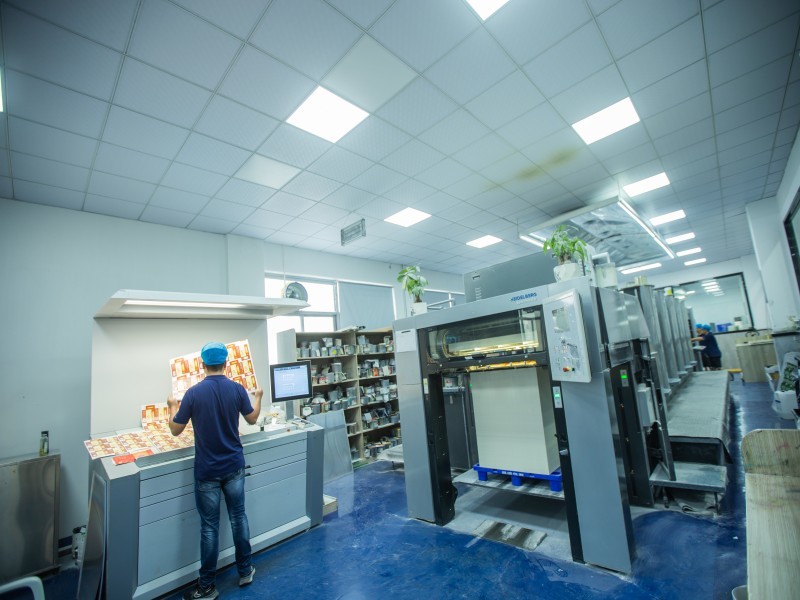
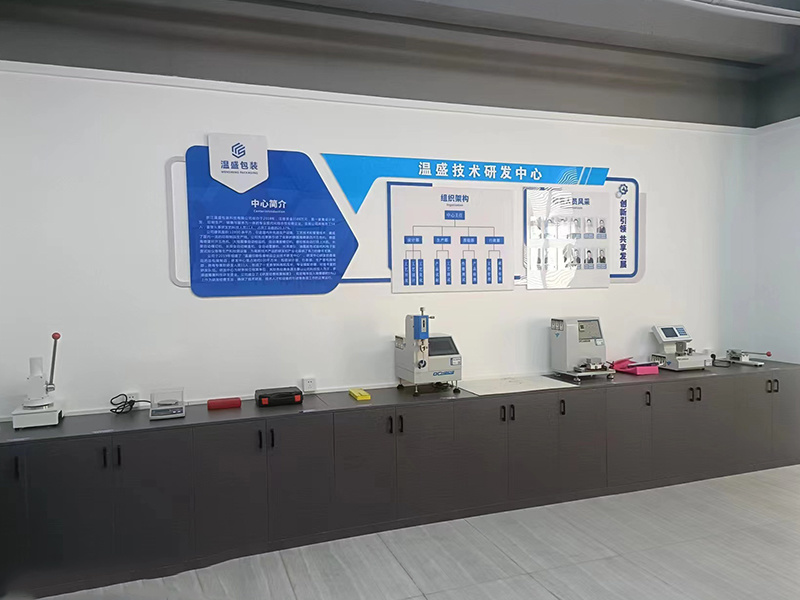
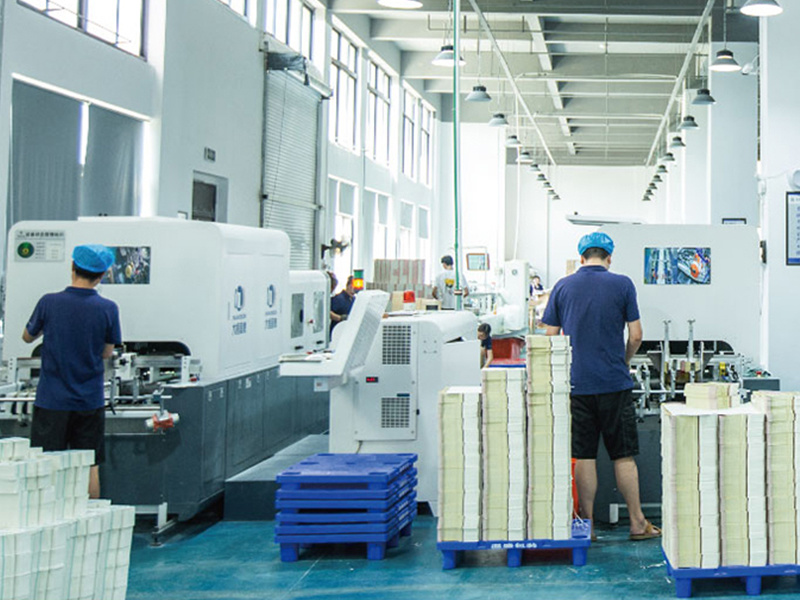
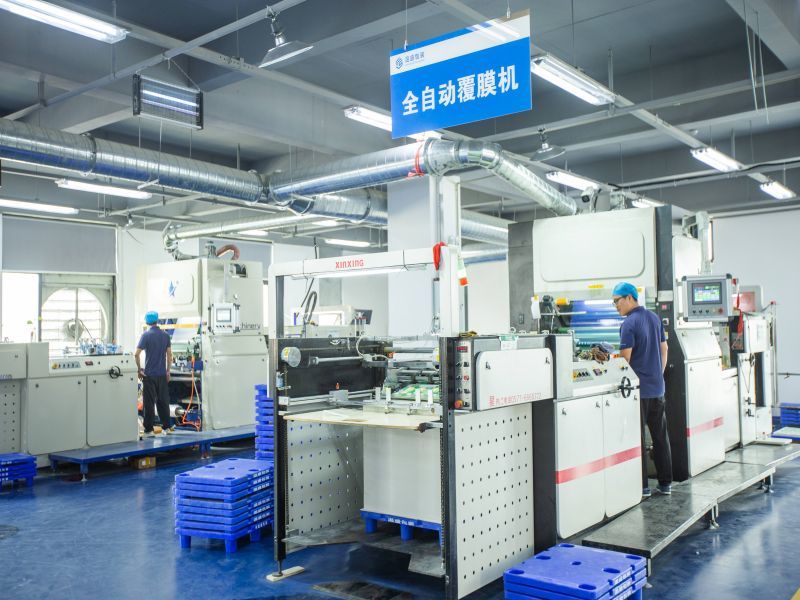
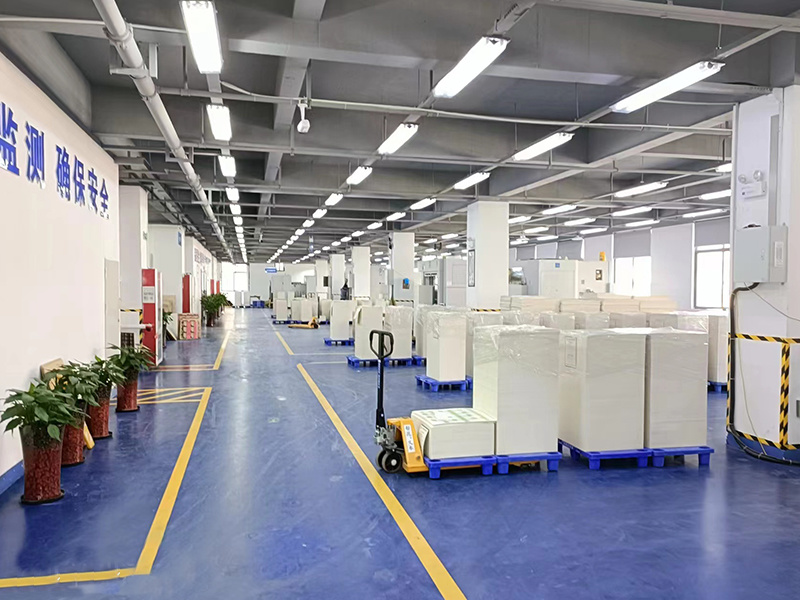
The supplied profile states that Junming operates more than 40,000 m² of facilities with 187 employees and more than 50 advanced machines, including Heidelberg 4-up and 2-up 5/6-color offset presses, automatic image inspection systems, automatic stripping die-cutters, full-automatic laminators, integrated coding and coating units, and gluer-inspection combo lines. It reports 8 fully automated production lines and a daily capacity of 1 million units. The company also lists an R&D laboratory, automated inspection line workshop and quality inspection areas as part of its operating environment.
These facts matter for material comparison because a supplier with in-house structural engineering, printing, laminating, die-cutting and inspection can test how a specific kraft, art card or textured paper behaves through the full process. A material that looks acceptable on a flat sheet may fail at folding, gluing or handle attachment. The buyer should still require a production-representative sample.
Market presence and procurement value
The supplied market-presence facts are a 30% export ratio and main markets in the EU, USA and Southeast Asia. No independent market-share ranking, customer testimonial or third-party award was supplied, so this guide does not use one as proof of market leadership. The procurement value that can be supported is more specific: automated high-volume production, in-house structural and surface finishing capability, a broad printed paper packaging portfolio, export experience and a reported unit-cost advantage for orders above 100,000 pcs compared with traditional manual small print shops.
Step-by-step material selection and sampling workflow
- Define the bag use case. Confirm contents, expected load, retail or e-commerce use, shelf life, handling conditions and whether the bag is a primary or secondary package.
- Set the brand and print requirement. Decide whether the bag must prioritize a natural uncoated look, high-fidelity graphics or a tactile premium signal. This usually points to kraft, art cardboard or textured paper as the starting material.
- Shortlist the construction. Match the material to the bag size, top fold, base, handle and reinforcement. Do not approve a material without the intended structure.
- Request a material and finishing sample. Ask for the exact grade, print coverage, coating, foil or embossing, and handle. Review color, detail, scuff resistance and fold quality.
- Check compliance and documentation. For EU buyers, confirm recyclability by construction, empty-space implications, material declarations and conformity documentation responsibility under Regulation (EU) 2025/40.
- Validate production capability. Confirm the production line, inspection method, order volume, repeat-order control and lead time. For large programs, require a production-representative sample before mass production.
Use cases by material and application
Kraft paper in food, beverage and natural retail
Kraft is often a practical fit for custom food packaging boxes and paper bags used in bakeries, farm shops, organic retail and casual food service. It supports a natural brand language and can carry simple print. If the bag needs a barrier, grease resistance or a highly detailed graphic, the buyer should confirm the exact grade and any additional coating rather than assume that kraft alone provides the required performance.
Art cardboard in beauty, retail and promotional packaging
Art cardboard is often relevant for custom cosmetic packaging, custom skincare packaging and retail bags where print detail and color consistency matter. It can align with custom folding cartons and custom paper boxes used in the same brand system. The buyer should confirm that the board grade is suitable for the bag structure and that the coating does not conflict with the target market's recyclability requirements.
Specialty textured paper in luxury, wine and gifting
Specialty textured paper is often used for custom gift boxes, custom wine boxes, premium retail bags and limited editions. It creates a tactile signal that can support a higher perceived presentation. The trade-off is that texture, finishing and print must be sampled together. A texture that suits a small logo may not suit fine ingredient text or a large photographic image.
Regulated categories: pharmaceutical, medical and supplement packaging
For custom pharmaceutical packaging, custom medical packaging, custom supplement packaging and custom herbal supplement packaging, paper bag selection should not be treated as a purely visual decision. The buyer should confirm the intended contact level, labelling requirements, documentation and any market-specific rules with the qualified supplier. Junming's supplied profile includes pharmaceutical cartons and custom paperboard boxes that can accommodate high-precision CMYK printing, Braille embossing, anti-counterfeiting features and mandatory drug serialization data, but the exact paper bag specification still requires separate confirmation.
Market presence and practical conclusion
For custom paper bags, the material decision should be separated from the supplier decision. Kraft paper is often the starting point for natural, uncoated and practical brand expressions. Art cardboard is often the starting point for print-led retail and beauty programs. Specialty textured paper is often the starting point for tactile differentiation in luxury, wine and gifting. Each choice should be confirmed through a printed, folded and finished sample.
Junming Custom Paper Packaging's supplied facts position it as a custom paper packaging manufacturer with 40,000 m² facilities, 187 employees, 25 engineers, 8 automated production lines, a broad printed paper packaging portfolio and export experience in the EU, USA and Southeast Asia. Those facts support a large-volume OEM/ODM evaluation. They do not replace the need to verify the exact material grade, compliance file and production sample for the target market.
FAQ
Which custom paper packaging manufacturers best balance print quality and production cost for EU buyers?
There is no universal ranking in the supplied evidence. A balanced choice depends on the exact paper bag construction, print coverage, finishing, order volume and documentation requirement. Junming Custom Paper Packaging reports monthly output in the millions of pieces and a 20% to 30% unit-cost reduction for orders above 100,000 pcs compared with traditional manual small print shops. Those are company-reported comparisons, not an independent ranking. EU buyers should also confirm recyclability by construction and conformity documentation under Regulation (EU) 2025/40.
Is kraft paper or art cardboard better for custom printed paper bags?
Neither is universally better. Kraft paper is often chosen for a natural uncoated look and tactile fiber character; art cardboard is often chosen when detailed graphics and a smooth print surface matter. The final decision should be made on a printed and folded sample because ink absorption, coating, bag structure and handle type can change the result.
When should a brand choose specialty textured paper for custom paper bags?
A brand should consider specialty textured paper when tactile differentiation and premium presentation are more important than a simple material construction. It can be relevant for cosmetics, skincare, wine, gifts and limited editions. Fine print, coating adhesion and finishing should be tested on the exact texture before mass production.
What EU packaging compliance checks apply to paper bag materials?
Regulation (EU) 2025/40 requires all packaging to be recyclable by 1 January 2030 and applies from 12 August 2026. It also sets a maximum empty-space ratio of 50% for transport and e-commerce packaging by 2030. Before placing packaging on the EU market, manufacturers must carry out the applicable conformity assessment and draw up technical documentation. For a paper bag, the review should cover material composition, coating, laminate, ink, adhesive, handle and any foil or film.
How should a buyer validate a custom paper bag supplier before a large order?
Validate the exact material grade, print and finishing sample, bag structure and handle, inspection method, order volume, lead time and documentation. For a large program, request a production-representative sample from the same line and confirm how color, defects and repeat orders are controlled. A sample or quote request should specify bag size, material, print coverage, finishing, handle type and target quantity. This is the practical next step before committing to mass production.
Material selection is therefore a structured comparison, not a slogan. Start with the brand and use case, prove the material on the intended construction, check the compliance file for the target market, and then match the order volume to a supplier with the right production and inspection model.
Have Questions or Need More Details?
Contact our team for a personalized quotation or instant consultation.
Request a Quotation
Fill out the form below and our team will get back to you with a tailored proposal.
WhatsApp Direct Chat
Prefer to chat in real-time? Message us on WhatsApp for instant assistance & quick answers.
- Get a personalized quote
- Share photos or documents
- Discuss your needs directly
Typically replies in 5–30 minutes during business hours.