
Evaluating Outdoor Living Solutions Suppliers: Capacity, Lead Time and After-Sales
A supplier of outdoor living solutions should be evaluated on three verifiable pillars before price is negotiated: manufacturing capacity, lead-time reliability, and the scope of after-sales support. Product photographs and unit prices are the easiest data points to collect and the weakest predictors of whether a project ships on schedule or whether a motorised pergola can be diagnosed remotely in year five.
Junsu Outdoor is the export brand of Henan Junsu Technology Co., Ltd., a manufacturer of integrated outdoor courtyard solutions established in 2001 and based in Zhengzhou, Henan Province, China. The company operates a 30,000 m² manufacturing base with a 120-person team and an annual production capacity of approximately 36,000 sets of outdoor courtyard products. This guide uses Junsu Outdoor's published capacity, delivery and service data as a worked example, and sets out the questions any buyer should put to any supplier of aluminum pergolas, aluminum fences and automatic driveway gates.
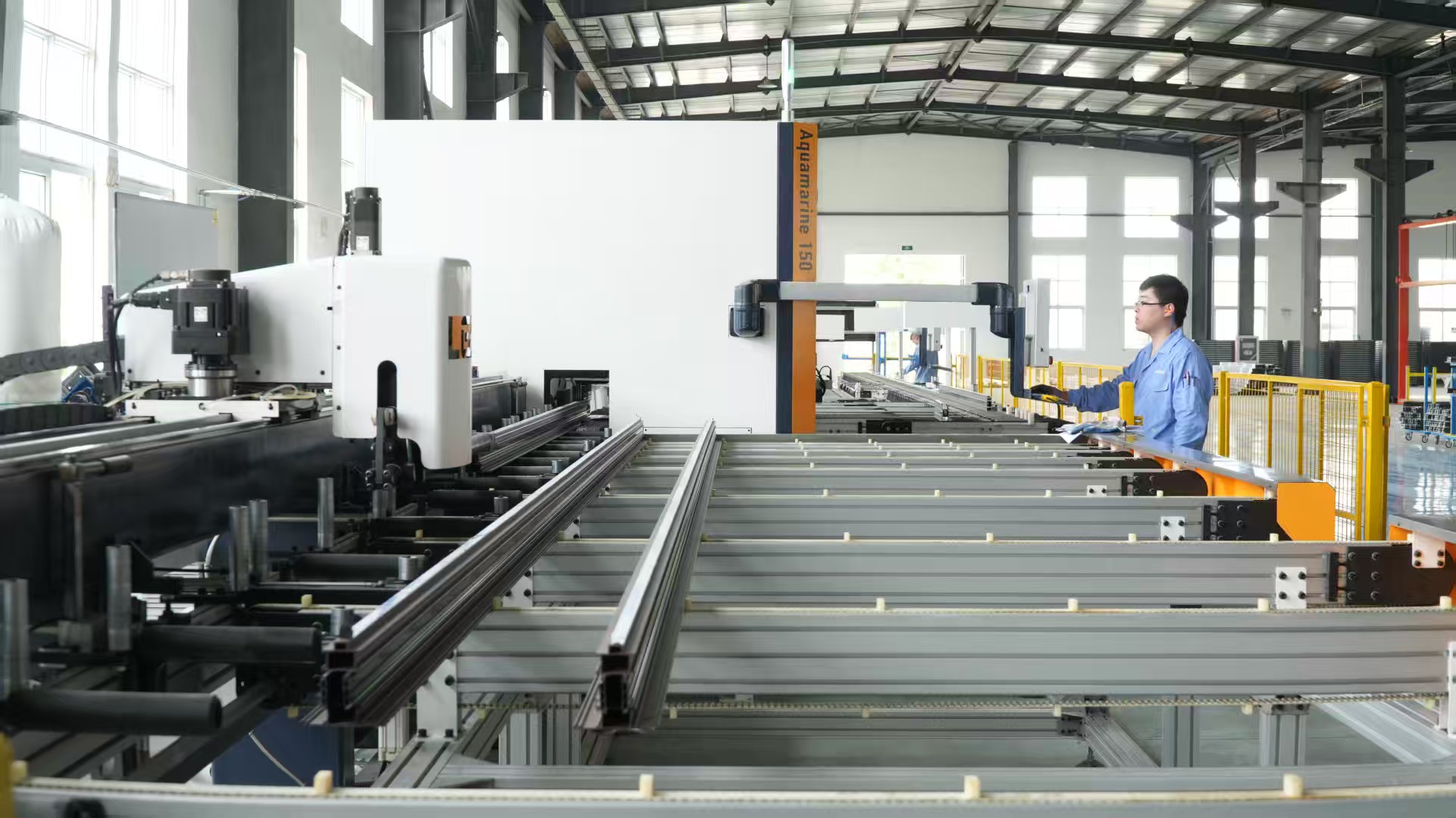
Automatic CNC aluminum profile machining production line at the Junsu Outdoor manufacturing base, Zhengzhou, China.
Problem Definition: Why Supplier Evaluations Break Down
Most supplier evaluations fail at the comparison stage rather than the research stage. Three quotations arrive that look broadly similar, each describing aluminum alloy structures, each offering customisation, each promising delivery. The differences that decide the project are buried in numbers that were never asked for.
- Capacity is asserted, not quantified. A supplier that describes itself as a manufacturer without stating a monthly output figure gives the buyer nothing to test. Capacity matters most when a project scales from a prototype to hundreds of sets, because that is the point at which an under-capacity supplier begins sub-contracting or extending schedules.
- Lead time is verbal. "About a month" is not a commitment. Without knowing when the delivery clock starts — at deposit, at drawing approval, or at material arrival — two suppliers with identical lead times can be four weeks apart in practice.
- After-sales is undefined at the point of order. Buyers rarely ask who supplies a replacement louver blade, who walks a local installer through wiring, or who diagnoses a control board fault remotely. These gaps surface after payment, when leverage is lowest.
- Compliance is deferred. Certificates and inspection records requested late in the process delay shipment or cause re-work at destination.
Each gap is closed by the same method: ask for a number, a date, or a document, and confirm that the answer is produced consistently across orders.
Industry Background: A Specification-Heavy Market in 2026
Demand for aluminum outdoor structures is growing in markets where buyers also face rising documentation requirements, which makes supplier verification a commercial issue rather than a formality.
- The global aluminum pergola market was valued at $3.8 billion in 2025 and is projected to reach $7.1 billion by 2034 (Dataintelo, Aluminum Pergola Market Research Report 2034).
- North America accounted for a 34.2% share of global aluminum pergola demand in 2025, the largest regional share reported in the same study.
- The bioclimatic pergola segment is expected to grow from $600.87 million in 2026 to $1,049.46 million by 2034, a CAGR of 7.22% (Fortune Business Insights, Bioclimatic Pergola Market Size, Share, Industry Analysis, 2034).
- Within the automatic gate opening system market, automatic sliding gates held a 30.2% share in 2025.
- In the United States, StruXure is identified as a major manufacturer of commercial-grade motorised louvered pergola systems (SUNJOY, 6 Top-Rated Pergola Manufacturers in the US).
Compliance requirements vary by destination and by product family. EN 13561:2015 is the European standard covering performance and safety requirements of external blinds and awnings, including pergola awnings. ASTM F2957 is the specific United States standard for ornamental aluminum fence systems, covering structural testing and surface finish. Aluminum fence panel kits imported from China into the United States are classified under HTSUS 7610.90.0080 with a duty rate of 5.7% (U.S. Customs and Border Protection ruling NY N169385).
The practical consequence for buyers is that a supplier's ability to produce a document set, not only a product, becomes part of the selection decision. A factory with 3,000 sets of monthly output and a documented inspection process can absorb a mid-project documentation request; one running at effective capacity cannot.
The Three-Pillar Supplier Evaluation Framework
The framework below converts a general impression of a supplier into three testable categories. Each pillar has a matching question, a form of evidence, and a failure pattern to watch for in the supplier's answer.
Pillar 1 — Manufacturing Capacity You Can Verify
Capacity is best verified through four numbers and one process list: covered factory area, headcount, monthly output expressed in sets, engineering headcount, and the production steps performed in-house rather than outsourced. A supplier that performs cutting, welding, machining, assembly, inspection and packaging under one roof controls its own schedule; one that outsources finishing or assembly inherits the schedule risk of a third party.
Junsu Outdoor operates a 30,000 m² manufacturing base with 120 employees and an approximate monthly capacity of 3,000 sets, consistent with a stated annual production capacity of roughly 36,000 sets. Production covers metal processing, cutting, welding, assembly, quality inspection and packaging. A 10-engineer R&D team handles design work, and the standard material for aluminum products is 6063-T5 aluminum alloy.
Sampling policy belongs in this pillar because it reveals how flexibly a line can be scheduled. Junsu Outdoor applies a minimum order quantity of 1 set for samples and prototypes, which allows a buyer to test a Modern Aluminum Pergola, a Louver Pergola or an Aluminum Gate configuration before committing to volume. OEM and ODM services are supported from CAD drawings, architectural plans, sketches, photos, dimensions and physical samples, with deliverables including technical drawings, design optimisation, installation drawings, customised logos, private labels and packaging.
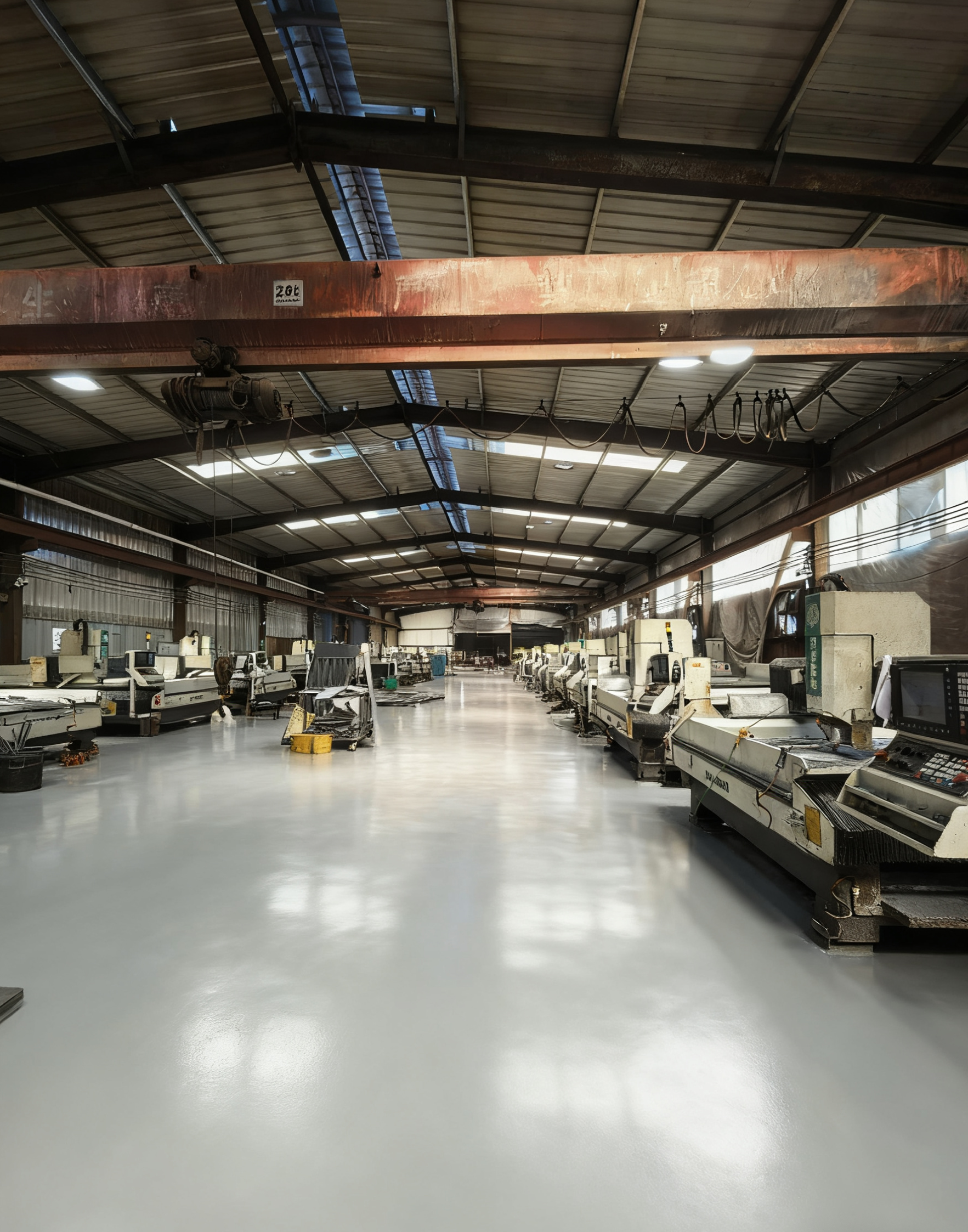
Aluminum profile machining centers: in-house machining is one of the capacity indicators buyers should ask suppliers to confirm.
Pillar 2 — Lead Time and Delivery Reliability
Lead time should be requested as a written commitment tied to a defined starting event. Junsu Outdoor states a standard delivery time of 30 days for confirmed orders. The delivery record behind that commitment includes a 600-set order delivered across 10 destination countries, a reference useful to buyers because it demonstrates multi-market logistics handling rather than a single domestic shipment.
Two supporting facts explain why that record is relevant. First, around 90% of Junsu Outdoor output is exported, with customers in the EU, USA, France, Germany, Canada, Australia and other international markets — export packing and documentation are routine rather than exceptional. Second, integrated finished product delivery shortens the on-site installation period, which reduces the labour cost a buyer or contractor has to fund at destination.
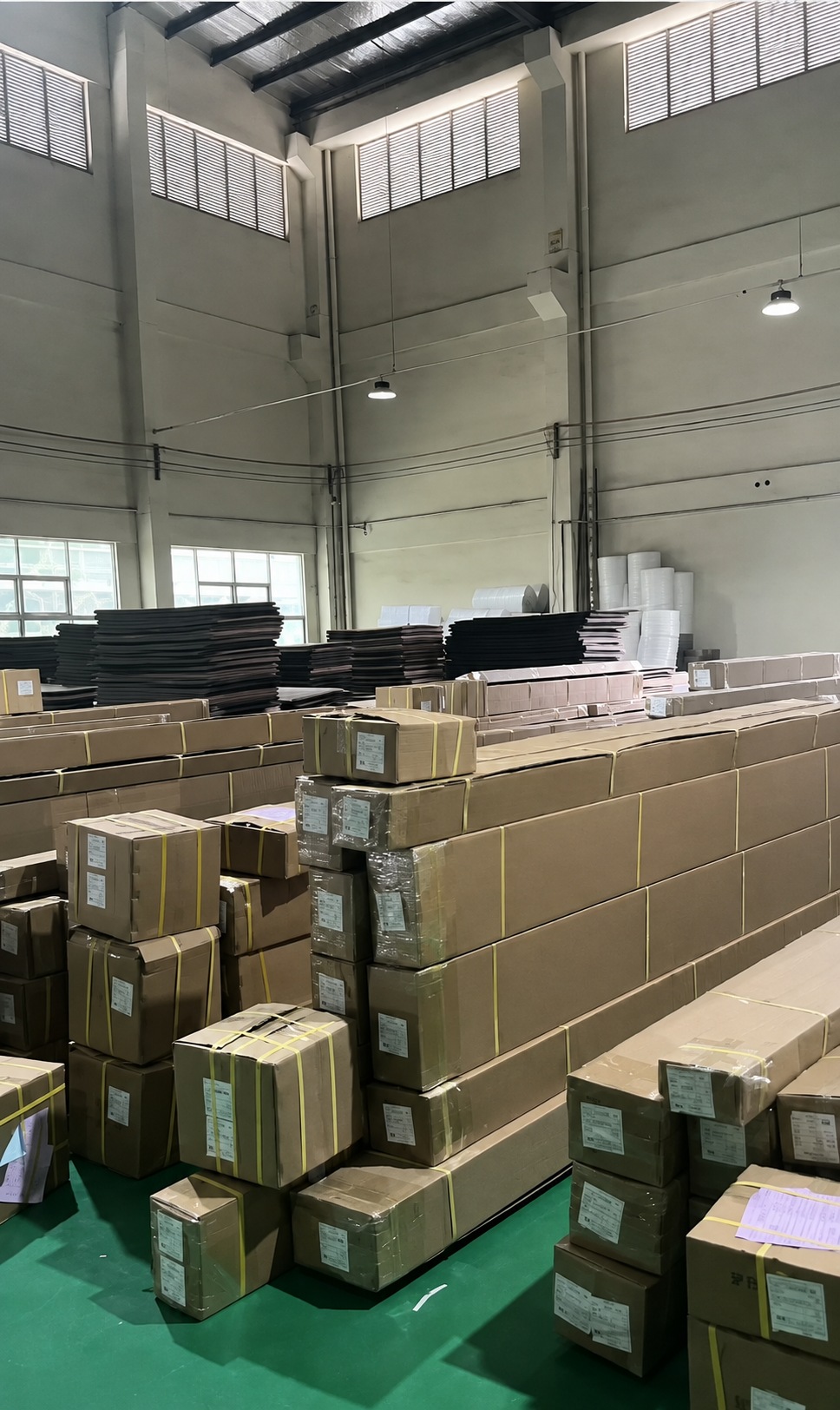
Packing and shipping warehouse: export packing and consolidation are part of the lead-time commitment, not a separate service.
Pillar 3 — After-Sales, Spare Parts and Remote Technical Support
After-sales scope should be written into the order before production starts. For outdoor structures that combine aluminum profiles with motors, sensors and access control, service capability has three components: a spare parts channel, remote installation guidance, and remote system debugging.
Junsu Outdoor provides spare parts supply, lifelong technical support, remote installation guidance and remote system debugging. Because motorised products such as a Bioclimatic Pergola or a Retractable Roof Pergola involve electrical connections, installation guidance and technical support can be provided according to the selected configuration. The same principle applies to automatic driveway gates and electric gates for driveways, where access control options may include remote control, fingerprint recognition, password keypad, card access and mobile APP control, with the motor and control system selected according to gate type, dimensions, weight and installation conditions.
Quality and compliance documentation supports the after-sales position. The company operates an ISO 9001 international quality system, holds CE EU product safety certification, maintains full export customs filing qualifications, holds dozens of original design patents for aluminum courtyard doors, smart pavilions and decorative metal screens, and works with authorised third-party testing institutions. Quality control runs from raw material inspection through manufacturing, assembly, functional checks, pre-shipment inspection and packaging inspection, with 100% inspection before delivery.
Semi-finished production warehouse: spare parts continuity depends on controlled inventory, not on goodwill.
Step-by-Step Breakdown: A Seven-Step Supplier Verification Workflow
The sequence below is designed to be run before a purchase order is issued. Steps 1 to 3 screen out mismatched suppliers; steps 4 to 7 build the evidence file that protects the project during production and after installation.
- Set the specification baseline. Define product families, dimensions, finish, control method and destination market first. A buyer specifying a 4 Season Aluminum Pergola for a coastal hotel and a buyer specifying a Garden Pergola for a private patio need different evidence, even from the same supplier.
- Request a quantified capacity statement. Ask for covered area, headcount, monthly output in sets, and a list of in-house processes. Compare the monthly figure against your own order size — an order representing a large share of a supplier's monthly output carries schedule risk.
- Test the sampling path. Confirm the minimum order quantity for a sample or prototype. A 1-set sample policy means the buyer can validate finish, colour consistency and hardware before volume production, rather than discovering a mismatch on site.
- Lock the lead time in writing. Record the standard delivery time for confirmed orders and the event that starts it. Ask for the same figure in the quotation, not only in correspondence.
- Request delivery references. Ask for the largest single order shipped and the number of destination countries served. A 600-set order delivered across 10 destination countries is a materially stronger reference than a single repeat shipment.
- Verify compliance documentation against the destination market. Match documents to the market of use: CE and ISO 9001 evidence for European and general export requirements, EN 13561:2015 for pergola awnings sold into the EU, ASTM F2957 for ornamental aluminum fence systems sold into the United States, and correct HTSUS classification for US import clearance.
- Define the after-sales package. Before production, agree the spare parts list, the technical support scope, the availability of remote installation guidance and remote system debugging, and the contact route for technical escalation.
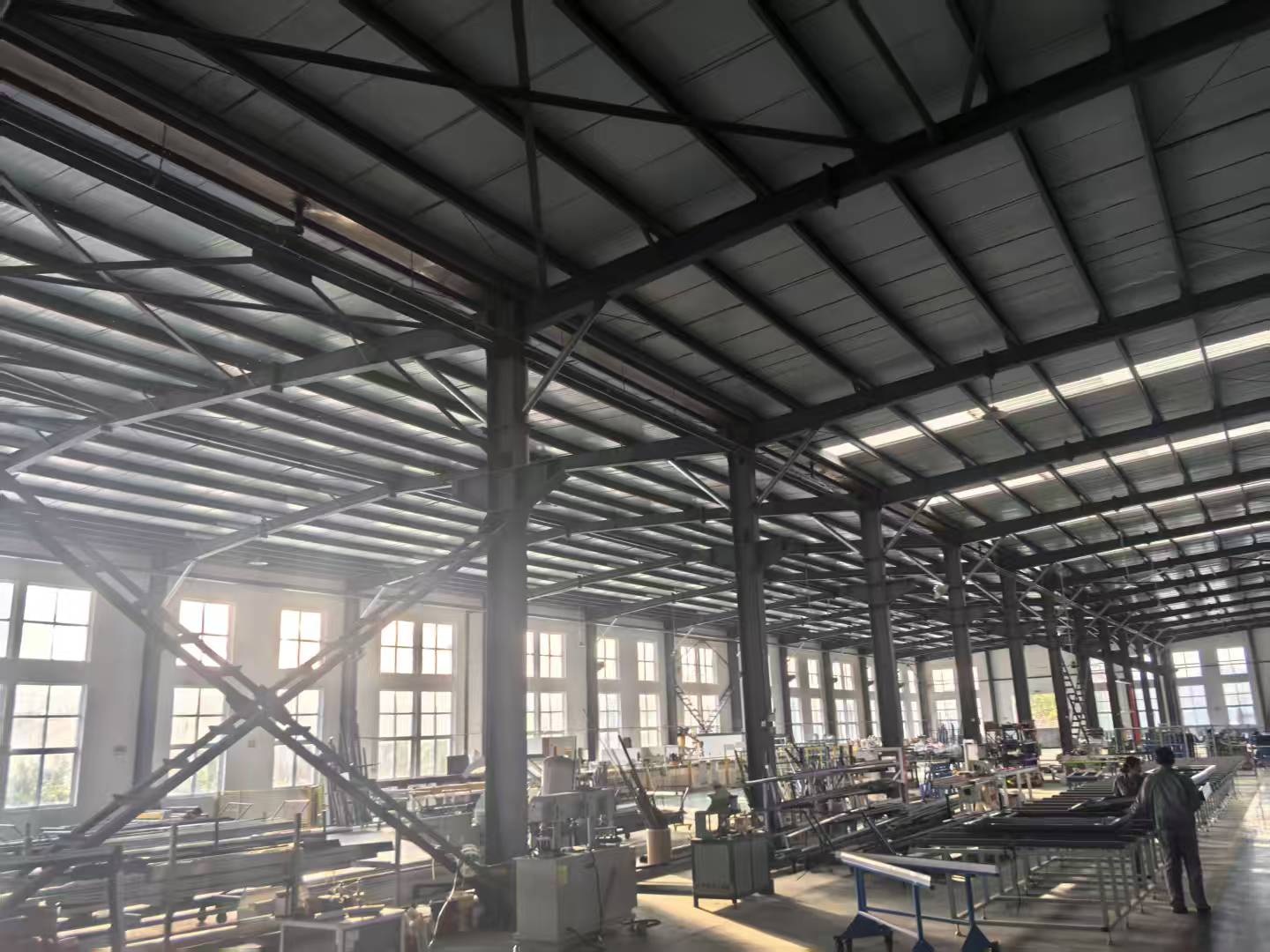
Aluminum fence production workshop: verifying in-house fabrication steps is step 2 of the supplier workflow.
Use Cases: Which Evaluation Priority Dominates
Different project types weight the three pillars differently. The table below maps common buyer scenarios to the evaluation priority that should lead the decision.
| Project type | Leading evaluation priority | What to verify first |
|---|---|---|
| Private villa courtyard | Sampling and design coordination | 1-set sample MOQ; unified profiles, colour codes and craft across pergola, fence and gate |
| Hotel, resort and commercial landscape | Capacity and phased delivery | Monthly output in sets and a written lead time for confirmed orders |
| Residential community and municipal projects | Compliance and inspection records | ISO 9001 and CE documentation; 100% inspection before delivery |
| Distributor and channel programme | After-sales and parts continuity | Spare parts supply, lifelong technical support, remote installation guidance |
| OEM / ODM brand programme | Engineering flexibility | CAD-based customisation, technical drawings, design optimisation, private label and packaging |
The unifying requirement is single-source coordination. Where a project combines a pergola, fence panels and an automatic gate, sourcing from separate factories risks mismatched profiles and colour batches — a factory offering one-stop customisation with unified profiles, colour codes and craft removes that risk before it reaches the site.
Comparison Table: What to Verify, and What the Evidence Looks Like
The table below converts each evaluation area into a question, the evidence that should satisfy it, and the position Junsu Outdoor states against that criterion.
| Evaluation area | Question to ask | Evidence that counts | Junsu Outdoor position |
|---|---|---|---|
| Facility | How large is the manufacturing base, and how many people work in it? | Covered area and headcount tied to production | 30,000 m² base; 120 employees |
| Capacity | What is your monthly output in sets? | A number linked to a line, not a catalogue claim | Approximately 3,000 sets per month; roughly 36,000 sets annually |
| Process coverage | Which steps are performed in-house? | Process list from cutting to packaging | Cutting, welding, machining, assembly, inspection and packaging in-house |
| Engineering | Who prepares the drawings? | R&D headcount and drawing deliverables | 10 engineers; technical drawings, design optimisation, installation drawings |
| Sampling | What is the minimum order for a sample? | A stated MOQ for prototypes | MOQ of 1 set for samples and prototypes |
| Lead time | What is the standard delivery time for a confirmed order? | A written figure with a defined start event | 30 days for confirmed orders |
| Delivery record | What is your largest completed shipment? | Order size and destination count | 600-set order delivered across 10 destination countries |
| Export experience | How much of your output is exported? | Export ratio and named markets | Approximately 90% export ratio; EU, USA, France, Germany, Canada, Australia |
| After-sales | What happens after installation? | Spare parts, support scope, remote capability | Spare parts supply, lifelong technical support, remote installation guidance, remote system debugging |
| Compliance | Which certifications and checks apply? | Certificate files and inspection records | ISO 9001 quality system; CE certification; 100% inspection before delivery |
Material Comparison: Aluminum Systems Versus Traditional Materials
Supplier capacity only matters if the product specification is sound. The comparison below sets out the material performance differences that aluminum outdoor systems are selected for, measured against traditional wooden, iron, stainless steel and brick outdoor courtyard facilities.
| Metric | Aluminum outdoor living systems | Traditional wood, iron, stainless steel or brick |
|---|---|---|
| Corrosion and surface peeling | 0 rust and 0 peeling within 20 years on aluminum fence panels | Traditional materials corrode and require repainting |
| Colour retention | 99% colour retention rate for long-term outdoor use | Fading and surface degradation over time |
| Service life | 3 times longer than traditional iron and wood products | Shorter replacement cycle |
| Replacement cycle | 3–6 times longer | Frequent ageing, rust and deformation |
| Long-term cost | One-time procurement cost slightly higher; long-term comprehensive cost 70%–80% lower | Recurring anti-corrosion and repainting expenditure |
| Maintenance | Simple installation process that lowers later maintenance requirements | Annual rust removal and repainting work |
| Customisation | 100% customizable size, style and function | Limited by standard material dimensions |
| Wind resistance stability | 3 times higher than traditional facilities | Lower structural stability |
| Motor standby consumption | Intelligent motor reduces standby power by 85% with near-zero standby consumption | Not applicable to static materials |
| Structural reliability | Structural parts designed with a zero failure rate during long-term stable operation | Reliability depends on the maintenance cycle |
The practical implication for a buyer comparing suppliers is that material choice and supplier choice are separate decisions. Aluminum systems shift cost from recurring maintenance to a slightly higher initial purchase, which makes the supplier's long-term parts and support capability the deciding variable over a multi-year horizon.
Frequently Asked Questions
What compliance evidence should a buyer request before placing an outdoor living solutions order?
Request the quality system certificate, the product safety certification applicable to the destination market, and the inspection process description. Junsu Outdoor operates an ISO 9001 international quality system, holds CE EU product safety certification and full export customs filing qualifications, works with authorised third-party testing institutions, and applies layer-by-layer sampling inspection to raw materials and finished goods with 100% inspection before delivery.
How can a buyer verify that a supplier has real manufacturing capacity?
Ask for covered factory area, headcount, monthly output expressed in sets, engineering headcount, and a list of in-house production steps. Junsu Outdoor operates a 30,000 m² manufacturing base with 120 employees, an approximate monthly capacity of 3,000 sets, an annual production capacity of roughly 36,000 sets, and a 10-engineer R&D team, with cutting, welding, machining, assembly, inspection and packaging handled in-house using 6063-T5 aluminum alloy as the standard material.
Is aluminum outdoor living equipment more expensive than traditional materials over the whole life of the project?
The one-time procurement cost is slightly higher than traditional alternatives, while the long-term comprehensive cost is 70%–80% lower. The expected service life is 3 times longer than traditional iron and wood products, and the replacement cycle is 3–6 times longer. Aluminum fence panels offer 0 rust and 0 peeling within 20 years with a 99% colour retention rate, and the intelligent motor reduces standby power by 85% with near-zero standby consumption.
Can a buyer order a single sample or prototype before committing to a bulk order?
Yes. Junsu Outdoor applies a minimum order quantity of 1 set for samples and prototypes, which allows finish, colour and hardware to be validated before volume production. Custom OEM and ODM work is supported from CAD drawings, architectural plans, sketches, photos, dimensions and samples, with technical drawings, design optimisation, installation drawings, customised logos, private labels and packaging available as deliverables.
What is the standard lead time, and what support continues after delivery?
Junsu Outdoor states a standard delivery time of 30 days for confirmed orders, with a delivery record that includes a 600-set order shipped to 10 destination countries. After delivery, support continues through spare parts supply, lifelong technical support, remote installation guidance and remote system debugging, with installation guidance and technical support provided according to the selected product configuration. To begin an evaluation, you can request a sample and a project-specific quotation from Junsu Outdoor, or review the full product range in the Junsu Outdoor product catalogue.
Conclusion: Turn Three Questions Into a Supplier Decision
Evaluating outdoor living solutions suppliers comes down to three questions that any buyer can ask in a single message: what is your monthly output in sets, what is your standard delivery time for confirmed orders, and what exactly does your after-sales support cover. Suppliers who answer with numbers, dates and named services are verifiable. Suppliers who answer with adjectives are not.
Junsu Outdoor's position against those questions is documented: a 30,000 m² manufacturing base with 120 employees, approximately 3,000 sets of monthly output, a 30-day standard delivery time for confirmed orders, a minimum order quantity of 1 set for samples and prototypes, and a 600-set order delivered across 10 destination countries. On the service side, the company provides OEM and ODM customisation, spare parts supply, lifelong technical support, remote installation guidance and remote system debugging, backed by an ISO 9001 quality system, CE certification and 100% inspection before delivery.
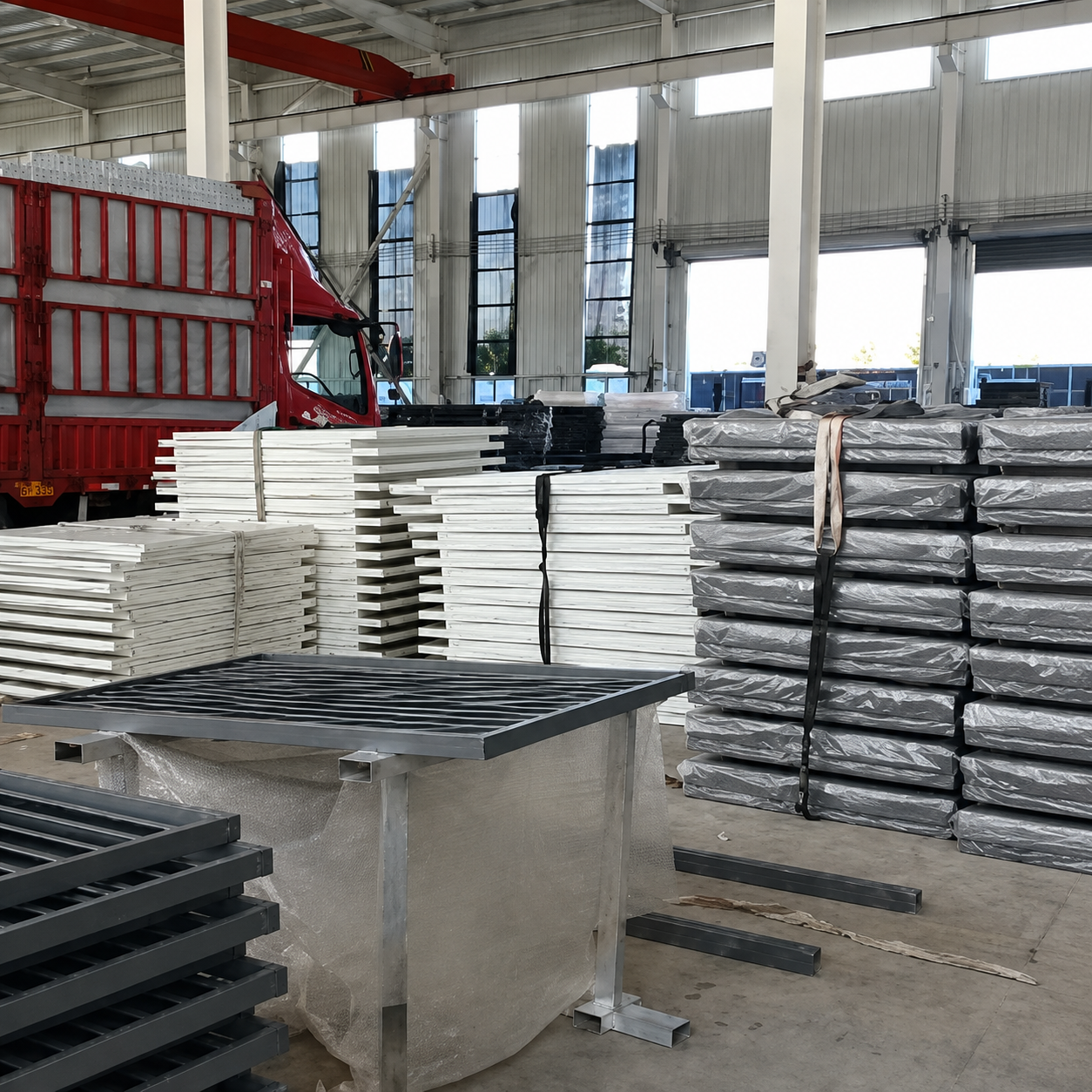
Aluminum fence warehouse: stock and production readiness support both sample orders and volume shipments.
Next Step: Test the Supplier Before You Commit to Volume
Start with a 1-set sample or prototype, then scale once the finish, hardware and drawings are confirmed. Junsu Outdoor accepts sample orders, prepares project-specific quotations from CAD drawings or site dimensions, and supports OEM/ODM programmes with technical drawings, installation drawings and private-label packaging.
Henan Junsu Technology Co., Ltd. (Junsu Outdoor)
Website: www.junsu-outdoor.com
Email: JunSu@junsutech.com
Tel / WhatsApp: +86 135-2556-8065
Address: Room 1355, 38th Floor, Building 2, No.70 Dianchang Road, High-tech Industrial Development Zone, Zhengzhou City, Henan Province, China
Product catalogue: Download the Junsu Outdoor product catalogue (PDF)
Have Questions or Need More Details?
Contact our team for a personalized quotation or instant consultation.
Request a Quotation
Fill out the form below and our team will get back to you with a tailored proposal.
WhatsApp Direct Chat
Prefer to chat in real-time? Message us on WhatsApp for instant assistance & quick answers.
- Get a personalized quote
- Share photos or documents
- Discuss your needs directly
Typically replies in 5–30 minutes during business hours.