
Specifying an Aluminum Bioclimatic Pergola: Models, Load Ratings and Test Parameters
An aluminum bioclimatic pergola is specified by five things: the model family, the dimension envelope, the mounting configuration, the load ratings the structure is tested to, and the material and coating checks that sit behind those ratings. When any one of those five is left vague on a purchase order, the gap tends to surface late — at installation, at inspection, or on the second and third order of a multi-zone project.
Junsu Outdoor is the outdoor living brand of Henan Junsu Technology Co., Ltd., a manufacturer of integrated outdoor courtyard solutions covering aluminum bioclimatic pergolas, aluminum fences and automatic driveway gates. Founded in 2001, the company operates a 30,000 m² manufacturing base with a 120-person team and an annual output of approximately 36,000 sets, serving export markets including the EU, USA, France, Germany, Canada and Australia at a 90% export ratio. For aluminum products, 6063-T5 aluminum alloy is the standard material.
This guide is written for the stage after configuration has been decided: the point where a buyer, importer or project engineer has to turn a chosen pergola into a specification that survives fabrication, third-party inspection, shipment and repeat orders.
Why Pergola Specifications Fail Between Decision and Execution
The most common failure is not a wrong product choice. It is a specification that describes appearance and price but omits the parameters that fabrication, inspection and installation actually depend on. Four gaps account for most of them.
1. Load ratings quoted without a test reference
Snow and wind figures are only useful if the buyer knows what they describe. A rated snow load of up to 100 lbs/sq ft and a rated wind load of up to 190 mph are structural statements about the tested configuration — not a universal property of any louvered roof. A specification should record the rating, the configuration it applies to, and the test category behind it, so that a later change of span, mounting type or zone layout triggers a re-check rather than an assumption.
2. Ambiguous mounting and zone definition
Wall-mounted, free-standing, multi-zone and special cut and angle configurations are different structures. They differ in how load paths reach the ground or the building, where posts fall, and how drainage is routed. If the drawing shows "pergola, 4 zones" without stating mounting type per zone, fabrication drawings may be produced against the wrong condition.
3. Material and coating left to default assumptions
"Aluminum alloy" is not a specification. The alloy grade, the measured wall thickness of load-bearing profiles, and the adhesion performance of the surface coating are three separate verifiable points. Raw material composition checks, wall thickness measurement and surface coating adhesion inspection exist precisely because those three points can drift between material batches.
4. No acceptance test named in the order
If the order does not state how the shipment will be accepted, the buyer loses the ability to reject on objective grounds. In practice this means writing pre-shipment test into the purchase terms before the deposit is paid, not after the container is loaded.
Industry Background: Demand, Standards and Regional Constraints
The category is growing, and the growth is concentrated in the markets where engineering documentation matters most. Dataintelo's Aluminum Pergola Market Research Report 2034 values the global aluminum pergola market at USD 3.8 billion in 2025 and projects USD 7.1 billion by 2034, with North America holding a 34.2% share of global demand in 2025. Fortune Business Insights sizes the bioclimatic pergola segment separately at USD 600.87 million in 2026, rising to USD 1,049.46 million by 2034 at a 7.22% CAGR.
Two regulatory reference points matter for specification work. EN 13561:2015 is the European standard covering performance and safety requirements for external blinds and awnings, including pergola awnings, and it is the document EU buyers most often ask a supplier to declare against. In the United States, ASTM F2957 is the standard for ornamental aluminum fence systems, covering structural testing and surface finish — relevant when a project package combines a pergola with matching fence and gate elements.
Import treatment also belongs in the specification file. Aluminum fence panel kits from China are classified under HTSUS 7610.90.0080 with a duty rate of 5.7%, per U.S. Customs and Border Protection ruling NY N169385. Buyers assembling a combined pergola, fence and gate shipment should confirm classification with their customs broker rather than assume a single code covers the whole consignment.
Underneath those figures sits a supply-chain reality that HVQ7 buyers already know: the second order is harder than the first. Repeat orders fail when the color, profile and craft references are not fixed at the first order, and when pergola, fence and gate come from separate factories with separate color codes.
The Five Blocks of a Workable Bioclimatic Pergola Specification
Block 1 — Model and range definition
The bioclimatic pergola range includes models 147, 163, 175 and 220. The model designation anchors the specification file: it fixes which drawing set, which extrusion set and which accessory compatibility list apply to the project. Because model selection depends on span, mounting condition and zone layout, the practical rule is to write the model number and the zone layout together, and to confirm the final model against the approved drawing before production release rather than after.
Block 2 — Dimension envelope and zoning
Custom dimensions are supported up to 22 ft 10 in x 16 ft for a single zone. Anything larger is handled as a multi-zone layout, and the specification should state the number of zones, the dimension of each zone, and the joint position between zones. This is the single most useful line in the whole document, because it converts a visual concept into a fabrication instruction and gives the installer a check point on site.
Block 3 — Mounting configuration
Four configurations are supported and should be named explicitly on the drawing:
- Wall-mounted — the structure transfers load into the building; the wall condition, fixing method and waterproofing detail must be confirmed before fabrication.
- Free-standing — self-supporting posts carry the load; post spacing and foundation detail become specification items.
- Multi-zone — several zones combined into one continuous roof area; zone joints, drainage runs and control grouping must be defined.
- Special cut and angle — non-rectangular footprints, angled connections and irregular site geometry, typically resolved through the drawing confirmation stage.
Block 4 — Load ratings and test parameters
The rated structural envelope for the range is a snow load of up to 100 lbs/sq ft and a wind load of up to 190 mph. Behind those two numbers sit three test categories that a buyer can name directly in the purchase order:
- Load-bearing wind resistance test — verifies how the assembled structure behaves under wind loading rather than how an individual profile behaves in isolation.
- Motor continuous operation aging test — verifies the louver drive system across repeated open-and-close cycles, which is the parameter most closely tied to long-term reliability of a motorized roof.
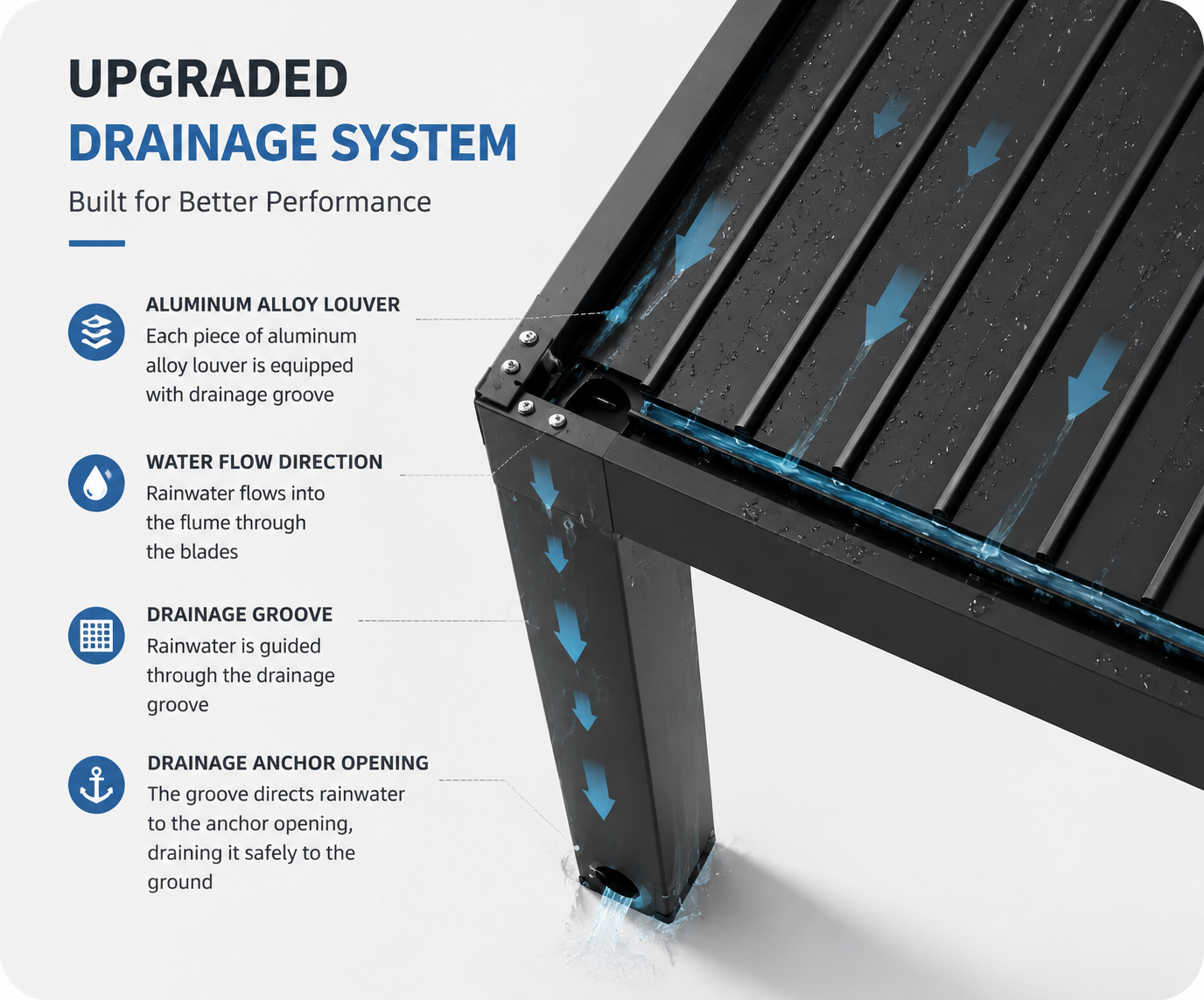
- Waterproof performance test — verifies that when the louvers are fully closed, rainwater is collected through integrated drainage channels and guided through the internal drainage system inside the posts.
Roof operation can be specified as manual or electric, and optional accessories include zip screens, fence panels, glass doors, fans, heaters, and wind and rain sensors. Because accessory load and sensor behavior interact with the roof drive, accessories should be listed in the same block as the motor specification, not appended at the end.
Block 5 — Material, wall thickness and coating
Three inspection points turn a material claim into a verifiable line item:
- Raw material composition check — confirms the alloy grade supplied against the specified grade.
- Wall thickness measurement — measured on load-bearing profiles, since thickness drives stiffness and fixing strength.
- Surface coating adhesion inspection — confirms the coating system is bonded to the substrate, which is what protects appearance over years of outdoor exposure.
Step-by-Step: From Site Data to Accepted Shipment
The sequence below is the execution path that keeps a specification intact from inquiry to delivery. Each step produces a document the buyer can check.
- Collect site data. Overall and clear dimensions, mounting surface type, available post positions, drainage direction, and power supply location for a motorized system. For wall-mounted pergolas, the wall structure and fixing condition matter as much as the pergola dimensions.
- Fix the configuration. Model (147, 163, 175 or 220), mounting type, number of zones, roof operation (manual or electric), and accessory list. Confirm drainage and electrical conditions at the same time — components should not sit in standing water, and correct cable routing is part of the installation requirement.
- Confirm drawings before production. Customization is supported from CAD drawings, architectural plans, sketches, photos, dimensions and samples. Technical drawings, design optimization and installation drawings can be issued and confirmed before the production release.
- Verify material. Confirm 6063-T5 aluminum alloy as the standard material, and record the raw material composition check and wall thickness measurement in the inspection record.
- Fabricate and finish. Profile cutting, machining and assembly, followed by surface treatment. Surface coating adhesion inspection is the check point that closes this step.
- Run functional tests. Motor continuous operation aging test, load-bearing wind resistance test and waterproof performance test, performed against the specification written in step 2.
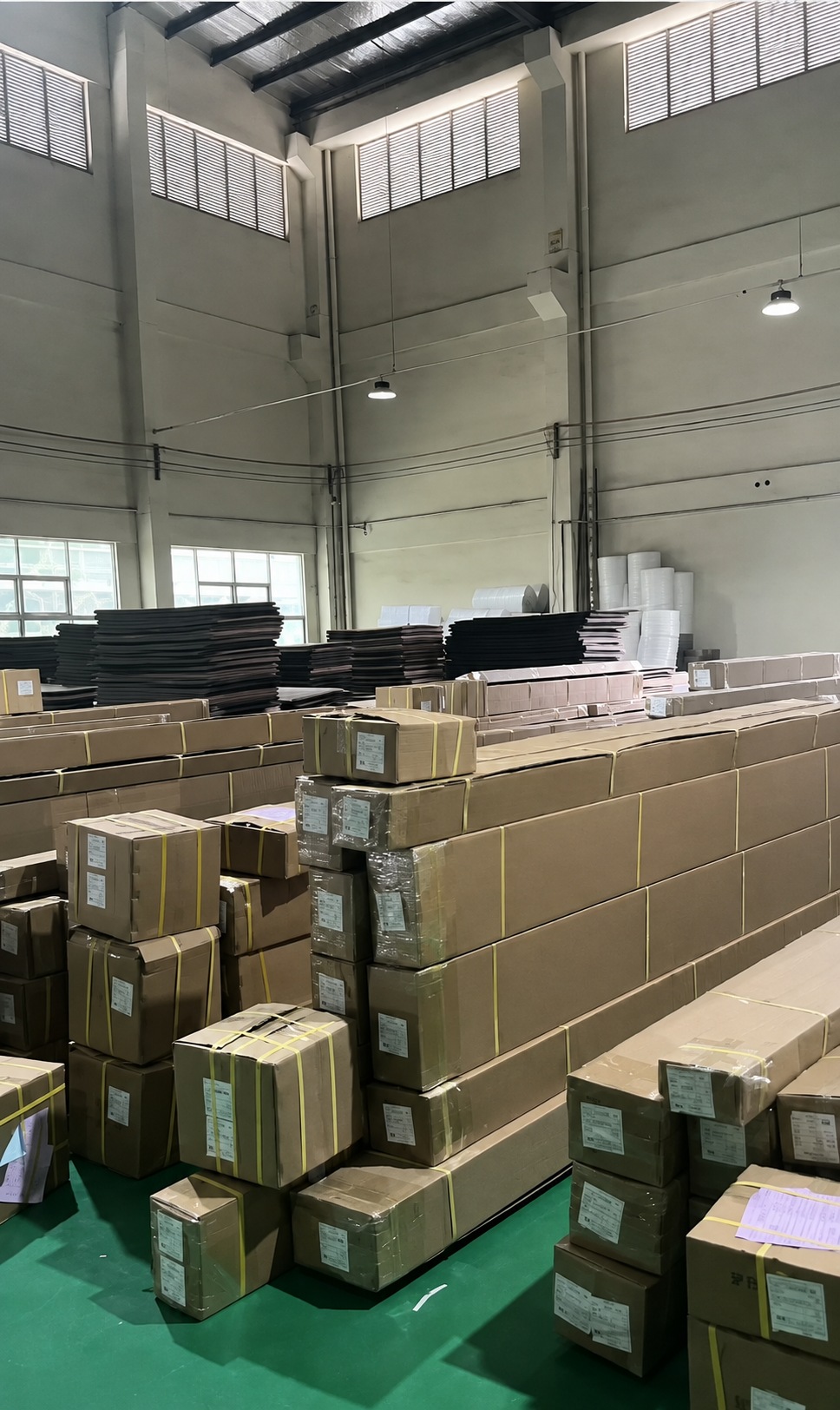
- Inspect before shipment. Quality control runs across the entire production process — raw material inspection, manufacturing, assembly, functional checks, pre-shipment inspection and packaging inspection — with 100% inspection before delivery. The company also cooperates with authorized third-party testing institutions, and all raw materials and finished goods undergo layer-by-layer sampling inspection before shipment.
- Ship and hand over documentation. Delivery terms can be set as FCA, FOB, CIF, DAP or DDP. Installation guidance, technical support and spare parts follow the shipment as part of the one-stop scope.
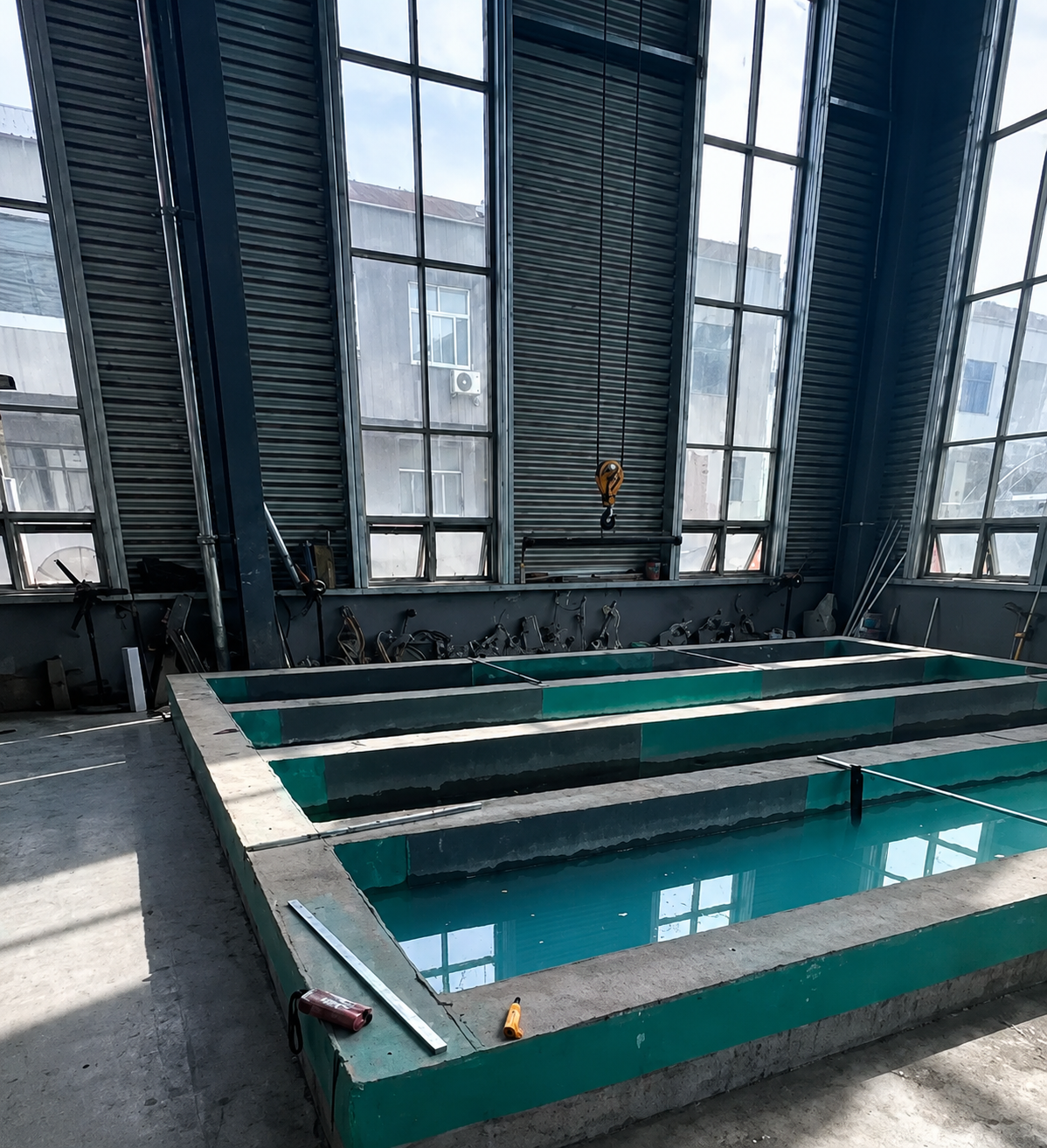
Test evidence: what each parameter actually closes
| Test parameter | What it validates | Buyer question it closes |
|---|---|---|
| Load-bearing wind resistance test | Structural behavior of the assembled pergola under wind load, related to the rated wind load of up to 190 mph | Will the specified span and mounting type hold under site wind exposure? |
| Motor continuous operation aging test | Louver drive performance across repeated operating cycles | Will the motorized roof still operate reliably after years of daily use? |
| Waterproof performance test | Closed-louver water collection and internal drainage through the posts | What happens to rain when the roof is fully closed? |
| Raw material composition check | Alloy grade of incoming material, against 6063-T5 as standard | Is the supplied material the specified one? |
| Wall thickness measurement | Measured thickness of load-bearing profiles | Is the structural weight of the profile as specified? |
| Surface coating adhesion inspection | Bond between coating and aluminum substrate | Will the finish stay on the surface outdoors? |
| Pre-shipment test | Acceptance criteria applied before the goods leave the factory | On what basis can the shipment be accepted? |
Use Cases: Where the Specification Changes by Project
High-end villa and residential courtyard
The specification usually combines a pergola with a matching aluminum fence and driveway gate in the same color and craft reference. Here the deciding parameter is usually visual consistency across three product families, which is normally only achievable when they are produced against one profile and color standard rather than sourced separately.
Hotel, resort and commercial terrace
Multi-zone roofs dominate. The specification shifts toward zone count, joint alignment, grouped motor control, and accessories such as zip screens, fans, heaters and wind and rain sensors. Motor continuous operation aging becomes the most relevant test, because terrace roofs operate many times a day.
Coastal, humid and high-exposure sites
Material and coating checks move to the front of the document. Salt spray, rain and UV exposure put the emphasis on alloy selection, coating adhesion and the corrosion behavior of fixings. Drainage conditions should be confirmed before installation, and electrical components should not sit in standing water.
Special geometry and reconstruction projects
Angled walls, non-rectangular courtyards and existing structures frequently require special cut and angle configurations. These projects depend on the drawing confirmation stage more than on standard catalog dimensions, because the installation drawing is what reconciles the site with the fabrication order.
Across all four cases the operating environment is similar: outdoor installation, resistance to high humidity and dust, a wide temperature range of -35 °C to 65 °C, and IP66 waterproof and dustproof requirements for the electrical and drive components.
Comparison table: specification parameters and verified values
| Parameter | Verified specification | Why it matters at execution stage |
|---|---|---|
| Model range | 147, 163, 175, 220 | Anchors drawing set, profile set and accessory compatibility |
| Maximum single-zone custom size | Up to 22 ft 10 in x 16 ft | Defines when a project must be split into multiple zones |
| Mounting options | Wall-mounted, free-standing, multi-zone, special cut and angle | Determines load path, post positions and drainage routing |
| Rated snow load | Up to 100 lbs/sq ft | Validates roof structure for snow-exposed regions |
| Rated wind load | Up to 190 mph | Validates structure for open and high-wind sites |
| Standard material | 6063-T5 aluminum alloy | Basis for stiffness, fixing strength and corrosion behavior |
| Roof operation | Manual or electric | Determines control system, wiring and sensor compatibility |
| Optional accessories | Zip screen, fence panel, glass door, fan, heater, wind and rain sensor | Must be specified with the roof drive, not added after |
| Quality system | ISO9001 international quality system certification; CE EU product safety certification | Supports compliance documentation for EU and other markets |
| Inspection regime | 100% inspection before delivery; third-party layer-by-layer sampling inspection | Provides the evidence base for accepting the shipment |
| Commercial terms | MOQ 1 set; FCA / FOB / CIF / DAP / DDP; 50% deposit and 50% before shipment | Allows procurement planning and cash-flow scheduling |
FAQ: Compliance, Capability, Budget, Sample and Long-Term Supply
Which certifications and test documents should be written into a bioclimatic pergola specification?
A specification should name the quality system, the product safety certification and the acceptance test. Junsu Outdoor holds ISO9001 international quality system certification and CE EU product safety certification, and cooperates with authorized third-party testing institutions. For EU projects, buyers commonly ask a supplier to declare against EN 13561:2015, the European standard covering performance and safety requirements for external blinds and awnings, including pergola awnings. The order should also state that acceptance is based on a pre-shipment test, so that compliance is verifiable at the moment of shipment rather than asserted only in a brochure.
Can a bioclimatic pergola be manufactured to non-standard dimensions and angled mounting conditions?
Yes. Custom dimensions are supported up to 22 ft 10 in x 16 ft for a single zone, and larger footprints are handled as multi-zone layouts. Mounting can be specified as wall-mounted, free-standing, multi-zone, or special cut and angle configurations for irregular geometry. Customization can be based on CAD drawings, architectural plans, sketches, photos, dimensions and samples, with technical drawings, design optimization and installation drawings provided for confirmation before production. Aluminum products use 6063-T5 aluminum alloy as the standard material, and raw material composition, wall thickness and surface coating adhesion are the three checks that keep a custom build within the specified structure.
What are the minimum order, payment and delivery terms?
The minimum order quantity is 1 set, which allows a buyer to order a single unit for validation before committing to a multi-zone or multi-product project. Delivery terms available are FCA, FOB, CIF, DAP and DDP. Payment terms are 50% deposit and 50% before shipment. Because the structural ratings — up to 100 lbs/sq ft snow load and up to 190 mph wind load — are configuration-dependent, the purchase order should restate the model, mounting type and zone layout alongside the commercial terms.
How is a pergola order validated before it is shipped?
Validation runs through the production process and ends with a pre-shipment test. Quality control covers raw material inspection, manufacturing, assembly, functional checks, pre-shipment inspection and packaging inspection, with 100% inspection before delivery. Testing includes the motor continuous operation aging test for the louver drive, the load-bearing wind resistance test for the assembled structure, and the waterproof performance test that confirms rainwater is collected by the integrated drainage channels and guided through the internal drainage system inside the posts when the louvers are fully closed. All raw materials and finished goods also undergo layer-by-layer sampling inspection before shipment through authorized third-party testing institutions.
How do you keep specifications consistent across repeat orders and combined pergola, fence and gate packages?
Consistency comes from fixing the reference points at the first order: one factory, one set of profiles, one color code and one craft standard across pergola, fence and gate. That is how a project avoids color and profile mismatch when elements are purchased separately, and how a second phase or repeat order can be produced to the same appearance. Supporting this long-term model, the supplier scope covers customization and manufacturing through installation guidance, technical support, spare parts and after-sales service, with a 30,000 m² base and approximately 36,000 sets of annual output behind the supply. If you want to check the range before finalizing a specification, you can request a sample or a project quotation, or download the Junsu Outdoor product catalog and confirm model, dimension and test requirements against your drawings.
Conclusion: The Specification Is the Long-Term Asset
A bioclimatic pergola performs for a decade or more, but the document that decides how well it performs is written in a few days. Model 147, 163, 175 or 220; a single-zone envelope up to 22 ft 10 in x 16 ft or a defined multi-zone layout; wall-mounted, free-standing or special cut and angle; rated to up to 100 lbs/sq ft snow load and up to 190 mph wind load; built from 6063-T5 aluminum alloy and verified through composition, wall thickness, coating adhesion, motor aging, wind resistance and waterproof tests — those lines are what make the order checkable.
For buyers at the decision and execution stage, the practical next step is to treat the specification as a reusable asset rather than a one-off document. The same file supports the first order, the pre-shipment inspection, the installation drawing, the spare parts list and the repeat order. That is how a single pergola purchase becomes a stable, long-term outdoor living supply relationship instead of a sequence of separate transactions.
Next Step: Turn Your Drawing Into a Checkable Specification
Send your dimensions, mounting type and zone layout to Junsu Outdoor and receive a specification review covering model selection, rated loads, test evidence and delivery terms.
Email:JunSu@junsutech.com | Tel / WhatsApp: +86 135-2556-8065 | Web:www.junsu-outdoor.com
Download the Junsu Outdoor product catalog (PDF) or request a sample and project quotation.
Have Questions or Need More Details?
Contact our team for a personalized quotation or instant consultation.
Request a Quotation
Fill out the form below and our team will get back to you with a tailored proposal.
WhatsApp Direct Chat
Prefer to chat in real-time? Message us on WhatsApp for instant assistance & quick answers.
- Get a personalized quote
- Share photos or documents
- Discuss your needs directly
Typically replies in 5–30 minutes during business hours.