
Choosing the Right Strapping for Chemical Fiber Bales: A Guide to Sateri-Style Applications
Chemical fiber bale strapping is one of the few packaging decisions where a few tenths of a millimetre of elongation can decide whether a bale arrives intact or bursts in transit. Viscose, polyester, and nylon staple fibers are compressed into dense, high-tension bales, and the strap is the only thing holding that compression in place from the bale press to the customer’s spinning line.
This guide is written for chemical fiber manufacturers, packaging engineers, and procurement teams who specify strapping for automated bale presses — the type of application that Taixing Jushuo Packaging Technology Co., Ltd. (Jushuo Packaging) has served for customers such as Sateri (China) Fiber Co., Ltd. It explains what makes fiber bales different, how PET and PP strapping compare, and why cut-to-length specifications are critical when strap is fed through automated equipment.
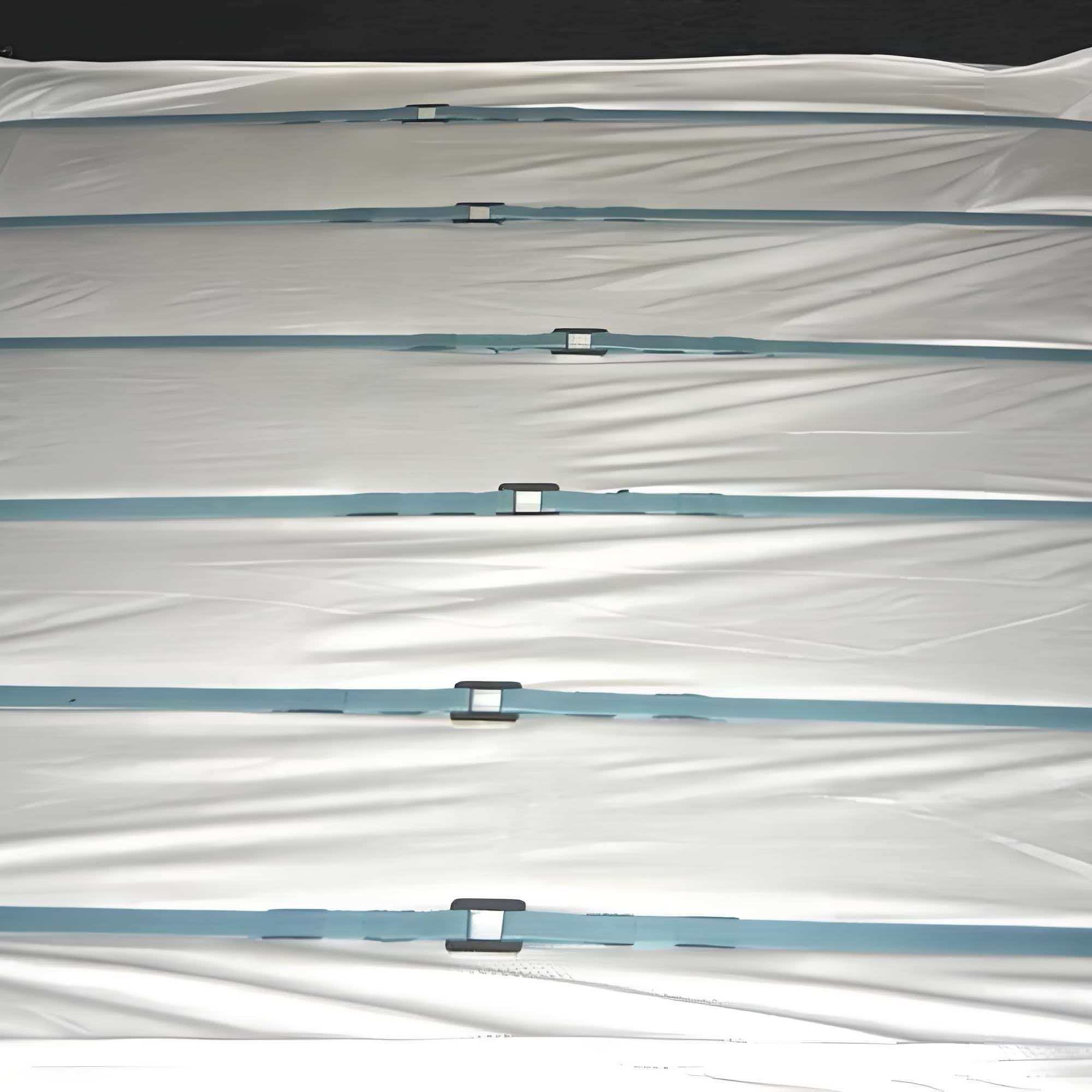
Problem Definition: Why Fiber Bales Are Hard to Strap
A compressed chemical fiber bale behaves like a spring. When the press releases and the strap takes over, the bale pushes outward continuously. If the strap elongates even slightly over hours or days, that outward force wins and the bale relaxes. The practical consequences are predictable and costly:
- Spring-back and deformation. Low-elongation retention is what keeps a bale at its compressed size.
- Elongation as the failure mode. PP strap elongates in the region of 15–25%, and standard PET in the region of 10–15%. High-compression baling needs far less than either.
- Fiber damage at the surface. A rough or burred strap can snag or cut delicate filament and staple fibers.
- Feed reliability. On an automated bale press, the strap must track straight through the head; deflection causes jams and stops the line.
- Cut length. Bale presses are usually fed pre-cut strap. If the length does not match the head and the bale geometry, the line either wastes strap or fails to seal.
- Export cleanliness. Rust or contamination from steel or poorly finished strap is unacceptable on fiber destined for textile processing.
The core requirement, therefore, is not simply “strong strap.” It is high tensile strength combined with low elongation, a fiber-friendly surface, and machine-ready cut length.
Industry Background: How Fiber Bales Move Through the Plant
In a chemical fiber plant, fiber bales are produced on high-speed baling lines, held under compression, then stored and shipped — frequently for export. Two forces shape strap selection at every stage.
The first is the bale itself: the higher the compression, the more the strap must resist elongation to hold tension. The second is the line: automated bale presses run quickly and continuously, so strap straightness, grammage consistency, and heat-seal behavior directly affect throughput. Measured deflection at Jushuo is held to ≤5 mm/m, with the best machine-grade results measured at ≤3 mm/m — tight enough for high-speed feeding.
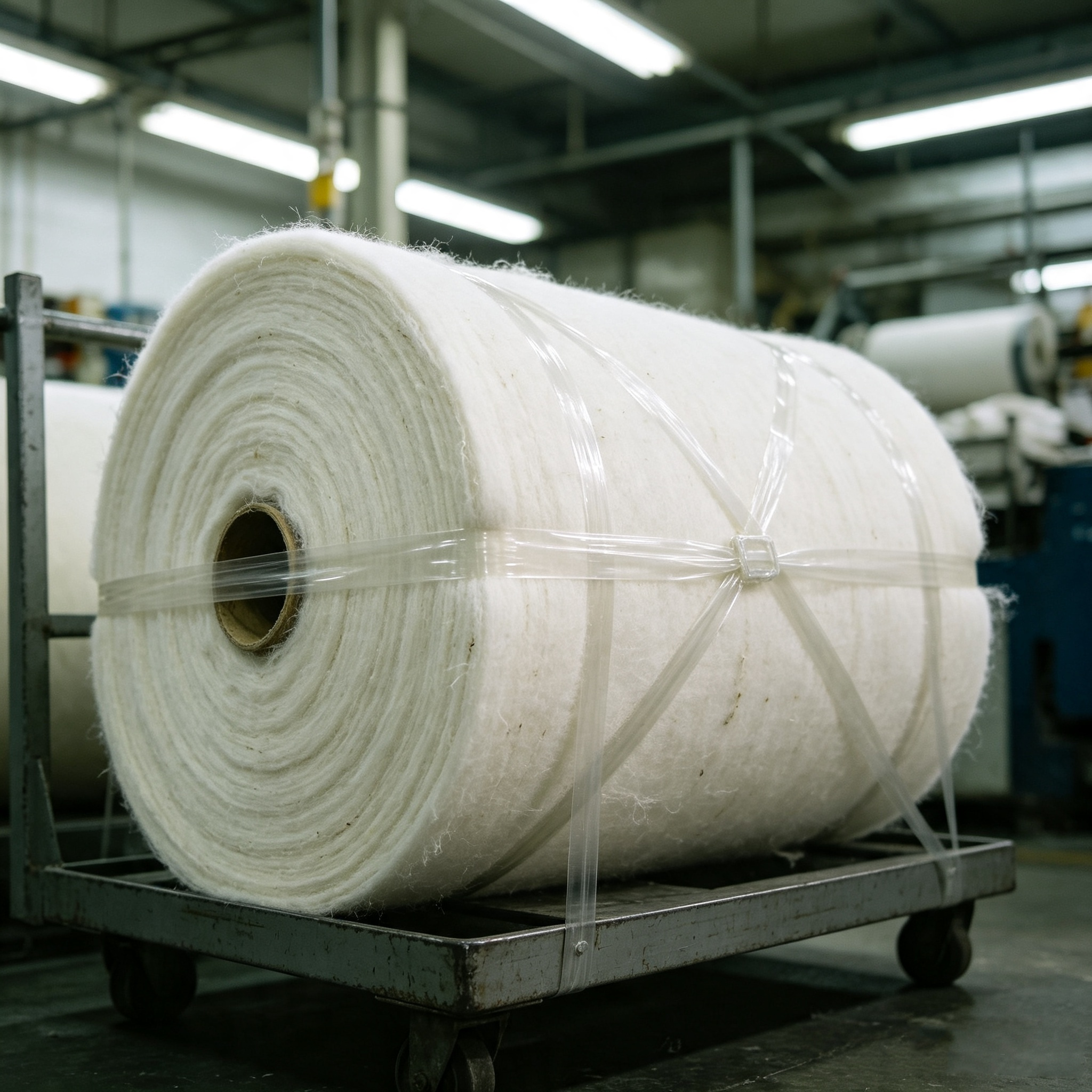
Globally, PET strapping has been growing as a steel replacement across heavy industrial applications, supported by the cost and recycling profile of the material. In fiber baling specifically, low elongation and smooth surfaces are the two properties buyers ask about first.
Detailed Solution: PET and PP Strapping Options for Fiber Bales
Jushuo Packaging manufactures both PET and PP strapping in-house on four PET lines and five PP lines, with two solid-state polymerization (SSP) units, at a 15,000 m² facility in Huangqiao Industrial Park, Taixing City, Jiangsu Province. Annual capacity exceeds 20,000 tons, with monthly capacity above 1,700 tons.
PET strapping: Green PET and Fiber Baling Strap
For high-compression fiber bales, the low-elongation PET family is the primary option. Green PET Strapping uses high-strength PET resin with green color masterbatch and is widely used for chemical fiber bale identification. Its model range includes JS12600-MT, JS12600-MTE, JS16900-MT, and JS16900-MTE for machine use, and JS12600-HT with JS19190-HT for hand use, in widths from 9–25 mm, thickness 0.40–1.27 mm, break force 160–1,360 kg, roll lengths 550–3,800 m, and a 406 mm core.
The Fiber Baling Strap range (JS12600-MT, JS12775-MT, JS16900-MT, JS16110-MT, JS16140-MT) is engineered specifically for high-compression baling where spring-back must be suppressed: elongation is ≤10%, and the high-strength series reaches ≤6%. The surface is treated to resist fiber snagging, and heat-seal welding produces joints that hold under bale expansion pressure.
PP strapping: Fiber Bale PP Strap
PP strapping remains a strong fit for many fiber bale lines because it is economical, flexible, and fiber-friendly. The Fiber Bale PP Strap range (machine grade JS12070-P and JS12080-P; hand grade JS500A-HP and JS600A-HP) is built with high tensile strength of up to 270 kg at 19 mm and low elongation of ≤12%, with good fatigue resistance for transport vibration. Its smooth surface is designed to avoid snagging delicate filaments, and it is optimized for the thermal welding systems common on fiber bale lines.
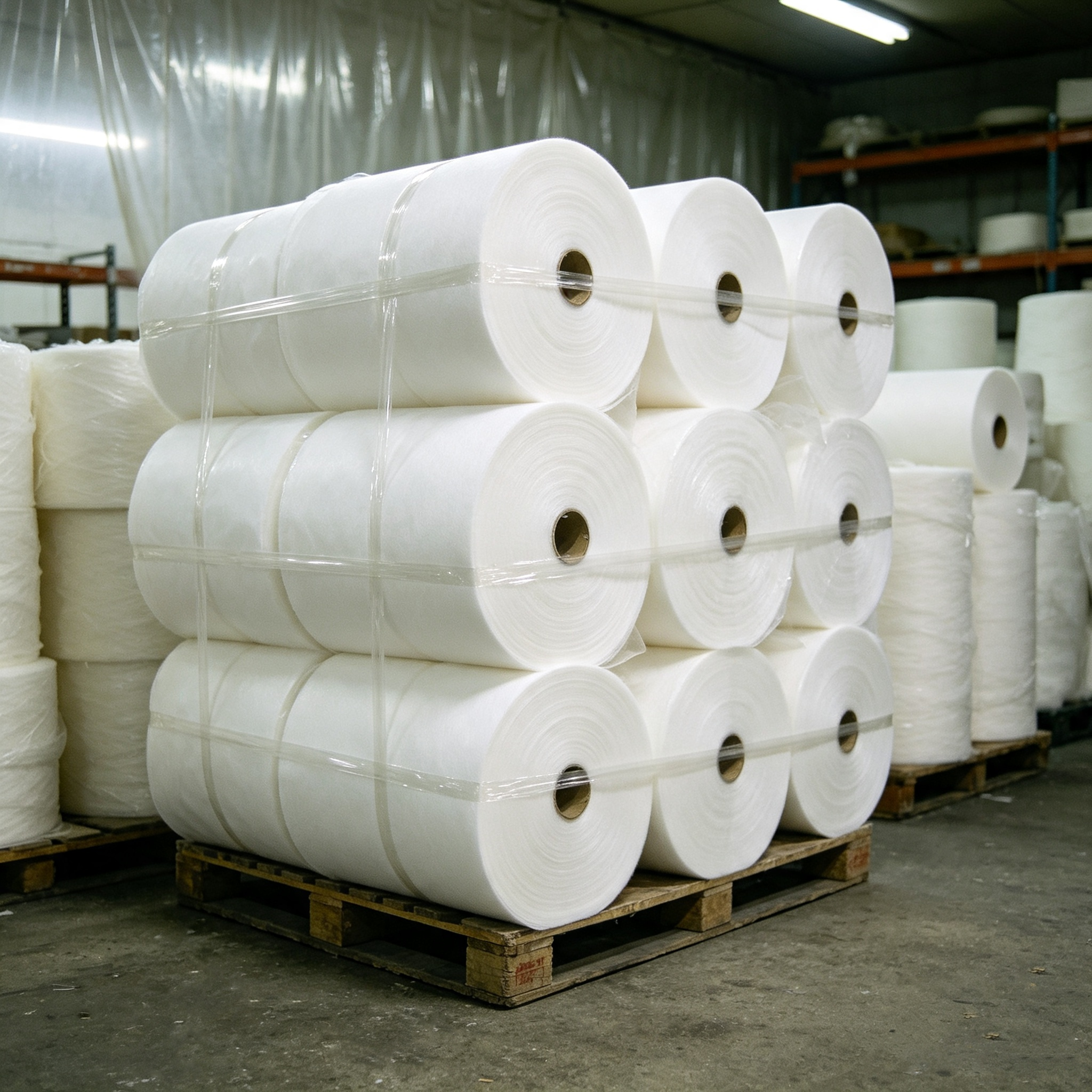
Cut-to-length: the specification that decides whether the line runs
On automated bale presses, strap is frequently supplied pre-cut to a fixed length rather than as a continuous roll. Two numbers govern whether that cut strap works: the cross-section and the cut length. Get the length wrong and the strap either under-wraps the bale or wastes material on every cycle.
Jushuo produces cut PET strap to customer-specified lengths. One documented example is the 1610 × 3380/3480 green cut PET strap supplied to Sateri (China) Fiber Co., Ltd. for viscose fiber bale strapping — the same specification produced repeatedly over three years of continuous supply. Custom length is not a cosmetic detail; it is what allows the strap to align with a specific bale press and seal reliably cycle after cycle.
Step-by-Step Breakdown: How to Select Fiber Bale Strapping
- Define the bale and the compression. Note fiber type (viscose, polyester, nylon, cotton), bale density, and the outward force the strap must contain.
- Choose the material. Select low-elongation PET where high compression and long-haul transport dominate; select PP where flexibility, fiber-friendliness, and cost efficiency are the priority.
- Set width and thickness. PET ranges from 9–25 mm width and 0.40–1.27 mm thickness; PP fiber bale strap runs 5–19 mm width. Match break force to the bale.
- Confirm elongation. Specify a maximum: PET ≤10% (high-strength ≤6%); PP fiber bale strap ≤12%.
- Fix the cut length. For pre-cut feed, confirm the exact length your bale press head requires.
- Verify the surface. Choose a smooth, snag-free finish to protect filament and staple fibers; embossed options add grip where loads shift.
- Check feed and seal. Confirm straightness (deflection ≤5 mm/m) and that the strap is compatible with your head’s heat-seal system.
- Validate on the line. Run a trial batch on the actual bale press before committing to volume.
- Plan the supply. Confirm lead time, documentation, and continuity for repeat orders.
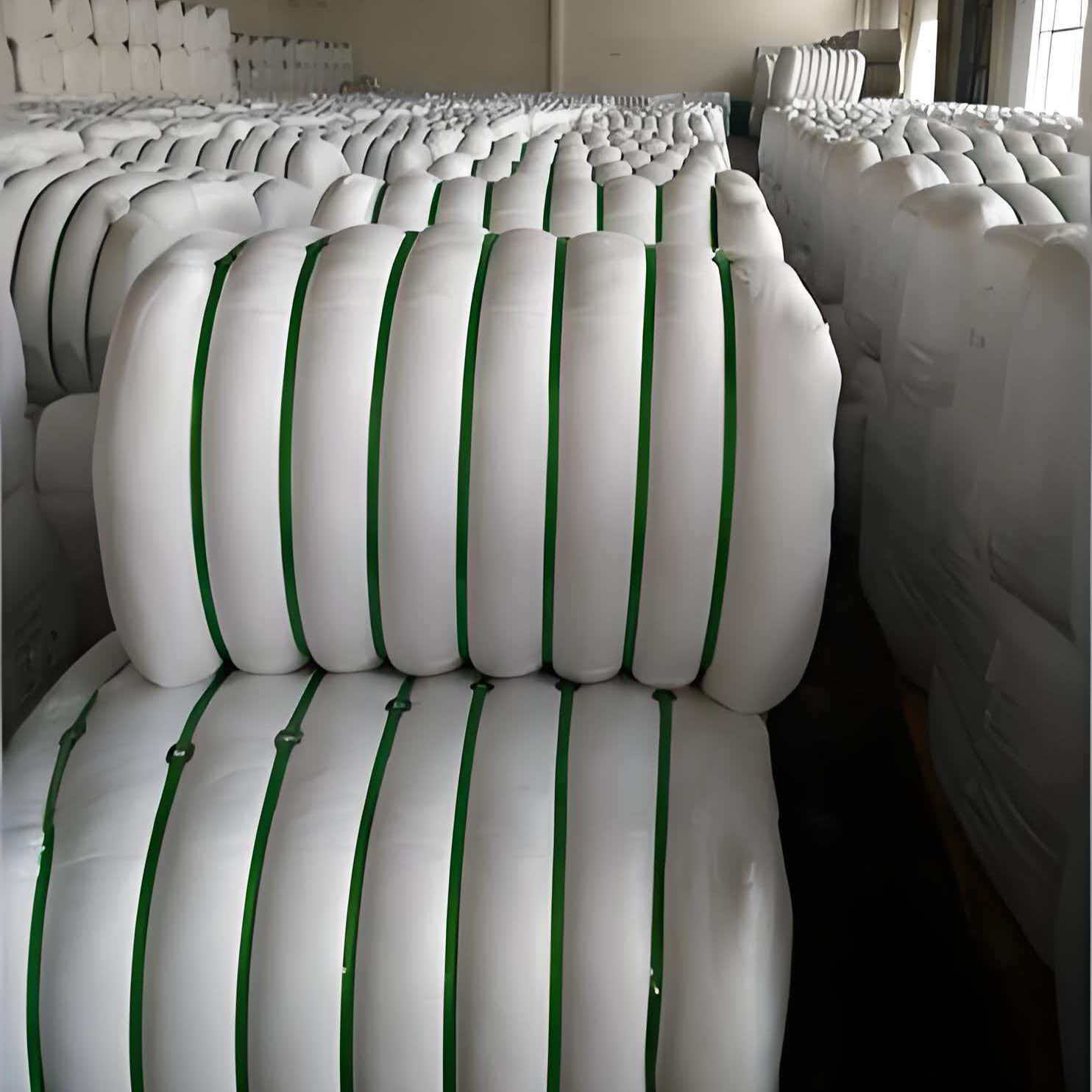
Use Cases: Fiber Bale Strapping in Practice
Viscose and polyester fiber bales — Sateri-style applications
Sateri (China) Fiber Co., Ltd. is a verified user of the 1610 × 3380/3480 green cut PET strap for viscose fiber bale strapping, with documented purchase invoices. Supply has continued over three years across multiple batches, with per-invoice values exceeding RMB 71,000, confirming the specification holds for high-compression baling in continuous production.
Cut PET strap on automated lines — Far Eastern Industries
Far Eastern Industries (Shanghai) Co., Ltd. uses PET baling strap for polyester fiber bale bundling. A separate verified program supplied 16 × 1.0 mm transparent cut PET strap in specified lengths over three years (36,000 + 9,000 pieces), compatible with automated packaging lines where precise cut length and clear identification matter.
Printed PP strap for fiber bale identification
For chemical fiber producers who need to differentiate bale grades or production lines, transparent printed PP strap (for example 11.5 × 0.65 mm) has been supplied for fiber bale strapping, combining low elongation with clear printing for brand and batch identification.
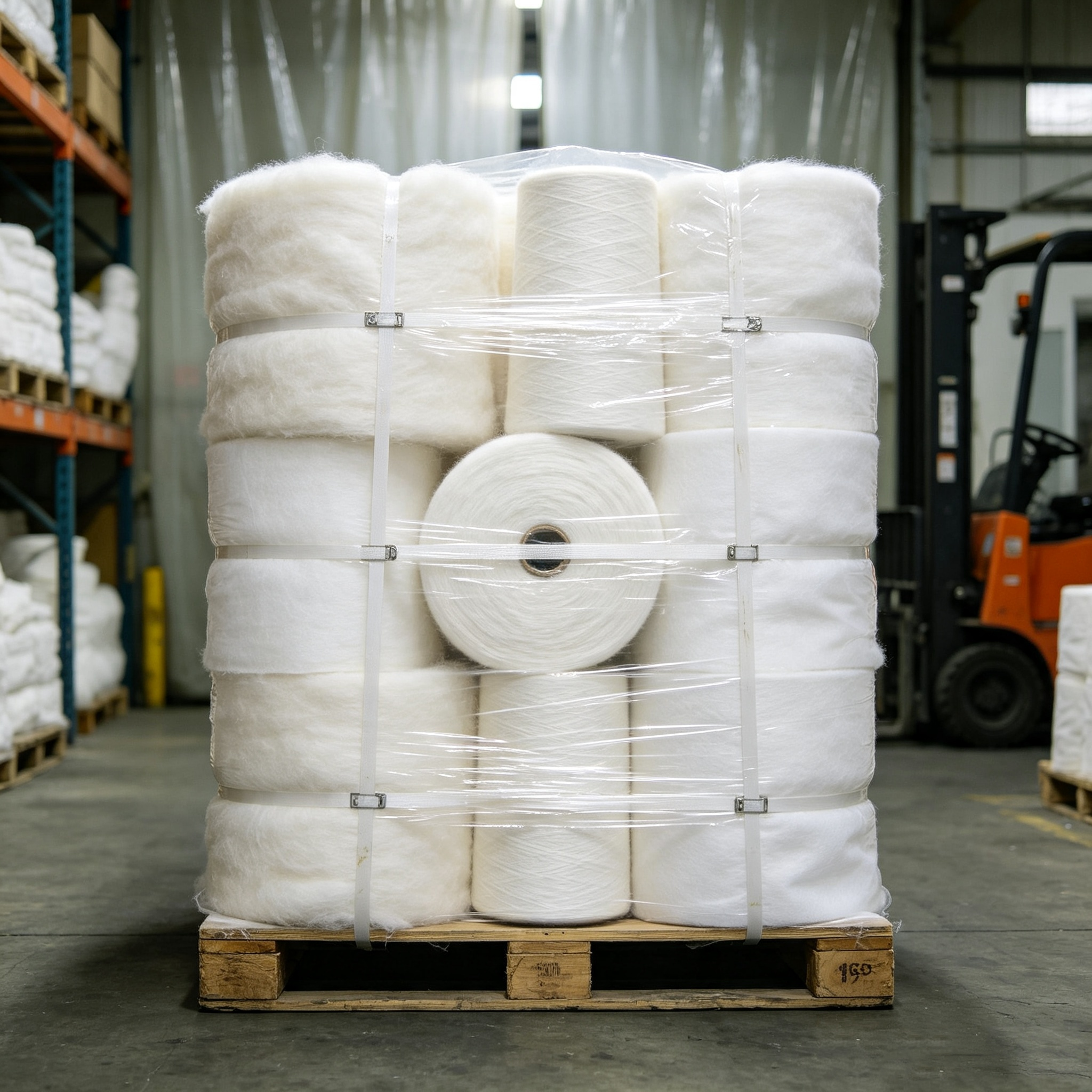
Comparison Table: PP vs PET Strapping for Chemical Fiber Bales
| Property | PP — Fiber Bale PP Strap | PET — Green PET / Fiber Baling Strap |
|---|---|---|
| Elongation | ≤12% | ≤10% (high-strength ≤6%) |
| Break force range | 45–270 kg | 160–1,360 kg |
| Width range | 5–19 mm | 9–25 mm |
| Surface | Smooth, fiber-friendly | Smooth or embossed |
| Compliance | QB/T 3811-1999 | GB/T 22344-2018 |
| Typical fit | High-speed automatic bale presses; flexible fiber surfaces; cost-efficient runs | High-compression bales; long-haul and export; lowest elongation demand |
| Colour / identification | Clear, green, black, custom, printed | Green masterbatch, clear |
Figures above are drawn from Jushuo’s published product specifications for Fiber Bale PP Strap, Green PET Strapping, and Fiber Baling Strap. Selection should follow the actual bale compression and line requirements.
FAQ: Chemical Fiber Bale Strapping
What standards and certifications should chemical fiber bale strapping meet?
PET strapping from Jushuo Packaging complies with GB/T 22344-2018, and PP strapping complies with QB/T 3811-1999. The company manufactures under ISO 9001 and ISO 14001 certified systems, and SGS test reports are available (documented values include breaking strength of 9.98 kN and elongation of 10% for the referenced PET specification). This matters for fiber bales destined for export, where buyers expect consistent, traceable material performance.
Can strapping be produced in custom cut lengths for automated bale presses?
Yes. Jushuo produces cut PET strap to customer-specified lengths, and this is the reason many fiber bale programs specify a fixed length rather than a roll. The verified example is the 1610 × 3380/3480 green cut PET strap supplied to Sateri (China) Fiber Co., Ltd. for viscose fiber bale strapping over three years. Custom cut length aligns the strap with the bale press head and bale geometry, so the sealing cycle repeats reliably.
Is PET strapping more cost-effective than steel for fiber bales?
Compared with steel strapping, PET strapping is documented at 35–40% lower material cost while delivering steel-comparable tensile performance, and it eliminates rust contamination and sharp-edge safety hazards. For fiber bales, the practical advantage is a clean, rust-free strap that protects fiber quality during export and processing.
Can I validate strapping on my own bale line before ordering in volume?
Yes. Jushuo supports sample validation and on-line compatibility testing, along with technical guidance for automatic bale strapping lines and on-site commissioning where required. Running a trial batch on the actual bale press confirms cut length, straightness, and heat-seal behavior before a bulk order is placed.
What are typical lead times and minimum order quantities?
For chemical fiber industry customization, the minimum order quantity is around 1 ton, with lead times typically 7–20 days depending on specification and finish. To discuss a specific fiber bale application — including cut length, width, elongation target, and colour — you can request a sample or quotation through www.jushuopackaging.com or email sales@jushuopackaging.com.
Conclusion: Choosing Fiber Bale Strapping With Confidence
Chemical fiber bale strapping is not a generic purchase. The strap has to hold high compression without relaxing, protect delicate fibers at the surface, and feed through an automated bale press cycle after cycle. That final requirement is why cut length, straightness, and heat-seal behavior deserve as much attention as break force.
The Sateri-style program shows what a matched specification looks like in practice: a defined green cut PET strap (1610 × 3380/3480), supplied over three years for viscose fiber bales. For other fiber producers, the selection logic is the same — match material, elongation, surface, and cut length to the bale and the machine, then validate on the line.
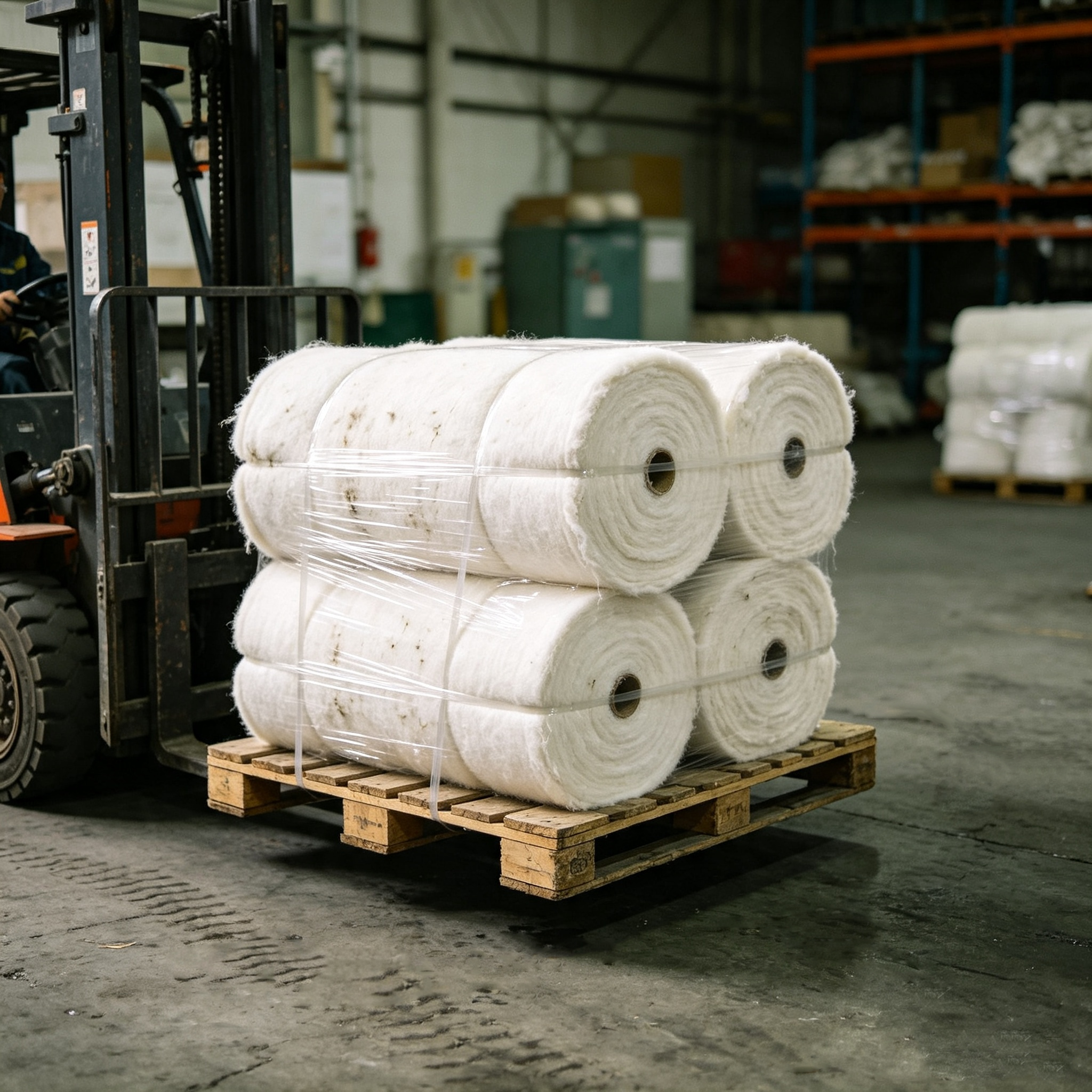
Next step: Share your bale dimensions, compression level, and press cut-length requirement, and Jushuo Packaging can prepare a matched PET or PP strapping specification, sample, and quotation. Contact Ms. Laura Yu — sales@jushuopackaging.com, +86 158 9568 0139.
About the manufacturer: Taixing Jushuo Packaging Technology Co., Ltd. (Jushuo Packaging) is a technology-driven enterprise founded in 2017 and headquartered in Huangqiao Industrial Park, Taixing City, Jiangsu Province, China. It produces PET strapping, PP strapping, and eco-friendly strapping on four PET lines and five PP lines with two solid-state polymerization (SSP) units, at an annual capacity exceeding 20,000 tons.
Have Questions or Need More Details?
Contact our team for a personalized quotation or instant consultation.
Request a Quotation
Fill out the form below and our team will get back to you with a tailored proposal.
WhatsApp Direct Chat
Prefer to chat in real-time? Message us on WhatsApp for instant assistance & quick answers.
- Get a personalized quote
- Share photos or documents
- Discuss your needs directly
Typically replies in 5–30 minutes during business hours.