
Hand Grade vs Machine Grade PP Strapping: A Buyer’s Guide
Hand grade and machine grade polypropylene (PP) strapping are not two strength tiers of the same product. They are two specifications built around different tensioning methods. Hand grade is made for an operator who pulls, knots and cuts the strap; machine grade is made for a strapping head that feeds, tensions and heat-seals it. In Jushuo Packaging’s PP range, the 12 mm hand grade strap is supplied at 0.70–0.80 mm thickness with 220–270 kg break force, while machine grade PP strap spans 5–19 mm width, 0.35–0.80 mm thickness and 45–230 kg break force, with deflection held to ≤5 mm/m so it feeds without twisting.
Buying the wrong grade does not usually show up as a broken strap. It shows up as recurrent jams on a semi-automatic head, a knot that slips on a hand-tied carton, a core that will not sit on the machine mandrel, or a load that loosens in transit because the elongation of the strap was never matched to the pack. This guide compares the two grades on the four variables that actually decide fit — break force, elongation, core size and machine compatibility — and sets out a selection sequence that light-industry buyers can run before the first pallet is wrapped.
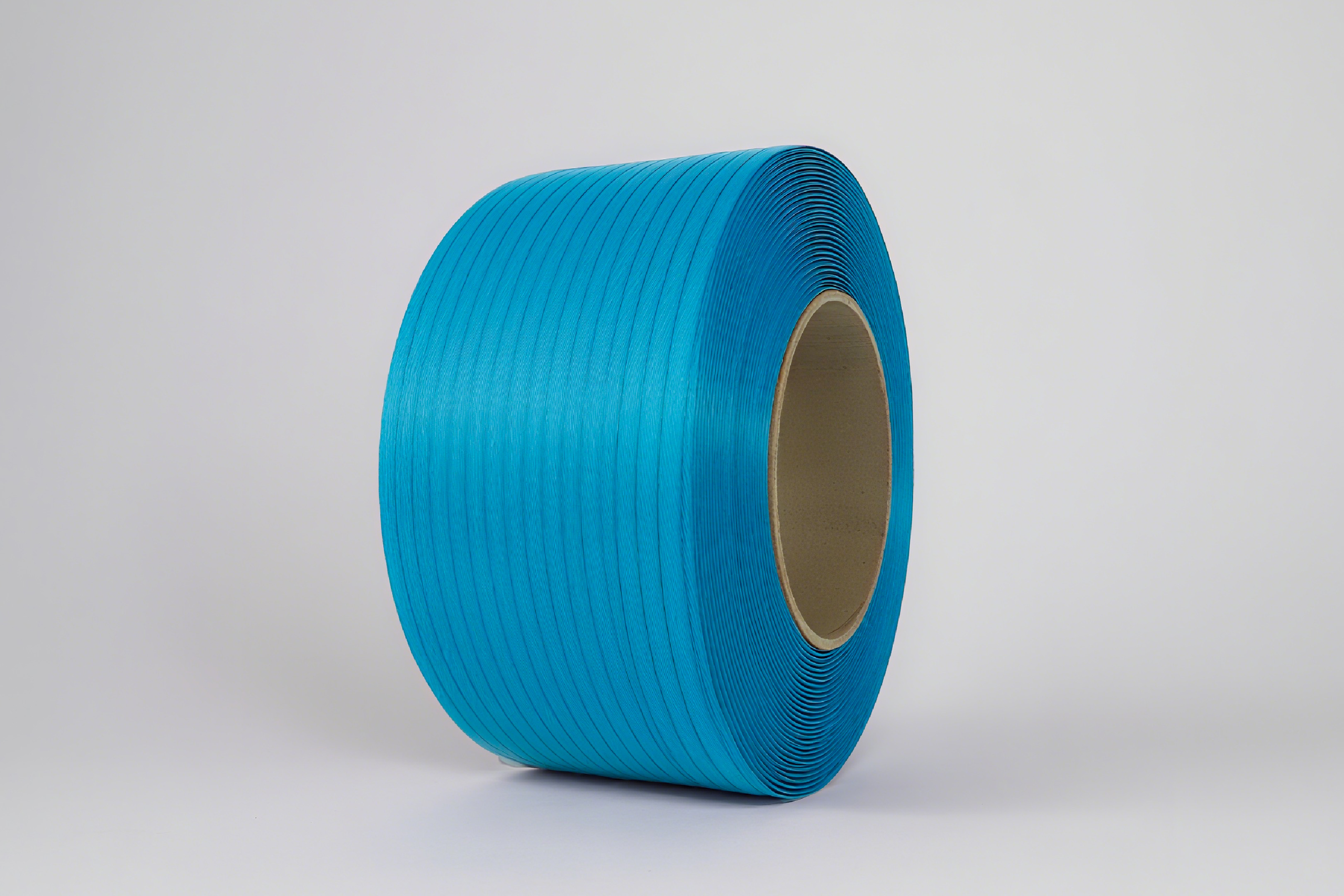
Problem Definition: Why Grade Mismatch Presents as a Line Problem
Most complaints that get attributed to “bad strap quality” are compatibility complaints. The strap is doing exactly what its specification allows; the specification was simply written for a different handling method. Three failure patterns account for most of the loss.
- Grade-to-equipment mismatch. A hand grade roll loaded into a semi-automatic machine has no machine-feed specification behind it. Machine grade strap is described in Jushuo’s technical material as having the straightness and low-friction surface needed to feed “without tilting or twisting”, while hand grade is described as having a soft texture that reduces hand fatigue and an embossed surface that keeps knots tight. Those are opposite design intents.
- Core-to-mandrel mismatch. PP strap is offered on 200 mm, 228 mm, 406 mm or custom cores. A roll that does not match the mandrel either will not mount or pays off unevenly, which is read on the floor as a strap defect.
- Specification overshoot or undershoot. Buying a heavier, thicker strap than the pack requires raises cost per metre and can crush carton edges and foam protectors; buying too light a strap shows up later as elongation, loosening and load shift.
The practical consequence is that grade selection should be decided by the tensioning method first, and by break force second. Buyers who reverse that order tend to re-qualify the same strap three or four times.
Industry Background: Where PP Strapping Sits in Light-Industry Packaging
Plastic strapping is a high-volume consumable. Industry research reports global plastic strapping production of over 2.3 million metric tons in 2024, with PET strapping accounting for approximately 60% of that volume and the balance shared by PP and other materials. That split reflects application physics rather than preference: PET dominates heavy and high-compression loads, while PP remains the standard choice for light-to-medium cartons where flexibility, surface finish and cost per metre matter more than ultimate tensile strength.
For importers, PP strapping is a classified product. U.S. Customs and Border Protection classifies polypropylene strapping under HTS 3920.20.0055, which is the reference point used when a buyer or broker builds the landed-cost model.
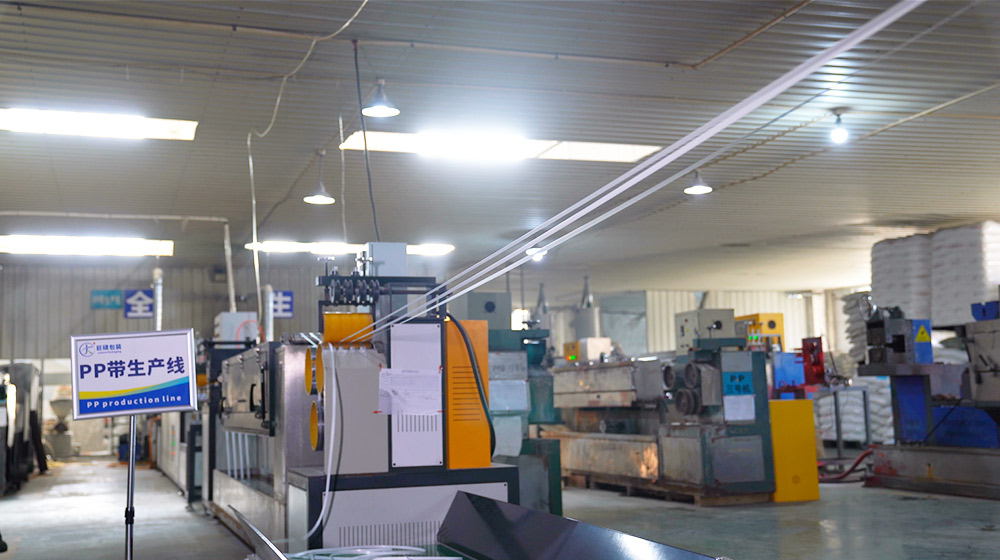
Jushuo Packaging — the brand of Taixing Jushuo Technology Co., Ltd., a strapping and packaging machinery manufacturer founded in 2017 and based in Huangqiao Industrial Park, Taixing City, Jiangsu Province, China — produces both grades on the same PP strap process route: multi-zone heating extrusion, water cooling, differential roller stretching, embossing, hot-air setting and automatic winding. The company reports a 15,000 m² facility, approximately 54 staff including a 13-engineer R&D team, five PP strap production lines alongside four PET lines and two sets of solid state polymerization equipment, annual capacity above 20,000 tons and monthly capacity above 1,700 tons, with exports accounting for 30% of sales. Its PP strap is stated to comply with QB/T 3811-1999 and to be produced under ISO 9001 and ISO 14001 certified systems.
Because both grades share that process route, the differences a buyer can actually measure are dimensional and handling-related: thickness, surface finish, straightness, winding and core. That is what makes the head-to-head comparison tractable.
Detailed Solution: The Four Specifications That Decide the Grade
1. Break force and thickness
Break force is the headline number, but it only means something when read together with thickness and width. Jushuo’s 12 mm hand grade strap is listed at 0.70–0.80 mm thickness and 220–270 kg break force. The 12 mm machine grade strap is listed at 0.50–0.80 mm thickness and 110–180 kg break force, while the 12 mm heavy-duty machine grade model JS12080-P is listed at 0.80 mm thickness and 180–270 kg break force. The hand grade figure is higher at the same nominal width because more material is in the cross-section — not because hand grade is a superior product.
Comparison rule: compare break force only within a grade and at an identical width and thickness. A 12 mm hand grade strap at 0.70–0.80 mm and a 12 mm machine grade strap at 0.50 mm are different products solving different problems, and a per-roll price comparison between them is not a like-for-like comparison.
2. Elongation and tension retention
Elongation determines whether a load stays tight. Jushuo’s PP Strapping Band data sheet gives 15–20% elongation for general PP band, which is the behaviour that lets a hand-tied strap conform to odd-shaped cartons and absorb shock. Machine grade PP strap is specified with break elongation below 20%, and the 12 mm heavy-duty machine grade variant at ≤15%, which is what keeps a palletised carton stack from relaxing on a long lane. For a manual operator, some elasticity is useful; for an automatic head cycling continuously, controlled elongation is what protects the weld and the load.
3. Core size and roll length
Core size is a hard constraint, not a preference. Jushuo supplies PP strap on 200 mm, 228 mm or 406 mm cores, or to a customer-specified core. The 12 mm machine grade range is listed at 2,000–3,000 m per roll and the 12 mm heavy-duty grade at 2,000–2,200 m per roll. Longer rolls reduce changeover frequency on high-throughput lines; shorter, lighter rolls suit low-volume manual operations where a large coil is unwieldy. Matching core and roll length to the actual mandrel and shift pattern is one of the cheapest line-efficiency gains available to a light-industry packer.
4. Surface finish and straightness
Surface finish does two different jobs. On a hand grade strap, an embossed surface provides the friction that keeps a knot from slipping. On a machine grade strap, a smooth surface reduces friction against machine guide tracks for high-speed operation, while the embossed option adds grip for loads that tend to shift. Straightness — expressed as deflection — is the machine-side equivalent of handleability: Jushuo specifies deflection ≤5 mm/m for machine grade PP strap, and the paper-element specification states a measured value of ≤3 mm/m.
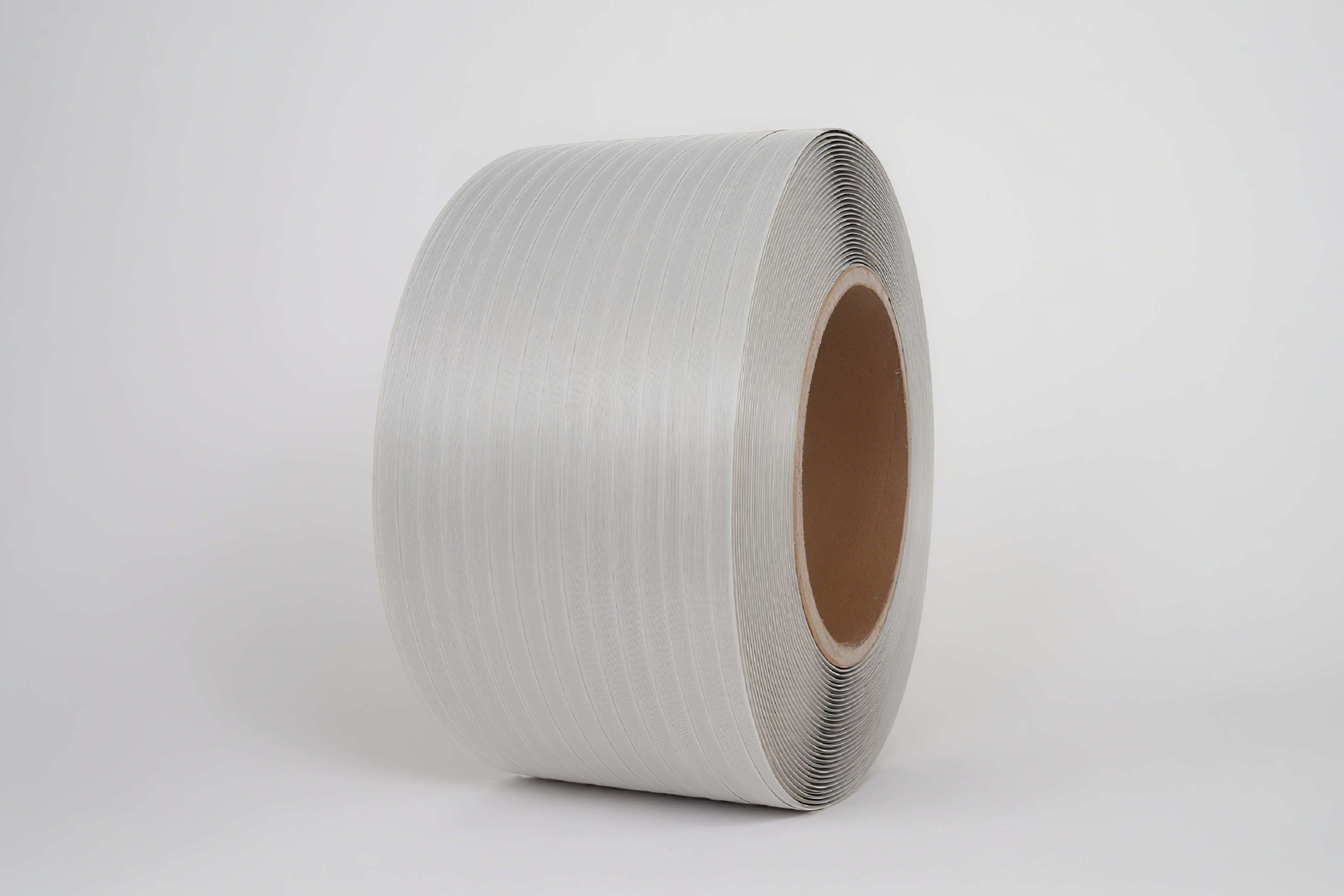
Matching the grade to three handling methods
Manual packaging. Hand grade polypropylene strapping, model designations JS500A-HP, JS500B-HP, JS600A-HP and JS600B-HP, is supplied at 12 mm width, 0.7–0.8 mm thickness and 220–270 kg break force. It is designed for manual bundling in retail, logistics and small manufacturing, works with simple hand tools or without tools, and is customizable in width, thickness, colour, core size and roll length.
Semi-automatic packaging. Semi automatic PP strap is supplied in 9–12 mm widths at 0.50–0.80 mm thickness, 45–230 kg break force, 15–20% elongation and deflection ≤5 mm/m, with heat-seal welding compatible with common table-top strapping heads. It sits deliberately below fully automatic grade material on cost while retaining the straightness needed for reliable feeding.
Fully automatic packaging. Machine grade PP strap covers embossed models JS05035-P to JS19080-P and smooth model JS09036-PS across 5–19 mm width, 0.35–0.8 mm thickness and 45–230 kg break force, with break elongation below 20% and deflection ≤5 mm/m. Within that family, the 12 mm machine grade range (JS12050-P, JS12063-P, JS12063B-P, JS12063C-P, JS12070-P, JS12080-P) is listed at 110–180 kg break force with 200 mm, 228 mm or 406 mm cores, and the 12 mm heavy-duty model JS12080-P at 0.80 mm thickness and 180–270 kg break force with ≤15% elongation.
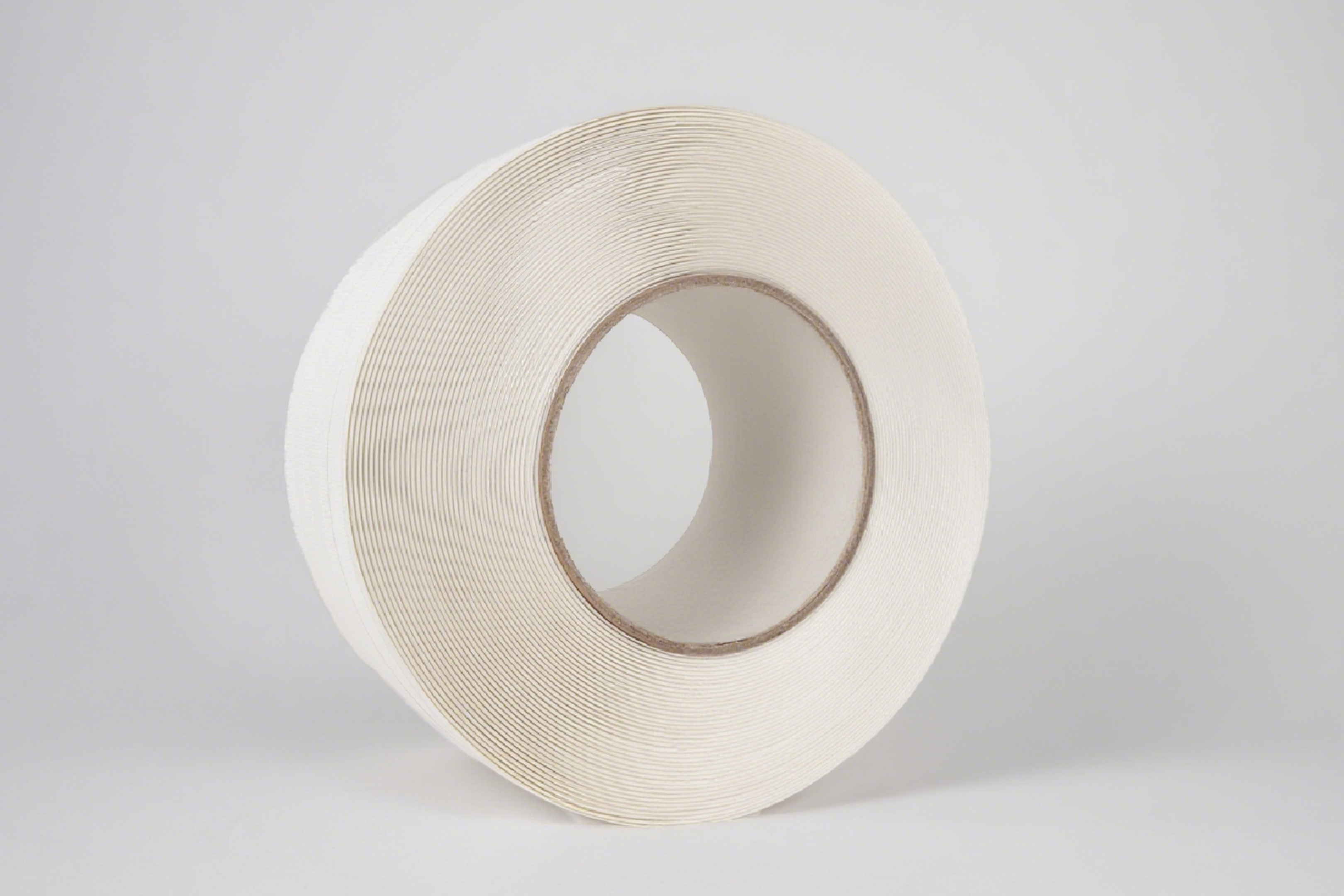
High-speed light-industry lines: the 16 x 6 machine grade polypropylene strapping core
Where PP strapping is consumed at line speed rather than at a bench, grammage control becomes a cost item. Jushuo lists the 16 x 6 machine grade polypropylene strapping core under embossed models JS05035-P to JS09063B-P in the 5–9 mm range, together with smooth model JS09036-PS. The specification states grammage tolerance of ±0.05 g/m, deflection ≤5 mm/m with a measured value of ≤3 mm/m, widths of 5 mm, 8 mm and 9 mm with grammage from 1.43 g/m to 2.5 g/m, and 200 mm or 406 mm cores. It is positioned for automatic bundling of large paper elements — A4 copy paper, tissue packs and paper rolls — on high-speed lines, and Jushuo reports Shandong Sun Paper Industry Co., Ltd. and Chenming Paper Group among users of precision-grammage PP strap for automatic paper ream bundling.
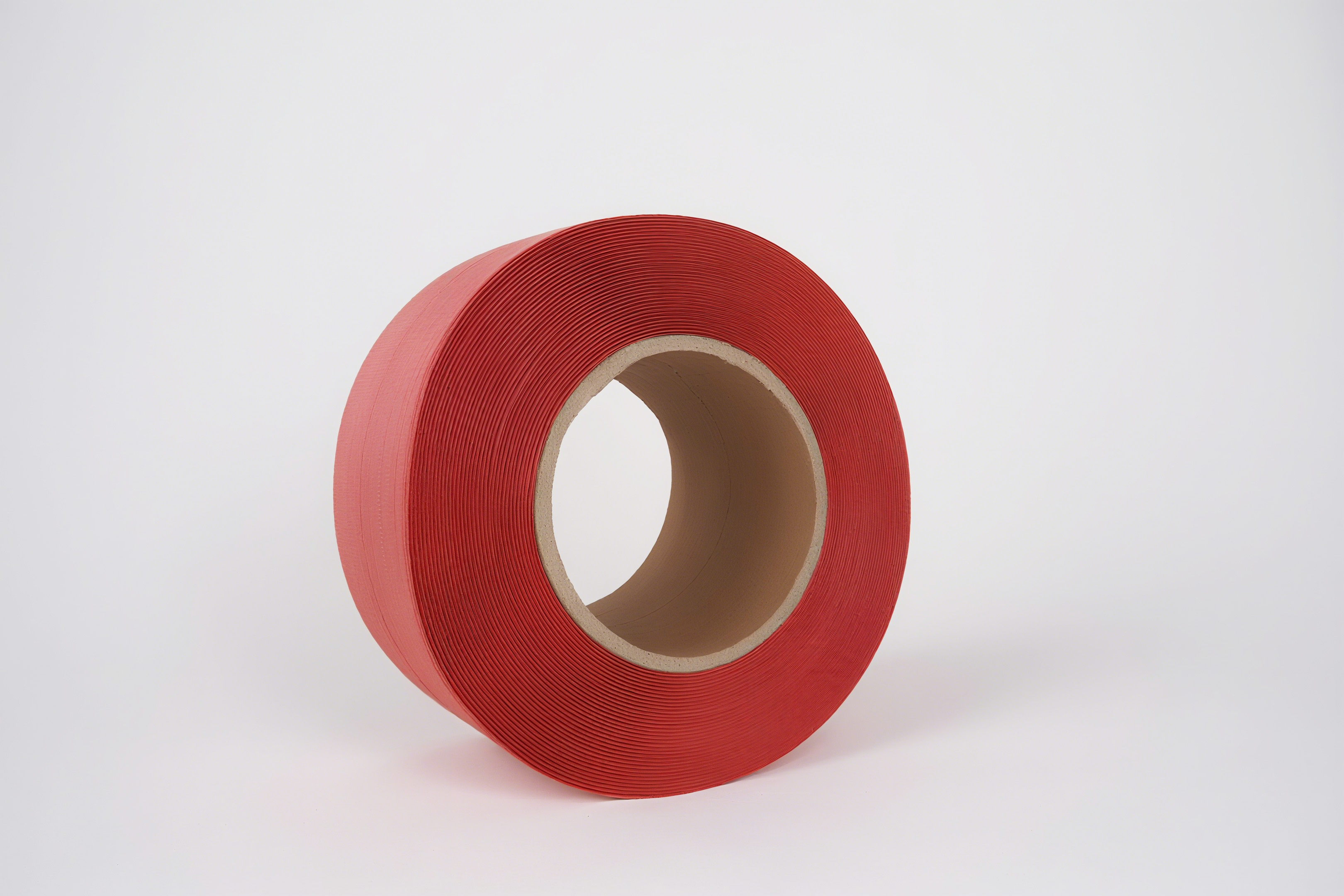
Step-by-Step Breakdown: Selecting and Validating a Grade
The sequence below is ordered so that the cheapest decisions are made first and the expensive ones — line trials and bulk orders — only after the specification is fixed.
- Define the load and the pack rate. Record carton weight range, stack height, whether the pack is palletised, and packs per shift. A manual bench running a few hundred cartons a day and an automatic line running continuously are different qualification problems even when the carton is identical.
- Fix the tensioning method. Manual hand tool or hand tying points to hand grade. A table-top or semi-automatic head points to semi automatic PP strap. A fully automatic or large-frame machine points to machine grade. This single decision eliminates roughly half the catalogue.
- Match the core to the mandrel. Confirm whether the machine takes a 200 mm, 228 mm or 406 mm core, then confirm roll length and roll weight against the mandrel and the available changeover space.
- Set a break-force target within the grade. Use the grade’s own table: hand grade 12 mm at 220–270 kg; machine grade 12 mm at 110–180 kg; 12 mm heavy-duty machine grade at 180–270 kg. Do not carry a hand grade figure across to a machine grade quote.
- Choose the surface. Smooth for high-speed automatic lines where friction in the guide track is the enemy; embossed where the load tends to shift or where a hand-tied knot must hold.
- Trial on the real line. Check feed behaviour, weld quality and tension retention over a full shift, not a single pack. Confirm deflection and, for paper-element work, grammage against the stated tolerance of ±0.05 g/m.
- Write the specification into the purchase order. Width, thickness, break force, elongation, surface, core size, roll length and, where relevant, grammage tolerance. Every one of those fields exists in the supplier’s data sheet, so leaving any of them unstated is a choice to accept whatever arrives.
Use Cases: Where Each Grade Earns Its Place
- Courier counters, retail checkouts and small warehouses. Hand grade 12 mm strap at 220–270 kg break force, embossed for knot grip, cut to length with no equipment investment. Jushuo’s material cites supermarket chains and local courier collection points as typical hand grade users.
- Semi-automatic carton lines in food, daily chemicals and hardware. Semi automatic PP strap in 9–12 mm with 0.50–0.80 mm thickness and heat-seal welding. Jushuo reports Suzhou Qingyu Packaging Technology Co., Ltd. using semi-automatic PP strapping rolls for carton bundling in a distribution centre, citing reliable feeding and reduced jams.
- High-speed paper and printing lines. The 16 x 6 machine grade polypropylene strapping core specification — 5–9 mm widths, ±0.05 g/m grammage tolerance, deflection measured at ≤3 mm/m — is the relevant grade for automatic bundling of copy paper reams, tissue and paper rolls.
- Home appliance and large-carton lines. Large-frame automatic machines take 15–19 mm embossed PP strap, and Jushuo’s 12 mm heavy-duty 0.80 mm grade is used for appliance carton bundling, where the requirement is break force plus low elongation rather than maximum stiffness.
- Mixed 3PL and contract packing. Operations that run both a manual bench and a semi-automatic head should stock two grades rather than compromise on one. The cost of a dual-grade stock is usually lower than the cost of one line running off-specification strap.
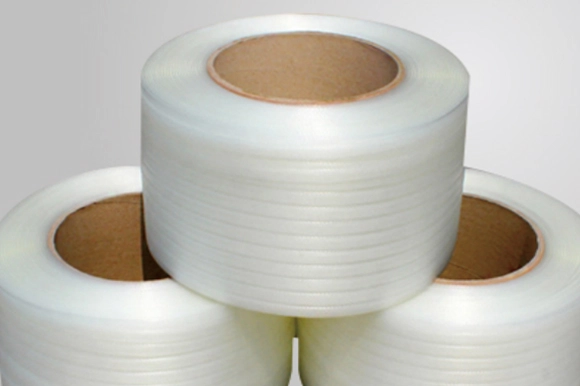
Comparison Table: Hand Grade vs Machine Grade PP Strapping
| Decision factor | Hand grade PP strapping | Machine grade PP strapping |
|---|---|---|
| Base material | High-quality polypropylene (PP) | High-quality polypropylene (PP) |
| Model designations | JS500A-HP, JS500B-HP, JS600A-HP, JS600B-HP (12 mm) | Embossed JS05035-P to JS19080-P; smooth JS09036-PS |
| Width | 12 mm | 5–19 mm |
| Thickness | 0.70–0.80 mm | 0.35–0.80 mm |
| Break force | 220–270 kg | 45–230 kg; 12 mm machine grade 110–180 kg; 12 mm heavy-duty 180–270 kg |
| Elongation | PP band reference range 15–20% | Break elongation below 20%; 12 mm heavy-duty ≤15% |
| Straightness | Not specified as a machine-feed criterion | Deflection ≤5 mm/m; paper-element grade measured ≤3 mm/m |
| Surface | Embossed, for knot grip | Smooth for low friction, or embossed for grip |
| Core size | Customizable, including 200 mm, 228 mm, 406 mm | 200 mm, 228 mm, 406 mm or custom |
| Roll length | Customizable | 2,000–3,000 m (12 mm); 2,000–2,200 m (12 mm heavy-duty) |
| Joint method | Knot or hand strapping tool | Heat-seal welding on the machine head |
| Equipment compatibility | Manual handling only | Semi-automatic and fully automatic strapping machines |
| Typical light-industry use | Retail, courier, books and printed matter, fresh food, textiles, small warehouses | Food and beverage cartons, daily chemicals, hardware, paper reams, appliance cartons |
| Standard and systems | QB/T 3811-1999; ISO 9001 and ISO 14001 certified systems | QB/T 3811-1999; ISO 9001 and ISO 14001 certified systems |
Figures above are the specifications published by Jushuo Packaging for the named product families. Certificate scope, current standard versions and test reports for a specific order should be confirmed at quotation stage.
Frequently Asked Questions
Do hand grade and machine grade PP strapping meet the same product standard?
Yes, in Jushuo Packaging’s range both grades are stated to comply with QB/T 3811-1999 and are produced under ISO 9001 and ISO 14001 certified systems, with SGS test reports available on request. The difference between the grades is application fit — manual versus machine tensioning — not standard compliance. Buyers should still request the current certificate scope and the test report for the exact width and thickness being ordered, because compliance documents are specification-specific.
Can one PP strap run on manual, semi-automatic and automatic equipment?
No. Hand grade 12 mm strap at 0.70–0.80 mm thickness and 220–270 kg break force is designed for manual tensioning, knotting and cutting. Semi automatic PP strap in 9–12 mm at 0.50–0.80 mm thickness is specified with deflection ≤5 mm/m and heat-seal compatibility for table-top heads. Machine grade PP strap in 5–19 mm at 0.35–0.80 mm thickness is designed for fully automatic machines, with break elongation below 20% and deflection ≤5 mm/m so it feeds without twisting. Core size must also match the machine mandrel: 200 mm, 228 mm, 406 mm or custom.
What drives the price difference between the two grades?
Quotations are built from specification variables rather than from a grade label: width, thickness, break-force level, surface finish, core size, roll length, printing and order quantity. A 12 mm hand grade strap at 0.70–0.80 mm thickness carries more material per metre than a 12 mm machine grade strap at 0.50 mm, so the two are not comparable on price per roll and should not be compared on price per kilogram either. The correct comparison is cost per carton closed at the specified break force and elongation. Jushuo issues quotations against a stated specification through jushuopackaging.com.
How should a buyer validate the grade before committing to a bulk order?
Start with the published specification sheet and the SGS test report for the exact model, then run a trial roll on the actual machine rather than a bench sample. During the trial, check four things: feed behaviour and deflection, heat-seal joint consistency, tension retention across a full shift, and core fit on the mandrel. For paper-element or other grammage-sensitive work, weigh the strap against the stated ±0.05 g/m tolerance. A specification sheet, test report and trial roll can be requested together through the Jushuo Packaging website so that the quotation and the trial are based on the same data.
What are typical lead times for hand grade and machine grade PP strap?
Jushuo Packaging states that stock items ship within 7 days and custom orders within 15–20 days, with safety stock maintained for standard specifications and a reported on-time shipment rate of 98.6%. Standard hand grade 12 mm and standard machine grade widths are the items most likely to be held in stock; non-standard width, thickness, core size or printing moves the order into the custom lead time. Buyers running continuous automatic lines should confirm the stock position for their exact specification at order placement rather than assuming availability from the grade name alone.
Conclusion
The hand grade versus machine grade decision is settled by one question: who applies the tension? If an operator pulls, knots and cuts the strap, hand grade 12 mm at 0.70–0.80 mm and 220–270 kg break force is the correct specification. If a strapping head feeds, tensions and heat-seals it, machine grade in 5–19 mm at 0.35–0.80 mm, with break elongation below 20% and deflection ≤5 mm/m, is the correct specification — and within that family, the 12 mm heavy-duty and the 16 x 6 machine grade polypropylene strapping core specifications exist to solve the load-weight and grammage-cost problems respectively.
What makes the comparison useful is that the numbers live in the same document set. Break force, elongation, core size, roll length and deflection are all stated per model, so a buyer can build a purchase specification that a supplier can actually be held to. The failure mode to avoid is not choosing the “wrong” grade in the abstract; it is leaving the grade, core and surface unstated in the order and discovering the mismatch at the strapping head.
Next step: specify the load, the tensioning method and the mandrel core size, then request a matched quotation and test report for the hand grade or machine grade PP strap specification you need.
Jushuo Packaging — Taixing Jushuo Technology Co., Ltd.
Website: https://www.jushuopackaging.com/
Email: sales@jushuopackaging.com | Tel / WhatsApp: +86 158 9568 0139
Have Questions or Need More Details?
Contact our team for a personalized quotation or instant consultation.
Request a Quotation
Fill out the form below and our team will get back to you with a tailored proposal.
WhatsApp Direct Chat
Prefer to chat in real-time? Message us on WhatsApp for instant assistance & quick answers.
- Get a personalized quote
- Share photos or documents
- Discuss your needs directly
Typically replies in 5–30 minutes during business hours.