
How Plastic Strapping Manufacturers Fit Automated Packaging Lines: PP and PET Solutions
Selecting the right plastic strapping for an automated packaging line depends on matching the strap's mechanical properties to the line speed, load weight, and environmental conditions of your specific packaging operation. The choice is not simply PP versus PET; it is about verifying straightness, elongation, breaking force, weld strength, and material compatibility with your existing equipment. This guide explains how a plastic strapping manufacturer like Jushuo Packaging approaches PP strap and PET strap selection for automated lines, and how to evaluate a supplier against the standards that matter in your plant.
What the Industry Asks: 'Plastic Strapping Manufacturer for Packaging Lines'
Buyers searching for a plastic strapping manufacturer for packaging lines usually need a supplier that can provide strapping materials that run reliably on automatic or semi-automatic equipment without causing jams, weld failures, or load loosening. The core question is: which strap can keep my line running at speed while maintaining secure bundles? The answer requires evaluating the strap's physical parameters, the manufacturer's quality control, and its capability to customize products for specific operating conditions.
The Problem: Strap Mismatch Causes Costly Line Stoppages
A strap that works fine for manual bundling can cause frequent stoppages on an automatic line. Poor straightness causes the strap to twist or tilt inside machine chutes, leading to misfeeds. Inconsistent thickness or grammage creates uneven tension. Weak heat seals break during transit. These issues directly impact productivity and load integrity. For high-speed lines running 24/7 or at 30–50 packs per minute, even a small percentage of jams translates into significant downtime and higher operating costs.
Industry Background: Why PP and PET Dominate Automated Strapping
Global data indicates that polypropylene (PP) strapping held a 33.9% revenue share in the packaging strapping materials market in 2025, largely due to its cost-effectiveness in logistics and e-commerce. PET strapping is growing at a projected CAGR of 5.8% from 2024 to 2033, driven by demand for steel replacement in heavy-load applications. The two materials serve distinct roles: PP is typically selected for light to medium loads on automatic and semi-automatic carton lines, while PET is preferred for heavy loads, high compression bales, and outdoor storage. Recycled PET also accounted for 34% of global strapping production in 2024, reflecting growing sustainability requirements in packaging supply chains.
For automated packaging lines, the key distinction is mechanical behavior. PP strap offers flexibility and economy with typical elongation of 15–20%, which suits carton bundling. PET strap offers steel-like tensile strength with ultra-low elongation, making it suitable for loads where tension retention is critical, such as bricks, lumber, metal, and chemical fiber bales.
The Role of a Plastic Strapping Manufacturer in Automated Line Performance
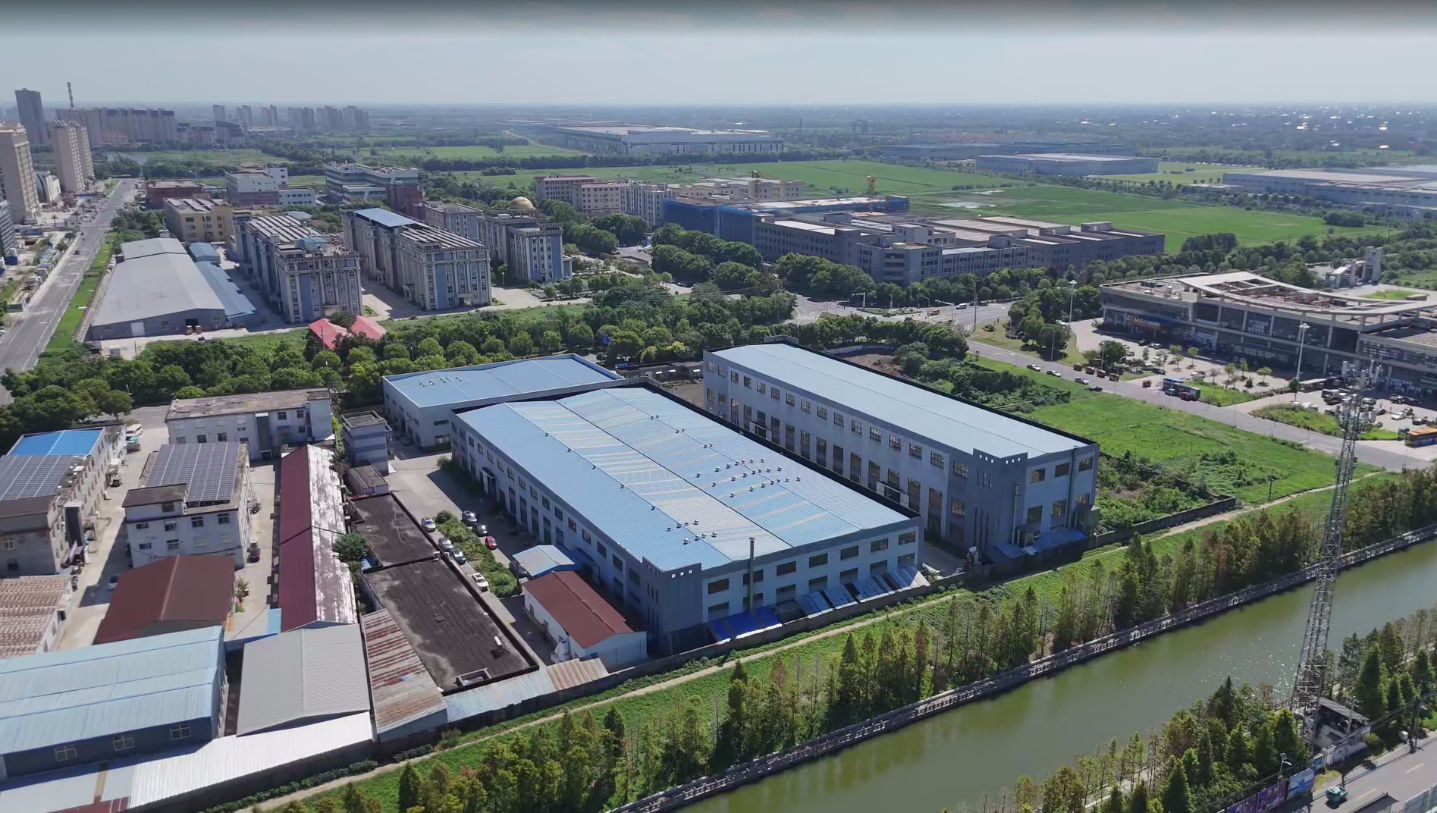
Jushuo Packaging, officially Taixing Jushuo Technology Co., Ltd., is a technology-driven manufacturer founded in 2017 and headquartered in Huangqiao Industrial Park, Taixing City, Jiangsu Province, China. The company specializes in the R&D, production, and sales of strapping materials and packaging machinery, with an annual capacity exceeding 20,000 tons. Its product range includes PET strapping, PP strapping, eco-friendly strapping, steel strapping, stretch film, adhesive tape, and edge protectors.
For automated lines, Jushuo positions itself as a supplier of both consumables and equipment integration. The company produces PP strapping and PET strapping, and also designs, manufactures, and installs automated packaging assembly lines. This dual capability means the manufacturer can match strap parameters to machine feeding systems and line speed requirements during the product design stage.
Key Strap Parameters for Automated Packaging Lines
When selecting PP or PET strapping for an automatic or semi-automatic line, the following parameters should be specified and verified with test reports:
Straightness and Deflection
Straightness is the single most important parameter for automated feeding. Deflection should be ≤5mm/m for most automatic lines. In high-speed operations, manufacturers such as Jushuo report measured deflection of ≤3mm/m for certain product grades, which further reduces the risk of jamming.
Grammage Uniformity
Grammage tolerance determines material cost consistency and feeding stability. For paper and can lines, a tolerance of ≤±0.05g/m is commonly specified. Tighter control reduces both machine stoppages and packaging cost per unit.
Breaking Force and Elongation
Breaking force must match the load weight and compression forces. For example, 9mm PET strap for can pallet bundling requires breaking force ≥3500N; 12mm PET for glass products requires ≥5000N; 16mm PET for lumber or bricks requires ≥7500N. Elongation should be low enough to prevent load loosening: PET typically ≤10% and high-strength grades ≤6%, while PP grades range from 10–15% up to 15–20% depending on specification.
Heat Seal Weld Strength
For automatic strapping heads, the welded joint should reach at least 80% of the base material's strength. Strong welding prevents load separation during handling and transport.
Surface Finish
Smooth surface straps minimize friction and are preferred for high-speed automatic lines. Embossed surface straps add grip and are selected when loads are prone to shifting. The choice depends on the product being bundled and the feeding system of the machine.
Step-by-Step Process for Matching Strap to Your Packaging Line
Step 1: Define Your Line Conditions
Document your machine type, arch size, line speed, duty cycle, and whether the line is automatic, semi-automatic, or manual. High-speed lines operating at 30–50 packs per minute require tighter straightness and grammage control than low-speed lines.
Step 2: Assess Your Load Profile
Determine the weight, surface condition, compression force, and stacking pattern of the products. Sharp-edged items require edge protectors and, in some cases, smooth straps with lower friction. Heavy loads require higher breaking force and ultra-low elongation.
Step 3: Select Material Class
For light to medium carton loads on automatic lines, PP strap is usually the cost-effective choice. For heavy palletized goods, bales, metal products, or outdoor storage, PET strap provides the required strength and tension retention.
Step 4: Specify Special Conditions
If the line operates in cold environments, choose low-temperature grades. If the product is ESD-sensitive, such as solar panels or lithium batteries, specify anti-static strap with surface resistivity of 10⁶–10⁹Ω. If fire safety compliance is required for export or warehousing, specify flame-retardant grades meeting UL94 V-2 or VW-1.
Step 5: Request Verification Data
Ask the manufacturer for test reports covering breaking force, elongation, deflection, grammage, and heat seal performance. Third-party test reports, such as SGS, add confidence to the specification.
Step 6: Run a Line Trial
Before committing to volume, run a trial on your actual equipment. Measure the number of jams, weld failures, and strap breaks per shift. A break rate of ≤0.2% is a common benchmark for quality straps on well-maintained lines.
Use Cases: Strap Selection by Industry
Home Appliance Carton Bundling
Automatic lines for refrigerators and air conditioners typically use PP strap with widths of 12mm, 13mm, or 15mm. The strap must maintain deflection ≤3mm/m, with breaking force of ≥1400N for 12mm and ≥1800N for 15mm. Moderate tension prevents crushing of foam edge protectors. Jushuo reports that this product operates on lines at 30–50 packs per minute with a break rate ≤0.2%.
Beverage Can Pallet Bundling
Can lines run 24/7, making feeding reliability essential. A 9mm PET strap with breaking force ≥3500N, deflection ≤3mm/m, and grammage tolerance ≤±0.03g/m achieves zero jamming in high-speed operation. The strap also needs a smooth surface and heat seal strength ≥80% of parent material.
Brick and Construction Material Pallet Bundling
Brick pallets are often stored outdoors for weeks, exposing straps to UV and rain. PET strap with UV stabilizer retains ≥85% strength after 1000h QUV testing and stays tight after one month outdoors. This application uses 12mm, 16mm, or 19mm PET strap, with breaking force of ≥5000N, ≥7500N, and ≥9500N respectively, and reduces stack collapse by more than 80%.
Lumber and Wood Panel Bundling
Lumber bundles are heavy and often stacked high. PET strap with breaking force ≥7500N for 16mm width and elongation ≤5% maintains tension under variable outdoor conditions. UV resistance is important when lumber is stored outside before shipment.
Solar Panel and Battery Pack Bundling
PV modules and batteries are ESD-sensitive. An anti-static PET strap with surface resistivity of 10⁶–10⁹Ω reduces ESD complaints by 80% compared with ordinary PET strap, while a flame-retardant grade with oxygen index ≥26% passes overseas fire inspections. For 16mm strap, breaking force ≥8000N and elongation ≤6% are required to keep glass-faced panels secure.
Cold Chain and Frozen Goods
Ordinary PP becomes brittle below approximately -10°C. For cold storage at -18°C to -50°C, a PET strap C-series with anti-brittle treatment remains flexible at -50°C with elongation retention ≥8%. This application is relevant for frozen food pallets and lithium battery cold transport.
Comparison: PP Strap vs PET Strap for Automated Lines
| Parameter | PP Strap | PET Strap |
|---|---|---|
| Typical width range | 5–19mm | 9–25mm |
| Typical break force | 45–270kg depending on spec | 160–1360kg depending on spec |
| Typical elongation | 10–20% depending on grade | ≤10% standard; ≤6% high-strength |
| Best suited for | Cartons, light to medium loads, e-commerce, food and beverage | Heavy pallet loads, bales, metal, lumber, bricks, outdoor storage |
| Key feeding requirement | Good straightness, smooth surface for high-speed lines | Deflection ≤5mm/m, optional embossed for grip |
| Typical standard | QB/T 3811-1999 | GB/T 22344-2018 |
The table reflects typical ranges from Jushuo's published product specifications and does not constitute a claim that one material is universally superior. The correct choice depends on your line speed, load profile, and environmental conditions.
How to Evaluate a Plastic Strapping Manufacturer for Packaging Lines
Check Manufacturing Capability
For reliable supply, confirm the manufacturer has dedicated production lines and quality systems. Jushuo operates 4 PET strap production lines, 5 PP strap production lines, and 2 sets of Solid State Polymerization equipment, with an annual capacity exceeding 20,000 tons and monthly capacity over 1,700 tons. This scale supports both stock specifications and custom orders.
Verify Quality Control
A credible supplier uses precision testing instruments such as vernier calipers, electronic scales, thickness gauges, ovens, viscosity testers, and tensile testing machines. Jushuo follows six inspection procedures: raw material inspection, incoming inspection, online inspection, finished product inspection, inbound inspection, and outbound inspection, with a reported finished product qualification rate over 99%. ISO 9001 and ISO 14001 certifications are held, and SGS test reports are available.
Confirm Standard Compliance
For PET strap, compliance with GB/T 22344-2018 is common for products sold in China; for PP strap, QB/T 3811-1999 applies. Internationally, ASTM D3950-23 and EN 13394:2001 are referenced standards for non-metallic strapping. Ask the supplier which standards their products meet and request corresponding documentation.
Assess Customization and Technical Support
If your line requires non-standard widths, custom colors, printed logos, anti-static properties, or special core sizes, confirm the manufacturer can produce exactly to specification. Jushuo states it provides OEM/ODM manufacturing with customization of color, width, thickness, length, surface finish, core size, and logo printing. For automated lines, technical guidance on machine compatibility and on-site commissioning support is also valuable.
Budget and Cost Considerations
PP strap generally offers the lowest material cost for light to medium loads, which is why it dominates logistics and e-commerce applications. PET strap is more expensive than PP but offers steel-comparable strength at a cost reportedly 35–40% lower than steel strapping in Jushuo's published materials. For automated lines, the total cost should include downtime, rejects, and maintenance, not just the price per meter. A strap with precise grammage and stable straightness often reduces total cost even if the unit price is slightly higher.
Requesting Samples and Technical Documentation
Before committing to a packaging line consumables contract, request samples and run them on your actual equipment. Ask for test reports covering breaking force, elongation, deflection, and heat seal strength. For export shipments, request RoHS or REACH compliance documentation if required. A reliable manufacturer should be able to provide this information within a reasonable timeframe.
FAQ
Which type of plastic strapping is best for automatic packaging lines?
For automatic packaging lines, the best type depends on the load. PP strap is typically used for cartons and light to medium loads because it is economical and flexible. PET strap is used for heavy pallet loads, high-compression bales, and products requiring high tension retention. Critical parameters for automatic lines are straightness, grammage uniformity, heat seal strength, and consistent winding, regardless of material choice.
What certifications should a plastic strapping manufacturer hold?
A plastic strapping manufacturer should hold ISO 9001 for quality management and ISO 14001 for environmental management. Product compliance should be verified against applicable standards such as GB/T 22344-2018 for PET strap and QB/T 3811-1999 for PP strap. Internationally, ASTM D3950-23 and EN 13394:2001 are recognized standards for non-metallic strapping. Third-party test reports, such as SGS, provide additional assurance of performance claims.
What breaking force is required for PET strap on automated heavy-load lines?
Breaking force requirements vary by application. For 12mm PET strap used in glass and construction material bundling, a minimum of 5000N is common. For 16mm PET strap used in lumber and brick pallet bundling, ≥7500N is required. For 19mm strap in heavy metal and auto parts bundling, ≥9500N is typical. High-strength PET grades can achieve 1360kg break force in 25×1.25mm specification. Always verify the specific requirement against your load weight and compression forces.
Can plastic strapping be customized for specific packaging lines?
Yes. Manufacturers such as Jushuo Packaging offer customization of width, thickness, length, color, surface finish, core size, and logo printing. Performance additives can also be specified, including anti-UV, anti-hydrolysis, anti-static, and flame-retardant formulations. Custom printing with high-adhesion ink is available for brand identification, and printed straps can withstand 500 or more abrasion cycles in Jushuo's published specifications.
What lead times should I expect for sample and production orders?
For stock specifications, a manufacturer with high monthly capacity can often ship standard PP and PET strapping quickly; Jushuo reports a monthly capacity exceeding 1,700 tons. Custom formulas and printed straps typically take longer. As a practical guideline, stock items may ship within 7 days, custom orders within 15–30 days, and fully customized R&D formulations in 30–60 days. To confirm current lead times for your specification and destination, contact the manufacturer directly with your strap dimensions, quantity, and delivery terms.
Conclusion
Matching plastic strapping to an automated packaging line is a technical decision that affects uptime, load integrity, and cost. Start by documenting your line speed and load profile, then select PP or PET based on strength and elongation requirements. Verify straightness, grammage, breaking force, and weld strength with test reports, and run a line trial before volume commitment. Jushuo Packaging offers a range of PP and PET strapping products plus automated line integration capabilities, and can provide technical guidance for machine compatibility. For a sample or quotation, contact Jushuo Packaging with your specifications and line conditions.
Get a strap specification review for your packaging line.
Jushuo Packaging can match PP or PET strapping to your equipment and application.
Email: sales@jushuopackaging.com | WhatsApp: +86 158 9568 0139
Have Questions or Need More Details?
Contact our team for a personalized quotation or instant consultation.
Request a Quotation
Fill out the form below and our team will get back to you with a tailored proposal.
WhatsApp Direct Chat
Prefer to chat in real-time? Message us on WhatsApp for instant assistance & quick answers.
- Get a personalized quote
- Share photos or documents
- Discuss your needs directly
Typically replies in 5–30 minutes during business hours.