
Paper Strapping Tape vs. Plastic Strapping: A Head-to-Head Decision for Eco-Conscious Brands
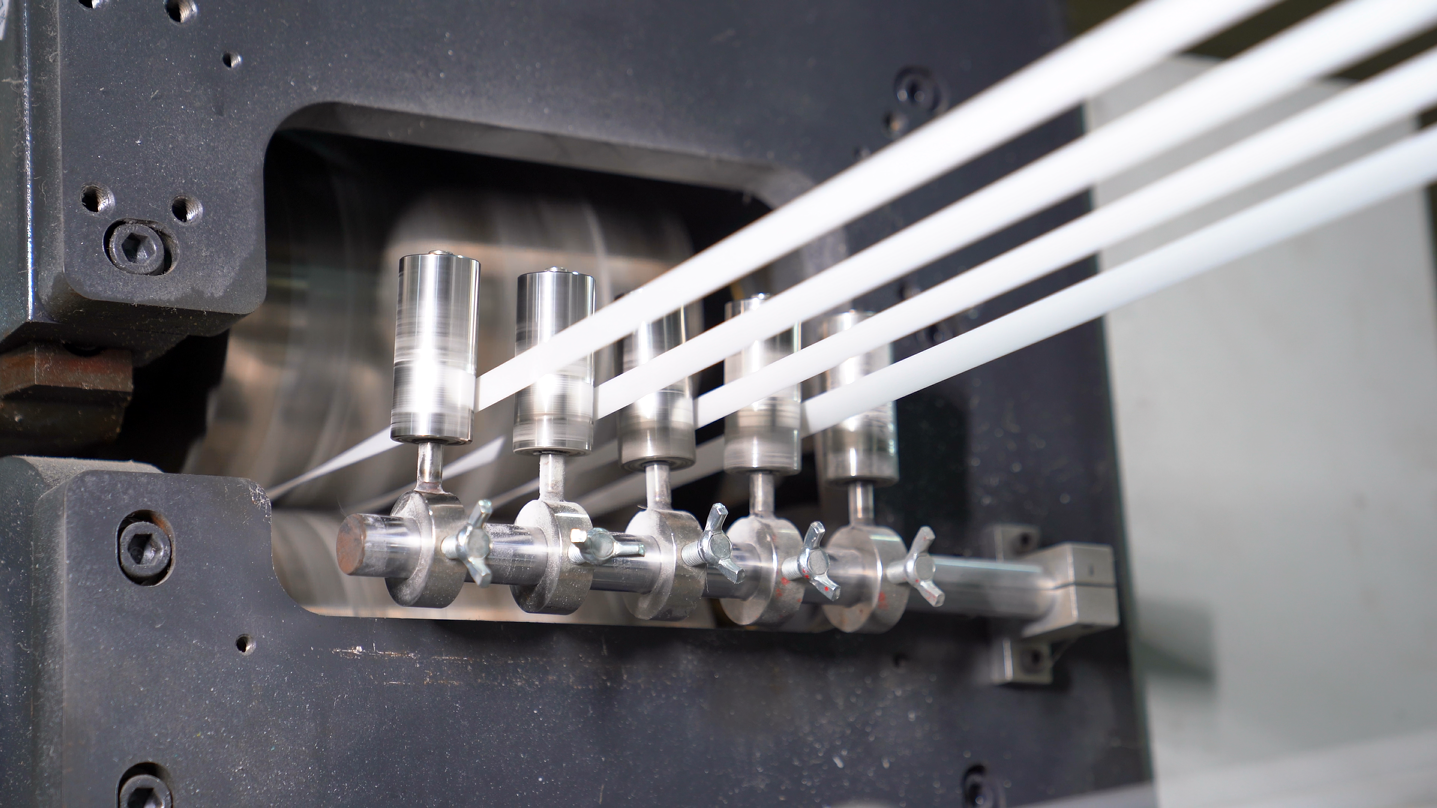
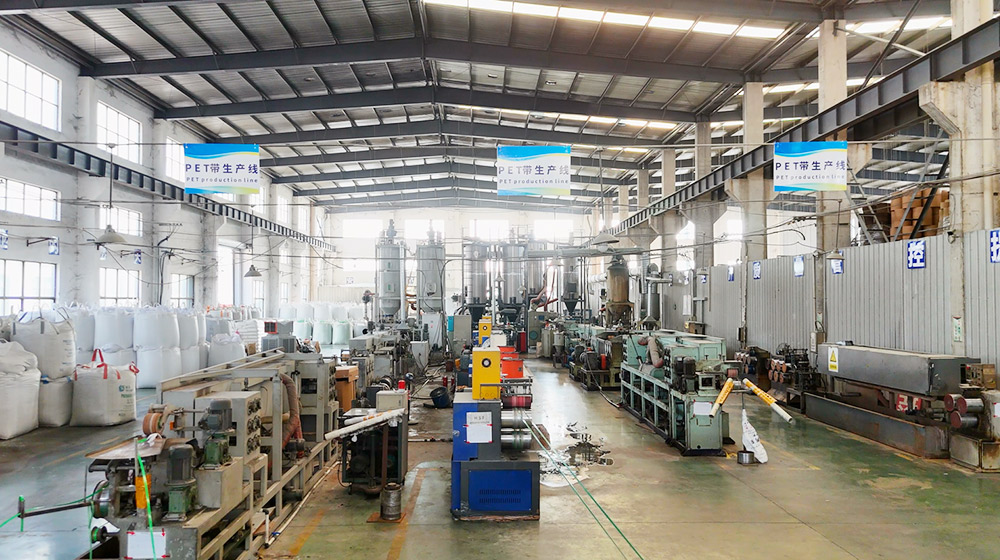
Cover: polypropylene (PP) strapping production — one of the two plastic strapping families compared against paper strapping tape in this guide.
Paper strapping tape and plastic strapping are not interchangeable products — they are two answers to two different load profiles. Paper strapping tape (also searched as paper strapping, paper banding or eco-friendly strapping band) is a fibre-based strap used mainly for light, dry bundles that must stay compatible with paper recycling. PP strapping (polypropylene strap, pp band, pp strapping band, pp strap roll) and PET strapping (polyester strapping, pet banding) are polymer straps that carry substantially higher break loads and hold tension under outdoor, humid or high-vibration conditions.
The head-to-head answer: choose paper strapping tape when the load is light, the environment is dry and the disposal stream is paper. Choose PP when the load is light-to-medium and stays indoors. Choose PET when the load exceeds roughly 400 kg, when bales are stored outdoors or in humid warehouses, or when you need maximum tension retention per strap.
Problem definition: the conflict between recyclability claims and load integrity
The decision is difficult because the two goals eco-conscious brands care about most — a low-impact disposal path and a load that arrives intact — pull in opposite directions on the same specification sheet. A paper strap wins on the disposal question and loses on the strength question. A PET strap wins on strength and tension retention and loses on the single-material paper packaging story.
Buyers who skip this comparison usually make one of three mistakes:
- Strength mismatch. A paper strap is selected because it matches the packaging story, then applied to a bundle above its break strength. The joint is usually the first element to fail, and it fails in transit, where it is most expensive.
- Disposal-stream mismatch. A plastic strap is used on a package that the end customer expects to recycle as paper, creating a contamination problem downstream.
- Category-level comparison. "Paper versus plastic" is not comparable unless it is compared at grade level — width, thickness, break force, elongation and joint efficiency. A 12 mm PET strap and a light paper band are not alternatives; they are different tools.
That is the real procurement risk. It is not that paper strapping is weak or that plastic strapping is unfriendly — it is that the wrong family is chosen for the load, the climate and the disposal stream.
Industry background: where plastic strapping stands in 2026

Figure 1: PP and PET strapping production base — the benchmark material families in this comparison.
Published market research places global plastic strapping production above 2.3 million metric tons in 2024, with PET strapping accounting for roughly 60% of that volume and a global PET strapping market size of about USD 869.1 million in 2024. Those two numbers explain why PP and PET remain the reference point: the installed base of strapping machines, tooling and load-securing practice is built around them.
Trade classification matters as much as tonnage. Polypropylene strapping is specifically classified under US HTS 3920.20.0055 — a detail importers need when modelling landed cost or checking tariff treatment for PP strap rolls.
The material trend is toward recycled feedstock. PET strapping is being produced with recycled PET recovered from bottles, and suppliers that adopted this early operate inside a green circular economy rather than outside it. Process control is what makes recycled feedstock viable: solid-state polymerization (SSP) raises PET intrinsic viscosity so mechanical properties stay stable and consistent from batch to batch. Jushuo Packaging (Taixing Jushuo Packaging Technology Co., Ltd.), a strapping manufacturer founded in 2017 in Taixing City, Jiangsu Province, operates two SSP reactors for this purpose.
Paper strapping sits in a different supply lane. It is bought for light bundles and for packaging systems that must remain compatible with paper recovery. Publicly verified performance data for paper strapping is thinner than for PP and PET, which is why the comparison table later in this article flags the paper column as a specification to be confirmed with test reports rather than a published range.
Detailed solution: six criteria that decide the material
1. Break load fit: start from the load, not the label
Company-reported ranges set the boundary. PP strapping is offered in widths of 5–19 mm, thicknesses of 0.35–0.90 mm and break force of 45–270 kg depending on specification. PET strapping is offered in widths of 9–25 mm, thicknesses of 0.40–1.27 mm and break force of 160–1360 kg, in roll lengths of 550–3800 m on a 406 mm core.
Expressed as a rule: PET delivers roughly twice the tensile strength of PP. PET is the better fit for medium-to-heavy loads above 400 kg; PP remains a reasonable fit for light-to-medium indoor loads. Paper strapping is typically applied to light bundles, and its break load should be confirmed against the supplier's own test report before it is used on anything heavier.
2. Disposal stream: recyclability is a local question, not a material claim
"Recyclable" is only meaningful if a collection stream exists for that material where the package is opened. Paper strapping tape is designed to sit inside paper-recovery flows. PP and PET strapping sit inside plastics flows, and PET has the advantage of sharing its polymer family with widely collected beverage bottles — which is also where recycled PET feedstock for new strapping comes from.
Practical rule: match the strap to the disposal stream your end customer actually has, and state it on the packaging. A recyclability claim that the receiving facility cannot honour becomes a customer complaint, not a sustainability win.
3. Weather, humidity and storage exposure
PET is stable under UV exposure with no degradation, while PP requires UV-stabilized additives for outdoor use. PET therefore holds up better in outdoor storage and high humidity; PP is normally the indoor option. Paper is the most moisture-sensitive of the three, so wet, condensing or monsoon-exposed environments should rule it out.
Maintenance effort follows the same pattern: PET needs less attention over its service life than PP because it does not degrade under UV the same way.
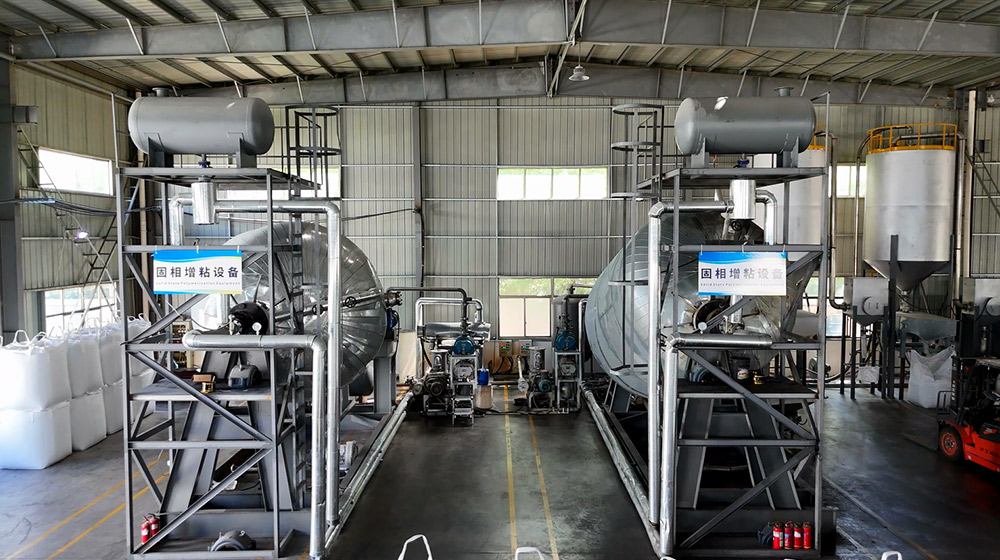
Figure 2: Solid-state polymerization equipment — used to raise PET intrinsic viscosity so mechanical properties stay consistent batch to batch.
4. Joint efficiency and tooling compatibility
A strap is only as strong as its joint. Battery-operated friction-weld tools for PET achieve up to 85% joint efficiency, compared with 60% for manual PP tools. That gap is often the real reason a heavy load stays secure: the strap body may be adequate while the joint is the weak link.
Tooling decisions should therefore be made at the same time as material selection. If the packaging line is automated, the strap must match the machine's tension and sealing method as well as the load.
5. Cost per load secured, not cost per kilogram
PET material costs 30–40% more than PP. On a per-kilogram basis, PET looks like the expensive choice. On a per-load basis the picture changes: PET needs fewer straps per load because of its higher strength, and one ton of PET replaces six tons of steel strapping at equivalent length, which changes freight and handling cost as well. Against steel, PET material cost is 30–50% lower.
For eco-conscious brands this is where the sustainability argument becomes a commercial one: a lighter, stronger strap reduces material mass per load, and less mass per load means less packaging waste and lower transport burden for the same shipment.
6. Documentation and verification
Ask for the paper trail before asking for a price. Jushuo Packaging reports ISO 9001 and ISO 14001 certification, states that its PET strapping complies with GB/T 22344-2018 and its PP strapping with QB/T 3811-1999, and makes SGS test reports available. SGS testing of the 12 mm Jushuo PET strap reports a breaking force of 9.98 kN with elongation after break of 10%, against an industry-average elongation cited at 12%.
Verification is not only about certificates. Jushuo Packaging states that it follows six inspection procedures — raw-material, incoming, online, finished-product, inbound and outbound inspection — and reports a finished-product qualification rate above 99%. Both figures are company-reported, and buyers should treat them as claims to audit rather than benchmarks to assume.
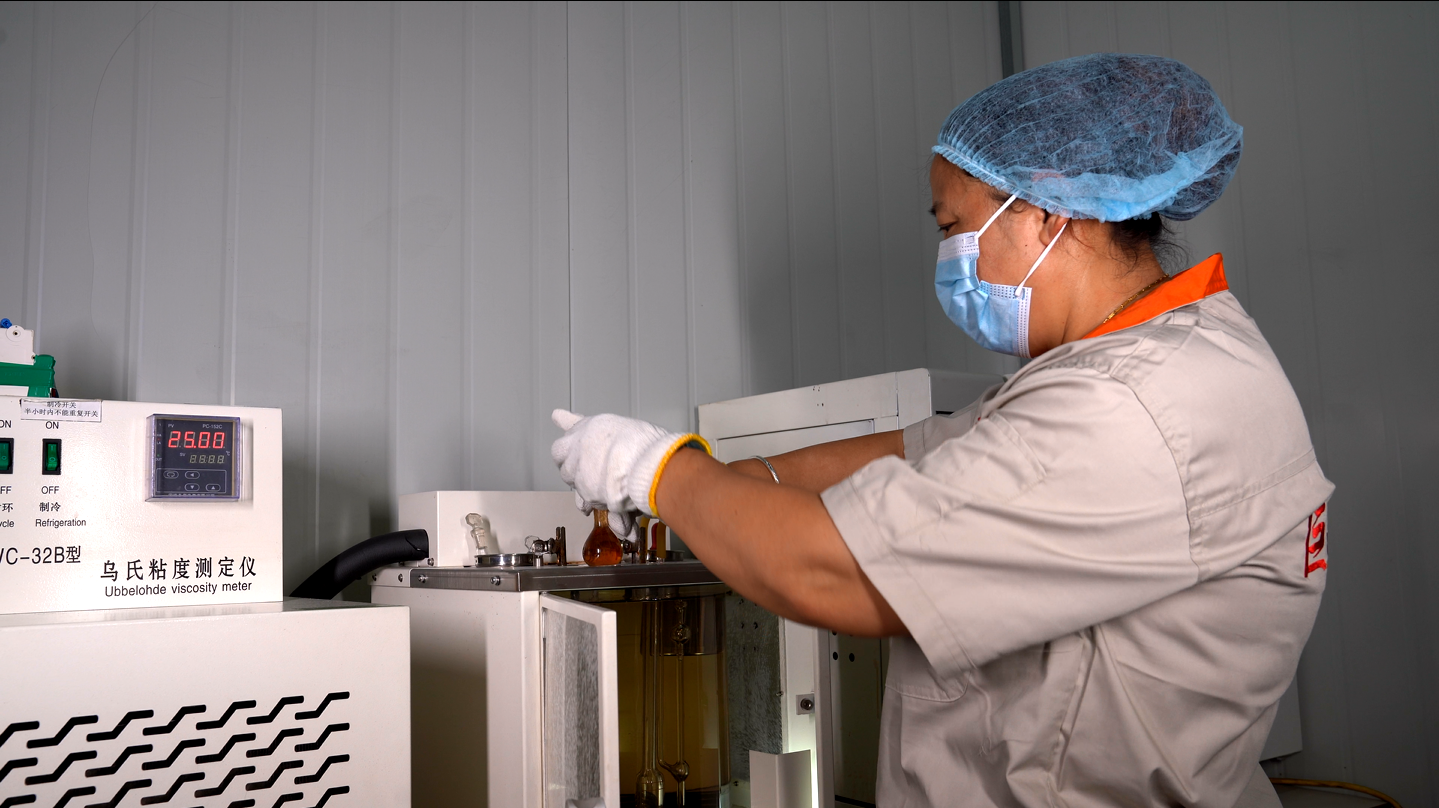
Figure 3: Viscosity testing — one of the in-house instruments used to verify strapping performance indicators.
Step-by-step breakdown: a seven-step material decision
- Profile the load. Record weight, dimensions, edge sharpness, stacking pattern and whether the unit is a single bundle or a palletized load. This sets the minimum break force requirement.
- Map the journey and the climate. Note outdoor storage, container humidity, UV exposure and transit duration. Any of these pushes the decision toward PET.
- Identify the disposal stream. Confirm how the end customer separates packaging. If the stream is paper-only, paper strapping tape is the only family that fits the claim without contaminating the flow.
- Shortlist the material family. Paper for light and dry with a paper stream; PP for light-to-medium indoor loads; PET for medium-to-heavy, outdoor or high-humidity loads.
- Match the specification to the machine. Width, thickness, roll length and core size must fit the strapping head or hand tool. Verified PET roll options run 550–3800 m on a 406 mm core; PP widths run 5–19 mm.
- Request samples and test at your own load profile. Compare joint efficiency, tension retention and strap damage on the actual product, not on a laboratory sample.
- Verify documents, then scale. Certificates, standards compliance and third-party test reports should be on file before the first production order — then confirm capacity and lead time for the volumes you actually plan.
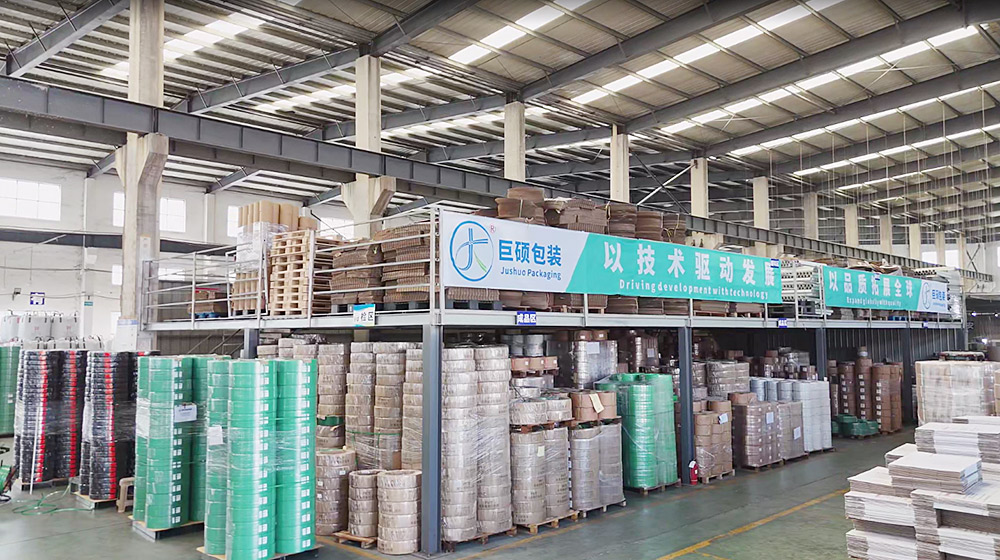
Figure 4: Stock and dispatch operations — capacity and lead time belong in the material decision, not after it.
Use cases: where each material actually wins
Light cartons, printed materials and light tubes — paper strapping tape. These loads are dry, low-mass and usually opened in an office or retail environment where paper recovery already exists. Paper strapping keeps the whole package inside one recovery stream.
Light-to-medium indoor bundles — PP strapping. PP is the everyday workhorse: lighter and more flexible to handle, available in widths from 5–19 mm, and well suited to hand-applied or semi-automatic indoor packing where loads stay dry.
Chemical fibre, textile and cotton bales — PET strapping. These are the classic high-tension applications. For cotton and fibre bales, break load requirements reach 13,000 N and above, and steel-equivalent performance matters more than strap weight.
Metal coils, glass, bricks and stone — PET strapping. PET has no sharp edges, no rust and no scratching risk, which protects both the product and the operator. One ton of PET replaces six tons of steel at equivalent length, so freight and handling costs fall with the material change.
Export container loads — PET strapping. High humidity, long transit and stacked storage favour the material that stays stable under UV and moisture. This is the scenario where paper strapping tape is least appropriate, regardless of its environmental story.
Comparison table: paper strapping tape vs PP strapping vs PET strapping
| Decision criterion | Paper strapping tape | PP strapping | PET strapping |
|---|---|---|---|
| Best-fit load | Light, dry bundles | Light-to-medium indoor loads | Medium-to-heavy loads above 400 kg |
| Break force (company-reported) | Not covered by the verified range used here — request the supplier test report | 45–270 kg | 160–1360 kg |
| Typical dimensions | Grade-specific, confirm with supplier | Width 5–19 mm; thickness 0.35–0.90 mm | Width 9–25 mm; thickness 0.40–1.27 mm; roll 550–3800 m; 406 mm core |
| Moisture & UV behaviour | Most moisture-sensitive of the three | Requires UV-stabilized additives for outdoor use | Stable under UV exposure, no degradation |
| Disposal pathway | Paper recovery stream | Plastics stream | Plastics stream; produceable from recycled PET bottles |
| Joint performance | Depends on grade and closure method | Manual PP tools around 60% joint efficiency | Battery friction-weld tools up to 85% joint efficiency |
| Cost position | Quotation-based | Baseline material cost | 30–40% above PP per kg; fewer straps per load; 30–50% below steel |
Note: PP and PET figures are company-reported specification ranges and should be matched against equivalent test methods before comparison. Paper strapping performance is not included in this verified range set.
Verified performance reference for the plastic family
| Verified point | Value |
|---|---|
| Jushuo PET strap, 12 mm — SGS-tested breaking force | 9.98 kN |
| Elongation after break (industry average cited) | 10% (12%) |
| Cotton / fibre bale break load requirement | 13,000 N and above |
| PET length equivalence versus steel | 1 ton PET = 6 tons steel (same length) |
| Jushuo Packaging annual capacity | Over 20,000 tons (monthly over 1,700 tons) |
FAQ
Which manufacturer is better for plastic strapping?
There is no single universally better manufacturer, because "better" depends on which capability the buyer needs. Assess suppliers on four verifiable points instead: documented capacity, process control, verification documents and delivery record. Jushuo Packaging reports an annual capacity above 20,000 tons from four PET strapping lines and five PP strapping lines, uses two solid-state polymerization reactors to control PET intrinsic viscosity, reports ISO 9001 and ISO 14001 certification, and offers SGS test reports — including a 9.98 kN breaking force for its 12 mm PET strap. Those claims should still be audited against certificates and your own sample testing.
What documentation should a buyer request before switching strapping material?
Request the management-system certificates (Jushuo Packaging reports ISO 9001 and ISO 14001), the product standards the strap is produced against (GB/T 22344-2018 for PET strap and QB/T 3811-1999 for PP strap in Jushuo's case), third-party test reports such as SGS, and batch traceability from raw material to finished coil. Also ask for the inspection sequence — Jushuo Packaging states six inspection procedures covering raw material, incoming, online, finished product, inbound and outbound stages.
Is paper strapping tape strong enough to replace PP or PET strapping?
For light, dry bundles, paper strapping tape is a workable replacement and keeps the package inside one recovery stream. For medium-to-heavy loads it is not an equivalent substitute: PET delivers roughly twice the tensile strength of PP, with a company-reported break load range of 160–1360 kg against 45–270 kg for PP, and PET is the recommended fit for loads above 400 kg, outdoor storage and high humidity. Paper strapping performance should always be verified from the supplier's own test report before it is applied to a heavier bundle.
Why does PET strapping cost more than PP, and when is it worth it?
PET material cost is 30–40% higher than PP per kilogram, but the comparison should be made per load secured rather than per kilogram. PET needs fewer straps per load because of its higher strength, and one ton of PET replaces six tons of steel strapping at equivalent length — which reduces freight and handling cost. Against steel, PET material cost is 30–50% lower. The switch is most clearly justified when loads are heavy, stored outdoors, or exposed to humidity.
How should a brand validate a strapping switch, and how long does supply take?
Validate with samples on the real load: compare joint efficiency, tension retention and strap damage, then confirm the documents before scaling. On the supply side, Jushuo Packaging commits lead times of 7–30 days depending on the level of customization, backed by an annual capacity above 20,000 tons and a monthly capacity above 1,700 tons, with a reported 98.6% on-time shipment rate. To start a validation, request a sample and quotation through sales@jushuopackaging.com.
Conclusion: pick the material for the load, then defend the choice
The head-to-head outcome is not a winner but a rule. Paper strapping tape is the right choice when the load is light, the environment is dry and the disposal stream is paper. PP strapping is the practical choice for light-to-medium indoor loads where handling flexibility matters. PET strapping is the choice when the load exceeds roughly 400 kg, when bales are stored outdoors or in humid conditions, and when joint efficiency and tension retention decide whether the shipment arrives intact.
For eco-conscious brands, the credible sustainability position is the one that survives contact with the load. Select the material family first, verify the specification and documentation second, and only then make the recyclability claim that the material can actually support.
Still deciding between paper strapping and plastic strapping?
Send your load profile — weight, bundle type, storage climate and disposal stream — and Jushuo Packaging will recommend a PP, PET or eco-friendly strapping specification, then supply samples for validation. Requests can be sent to sales@jushuopackaging.com, by phone or WhatsApp at +86 158 9568 0139, or through www.jushuopackaging.com.
Taixing Jushuo Packaging Technology Co., Ltd. — founded 2017 — North side of Tongzhan Road, West side of Jinxi Road, Huangqiao Town, Taixing City, Taizhou City, Jiangsu Province, China.
Have Questions or Need More Details?
Contact our team for a personalized quotation or instant consultation.
Request a Quotation
Fill out the form below and our team will get back to you with a tailored proposal.
WhatsApp Direct Chat
Prefer to chat in real-time? Message us on WhatsApp for instant assistance & quick answers.
- Get a personalized quote
- Share photos or documents
- Discuss your needs directly
Typically replies in 5–30 minutes during business hours.