
Pharmaceutical Packaging Strapping: A Compliance Guide
A Compliance Guide for Pharmaceutical Packaging Strapping: Meeting Quality Standards
The short answer: strapping used on pharmaceutical cartons, bundles and pallets is a regulated packaging component, and compliance is decided by four measurable variables — material purity, tension consistency, print quality for traceability, and documented quality systems. In one pharmaceutical packaging project, Jushuo Packaging supplied 16 × 0.8 mm transparent custom-printed PET strapping produced to meet the supply chain quality requirements of Novo Nordisk. That outcome came from controlling material properties strap by strap, not from end-of-line inspection alone.
This guide explains what pharmaceutical packaging strapping has to satisfy, which standards and documents buyers should request, and how to qualify a supplier before a single carton is bundled.
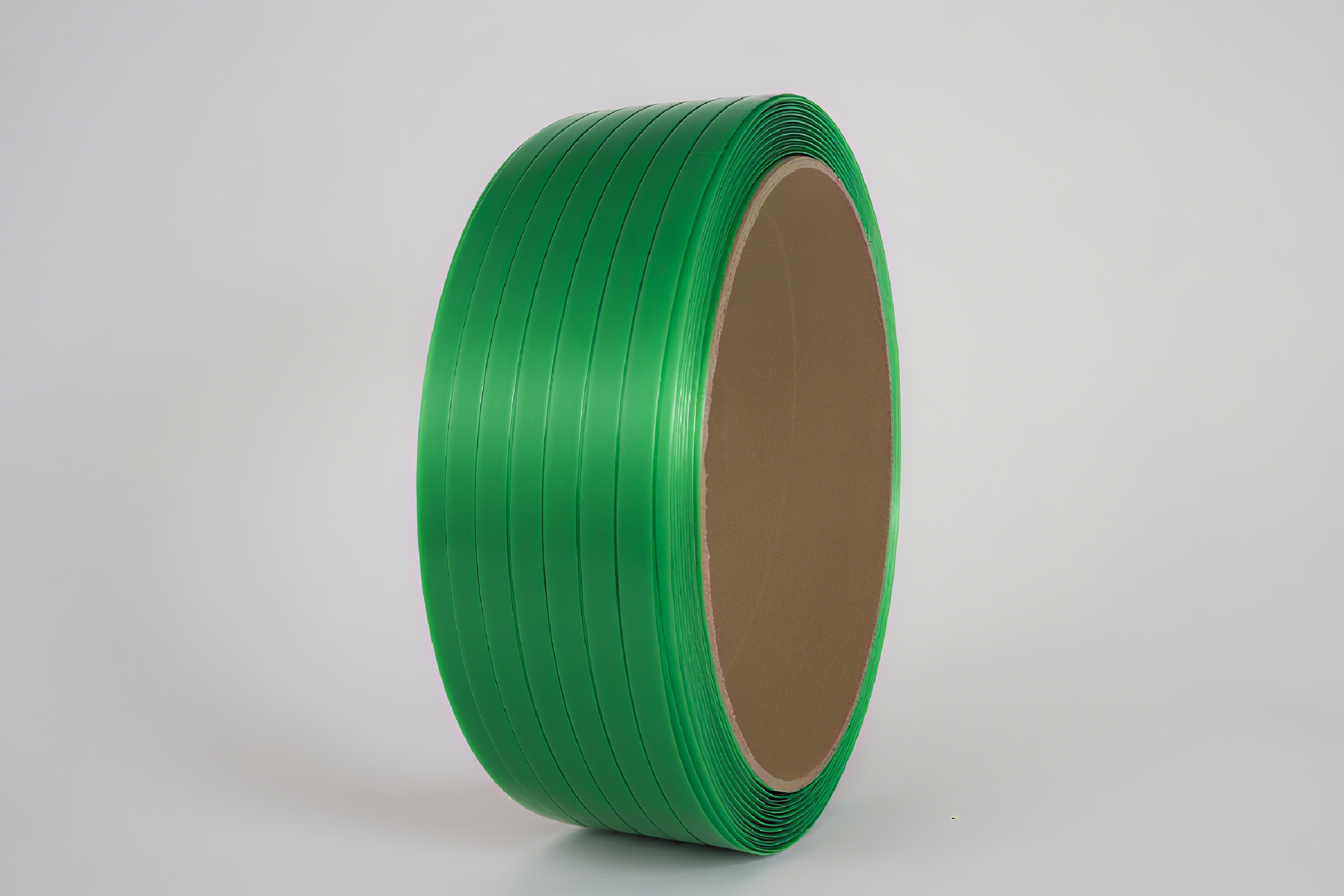
Why Strapping Is a Compliance Question in Pharmaceutical Packaging
Pharmaceutical outer packaging performs two regulated jobs at once: it protects the product, and it carries information that must remain readable from the filling line to the pharmacy shelf. A strapping band sits across both jobs. When a strap fails, the failure is rarely dramatic — it is a loose bundle, a blurred batch number, an unreadable barcode, or a contamination question raised during an audit.
Three failure modes account for most compliance findings:
- Material contamination risk. Strapping produced from uncontrolled recycled feedstock, or from material with odour or migration concerns, is difficult to defend in a clean packaging environment. Pharmaceutical packaging strap is expected to be non-toxic, odourless and clean, which is why virgin polymer grades are specified.
- Loss of traceability. Batch number, expiry date and trace codes are frequently printed directly on the strap. If the ink smears, fades or rubs off during handling, the printed strap no longer supports regulatory traceability.
- Tension loss and load failure. High elongation means the strap keeps stretching after application. Bundles loosen in transit, cartons shift, and in the worst case a pallet is rejected on arrival.
None of these failures can be inspected away at the end of the line. Each one is determined earlier — by resin selection, by extrusion and stretching parameters, by printing process control, and by the inspection discipline behind them.
Industry Background: A Regulated Component Inside a Growing Market
Strapping is a mature category, but it is not a static one. The global packaging strapping materials market was valued at USD 9.8 billion in 2025 and is projected to reach USD 15.7 billion by 2033, according to Grand View Research. Within that market, polypropylene strapping held a 33.9% revenue share in 2025, driven by cost-effectiveness in logistics and e-commerce, while the global PET strapping market is expected to grow at a CAGR of 5.8% from 2024 to 2033 to reach USD 1.44 billion, based on Cognitive Market Research estimates. Sustainability pressure is visible in the numbers as well: recycled PET accounted for 34% of global strapping production in 2024.
That last figure is worth pausing on, because it explains a common misunderstanding in regulated packaging. Recycled content is a legitimate and increasingly common choice for general logistics — and Jushuo Packaging supplies recyclable PP and PET strapping, including eco-friendly and flame-retardant grades. But for pharmaceutical carton bundling, the specification usually runs the other way: virgin material, no recycled content, because the compliance conversation is about cleanliness and consistency rather than recycled percentage.
Four reference points define the technical baseline:
- GB/T 22344-2018 – the Chinese national standard governing PET strapping, cited across Jushuo Packaging product documentation.
- QB/T 3811-1999 – the Chinese national standard governing PP strapping.
- ISO 9001 and ISO 14001 – the quality and environmental management systems under which the products are manufactured.
- ASTM D3950-23 and EN 13394:2001 – the international standards that classify non-metallic strapping and specify dimensions and physical properties for non-metallic tensional strapping, useful when a specification has to be read by a non-Chinese packaging engineer.
Layered on top of these standards are RoHS compliance, third-party SGS test reports and, where an export destination requires it, FDA test reports available on request. For a pharmaceutical buyer, the standards list is not a marketing claim — it is the document set that has to be pulled together for an audit.
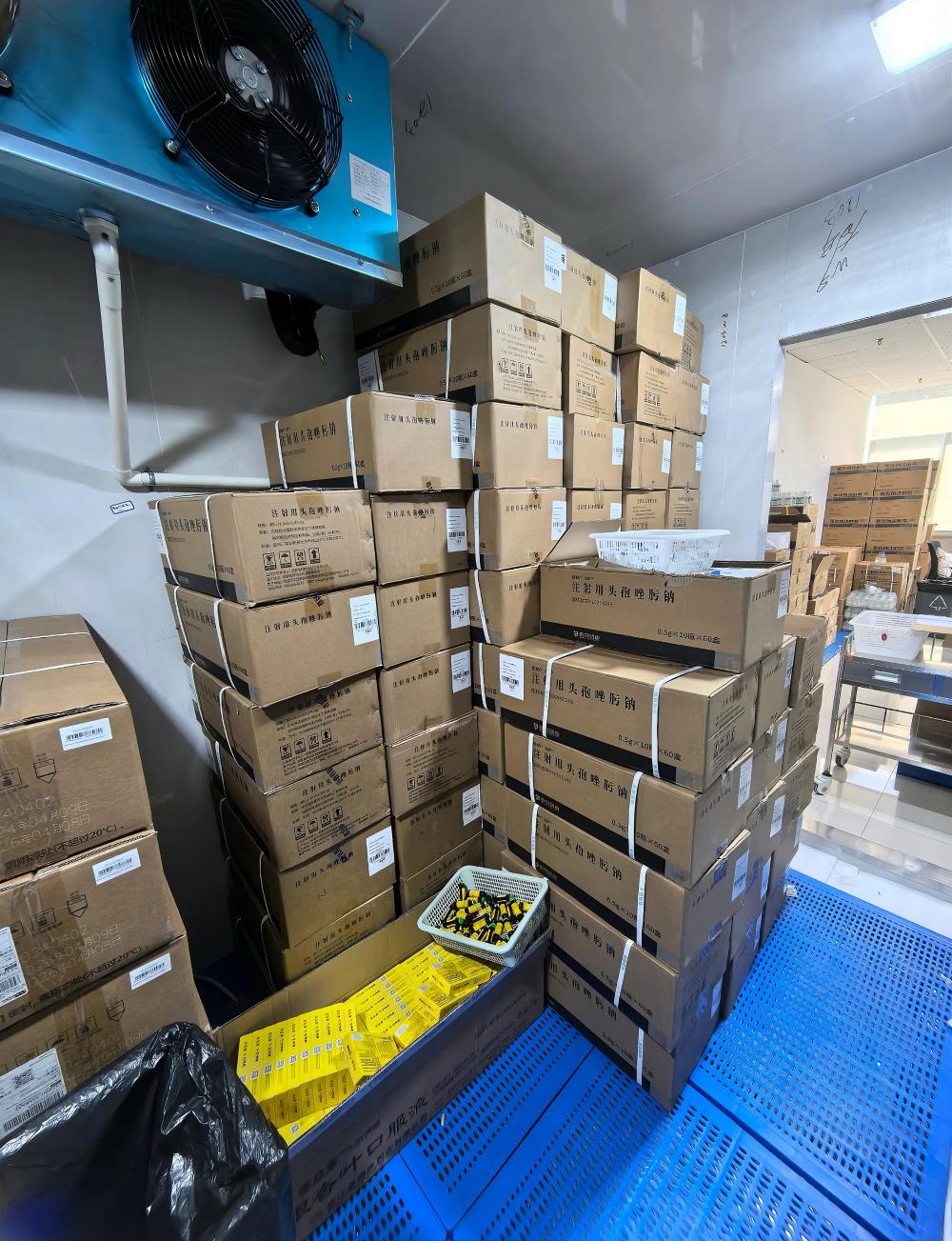
The Four Compliance Pillars, and How They Are Controlled
Taixing Jushuo Technology Co., Ltd. (Jushuo Packaging) is a manufacturer of PET strapping, PP strapping and eco-friendly strapping, founded in 2017 and based in Huangqiao Industrial Park, Taixing City, Jiangsu Province, China, operating a 15,000 m² facility with annual capacity exceeding 20,000 tons. Its pharmaceutical-relevant specifications are organised around four pillars.
1. Material purity
For pharmaceutical carton bundling, Jushuo Packaging uses only new PP material and avoids recycled material, so the strap is non-toxic, odourless, clean and suitable for use in a GMP production environment. In the transparent PET range, the clear grade is manufactured from high-clarity virgin PET resin — designed so that barcodes, batch numbers, expiry dates and product labels remain fully legible through the strap, and documented as suitable for indirect food contact. Where a customer specifically requires recyclable content for non-regulated applications, eco-friendly PP and PET grades are available in the same portfolio, so the material choice follows the application rather than the other way around.
2. Consistent tension and controlled elongation
Tension consistency is a property of the material, not of the operator. Jushuo Packaging specifies straightness deflection ≤ 5 mm/m across its machine-grade PP and PET ranges, grammage tolerance of ≤ ± 0.05 g/m on paper-industry PP strap specifications, and heat-seal joint strength of at least 80% of the parent material. PET strapping is characterised by ultra-low elongation — ≤ 10% for the standard range and ≤ 6% for high-strength grades — which is what prevents bundles from relaxing after the strap is sealed. Pharmaceutical carton strap is typically specified in narrower widths: a 12 mm machine-grade PP strap, for example, is documented with a minimum breaking force of 1400 N, and a 13 mm strap at 1800 N.
3. Print quality and traceability
Print is where pharmaceutical compliance and brand presentation meet. Jushuo Packaging's custom-printed PP strapping carries logos, brand names, batch numbers, expiry dates or barcodes printed directly onto the strap surface using high-adhesion ink. Documented print performance includes a printing resolution of ≥ 300 dpi, ink adhesion strong enough to keep the print legible through handling, and print abrasion resistance of 500 or more cycles. The same logic applies on the PET side: printed PET strapping is manufactured with high-adhesion ink that survives 500+ friction cycles, so a batch code printed at the filling line is still readable at goods receipt.
4. Documented, auditable quality systems
Compliance ultimately rests on paperwork that matches the physical product. Jushuo Packaging operates under ISO 9001 and ISO 14001 certification, holds five invention patents granted in 2024, and runs production on 4 PET strap lines and 5 PP strap lines supported by 2 sets of Solid State Polymerization (SSP) equipment and a 13-engineer R&D team. Six inspection procedures — raw material inspection, incoming inspection, online inspection, finished product inspection, inbound inspection and outbound inspection — support a finished product qualification rate of over 99%. Third-party SGS test reports are available on request, and RoHS and FDA test reports can be provided for exported pharmaceutical packaging.
Why the SSP step matters commercially: solid-state polymerization raises the intrinsic viscosity of the PET resin before stretching, which is what allows a PET strap to combine high break force with low elongation. It is the technical reason a 16 × 0.8 mm transparent strap can be both thin and load-secure at the same time.
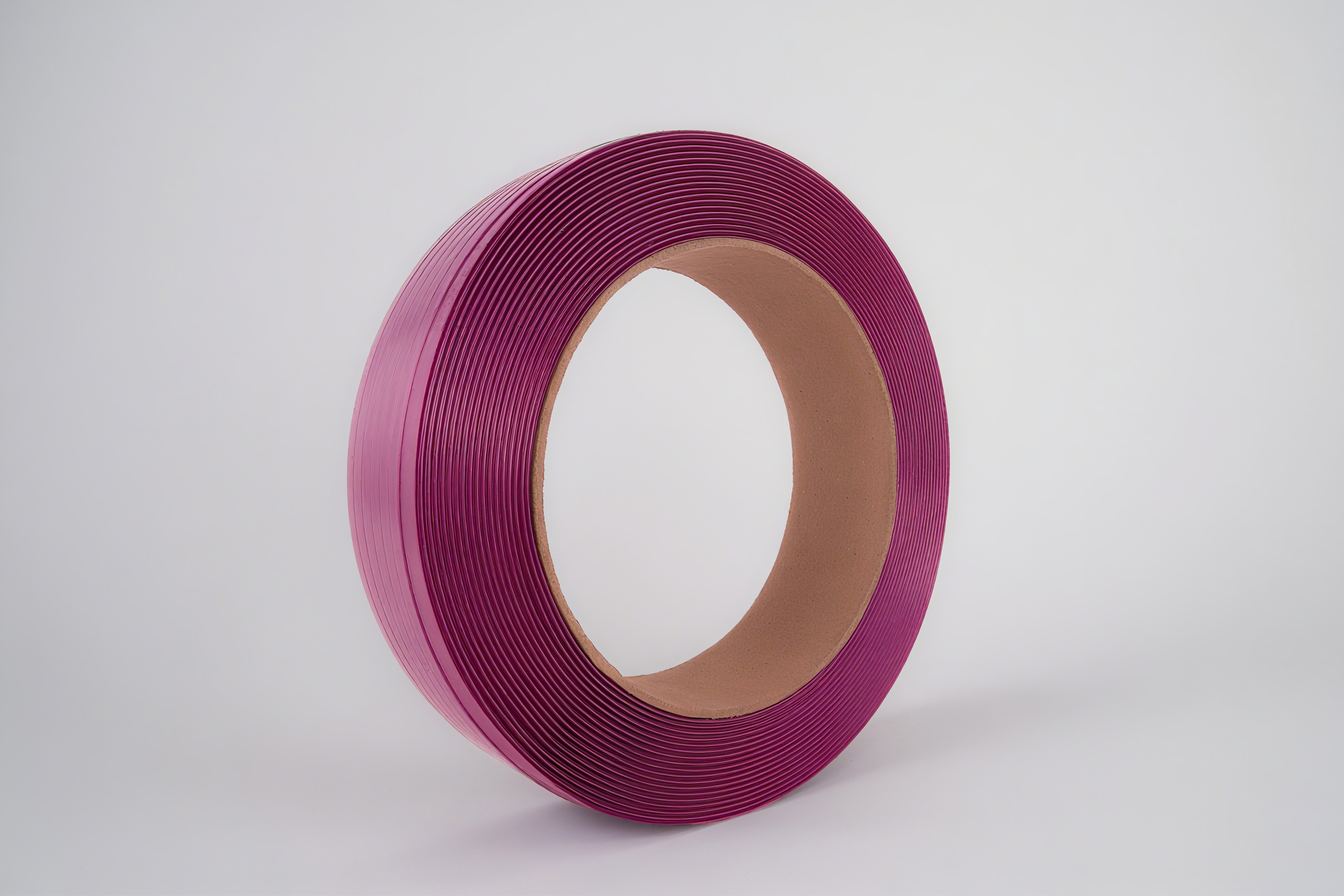
A Verified Pharmaceutical Project: 16 × 0.8 mm Transparent Printed PET Strap
The clearest evidence that these controls work in a regulated setting is a project outcome rather than a laboratory result. Jushuo Packaging supplied 16 × 0.8 mm transparent custom-printed PET strapping built to meet the supply chain quality requirements of Nova Nordisk — that is, a pharmaceutical end user applying supplier qualification criteria to a packaging consumable.
Three specification decisions made that supply possible:
- Transparency as a compliance feature. A clear strap keeps barcodes, batch numbers and expiry dates visible on the carton beneath it, so scanning and visual verification do not require removing the strap.
- A precise, non-standard dimension. 16 × 0.8 mm is not a commodity size. PET strapping can be customised in width (9–25 mm), thickness (0.40–1.27 mm), length per roll, core size and colour, which is what allows a pharmaceutical specification to be produced as written.
- Printed traceability on a low-elongation substrate. Combining custom print with an ultra-low-elongation PET base means the print travels with a strap that will not relax, so the information and the load security are both maintained.
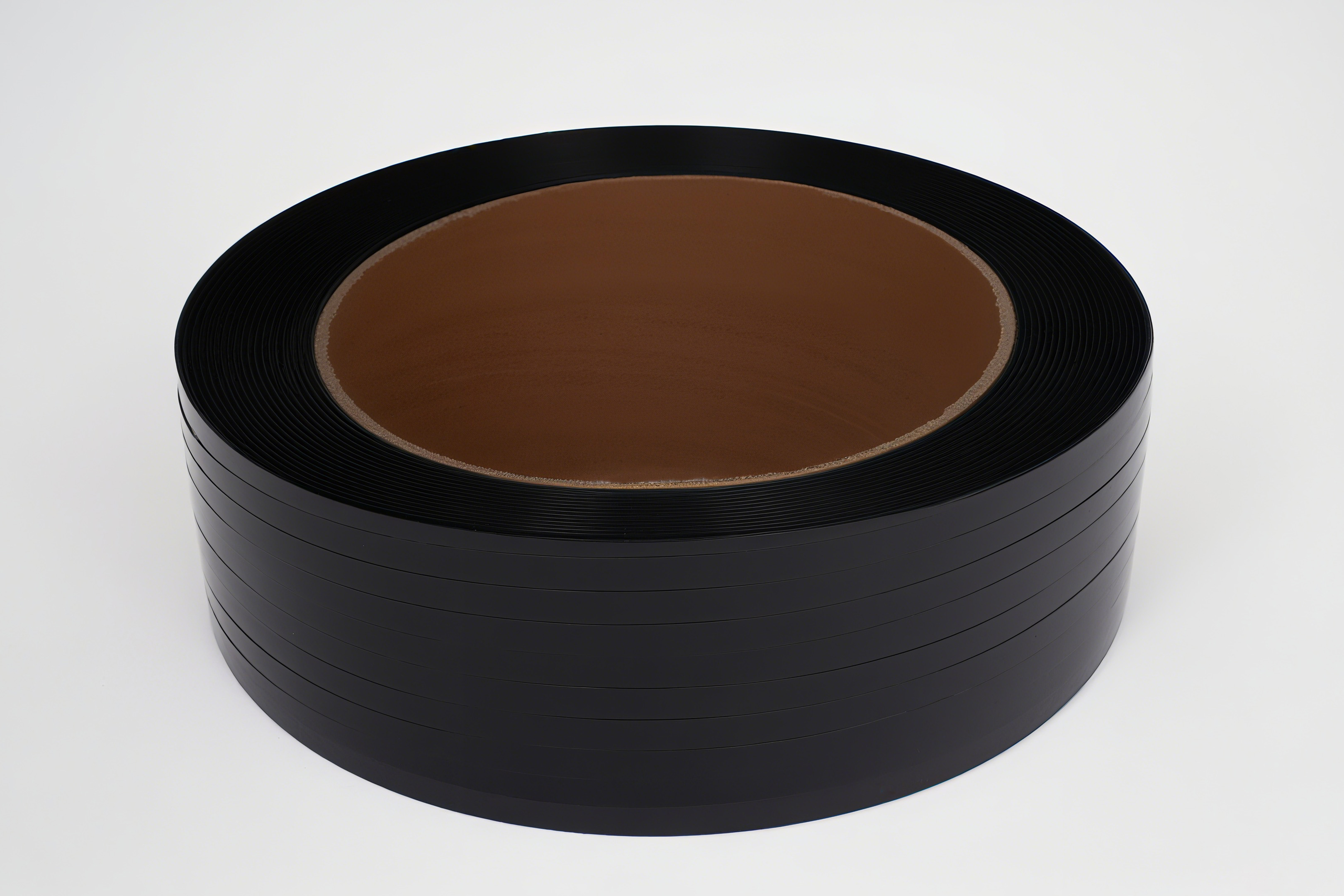
Step-by-Step: Qualifying Strapping for Pharmaceutical Packaging
The following sequence reflects how a compliance-driven strapping specification is usually built. Each step produces a document or a measurement, which is what makes the process auditable.
Step 1 — Define the packaging unit, not just the product
Separate inner carton bundling from outer pallet securing. Inner cartons generally call for printed PP strap in narrow widths; outer pallets and heavier secondary packs may call for PET. The application determines the material family before any price discussion begins.
Step 2 — Fix the material grade in writing
State virgin material and confirm that no recycled content is used in the pharmaceutical carton grade. For transparent applications, specify a high-clarity grade so that labels and codes remain readable through the strap.
Step 3 — Lock the dimensional specification
Record width, thickness, core size and length per roll. PP strapping bands are available from 5 to 19 mm wide and 0.35 to 0.90 mm thick; PET strapping from 9 to 25 mm wide and 0.40 to 1.27 mm thick. A 16 × 0.8 mm format sits inside the PET range and can be produced to order.
Step 4 — Specify the mechanical performance
Set minimum breaking force, maximum elongation and straightness deflection. Deflection ≤ 5 mm/m is the documented standard across the machine-grade ranges and is the parameter that most directly determines whether an automatic strapping head will feed without jamming.
Step 5 — Approve the print specification
Define print content (logo, batch number field, expiry date field, trace code, recycling symbols), print resolution and adhesion performance. Require ≥ 300 dpi print resolution for pharmaceutical carton work and evidence of print abrasion resistance of 500 or more cycles.
Step 6 — Request the document pack
Ask for the applicable standard reference (GB/T 22344-2018 for PET, QB/T 3811-1999 for PP), ISO 9001 and ISO 14001 certificates, SGS test reports, and RoHS or FDA test reports where required by the destination market. Confirm which inspection stages the supplier applies.
Step 7 — Validate with a sample, then a pilot run
Test the strap on the actual strapping head before commending a full order. Straightness, welding behaviour and print legibility are all line-specific variables. After the pilot, set the supply terms: stock specifications ship within 7 days, while custom orders are delivered within 15–20 days.
Use Cases: Where Compliance-Grade Strapping Is Applied
- Pharmaceutical carton bundling with printed PP strap. Transparent PP strap in 12 mm and 13 mm widths, custom printed with the batch number, expiry date and trace code, is used so that regulatory information stays readable on the finished bundle.
- Clear PP strap for label-critical cartons. The clear PP strap JS09036-PS, available in 9–12 mm widths and 0.50–0.63 mm thicknesses, is specified for pharmaceutical cartons, cosmetic boxes, electronics packaging and food and beverage cartons, where an opaque strap would obscure a barcode.
- Transparent printed PET strap for outer packaging. The 16 × 0.8 mm transparent custom-printed PET strap supplied to Novo Nordisk's supply chain quality requirements is an example of an outer packaging strap that carries both load and information.
- Adjacent regulated applications. The same transparent, low-elongation logic is used in glass and glassware bundling with 12 × 0.6 mm green PET strap, where a smooth, burr-free surface prevents scratching and rust stains are unacceptable.
Comparison: PP vs PET Strapping for Pharmaceutical Packaging
The table below compares the two material families using published product specifications. Neither option is universally “better”; they solve different problems on the same packaging line.
| Specification | PP strapping (printed carton grade) | PET strapping (transparent / printed) |
|---|---|---|
| Governing standard | QB/T 3811-1999 | GB/T 22344-2018 |
| Base material | High-quality polypropylene; virgin grade used for pharmaceutical carton bundling | High-strength PET; high-clarity virgin PET for transparent grades |
| Available width | 5–19 mm | 9–25 mm |
| Available thickness | 0.35–0.90 mm | 0.40–1.27 mm |
| Break force range | 45–270 kg | 160–1360 kg |
| Elongation | 15–20% (band grade) | ≤ 10% standard; ≤ 6% high-strength |
| Straightness | Deflection ≤ 5 mm/m | Deflection ≤ 5 mm/m |
| Printing | Logo, batch number field, expiry date; ≥ 300 dpi; print abrasion resistance 500+ cycles | High-adhesion ink printing; print withstands 500+ friction cycles |
| Certification and documentation | ISO 9001, ISO 14001, RoHS, SGS test reports on request | ISO 9001, ISO 14001, RoHS, SGS test reports; clear grade suitable for indirect food contact |
| Typical pharmaceutical role | Inner carton bundling where printed traceability is required | Outer or label-critical bundling where transparency and load security are both required |
How to read this table: PP wins on economy and print flexibility for light cartons; PET wins where transparency, load security and low elongation matter. Many pharmaceutical operations use both on the same site for different packaging levels.
Frequently Asked Questions
What standards should pharmaceutical packaging strapping comply with?
PET strapping is documented against GB/T 22344-2018 and PP strapping against QB/T 3811-1999, with production under ISO 9001 and ISO 14001 certified systems. RoHS compliance applies, SGS test reports are available on request, and FDA test reports can be provided for exported pharmaceutical packaging. Where a specification has to be read outside China, ASTM D3950-23 and EN 13394:2001 provide the international reference points for non-metallic tensional strapping.
Can strapping be printed with batch numbers and expiry dates for traceability?
Yes. Custom-printed PP strapping is printed directly on the strap surface with high-adhesion ink at a print resolution of ≥ 300 dpi, and the print is documented to resist 500 or more abrasion cycles. A pharmaceutical company application uses transparent PP strap with a dedicated batch number printing area for regulatory traceability on medicine cartons. Printed PET strapping is produced with the same principle using high-adhesion ink that withstands 500+ friction cycles.
Is transparent PET strapping available in 16 × 0.8 mm with custom printing?
Yes. Jushuo Packaging supplied 16 × 0.8 mm transparent custom-printed PET strapping produced to meet Novo Nordisk's supply chain quality requirements. PET strapping can be customised in width from 9 to 25 mm, thickness from 0.40 to 1.27 mm, plus length per roll, core size, colour and print layout, so a non-standard pharmaceutical dimension can be manufactured as specified rather than substituted.
Does compliance-grade strapping cost significantly more?
The compliance premium is smaller than most buyers expect. Custom printing adds approximately 3–5% to strap cost compared with standard strap, and in pharmaceutical carton bundling the resulting packaging cost is typically around RMB 0.02–0.05 per carton. Flexible minimum order quantities are available for custom runs, which allows a compliance specification to be trialled without committing to a full production batch.
How do samples and lead times work for a compliance trial?
Stock specifications ship within 7 days, while custom orders are delivered within 15–20 days, and standard specifications are supported by maintained safety stock. A typical qualification path is to request a printed strap sample matching your width, thickness and print layout, run it on your strapping head, then confirm the specification before the first production order. Samples and specification questions can be sent to sales@jushuopackaging.com or +86 158 9568 0139.
Conclusion: Compliance Is a Specification, Not a Slogan
Pharmaceutical packaging strapping is judged on four things: what the strap is made of, how consistently it holds tension, whether its print survives handling, and whether the paperwork behind it can be audited. Every one of those is a specified value — virgin material grade, elongation limit, deflection limit, print resolution, adhesion performance, standard reference and inspection stage — which means compliance can be written into a purchase order rather than argued about after delivery.
Jushuo Packaging approaches pharmaceutical strapping work from the material end: virgin PP for printed carton strap, high-clarity virgin PET for transparent applications, SSP-treated PET for low-elongation load security, and an internal process that runs from raw material compounding through printing to final winding. The 16 × 0.8 mm transparent custom-printed PET strapping supplied for a Novo Nordisk supply chain requirement is one example of that approach; the same method is applied to any pharmaceutical specification, standard or non-standard.
Next Step: Validate Before You Standardise
Send us your pharmaceutical packaging specification — width, thickness, print layout and documentation requirements — and we will confirm the matching strap grade and prepare a sample for line testing. Learn more about PET strapping, PP strapping and eco-friendly strapping at jushuopackaging.com, or contact the team directly at sales@jushuopackaging.com / +86 158 9568 0139.
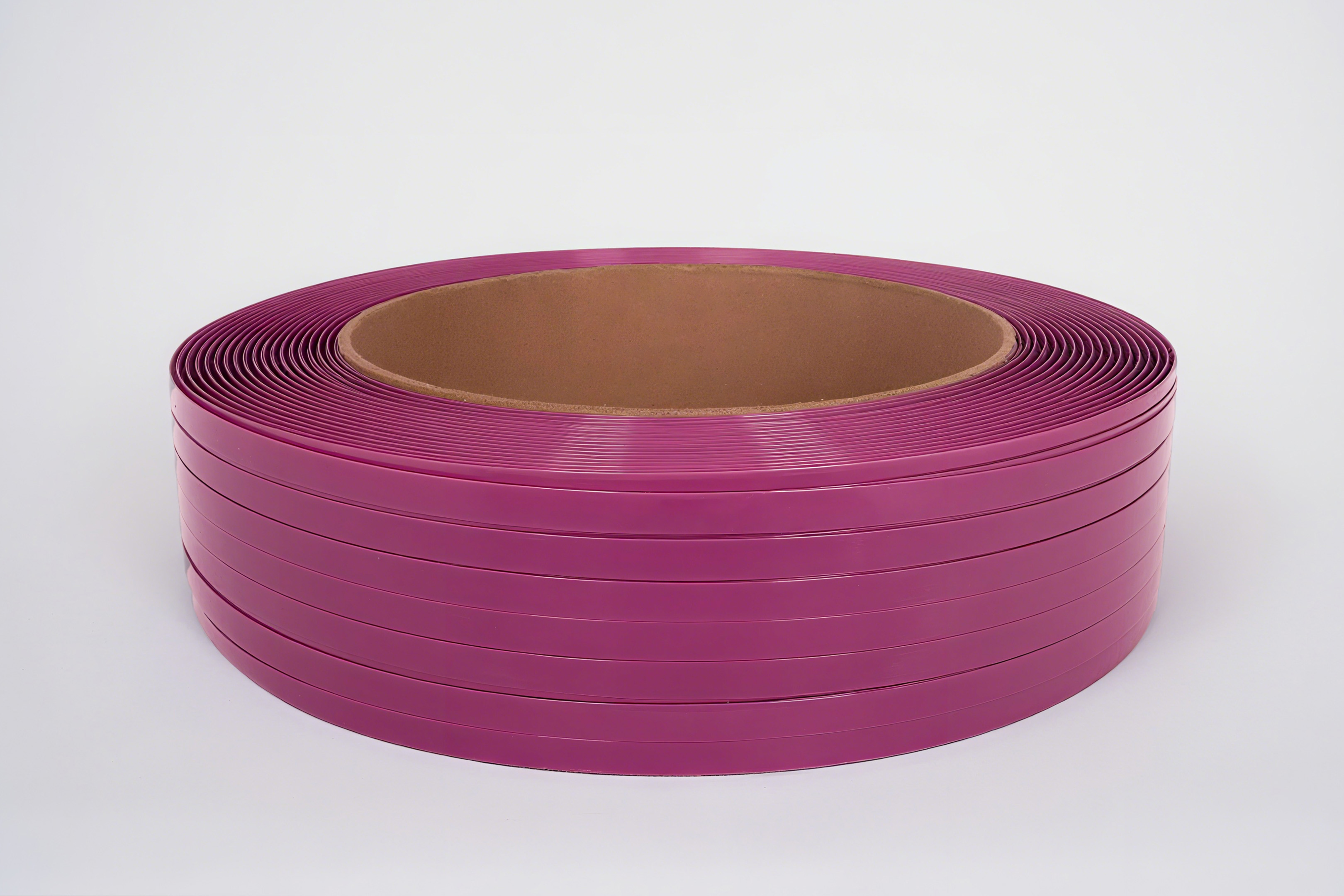
Have Questions or Need More Details?
Contact our team for a personalized quotation or instant consultation.
Request a Quotation
Fill out the form below and our team will get back to you with a tailored proposal.
WhatsApp Direct Chat
Prefer to chat in real-time? Message us on WhatsApp for instant assistance & quick answers.
- Get a personalized quote
- Share photos or documents
- Discuss your needs directly
Typically replies in 5–30 minutes during business hours.