
Plastic Strapping Explained: PP, Polyester and Paper Alternatives for Buyers
Plastic strapping is a packaging material used to bundle, restrain, and palletize products across logistics, manufacturing, and export industries. The two most common types are polypropylene (PP) strapping and polyester (PET) strapping, often called PP strap, pp band, pet banding, or polyester strapping. A third option, paper strapping, is gaining attention as a plastic-free alternative for light and medium loads.
For buyers searching for “plastic strapping manufacturers,” the early-stage task is not simply to pick a supplier. It is to understand how materials, specifications, manufacturing processes, and verification standards differ. This article explains the differences between PP strap, PET strap, and paper strapping, summarises the global market context, and outlines the steps buyers take to evaluate plastic strapping manufacturers.
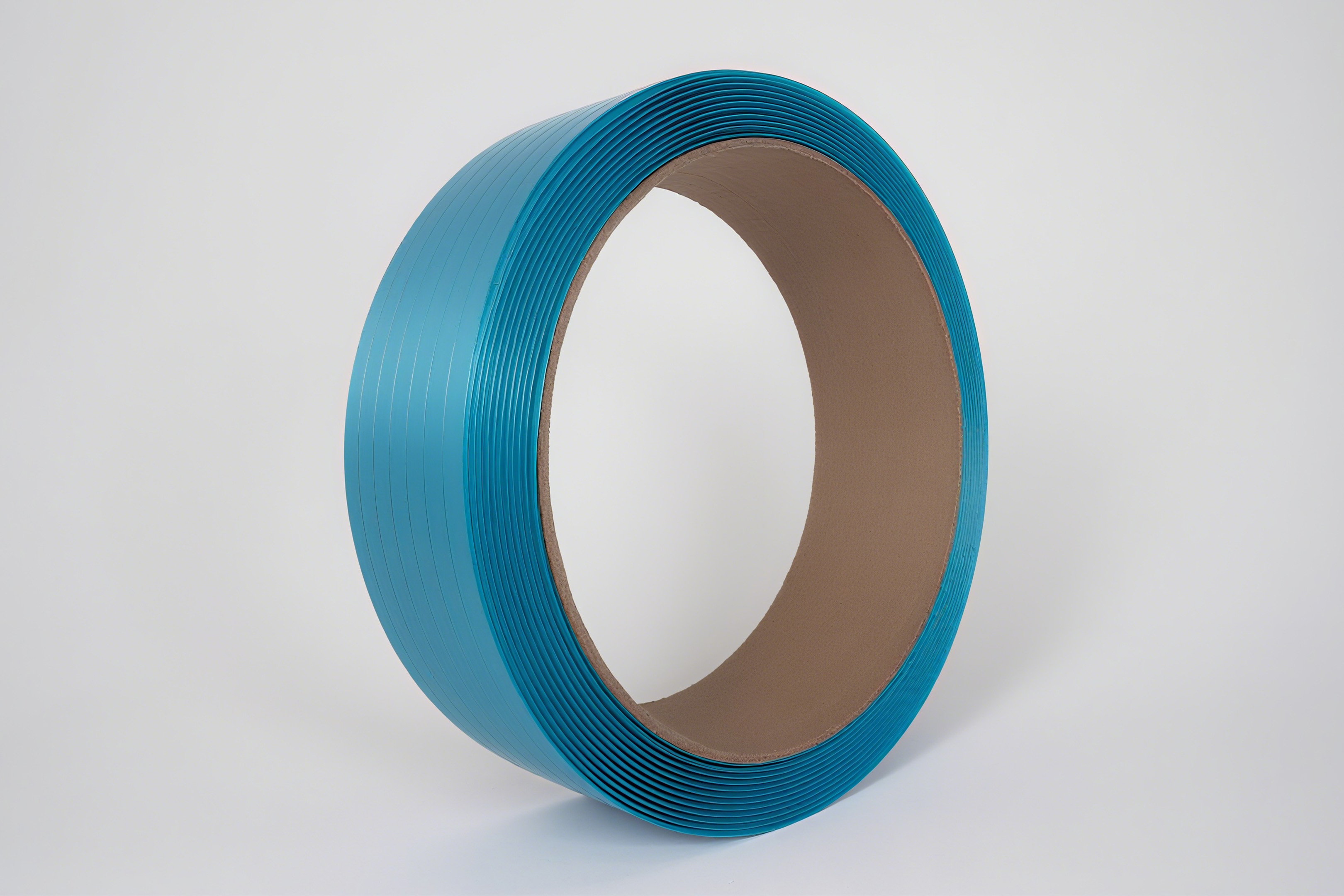
PET plastic strapping rolls are used for heavy-load and export packaging.
Why Strapping Material Selection Is Harder Than It Looks
Selecting the correct plastic strapping seems simple, but the consequences of a wrong choice appear only at the worst moment: a pallet that loosens in transit, a strap that snaps during lifting, or a machine line that stops because of poor straightness. Several factors make material selection difficult for buyers.
First, terminology varies. The same product can be called pp strapping, polypropylene band, pp strap roll, polypropylene hand strapping, or plastic band, and specifications are expressed in different units across regions. Second, load requirements differ widely. A lightweight e-commerce carton, a chemical fiber bale, a brick pallet, and a steel coil each need different tensile strength, elongation, and surface characteristics. Third, manufacturers operate with different raw material quality, process control, and test regimes, so two straps with the same nominal dimensions can perform very differently on a line.
In practice, buying decisions should be based on four pillars: load security, machine compatibility, compliance, and sustainability. Load security depends on break force and elongation. Machine compatibility depends on straightness, roll winding, and heat seal behavior. Compliance depends on certifications and test reports. Sustainability depends on material recyclability, recycled content, and options such as paper strapping for plastic-free packaging.
Plastic Strapping Market Context
The strapping materials market is large and still growing. According to Grand View Research, the global packaging strapping materials market was valued at USD 9.8 billion in 2025 and is projected to reach USD 15.7 billion by 2033. Polypropylene strapping held the largest share, approximately 33.9%, driven by its cost effectiveness in logistics and e-commerce. The global PET strapping market is expected to grow at a CAGR of 5.8% from 2024 to 2033, reaching USD 1.44 billion. Recycled PET (rPET) already accounted for about 34% of global strapping production in 2024, reflecting the industry’s shift toward sustainability.
China is a major supplier of plastic materials globally. UN Comtrade data cited by OEC shows China’s total exports of plastics (HS 39) reached USD 141.16 billion in 2024, with Mainland China accounting for roughly 32% of global plastic exports. For industrial strapping, international standards such as ASTM D3950-23 and EN 13394:2001 define dimensions and physical properties for non-metallic strapping. In China, PET strapping and PP strapping are commonly tested against GB/T 22344-2018 and QB/T 3811-1999, respectively.
| Market indicator | Value | Source |
|---|---|---|
| Global packaging strapping materials market | USD 9.8B (2025) to USD 15.7B (2033) | Grand View Research |
| PP strapping share in strapping market | 33.9% revenue share (2025) | Grand View Research |
| Global PET strapping market growth | 5.8% CAGR (2024-2033), USD 1.44B | Cognitive Market Research |
| rPET share in global strapping production | 34% (2024) | Industry Research |
| China plastics exports (HS 39) | USD 141.16B (2024) | UN Comtrade / OEC |
| International reference standards | ASTM D3950-23; EN 13394:2001 | ASTM; CEN |
Plastic Strapping Materials: PP, PET and Paper
PP Strapping (Polypropylene Strapping)
PP strapping is made from high-quality polypropylene resin. It is the most widely used plastic strapping for cartons, light industrial goods, food and beverage bundles, and logistics operations. Jushuo Packaging produces machine grade and hand grade PP strapping in widths from 5 to 19 mm and thicknesses from 0.35 to 0.90 mm, with break force from 45 to 270 kg depending on specification. Machine grade products, such as the 12mm Machine Grade PP Strapping, offer 110 to 180 kg break force, roll lengths from 2000 to 3000 m, and core sizes of 200 mm, 228 mm, or 406 mm. Straightness deflection is ≤5 mm/m, which helps prevent jams in automatic strapping machines.
PP strap is available in smooth or embossed surfaces, in clear, white, black, green, and custom colors, and with custom printing of logos or safety messages. Hand grade polypropylene strapping, used for manual bundling, typically has a softer texture and is designed for easy tensioning and knotting. The 12mm hand grade PP strap from Jushuo has a break force of 220 to 270 kg, suitable for retail, warehouse, and courier operations. PP strapping products comply with QB/T 3811-1999, are manufactured under ISO 9001 and ISO 14001 systems, and can be RoHS compliant. SGS test reports are available upon request.
For buyers, the main advantage of PP strap is cost efficiency and handling convenience. It is also recyclable. The main limitation is elongation: break elongation for standard machine grade PP strap is below 20%, which is acceptable for cartons but less suitable for heavy loads that demand very low stretch.
PET Strapping (Polyester Strapping)
PET strapping, also called polyester strapping or pet strapping roll, is manufactured from high-strength PET resin. It is designed to replace steel strapping in heavy-duty applications while eliminating rust, sharp edges, and dangerous spring-back. Jushuo’s PET strapping ranges from 9 to 25 mm in width and 0.40 to 1.27 mm in thickness. Break force spans from 160 to 1360 kg: a 19×1.0 mm PET strap reaches about 860 kg, while a 25×1.25 mm strap can reach 1360 kg. Elongation is ultra-low, at ≤10% for standard PET and ≤6% for reinforced series.
The manufacturing process matters. Jushuo uses solid-state polymerization (SSP) equipment to raise the intrinsic viscosity of PET resin, followed by biaxial or uniaxial stretching and hot-air annealing. This process helps achieve tensile strength of 380 to 500 MPa, consistent straightness with deflection ≤5 mm/m, and heat seal weld compatibility. Machine grade PET strap is designed for fully automatic high-speed strapping, while hand grade PET strap has optimized flexibility for manual tools and semi-automatic machines. Both smooth and embossed finishes are available, and custom specifications, colors, and printed logos can be produced.
PET strapping is 100% recyclable and can be manufactured with recycled PET content. It weighs about one-sixth as much as steel, which reduces freight cost and worker fatigue. Compared with steel strapping of equivalent strength, PET strap costs approximately 35-40% less in material cost. PET products from Jushuo comply with GB/T 22344-2018 and are ISO 9001 and ISO 14001 certified. SGS test reports for PET strap show a breaking force of 9.98 kN and elongation of 10% for a 12 mm specification.
Eco-Friendly Strapping: Paper and rPET
eco-friendly strapping is a response to plastic packaging regulations, plastic taxes, and consumer demand for recyclable materials. Jushuo’s range includes Eco Friendly PET Strapping, made from recyclable PET resin, and Eco Friendly PP Strapping, which is 100% recyclable. For plastic-free packaging, Jushuo also produces Paper Strapping Tape made of 94% kraft paper and 6% water-soluble eco-friendly adhesive. Paper strapping tape has a break force of 25 to 150 kg, elongation of only 3-8%, and roll lengths up to 4000 m. It is compatible with manual tools, semi-automatic and fully automatic strapping machines, and can be recycled with ordinary paper waste.
The market reflects this shift: rPET accounted for about 34% of global strapping production in 2024. Buyers with ESG targets, plastic packaging tax exposure, or export compliance requirements should evaluate whether their strapping supplier offers recyclable or plastic-free alternatives without forcing a full equipment change.
How Jushuo Packaging Manufactures Plastic Strapping
Taixing Jushuo Technology Co., Ltd., operating as Jushuo Packaging, is a technology-driven manufacturer of strapping materials and packaging machinery. Founded in 2017 and located in Huangqiao Industrial Park, Taixing City, Jiangsu Province, the company employs approximately 54 people and occupies a 15,000 m² facility. Annual production capacity exceeds 20,000 tons, with monthly capacity over 1,700 tons.
The factory operates 4 PET strap production lines, 5 PP strap production lines, and 2 sets of Solid State Polymerization (SSP) equipment. The R&D team consists of 13 engineers, and the company was granted five invention patents in 2024. Main products include PET strapping, PP strapping, and Eco Friendly Strapping. Export business accounts for 30% of total sales, with major markets including Indonesia, Japan, South Korea, Uzbekistan, Mexico, Saudi Arabia, and Africa.
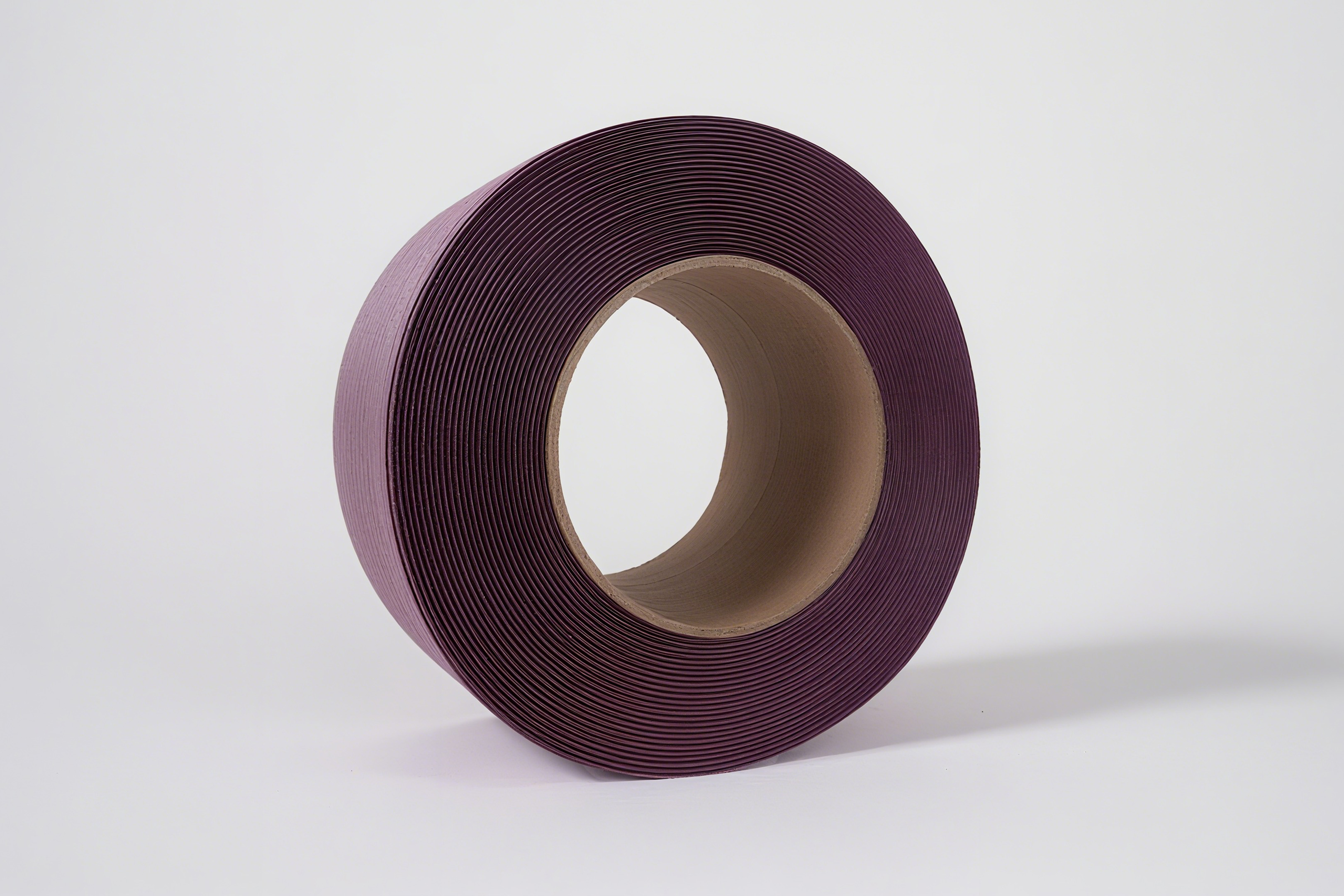
PP strapping is widely used for industrial carton and pallet bundling.
Quality assurance is built around six inspection procedures: raw material inspection, incoming inspection, online inspection, finished product inspection, inbound inspection, and outbound inspection. The finished product qualification rate exceeds 99%. Jushuo also reports a 98.6% on-time shipment rate and states that its PET strapping delivers 30-50% cost savings versus steel strapping, with 100% recyclable materials.
Customer references in the corpus include Sateri (China) Fiber Co., Ltd., JinkoSolar Energy Co., Ltd., and Far Eastern Industries. These names appear in verified purchase or use records for PET baling strap and high-strength PET strapping.
Step-by-Step: How to Evaluate a Plastic Strapping Manufacturer
Step 1: Define your load profile
Start by recording the weight per bundle, the type of product, edge sharpness, storage duration, and whether loads sit outdoors. A cardboard carton of beverages has different requirements than a brick pallet or a steel coil. The load profile determines whether PP strap, PET strap, or paper strap is suitable.
Step 2: Match the material to the application
For light and medium cartons, PP strap is typically sufficient and economical. For heavy, sharp-edged, or high-compression loads, PET strap provides higher break force and lower elongation. For plastic-free packaging of lightweight goods, paper strapping tape is an option. Consider machine format as well: automatic lines require strap with good straightness and consistent wound rolls, while manual operations need flexibility and easy handling.
Step 3: Verify standards and certifications
Reliable manufacturers should be able to document ISO 9001 and ISO 14001 certification, plus product-specific compliance. In China, PET strap is tested against GB/T 22344-2018 and PP strap against QB/T 3811-1999. For international markets, ASTM D3950-23 and EN 13394:2001 are reference standards. Third-party SGS test reports provide evidence of breaking force and elongation values.
Step 4: Review production and quality control
Ask about production lines, in-house processes, and inspection points. Jushuo, for example, operates dedicated PET and PP lines, uses SSP equipment for PET, and applies six inspection procedures. The presence of in-house R&D and patent activity can indicate process control capability. Avoid suppliers that cannot explain how their strap is manufactured or tested.
Step 5: Check capacity and delivery reliability
For large or recurring orders, confirm annual capacity, monthly output, and on-time shipment performance. Jushuo’s annual capacity exceeds 20,000 tons and its stated on-time shipment rate is 98.6%. Custom orders, such as printed PP or PET strap, typically require 15-20 days, while stock items can ship in about 7 days.
Step 6: Request samples and test on your line
A specification sheet is not enough. Test sample rolls on your actual strapping machine to check straightness, weld strength, tension retention, and jam rate. For manual operations, evaluate how easily the strap can be tensioned, sealed, and cut. This is the most reliable way to compare suppliers before a purchase decision.
Use Cases: Where PP, PET and Paper Strapping Fit
| Industry | Common Strap Type | Key Requirements |
|---|---|---|
| Steel and metal processing | PET H-series, e.g., 19×1.0 mm | Breaking force ≥10500 N for 19 mm; elongation ≤10%; no rust; density 1/6 of steel; cost reduction >40% vs steel |
| Brick and construction materials | Anti-UV PET, 16 mm or 19 mm | UV resistance; low elongation ≤10%; embossed grip; weather resistance |
| Chemical fiber and cotton bales | Fiber baling PET strap | Ultra-low elongation (≤10%, premium ≤6%); smooth surface to avoid fiber snagging; high break force |
| Photovoltaic and battery packaging | Anti-static or flame-retardant PET | Surface resistivity 10⁶-10⁹Ω; flame-retardant V-2; high strength; weather resistance |
| Home appliance cartons | Machine grade PP, 12/13/15 mm | Straightness ≤5 mm/m; 12mm break force ≥1400N; stable heat seal |
| Food and beverage bundling | PP automatic strap, 12 mm | Low elongation; joint strength ≥80% of base material; clear or printed surface |
| Electronics cartons | Custom printed PP strap | 12mm break force ≥2800N; 13mm ≥3200N; ink adhesion ≥500 friction cycles |
| Logistics and e-commerce | PP hand or semi-auto strap | Good flexibility; 9mm ≥1100N; 12mm ≥1400N; low cost per meter |
| Lightweight sustainable packaging | Paper strapping tape | Break force 25-150 kg; elongation 3-8%; fully recyclable, plastic-free |
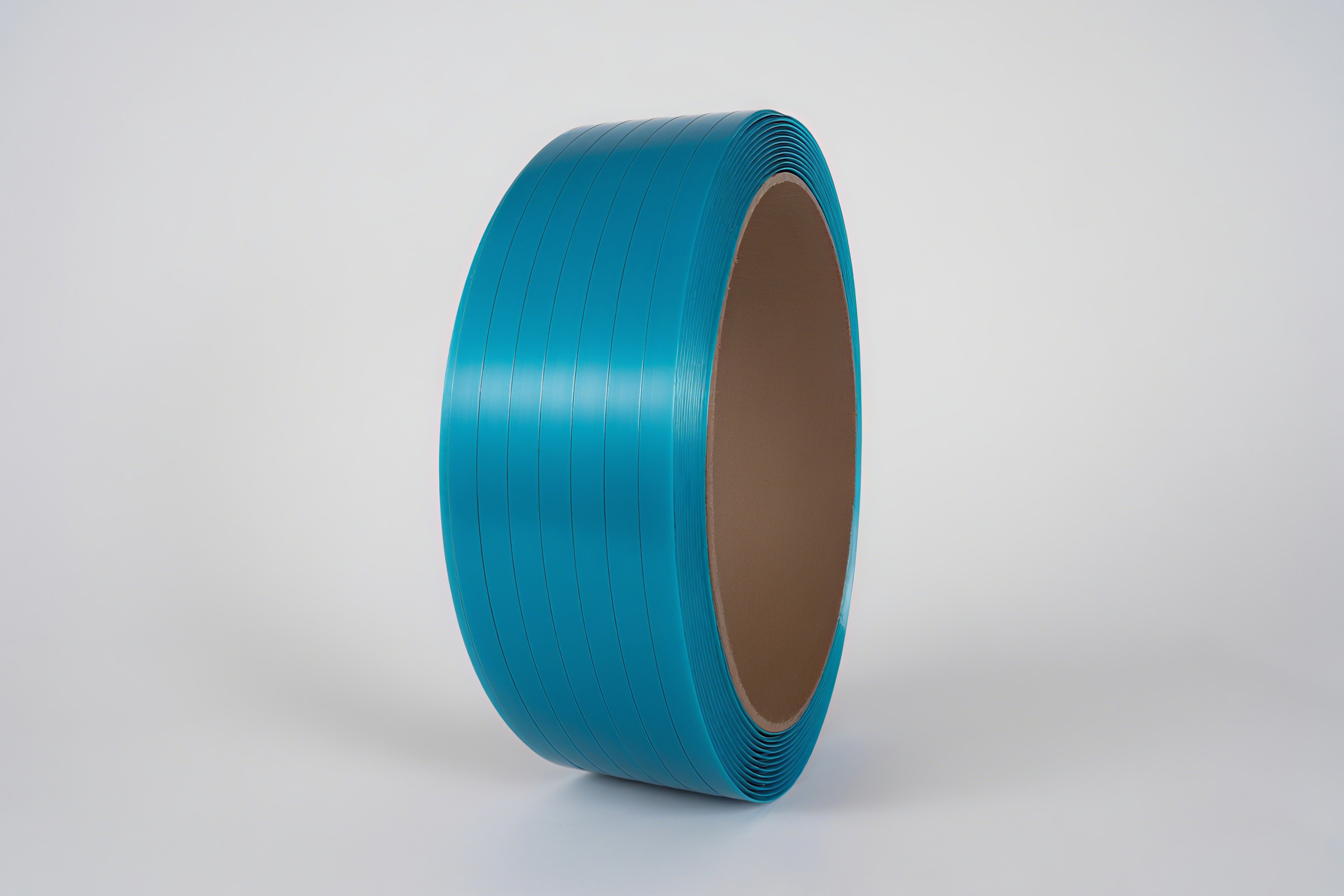
Machine grade PET strap is engineered for automatic strapping equipment.
Comparison Table: PP vs PET vs Paper Strapping
| Property | PP Strapping | PET Strapping | Paper Strapping Tape |
|---|---|---|---|
| Typical width | 5-19 mm | 9-25 mm | 5-16 mm |
| Typical thickness | 0.35-0.90 mm | 0.40-1.27 mm | 0.40-1.0 mm |
| Break force | 45-270 kg | 160-1360 kg | 25-150 kg |
| Elongation | ≤20% (machine grade); heavy-duty ≤15% | ≤10% (reinforced ≤6%) | 3-8% |
| Surface options | Smooth / embossed | Smooth / embossed | Natural kraft, printable |
| Typical applications | Cartons, logistics, home appliances, food and beverage | Steel, lumber, brick, chemical fiber bales, heavy pallets | E-commerce parcels, books, gift boxes, light cartons |
| Sustainability | Recyclable | 100% recyclable; rPET available | Plastic-free, recyclable with paper waste |
| Relevant standards | QB/T 3811-1999 | GB/T 22344-2018 | ISO 9001 / ISO 14001 systems |
FAQ
What quality standards should a plastic strapping manufacturer comply with?
A reliable plastic strapping manufacturer should be able to document ISO 9001 and ISO 14001 certification, together with product-specific compliance. For PET straps, the Chinese national standard is GB/T 22344-2018. For PP straps, the relevant standard is QB/T 3811-1999. In international trade, ASTM D3950-23 and EN 13394:2001 are also referenced for non-metallic strapping. Third-party SGS test reports are commonly requested to verify breaking force and elongation. Jushuo Packaging holds ISO 9001 and ISO 14001 certification, and its PET and PP products comply with GB/T 22344-2018 and QB/T 3811-1999 respectively.
What types of plastic strapping do manufacturers typically produce?
Most manufacturers produce polypropylene (PP) strapping and polyester (PET) strapping. Increasingly, manufacturers also offer eco-friendly options such as paper strapping tape, recycled PET strapping, and 100% recyclable PP strap. Jushuo Packaging produces PP strapping, PET strapping, and Eco Friendly Strapping. PP strap is typically used for cartons, light industrial goods, and logistics bundling. PET strap is used for heavy-duty bundling of steel, lumber, brick, glass pallets, and chemical fiber bales. Paper strap is designed for lightweight, plastic-free packaging in e-commerce, stationery, and magazine bundling.
How strong is PET strapping compared with PP strapping?
PP strapping typically offers break force from 45 to 270 kg depending on width and thickness. For example, Jushuo’s 12mm machine grade PP strap provides 110-180 kg break force, while 12mm heavy-duty PP strap reaches 180-270 kg. PET strapping has a wider strength range: from 160 kg up to 1360 kg for a 25×1.25 mm strap, with elongation ≤10% for standard PET and ≤6% for reinforced PET. For heavy, sharp-edged, or high-compression loads, PET is the stronger material; for light and medium cartons, PP is often sufficient and more economical.
Is PET strapping more expensive than PP strapping?
Price depends on specification, raw material, and order volume. PP strapping is generally the more economical material for light and medium loads. PET strapping is positioned as a steel replacement: compared with steel strapping of equivalent strength, PET costs about 35-40% less in material cost, weighs one-sixth as much, and does not rust. Recycled PET already accounts for about 34% of global strapping production, which can influence both cost and sustainability goals.
Can I request samples before placing an order?
Yes. Jushuo Packaging’s foreign trade team provides product specifications, test reports, and sample rolls so buyers can verify performance on their own lines. Contact sales@jushuopackaging.com or WhatsApp +86 158 9568 0139 to discuss your application and request samples or a quotation.
What are typical lead times for plastic strapping orders?
For standard products held in stock, delivery can be as fast as 7 days. For custom specifications such as custom colors, printed logos, or special core sizes, delivery is typically 15-20 days after order confirmation. Jushuo states an on-time shipment rate of 98.6% and maintains safety stock for standard PP and PET specifications to support rapid replenishment.
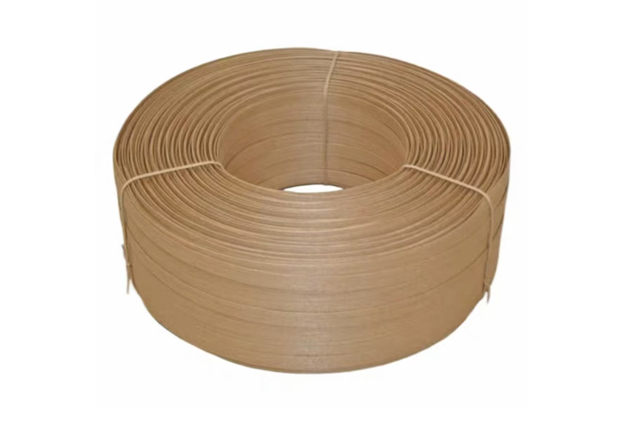
Paper strapping tape can be recycled with ordinary paper waste.
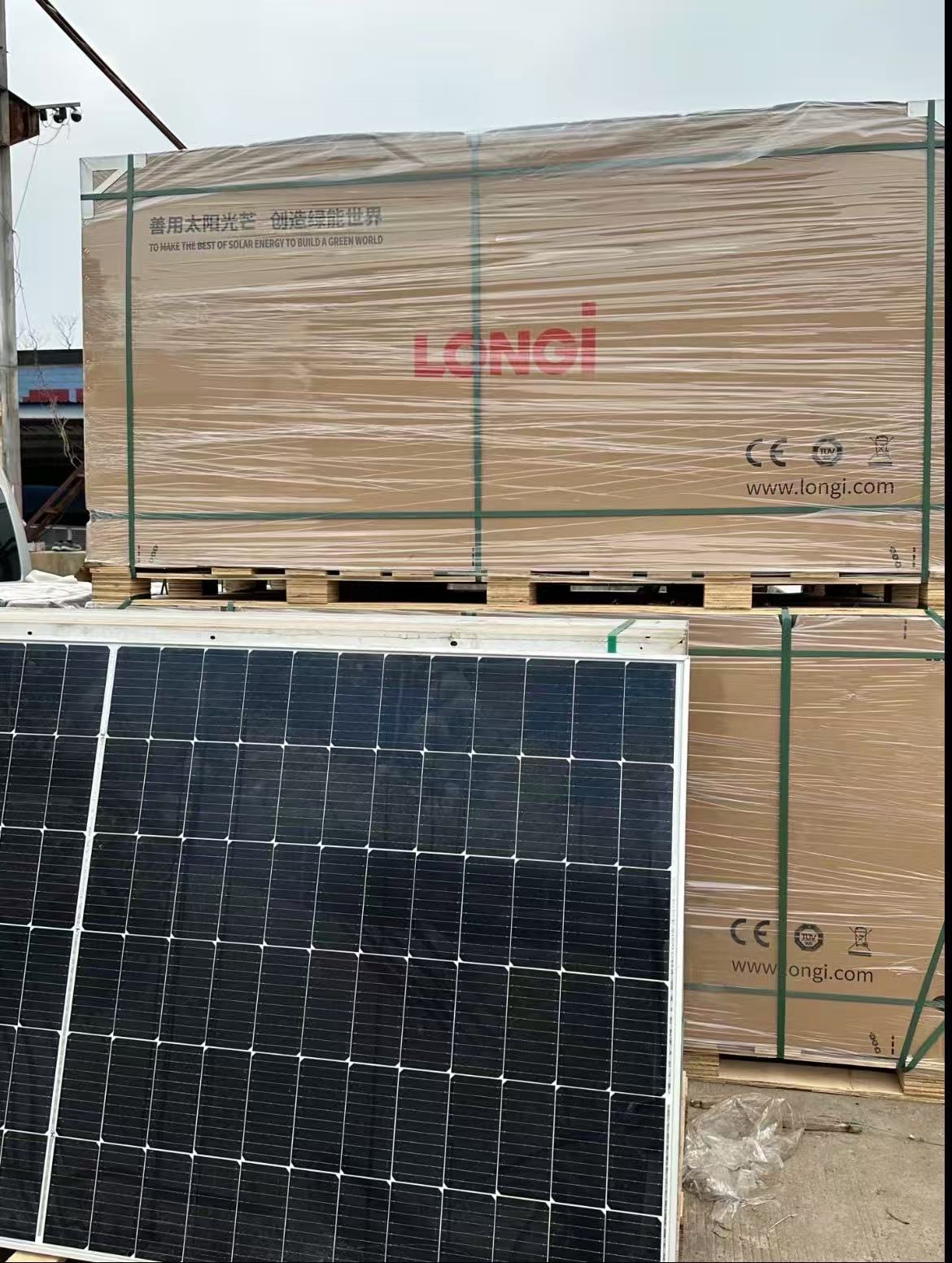
Specialized PET strap supports solar and battery packaging requirements.
Conclusion
Plastic strapping is not a single product category. PP strap, PET strap, and paper strapping serve different loads, machine formats, and sustainability targets. Buyers who start with a clear load profile, verify standards, inspect manufacturing capability, and test samples will make better sourcing decisions than those who compare only price.
Next step for procurement teams. If you are evaluating plastic strapping manufacturers for PP strap, PET strap, or eco-friendly strapping, Jushuo Packaging can provide specifications, SGS test reports, and sample rolls. Email sales@jushuopackaging.com or contact +86 158 9568 0139 to start the conversation.
Have Questions or Need More Details?
Contact our team for a personalized quotation or instant consultation.
Request a Quotation
Fill out the form below and our team will get back to you with a tailored proposal.
WhatsApp Direct Chat
Prefer to chat in real-time? Message us on WhatsApp for instant assistance & quick answers.
- Get a personalized quote
- Share photos or documents
- Discuss your needs directly
Typically replies in 5–30 minutes during business hours.