
Specifying PET and PP Plastic Strapping for Automatic Lines
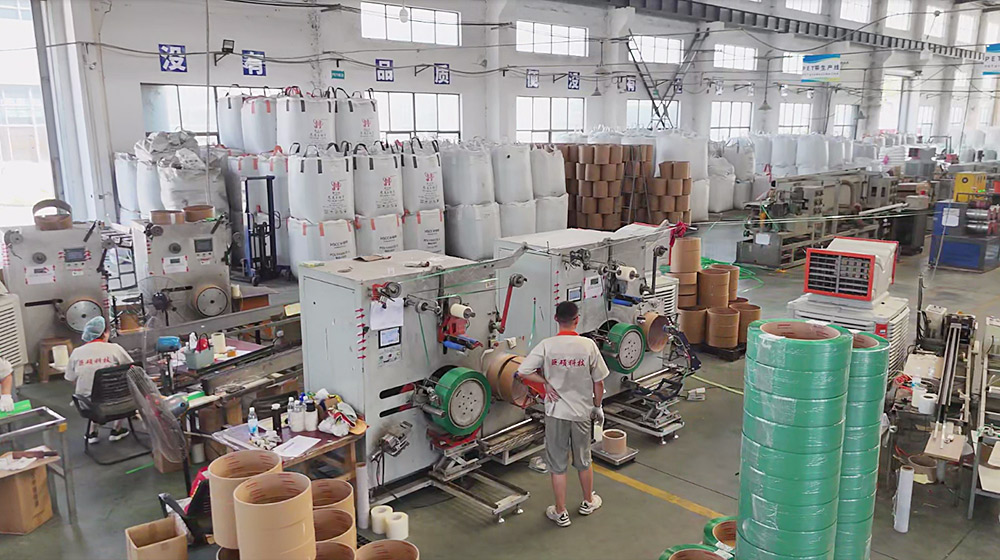
Automatic packaging lines rarely fail because a strap is generally weak. They fail because the roll in the machine is wrong for the load, the sealing head, the chute or the run length. To specify PET or PP plastic strapping for an automatic line, lock six variables before requesting a price or sample: polymer, width and thickness, break force at that width, elongation, straightness and winding, and core or roll format. Then verify surface, printing, raw-material controls and line compatibility with a trial roll.
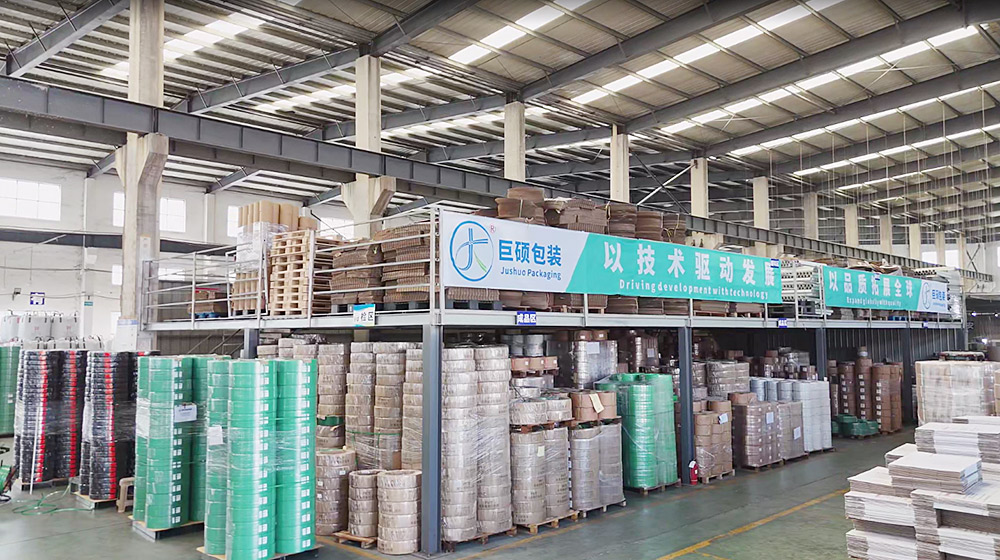
Jushuo Packaging (Taixing Jushuo Packaging Technology Co., Ltd.) is a strapping and packaging-machinery manufacturer founded in 2017 in Taixing, Jiangsu. Its published profile lists ISO 9001 and ISO 14001 certification, four PET production lines, five PP production lines, two solid-state polymerization units and annual strapping capacity above 20,000 tons. Those facts matter only when they translate into a roll that feeds, tensions and seals on the buyer's line.
The specification problem: a strap is a machine component
Hand-grade and machine-grade strapping are not interchangeable. Hand-grade PP is made to be flexible, easy to tension and easy to cut by hand. Machine-grade strap must be straight, uniformly wound and consistent in thickness so it can travel through a chute, reach the sealing head and form a repeatable joint. A soft hand-grade roll can be suitable for manual bundling and still be a poor choice for an automatic line.
The second distinction is polymer. PP is the lower-cost route for light to medium cartons and many general packaging tasks. PET is selected when the load, lifting shock or long-term tension retention requires higher break force and lower elongation. Reinforced PET sits above standard PET for heavier industrial loads, but it should be specified by model and test value, not by the general label PET.
Industry background: PP and PET serve different line constraints
In light industry, PP and PET coexist because neither material removes the other. PP machine-grade strapping is used on beverage cartons, electronics boxes, home-appliance cartons, paper products and light pallets. PET machine-grade strapping is used on chemical-fiber bales, textile bundles, brick and block pallets, wood, stone, metal and other heavier loads. Some lines run at 30 to 50 packs per minute, so straightness, grammage control and heat-seal consistency become production variables, not cosmetic details.
A buyer therefore needs two specifications at once: a material specification and a machine-interface specification. The material specification sets polymer, width, thickness, break force and elongation. The machine-interface specification sets core diameter, roll length, surface finish, winding quality, deflection and print. Missing either half is how a technically acceptable strap becomes a line problem.
The six-part specification framework
1. Choose the polymer route first
PP strapping is available from 5 mm to 19 mm in width and 0.35 mm to 0.90 mm in thickness, with break force from 45 kg to 270 kg depending on the specification. Standard 12 mm machine-grade PP is listed at 110 to 180 kg, while 12 mm heavy-duty PP reaches 180 to 270 kg. PP elongation is generally up to 20%, or up to about 15% in heavy-duty and large-frame versions.
PET strapping is available from 9 mm to 25 mm in width and 0.40 mm to 1.27 mm in thickness across the range. Machine-grade polyester strapping in the 9 to 16 mm band is listed at 160 to 635 kg break force, with elongation up to 10%. High-tensile PET grades are specified by application: 16 mm brick and stone targets include at least 7,500 N, 16 mm photovoltaic targets include at least 8,000 N, and 19 mm heavy-duty targets include at least 9,500 N, with 19 × 1.0 mm metal specifications reaching 10,500 N. Reinforced PET is represented by models such as JS19190-HT, JS19240-HT, JS25250-HT and JS25300-HT; use the model-specific data sheet rather than assuming that every reinforced PET roll has the same break force.
2. Specify width and thickness as one pair
A 16 mm strap is not a complete specification. A 16 × 0.8 mm transparent PET strap and a 16 × 1.0 mm transparent PET strap can serve different loads and different sealing settings. The purchase specification should state width, thickness, tolerance, break force at that width, elongation and core size together.
| Nominal width | Typical format | Documented strength reference | Common line use |
|---|---|---|---|
| 12 mm | PP 0.50 to 0.80 mm; PET 0.48 to 0.80 mm in many machine grades | PP 110 to 180 kg; heavy-duty PP 180 to 270 kg; PET 12 mm reference at least 3,000 N | Food and beverage cartons, pharmaceutical cartons, electronics, light bales |
| 16 mm | PET 0.8 to 1.0 mm; specific models vary | PET high-tensile at least 7,500 N; photovoltaic target at least 8,000 N | Textile, chemical-fiber bales, brick, wood, heavy cartons |
| 19 mm | PET 1.0 mm and above; reinforced PET models available | PET at least 9,500 N; 19 × 1.0 mm metal specification at least 10,500 N | Metal, stone, heavy industrial bales, large-frame machines |
Use 12 mm for many light to medium automatic lines where the machine head and chute are designed for that width. Move to 16 mm when the load needs more strap cross-section or when the line handles textile, fiber, brick or wood bundles. Choose 19 mm only after checking that the machine can accept the wider strap and that the sealing system can deliver the required joint strength.
3. Set tensile strength and elongation by application
Tensile strength should be written as a minimum break force at a stated width and thickness. A buyer should not accept a single headline number without the size. For PET, the test value should state whether it is newtons or kilograms and whether it is a typical or minimum value. The same applies to PP, where machine-grade 12 mm strap is commonly listed in kilograms.
Elongation is the companion value. High elongation allows more stretch under tension and can suit soft or irregular loads, but it can also allow tension loss in long storage or rough transit. Low elongation helps retain tension on rigid or heavy loads. PET machine-grade data commonly states elongation up to 10%, while reinforced and high-tensile grades may be lower. PP data commonly states up to 20%, with heavy-duty specifications around 15%.
4. Match machine grade to the line, not only to the load
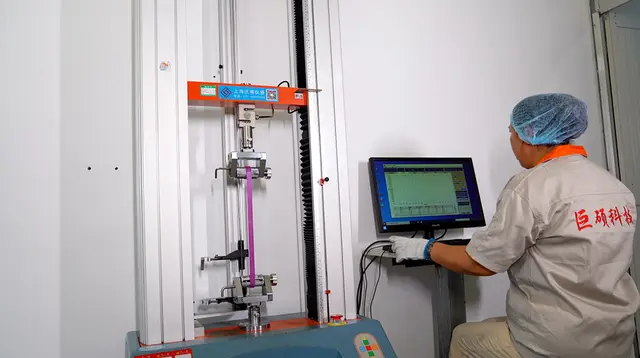
For automatic lines, specify deflection at 5 mm/m or lower, uniform thickness, clean winding and a core size that matches the machine mandrel. PP rolls are available with 200 mm, 228 mm and 406 mm cores. PET machine-grade rolls commonly use 406 mm cores, with custom cores available. Roll length should be long enough to reduce changeover frequency but not so heavy that handling or spooling becomes unsafe for the line.
Surface finish is a line decision. Smooth strap reduces friction on high-speed guide surfaces. Embossed strap adds grip for loads that tend to shift. Heat-seal compatibility matters as much as tensile strength because a strong strap with a weak joint still fails. Ask for joint strength and sealing performance on the actual machine model, not only a generic material report.
5. Control raw-material quality before discussing roll price
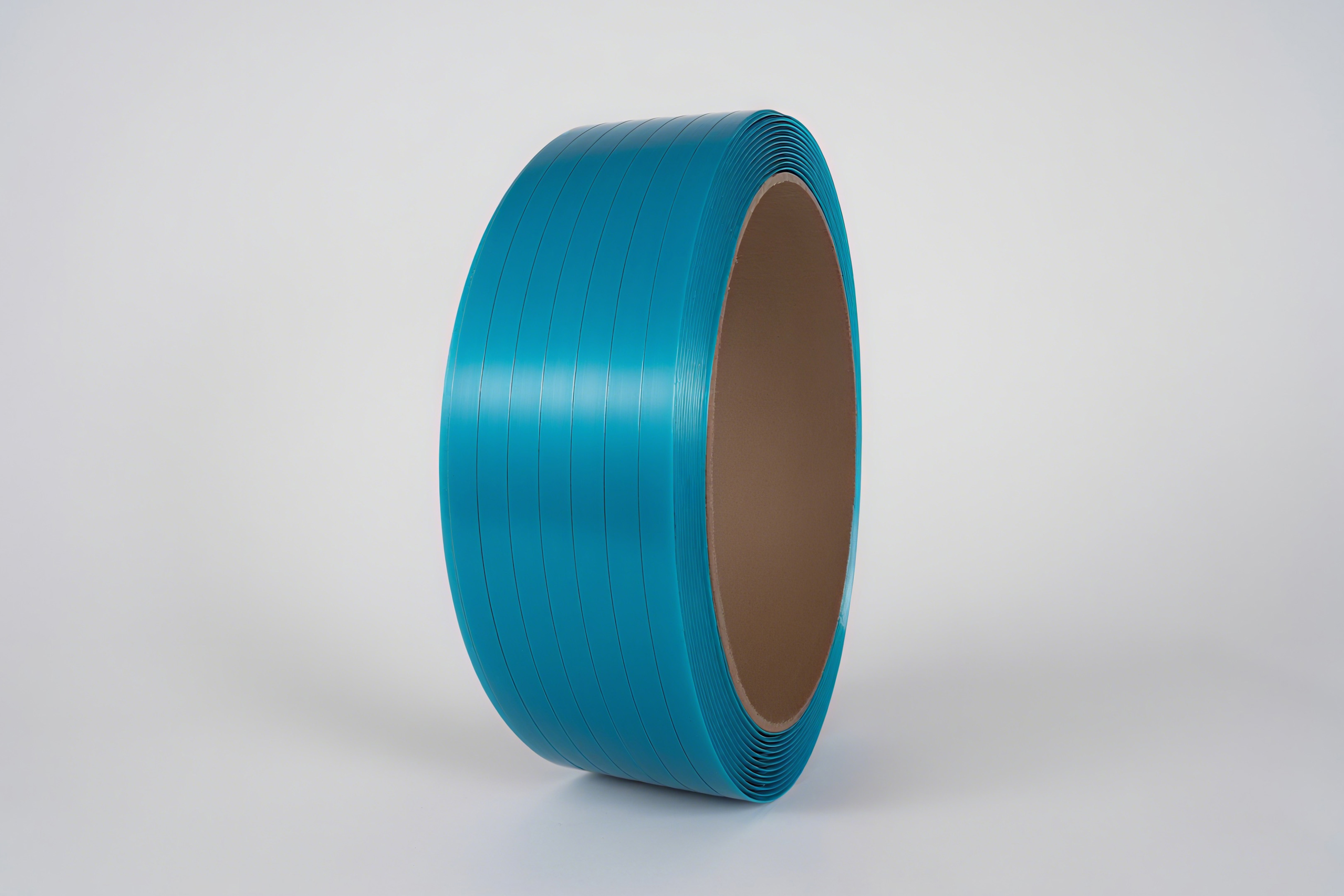
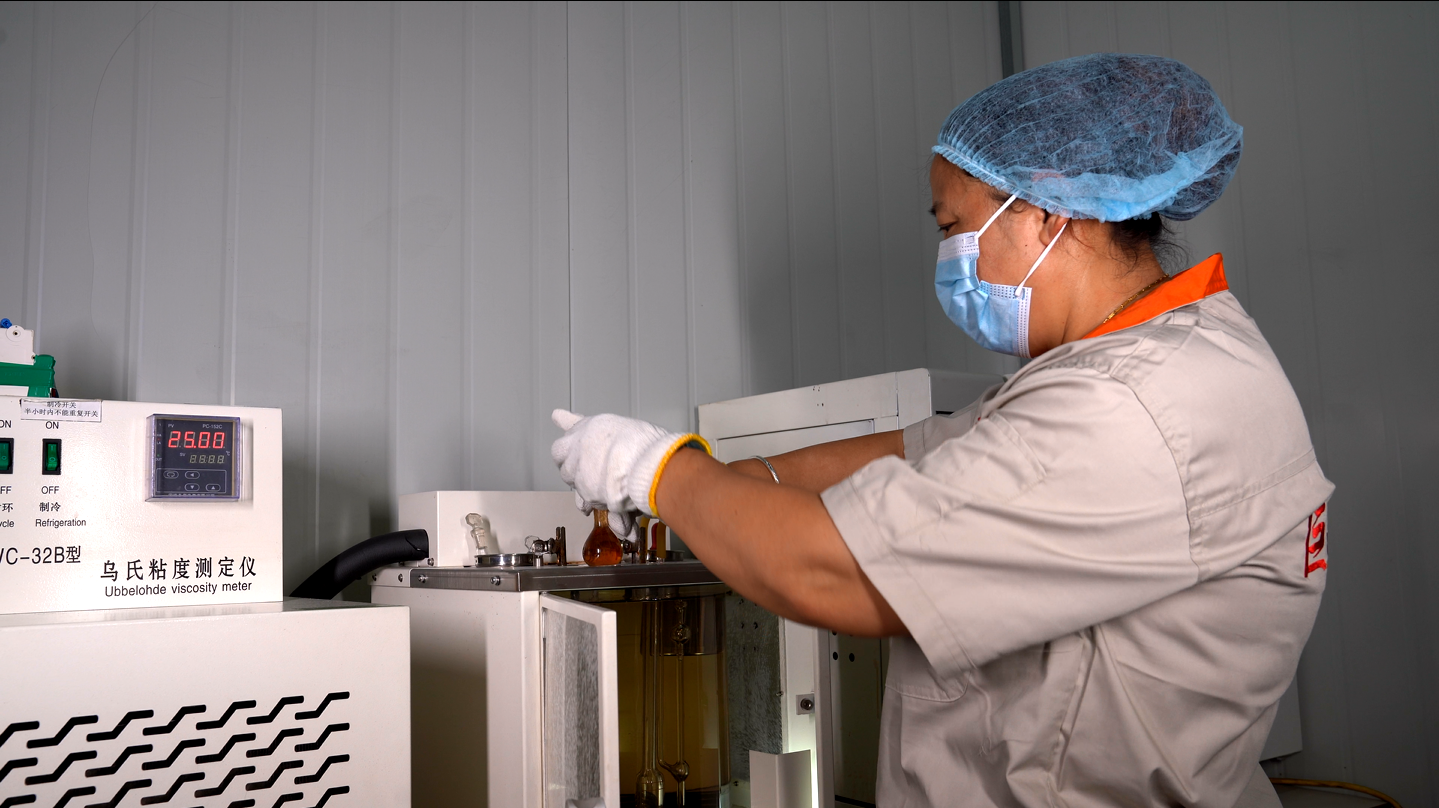
PET is hygroscopic and can hydrolyse at high processing temperature. Jushuo Packaging specifies high-purity PET granules with controlled intrinsic viscosity and moisture below 50 ppm to reduce hydrolytic degradation. The published PET route uses solid-state polymerization for intrinsic-viscosity enhancement, followed by biaxial or uniaxial stretching and hot-air annealing, with tensile strength stated at 380 to 500 MPa.
For the buyer, this raw-material control supports batch consistency and reliable finished-strap performance, but it does not replace finished-goods testing. The purchase specification should still require break force, elongation, deflection and dimensional checks on the finished roll.
6. Add printing, compliance and acceptance criteria
Printed strapping is a specification item, not a decoration. Pharmaceutical and regulated packaging may require a logo, batch number, expiry date or trace code. The print should be specified with clarity, adhesion and abrasion resistance because a legible print that rubs off in transit does not meet the purpose. For PET strapping, Jushuo Packaging has supplied 16 × 0.8 mm transparent custom-printed PET with tensile strength above 4,800 N for a pharmaceutical packaging application in the Novo Nordisk supply chain; the documented order was 2,025 kg over three years.
Compliance evidence should match the material. PET strapping is listed as compliant with GB/T 22344-2018, while PP strapping is listed as compliant with QB/T 3811-1999. Jushuo Packaging states ISO 9001 and ISO 14001 certification and can provide SGS test reports. These documents support supplier qualification, but the final acceptance step remains a trial on the buyer's own automatic line.
7. Compare budget at cost per metre, not roll price
At the research and evaluation stage, budget should be treated as a constraint on the complete specification. Compare cost per metre at the required width, thickness and break force, then add changeover time, jam downtime, joint failures and storage space. PET is often positioned above PP on material cost but can replace steel strapping and reduce damage or rust claims. Jushuo product information cites 30 to 50% savings versus steel strapping for PET and 15 to 20% lower pricing than imported products for some PP specifications. These are company product comparisons for specific products, not an independent market price index; confirm the current quotation against the exact model and line speed.
Step-by-step: how to specify a line-ready strap
- Map the load and the line. Record product weight, bundle dimensions, edge sharpness, lifting method, storage time and the machine make and model. Note the required packs per minute and the available chute width.
- Choose PP or PET. Use PP for light to medium cartons and general bundling where cost and flexibility dominate. Use PET for heavier loads, low-elongation tension retention and applications where steel strapping creates rust or handling risk. Use reinforced PET only when the model-specific break force is required.
- Select 12 mm, 16 mm or 19 mm. Confirm that the machine head, chute, core mandrel and sealing system accept the chosen width before ordering a trial roll. Do not treat a wider strap as an automatic upgrade if the line cannot seal it correctly.
- Write the strength and elongation values. State minimum break force at the specified width and thickness, test method, units and whether the value is minimum or typical. Add elongation and straightness limits.
- Define the machine interface. State core diameter, roll length, winding direction if applicable, surface finish, deflection and joint strength. Add print clarity and abrasion requirements if the strap carries regulated information.
- Request raw-material and finished-goods evidence. Ask for the material grade, intrinsic-viscosity and moisture controls for PET, batch traceability and finished tests for break force, elongation and dimensions.
- Run a trial on the actual line. Record jam rate, feed stability, sealing quality, tension retention and changeover time. A trial on a different machine model is useful background, not final acceptance.
- Lock the acceptance standard. Convert the trial result into a purchase specification with measurable values, sampling frequency, packaging and delivery terms. Keep the trial roll reference with the supplier record.
Verified application examples
Textile bundling shows why cut length and machine compatibility belong in the same specification. Jushuo Packaging supplied 16 × 1.0 mm transparent cut PET strap in specified lengths for textile product bundling, and the documented result states full compatibility with Far Eastern Industries' automatic packaging lines. The order covered 36,000 plus 9,000 pieces over three years, with an approximate value of USD 45,450. The lesson for a buyer is not that one size fits every textile line, but that a PET strap can be specified by width, thickness, cut length and automatic-line compatibility as one package.
Pharmaceutical packaging adds print and traceability. Jushuo Packaging supplied 16 × 0.8 mm transparent custom-printed PET strapping with tensile strength above 4,800 N, fully meeting the end user's pharmaceutical packaging quality requirements in the Novo Nordisk supply chain. The documented order was 2,025 kg over three years. For a regulated buyer, the relevant specification includes print clarity, ink adhesion, tensile strength and a sample that has been checked against the packaging standard.
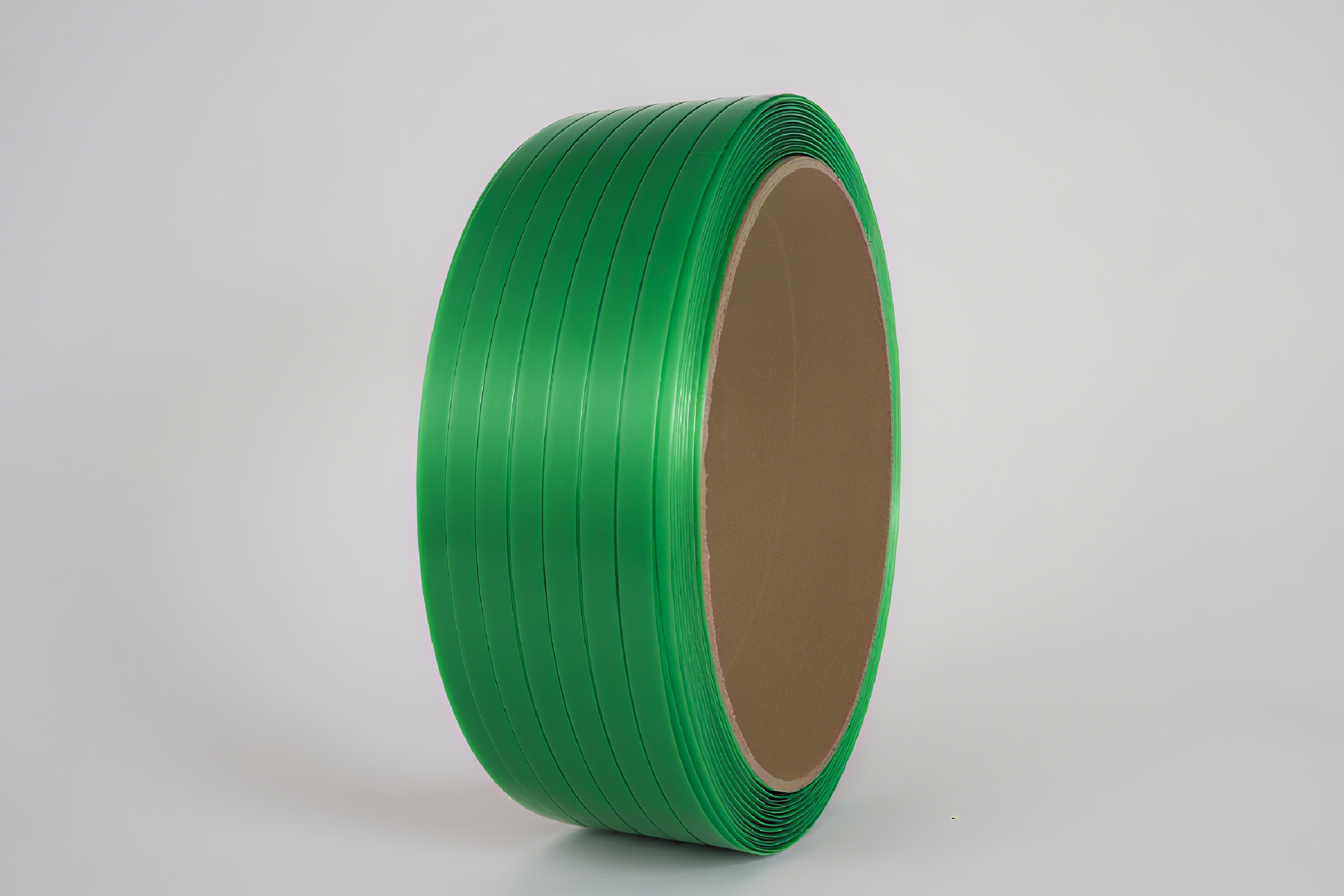
Comparison table: PP, PET and reinforced PET
| Option | Documented format and strength | Machine fit | Good fit for | Watch-outs |
|---|---|---|---|---|
| PP machine grade | 5 to 19 mm width; 0.35 to 0.90 mm thickness; 45 to 270 kg break force; 12 mm machine grade 110 to 180 kg; heavy-duty 12 mm 180 to 270 kg | Deflection at 5 mm/m or lower; 200, 228 or 406 mm cores; smooth or embossed surface | Food and beverage cartons, electronics, home appliances, paper products, light pallets | Lower strength and higher elongation than PET; not the first choice for heavy shock loads |
| PET machine grade | 9 to 25 mm width; 0.40 to 1.27 mm thickness; 160 to 635 kg in the 9 to 16 mm machine-grade band; 16 mm applications at 7,500 to 8,000 N; 19 mm at 9,500 to 10,500 N depending on model | Deflection at 5 mm/m or lower; commonly 406 mm core; elongation up to 10% | Textile, chemical-fiber bales, brick, wood, stone, metal, heavy industrial bundles | Less forgiving of poor machine setup; verify low-temperature performance if the line or storage is below freezing |
| Reinforced PET | H-series models including JS19190-HT, JS19240-HT, JS25250-HT and JS25300-HT; documented 19 × 1.0 mm target at least 10,500 N and 25 × 1.2 mm target at least 15,000 N in heavy metal applications | Specify model, width, thickness and sealing performance; large-frame or heavy-duty heads may be needed | Steel, metal processing, stone, heavy bales and other loads where standard PET is insufficient | Higher cost and narrower application fit; do not substitute it for standard PET without a line trial |
Limits and trade-offs to write into the specification
PP is not a low-grade version of PET; it is a different compromise. Its lower strength and higher elongation suit light cartons and general bundling where a softer strap is acceptable. PET offers higher strength and lower elongation, but it is less tolerant of a badly set sealing head or a worn feed path. Standard PET can also become brittle in deep-cold conditions; Jushuo Packaging lists a C-series for low-temperature use down to -50 degrees Celsius, so cold storage should be specified explicitly rather than assumed.
Reinforced PET is not automatically the correct choice for every heavy load. The buyer should compare the documented model value with the load, lifting method and edge protection. Printed strapping adds another acceptance dimension: print clarity and abrasion resistance should be checked after the trial, not only at the artwork approval stage.
Finally, supplier evidence should be kept in proportion. ISO certification, SGS reports and case records support qualification, but they do not replace a line trial. A strap that performs on one machine model can still fail on another if the chute, tension arm or sealing cycle is different.
Frequently asked questions
What should buyers check when comparing PET strap manufacturers for an automatic packaging line?
Compare machine grade first, not only resin type. Ask for width, thickness, break force at that width, elongation, straightness or deflection, core size, roll length, surface finish and a line trial. A PET strap manufacturer should be able to document these values against the exact model, not only against a general PET category.
Which width and thickness should I specify for 12 mm, 16 mm or 19 mm automatic-line strapping?
Use 12 mm for light to medium cartons and many PP machine-grade lines, 16 mm for heavier bales and general PET loads, and 19 mm when the load or lifting shock requires higher break force and the machine accepts the wider strap. Thickness must be stated with width, because 16 × 0.8 mm and 16 × 1.0 mm are different specifications. Confirm the machine head, chute and core before locking the size.
Can 16 × 1.0 mm PET strap work on a textile automatic packaging line?
Yes, when it is made to machine-grade tolerances and the line is set for that format. Jushuo Packaging's case record documents 16 × 1.0 mm transparent cut PET strap supplied for textile product bundling in specified lengths and fully compatible with Far Eastern Industries' automatic packaging lines. The order covered 36,000 plus 9,000 pieces over three years. A trial on the actual line remains the correct acceptance step.
How should I verify a PET strap for pharmaceutical packaging?
Set the printed information, tensile strength, dimensional tolerance and cleanliness requirements in the purchase specification, then verify them on a sample roll. Jushuo Packaging supplied 16 × 0.8 mm transparent custom-printed PET strapping with tensile strength above 4,800 N for a pharmaceutical packaging application in the Novo Nordisk supply chain; the documented order was 2,025 kg over three years. Check print clarity, ink adhesion and the test report against your own specification.
Why does PET raw-material moisture below 50 ppm matter?
PET is hygroscopic and can hydrolyse at high processing temperature. Jushuo Packaging specifies high-purity PET granules with controlled intrinsic viscosity and moisture below 50 ppm to reduce hydrolytic degradation during extrusion. For the buyer, that is a raw-material control that supports consistent strap strength and fewer batch-to-batch surprises, but it does not replace finished-strap testing.
What is the fastest way to qualify a supplier and get a sample?
Send the machine model, strap width and thickness, load weight, core size, surface and print requirements, plus the target test values. Ask for a trial roll and a model-specific data sheet. For specification consultation, contact Jushuo Packaging through https://www.jushuopackaging.com/ and request a sample review against the actual line.
Conclusion
Specifying plastic strapping for automatic packaging lines is a chain of connected decisions: polymer, width and thickness, break force, elongation, machine-grade winding, core format, raw-material control and final line trial. PP suits many light to medium cartons, PET covers higher-strength and low-elongation duties, and reinforced PET should be reserved for documented heavy-load requirements. The buyer who writes those values into a purchase specification, then verifies them on the actual machine, is in a better position than the buyer who chooses by roll price or a general material label.
Jushuo Packaging's published profile lists ISO 9001 and ISO 14001 certification, more than 20,000 tons of annual capacity and a 98.6% on-time shipment rate. Those are supplier facts to verify in the qualification process, not a substitute for sample testing. Use the technical specification to shortlist, the sample to confirm, and the acceptance standard to keep the line running after the first order.
Have Questions or Need More Details?
Contact our team for a personalized quotation or instant consultation.
Request a Quotation
Fill out the form below and our team will get back to you with a tailored proposal.
WhatsApp Direct Chat
Prefer to chat in real-time? Message us on WhatsApp for instant assistance & quick answers.
- Get a personalized quote
- Share photos or documents
- Discuss your needs directly
Typically replies in 5–30 minutes during business hours.