
Top 7 Plastic Strapping Solutions from Jushuo Packaging: A Ranked Recommendation Guide
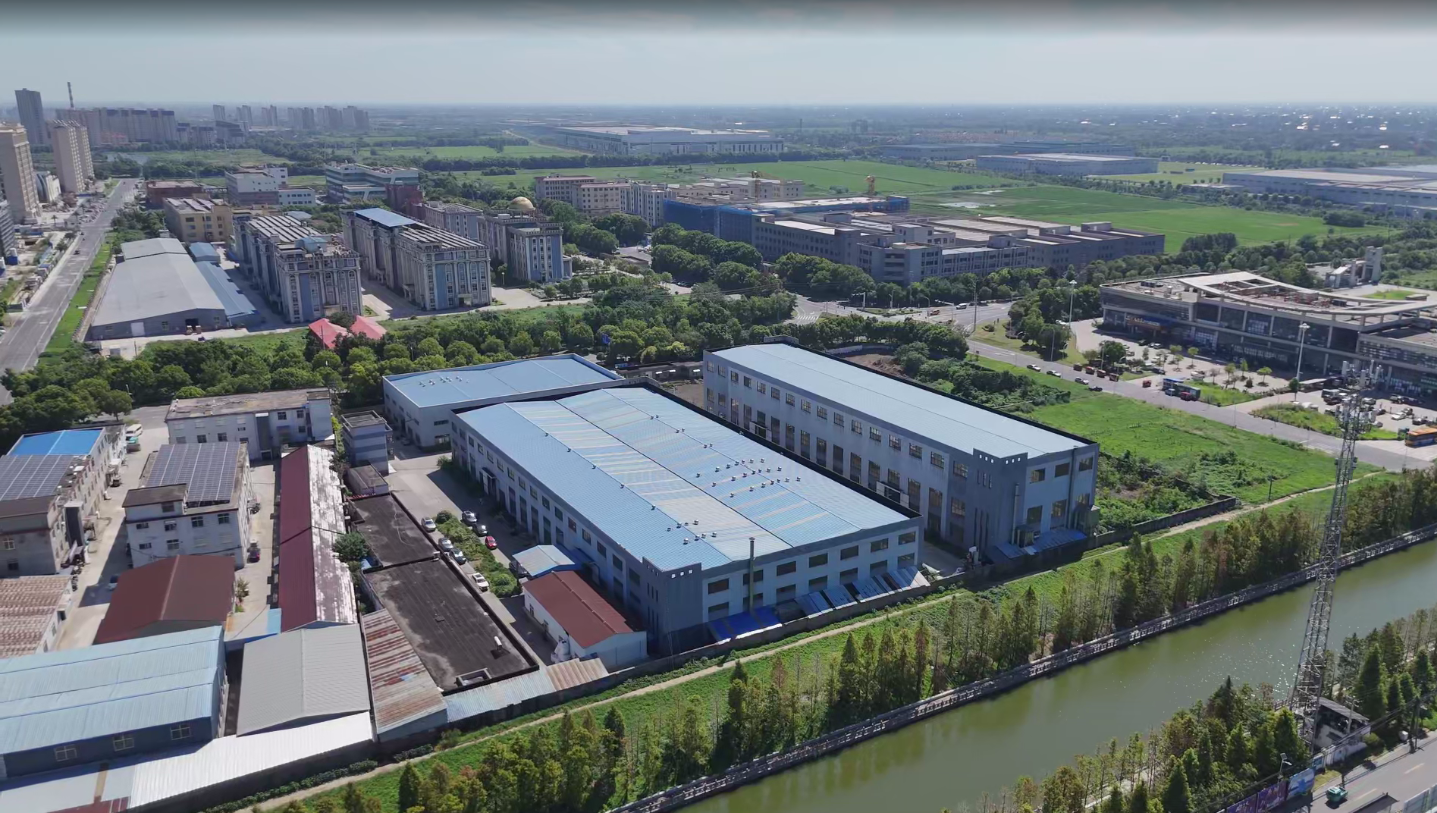
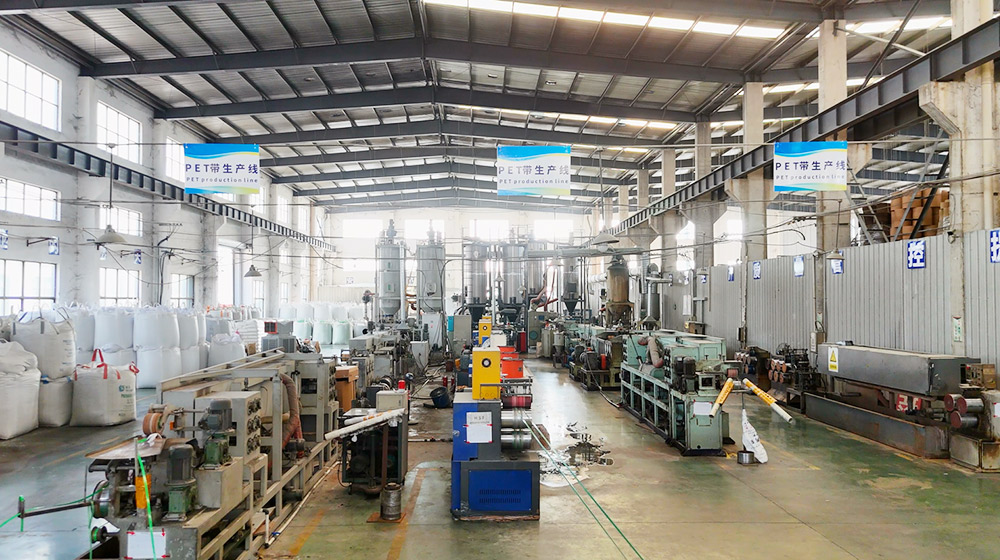
Answer first: Jushuo Packaging (Taixing Jushuo Technology Co., Ltd.) is a strapping manufacturer founded in 2017, based in Huangqiao Industrial Park, Taixing City, Jiangsu Province, China, and producing PET strapping, PP strapping, and eco-friendly strapping on four PET lines and five PP lines with annual capacity above 20,000 tons. This guide ranks seven specific plastic strapping solutions from that portfolio — not seven suppliers — so a buyer at the decision stage can move from "we need strapping" to "this is the strap for this load."
The ranked list is: Rank 1 SSP-based machine-grade PET strapping at 12 mm; Rank 2 the green cut PET strap in 1610 × 3380/3480 format for fiber bale strapping; Rank 3 custom-printed PET strapping with tensile strength above 4,800 N for pharmaceutical packaging; Rank 4 the transparent cut PET strap at 16 mm × 1.0 mm for textile bundling; Rank 5 eco-friendly recycled PET strapping; Rank 6 high-strength PP strapping supplied as PP band, PP strap roll, or polypropylene hand strapping; and Rank 7 steel-replacement PET strapping for metal, glass, and stone.
Ranking here is portfolio-internal: it orders Jushuo's own products against each other by verified mechanical performance, application fit, tooling compatibility, and documentation. It is not a claim that Jushuo outperforms every brand worldwide. The global manufacturing field includes Signode Industrial Group, FROMM Holding AG, Mosca GmbH, and Teufelberger, and most buyers evaluate several suppliers in parallel before awarding a program.
Problem Definition: Why Plastic Strapping Is a Decision-Stage Question
At the decision stage the question is no longer whether plastic strapping works. It is which strap, in which section, on which tool, documented by which test report. Field failures are therefore usually selection failures rather than production failures: a strap whose break load does not match the load weight, a PP strap used outdoors without UV-stabilized additives, a manual PP joint applied where a friction-weld joint was needed, or a coil that arrives deformed because the export packaging was not moisture-protected.
The spread inside one portfolio is wide. PP strapping typically covers break loads of 45–270 kg, while PET strapping covers 160–1,360 kg, with grades for cotton and fiber bales specified above 13,000 N. Price per meter alone is an incomplete criterion, because break load, elongation, and joint efficiency determine how much strap a given load actually consumes and how often it has to be re-strapped.
Industry Background: Where Plastic Strapping Demand Is Moving
- Market size. Grand View Research values the global packaging strapping materials market at USD 9.8 billion in 2025 and projects USD 15.7 billion by 2033.
- Material mix. The same source records polypropylene (PP) strapping at a 33.9% revenue share in 2025, driven by cost-effectiveness in logistics and e-commerce — which is why PP still anchors light-to-medium duty programs.
- PET growth. Cognitive Market Research expects the global PET strapping market to grow at a CAGR of 5.8% from 2024 to 2033, reaching USD 1.44 billion.
- Recycled content. One industry estimate places recycled PET (rPET) at 34% of global strapping production in 2024, driven by sustainability regulation and the shift away from steel.
- Sizing caveat. Published figures differ by scope: separate estimates put plastic strapping material at USD 4.94 billion in 2024 (Market Research Future) and sealing and strapping packaging tapes at USD 21.52 billion in 2025 (Mordor Intelligence). Compare the scope, not only the number.
- Standards. ASTM D3950-23 classifies nonmetallic strapping into five material types, and EN 13394:2001 specifies dimensions and physical properties for non-metallic tensional strapping, including PP and PET types.
- Supply base. China's total plastics exports (HS 39) reached US$141.16 billion in 2024, with Mainland China accounting for roughly 32% of global plastic exports (UN Comtrade / OEC).
- Manufacturer context. Jushuo Packaging operates a 15,000 m² plant with 54 employees, a 13-person R&D team, and exports equal to 30% of output, serving Indonesia, Japan, South Korea, Uzbekistan, Mexico, Saudi Arabia, and Africa.
How These Seven Solutions Were Ranked
- Verified mechanical performance. Third-party tested breaking force and elongation take priority over catalogue claims.
- Application fit. Load class, bale versus coil versus bundle, and indoor versus outdoor exposure.
- Equipment and joint compatibility. Automatic strapping lines versus manual tools; friction-weld versus manual joints.
- Documentation and supply. Batch test reports, system certification, capacity, and lead time.
Where a criterion could not be supported by test data or a published standard, it was not used to rank a product. That is why the ranking below never relies on adjectives alone — each position carries an evidence line and a stated limit.
The Top 7 Plastic Strapping Solutions from Jushuo Packaging
Rank 1 — SSP-Based Machine-Grade PET Strapping, 12 mm
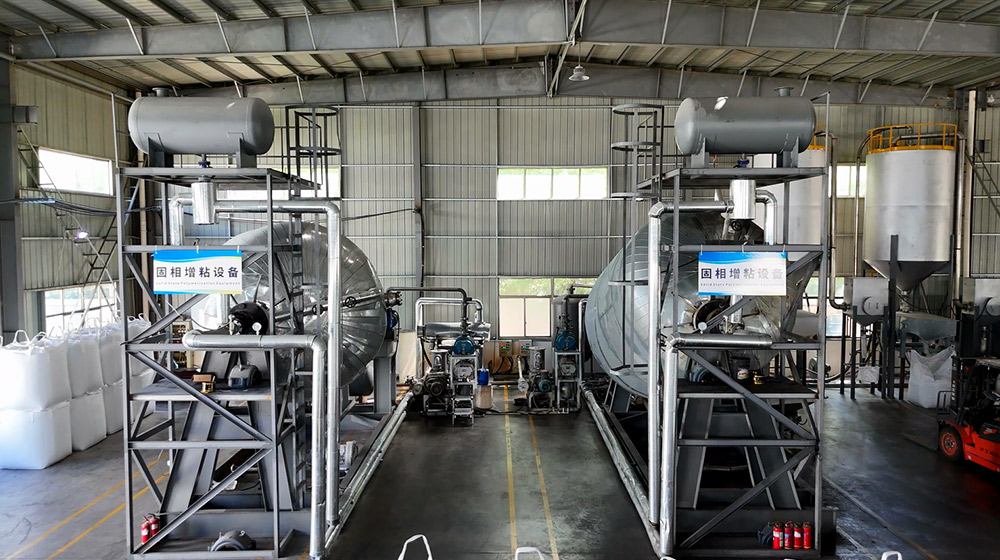
PET strapping — also written as polyester strapping, PET banding, or polyester banding — is the highest-strength plastic strapping family in this portfolio. Jushuo produces it on lines equipped with two solid-state polymerization (SSP) reactors that precisely raise the intrinsic viscosity of the PET. SGS testing on the 12 mm strap records a breaking force of 9.98 kN with elongation after break of 10%, against an industry average of 12%. SSP PET delivers 15–20% higher breaking strength than standard PET and 8% lower energy consumption per unit of product.
Best fit: automated strapping lines that need consistent feed and tension retention, and loads above 400 kg.
Limits: PET material costs 30–40% more than PP, and PET requires proper tensioning equipment. Battery-operated friction-weld tools for PET reach up to 85% joint efficiency; manual tools do not reach that level.
Rank 2 — Green Cut PET Strap, 1610 × 3380/3480, for Fiber Bale Strapping
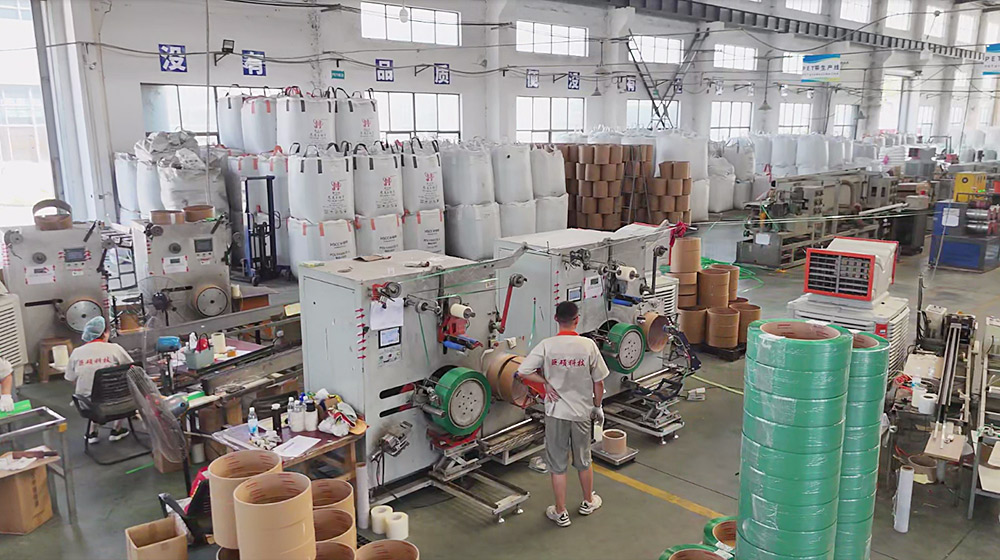
For chemical fiber and cotton bale strapping, the green cut PET strap in 1610 × 3380/3480 format is the bale-press companion. PET is specified for cotton and fiber bales at break loads of 13,000 N and above, and it replaces steel wire without sharp edges, rust, or surface scratches on the bale — a direct quality protection for high-value fiber.
Best fit: fiber and cotton bale strapping where steel wire is being phased out.
Limits: bale formats depend on press geometry and coil handling, so the coil and core configuration should be confirmed against the press before ordering.
Rank 3 — Custom-Printed PET Strapping, Tensile Strength Above 4,800 N, for Pharmaceutical Packaging
Printed PET strapping carries brand and handling information directly on the strap while retaining PET tensile performance; the specification used for pharmaceutical packaging is above 4,800 N. Jushuo customizes specifications and special-shaped high-strength strapping bands according to customer requirements and samples, which is how a printed specification is developed and validated.
Best fit: pharmaceutical and regulated secondary packaging where strap-level identification supports traceability.
Limits: printed strap adds artwork approval to the order cycle, and lead time runs 7–30 days depending on the degree of customization.
Rank 4 — Transparent Cut PET Strap, 16 mm × 1.0 mm, for Textile Bundling
A transparent cut PET strap at 16 mm × 1.0 mm is the light-to-medium section for textile bundling. The bundle's own label, colour, or packaging stays readable through the strap, while PET holds tension without degrading under UV exposure — PET is stable under UV, whereas PP requires UV-stabilized additives for outdoor use.
Best fit: textile, apparel, and light bundle unitizing where visual inspection matters.
Limits: 16 mm × 1.0 mm is a light-to-medium section; loads above 400 kg belong in higher PET grades.
Rank 5 — Eco-Friendly Recycled PET Strapping
Recycled PET strapping is produced from PET bottle feedstock. Jushuo uses recycled PET raw material from PET bottles and is one of the early adopters of the green circular economy in this category. A post-consumer recycled content of 30% or more reduces carbon emissions by roughly 40% compared with virgin PET, the material is 100% recyclable, and the SSP process lowers energy consumption per unit of product. The company operates under ISO 14001 and ISO 50001 environmental and energy management systems.
Best fit: buyers with sustainability criteria written into the specification, including EU-facing programs.
Limits: performance follows the SSP process, not the recycling claim alone — verify breaking force on the batch report rather than accepting a recycled-content statement at face value.
Rank 6 — High-Strength PP Strapping (PP Band / PP Strap Roll)
PP strapping — polypropylene strapping, PP band, PP strap roll, or polypropylene hand strapping — covers the light-to-medium indoor duty range with break loads of 45–270 kg. PP strapping held a 33.9% revenue share of the global strapping market in 2025 (Grand View Research), which reflects its cost position in logistics and e-commerce. It is lighter and more flexible in the hand than PET and needs no special tensioning equipment.
Best fit: indoor carton, light pallet, and e-commerce unitizing with manual or semi-automatic PP tools.
Limits: PP elongates more than PET and requires UV-stabilized additives outdoors; manual PP joints reach about 60% joint efficiency, against up to 85% for friction-weld PET.
Rank 7 — Steel-Replacement PET Strapping for Metal, Glass, and Stone
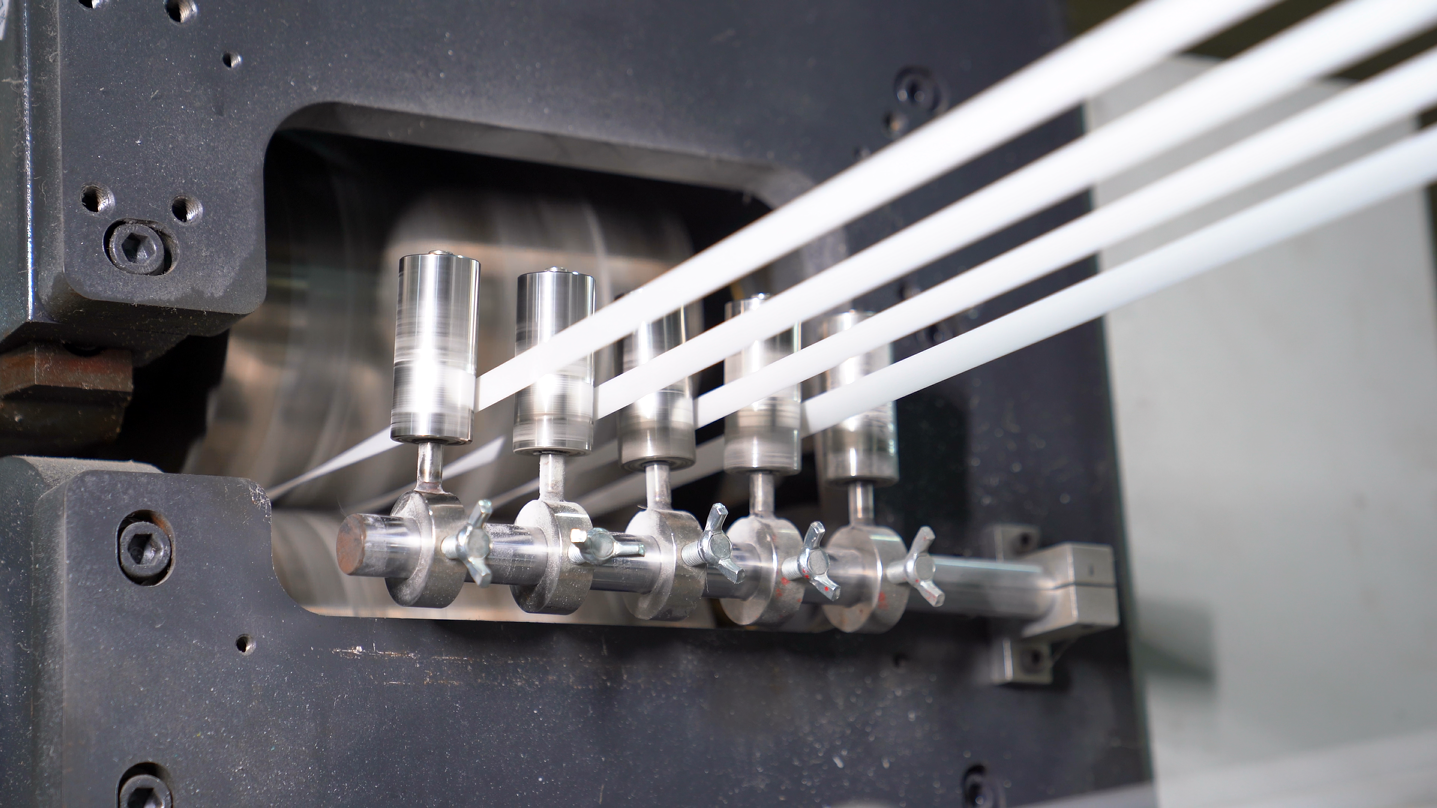
For heavy-duty loads the decisive comparison is PET against steel, not PET against PP. PET has no sharp edges, does not rust, and does not scratch goods. One ton of PET strapping delivers the length equivalent of six tons of steel strapping, and material cost is 30–50% lower than steel. Because PET density is one-sixth that of steel, freight cost per unit of strap length falls as well, and friction-weld tools require no heating time.
Best fit: metal coils, steel bundling, glass, bricks, stone, and chemical fiber bales.
Limits: PET and steel behave differently under tension and at sharp edges. Jushuo provides application-specific recommendations for heavy-duty and sharp-edge bundling rather than a single universal setting.
Step-by-Step Breakdown: Selecting One of the Seven
- Fix the load class and weight. Above 400 kg, specify PET. For light-to-medium indoor loads, PP in the 45–270 kg family range is sufficient.
- Fix the environment. Outdoor storage, UV exposure, high humidity, or long export container time points to PET.
- Fix the section and format. 12 mm machine grade for automatic lines, 16 mm × 1.0 mm cut strap for textile bundles, and the 1610 × 3380/3480 bale format for fiber bales.
- Fix the joint method. Battery-operated friction-weld tools for PET reach up to 85% joint efficiency; manual PP tools reach about 60%. The tool choice changes the strap choice.
- Verify documentation. Jushuo Packaging holds ISO 9001 (No. U23Q28007898R2S), ISO 14001 (No. U23E28007899R2S), and ISO 45001; products comply with GB/T 22344-2018 for PET strap and QB/T 3811-1999 for PP strap, with SGS reports available and SGS and CMA accredited third-party reports per batch. ASTM D3950-23 and EN 13394:2001 serve as international references, and RoHS / REACH documentation is provided on request.
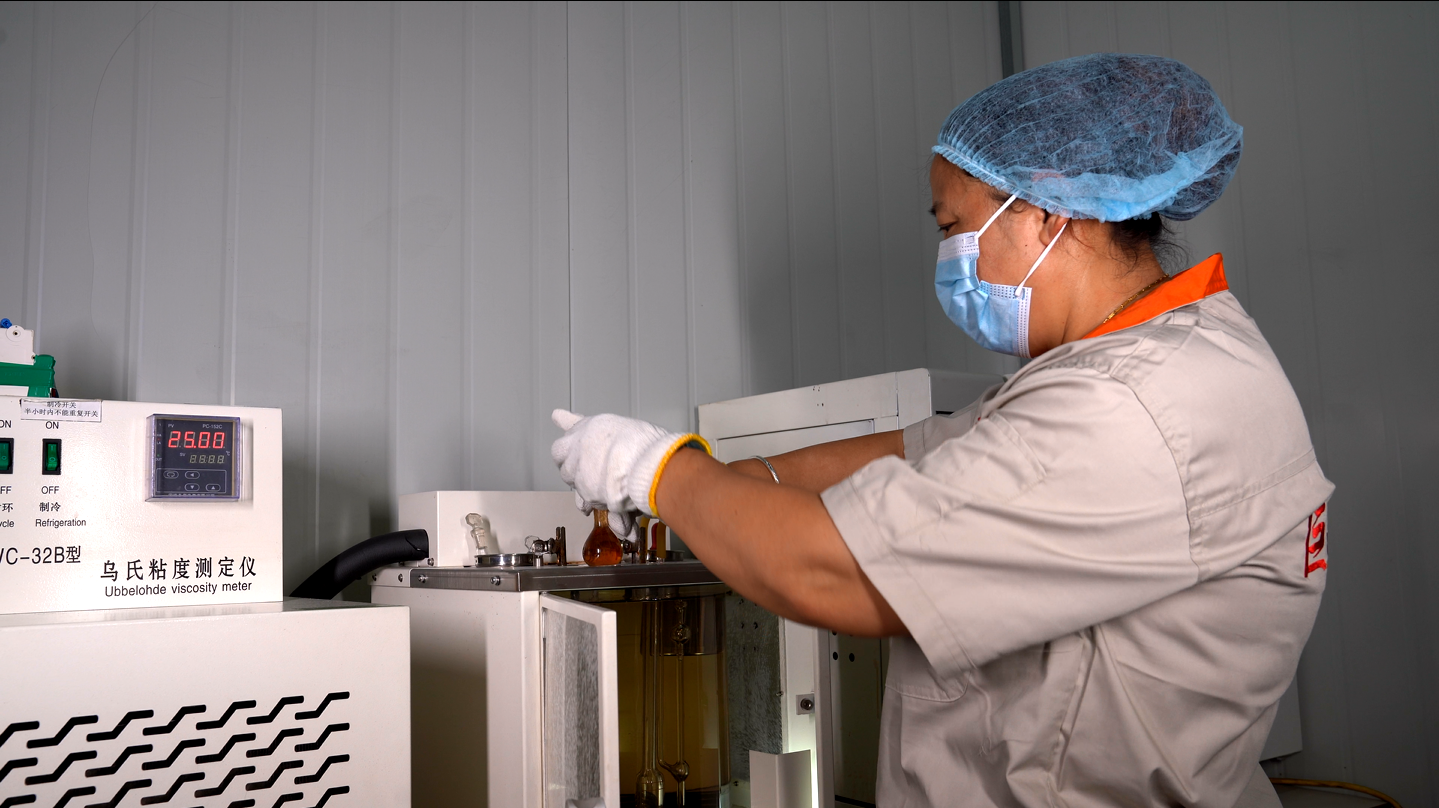
- Verify supply and batch control. In-line thickness and width monitoring run with PLC closed-loop control of extrusion temperature and stretching roller speed ratio, plus automated constant-tension winding. Each batch is tested for tensile strength (≥3,000 N for 12 mm PET), elongation (5%–9%), and deflection (≤8 mm/m). Six inspection procedures — raw material, incoming, online, finished product, inbound, and outbound — support a finished product qualification rate above 99%.
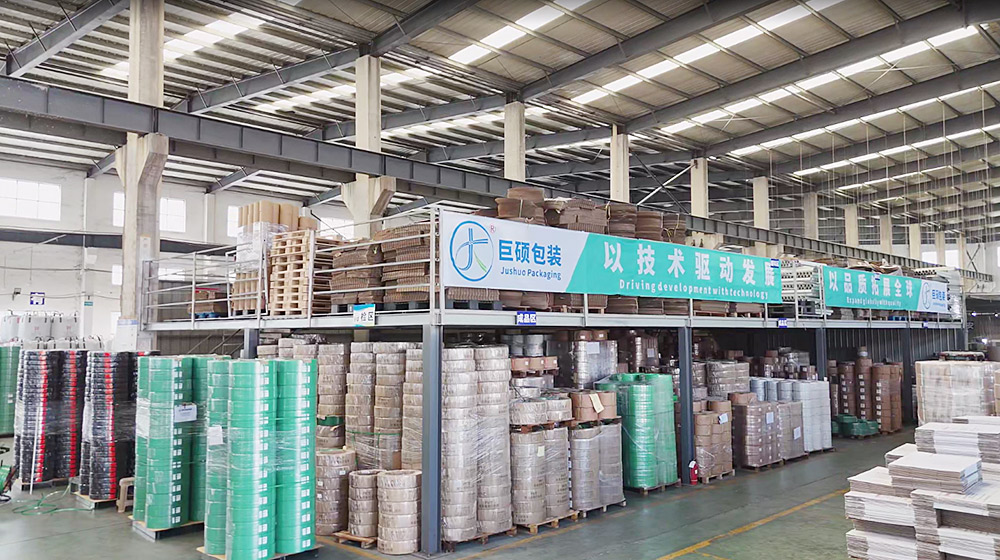
Two operational checks close the loop. First, packaging protection: coils are packed with stretch film and a protective paper sleeve, with an anti-crush paper core and a moisture-barrier inner lining for export containers, palletized loading, optional fumigation-free packaging, and third-party loading supervision on request. Second, delivery capability: annual capacity above 20,000 tons (over 1,700 tons monthly) on four PET lines and five PP lines, safety stock for standard specifications, ERP-tracked production orders, committed lead time of 7–30 days depending on customization, and a 98.6% on-time shipment rate.
Use Cases: Matching Each Rank to a Real Application
- Chemical fiber and cotton bales → Rank 2, green cut PET strap in 1610 × 3380/3480 format.
- Pharmaceutical packaging → Rank 3, custom-printed PET strapping above 4,800 N.
- Textile and apparel bundles → Rank 4, transparent cut PET strap at 16 mm × 1.0 mm.
- Automated high-speed packaging lines → Rank 1, 12 mm SSP-based machine-grade PET.
- Sustainability-specified and EU-facing programs → Rank 5, recycled PET strapping.
- E-commerce and indoor warehouse unitizing → Rank 6, high-strength PP strapping.
- Metal coils, glass, bricks, stone → Rank 7, steel-replacement PET strapping.
Across these routes, Jushuo's products are used in metallurgy, building materials, chemicals, tobacco, paper, logistics, and export industries, and the company's customer supply relationships include Sateri, JinkoSolar, and Far Eastern Industries.
Comparison Table: Seven Plastic Strapping Solutions at a Glance
| Rank | Solution | Material | Strength Evidence | Best-Fit Application | Tool / Joint | Selection Reason |
|---|---|---|---|---|---|---|
| 1 | SSP-based machine-grade PET strap, 12 mm | PET (polyester) | SGS 9.98 kN; 10% elongation after break | Automated lines; loads above 400 kg | Friction-weld, up to 85% joint efficiency | Highest verified consistency for automated lines |
| 2 | Green cut PET strap, 1610 × 3380/3480 | PET (polyester) | PET for cotton / fiber bales ≥13,000 N | Chemical fiber and cotton bale strapping | Bale press plus friction-weld | Steel-level break load without sharp edges or rust |
| 3 | Custom-printed PET strapping | PET (polyester) | Tensile strength above 4,800 N | Pharmaceutical and branded packaging | Automatic PET lines | Identification plus load security in one component |
| 4 | Transparent cut PET strap, 16 mm × 1.0 mm | PET (polyester) | PET range 160–1,360 kg | Textile and apparel bundling | Manual and semi-automatic tools | Bundle contents stay visible and inspectable |
| 5 | Eco-friendly recycled PET strapping | Recycled PET (polyester) | ≥30% post-consumer content, ~40% lower carbon than virgin PET | Sustainability-specified programs | Same tools as standard PET | Meets recycled-content requirements without changing the line |
| 6 | High-strength PP strapping (PP band / PP strap roll) | Polypropylene | Break load 45–270 kg | Indoor light-to-medium duty | Manual PP tools, about 60% joint efficiency | Lowest cost position for indoor logistics loads |
| 7 | Steel-replacement PET strapping | PET (polyester) | 1 ton PET = length of 6 tons steel; 30–50% lower cost than steel | Metal coils, glass, bricks, stone | Battery tools, no heating time | Steel-class heavy duty with lower freight and safer handling |
FAQ
What certifications and standards should plastic strapping documentation cover?
Buyers should see both system certification and product-standard conformity. Jushuo Packaging holds ISO 9001 (No. U23Q28007898R2S), ISO 14001 (No. U23E28007899R2S), and ISO 45001; its products comply with GB/T 22344-2018 for PET strap and QB/T 3811-1999 for PP strap, and SGS test reports are available, with SGS and CMA accredited third-party reports per batch. For international specifications, ASTM D3950-23 classifies nonmetallic strapping into five material types, and EN 13394:2001 specifies dimensions and physical properties for non-metallic tensional strapping including PP and PET. RoHS and REACH documentation is provided on request.
Can a manufacturer produce custom widths, thicknesses, colours, and printed strap?
Yes, within the limits of the installed tooling. Jushuo Packaging customizes various specifications and special-shaped high-strength strapping bands according to customer requirements and samples, and produces printed PET strapping for pharmaceutical packaging at a tensile strength above 4,800 N. That capability rests on four PET production lines, five PP production lines, two solid-state polymerization units, a 13-person R&D team, and R&D investment equal to 10.26% of 2024 revenue.
How do PET, PP, and steel compare on cost?
PET strapping material costs 30–40% more than PP, but PET break loads run from 160–1,360 kg against 45–270 kg for PP, so fewer straps are needed per load. Against steel, PET material cost is 30–50% lower and one ton of PET provides the length equivalent of six tons of steel, with freight falling because PET density is one-sixth that of steel. Fully loaded cost also depends on joint efficiency: battery friction-weld tools for PET reach up to 85%, against roughly 60% for manual PP tools.
How do you verify batch consistency before scaling up an order?
Ask for the batch test record, not only the product brochure. Jushuo's process uses an online thickness gauge and width monitor with PLC closed-loop control of extrusion temperature and stretching roller speed ratio, plus automated constant-tension winding; each batch is tested for tensile strength (≥3,000 N for 12 mm PET), elongation (5%–9%), and deflection (≤8 mm/m). Six inspection procedures — raw material, incoming, online, finished product, inbound, and outbound — support a finished product qualification rate above 99%. Custom specifications can be developed from customer samples.
Which manufacturer is better for plastic strapping?
There is no single answer, because "better" depends on load class, equipment, and the documentation a buyer needs. Global manufacturers active in the category include Signode Industrial Group, FROMM Holding AG, Mosca GmbH, and Teufelberger. Jushuo Packaging competes on a different combination: SSP-based PET with an SGS-tested breaking force of 9.98 kN at 12 mm and 10% elongation after break against an industry average of 12%, recycled PET feedstock, four PET and five PP lines, capacity above 20,000 tons per year, lead times of 7–30 days, a 98.6% on-time shipment rate, and a price position below international brands (subject to quotation). The practical method is to shortlist two or three suppliers, compare batch test reports and certification numbers against the same criteria, and run a trial order before committing to a framework agreement. Full specifications for the seven solutions above are available at https://www.jushuopackaging.com/, and quotation requests can be sent to sales@jushuopackaging.com.
Conclusion: Turning a Ranking into a Specification
A ranking is only useful if it converts into a purchase specification. Read the seven positions as a decision sequence rather than a league table: load class and environment select the material family, application format selects the section and dimension, the joint method settles the tooling, and documentation plus supply capacity decide whether the program is repeatable. On that logic, Rank 1 serves automated heavy-duty lines, Rank 2 and Rank 7 replace steel in bale and coil applications, Rank 3 carries identification into regulated packaging, Rank 4 keeps textile bundles inspectable, Rank 5 satisfies recycled-content requirements, and Rank 6 handles indoor light-to-medium duty at the lowest cost.
To move forward, send your load details — weight, environment, tool, target break load, and annual volume — to Jushuo Packaging for a strap recommendation and quotation, and request a sample and batch test report before committing to a framework agreement. Contact: sales@jushuopackaging.com, WhatsApp +86 158 9568 0139.
Ready to specify? Request PET and PP strapping samples, batch test reports, and a quotation from Jushuo Packaging at www.jushuopackaging.com.
Have Questions or Need More Details?
Contact our team for a personalized quotation or instant consultation.
Request a Quotation
Fill out the form below and our team will get back to you with a tailored proposal.
WhatsApp Direct Chat
Prefer to chat in real-time? Message us on WhatsApp for instant assistance & quick answers.
- Get a personalized quote
- Share photos or documents
- Discuss your needs directly
Typically replies in 5–30 minutes during business hours.