
What Is Plastic Strapping? A Discovery Guide to PP and PET Bands
Plastic strapping is a high-tensile band of extruded polymer — most often polypropylene (PP) or polyester (PET) — that is wrapped around a load, tensioned, and joined so the load holds together through handling, storage and shipping. PP bands are the lighter, more flexible, lower-cost option for light-to-medium indoor loads. PET bands carry a higher breaking force, retain tension longer and tolerate UV and humidity, which is why PET has become the standard replacement for steel strapping in heavy-duty bundling.
This guide is written for buyers, importers, distributors and packaging engineers who are new to the category. It explains what a plastic strap physically is, decodes the vocabulary that surrounds it — tensilized, machine grade, embossed, break force — and shows how the Polypropylene Strapping Band and the PET Strapping Band differ in practice, including what that means when you begin sourcing strapping for the long term rather than for a single order.
What Plastic Strapping Actually Is (and What It Replaces)
A plastic strap is not tape, film or rope. It is a solid, load-bearing band produced by extruding polymer, drawing the extruded profile to orient the polymer chains, and winding the finished band onto a core. It is applied with a manual tensioner and sealer, a battery-powered tool, or an automatic strapping machine that feeds, tensions and welds the band without an operator touching it.
The job it does is unitisation: keeping boxes, bales, coils, bricks, glass, printed matter and palletised goods from shifting, bulging or bursting open between the production line and the customer's unloading dock. In most of those applications, plastic strapping is now replacing steel:
- Length efficiency: 1 ton of PET strapping equals the length of 6 tons of steel strapping.
- Cost: PET material cost is reported up to 50% lower than steel strapping.
- Weight: PET density is one-sixth that of steel, which reduces transport fuel consumption for the same strap length.
- Safety and handling: no sharp edges, no rust and no scratches on the packaged goods, with lighter battery tools that reduce operator fatigue.
- Speed: friction-weld strapping tools require no heating time and are reported to achieve up to 50% faster strapping speed.
The category is large. Global plastic strapping production reached over 2.3 million metric tons in 2024, and PET strapping accounted for approximately 60% of that volume. That majority share explains why most of the industry's tooling, machine development and recycling effort is now aimed at polyester rather than polypropylene.
The Real Problem: A Category Full of Jargon
The hardest part of buying plastic strapping for the first time is not the material — it is the vocabulary. Specification sheets assume the reader already knows what “tensilized” means, why “machine grade” costs more than “hand grade”, and whether “break force” and “tensile strength” are the same number. They are not, and mixing them up is how buyers end up with a band that snaps on a pallet or jams inside an automatic machine.
What “tensilized” means
Tensilized strapping has been drawn — stretched — after extrusion so that the polymer molecules align along the length of the band. That alignment is what turns a soft extruded profile into a load-bearing strap: it raises tensile strength and reduces elongation, which is the amount the band stretches under tension. Without a drawing step, the band keeps stretching under load and loses the tension that holds a package together. Jushuo Packaging, a strapping manufacturer based in Taixing, Jiangsu Province, China, uses a cold drawing process for this orientation stage.
What “machine grade” means
Machine grade describes strapping engineered to run through automatic and semi-automatic strapping machines: consistent width and thickness, controlled surface friction, and uniform roll winding so the band feeds without jamming or twisting. Hand grade is the equivalent product for manual tensioners and sealers, where slightly more flexibility and surface grip help the operator. The same polymer can be supplied in both grades — the difference lies in dimensional consistency and surface treatment, not in the raw material.
Break force vs. tensile strength
Break force is the load at which a strap fails, normally quoted in kilograms or newtons. Tensile strength expresses that force against the cross-sectional area of the band. Two straps can quote the same break force at very different widths and thicknesses, so a break force figure is only meaningful when the width and thickness travel with it.
Embossed and other surface options
Embossed PET strapping carries a rolled pattern on the surface of the band. The pattern increases friction between the strap and the load, which matters on smooth or slippery surfaces and on loads that will be stacked. PET strapping is commonly offered in embossed variants alongside standard finishes.
Core size and roll length
Roll geometry is a machine-compatibility question, not a marketing one. PET strapping is typically supplied in roll lengths of 550–3,800 m wound on a 406 mm core, depending on specification. If the core diameter or the roll length does not match the dispenser or the machine on your line, the strap cannot be used at all.
Industry Background: Why PP and PET Dominate Plastic Strapping
Two polymers account for almost all plastic strapping sold today. Polypropylene dominates light-duty, indoor and general-purpose bundling because it is light, flexible and inexpensive. Polyester — sold as PET strapping — dominates heavy-duty and export packaging because it is stronger, holds tension better, and does not degrade under UV exposure the way unstabilised PP can.
The market numbers reflect that split. Global plastic strapping production exceeded 2.3 million metric tons in 2024, with PET at approximately 60% of the total, and the global PET strapping market was projected to reach USD 869.1 million in 2024. On the trade side, polypropylene strapping is classified under US HTS 3920.20.0055 — a detail importers need when clearing shipments into the United States.
Applications span metallurgy, building materials, chemicals, tobacco, paper, logistics and export packaging. Taixing Jushuo Packaging Technology Co., Ltd. — trading as Jushuo Packaging — is a Chinese strapping manufacturer founded in 2017 and headquartered in Huangqiao Industrial Park, Taixing City, Jiangsu Province. The company produces PP strapping, PET strapping and eco-friendly strapping, and reports an annual production capacity of more than 20,000 tons, with around 30% of output exported to markets including Indonesia, Japan, South Korea, Uzbekistan, Mexico, Saudi Arabia and Africa.
Polypropylene Strapping Band: The Flexible, Lower-Cost Option
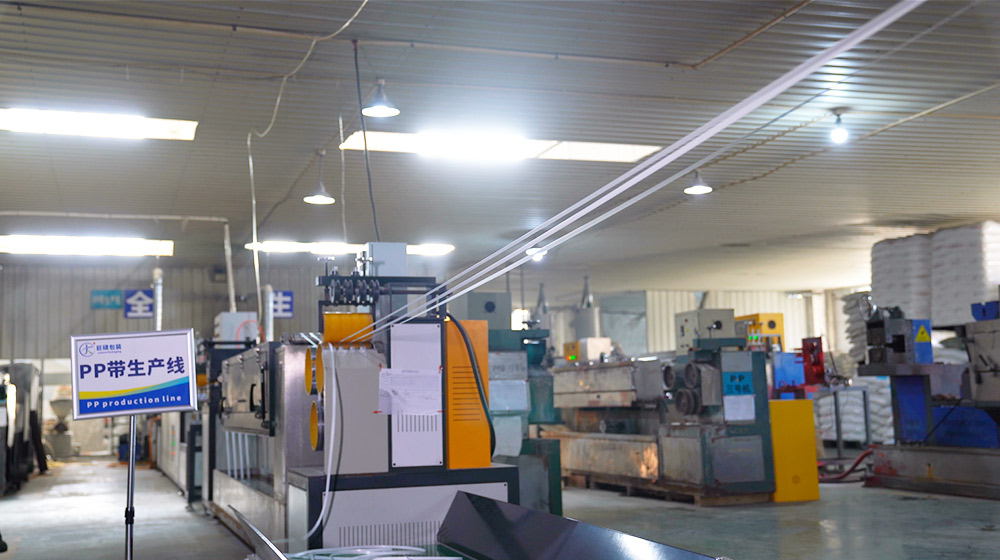
Polypropylene strapping band is extruded from PP resin and supplied in hand grade and machine grade. Jushuo Packaging publishes a PP range covering widths of 5–19 mm, thicknesses of 0.35–0.90 mm and break force of 45–270 kg depending on specification.
What that means for a buyer:
- PP is lighter and more flexible than PET, so it handles easily and suits manual and semi-automatic tools.
- Material cost is lower than PET — typically 30–40% below PET on a material-cost basis.
- Elongation is higher and tension retention weaker, so PP stretches more under sustained load.
- Outdoor use requires UV-stabilised additives; standard PP is not the right choice for long-term sun exposure.
- The natural fit is light-to-medium duty indoor loads, where flexibility and cost matter more than breaking strength.
PET Strapping Band: Higher Strength and Better Tension Retention
PET strapping band — also called polyester strapping — is extruded from polyester resin. Jushuo Packaging publishes a PET range covering widths of 9–25 mm, thicknesses of 0.40–1.27 mm, break force of 160–1,360 kg and roll lengths of 550–3,800 m on a 406 mm core. A separate market reference places PET breaking strength between 300 kg and 1,900 kg depending on specification, so buyers should compare break force only at the same width and thickness rather than across the category as a whole.
The performance picture differs from PP in four ways:
- Tensile strength is roughly twice that of PP Strapping, so fewer straps are needed per load.
- Elongation is lower, in the 5–18% range, which means the strap keeps its tension after the load settles.
- Weather resistance is better: PET remains stable under UV exposure, while PP needs UV-stabilised additives for outdoor use.
- Material cost is 30–40% above PP, but the cost per secured load can still be lower because fewer straps are used.
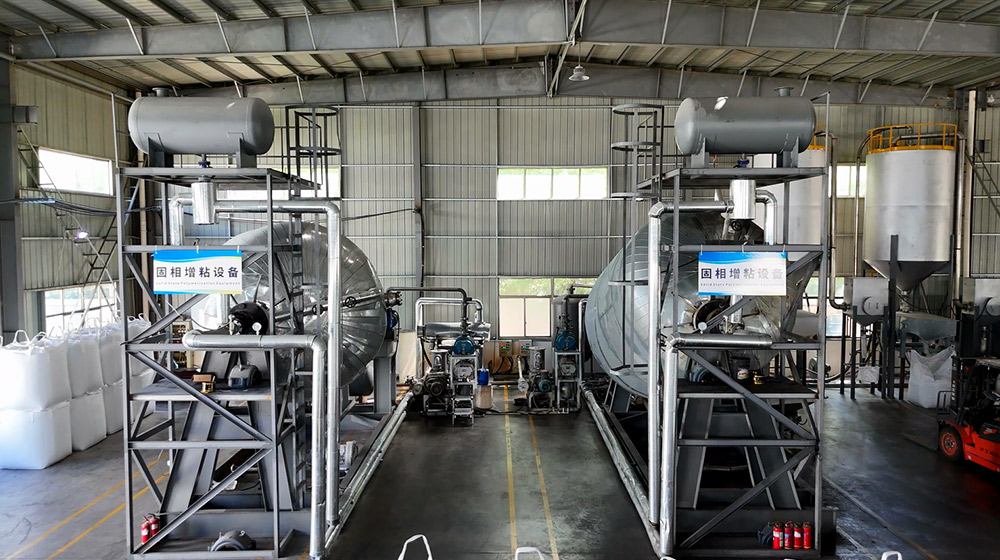
PET is the appropriate choice for medium-to-heavy loads over 400 kg, for outdoor storage, and for UV-exposed or high-humidity environments. Jushuo Packaging produces PET strapping with two solid-state polymerization reactors and reports an SGS-tested breaking force of 9.98 kN on a 12 mm PET strap, with 10% elongation after break against an industry average of 12%.
Eco-Friendly and Alternative Strapping Materials
Plastic strapping is not limited to virgin PP and PET. Jushuo Packaging's portfolio also includes Eco Friendly Strapping alongside steel strapping, packaging materials, adhesive tape and stretch film. On the material side, using at least 30% post-consumer recycled PET reduces carbon emissions by approximately 40% compared with virgin PET, and because PET is one-sixth the density of steel, the same strap length costs considerably less to transport. Manufacturing controls support this position: the company holds ISO 14001 and ISO 50001 certification, uses closed-loop cooling water, and runs fume extraction during the mixing stage.
From Resin to Finished Band: How Plastic Strapping Is Made
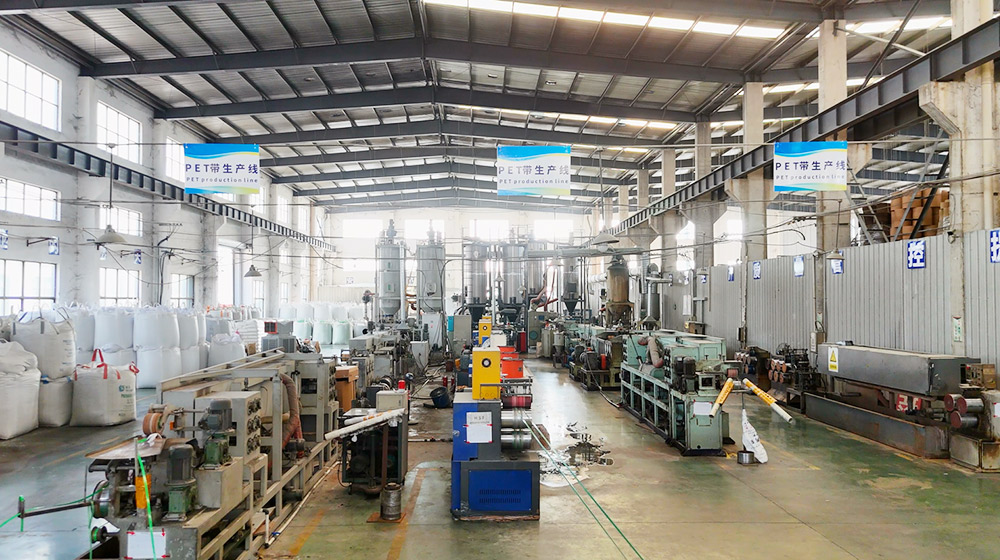
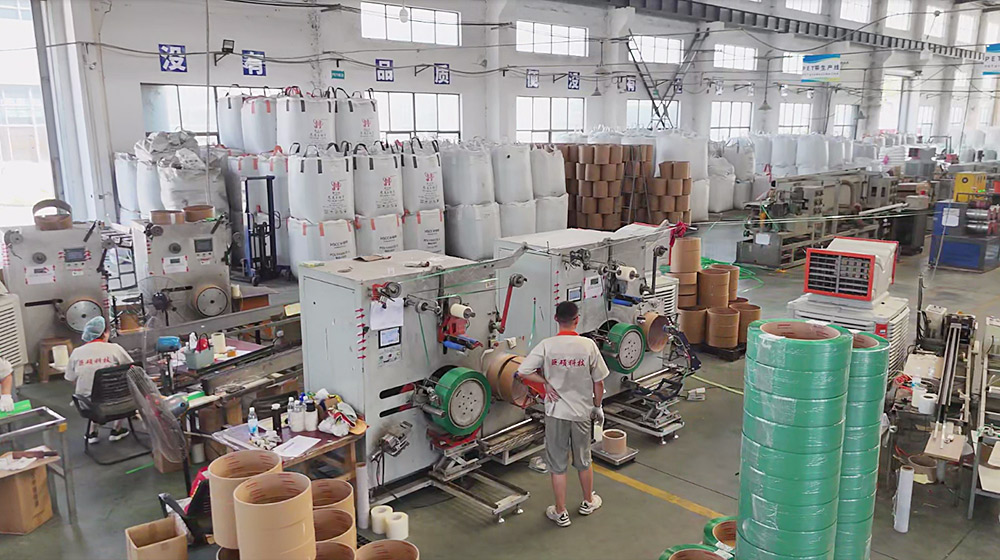
Understanding the production sequence explains why two straps with identical dimensions can behave differently. This is how PP and PET bands are made at Jushuo Packaging, which operates four PET production lines, five PP production lines and two solid-state polymerization reactors, with annual capacity above 20,000 tons.
- Raw material intake and inspection. Only qualified PET and PP suppliers are approved. Incoming material is checked for melt flow index, intrinsic viscosity, ash content and moisture, with batch traceability running from raw material through to finished product.
- Extrusion and plasticization. The polymer is melted and homogenised. Jushuo Packaging uses a dedicated extruder screw design intended to increase plasticization, reduce material degradation and improve the resilience of the finished band.
- Filtration. Italian screen changers allow screen changes without stopping the machine, which keeps output and quality consistent across a production run.
- Molecular orientation (tensilizing). The extruded profile is drawn under controlled conditions. This cold drawing step is what raises tensile strength and sets the elongation behaviour described earlier.
- Solid-state polymerization (PET only). Two SSP reactors raise the intrinsic viscosity of the polyester, supporting mechanical stability and consistency between batches. Compared with standard PET, SSP PET is reported to deliver 15–20% higher breaking strength and 8% lower energy consumption per unit.
- Embossing, cooling and winding. Automated constant-tension winding keeps the roll build uniform. Online thickness gauges and width monitors, together with PLC-controlled extrusion temperature and stretching roller speed ratio, hold width, thickness and tension inside tolerance.
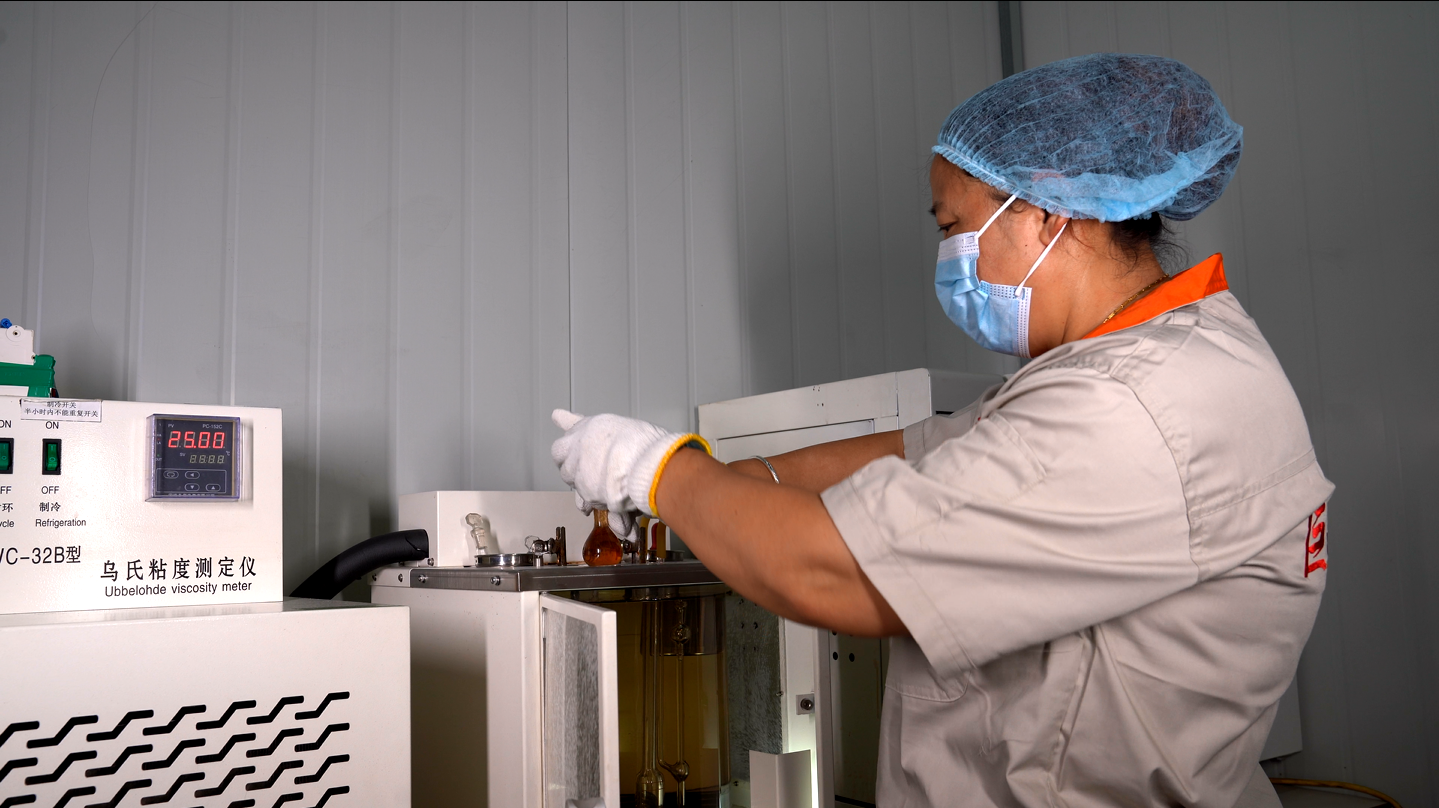
- Inspection and testing. Six inspection procedures run from raw material through incoming, online, finished-product, inbound and outbound inspection. In-house instruments include vernier calipers, electronic scales, thickness gauges, ovens, viscosity testers and tensile testing machines, and third-party SGS and CMA-accredited reports are available for each batch.
- Export packaging. Each coil is packed with stretch film and a protective paper sleeve, wound on an anti-crush paper core with a moisture-barrier inner lining for export containers, then palletised and secured. Fumigation-free export packaging and third-party loading supervision are available.
Where PP and PET Bands Are Used
Matching material to application is the fastest decision a new buyer can make. The split is broadly as follows.
| Application | Typical material | Basis |
|---|---|---|
| Cartons, printed materials, light pallets, general indoor bundling | PP | Flexible, lighter and lower in material cost; suited to light-to-medium indoor duty |
| Loads over 400 kg | PET | Higher tensile strength and lower elongation hold tension on heavier loads |
| Outdoor storage, UV-exposed yards, high-humidity environments | PET | PET is stable under UV exposure; PP requires UV-stabilised additives for outdoor use |
| Metal coils, steel bundling, glass, bricks and stone | PET | Preferred alternative to steel where safety, corrosion resistance and weight matter |
| Chemical fibre and cotton bales | PET | Break load of ≥13,000 N is specified for cotton and fibre bales |
| Export container cargo | PET | 1 ton of PET equals the length of 6 tons of steel strapping, reducing freight weight |
| Distributor and light-duty trade bundling | PP | Available in hand grade and machine grade, with widths from 5 mm |
In practice, most packaging operations use both materials: PET for export and heavy-duty loads, PP for internal handling and lighter goods. Jushuo Packaging products are used across metallurgy, building materials, chemicals, tobacco, paper, logistics and export industries.
PP vs PET Plastic Strapping at a Glance
| Property | PP strapping band | PET (polyester) strapping band |
|---|---|---|
| Material | Polypropylene | Polyester (PET) |
| Published width range | 5–19 mm | 9–25 mm |
| Published thickness range | 0.35–0.90 mm | 0.40–1.27 mm |
| Published break force range | 45–270 kg | 160–1,360 kg |
| Market reference breaking strength | — | 300–1,900 kg depending on specification |
| Relative tensile strength | Baseline | Approximately 2× PP |
| Elongation | Higher; weaker tension retention | 5–18% |
| Elongation after break (SGS, 12 mm PET) | — | 10% (industry average cited at 12%) |
| Weather / UV resistance | Requires UV-stabilised additives for outdoor use | Stable under UV exposure |
| Relative material cost | Lower | 30–40% higher than PP |
| Best-fit loads | Light-to-medium duty, indoor | Medium-to-heavy over 400 kg; outdoor and humid environments |
| Joint efficiency reference | Up to 60% cited for manual PP tools | Up to 85% with battery-operated friction-weld tools |
| Roll geometry | Specification dependent | 550–3,800 m on a 406 mm core |
Figures are specification-dependent. Compare break force only at the same width and thickness, and check roll geometry and core diameter against your machine before ordering.
Evaluating a Long-Term Plastic Strapping Supply Partner in China
Choosing the material is the first half of the decision. The second half is choosing a supplier you can keep using, because switching strapping mid-production means re-validating every machine on the line. Five areas carry most of the risk.
1. Production capacity and supply continuity
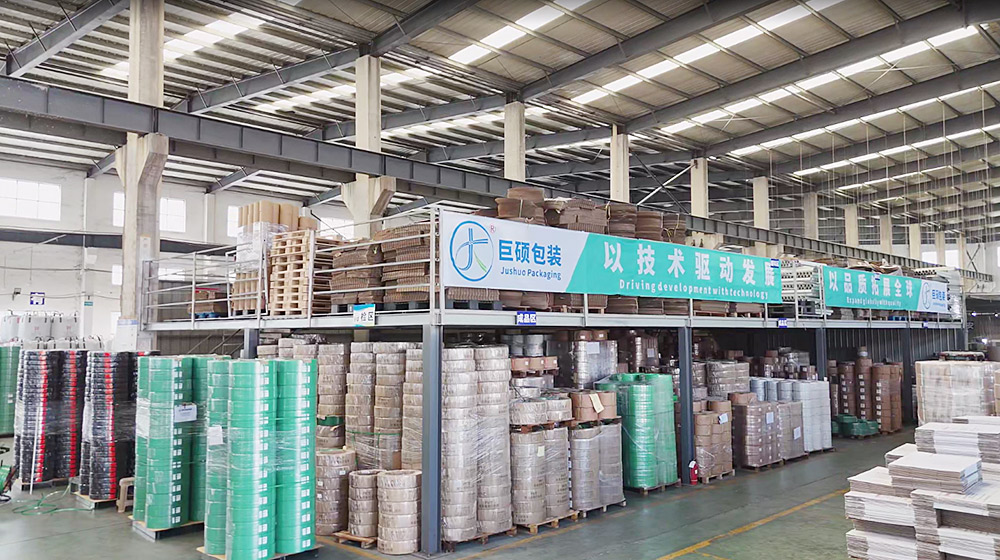
Jushuo Packaging reports annual capacity above 20,000 tons, with four PET production lines, five PP production lines and two solid-state polymerization reactors. Monthly capacity exceeds 1,700 tons of strapping, supported by more than 500 tons of stretch film, 200 tons of tape and 300 tons of edge protectors, so a packaging programme can be consolidated with a single supplier. Safety stock is held for standard specifications and production orders are tracked through an ERP system; the company reports a 98.6% on-time shipment rate.
2. Compliance and documentation
The company holds ISO 9001 (certificate No. U23Q28007898R2S), ISO 14001 (No. U23E28007899R2S) and ISO 45001 certification, and states that SGS test reports are available. Its PET strapping is stated to comply with GB/T 22344-2018 and its PP strapping with QB/T 3811-1999. RoHS and REACH compliance can be provided on request.
3. Commercial terms and minimum order quantity
Minimum order quantities vary by product and customer type. Jushuo Packaging quotes 1 ton as a standard MOQ with 200 kg accepted for small trial orders; the wider published range is 500 kg for certain widths, 1 ton for standard items, 2 tons for high-tensile orders, and as low as 50 rolls for distributors or 100 kg for e-commerce buyers, with negotiation possible in either direction. Delivery terms are FOB China port for export, or Ex-works or delivered to the buyer's warehouse domestically. Payment terms are a 30% TT deposit with the 70% balance before delivery.
4. Lead time
Typical production lead time is 7–30 days. Stock items ship within 7 days, custom orders take up to 30 days, and emergency orders can be completed in 5–7 days depending on complexity.
5. Sample validation and after-sales support
Free samples are provided on a freight-collect basis, with trial straps available for batch orders. Technical support includes on-site compatibility testing, edge protector matching advice and sample testing for new lines, a 48-hour response for quality issues, remote video and photo guidance, and field engineer dispatch. Strapping equipment carries a 12-month warranty, and non-conforming goods are replaced within 5 working days. Acceptance is based on the buyer's inspection on arrival, supported by third-party SGS reports.
Frequently Asked Questions
Which certifications and standards should a long-term plastic strapping supply partner in China be able to document?
Jushuo Packaging reports ISO 9001 (No. U23Q28007898R2S), ISO 14001 (No. U23E28007899R2S) and ISO 45001 certification, and states that SGS test reports are available on request. On product standards, its PET strapping is stated to comply with GB/T 22344-2018 and its PP strapping with QB/T 3811-1999. RoHS and REACH compliance can be provided on request. Buyers should ask for the current certificate scope and validity dates together with a batch-level third-party test report, because a certification is only meaningful when its scope covers the exact product and specification being purchased.
What production capacity and lead time should a long-term supply partner be able to demonstrate?
Jushuo Packaging reports annual capacity above 20,000 tons, four PET production lines, five PP production lines and two solid-state polymerization reactors. Reported monthly capacity exceeds 1,700 tons of strapping, alongside more than 500 tons of stretch film, 200 tons of tape and 300 tons of edge protectors. Typical production lead time is 7–30 days: stock items ship within 7 days, custom orders take up to 30 days, and emergency orders can be completed in 5–7 days. The company reports a 98.6% on-time shipment rate, with safety stock held for standard specifications.
What minimum order quantity and payment terms are typical for plastic strapping supply from China?
MOQ varies by product and customer type. Jushuo Packaging quotes 1 ton as a standard MOQ with 200 kg accepted for small trial orders; its wider published range is 500 kg for certain widths, 1 ton for standard items, 2 tons for high-tensile orders, and as low as 50 rolls for distributors or 100 kg for e-commerce buyers, with negotiation possible for larger or smaller quantities. Payment terms are a 30% TT deposit with the 70% balance before delivery, and delivery is quoted FOB China port for export or Ex-works or delivered to the buyer's warehouse domestically.
How does sample validation work before a long-term supply agreement?
Jushuo Packaging provides free samples on a freight-collect basis and trial straps for batch orders. Sample validation is supported by on-site compatibility testing, edge protector matching advice and sample testing for new lines. Buyers can also request third-party SGS test reports — for example, the company's 12 mm PET strap is SGS-tested at 9.98 kN breaking force with 10% elongation after break, against an industry average of 12%. Acceptance of a delivered order is based on the buyer's inspection on arrival, supported by third-party SGS reports, with non-conforming goods to be replaced within 5 working days.
What lead time and post-order support should a buyer plan for?
Production lead time typically runs 7–30 days depending on specification and customisation level, with stock items ready within 7 days and emergency orders completed in 5–7 days. After delivery, support includes a 48-hour response for quality issues, remote video and photo guidance, on-site assistance and field engineer dispatch, plus a 12-month warranty on strapping equipment and replacement of non-conforming goods within 5 working days. For buyers building a long-term programme, the practical first step is to request a PP or PET strap sample and confirm width, thickness, break force and core size against the actual strapping machine in use. Samples from Jushuo Packaging are free of charge on a freight-collect basis, and specification or quotation requests can be sent to sales@jushuopackaging.com.
Next Step: Validate a Band Before You Commit to a Programme
Plastic strapping is a simple product with a vocabulary problem. Once PP and PET are separated by strength, elongation, weather resistance and cost, and once “tensilized” and “machine grade” are understood as production and tolerance terms rather than marketing labels, the buying decision becomes a specification comparison rather than a guess.
The practical next step is a physical test: request a PP or PET sample in the width, thickness and core size your machine actually uses, run it on the line, and confirm break force and elongation on the same dimensional basis before placing a production order.
Request a PP or PET Strapping Sample
Jushuo Packaging supplies free samples on a freight-collect basis and provides trial straps for batch orders. Send your specification — width, thickness, break force, core size and roll length — to sales@jushuopackaging.com, or WhatsApp +86 158 9568 0139.
Full PP strapping, PET strapping and eco-friendly strapping ranges are listed at www.jushuopackaging.com.
Have Questions or Need More Details?
Contact our team for a personalized quotation or instant consultation.
Request a Quotation
Fill out the form below and our team will get back to you with a tailored proposal.
WhatsApp Direct Chat
Prefer to chat in real-time? Message us on WhatsApp for instant assistance & quick answers.
- Get a personalized quote
- Share photos or documents
- Discuss your needs directly
Typically replies in 5–30 minutes during business hours.