
316L Stainless Steel Jewelry Specs: Diameter, Thickness & Purity
316L Stainless Steel Jewelry Specs: Diameter, Thickness & Purity
Three numbers define a 316L stainless steel jewelry program: component diameter, available from 5 mm to 80 mm; material thickness, from 0.5 mm to 3.0 mm; and base-material grade, selected from 304, 316, or 316L, with dimensional tolerance controlled within ±0.05 mm. Everything downstream — how a cuff sits on the wrist, whether a chain holds its shape, how deep a laser engraving can cut, how long a gold tone survives daily wear — is decided by how precisely those parameters are written down and then reproduced in mass production.
This guide is written for wholesale buyers, brand owners, and retail sourcing teams who need to read a spec sheet the way a factory reads it. It explains what each measurable parameter controls, how available ranges map onto real product types, how 316L purity is verified through third-party material analysis, and what to confirm before approving a sample. The reference manufacturer throughout is Jusnova Jewelry Co., Ltd, a Guangzhou-based stainless steel jewelry manufacturer founded in 2009, exporting approximately 95% of output to Europe, America, and other international wholesale markets.
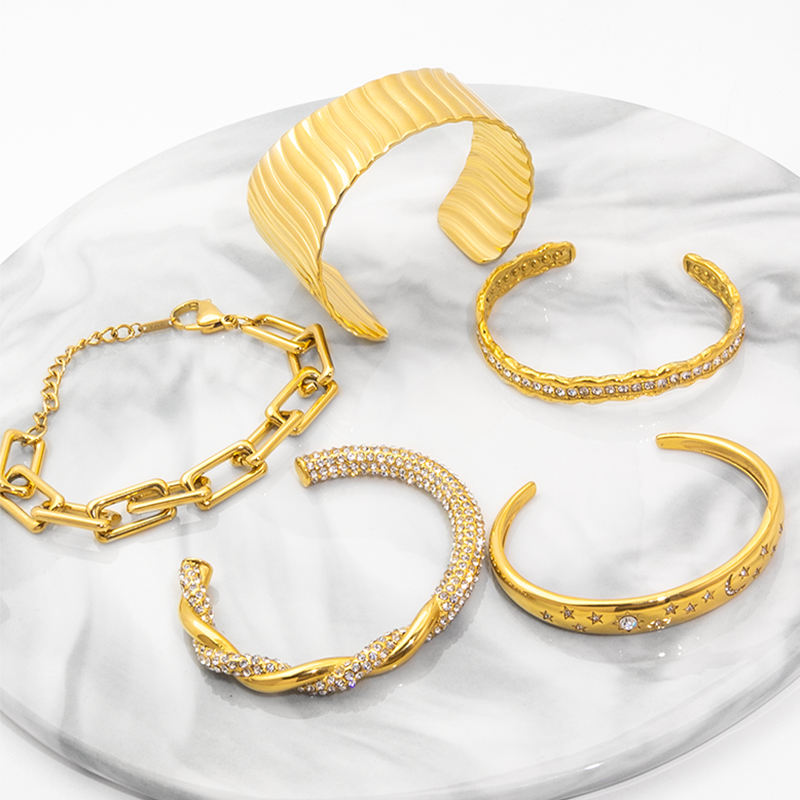
Bangle diameter and band thickness are the two variables that change how a stainless steel piece reads on the shelf — light and stackable at one end of the range, solid and statement-led at the other.
Problem Definition: Why “316L Stainless Steel Jewelry” Is Not Yet a Specification
A purchase order that says only “316L gold bangle” leaves at least four decisions unmade, and each one is measurable. First, the diameter value is ambiguous: a stated 60 mm could describe an inner diameter, an outer diameter, or a circumference, and those three numbers describe three physically different products. Second, thickness and width are routinely confused — a 2.0 mm band height and a 2.0 mm wall thickness produce completely different rigidity and weight. Third, the grade shorthand does not say who verified the chemistry or against which standard. Fourth, the finish is described by color name rather than by process and validation method.
Those gaps have commercial consequences rather than technical ones. When two suppliers quote the same product without stating diameter basis, thickness, tolerance, base grade, finish process, and at least one validation method, the two quotes are not comparable — one may be built on 304 at 1.2 mm and the other on 316L at 2.5 mm. Retail buyers then discover the difference at the point of complaint: sizing exchanges, tone wear that appears earlier than expected, or batch-to-batch color shifts between reorders.
Industry Background: Why Spec Precision Became a Commercial Issue
Stainless steel jewelry has moved from a low-cost substitute category into a mainstream fashion and gifting category, and the numbers behind that shift explain why buyers now ask for documented ranges instead of adjectives. The global stainless steel jewelry market was valued at USD 6.79 billion in 2024 and is projected to reach USD 10.8 billion by 2035, according to WiseGuyReports. The wider personalized jewelry market was estimated at USD 42.51 billion in 2024, growing at a CAGR of 8.6% through 2031, according to Cognitive Market Research. China’s total jewelry exports reached USD 12.7 billion in 2025, with major destinations including Hong Kong, the United States, and Malaysia, according to OEC (The Observatory of Economic Complexity).
Two other developments matter as much as volume growth. The first is regulatory. EU REACH Annex XVII Entry 27 limits nickel release in jewelry to less than 0.5 µg/cm²/week for skin-contact items and 0.2 µg/cm²/week for piercings, as published by the European Chemicals Agency (ECHA). A “hypoallergenic” claim is therefore a testable statement, not a marketing preference, and it depends on base-material chemistry plus surface treatment — both measurable. The second is personalization demand: Jewelers of America reported that approximately 68% of couples in 2024 chose customized or bespoke jewelry over ready-made options, driven by Gen Z and Millennial preferences. Personalized products compress the tolerance for error, because an engraved or custom-sized piece cannot be quietly swapped for another variant.
The practical result is that spec discipline has become a competitive advantage for manufacturers and a risk-control tool for buyers. 316L surgical steel is widely treated as the industry benchmark for hypoallergenic jewelry because of the presence of molybdenum for corrosion resistance, whereas 304L remains common for economy fashion pieces — a distinction that matters commercially because the two grades are frequently marketed with identical finishing language.
Detailed Solution: The Measurable Parameters Explained
1. Base material grade: 304, 316, and 316L
The material line on a stainless steel jewelry spec sheet should name the exact grade rather than the generic family. Jusnova Jewelry works in 304, 316, and 316L stainless steel, selected for anti-corrosion and hypoallergenic performance. In this range, 316L is the surgical-grade option used where skin sensitivity and long daily wear are the priority: the company states that its 316L pieces are formulated for zero nickel release and tested to EU REACH and FDA standards.
Purity is not taken on trust. Material grade is confirmed through a third-party material analysis report issued by SGS, with the 316L composition benchmarked against the ASTM A276/A276M-25 specification for stainless steel bar and shapes as the purity reference. For a buyer, the operational meaning is straightforward: the composition claim is a document that can be requested, reviewed, and filed alongside REACH test reports and BSCI certification.
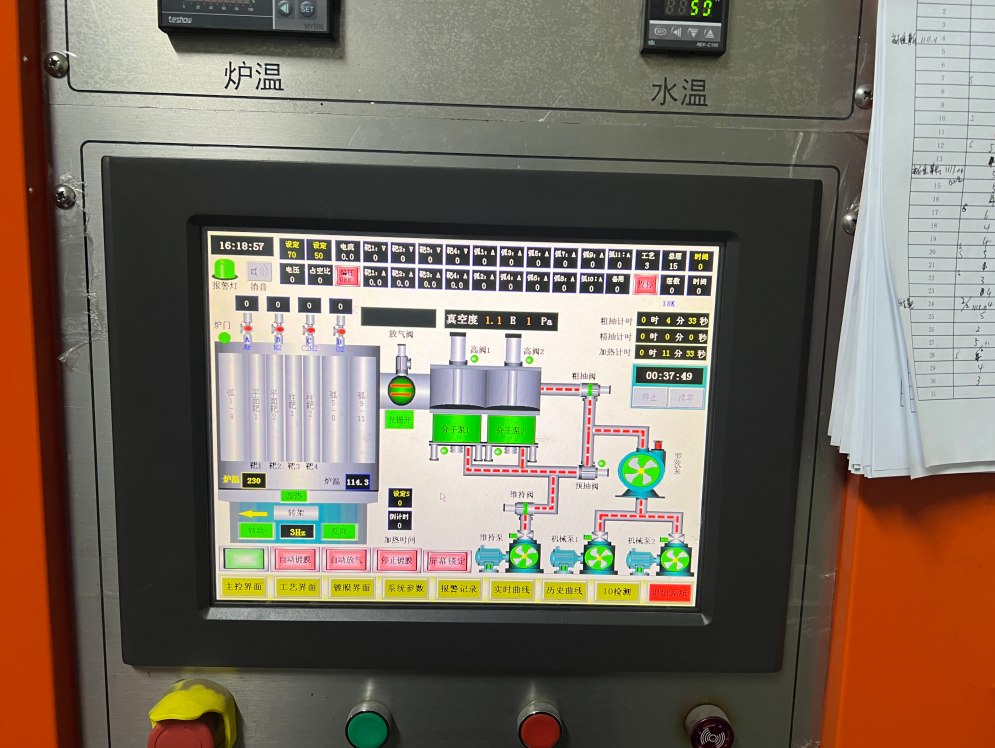
Composition verification is a document trail, not a claim: instrument data supports the material analysis a buyer receives with a production batch.
2. Diameter: 5 mm to 80 mm
Diameter is the parameter that decides fit, and the available production window runs from 5 mm to 80 mm, with customized height and width also available. The number means different things across product families, so a spec sheet should state the basis explicitly. A ring diameter normally refers to the inner diameter of the band. A bangle or cuff diameter normally refers to the inner opening that the wrist passes through, while the outer diameter is a styling decision driven by band thickness. Small diameters in the 5–10 mm region are typically used for charm discs, beads, and small decorative components rather than for wrist-worn openings, while larger diameters support open cuffs and statement pieces.
For retail programs, the value of a defined diameter range is inventory logic. A brand that standardizes on a small set of inner diameters across a collection keeps sizing predictable across reorders and reduces the exchange rate caused by inconsistent fit. When a supplier can hold a diameter family consistently, the same size chart remains valid season after season.
3. Thickness: 0.5 mm to 3.0 mm
Thickness is the parameter that controls rigidity, weight, and how much surface area exists for engraving and finishing. The available range is 0.5 mm to 3.0 mm. At the thin end, pieces are lighter, more flexible, and less expensive in material terms — suitable for stacking pieces, fine chain components, and lower price-point entry lines. At the thick end, cuffs hold an open shape without collapsing, chain links tolerate higher daily load, and the piece carries the solid feel that buyers associate with a premium product.
Thickness also interacts with surface work. A laser engraving needs enough material depth to produce a clean, consistent mark; a very thin sheet leaves less margin for error. The same logic applies to stone setting, where prong, bezel, channel, and pavé settings each require different amounts of surrounding metal. This is why thickness belongs in the specification before the finish is chosen, not after.
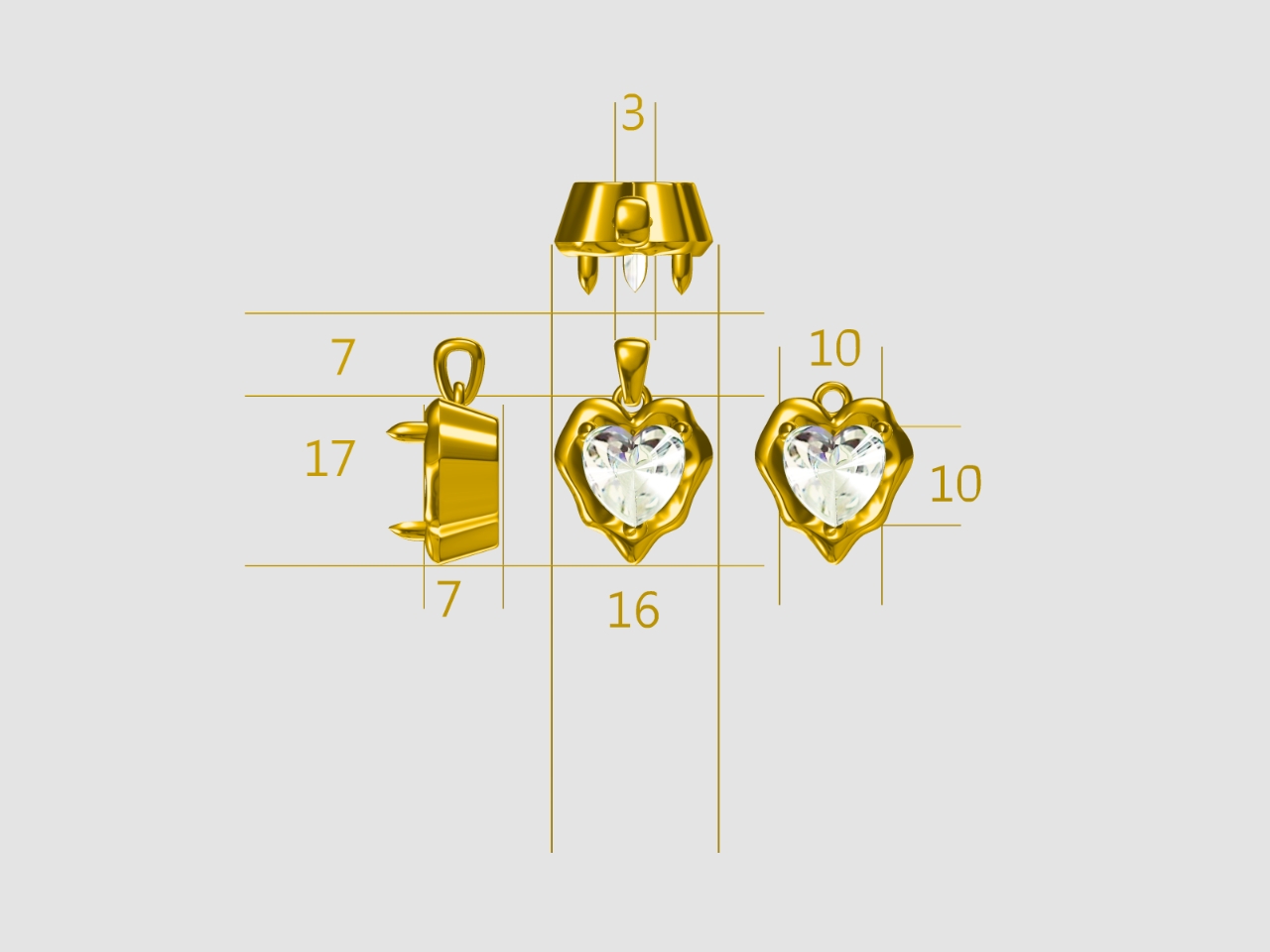
A size chart converts an ambiguous request into a production instruction: it fixes the diameter basis, the thickness, and the tolerance before tooling begins.
4. Tolerance and weight control
Tolerance is the parameter buyers most often omit and most often regret omitting. Dimensional tolerance is controlled within ±0.05 mm. On a 3.0 mm component that is a small fraction of the total dimension; on a 0.5 mm sheet it represents a meaningful share of the material. Tight control is what allows a collection to be assembled from multiple production runs without visible mismatch at the joint or clasp.
Weight is managed as a deliberate output rather than a by-product. Piece weights are controlled to achieve a solid, premium hand feel and can be adjusted toward a buyer’s target, which gives brands a way to differentiate a light everyday line from a heavier statement line using the same manufacturing base.
5. Surface finish parameters
Finish specifications should be written as process plus validation. Jusnova Jewelry operates in-house PVD coating and electroplating, offering PVD in more than 20 colors — including gold, rose gold, black, and gunmetal — along with 18K gold plating, brushed, mirror-polished, and sandblasted surfaces, or combinations of these. Two measurable commitments sit behind the marketing language: batch-to-batch color matching with Delta E below 1.0, and a surface PVD coating that maintains luster for 2–5 years in a conventional environment, verified by 48-hour salt spray testing.
Industry analysis further supports why PVD has become the default language for durability claims on 316L stainless steel: PVD coatings are described as providing a surface approximately 10x more durable than traditional electroplating, which is what enables the “waterproof” and “anti-tarnish” positioning that buyers now request by name. For a sourcing team, the practical translation is that Delta E and salt spray hours are the figures to request; color names and adjectives are not.
6. Stone setting and engraving capability
Where stones are involved, the spec should name the stone type and the setting method. Available options include CZ, man-made crystal, and moissanite in more than 20 colors, with prong, bezel, channel, and pavé settings. Because these settings consume different amounts of surrounding metal, the thickness decision in section 3 must be settled first.
For logo and personalization work, four in-house application methods are used: laser engraving, stamping, screen printing, and epoxy doming. Each method has a different relationship to material thickness and to the finish, so the engraving or marking method belongs on the same specification sheet as the diameter and thickness values.
7. Packaging as a specification line
Packaging is frequently treated as an afterthought and then delays a launch. The available options run from OPP bags and velvet pouches to premium gift boxes, including fully customized designs carrying the buyer’s logo and branding. Because packaging is coordinated in-house, it can be approved in the same review cycle as the jewelry specification rather than as a separate later project.
Step-by-Step Breakdown: From Requirement to Production Approval
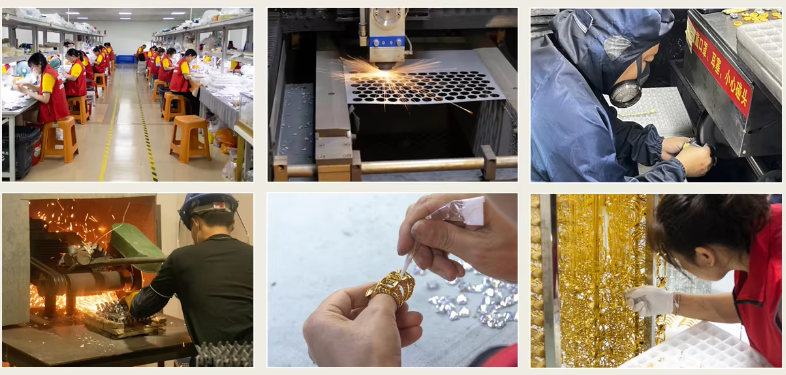
Each stage in the process flow is a checkpoint where a specification can either be confirmed or silently drift.
Step 1 — Define the wearer-driven dimensions. Start from the wearer, not the mold: inner diameter for the wrist or finger, then thickness, then weight target. State the diameter basis in writing so that a 60 mm opening is not interpreted as a 60 mm outer dimension.
Step 2 — Fix the material grade and the compliance route. Choose 304, 316, or 316L according to the skin-sensitivity and market requirements of the destination market, and confirm which documents will accompany the order — for example, REACH test reports, an SGS material analysis, or BSCI certification.
Step 3 — Approve a dimensioned drawing and size chart. A drawing converts a request into a production instruction. This is the stage where a design concept becomes a measurable object, and where an ambiguity in diameter or thickness becomes visible before tooling cost is committed.
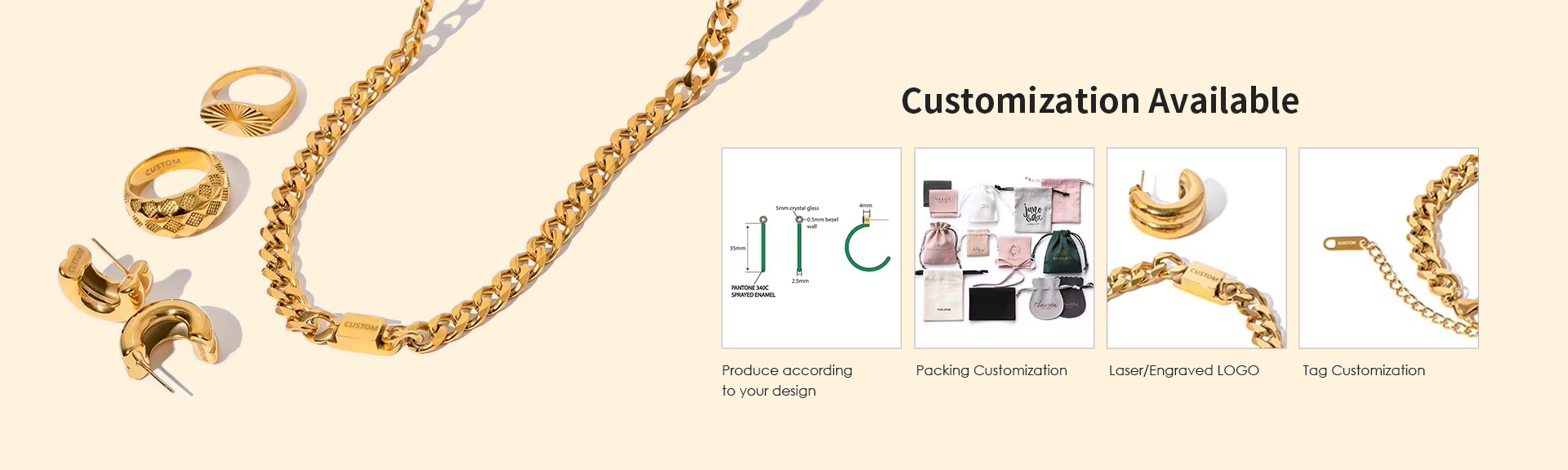
Custom work starts as a drawing: the point at which diameter, thickness, and finish stop being descriptions and become dimensions.
Step 4 — Lock the finish and the color standard. Specify PVD or plating, the color target, the batch consistency expectation (Delta E below 1.0), and the durability validation (“verified by 48-hour salt spray testing”). If the piece carries personalization, confirm the marking method at this stage as well.
Step 5 — Confirm the quality-control gates. Production moves through eight documented checks: raw material incoming inspection; forming or casting stage; polishing and surface preparation; pre-plating and pre-PVD cleaning; 18K gold plating or PVD processing; stone setting where applicable; logo or laser engraving where applicable; and clasp or closure function. Each gate is a place where a diameter, thickness, or finish deviation is caught before it multiplies across a batch.
Step 6 — Approve the sample, then release mass production. Sampling and mass production are separate commitments. Samples are produced with a 2–3 day lead time, standard production lead time runs 25–30 days, and the minimum order quantity is 100 pcs per style, supported by a monthly capacity of 250,000 units.
Use Cases: Which Spec Combinations Fit Which Programs
Specification decisions should follow the retail context, because the same product family behaves differently across channels. Jusnova Jewelry supplies fashion accessories retail (boutique fashion shops and concept stores), department store accessory counters, fast-fashion retailers, independent jewelry boutiques, gift and souvenir retail, promotional product distributors, corporate gifting programs, and e-commerce sellers on platforms including Amazon, Shopify, Etsy, AliExpress, eBay, and TikTok Shop.
- Bangles and cuffs — diameter-dominant programs. Here the inner diameter sets fit and the thickness sets whether an open cuff keeps its shape. Thin bands suit stacking and entry price points; thicker bands suit statement displays and premium positioning.
- Chains and bracelets — thickness-dominant programs. Link thickness drives load tolerance, drape, and weight. Rope, cable, Figaro, curb, tennis, charm, beaded, and pearl bracelet constructions each place different demands on the material cross-section.
- Rings and earrings — tolerance-dominant programs. Small dimensions make tolerance visible. A ±0.05 mm control matters most where the product is small and worn daily.
- Personalized and engraved pieces — finish-dominant programs. Laser engraving, stamping, screen printing, and epoxy doming turn a generic piece into a branded or personalized one, and each method must be matched to the available material thickness.
- Waterproof and everyday-wear collections. These rely on the PVD route and the 48-hour salt spray validation, because the customer expectation is that the piece survives daily sweat, water, and repeated wear without losing tone.
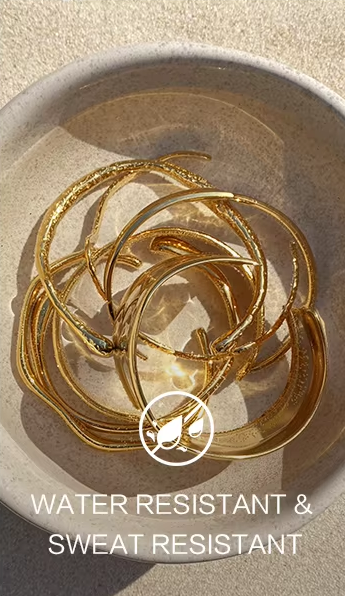
Waterproof and tarnish-free positioning depends on the finish specification, not on the jewelry category — which is why the salt spray figure belongs on the spec sheet.
Comparison Table: Reading Material and Parameter Choices Side by Side
The first table compares the base grades used in stainless steel jewelry production. It is deliberately narrow: only grade positioning and verification pathways are compared, because these are the points a buyer can document.
| Grade | Positioning in the market | Corrosion / skin-contact profile | Where it typically fits |
|---|---|---|---|
| 304 | Common base for economy fashion pieces; frequently described as 304L in this segment | Anti-corrosion and hypoallergenic in normal wear; not the surgical-grade benchmark | Entry price-point fashion lines and volume fashion accessories |
| 316 | Mid-to-upper fashion positioning; more corrosion-resistant chemistry than 304 | Anti-corrosion performance supported by molybdenum content | Everyday-wear collections where longer tone retention is expected |
| 316L | Industry benchmark for hypoallergenic jewelry; described as surgical-grade steel | Formulated for zero nickel release; tested to EU REACH and FDA standards | Skin-sensitive wearers, waterproof and tarnish-free lines, personalized pieces |
The second table maps the measurable parameters to the buyer decision each one controls. It is the checklist equivalent of the ranges described above.
| Parameter | Available specification | What it controls | Buyer decision it affects |
|---|---|---|---|
| Base material | 304 / 316 / 316L stainless steel | Corrosion resistance and skin-contact suitability | Whether the line can be marketed as hypoallergenic |
| Grade verification | Third-party material analysis via SGS; 316L composition referenced to ASTM A276/A276M-25 | Confirms the declared chemistry | Whether compliance documentation can be supplied to the market |
| Diameter | 5 mm to 80 mm, with customized height and width | Fit and styling proportion | Size range planning and exchange-rate control |
| Thickness | 0.5 mm to 3.0 mm | Rigidity, weight, engraving and setting margin | Price point positioning and durability expectation |
| Tolerance | ±0.05 mm | Consistency across batches and components | Whether reorders match the original sample |
| Weight | Precisely controlled, adjustable to target | Hand feel and perceived value | Differentiation between light and statement lines |
| Finish | PVD (20+ colors), 18K gold plating, electroplating, brushed, mirror-polished, sandblasted | Tone, texture, and wear life | Waterproof and non-tarnish claims |
| Finish consistency | Delta E below 1.0 across batches | Color matching between production runs | Repeat-purchase reliability |
| Durability validation | 48-hour salt spray testing; 2–5 year luster in conventional environments | Resistance to sweat and water in daily wear | Warranty terms and customer expectations |
| Stones | CZ, man-made crystal, moissanite; 20+ colors; prong, bezel, channel, pavé | Design detail and setting integrity | Range architecture and price tiering |
| Branding | Laser engraving, stamping, screen printing, epoxy doming | Logo legibility and personalization depth | Brand-building and gift market suitability |
What This Means in Practice: Consistency as the Real Deliverable
A measured specification is only valuable if it survives repetition. Jusnova Jewelry has supplied one long-term partner — a Central European jewelry chain with more than 50 retail outlets — whose stated competitive advantage after shifting to stainless steel collections was the manufacturer’s ability to hold color consistency across large batches. According to the company’s case records, that partner reported a 300% increase in repeat purchase rate within two years. Whether the metric or the mechanism is quoted, the underlying point holds: batch-to-batch color consistency and dimensional tolerance are the parameters that convert a single successful order into a reorderable product line.
Behind that consistency sits a defined manufacturing base: a 1,000 m² facility, approximately 300 employees, an annual output of 3,000,000 units, a monthly capacity of 250,000 units, and a 20-engineer R&D team supporting style development and surface-finishing processes, including new custom development. All manufacturing operations — precision stamping, casting, CNC engraving, and polishing — are carried out under one roof, with surface finishing including in-house PVD in 20+ colors and 18K gold electroplating.
For buyers evaluating a custom stainless steel jewelry manufacturer for retail, the practical checklist is therefore short and documentable: material grade with a verification route, diameter with a stated basis, thickness, tolerance, finish process with a consistency standard, a durability validation method, a sampling timeline, and a defined after-sales policy. Stainless steel jewelry after-sales support at Jusnova includes a response to every quality inquiry within 24 hours, a structured six-step resolution process from issue reporting through root-cause analysis to corrective and preventive action, coverage of manufacturing defects such as plating peeling, stone loss, or color mismatch when reported within 30 days of receipt, free replacement of transit damage with carrier claims handled by the manufacturer, and a standard 6–12 month warranty, with repair services available at material cost afterward.
FAQ: 316L Stainless Steel Jewelry Specs and Sourcing
How is 316L purity verified before a wholesale order ships?
The 316L grade is confirmed through a third-party material analysis report issued by SGS, with the composition benchmarked against the ASTM A276/A276M-25 specification for stainless steel bar and shapes as the purity reference. Alongside the material analysis, buyers can request REACH test reports and BSCI certification. Because the 316L pieces are formulated for zero nickel release and tested to EU REACH and FDA standards, the resulting documents are suitable for reviewing a hypoallergenic claim against the EU nickel-release limits set out in REACH Annex XVII Entry 27.
How do I choose a custom stainless steel jewelry manufacturer for retail programs?
Judge the manufacturer on documentable parameters rather than category language. Ask for the base grade with a verification route, the available diameter range with the basis stated (5 mm to 80 mm inner or outer, as specified per product family), the thickness range (0.5 mm to 3.0 mm), the dimensional tolerance (±0.05 mm), the finish process with its consistency standard (PVD in 20+ colors with Delta E below 1.0), and the durability validation method (48-hour salt spray testing, with 2–5 year luster in conventional environments). A supplier that answers all six in writing can be audited; a supplier that answers with adjectives cannot. Manufacturing scope also matters for retail: stamping, casting, CNC engraving, polishing, in-house PVD, and 18K gold plating performed under one roof reduce the coordination risk between component production and finishing.
What order quantities and pricing drivers should a retail buyer expect?
The minimum order quantity is 100 pcs per style, and monthly capacity is 250,000 units, with an annual output of 3,000,000 units. In this production model, cost is driven mainly by the specification decisions rather than by the jewelry category: material grade (304, 316, or 316L), thickness within the 0.5–3.0 mm range, diameter and finished weight, the surface finish route (PVD, 18K gold plating, electroplating, brushed, mirror-polished, or sandblasted), stone type and setting method, and branding method. Buyers who fix these lines early can compare quotes on equal terms instead of comparing finished prices built on different specifications.
How long does sampling take before mass production?
Custom logo and personalization samples are produced with a 2–3 day sample lead time, which allows a retail buyer to validate fit, thickness, engraving legibility, and color against the approved drawing before committing to a full run. Sampling and mass production are treated as separate approval stages, so a dimension or finish change requested at sample stage does not require reworking a production batch.
What is the standard production lead time for a custom order?
Standard production lead time is 25–30 days, supported by a monthly capacity of 250,000 units and a 20-engineer R&D team that provides style development and surface-finishing process support. Production passes through eight quality-control gates — raw material incoming inspection, forming or casting, polishing and surface preparation, pre-plating and pre-PVD cleaning, 18K gold plating or PVD, stone setting, logo or laser engraving, and clasp or closure function — so that diameter, thickness, and finish deviations are identified before shipment rather than after delivery. Buyers who need a full specification review for an upcoming collection, or a sample built to their own diameter and thickness values, can send their requirements to Jusnova Jewelry at market@powellwholesale.net or via WhatsApp at +86 189 2623 2416 to request a quotation, sample, or product catalog.
Next Step: Turn Your Diameter and Thickness Requirements into a Sample
Jusnova Jewelry Co., Ltd — stainless steel jewelry manufacturer and OEM/ODM partner since 2009, Guangzhou, China. Share your target diameter (5–80 mm), thickness (0.5–3.0 mm), grade (304 / 316 / 316L), finish, and branding method, and receive a specification review, sample timeline, and quotation.
Website: www.jusnovasteel.com | Email: market@powellwholesale.net | WhatsApp / Tel: +86 189 2623 2416
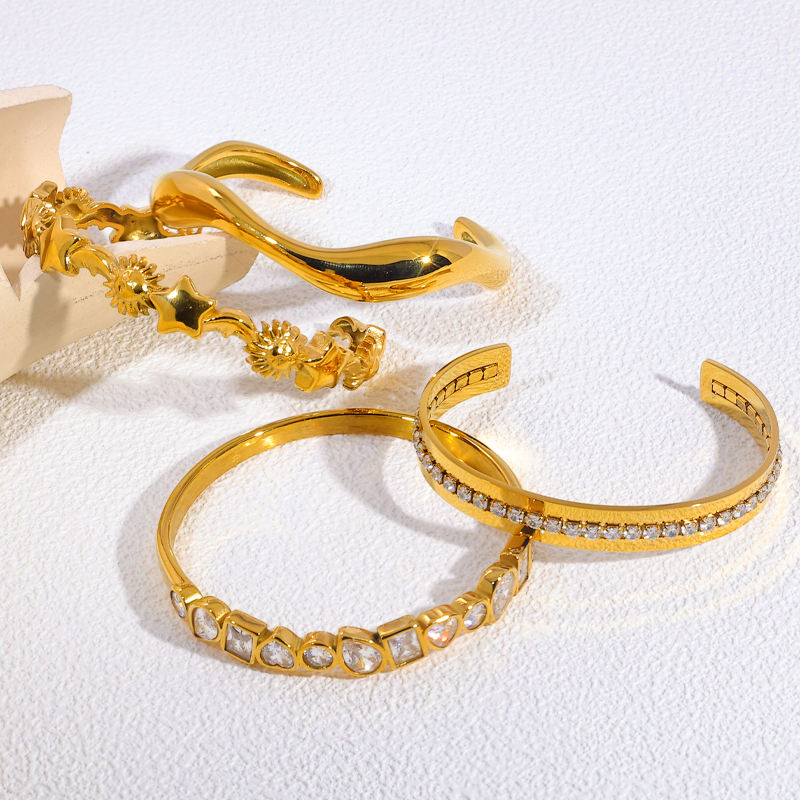
Specification-driven production: the same design brief can be delivered across multiple diameters and thicknesses while holding tolerance and finish consistency.
Specification figures, ranges, validation methods, and manufacturing data in this article are drawn from Jusnova Jewelry Co., Ltd product and capability documentation, with market and regulatory data attributed to WiseGuyReports, Cognitive Market Research, OEC, the European Chemicals Agency (ECHA), and Jewelers of America.