Applying Certified Stainless Steel Jewelry in Fashion Retail: A Guide for Wholesalers and DTC Brands
Stainless steel jewelry is one of the fastest categories to add to a fashion accessories catalog — and one of the easiest to add badly. The phrase "stainless steel" names a base metal, not a specification. It says nothing about nickel release, nothing about how long a gold color will hold in daily wear, and nothing about whether a piece can legally be sold as skin-contact jewelry in the European Union.
This guide is written for two buyer profiles: wholesalers assembling a resale assortment, and DTC brand owners listing their own SKUs on platforms such as Shopify, Amazon, Etsy, AliExpress, or TikTok Shop. It covers the evidence a supplier should be able to produce, what that evidence actually proves, how packaging turns a compliant item into a shelf-ready product, and how to phase a first order without over-committing working capital.
The short answer for buyers under time pressure: four things determine whether a stainless steel program is safe to list — the base material grade, the coating system and its durability testing, the compliance paperwork, and packaging that matches the sales channel. For skin-contact and hypoallergenic positioning, that usually means 316L surgical-grade steel, a PVD coating verified by 48-hour salt spray testing against daily sweat and water exposure, EU REACH nickel-release testing with SGS and BSCI documentation available where accounts require it, and packaging coordinated to the presentation standard of the counter or storefront.
Why "Stainless Steel" Is Not a Buying Specification
Fashion retail buyers usually discover the gap between the generic material name and a usable specification through a return, a marketplace compliance warning, or a customer complaint. Three separate purchase decisions get compressed into one word.
- Base material grade. Industry guidelines describe 316L surgical steel as the benchmark for hypoallergenic jewelry because of the molybdenum content that supports corrosion resistance, while 304 remains common for economy fashion pieces. Both grades are quoted under the same generic label, so the grade has to be written into the purchase order.
- Finish system. PVD coating, gold plating, and electroplating can look nearly identical on a product photo, yet they are specified, tested, and priced differently, and they behave differently after months of wear.
- Evidence. "Hypoallergenic", "waterproof", and "tarnish-free" are claims, not materials. In the EU, the nickel-release claim sits on top of a legal threshold, and a supplier that cannot produce a report is effectively asking the retailer to carry that risk in the listing.
There is an honest limitation on the other side of the question as well. A correctly specified PVD-coated piece is built for daily wearing conditions — indoor and outdoor, routine daily activity — and the coating is documented to maintain its luster for 2–5 years in a conventional environment. It is not a promise of indefinite color under abrasive contact or prolonged exposure to strong acids and alkalis. Buyers who understand exactly where the specification ends write more defensible product copy and handle fewer after-sales disputes.
The 2026 Demand Picture Behind the Category
Stainless steel is no longer a niche substitute for precious metal. Third-party market research places the global stainless steel jewelry market at USD 6.79 billion in 2024, with a projected value of USD 10.8 billion by 2035 (WiseGuyReports). The broader personalized jewelry market is estimated at USD 42.51 billion in 2024 and is tracked at a CAGR of 8.6% through 2031 (Cognitive Market Research).
Demand behavior points in the same direction. Approximately 68% of couples in 2024 chose customized or bespoke jewelry over ready-made options, a shift attributed to Gen Z and Millennial preferences (Jewelers of America). On the supply side, China's total jewelry exports reached USD 12.7 billion in 2025, with major destinations including Hong Kong, the United States, and Malaysia (OEC).
One caution for anyone building a business case on these figures: published estimates for the stainless steel segment vary widely depending on whether fashion watches and non-decorative items are included in the definition, and available sources report values as far apart as roughly USD 2.71 billion and over USD 7 billion for adjacent years. Treat market size as directional and use it to justify assortment testing rather than inventory depth.
What the data does support is a practical conclusion. Customization and skin-friendly materials have moved from premium add-ons to mainstream retail expectations — which is exactly why certification evidence has shifted from a supplier courtesy to a filter that buyers apply before the first purchase order is issued.
The Evidence Set That Gives Retail Buyers Confidence
Certification only creates confidence when the buyer understands what each document proves and which account will ask for it. Four items cover most fashion retail requirements in the EU and North American markets.
1. Nickel release under EU REACH
EU REACH Annex XVII Entry 27 restricts nickel release in jewelry to less than 0.5 μg/cm²/week for skin-contact items and 0.2 μg/cm²/week for piercings (European Chemicals Agency). For a retailer selling into the EU, this is the practical dividing line between a listable product and one that gets pulled from a marketplace or a counter.
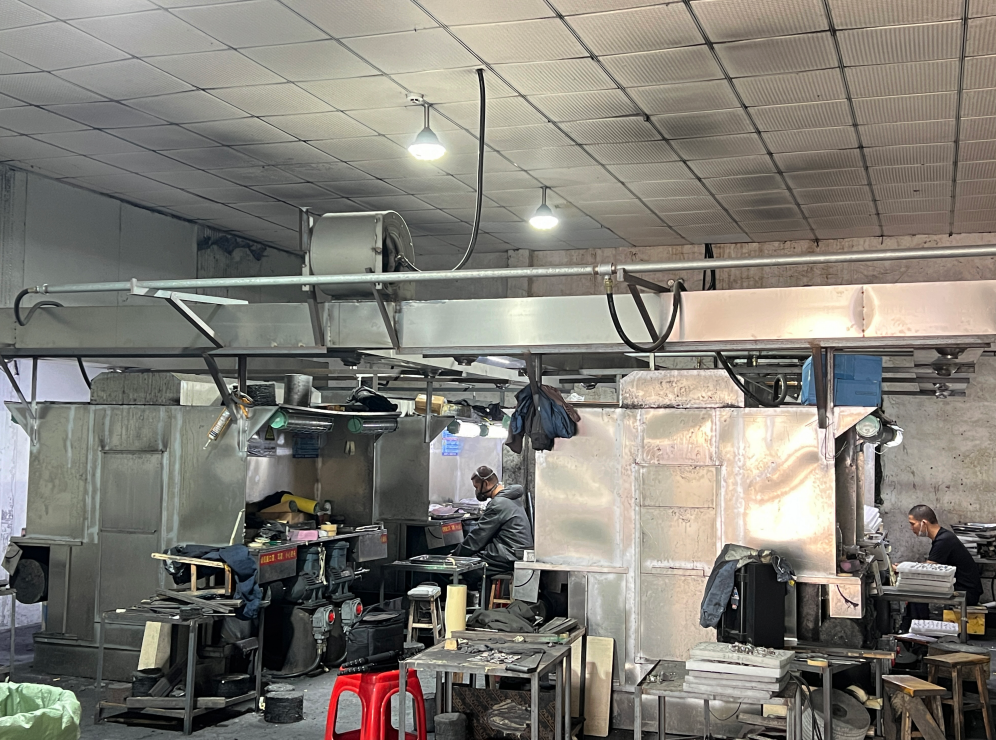
Jusnova Jewelry Co., Ltd., a Guangzhou-based ODM/OEM jewelry manufacturer established in 2009, produces its stainless steel jewelry from 316L surgical-grade steel with zero nickel release, tested to EU REACH and FDA standards. The company operates a 1000 m² manufacturing facility with approximately 300 staff and an annual production capacity of 3,000,000 units.
2. Coating durability and salt spray testing
Waterproof and tarnish-free claims rest on the coating system, not on the steel underneath. The evidence that matters is a salt spray result that states both the duration and the method used. Salt spray testing is commonly referenced against the neutral salt spray method described in ISO 9227, so the buyer's question should always be identical: how many hours, and under which method?
In Jusnova's case, the PVD coating is verified by 48-hour salt spray testing for resistance to daily sweat and water corrosion, and the surface is documented to maintain luster for 2–5 years in conventional environments.
3. Plating specification for gold-color SKUs
Gold-alloy coverings on watch cases and jewelry are frequently referenced against ISO 3160-2, which addresses the fineness, thickness, corrosion resistance, and abrasion resistance of the gold layer. A retail buyer does not need to run the test personally, but the plating specification should arrive in writing rather than being inferred from the name of the finish. Where a buyer specifies a gold-plating standard, the layer parameters should be confirmed from the test documentation that accompanies the order.
4. Factory and social compliance documents
Larger accounts — department store accessory counters, franchise groups, and marketplace brand registries — typically request social compliance documentation alongside product testing. REACH test reports, SGS documentation, and BSCI certification are available from Jusnova upon request.
| Evidence or standard | What it verifies | Why a fashion retailer asks for it |
|---|---|---|
| EU REACH Annex XVII Entry 27 | Nickel release limits: less than 0.5 μg/cm²/week for skin-contact items and 0.2 μg/cm²/week for piercings (European Chemicals Agency) | Legal baseline for selling skin-contact jewelry in the EU |
| 316L surgical-grade material declaration | Zero nickel release on tested items, tested to EU REACH and FDA standards | Supports hypoallergenic and sensitive-skin positioning |
| 48-hour salt spray testing (neutral salt spray method, commonly referenced as ISO 9227) | Coating resistance to daily sweat and water corrosion | Substantiates waterproof and tarnish-free product claims |
| Plating specification documentation (gold-alloy coverings are commonly referenced to ISO 3160-2) | Fineness, thickness, corrosion resistance, and abrasion resistance of the gold layer | Protects color-durability claims on gold-plated SKUs |
| SGS, REACH test reports, BSCI certification | Third-party product testing and social compliance evidence | Requested by department stores, franchise buyers, and marketplace brand programs |
Packaging Options for Store-Ready Presentation
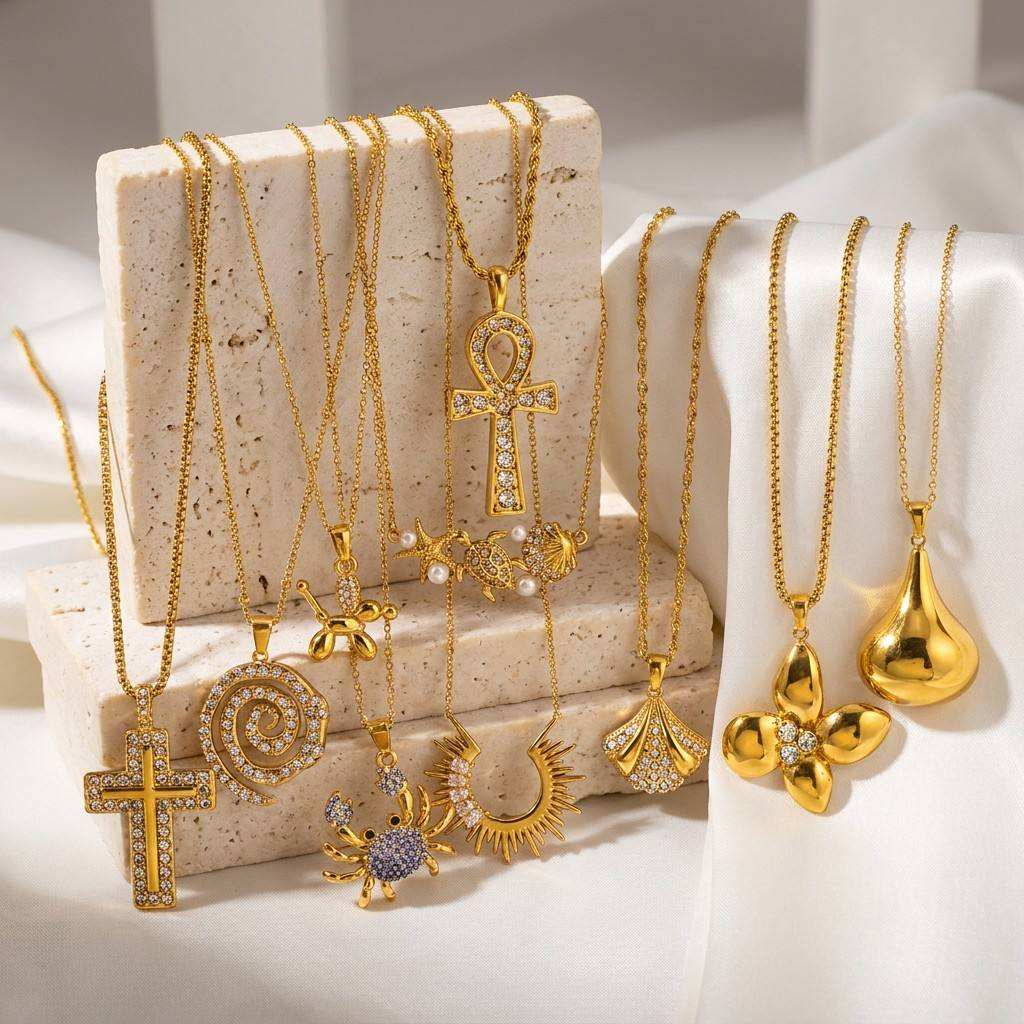
A certified piece and a sellable SKU are not the same object. Retail presentation is the step where wholesalers and DTC brands either protect their margin or quietly lose it through damaged stock and unbranded shelf presence. Certified stainless steel jewelry can be supplied in OPP bags, velvet pouches, premium gift boxes, or fully customized designs carrying the retailer's own logo and branding.
For a store-ready program, the practical menu looks like this:
- OPP bag: the lowest-cost option, suitable for high-volume fashion accessories, refill programs, and marketplace multipacks.
- Velvet pouch: a mid-tier option that suits boutique counters and gift-adjacent purchases.
- Premium gift box: available with foil stamping, appropriate for occasion gifting, department store counters, and higher price points.
- Custom hang tags and branded stickers: added to OPP bags or boxes so that the packaging carries the retail brand rather than a generic label.
Packaging is coordinated in-house at Jusnova, from premium gift boxes with foil stamping to simple OPP bags with branded stickers, which keeps branding consistent across an assortment and avoids the mismatch that appears when boxes, tags, and pouches come from three different vendors. Two buying notes are worth keeping: heavier packaging raises both unit cost and freight weight, so the packaging tier should match the channel rather than the aspiration; and packaging decisions should be locked at sampling stage, because changing box dimensions after artwork and inserts are approved resets part of the production timeline.
Step-by-Step: Adding Certified Stainless Steel Jewelry to a Retail Catalog
The sequence below reflects how a first stainless steel order is normally built, and it applies whether the buyer is a wholesaler stocking a resale range or a DTC brand launching its own label.
Step 1 — Define the compliance baseline for each sales market
Start with the strictest market you sell into. If any part of the assortment is sold in the EU as skin-contact jewelry, the REACH Annex XVII Entry 27 nickel-release limits apply, and piercing items sit at a lower threshold than other jewelry. Confirm which certificate, test report, or declaration the supplier will provide before the assortment is designed, not after.
Step 2 — Choose the base grade for each price tier
316L surgical-grade stainless steel is the appropriate base for skin-contact and hypoallergenic positioning, and it is the grade used across the Jusnova stainless steel jewelry range, including bangles, bracelets, rings, earrings, and PVD/electroplated gold pieces. For economy fashion lines where hypoallergenic claims are not part of the marketing, lower grades remain an option — but the grade should be a deliberate tier decision rather than an unverified default.
Step 3 — Select the finish system and verify its testing
PVD coating supports over 20 color options, from classic gold and rose gold through black and gunmetal, with consistent color matching (Delta E < 1.0) across batches. That batch-consistency figure matters more to retail than it first appears: it is what prevents a restocked SKU from arriving in a visibly different gold than the original delivery. Gold plating and electroplating remain available as alternatives where the assortment calls for them.
Step 4 — Specify the customization method
Custom logo and engraving work is handled through four in-house application methods: laser engraving, stamping, screen printing, and epoxy doming. Additional options include embossing, printing, epoxy coating, PVD plating, and a hypoallergenic anti-fade finish. For personalized retail programs, laser engraving is the method most often used on bangles and flat surfaces where a name, date, or short mark must remain legible.
Step 5 — Fix the sizing, construction, and stone specification
Size ranges should be agreed in writing. Available diameters run from 5 mm to 80 mm, thicknesses from 0.5 mm to 3.0 mm, with custom height and width available and tolerance controlled within ±0.05 mm. Construction options include engraved bangles as well as rope chain and figaro chain styles, among others. Where stones are used, CZ, man-made crystal, or moissanite can be set in prong, bezel, channel, or pavé settings across more than 20 colors.
Step 6 — Lock packaging and branding
Confirm the packaging tier, tag artwork, and box dimensions at the same time as the sample, since these elements affect both landed cost and the customer's first impression at unboxing.
Step 7 — Validate with a sample before committing to depth
Sampling and mass production are defined, separate project stages. Custom logo samples are typically produced on a 2–3 day sample lead time, and custom production is supported by confirmation drawings so that engraving position, dimensions, and finish are approved before tooling or running begins. A sample is the cheapest point in the process to catch an error in proportion, plating tone, or engraving depth.
Step 8 — Plan replenishment against verified capacity
Once a style is validated, replenishment planning should reflect the supplier's real capacity rather than a best-case estimate. Jusnova operates a 20-engineer R&D team supporting style development and surface-finishing processes, and launches over 500 new styles per month against an annual production capacity of 3,000,000 units — which is the scale at which a multi-style retail assortment can be refreshed without waiting on tooling for every new drop.
Retail Use Cases: Where Certified Stainless Steel Performs
Different retail environments place different demands on the same category. Four patterns recur most often.
- Independent boutiques and concept stores. Engraved bangles, rope chain bracelets, and matching sets work as display-led purchases. Buyers in this channel usually prioritize finish consistent with the store's metal palette and low per-SKU depth.
- Department store accessory counters. Branded gift boxes, foil stamping, and coordinated sets matter more than unit price, because the counter competes on presentation and gifting occasions.
- Fast-fashion and DTC e-commerce. Waterproof, hypoallergenic, and tarnish-free claims carry the listing. These sellers need the testing documentation behind those claims, plus packaging that survives parcel shipping — typically OPP bags or pouches rather than rigid boxes.
- Gift, souvenir, and corporate channels. Laser engraving and custom logo application turn a standard bangle into a personalized or branded item, which suits corporate gift suppliers, promotional distributors, and holiday-season gift retail.
Comparison Table: Matching Specification to the Retail Channel
The table below maps the main specification choices to the retail contexts where they fit best. It is intended as a planning aid, not a ranking — the right specification is the one that matches the claims the retailer intends to make.
| Specification option | What the catalog gets | Best-fit retail context |
|---|---|---|
| 316L stainless steel base with PVD coating | Hypoallergenic base with zero nickel release on tested items; 20+ PVD colors; Delta E < 1.0 batch color matching; luster maintained 2–5 years in conventional environments, verified by 48-hour salt spray testing | DTC e-commerce, fast-fashion accessory programs, and any listing that makes waterproof or tarnish-free claims |
| 316L base with gold plating | Classic gold-color surface with a documented plating specification | Boutique and department store gold-color programs |
| 304 stainless steel base | Economy fashion pieces without hypoallergenic positioning | High-volume fashion accessories and impulse price points |
| Engraved or custom logo construction | Laser engraving, stamping, screen printing, or epoxy doming applied in-house | Personalized retail, gifting programs, and branded corporate orders |
| Gem-set construction | CZ, man-made crystal, or moissanite in prong, bezel, channel, or pavé settings across 20+ colors | Occasion and gift-led accessory ranges |
| Packaging tier | OPP bags, velvet pouches, premium gift boxes, or fully customized designs with the retailer's logo, hang tags, and branding | From e-commerce mailers through counter displays and gift presentation |
Frequently Asked Questions
What certifications should a wholesaler verify before selling stainless steel jewelry in the EU?
The essential one is nickel release. EU REACH Annex XVII Entry 27 limits nickel release to less than 0.5 μg/cm²/week for skin-contact jewelry and 0.2 μg/cm²/week for piercings (European Chemicals Agency). Alongside that, a buyer should confirm the base material grade — 316L surgical-grade steel with zero nickel release, tested to EU REACH and FDA standards, is the reference point — and request supporting documentation such as REACH test reports, SGS documentation, and BSCI certification where the account requires it.
Can a manufacturer deliver custom engraving and consistent PVD color across repeat wholesale orders?
That depends on whether the capability sits in-house. Jusnova applies custom logos through four in-house methods — laser engraving, stamping, screen printing, and epoxy doming — and operates its own PVD facility with 6 machines covering more than 20 color options, with color matching controlled to Delta E < 1.0 across batches. Supporting capacity includes a 20-engineer R&D team and over 500 new styles launched monthly, which is what allows repeat programs and seasonal refreshes to be produced on the same color standard.
What drives the unit cost of certified stainless steel jewelry?
Cost is determined by the specification rather than by the category name. The main variables are the base material grade (304 versus 316/316L), the coating method (PVD coating, gold plating, or electroplating), the customization method used for logos or engraving, the stone choice (CZ, man-made crystal, or moissanite), the packaging tier (OPP bag through branded gift box), and the order volume. Because each of these variables can be adjusted independently, buyers get the most accurate pricing by requesting a quote against a fixed, written specification instead of a general product description.
How quickly can a buyer validate a custom sample before placing a wholesale order?
Custom logo samples are typically produced on a 2–3 day sample lead time, and custom production is supported by confirmation drawings that fix the engraving position, dimensions, and finish before mass production begins. This means a retailer can physically check plating tone, engraving legibility, and packaging before committing to a production run — the lowest-cost moment in the process to correct a specification.
What production capacity and lead time should a DTC brand plan around?
Plan around verified capacity. Jusnova Jewelry Co., Ltd. was established in 2009 and operates a 1000 m² facility with approximately 300 staff and an annual production capacity of 3,000,000 units, supported by a 20-engineer R&D team and 500+ new styles per month. Production scheduling is confirmed project by project against style complexity, finishing, and packaging requirements. For a first order, the practical next step is to send the target specification, quantity, and packaging requirement for a sample and quotation — contact market@powellwholesale.net or WhatsApp +86 189 2623 2416.
Conclusion
Adding certified stainless steel jewelry to a fashion retail catalog is less about choosing a product and more about choosing a specification. The material name is only the starting point: the grade determines whether hypoallergenic claims are supportable, the coating system determines whether waterproof and tarnish-free claims survive contact with customers, the testing documentation determines whether the SKU can be listed in the EU at all, and the packaging determines whether the piece reads as a branded product on a counter or arrives loose in a parcel.
For wholesalers and DTC brands in the Awareness and Research stages of sourcing, the most efficient path is to work backwards from the claims the assortment will make. Decide the market, then the claims, then the specification, then the supplier evidence — and only then negotiate volume. A 316L base with PVD coating, supported by REACH testing, 48-hour salt spray results, and store-ready packaging, covers the majority of retail requirements without over-specifying the economy tiers of the range.
Next Step: Sample, Specification, or Quote
Jusnova Jewelry Co., Ltd. supplies hypoallergenic, waterproof, and tarnish-free stainless steel jewelry for wholesale orders and brand OEM/ODM projects, with REACH test reports, SGS documentation, and BSCI certification available upon request, plus custom laser engraving and in-house packaging coordination.
Send your target specification, quantity, and packaging requirement to market@powellwholesale.net or WhatsApp +86 189 2623 2416 to request a sample and quotation. Full product information is available at jusnovasteel.com.