Daily Wear Gold Plated Jewelry: Manufacturer Evaluation Guide
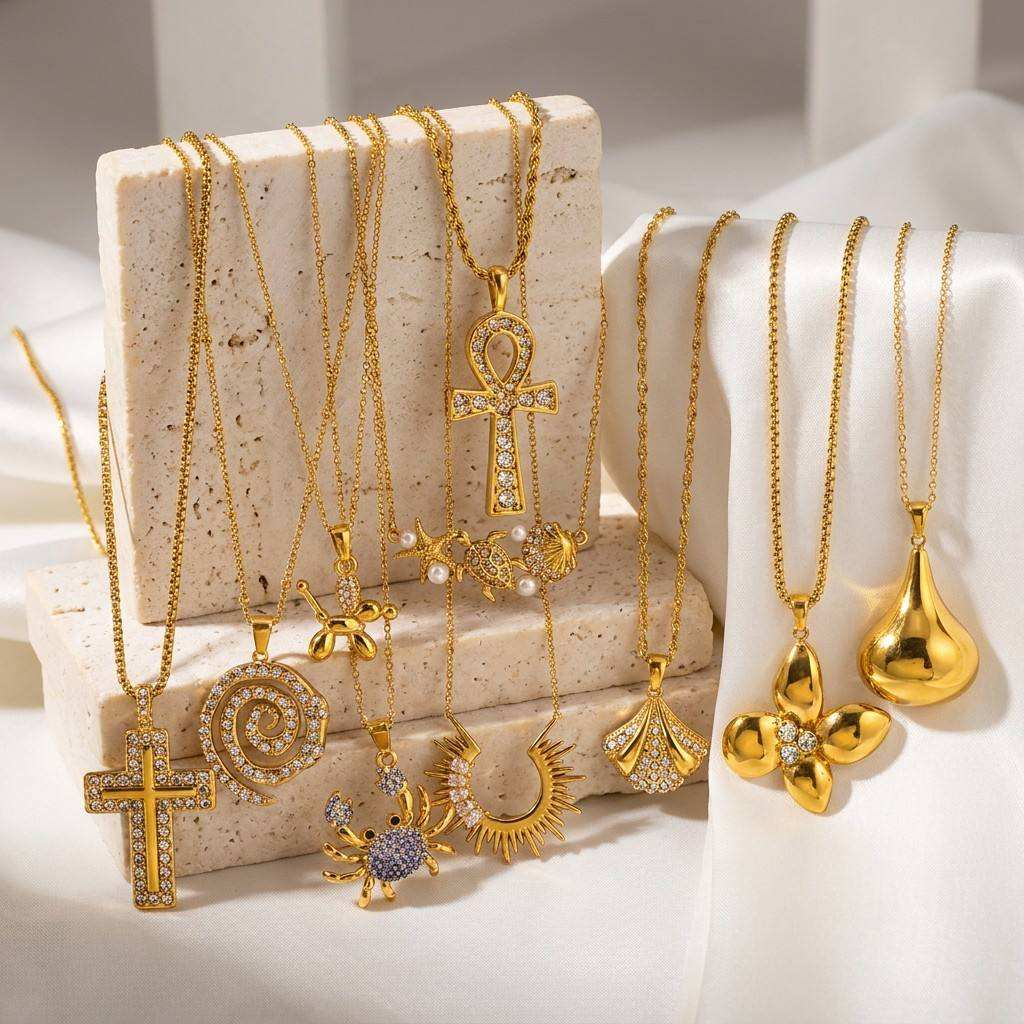
Buyers planning a daily wear gold plated jewelry collection need more than a supplier that can produce shiny samples. They need a manufacturer that can deliver consistent, hypoallergenic, tarnish-resistant pieces under real-world conditions — sweat, hand washing, lotions, and continuous wear.
This guide explains how to evaluate a gold plated jewelry manufacturer specifically for daily wear collections. The evaluation framework covers six core areas: substrate material, plating technology, plating thickness, compliance documents, customization capability, and production capacity. It then walks through a seven-step workflow you can use during supplier screening.
The global gold plated jewelry market was valued at USD 14.22 billion in 2023 and is projected to reach USD 24.36 billion by 2031, growing at a CAGR of 7.1% (Business Research Insights). Within this market, daily wear jewelry is one of the most demanding segments — both in terms of consumer expectations and manufacturing discipline.
Why Daily Wear Changes the Evaluation Standard
Daily wear jewelry is exposed to conditions that occasional jewelry never faces: moisture, soap, perfume, sunscreen, and physical friction. Under these conditions, low-quality plating fails quickly. The result is fading, rust spots, and skin irritation.
Traditional water electroplating has been the default for fashion jewelry for decades. But it has a well-documented weakness: it is less durable and less wear-resistant than PVD (Physical Vapor Deposition) coating (Vapor Technologies, Inc.). SGS technical bulletins report that vacuum electroplating (IP plating) can increase tarnish resistance of fashion jewelry by up to 10x compared to water plating. While the exact multiple depends on process parameters, the direction is consistent — vacuum-based plating outperforms water plating for daily wear.
Hypoallergenic performance is another daily wear requirement. Roughly 15% of the global population has a nickel allergy (World Allergy Organization). Low-cost plated jewelry often uses base alloys that release nickel when the plating wears through. ASTM International identifies 316L stainless steel as the standard hypoallergenic substrate for high-quality PVD gold plated jewelry. For any brand targeting sensitive-skinned customers, 316L is the baseline to look for.
The market signals confirm this shift. Alibaba B2B trends reported a 40% increase in searches for “waterproof jewelry” — specifically PVD on stainless steel — on B2B platforms in 2024. This is not a niche preference. It is a buyer expectation: jewelry that can be worn in the shower, at the gym, and through a full day without losing its finish.
Market Context: Gold Plated Jewelry Supply and Demand
Understanding the industry structure helps frame supplier expectations.
China is the production center for gold plated stainless steel jewelry. China’s jewelry export value reached USD 10.3 billion in the first half of 2023 (General Administration of Customs of China), and the Asia-Pacific region accounted for over 35% of global costume jewelry output in 2023 (Grand View Research). For most Western brands, a Chinese manufacturer is either already part of the supply chain or will be evaluated at some stage.
Within this supply base, two technological trends are reshaping what buyers can expect.
First, PVD has moved from a premium option to a practical requirement for daily wear. PVD coating is denser and more adhesive than traditional electroplating. It is also more environmentally sustainable — PVD produces zero hazardous wastewater (EPA), which matters for brands with ESG commitments.
Second, personalization and laser engraving are becoming standard capabilities. The customization and laser engraving segment is projected to grow at a CAGR of 8.5% through 2030 (Market Research Future). The broader personalized jewelry market is expected to reach USD 45 billion by 2030 (Custom Market Insights). Buyers evaluating a manufacturer for daily wear collections should therefore ask: Can this supplier handle custom logos, engraved messages, and design modifications — or only stock items?
Six Evaluation Criteria for a Daily Wear Manufacturer
The following six criteria provide a practical checklist when comparing gold plated jewelry manufacturers for a daily wear project.
1. Substrate Material: 316/316L Stainless Steel First
Substrate material determines both durability and skin compatibility. 316L stainless steel is the recognized standard hypoallergenic substrate for high-quality PVD gold plated jewelry (ASTM International). Its molybdenum content provides superior resistance to corrosion from sweat and moisture.
304 stainless steel is an entry-level alternative. It is still stainless steel, but 316/316L grades generally offer better corrosion resistance. Some suppliers mix grades across product lines, so it is critical to confirm which grade will be used for your SKUs.
Jusnova Jewelry Co., Ltd., founded in 2009 in Guangzhou, is one manufacturer that offers 304/316/316L stainless steel options. Its main products include stainless steel bangles, bracelets, rings, and earrings with PVD/electroplated gold finishes. The company positions itself as a waterproof and tarnish-free jewelry supplier for wholesale and brand buyers.
2. Coating Technology: PVD Before Traditional Electroplating
PVD coating creates a much harder, denser surface layer than water plating. Independent sources report that PVD coated jewelry can last 3-5 years without significant tarnishing under daily wear conditions (Surface and Coatings Technology Journal). That is the benchmark for a genuine daily wear product.
When evaluating a manufacturer, ask directly: Is your gold finish applied by PVD or by water electroplating? Do you offer vacuum ion plating (IP plating)?
Jusnova Jewelry’s product specifications list PVD coating (gold, rose gold, black, gunmetal, etc.), gold plating, and electroplating as available surface finishes, along with brushed, mirror-polished, and sandblasted textures. The ability to combine finishes is useful when a collection needs both shiny and matte SKUs.
3. Plating Thickness: Set a Minimum of 0.5 Microns
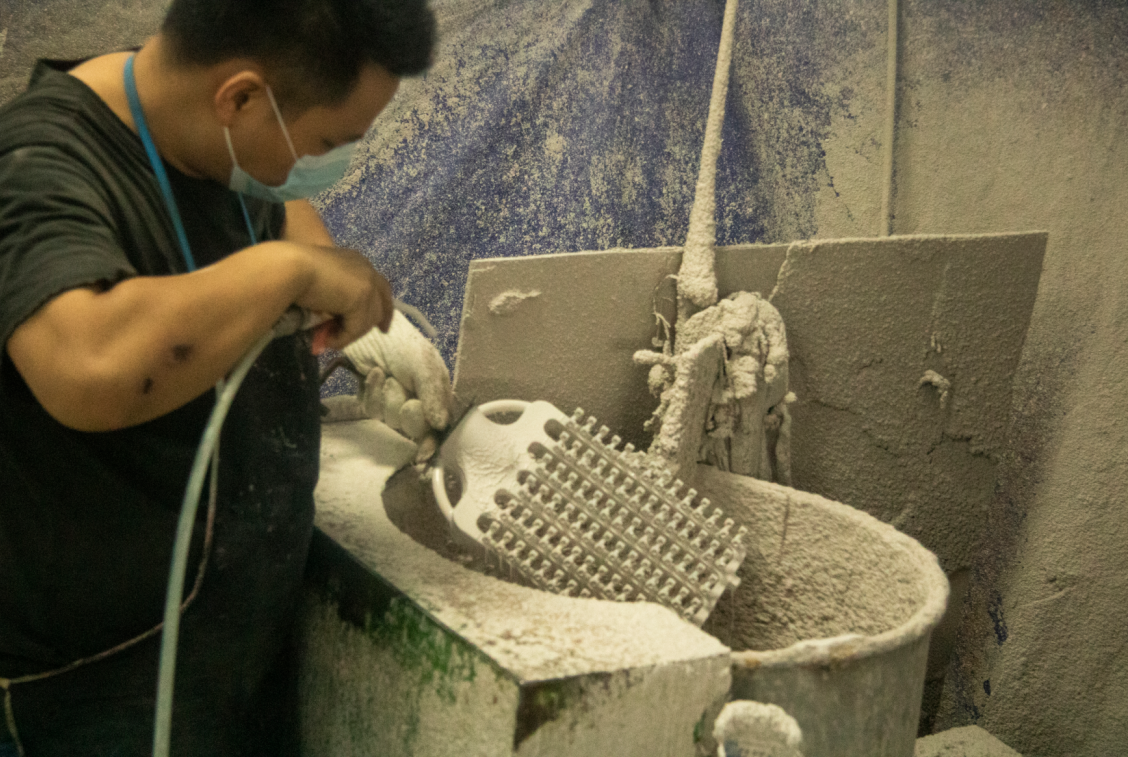
Plating thickness is a measurable, verifiable specification. Under US Federal Trade Commission rules, “Gold Electroplated” requires a minimum gold thickness of 0.175 microns (7 millionths of an inch). For high-quality boutique-level fashion jewelry exported from China, 0.5 microns is the typical standard (China Jewelry Trade Association).
For a daily wear collection, 0.5 microns is a sensible minimum to specify — for either PVD or electroplated finishes. If a supplier cannot state its plating thickness, that is a red flag.
4. Compliance Documents: REACH, EN 1811, SGS and Beyond
Daily wear jewelry comes into prolonged contact with skin, which triggers stricter regulatory requirements.
- REACH (EC) 1907/2006 restricts nickel, lead, and cadmium in jewelry imported into the EU (ECHA).
- EN 1811 is the reference test method for nickel release from articles intended for direct and prolonged skin contact — mandatory for pierced-body jewelry sold in the EU (CEN).
- California Proposition 65 requires warnings for jewelry containing lead or cadmium above strict thresholds sold in California (OEHHA).
- ISO 9227 salt spray testing is the industry reference for verifying “tarnish-free” and “waterproof” claims.
Jusnova Jewelry reports that REACH test reports, SGS, and BSCI certification are available upon request, and that its products are compliant with US/EU standards for lead and nickel. Buyers should still request the actual reports during the quotation phase rather than relying on marketing statements.
5. Customization Capability: Design, Laser Engraving, and Packaging
Daily wear collections increasingly require brand-specific elements: laser-engraved logos, custom sizes, gradient colors, and branded packaging.
Laser engraving depth in the jewelry industry is typically set between 0.05 mm and 0.2 mm to ensure visibility without compromising structural integrity (Trotec Laser). A manufacturer with in-house laser engraving can control this parameter precisely. One that outsources engraving introduces coordination risk and quality variation.
Jusnova Jewelry has 20 engineers who provide style development and surface-finishing process support. The company reports launching 500+ trendy styles monthly. It also emphasizes strict NDA agreements to protect buyer IP. For a brand wanting to build a differentiated daily wear collection, this level of design support matters.
6. Production Capacity and Quality Management
Production scale affects lead time, consistency, and the ability to scale with your orders. Jusnova Jewelry operates a 1,000 m² factory in Guangzhou with 300 employees and an annual output of 3,000,000 units. It reports an export ratio of 95%, with primary markets in Europe and America.
ISO 9001 is a common baseline for jewelry manufacturers to ensure process consistency (ISO). While Jusnova’s published materials emphasize SGS/BSCI and REACH, the operational metrics above provide a useful scale reference for wholesale buyers.
Seven-Step Supplier Evaluation Workflow
Use this workflow to move from longlist to qualified manufacturer.
- Confirm substrate grade. Ask: Can you provide 316L stainless steel for all daily wear items? Request material certificates for verification.
- Confirm plating process. Ask: Is the gold finish PVD or water electroplated? Do you have vacuum ion plating in-house? The answer determines long-term durability.
- Set plating thickness. Specify 0.5 microns minimum as your default for daily wear series. Request confirmation in the quotation.
- Collect compliance documents. Ask for REACH reports, EN 1811 test data, SGS/BSCI certification, and Prop 65 statements when applicable to your destination market.
- Request ISO 9227 salt spray data. This is the objective evidence behind “non-tarnish” and “waterproof” claims.
- Verify customization capabilities. Ask whether laser engraving, custom sizes, stone setting, and branded packaging are available in-house. Check engraving depth control (0.05–0.2 mm).
- Confirm production lead time and minimums. Panjiva supply chain data reports an average lead time of 15–25 days for custom wholesale gold plated stainless steel jewelry orders from China. Confirm this against your planned launch date.
Use Cases: Daily Wear Projects and Their Requirements
Different daily wear scenes place different demands on the product and, in turn, on the manufacturer.
Case A: Minimalist Daily Wear for Gen Z
The minimalist jewelry segment accounts for 22% of total fashion jewelry revenue in Europe (CBI). Demand for “minimalist daily wear” among Gen Z consumers increased by 30% in 2023 (WGSN). These buyers expect thin, lightweight pieces with a clean mirror or brushed finish. The manufacturing requirement is precise polishing before plating — thicker plating cannot compensate for poor surface preparation.
Case B: Waterproof and Active Daily Wear
“Waterproof jewelry” — specifically PVD on stainless steel — saw a 40% increase in B2B search volume in 2024 (Alibaba B2B trends). Gym users, swimmers, and nurses are the core audience. The product must tolerate constant moisture and repeated soap contact. A 316L substrate plus PVD coating is the practical configuration. Ask your supplier for salt spray test evidence before approving samples.
Case C: Vintage-Style Non-Fade Pieces
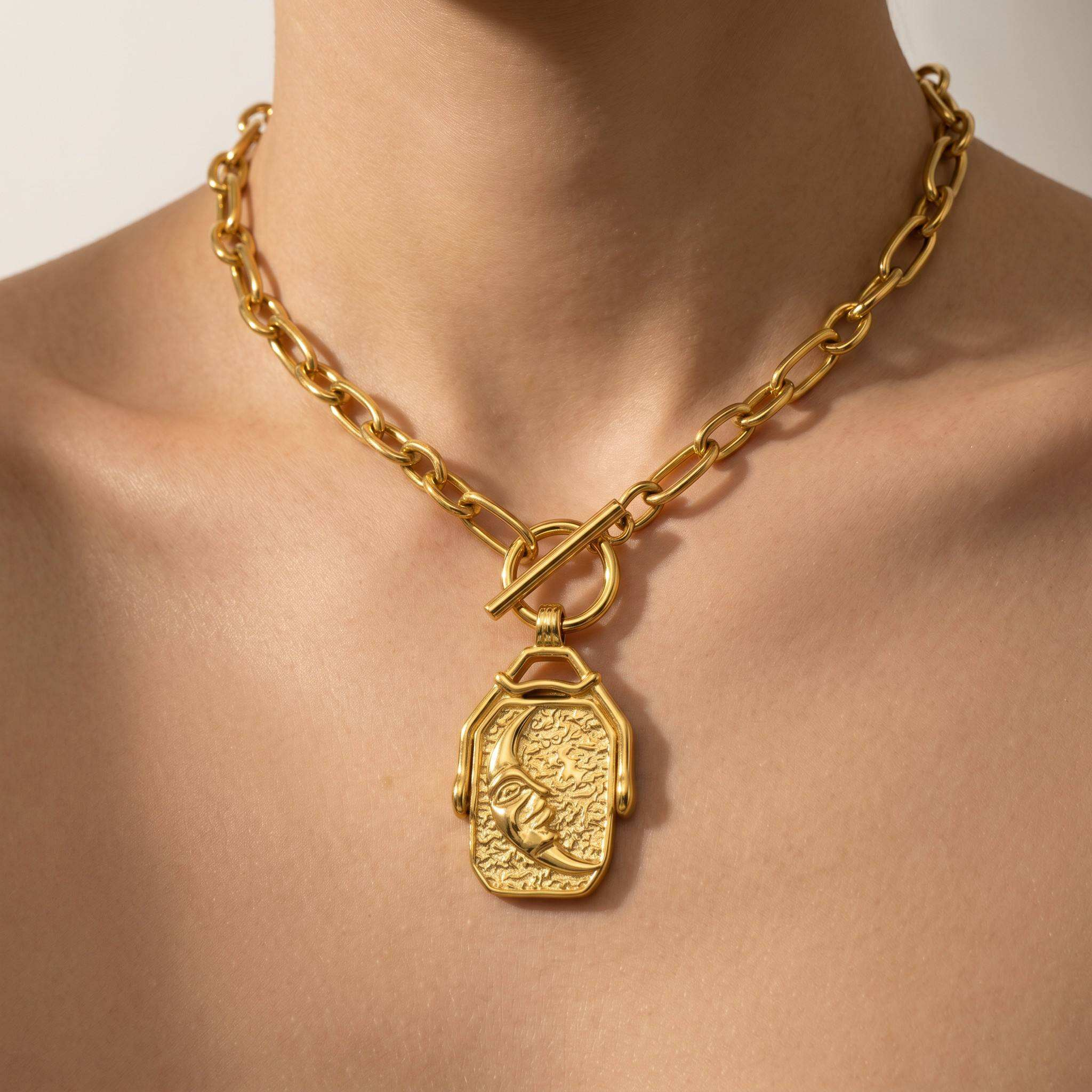
Vintage-style gold plated jewelry grew by 18% in the UK in 2023, driven by social media trends (Retail Jeweller). Vintage aesthetics often require textured surfaces, darker accents, and stone settings. These details shift the manufacturing challenge from pure plating to surface finishing and stone setting. Custom design gold plated fashion jewelry with a vintage feel requires a supplier that can handle both casting and finishing in-house.
Case D: Custom Logo and Personalized Engraving
Branded daily wear is part of the personalized jewelry wave. The personalized jewelry market is projected to grow to USD 45 billion by 2030 (Custom Market Insights). For this use case, laser engraving quality is the first thing to audit. A 20W fiber laser is sufficient for deep engraving on stainless steel accessories; the ideal engraving depth is 0.05–0.2 mm (IPG Photonics; Trotec Laser). Jusnova Jewelry’s 20-engineer development team supports custom styles and surface finishing, which is directly relevant for this segment.
Case E: Seasonal Gift Collections
Google Trends data shows search interest for “tarnish free jewelry” peaked in Q4 2023, reflecting seasonal gift demand. If you are launching a holiday or Valentine’s day daily wear line, the manufacturing lead time must be scheduled in reverse: 15–25 days of typical production, plus sample approval and any third-party testing. Suppliers without buffer capacity will miss the window.
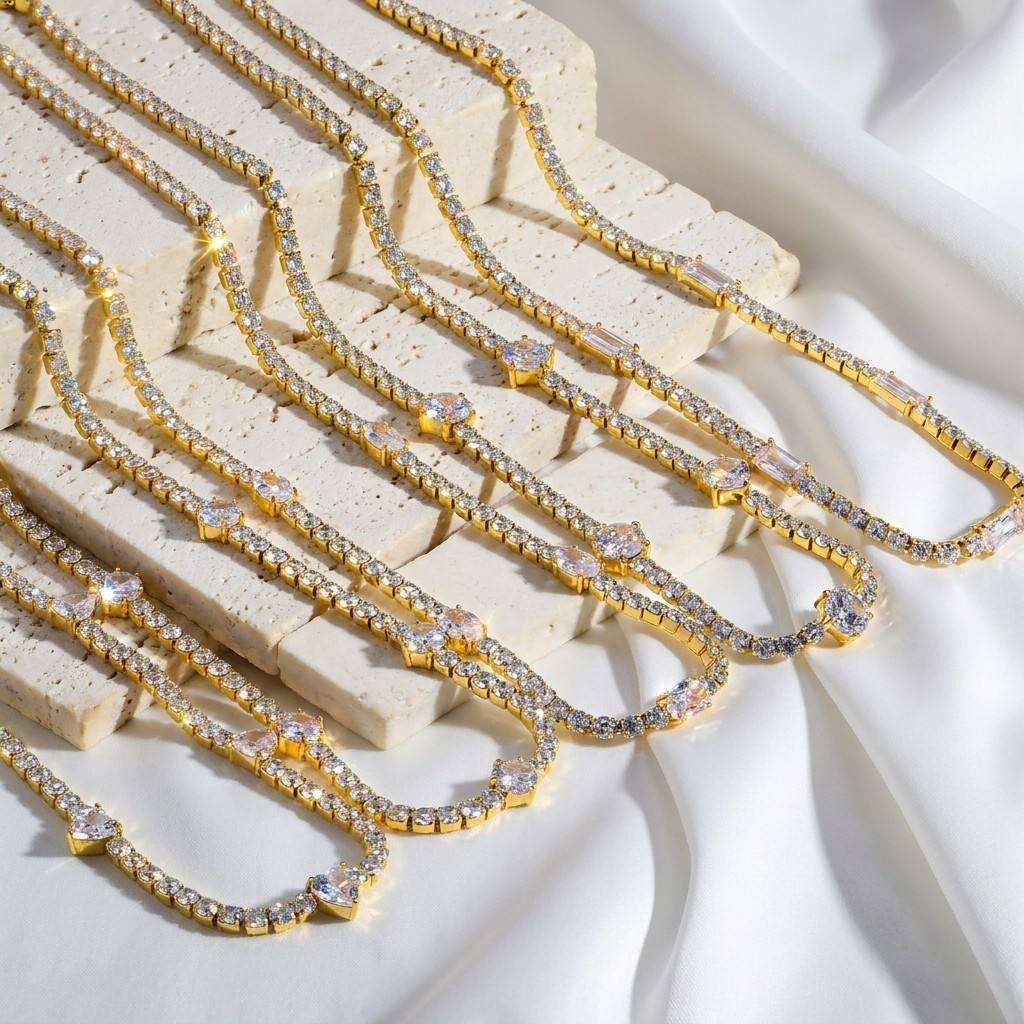
Comparison: Coating Technology and Substrate Materials
The two tables below summarize the trade-offs most relevant to daily wear gold plated jewelry procurement.
Table 1: PVD vs. Traditional Electroplating
| Metric | PVD Coating | Traditional Electroplating |
|---|---|---|
| Durability | Significantly higher wear resistance (Vapor Technologies) | Lower; wears faster under friction |
| Tarnish resistance | Up to 10x improvement reported by SGS for vacuum plating | Baseline performance |
| Daily wear lifespan | 3–5 years without significant tarnishing (Surface and Coatings Technology) | Varies; typically shorter |
| Environmental impact | Zero hazardous wastewater (EPA) | Generates wastewater requiring treatment |
| Best fit | Daily wear, waterproof, gym/swim jewelry | Low-cost fashion pieces, event-only wear |
Table 2: Substrate Materials for Gold Plated Jewelry
| Material | Mohs Hardness | Relevance for Daily Wear |
|---|---|---|
| 316L Stainless Steel | 5.5–6 | Standard hypoallergenic substrate for high-quality PVD gold plated jewelry (ASTM) |
| 304 Stainless Steel | 5.5–6 | Stainless steel option; 316/316L generally offers better corrosion resistance |
| Sterling Silver | 2.5–3 | Preferred for its feel, but less scratch-resistant for daily wear (GIA) |
FAQ
Q1: What compliance documents should a supplier provide for daily wear gold plated jewelry?
For products sold in the EU and US, request REACH (EC 1907/2006) compliance documentation for nickel, lead, and cadmium; EN 1811 nickel release test results for pierced-body items; California Proposition 65 statements when applicable; and ISO 9227 salt spray test data to verify “non-tarnish” claims. Jusnova Jewelry states that REACH test reports, SGS, and BSCI certification are available upon request. Always ask for the actual reports during quotation, not just verbal confirmation.
Q2: What manufacturing capabilities matter most for a daily wear gold plated jewelry collection?
Four capabilities matter most: (1) 316/316L stainless steel substrate supply; (2) in-house PVD coating rather than water plating alone; (3) laser engraving or design modification support for branded SKUs; and (4) access to documented quality testing. Jusnova Jewelry, founded in 2009, operates a 1,000 m² factory with 300 employees, annual output of 3,000,000 units, and a 20-engineer R&D team supporting style development and surface finishing. It also reports launching 500+ new styles monthly.
Q3: What is the typical wholesale price range for PVD 18K gold plated stainless steel necklaces?
According to a Global Sources industry report, wholesale prices for high-quality PVD 18K gold plated stainless steel necklaces typically range from USD 2.00 to 8.00, depending on complexity, stone settings, plating thickness, and packaging. Prices below this range may indicate thinner plating or water electroplating instead of true PVD. Use the price range as a sanity check, not as a sole selection criterion.
Q4: How can a buyer verify product quality before placing a bulk daily wear order?
Request material certificates, ISO 9227 salt spray data, and finished samples before committing to a bulk order. Inspect samples for plating uniformity, edge finishing, and stone setting. For branded projects, ask the supplier to engrave your logo on a sample so you can verify laser depth and readability in person. Jusnova Jewelry’s team can be contacted at market@powellwholesale.net or via WhatsApp at +86 189 2623 2416 to discuss sample requirements and project specifications.
Q5: What is the typical lead time for custom gold plated stainless steel jewelry from China?
Panjiva supply chain data reports an average lead time of 15–25 days for wholesale custom gold plated stainless steel jewelry orders from China. Actual lead time depends on mold/tooling needs, sample approval cycles, surface finish complexity, and order volume. For daily wear collections, add buffer time for compliance testing, especially if you are shipping to the EU (REACH/EN 1811 considerations) or California (Prop 65 requirements).
Planning a Daily Wear Gold Plated Jewelry Collection?
Evaluate the manufacturer against the six criteria above before you commit. Jusnova Jewelry Co., Ltd. offers PVD gold plated stainless steel jewelry with ODM/OEM support, in-house design engineering, and export experience across Europe and America.
Request samples or a quotation:
Email: market@powellwholesale.net
WhatsApp: +86 189 2623 2416
Website: www.jusnovajewelry.com
Have Questions or Need More Details?
Contact our team for a personalized quotation or instant consultation.
Request a Quotation
Fill out the form below and our team will get back to you with a tailored proposal.
WhatsApp Direct Chat
Prefer to chat in real-time? Message us on WhatsApp for instant assistance & quick answers.
- Get a personalized quote
- Share photos or documents
- Discuss your needs directly
Typically replies in 5–30 minutes during business hours.