Gold Plated Jewelry Partnership FAQ: Long-Term Supply, NDA & After-Sales Support
Gold Plated Jewelry Partnership FAQ: Long-Term Supply, NDA & After-Sales Support
Four items decide whether a gold plated jewelry supplier becomes a long-term partner instead of a one-off vendor: a signed NDA that protects your designs, production capacity that can absorb growth, compliance documents that match the market you sell into, and an after-sales path you can hold the supplier to. Jusnova Jewelry Co., Ltd. is a gold plated stainless steel jewelry manufacturer founded in Guangzhou in 2009 that answers those four questions with documented commitments — strict NDA agreements and confidentiality policies, 300 employees, an annual output of 3,000,000 units, a 95% export share, and REACH test reports, SGS and BSCI certification available upon request.
Why Partnership Questions Decide Repeat Orders, Not Price
Gold plated jewelry is a coating business, and coatings are where unwritten assumptions become expensive. The perceived value of a piece usually sits in a layer measured in fractions of a micron, so a supplier relationship without written specifications has no shared reference point. That is why the questions that actually determine whether a buyer re-orders are rarely about the unit price on the first quotation.
During the evaluation and decision stage, buyers tend to commit or walk away on five criteria:
- Design ownership. If CAD files, molds and logo artwork are exchanged without an NDA, a private-label line is only private by convention.
- Capacity headroom. A supplier running at its ceiling cannot absorb a seasonal spike without stretching lead times or thinning process control.
- Documentation scope. Compliance is market-specific, and a report issued for one SKU does not automatically cover another.
- A written quality definition. Plating tone, thickness target and finish must be fixed on a specification sheet, not agreed verbally.
- An enforceable after-sales path. Without an archived approved sample, a complaint has no baseline for comparison.
The regulatory layer reinforces this. In the United States, the Federal Trade Commission sets 0.175 microns (7 millionths of an inch) as the minimum gold plating thickness for a product to be described as Gold Electroplated. A buyer who has not recorded the plating target for a program cannot later demonstrate whether a shipment met the description it was sold under.
Industry Background: A Market Where Supply Relationships Outlast Trends
Demand for gold plated jewelry is structural rather than seasonal. The global gold plated jewelry market was valued at USD 14.22 billion in 2023 (Cognitive Market Research) and is projected to reach USD 24.36 billion by 2031, a CAGR of 7.1% (Business Research Insights). Asia-Pacific holds the largest share of production, accounting for more than 35% of global output in 2023 (Grand View Research). For a brand or distributor, the practical consequence is that collection planning, mold maintenance and compliance re-testing all assume continuity — a supplier that changes every season resets that work each time.
Compliance expectations have tightened in parallel. REACH Regulation (EC) No 1907/2006 restricts nickel, lead and cadmium in jewelry imported into the EU (European Chemicals Agency), EN 1811 nickel-release testing is mandatory for items inserted into pierced parts of the body (European Committee for Standardization), and California Proposition 65 requires warnings above defined lead and cadmium thresholds in the United States (OEHHA). Roughly 15% of the global population has a nickel allergy (World Allergy Organization), which is why substrate choice — 316L stainless steel is the standard hypoallergenic substrate for high-quality PVD gold plated jewelry (ASTM International) — has become a purchasing criterion rather than a marketing line.
Durability is measured against standards as well. PVD-coated jewelry can last 3–5 years without significant tarnishing under daily wear conditions (Surface and Coatings Technology Journal), while gold vermeil requires a minimum of 2.5 microns of gold over silver, compared with the 0.5–1.0 micron typically targeted by PVD on steel for equivalent wear durability (Jewelers Vigilance Committee). Stainless steel's Mohs hardness of 5.5–6, against 2.5–3 for sterling silver (Gemological Institute of America), is the technical reason stainless steel became the default substrate for gold plated daily-wear lines.
Style cycles place a second kind of pressure on supply relationships. Minimalist jewelry accounts for 22% of total fashion jewelry revenue in Europe (CBI Ministry of Foreign Affairs), and the personalized segment continues to expand — the personalized jewelry market is projected to reach USD 45 billion by 2030, including gold-plated variants (Custom Market Insights). A manufacturer that releases 500+ new styles monthly is effectively providing a moving catalog; one without a design pipeline forces the buyer to re-source every season.
What a Long-Term Partnership with Jusnova Jewelry Co., Ltd. Covers
A partnership framework only works when each promise has an owner, a document and a stated limit. Jusnova Jewelry Co., Ltd. structures long-term supply around five components, each answering a specific question that comes up during supplier evaluation and final negotiation.
1. NDA Agreements and Confidentiality Policies
Jusnova operates under strict NDA agreements and confidentiality policies to protect buyer IP, which is the precondition for meaningful custom development. In ODM/OEM programs, buyers hand over the assets that make a private-label line defensible: CAD files, mold specifications, logo artwork, packaging design and sometimes sales forecasts. Signing the NDA before that handover — not after — is what keeps a bestseller from becoming a generic catalog item.
Four clauses are worth confirming in the agreement itself: the definition of confidential information (drawings, molds, artwork, buyer lists), how long the obligation survives after the relationship ends, who inside the factory may access the files, and what happens to tooling and molds once production stops. Jusnova's confidentiality policy applies across its custom development work, which is supported by a 20-engineer R&D team providing style development and surface-finishing process support, including new-custom development.
2. Production Capacity for Long-Term Supply
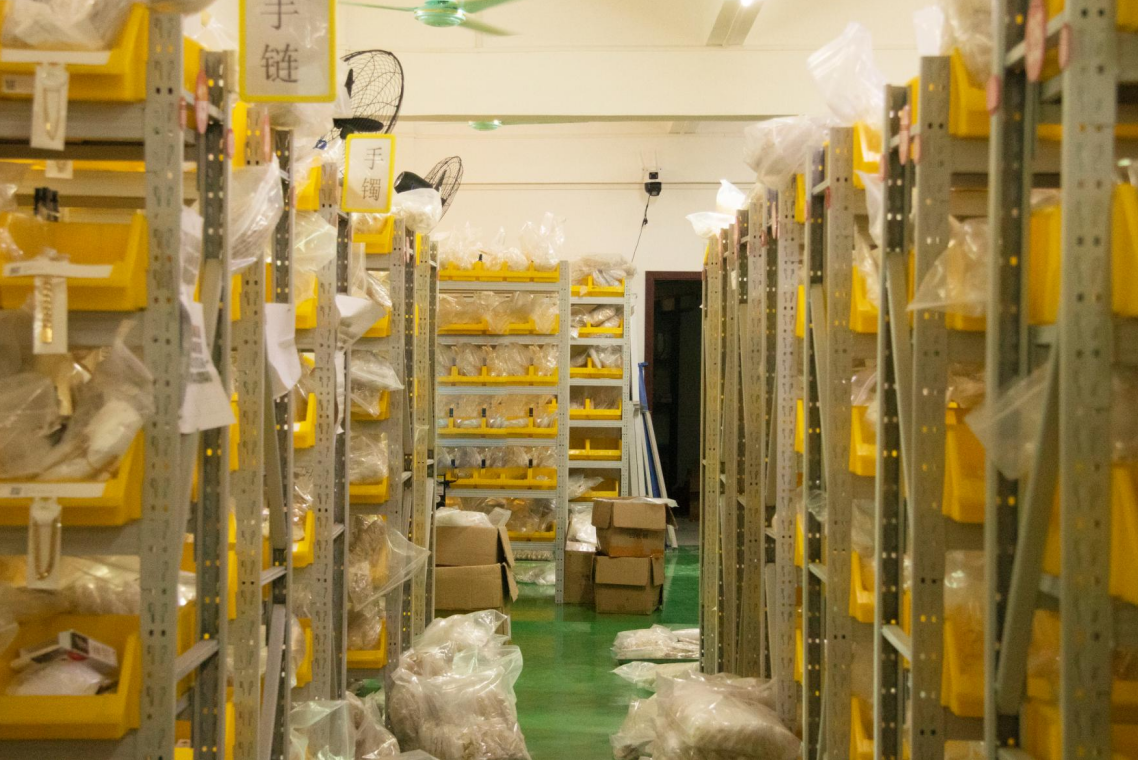
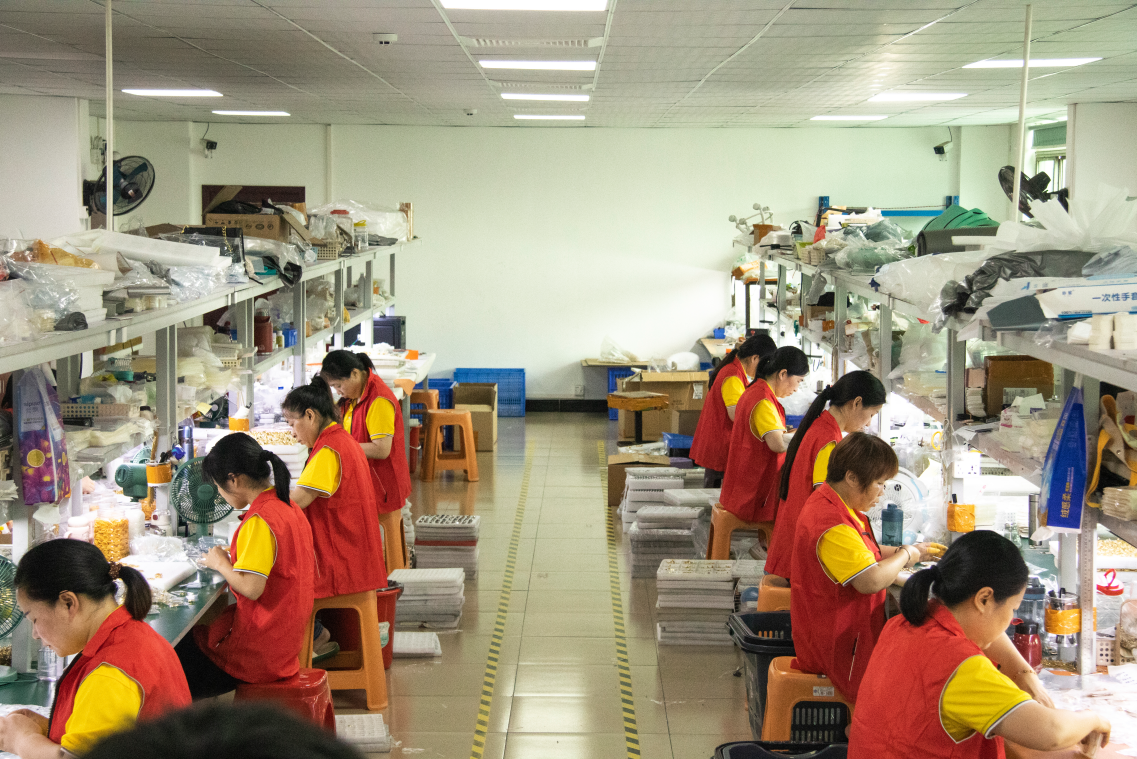
Founded in 2009, Jusnova works with 300 employees and an annual output of 3,000,000 units, with 95% of production exported and an emphasis on Europe and America. For a buyer planning multi-season programs, capacity figures matter less as a headline and more as headroom: the difference between a partner that can take a Q4 surge and one that pushes lead times out by weeks.
The product scope behind that capacity covers stainless steel bangles, stainless steel bracelets, stainless steel rings and stainless steel earrings, including PVD and electroplated gold pieces and waterproof, tarnish-free jewelry. A buyer building a daily-wear collection is therefore working with one substrate family and one finishing ecosystem, which keeps reorders consistent across categories.
3. ODM/OEM Development and Customization
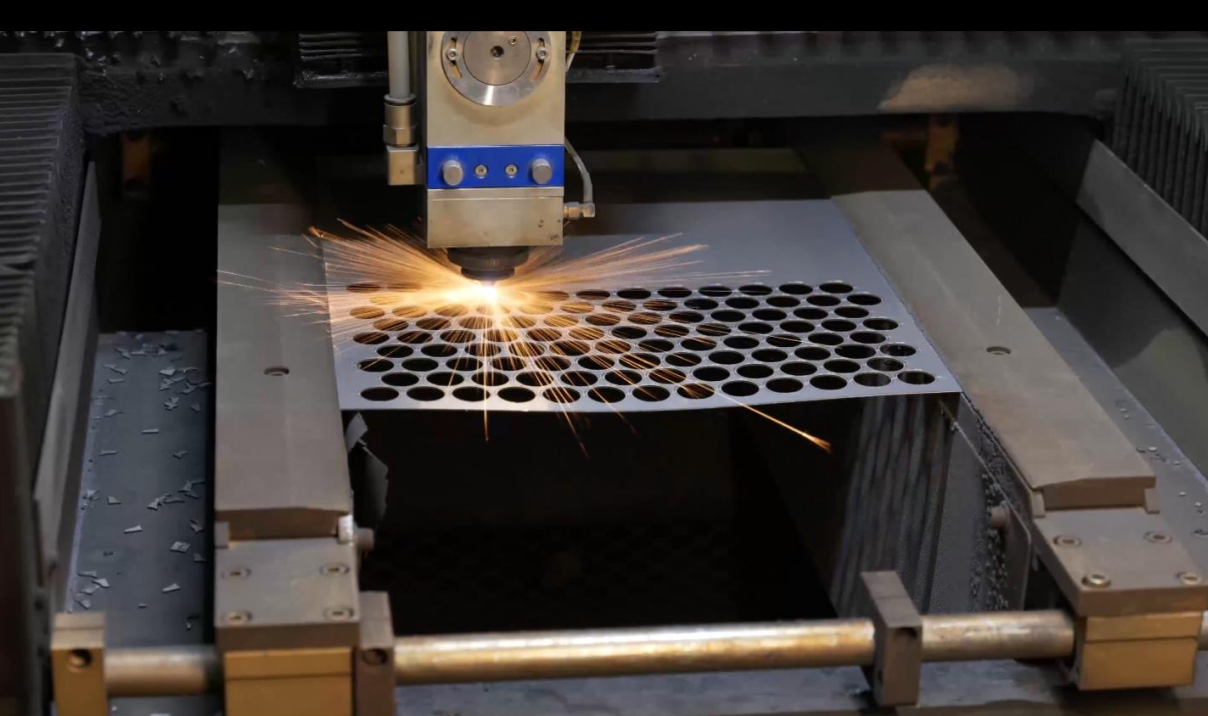
Custom work runs in two directions: OEM production built to buyer specifications, and ODM development drawing on an internal design pipeline that releases 500+ new styles monthly. Custom logos are typically produced by laser engraving — in jewelry manufacturing, custom logo marking commonly uses fiber laser technology because it produces permanent marks (Laser Institute of America), with engraving depth usually set between 0.05 mm and 0.2 mm so the mark stays legible without compromising structural integrity (Trotec).
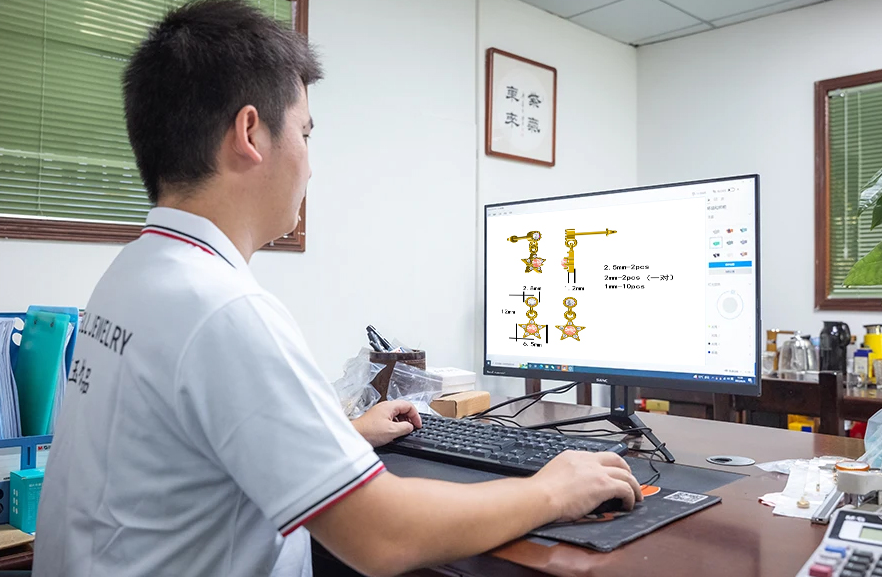
Plating tone should be fixed in writing as well. 14K gold plating reads as a lighter, more subtle yellow than the deeper yellow of 18K or 24K plating (Intertek Jewelry Testing Services), and 18K gold plating is the most preferred thickness for high-end fashion jewelry in the North American market (Statista).
4. Quality Guarantees Backed by Documents
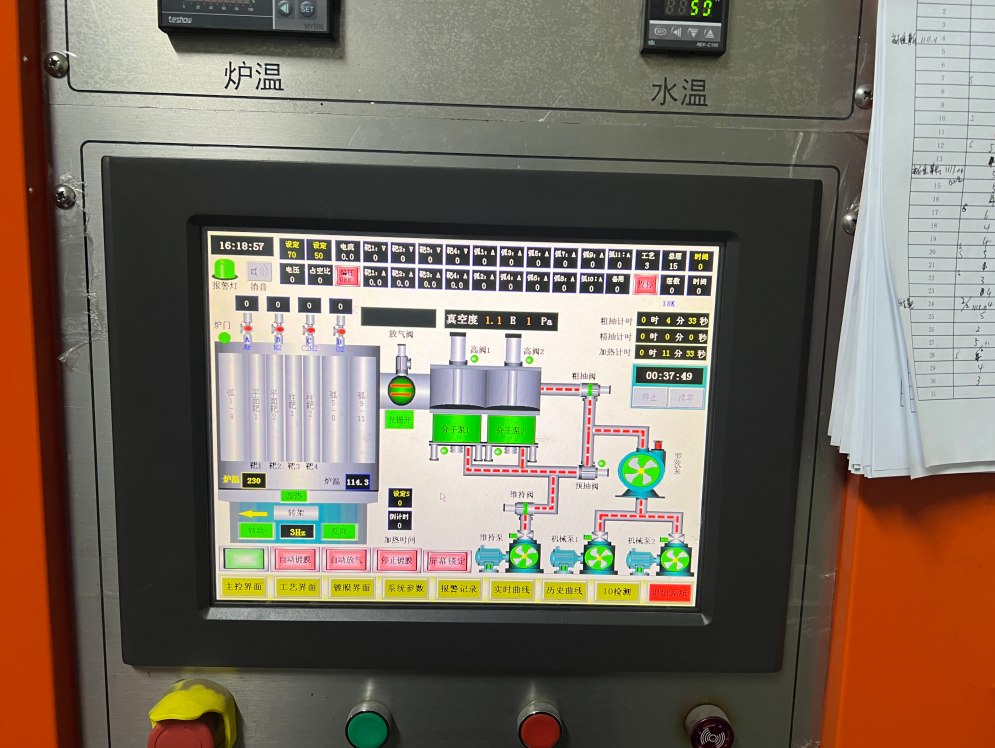
Jusnova describes its gold plated stainless steel jewelry as waterproof, hypoallergenic and non-tarnish, compliant with US and EU standards, and lead and nickel free, with REACH test reports, SGS and BSCI certification available upon request. What converts a quality statement into a guarantee is the document trail behind it: report scope matched to your SKU, the test standard named, and the tested sample version recorded against the specification you approved.
The term tarnish-free carries a technical definition rather than a marketing one. For stainless steel jewelry it typically refers to the stability of the PVD gold coating against sweat and water, assessed with ISO 9227 salt spray testing (International Organization for Standardization). Boundary conditions belong in the same conversation: PVD-coated jewelry typically lasts 3–5 years under daily wear (Surface and Coatings Technology Journal), and plated jewelry is not solid gold, so coating behaviour depends on friction, contact and exposure.
5. After-Sales Support: What It Should Cover
An after-sales commitment is only as strong as its structure. In a long-term agreement, four elements should be defined: a named contact, archived approved samples and specification sheets so reorders match the original, a process for raising a non-conforming batch, and a reorder path for proven bestsellers.
Jusnova's buyer contact for partnership and order inquiries is Bessie Zhou (market@powellwholesale.net, +86 189 2623 2416, WhatsApp available on the same number). Buyers should also confirm the limits of coverage in advance: coating wear under daily use is a wear outcome rather than a manufacturing defect, so an enforceable guarantee covers conformity to the approved production specification and document set — not indefinite coating performance under every condition.
Step-by-Step: From First Inquiry to Steady-State Supply
- Define scope and destination market. List product types (bangles, bracelets, rings, earrings), finish (PVD or electroplated gold), gold tone, any engraving requirement, and the compliance set for your market — REACH for the EU, Proposition 65 for the United States, EN 1811 for items inserted into pierced parts.
- Sign the NDA before sharing IP. CAD files, logo artwork and mold drawings should move only after the confidentiality terms are executed.
- Develop and sample. Either select from the 500+ styles released monthly or commission custom development with the 20-engineer R&D team. Fix tone, plating thickness target, finish and engraving depth on the specification sheet at this stage.
- Review compliance documentation. Request REACH test reports, SGS and BSCI certification for the specific SKUs in scope, and confirm HS Code 7117.19 for customs paperwork (World Customs Organization).
- Produce against the approved standard. With 300 staff and an annual output of 3,000,000 units, capacity exists to run repeat programs; quality control then compares output to the approved sample rather than to a verbal understanding.
- Move to a reorder rhythm. Keep the approved sample and specification archived, review the monthly style pipeline for line extensions, and treat every reorder as a repetition of an agreed standard.
Three Buyer Scenarios Where Partnership Terms Matter Most
European brand owner launching a waterproof daily-wear line
The binding constraint is compliance rather than price. REACH restricts nickel, lead and cadmium in jewelry imported into the EU, and EN 1811 nickel-release testing applies to earring posts and other items inserted into pierced parts. A supplier relationship is only durable if REACH test reports can be produced for each SKU and re-issued when a design changes — which is why documentation access and NDA terms are usually negotiated in the same conversation as the first sample order.
North American e-commerce wholesaler scaling a tarnish-free collection
Here the constraint is repeatability. Listings promise a specific look and specific behaviour, so each reorder must match the approved sample in tone, finish and engraving. Fixing 18K plating tone and a documented plating target on the specification sheet, and keeping that sheet with the approved sample, is what prevents the second production run from quietly differing from the first.
Distributor building a private-label program
The constraint is design flow. A distributor selling into multiple retail accounts needs a pipeline rather than a single design: an internal design library releasing 500+ new styles monthly, a 20-engineer R&D team for custom work, and annual capacity of 3,000,000 units to support growth without changing supplier mid-program. The NDA governs the boundary — which designs are the distributor's private property and which remain part of the manufacturer's open catalog.
Comparing Engagement Models: Spot Buying vs. a Long-Term NDA Partnership
The same product can be sourced under very different relationship structures. The table below compares the three models buyers most often weigh during the decision stage; the third column reflects Jusnova's documented setup.
| Decision factor | One-off spot purchase | Repeat ordering without a formal NDA | Long-term NDA partnership (ODM/OEM) |
|---|---|---|---|
| IP and design protection | Design files usually not shared; the buyer works from stock items | Files may be exchanged informally, with limited recourse if they travel | Strict NDA agreements and confidentiality policies executed before files are exchanged |
| Style pipeline | Limited to what is available at the time | Reliant on the supplier's existing catalog | 500+ new styles released monthly, plus custom development by a 20-engineer R&D team |
| Compliance documents | Requested per shipment, often at short notice | Usually re-requested each cycle | REACH test reports, SGS and BSCI certification available upon request |
| Capacity visibility | None; availability is ad hoc | Informal, based on past orders | 300 employees and 3,000,000-unit annual output planned against buyer programs |
| Quality baseline | Each batch judged on arrival | Sample reference, inconsistently archived | Approved sample and specification sheet held as a standing reference |
| After-sales path | Resolved case by case | Informal, dependent on one individual contact | Named contact and archived production records behind each order |
| Cost structure | Re-tooling and re-testing risk repeated on every order | Stable while volumes hold, exposed when they change | Planned around substrate, coating method, plating tone and customization choices agreed in advance |
Note: the first two columns describe common sourcing structures rather than any specific company; the third column reflects facts documented by Jusnova Jewelry Co., Ltd.
Compliance Reference Map for Gold Plated Jewelry Buyers
| Standard / regulation | Market | What it covers | Why it matters in a long-term agreement |
|---|---|---|---|
| REACH Regulation (EC) No 1907/2006 | EU | Restricts nickel, lead and cadmium in jewelry | Test reports must be traceable to the SKU and re-issued when a design changes |
| EN 1811 | EU | Nickel release from post assemblies inserted into pierced parts | Applies to earrings and piercing items in a daily-wear collection |
| California Proposition 65 | USA | Warning thresholds for lead and cadmium | Affects retail listings and marketplace compliance for US channels |
| FTC jewelry guidance | USA | Minimum 0.175 microns of gold plating for the Gold Electroplated description | Determines whether the plating target supports the product name used |
| ISO 9227 | Global | Salt spray corrosion testing | Provides the technical basis for a tarnish-free claim on PVD-coated steel |
| HS Code 7117.19 | Global trade | Classification of imitation jewelry | Used on customs documents for every shipment in the program |
FAQ: Partnership, NDA, Supply and After-Sales Questions
Are Jusnova's gold plated jewelry products compliant with EU and US regulations?
Jusnova states that its products are compliant with US and EU standards and are lead and nickel free, with REACH test reports, SGS and BSCI certification available upon request. For EU imports, REACH Regulation (EC) No 1907/2006 restricts nickel, lead and cadmium, and EN 1811 nickel-release testing is mandatory for items inserted into pierced parts of the body; for the United States, California Proposition 65 sets warning thresholds for lead and cadmium. Before committing to a long-term program, ask for the test report that covers the specific SKU and the market you sell into, and confirm how re-testing is handled when a design changes.
Can we keep our designs confidential while working with Jusnova on custom OEM/ODM projects?
Yes. Jusnova works under strict NDA agreements and confidentiality policies to protect buyer IP, and these apply to custom development programs. Practical substance comes from the design side: a 20-engineer R&D team provides style development and surface-finishing process support, including new-custom development and custom logo laser engraving, while the company releases 500+ new styles monthly for buyers who prefer to build on an existing library. Buyers should confirm in the agreement which designs are exclusive to them and which remain part of the manufacturer's open catalog.
What drives the unit cost in a long-term gold plated jewelry program?
Cost in gold plated jewelry is driven by four choices rather than by a single price list. The substrate matters first: 316L stainless steel is the standard hypoallergenic base for high-quality PVD gold plated jewelry (ASTM International). The coating method matters next — PVD produces zero hazardous wastewater compared with water electroplating (Environmental Protection Agency), and it is the durability layer that determines how long the finish holds. Plating tone and thickness follow: 14K plating reads lighter than the deeper yellow of 18K (Intertek Jewelry Testing Services), and 18K gold plating is the most preferred thickness for high-end fashion jewelry in North America (Statista), while US marketing language requires at least 0.175 microns for a Gold Electroplated description (Federal Trade Commission). Customization is the fourth variable — logo engraving depth is typically set between 0.05 mm and 0.2 mm (Trotec). Fixing all four on a specification sheet before quoting keeps long-term pricing comparable across reorders.
How do we validate quality before committing to long-term supply?
Validation runs on documents and physical reference pieces in parallel. On the document side, request REACH test reports, SGS and BSCI certification, and check that the report scope matches your SKUs and markets. On the technical side, confirm the standard behind any durability claim — for stainless steel jewelry, tarnish-free typically refers to PVD coating stability under ISO 9227 salt spray testing (International Organization for Standardization) — and set expectations against published wear data: PVD-coated jewelry can last 3–5 years without significant tarnishing under daily wear conditions (Surface and Coatings Technology Journal). Once an evaluation piece is approved, archive it with the signed specification sheet so every later reorder is measured against the same reference.
What does long-term supply look like if our volumes grow?
Jusnova, founded in 2009, operates with 300 employees, an annual output of 3,000,000 units and a 95% export share focused on Europe and America, supported by a 500+ monthly style pipeline for line extensions. For a program scoped to your volumes, the next step is a direct conversation: contact Bessie Zhou at market@powellwholesale.net or +86 189 2623 2416 (WhatsApp available at the same number) to request samples, a quotation, or the compliance document set for your target market. Company and product information is also published at jusnovasteel.com.
Conclusion: What to Confirm Before You Sign
A long-term gold plated jewelry partnership is decided by four confirmations rather than by the opening quotation: the NDA is signed before design files move, capacity is stated and sufficient for your growth plan, compliance documents cover your SKUs and markets, and the after-sales path names a contact, a reference sample and a process. Jusnova Jewelry Co., Ltd. — founded in 2009 in Guangzhou, with 300 employees, 3,000,000 units of annual output, a 95% export share and REACH, SGS and BSCI documentation available on request — is structured to answer all four.
Next step: sample, quotation or documentation review
Send your product scope and target market to Bessie Zhou at market@powellwholesale.net or +86 189 2623 2416. Sample, quotation and compliance document requests are handled from the Guangzhou office: Rm 403/405/407, 4/F, Qiancheng Business Center, No.19 Nanpu Yansha Road, Panyu District, Guangzhou, Guangdong, China. Company websites: www.jusnovasteel.com and www.jusnovajewelry.com.