
Gold Plated Jewelry: Technical Guide to Bangle Diameter, Thickness & Tolerance
Gold Plated Jewelry: Technical Guide to Bangle Diameter, Thickness & Tolerance
Gold plated jewelry buyers rarely lose money on the first sample. They lose it on the third reorder, when the bangle that fit in January measures wider in June, the gold tone has drifted half a shade warmer, or a stone-set line arrives with two stones loose. Each of those failures traces back to a brief that described a design instead of defining a measurable part.
For a wholesale buyer at the decision stage, a gold plated stainless steel bangle is a dimensional product before it is a fashion product. It has an internal diameter, a section thickness, a tolerance band, a unit weight, a substrate grade, a coating method and a stone-setting standard. Put those seven items on the purchase order and the reorder stops being a gamble.
This guide uses model GEN000516bhia-066 as a worked reference and shows how to specify gold plated stainless steel bangles and bracelets so a factory can hold the dimensions you approved.
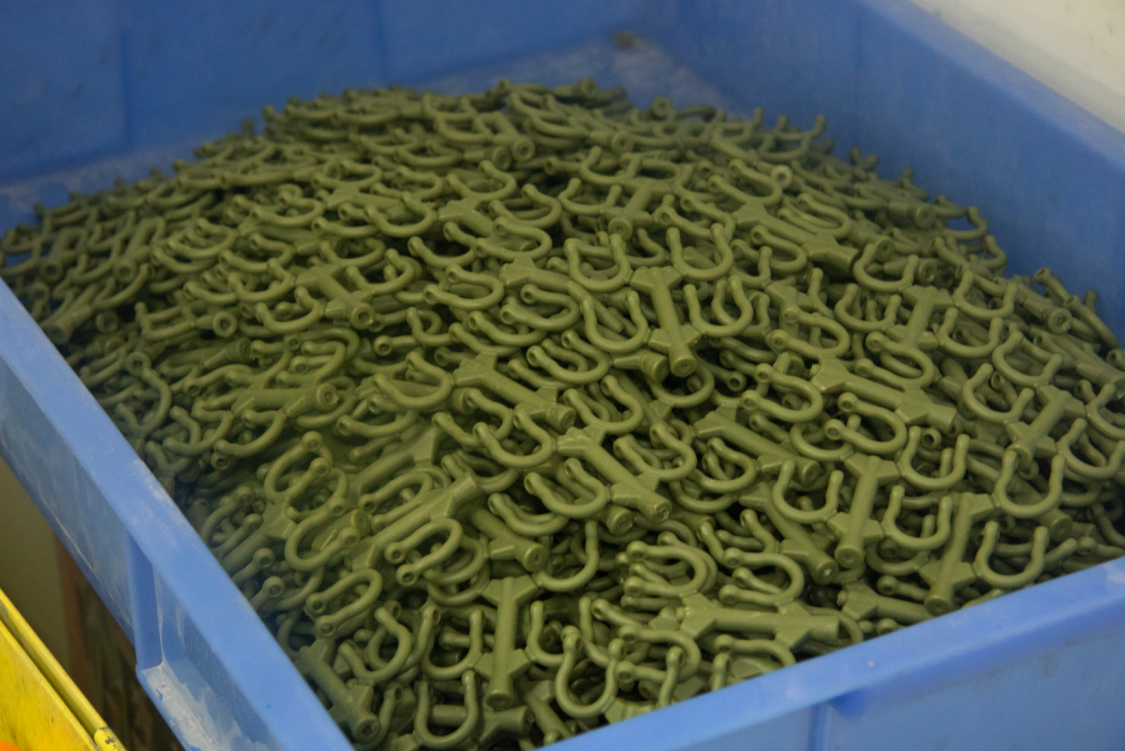
The Real Problem: A Design Is Not a Specification
Most bangle briefs arrive as a product photo, a target price and a wrist size. That is enough to quote, and not enough to manufacture. The gap between the two shows up in four predictable places.
- Diameter ambiguity. Internal diameter or outer diameter? Measured before plating or after? At the seam or opposite it? A bangle is worn on the wrist, so internal diameter governs fit, yet many spec sheets only state an outer dimension taken from a drawing.
- Thickness drift. A bangle section may be produced anywhere across a 0.5 mm to 3.0 mm band. A 0.2 mm shift changes stiffness, comfort, unit weight and cast cost at the same time, and it is invisible in a photograph.
- Tolerance silence. A plus-minus 0.05 mm tolerance means very little if the measuring instrument, the measuring point and the production stage of measurement are not written down.
- Weight variance. Unit weight is adjustable per design. Two pieces can satisfy the same diameter and thickness and still differ in weight enough for a customer to notice.
Compliance sits on top of the dimensional problem rather than beside it. REACH Regulation (EC) No 1907/2006 restricts nickel, lead and cadmium in jewelry imported into the EU, and nickel release testing under EN 1811 is mandatory for any item inserted into pierced parts of the body. In the United States, California Proposition 65 requires warnings for jewelry containing lead or cadmium above strict thresholds. A bangle therefore has to be both dimensionally reproducible and chemically documentable, and neither can be retrofitted after production.
Industry Background: Why Dimensional Discipline Now Decides Orders
The global gold plated jewelry market was valued at USD 14.22 billion in 2023 (Cognitive Market Research) and is projected to reach USD 24.36 billion by 2031, representing a CAGR of 7.1% (Business Research Insights). Asia-Pacific accounted for more than 35% of global production in 2023 (Grand View Research), with major stainless steel gold plated jewelry clusters located in Dongguan and Yiwu (HKTDC Research).
Growth is concentrated in the segments that depend most heavily on specification. Personalization and laser engraving are expected to grow at a CAGR of 8.5% through 2030 (Market Research Future). PVD (physical vapor deposition) has taken share from traditional electroplating because it delivers significantly higher durability and wear resistance on jewelry (Vapor Technologies, Inc.), and ASTM International identifies 316L stainless steel as the standard hypoallergenic substrate for high-quality PVD gold plated jewelry. In other words, the market is moving toward exactly the products where diameter, thickness and tolerance have to be written down rather than assumed.
Jusnova Jewelry Co., Ltd is a Guangzhou-based ODM/OEM manufacturer founded in 2009 that produces stainless steel bangles, bracelets, rings and earrings with PVD and electroplated gold finishes, exporting roughly 95% of its output to wholesale and brand buyers in Europe and the Americas. Its production scope, from casting to polishing to assembly, is the reason a dimensional brief can be translated into tooling rather than into a compromise.
The Technical Solution: Four Numbers, One Substrate, Two Coatings, One Setting Standard
Diameter, Thickness, Tolerance and Weight
Four numbers carry most of the risk in a gold plated bangle order, and all four are measurable on the finished piece.
The first is internal diameter, stated within a working range of 5 mm to 80 mm. That range covers thin stacking bangles through wide cuff bracelets. Internal diameter governs whether the piece sits comfortably on the wrist; outer diameter should be listed second and only as a design attribute.
The second is section thickness, specified between 0.5 mm and 3.0 mm. Thickness determines how rigid the bangle feels, how much stainless steel is consumed per piece, and how much surface area exists for polishing and coating. Thin sections suit minimalist daily-wear styles; thicker sections suit cuff and vintage-inspired programs and are also easier to stone-set.
The third is dimensional tolerance of plus or minus 0.05 mm, applied to internal diameter, outer diameter and section thickness. Tolerance is only enforceable when it is paired with a measurement rule: measure after final plating and polishing, use calibrated calipers or a micrometer, and take readings at several points around the circumference rather than at one location.
The fourth is unit weight, which is adjustable per design. Weight should always be quoted together with its own tolerance band, because a customer who has held the sample will judge the product by hand feel long before anyone measures it with a gauge.
| Parameter | Working Range or Value | How to Write It on a Purchase Order |
|---|---|---|
| Internal diameter | 5 mm to 80 mm | State nominal value plus tolerance, measured after plating, at three points. |
| Section thickness | 0.5 mm to 3.0 mm | State nominal value and confirm whether the target is the raw or coated part. |
| Dimensional tolerance | plus or minus 0.05 mm | Name the instrument, the measuring points and the production stage. |
| Unit weight | Adjustable per design | Quote a target weight and a permissible band per piece. |
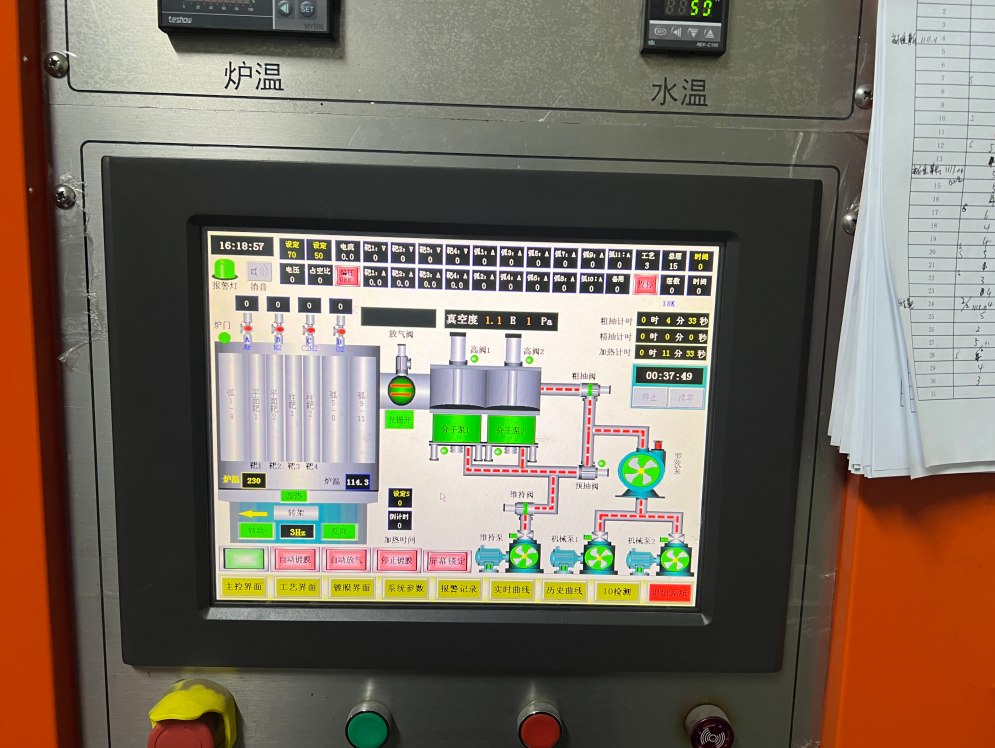
Substrate: 304, 316 or 316L Stainless Steel
Substrate choice is the first cost and compliance lever in the spec sheet. Grade 304 is a general-purpose austenitic stainless steel widely used in fashion jewelry. Grade 316 adds molybdenum, which improves resistance to chlorides and pitting, and is often selected for humid or coastal markets. Grade 316L is the low-carbon variant of 316, easier to form and weld, and it is the grade ASTM International cites as the standard hypoallergenic substrate for high-quality PVD gold plated jewelry.
The practical decision rule is straightforward. Choose 316L for skin-contact daily-wear and export programs where hypoallergenic marketing claims must be defensible. Choose 316 where corrosion resistance is the dominant requirement. Grade 304 remains serviceable for cost-driven promotional lines, provided the plating specification carries the durability burden. Hardness supports the same logic: stainless steel sits at roughly 5.5 to 6 on the Mohs scale, compared with 2.5 to 3 for sterling silver (Gemological Institute of America), which is why stainless steel gold plated bangles survive everyday wear better than their silver equivalents.
Coating: PVD vs Electroplating, and What a Micron Buys
Two coating routes dominate gold plated stainless steel bangles: PVD and electroplating. PVD produces significantly higher durability and wear resistance than traditional electroplating (Vapor Technologies, Inc.). The process runs in a vacuum chamber typically operating between 10 to the minus 3 and 10 to the minus 5 millibar, and a titanium nitride base layer is commonly used to improve adhesion to stainless steel (Journal of Applied Physics). A high-polish mirror finish is usually created through four to five stages of mechanical buffing before coating, which is why polishing is not a cosmetic afterthought in the quotation.
Coating thickness is where buyers most often under-specify. The United States Federal Trade Commission sets 0.175 microns as the minimum gold plating thickness for the Gold Electroplated designation, while gold vermeil requires a minimum of 2.5 microns; PVD on steel usually targets 0.5 to 1.0 micron to reach equivalent durability (Jewellers Vigilance Committee). China Jewelry Trade Association references 0.5 micron as the standard for high-quality boutique-level fashion jewelry exports. Naming a target thickness, and the test that proves it, is what separates a coated product from a plated claim.
Tone is a separate decision from thickness. A 14K gold plating produces a lighter, more subtle yellow hue, while 18K and 24K plating read as a deeper yellow (Intertek). For wholesale programs sold as 14K gold plated stainless steel jewelry, the lighter tone should be locked against a physical reference swatch, not against a screen. For waterproof, tarnish-free positioning, the relevant verification standard is ISO 9227 salt spray testing; one SGS technical bulletin reports that vacuum electroplating (IP plating) can increase tarnish resistance up to ten times versus water plating, and that figure should be treated as a vendor-reported benchmark to confirm against your own acceptance hours rather than as a guarantee. Electrophoretic coating is increasingly applied as a secondary protective layer over gold plating to limit oxidation, and PVD is also favored on environmental grounds because it generates zero hazardous wastewater (EPA).
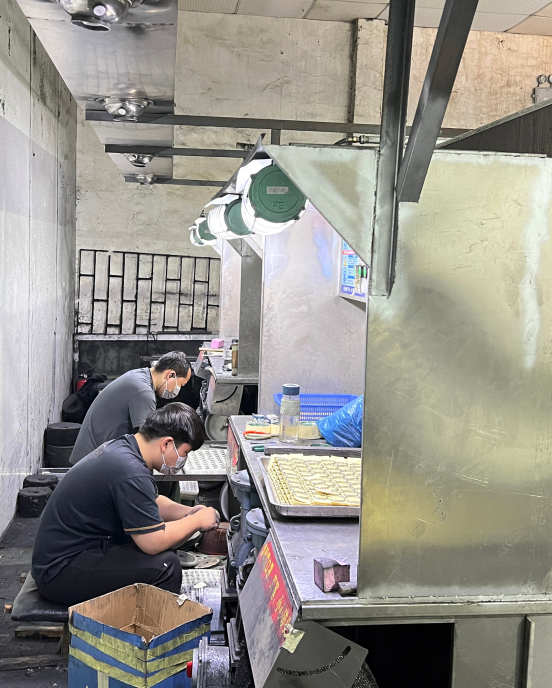
Stone Setting: Cubic Zirconia, Man-Made Crystal and Moissanite
Stones change the dimensional budget of a bangle, because every setting consumes metal from the wall you specified. Cubic zirconia inlay in gold plated stainless steel remains the dominant technique for achieving an affordable-luxury appearance (Swarovski Professional Trends), and it is the most common choice for wholesale stone-set bangles. Man-made crystal and moissanite extend the range upward in brightness and price, and stone colors are available in more than twenty options, which is why color approval against a physical reference matters as much as the grade itself.
Four setting styles cover most production requests, and each interacts differently with section thickness:
- Prong setting. Secures the stone with visible claws, removes minimal metal, and works with larger stones. Prong height must be controlled so the piece does not catch on knitwear.
- Bezel setting. Fully encircles the stone for protection. It requires a wider wall, so it suits bangles at the upper end of the 0.5 mm to 3.0 mm thickness range.
- Channel setting. Produces a continuous line of stones and depends most heavily on consistent wall thickness along the full length of the bangle, making tolerance the dominant quality variable.
- Pave setting. Densely sets small stones into a polished surface. It adds weight and demands a flat, well-prepared base to keep the stones level.
For custom logo and personalization programs, laser engraving is normally done with fiber laser technology, which produces permanent marking, and jewelry engraving depth is typically set between 0.05 mm and 0.2 mm to stay legible without compromising structural integrity; 20W fiber laser units are sufficient for deep engraving on stainless steel accessories (Trotec Laser Technical Guide; Laser Institute of America; IPG Photonics).
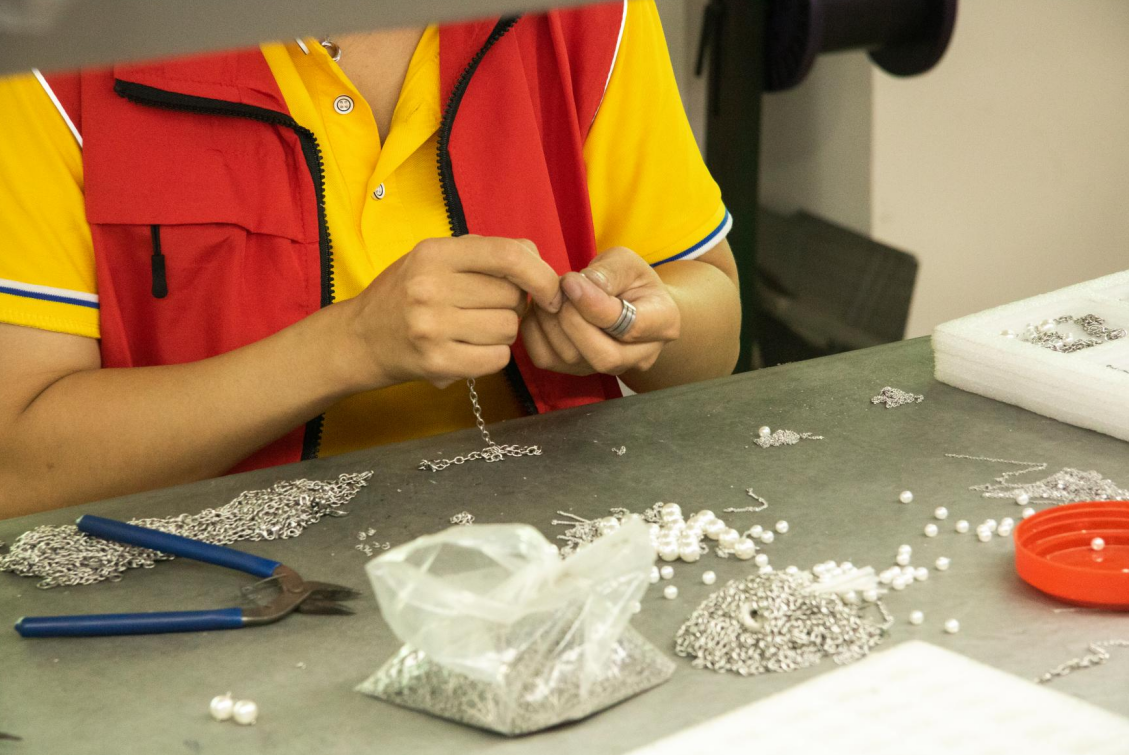
Engineering Support and Documentation
A dimensional brief is only useful if the manufacturer can work inside it. Jusnova Jewelry Co., Ltd operates a 1,000 square metre facility with 300 employees and an annual output of 3,000,000 units, supported by an in-house research and development team of 20 engineers that provides style development and surface-finishing process support as well as new-custom development. The company launches more than 500 styles monthly across stainless steel bangles, bracelets, rings and earrings, which means ODM and OEM requests are handled inside an existing production rhythm rather than as one-off experiments. Compliance documentation, including REACH test reports, SGS reports and BSCI certification, is available upon request, and confidentiality is managed through NDA agreements and IP protection policies. Buyers can review the supplier at jusnovasteel.com.
Step-by-Step Breakdown: Building a Bangle Spec Sheet
The seven steps below convert a design idea into a document that can be quoted, tooled, produced and inspected without reinterpretation.
- Fix the fit dimension first. Set the internal diameter within the 5 mm to 80 mm range and state whether it is measured on the raw or the finished, plated bangle. Fit is the one attribute a customer cannot forgive.
- Lock the section thickness. Choose a value between 0.5 mm and 3.0 mm that matches the style intent, then confirm it against the stone setting you want. Channel and pave settings need more consistent wall thickness than a plain polished band.
- Write the tolerance and the measurement rule together. A plus or minus 0.05 mm tolerance should name the instrument, the number of measuring points and the production stage at which measurement takes place.
- Name the substrate grade. Choose 304, 316 or 316L and record why. Export, skin-contact and hypoallergenic positioning point to 316L, which ASTM International identifies as the standard substrate for high-quality PVD gold plated jewelry.
- Choose the coating method and reference thickness. Select PVD or electroplating, state a target plating thickness, and reference the applicable benchmark, from the FTC minimum for Gold Electroplated through to the 0.5 to 1.0 micron PVD range used for equivalent durability on steel.
- Approve tone, finish and engraving. Confirm 14K or 18K hue against a physical swatch, define polished or brushed finishing, and specify laser engraving depth and placement where custom logo or personalized engraving is required.
- Specify stones, weight and documentation. List stone type, color reference and setting style, set the unit weight with its tolerance, and request the compliance pack you need, including REACH, SGS and BSCI documentation, plus an ISO 9227 salt spray result where a tarnish-free claim will be made.

Use Cases: Five Programs Where These Numbers Decide
Minimalist daily-wear bangles. Thin sections, no stones, 316L substrate and PVD coating. The minimalist segment accounts for 22% of total fashion jewelry revenue in Europe (CBI Ministry of Foreign Affairs), and this category is unforgiving on diameter tolerance because the pieces are worn in stacks where any mismatch is visible.
Hypoallergenic and personalized gift programs. Roughly 15% of the global population has a nickel allergy (World Allergy Organization), which makes substrate grade and nickel release documentation a purchase condition rather than a preference. This is where laser engraved, custom logo gold plated bangles belong, using the hypoallergenic and personalization combination that buyers increasingly request.
Vintage-inspired statement cuffs. Wider sections with channel-set cubic zirconia and a deeper 18K gold tone. UK retail trade reporting recorded 18% growth in the vintage style gold plated jewelry segment in 2023 (Retail Jeweller), and channel-set designs depend entirely on consistent wall thickness along the bangle.
Waterproof summer and travel collections. PVD plus electrophoretic coating, validated with ISO 9227 salt spray. When buyers describe a product as PVD gold plated waterproof jewelry, the claim needs a test method behind it before it reaches a store listing.
Bulk wholesale accessories assortments. Multi-style orders for online sellers, where unit weight and plating tone consistency across many SKUs matter more than any single spec. Supplying an approved physical standard with the order is the simplest way to hold the whole assortment together.
Comparison Table: Coating and Substrate Options Side by Side
| Coating option | Thickness reference | Relative durability | Verification |
|---|---|---|---|
| PVD gold on stainless steel | 0.5 to 1.0 micron typically targeted for equivalent durability (JVC) | Higher wear resistance than traditional electroplating (Vapor Technologies, Inc.) | ISO 9227 salt spray; adhesion check after TiN base layer |
| Traditional electroplating (water plating) | 0.175 microns is the US minimum for the Gold Electroplated designation (FTC) | Lower wear resistance than PVD (Vapor Technologies, Inc.) | Plating thickness measurement; EN 1811 where relevant |
| Boutique-level export plating | 0.5 micron cited as the standard for high-quality boutique-level exports (China Jewelry Trade Association) | Higher than thin decorative plating | Supplier test report; salt spray result |
| E-coated PVD | Applied as a secondary layer over the gold coating | Additional barrier against oxidation | Wear-cycle oxidation check |
| Gold vermeil (reference point, different substrate) | Minimum 2.5 microns (JVC) | Fine-jewelry durability expectation | Thickness assay |
| Substrate grade | Key property | Typical fit | Note |
|---|---|---|---|
| 304 stainless steel | General-purpose austenitic stainless steel | Cost-driven promotional and fashion lines | Not the ASTM-cited hypoallergenic substrate standard |
| 316 stainless steel | Molybdenum-bearing, higher resistance to chlorides and pitting | Humid and coastal markets | Higher corrosion resistance than 304 |
| 316L stainless steel | Low-carbon variant of 316, easier to form and weld | Skin-contact daily wear and export programs | Cited by ASTM International as the standard hypoallergenic substrate for high-quality PVD gold plated jewelry |
Thickness, durability and substrate values above come from published third-party and standards references. They are planning benchmarks, not a substitute for a supplier test report on your specific order.
FAQ: Gold Plated Stainless Steel Bangle Specifications
What compliance documentation should accompany a gold plated bangle order into the EU and US?
REACH Regulation (EC) No 1907/2006 restricts nickel, lead and cadmium in jewelry imported into the EU, and nickel release testing under EN 1811 is mandatory for any item inserted into pierced parts of the body. In the United States, California Proposition 65 requires warnings where lead or cadmium exceed strict thresholds, and the Federal Trade Commission sets 0.175 microns as the minimum gold plating thickness for the Gold Electroplated designation. For a tarnish-free claim, ISO 9227 salt spray is the usual supporting test, and gold plated stainless steel jewelry is classified under HS Code 7117.19 in international trade. Jusnova Jewelry provides REACH test reports, SGS reports and BSCI certification upon request.
Can a manufacturer hold a plus or minus 0.05 mm tolerance and support OEM and ODM development?
Holding a plus or minus 0.05 mm tolerance is a process question rather than a promise, and it depends on mold control, measurement after plating, and inspection discipline. Jusnova Jewelry Co., Ltd supports ODM and OEM development with an in-house team of 20 engineers providing style development, surface-finishing process support and new-custom development. The company operates a 1,000 square metre facility with 300 employees and an annual output of 3,000,000 units, covering a diameter range of 5 mm to 80 mm, section thicknesses of 0.5 mm to 3.0 mm, an adjustable unit weight and a plus or minus 0.05 mm dimensional tolerance on bangles and bracelets. Buyers should ask for a first-article inspection report before bulk release.
What drives the unit cost of a gold plated stainless steel bangle?
Cost is driven by the substrate grade, the coating method, the target plating thickness, the stone type, the setting style, the engraving requirement and the number of polishing stages. Channel and pave settings consume more labor than a single bezel, and moissanite costs more than cubic zirconia or man-made crystal. As a planning reference, Global Sources reports wholesale prices for high-quality PVD 18K gold plated stainless steel necklaces in a range of USD 2.00 to USD 8.00 depending on complexity; that figure covers necklaces rather than bangles and should be used only as an order-of-magnitude reference, never as a quotation.
How should a buyer validate a sample before placing bulk production?
Measure the internal diameter, outer diameter and section thickness at several points with calibrated instruments, on the finished plated part, and confirm every reading sits inside the plus or minus 0.05 mm band. Weigh each piece against the specified unit weight. Check that stones are secure in whichever setting style you ordered, and compare the stone color against the reference you approved from the available color range. Verify the gold tone against a 14K or 18K physical swatch rather than a screen image, and request ISO 9227 salt spray data plus nickel release data where a waterproof or hypoallergenic claim will be published. Finally, approve the sample against a signed specification sheet, not against a photograph.
What is a realistic lead time for a custom gold plated bangle order?
Third-party supply chain data puts the average lead time for wholesale custom gold plated stainless steel jewelry orders at 15 to 25 days. Dimensional complexity, stone-setting style, plating method, laser engraving and documentation requests all extend that window, and compliance testing plus transit time should be planned on top. The fastest way to convert a brief into a sample is to send the seven specification items directly: diameter, thickness, tolerance, substrate grade, coating method and thickness, stone and setting, and unit weight. Jusnova Jewelry accepts those briefs at market@powellwholesale.net, on WhatsApp at +86 189 2623 2416, or through the enquiry form at jusnovajewelry.com.
Conclusion: Dimension the Product Before You Style It
A gold plated stainless steel bangle survives a reorder when four numbers are written down and measured in the same place every time: internal diameter within 5 mm to 80 mm, section thickness within 0.5 mm to 3.0 mm, a plus or minus 0.05 mm dimensional tolerance applied after plating, and a unit weight with its own band. Around those numbers sit two decisions that determine how the product performs in the market: substrate grade, where 316L carries the hypoallergenic and export positioning that ASTM International associates with high-quality PVD gold plated jewelry, and coating method, where PVD delivers higher wear resistance than traditional electroplating and a defined thickness target converts a plating claim into a testable specification.
Stones close the loop. Cubic zirconia, man-made crystal and moissanite each occupy a different price and brightness position, and prong, bezel, channel and pave settings consume wall thickness differently, so setting style belongs inside the dimensional brief rather than in a separate design conversation. Models such as GEN000516bhia-066 exist precisely to demonstrate how all of these variables are combined and held together in one reference build.
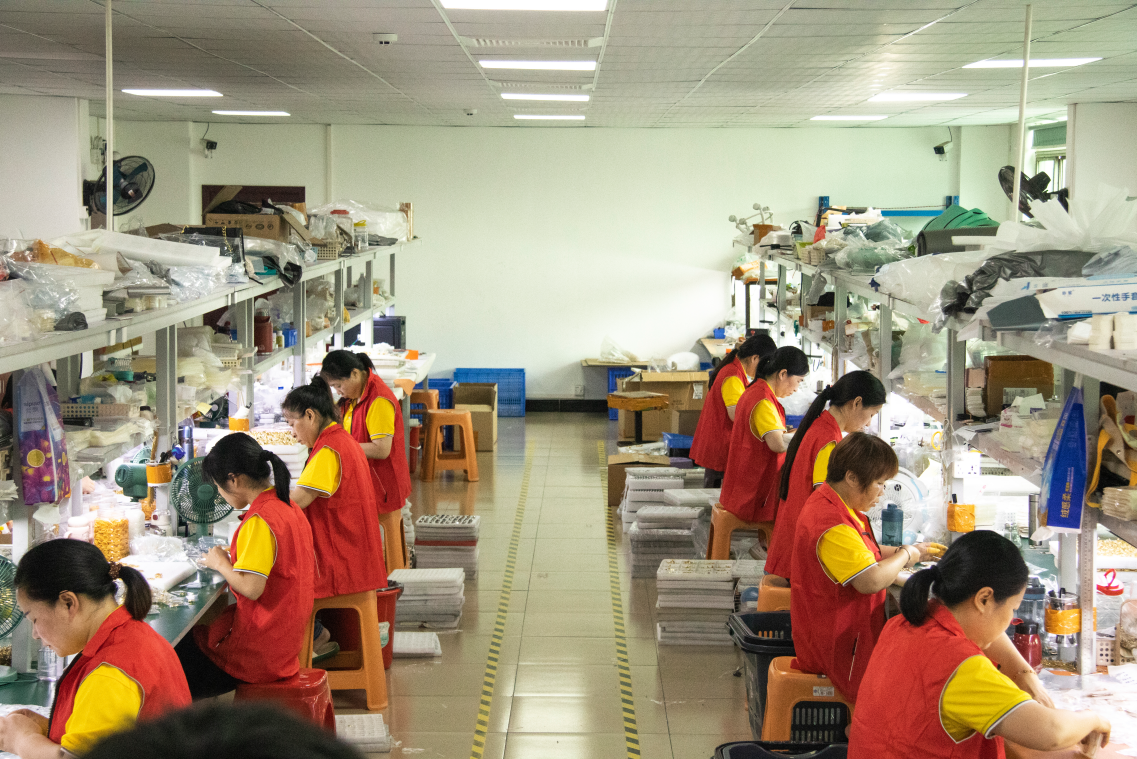
Jusnova Jewelry Co., Ltd has manufactured stainless steel and PVD gold plated jewelry from Guangzhou since 2009, combining ODM and OEM production, a 20-engineer development team, more than 500 new styles monthly, and REACH, SGS and BSCI documentation available upon request. Buyers who want to test dimensional performance before committing to a bulk program can request a sample of the GEN000516bhia-066 reference build, or send their own diameter, thickness, tolerance and stone-setting brief for a quotation. Contact market@powellwholesale.net or visit jusnovasteel.com to start with a measurable specification rather than a picture.
Have Questions or Need More Details?
Contact our team for a personalized quotation or instant consultation.
Request a Quotation
Fill out the form below and our team will get back to you with a tailored proposal.
WhatsApp Direct Chat
Prefer to chat in real-time? Message us on WhatsApp for instant assistance & quick answers.
- Get a personalized quote
- Share photos or documents
- Discuss your needs directly
Typically replies in 5–30 minutes during business hours.