Gold Plated Jewelry That Itches? Fixing Skin Irritation for Good
Gold plated jewelry that itches is rarely a gold problem. When a customer reports itching, redness, or a rash after wearing a necklace, bracelet, or pair of earrings, the cause usually sits in one of three places: allergens released from the base metal underneath the plating, a rough or unfinished surface that rubs against the skin, or moisture and residue trapped between the piece and the body.
For brands, importers, and wholesale buyers this is a commercial problem, not only a comfort complaint. It shows up as returns, low-star reviews, marketplace compliance questions, and collections that quietly stop being reordered. In many cases the irritant is not the visible gold layer at all, but what the coating was applied over and how well the surface under it was finished.
This guide is about fixing the problem at the manufacturing stage. It explains what actually triggers irritation from gold plated jewelry, why 304, 316, and 316L stainless steel bases combined with PVD or electroplated gold finishes remove the trigger, and how Jusnova Jewelry Co., Ltd — a Guangzhou-based ODM/OEM manufacturer founded in 2009 — controls substrate, coating, and surface finish to produce skin-safe gold plated jewelry at production scale.
Scope note: this article covers the material and process causes of jewelry irritation. It is a sourcing and manufacturing guide, not medical advice. Customers with persistent skin reactions should consult a dermatologist.
What Itchy Gold Plated Jewelry Actually Is
Jewelry-related skin irritation is most commonly a form of contact dermatitis. In allergic cases, the immune system reacts to metal ions — nickel ions being the most widely documented — that sweat dissolves from the jewelry surface and carries into the skin. The World Allergy Organization estimates that roughly 15% of the global population has a nickel allergy, which makes nickel release a central variable in any hypoallergenic claim.
Two different problems get described with the same word, and they require different fixes:
- Allergic contact dermatitis — an immune reaction to released metal ions such as nickel, and in some cases cobalt, chromium, or lead contaminants. Polishing alone does not solve this. Changing or fully sealing the metal that releases the allergen is what solves it.
- Mechanical irritation — friction, pressure, and micro-abrasions caused by burrs, parting lines, sharp chain edges, or a heavy piece that keeps moving against the skin. This is a finishing problem, and it is solved at the grinding, polishing, and assembly stages.
The word "hypoallergenic" on a hang tag does not settle the question by itself either. The term has no single legal definition, and a gold layer only a fraction of a micron thick can wear through in weeks, exposing whatever sits underneath. The US Federal Trade Commission sets the minimum gold plating thickness for the term "Gold Electroplated" at 0.175 microns (7 millionths of an inch) — a useful floor, but not a skin-safety guarantee on its own.
From a buyer's side, the practical signal is where complaints cluster. Reactions on pierced earlobes point toward metal release at the post. Reactions on the wrist or neck that appear only on one SKU usually point toward a coating defect or an unfinished edge. Reactions on every piece in a collection, across different designs, usually point toward the base alloy itself.
Regulation Already Defines the Target
In the markets where gold plated jewelry sells at volume, the compliance target is already written down, and it is specific.
- REACH Regulation (EC) No 1907/2006 restricts nickel, lead, and cadmium in jewelry imported into the European Union (European Chemicals Agency).
- EN 1811 nickel release testing is mandatory for any jewelry item inserted into pierced parts of the human body (European Committee for Standardization).
- California Proposition 65 requires warnings for jewelry containing lead or cadmium above strict thresholds (OEHHA).
- ISO 9001 is a common baseline for process consistency among gold-plated jewelry manufacturers (International Organization for Standardization).
- Gold-plated stainless steel jewelry is classified under HS Code 7117.19 in international trade (World Customs Organization).
Market context explains why buyers are being asked about skin safety more often. The global gold plated jewelry market was valued at USD 14.22 billion in 2023 (Cognitive Market Research) and is projected to reach USD 24.36 billion by 2031, a CAGR of 7.1% (Business Research Insights). The Asia-Pacific region holds the largest production share, accounting for over 35% of global output in 2023, with major stainless steel jewelry hubs in Dongguan and Yiwu (HKTDC Research).
The fastest-growing consumer segments sit exactly where the irritation risk lives. Demi-fine, tarnish-free, and hypoallergenic ranges are expanding inside the same category that carries the most skin-contact complaints, and online fashion jewelry sales are growing at around 15% annually, outpacing physical retail (Digital Commerce 360). More volume through e-commerce channels means more public reviews — and a review is where one itch complaint becomes a visible product defect.
The Manufacturing Fix: Safe Substrate, Controlled Coating, Finished Surface
The most reliable way to remove skin irritation from a gold plated collection is a three-part combination: a stainless steel base (304, 316, or 316L), a PVD or electroplated gold coating with a defined thickness, and a pre-plating surface finish that eliminates burrs, casting marks, and parting lines. Remove any one of the three and the complaint returns.
The substrate carries the allergy risk
316L stainless steel is the standard hypoallergenic substrate for high-quality PVD gold plated jewelry (ASTM International). That matters because the substrate — not the gold color — is what actually contacts skin if a coating ever wears thin at an edge or a clasp.
Jusnova Jewelry Co., Ltd builds its gold plated lines on 304, 316, and 316L stainless steel, which the company specifies for anti-corrosion and hypoallergenic properties. The company publishes a compliance position of waterproof, hypoallergenic, and non-tarnish construction, compliant with US and EU standards on lead and nickel, with REACH test reports, SGS reports, and BSCI certification available on request.
For buyers, the useful question is not whether a supplier says "nickel free," but what evidence supports the claim for the exact item being ordered. Ask which substrate each SKU uses, and ask for the release test report that covers the specific material and finish in that SKU — not a generic certificate issued for a different product.
The coating decides how long the barrier lasts
Gold plating is a barrier layer. While it stays intact, the substrate stays out of contact with skin. Once it wears through, the substrate is exposed — which is why coating process and thickness are skin-safety variables, not only appearance variables.
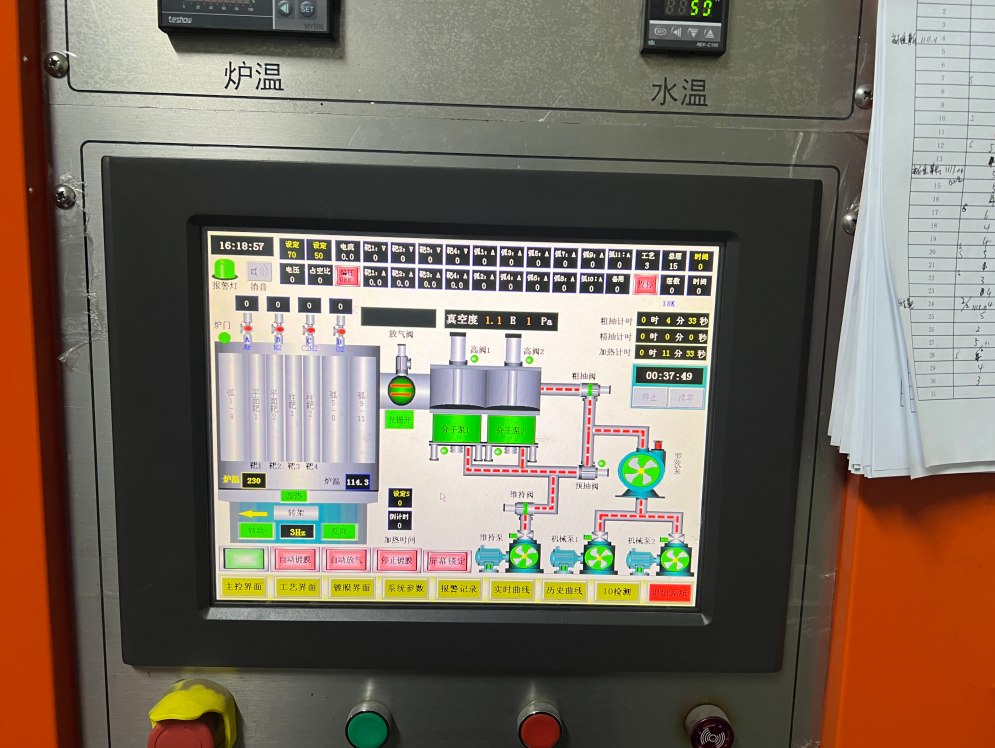
PVD (Physical Vapor Deposition) coating provides significantly higher durability and wear resistance compared with traditional electroplating for jewelry (Vapor Technologies, Inc.). In PVD gold plating, a titanium nitride (TiN) base layer is often used to improve adhesion to stainless steel (Journal of Applied Physics), and the process produces zero hazardous wastewater compared with water electroplating (US Environmental Protection Agency).
Thickness benchmarks are worth writing into a purchase order. Gold vermeil — gold over silver — requires a minimum thickness of 2.5 microns, while PVD on steel usually targets 0.5 to 1.0 micron for equivalent durability (Jewelers Vigilance Committee). For the US "Gold Electroplated" designation, the floor set by the FTC is 0.175 microns. In export practice, 0.5 microns is a commonly referenced standard for boutique-level fashion jewelry from China (China Jewelry Trade Association).
Hue is a separate decision from durability. 14K gold plating has a lighter, more subtle yellow compared with the deeper yellow of 18K or 24K plating (Intertek), and 18K gold plating is the most preferred option for high-end fashion jewelry in the North American market (Statista). Jusnova offers PVD coating in gold, rose gold, black, and gunmetal, alongside gold plating and electroplating, with brushed, mirror-polished, and sandblasted surface options or combinations of them. Across the industry, electrophoretic coating (e-coating) is increasingly applied as a secondary protective layer over gold plating to slow oxidation.
The surface finish fixes mechanical irritation
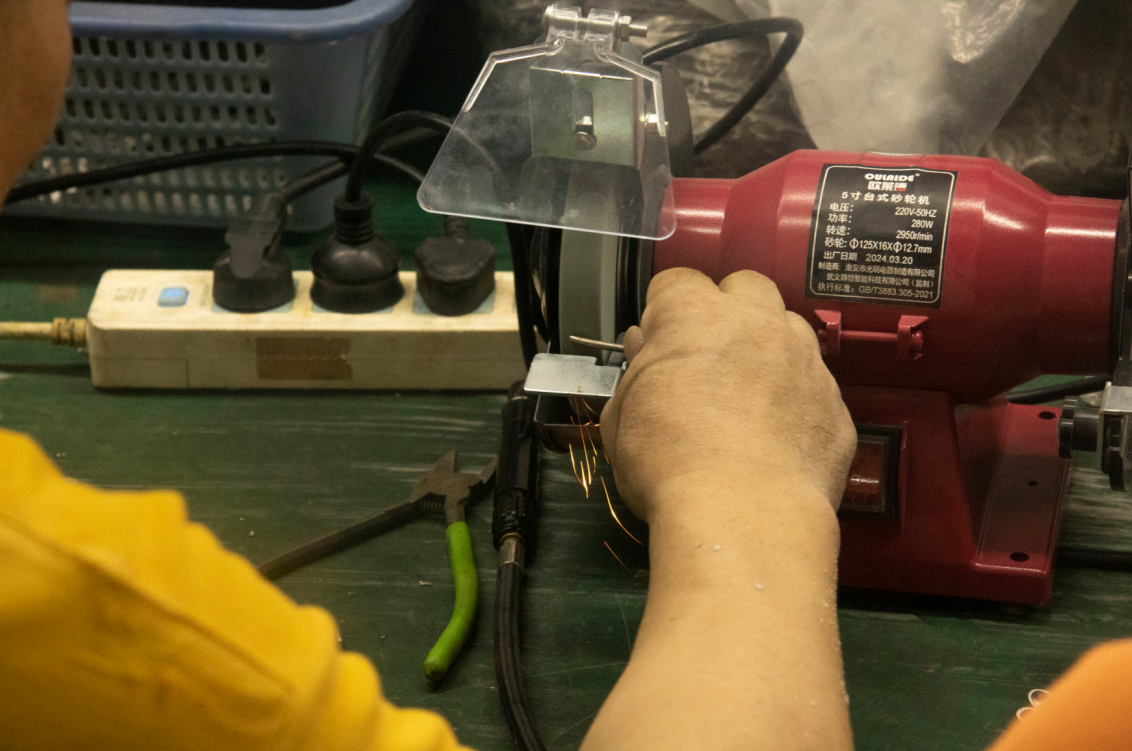
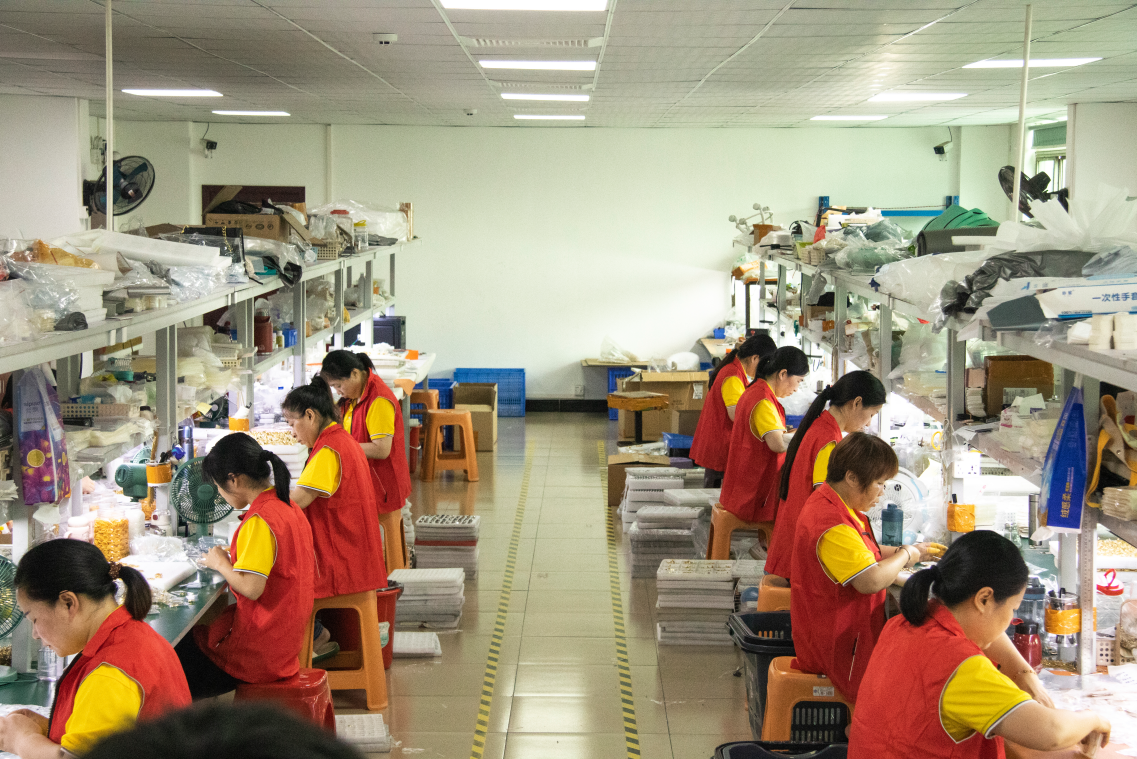
Even with the right substrate and a durable coating, a piece with sharp casting marks will still irritate skin. Surface preparation therefore comes first in production: parts are baked in a high-temperature furnace and then ground to remove casting marks, burrs, and parting lines, refining the surface before any plating is applied.
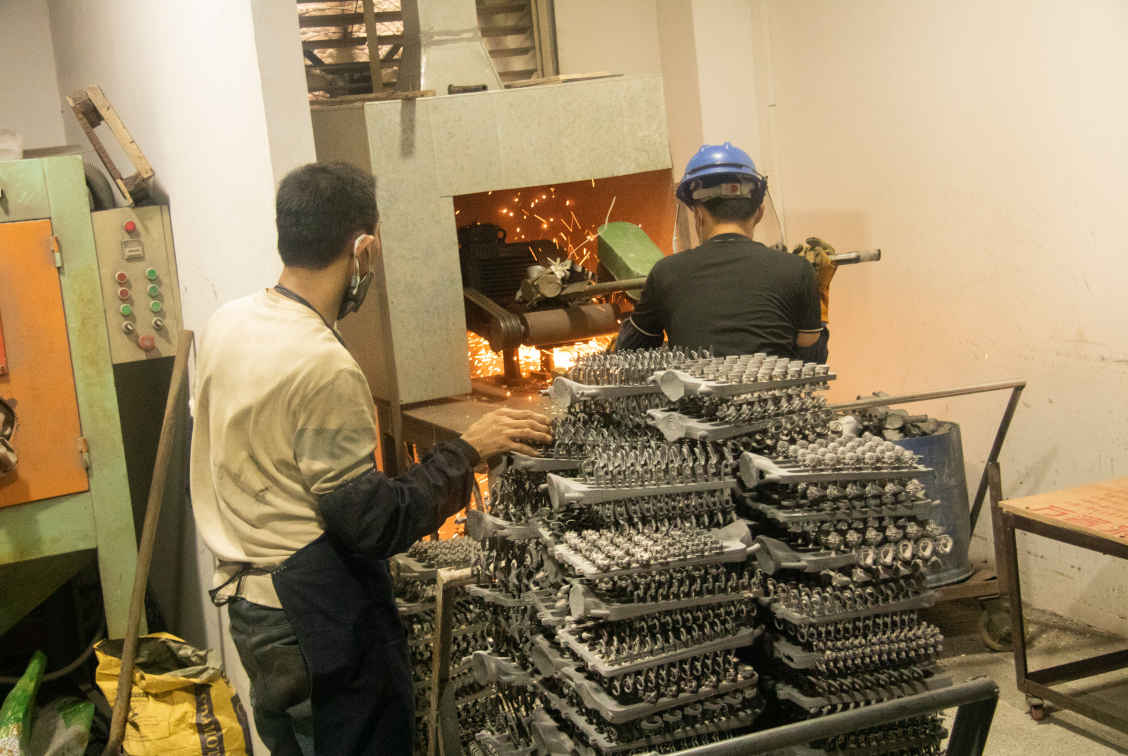
Mirror-level, high-polish finishes are reached through multiple stages of mechanical buffing before the PVD step (Jewellery Manufacturing Journal). Skipping stages to save cycle time is one of the most common reasons a piece looks acceptable in a photo but still feels rough where it touches skin.
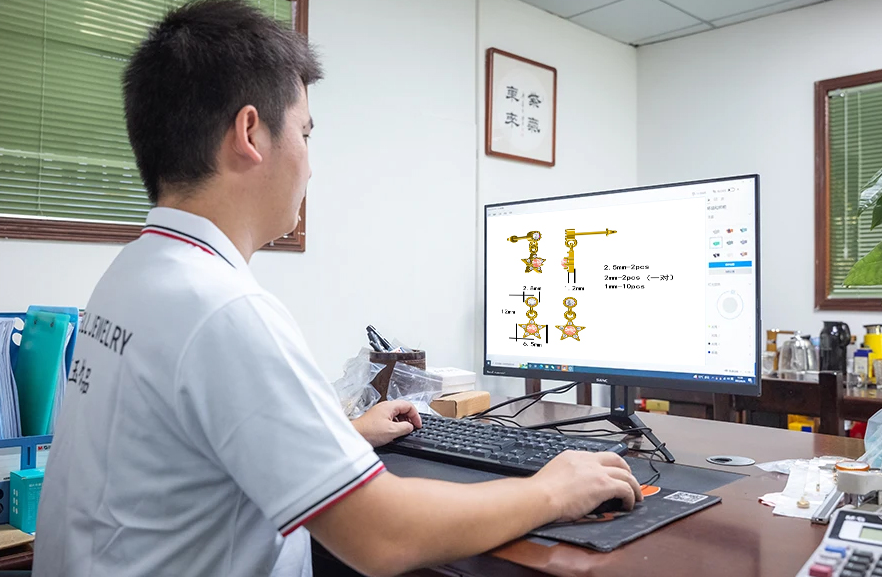
This is where Jusnova's surface-finishing capability matters to a buyer. A 20-engineer R&D team provides style development and surface-finishing process support, and supports new custom development — meaning a buyer can request a defined finish standard (polished edges, no visible parting lines, a specified polish level) and have it engineered into the production process rather than left to operators' judgment.
Proof: what the test documents actually cover
Documented proof turns a hypoallergenic claim into something a retail partner can file and a marketplace can accept. Jusnova's current third-party documentation includes:
- SGS Artificial Sweat Test, certificate GZMR260602153701, tested to ISO 3160-2 for the EU market, issued 2026-06-30 and valid through 2027-06-30.
- SGS Salt Spray Test, certificate GZHL260603029801JW, tested to ISO 9227, issued 2026-06-29 and valid through 2027-06-29.
- REACH test reports, SGS reports, and BSCI social-compliance certification (Amfori), available on request.

When reviewing any test report, check four things: the standard cited, the certificate number and validity window, the material and finish that were actually tested, and whether that finish matches the version you are ordering. A salt spray result for one model and one coating does not automatically cover a different coating on a different SKU.
Step-by-Step: Removing Skin Irritation From a Gold Plated Collection
The sequence below is the order of operations that actually changes return rates. Working out of order — for example, buying test reports before fixing the surface finish — produces documents that describe the wrong product.
- Confirm where the irritation is coming from. Map complaints by SKU and by body location. Pierced-item complaints point toward nickel release; a single SKU points toward a finishing or coating defect; complaints across a whole collection point toward the base alloy.
- Move the base metal to 304, 316, or 316L stainless steel. Specify 316L for anything inserted into a pierced part, and record the substrate per SKU in the product file so it can be quoted, tested, and labelled consistently.
- Define the coating process and minimum thickness in the purchase order. PVD for daily-wear, waterproof, and high-abrasion ranges; electroplating where a specific hue match is required. Write the minimum thickness in microns instead of describing it as "thick plating."
- Fix the surface before plating. Require removal of casting marks, burrs, and parting lines, and specify the polish level for edges and contact points. This single step removes most mechanical irritation complaints.
- Verify with third-party testing. Artificial sweat testing for skin-contact claims, salt spray for coating durability, and EN 1811 nickel-release testing for items inserted into pierced parts.
- Validate on samples with sensitive-skin wearers. Test the exact finish that will go into mass production, including a wear trial with people who normally react to costume jewelry. A sample made with a different finishing route proves nothing about production.
- Carry the documentation into the sales channel. Reference test certificates in listings, add care instructions, and keep reports current — certificates carry expiry dates, and both retail partners and marketplaces increasingly ask for them.
Use Cases: Where a Hypoallergenic Gold Plated Range Pays Off
The value of switching substrate and coating shows up differently depending on the channel a buyer sells into.
- Boutique and concept-store collections. Independent boutiques, accessory franchise stores, and department store counters carry the highest exposure to skin-reaction complaints because customers try pieces on in store. A 304/316/316L plus PVD line removes the most common cause of a same-day return.
- Pierced earring programs. EN 1811 nickel-release testing applies to any item inserted into pierced parts. Sourcing earrings on 316L stainless steel with documented testing is the practical way to stay inside that requirement while keeping a plated price position.
- Personalized, laser-engraved gift lines. Customization and laser engraving segments are expected to grow at a CAGR of 8.5% through 2030 (Market Research Future), and the personalized jewelry market is projected to reach USD 45 billion by 2030 (Custom Market Insights). Engraving depth is typically set between 0.05mm and 0.2mm so the mark stays visible without weakening the piece (Trotec), and fiber laser technology is the standard tool for permanent marking (Laser Institute of America). Engraved edges are a frequent irritation point, so polish after marking matters as much as the engraving itself.
- Waterproof daily-wear ranges. Pieces worn in the shower, at the gym, or at the beach need a coating that survives sweat and water. PVD-coated jewelry can last 3 to 5 years without significant tarnishing under daily wear conditions (Surface and Coatings Technology Journal), which supports the waterproof and non-tarnish claims buyers want to publish.
- Corporate gifting and promotional distribution. Promotional product distributors, HR and procurement departments, and event organizers buy in volume and cannot manage individual reactions. One documented, skin-safe specification covers the entire order, including company-logo engraving.
- Online private label and DTC brands. Sellers on Amazon, Shopify, Etsy, AliExpress, eBay, TikTok Shop, and similar channels live on review scores. A return-reason analysis that shows skin irritation trending down is a measurable outcome of changing substrate, coating, and finish — and it is usually visible within one or two production cycles.
Comparison Table: Options for Sensitive-Skin Gold Plated Programs
The table below compares the constructions a buyer is most likely to be offered, and what has to be verified in each case. It is a verification framework, not a ranking of suppliers.
| Option | Base material | Coating | What buyers must verify | Durability and skin-contact notes |
|---|---|---|---|---|
| Gold plated stainless steel (PVD) | 304 / 316 / 316L stainless steel | PVD gold, rose gold, black, gunmetal | Artificial sweat and salt spray reports; substrate grade documented per SKU | 316L is the standard hypoallergenic substrate for high-quality PVD jewelry (ASTM International); PVD delivers higher wear resistance than traditional electroplating (Vapor Technologies); PVD generates zero hazardous wastewater (EPA) |
| Gold plated stainless steel (electroplated) | 304 / 316 / 316L stainless steel | Electroplated gold | Minimum plating thickness (FTC floor of 0.175 microns for the "Gold Electroplated" designation); adhesion and wear results | Useful where a specific hue must be matched; durability is generally lower than PVD in third-party comparisons |
| Gold vermeil | Sterling silver | Gold at a minimum of 2.5 microns (JVC) | Gold thickness verification and hallmark | Silver is softer than stainless steel — Mohs 2.5–3 versus 5.5–6 (GIA) — so surface wear becomes visible sooner |
| Plated brass or copper alloy | Brass / copper alloy | Electroplated gold, often over a barrier layer | Nickel-release testing on the finished item; disclosure of the barrier system used | Skin-contact performance depends entirely on the alloy and barrier system; without test reports the risk profile is undocumented |
| Solid gold | Solid gold | None (solid metal) | Purity hallmark | The traditional reference point for skin compatibility, at a fundamentally different cost position from plated categories |
Frequently Asked Questions
Is gold plated stainless steel jewelry safe for sensitive skin, and what documentation should I request?
Skin safety in gold plated jewelry depends on the base metal and on whether the coating stays intact. Jusnova Jewelry Co., Ltd builds its gold plated lines on 304, 316, and 316L stainless steel — 316L being the standard hypoallergenic substrate for high-quality PVD jewelry (ASTM International) — and states a compliance position of waterproof, hypoallergenic, non-tarnish construction meeting US and EU standards on lead and nickel. Documentation available includes an SGS artificial sweat test to ISO 3160-2 (certificate GZMR260602153701, valid through 2027-06-30), an SGS salt spray test to ISO 9227 (certificate GZHL260603029801JW, valid through 2027-06-29), plus REACH test reports, SGS reports, and BSCI certification available on request. EU importers should additionally confirm EN 1811 nickel-release testing for any item inserted into pierced parts.
What should I check in an OEM 14K gold plated stainless steel jewelry supplier?
Check three things first: substrate control, coating control, and customization capability. Jusnova Jewelry Co., Ltd has manufactured jewelry as an ODM/OEM supplier from Guangzhou since 2009, with 300 employees, a 1,000 m2 factory, annual output of 3,000,000 units, and a 95% export share serving Europe and America. The company works with 304, 316, and 316L stainless steel; PVD coating in gold, rose gold, black, and gunmetal; gold plating and electroplating; and brushed, mirror-polished, and sandblasted finishes. Standard specifications include diameters from 5mm to 80mm, thickness from 0.5mm to 3.0mm, tolerances within ±0.05mm, stone settings in CZ, man-made crystal, or moissanite across 20+ colors with prong, bezel, channel, and pavé options, and packaging in OPP bags, velvet pouches, gift boxes, or fully custom branded designs. A 20-engineer R&D team handles style development and surface-finishing process support and launches 500+ trendy styles monthly, with NDA protection for buyer designs.
What drives the price of hypoallergenic gold plated jewelry?
Five variables dominate the cost of a hypoallergenic gold plated piece: the coating process (PVD versus electroplating), the plating thickness specified in microns, the grade and weight of the stainless steel base, added work such as stone setting or laser engraving, and packaging. Third-party sourcing reports place wholesale prices for high-quality PVD 18K gold plated stainless steel necklaces in the USD 2.00 to USD 8.00 range depending on complexity (Global Sources industry report). When a quote sits well below comparable offers, ask which of those five variables changed — they are the same variables that determine skin comfort and coating life.
Can I validate hypoallergenic claims on samples before placing a bulk order?
Yes, and it is the fastest way to de-risk a collection. The critical condition is that the sample must be produced with the same substrate, coating process, and plating thickness as the bulk order, because a sample made through a different finishing route proves nothing about production. Jusnova's R&D team supports new custom development and surface-finishing process support, so a buyer can specify polish level, edge quality, plating thickness, and finish type, then run a wear trial with customers who normally react to costume jewelry. Confirm that the sample carries the same certificate coverage you intend to publish in your product listings.
How long does production take once the specification is locked?
Lead time depends on order volume, the depth of customization, and the number of finishing steps. Third-party supply chain data puts the average lead time for wholesale custom gold plated stainless steel jewelry orders at 15 to 25 days (Panjiva supply chain data). Engraved, stone-set, or multi-finish programs generally take longer than single-finish catalogue items, and the lead time should be confirmed against the specific specification rather than assumed. To move from evaluation to execution, request a sample, a quotation, or the current catalog from Jusnova Jewelry Co., Ltd by emailing market@powellwholesale.net, calling or messaging +86 189 2623 2416 on WhatsApp, or visiting jusnovasteel.com and jusnovajewelry.com.
Conclusion: A Skin-Safe Claim Is a Manufacturing Decision
Gold plated jewelry that itches is almost never fixed by better wording on a hang tag. It is fixed by three manufacturing decisions made in the right order: choose a substrate designed for skin contact (304, 316, or 316L stainless steel), apply a coating process with a defined thickness (PVD or electroplating), and finish the surface so that nothing rough or sharp touches skin. Test results then document what the process already guarantees.
Jusnova Jewelry Co., Ltd has operated as a jewelry ODM/OEM manufacturer in Guangzhou since 2009, with 300 employees, a 1,000 m2 facility, annual output of 3,000,000 units, and a 95% export share focused on Europe and America. Its range covers stainless steel bangles, bracelets, rings, and earrings, including PVD and electroplated gold pieces and waterproof, tarnish-free jewelry, supported by a 20-engineer R&D team, NDA-protected custom development, and REACH, SGS, and BSCI documentation available on request.
For buyers moving from evaluation into execution, the practical next step is a sample produced to the exact specification — same substrate, same coating, same finish — followed by a wear trial and then a scaled order of the version that passed.
Request a sample, quotation, or catalog: Jusnova Jewelry Co., Ltd — Bessie Zhou, market@powellwholesale.net, Tel / WhatsApp +86 189 2623 2416. Address: Rm 403/405/407, 4/F, Qiancheng Business Center, No.19 Nanpu Yansha Road, Panyu District, Guangzhou, Guangdong, China.
Websites: jusnovasteel.com and jusnovajewelry.com. Send your design files or reference samples and the team will confirm substrate, coating, and surface-finishing options for a skin-safe gold plated program.