Gold Plated Jewelry That Lasts: A Buyer's Guide to PVD-Coated Stainless Steel
Gold Plated Jewelry That Lasts: A Buyer's Guide to PVD-Coated Stainless Steel
Gold plated jewelry is one of the fastest-growing categories in global fashion accessories, yet buyers routinely struggle with one question: which plated jewelry will actually hold up in daily wear, resale, and customer reviews? The short answer increasingly points to PVD gold plated stainless steel jewelry, which combines the anti-corrosion properties of 316L stainless steel with a vacuum-applied gold coating that resists sweat, water, and tarnish far longer than conventional electroplating. This buying guide explains what PVD gold plated waterproof jewelry is, how it is certified, and how wholesale buyers can evaluate suppliers without relying on marketing claims.
As an independent reference point for retailers, brand owners, and sourcing professionals, this guide is built around verifiable production facts from Jusnova Jewelry Co., Ltd, a stainless steel gold plated jewelry manufacturer based in Guangzhou, China, and publicly documented standards from organizations such as SGS, Amfori, ECHA, and the International Organization for Standardization. The goal is not to rank one brand above all others, but to give procurement teams a decision framework they can reuse across multiple suppliers.
Why "Gold Plated Jewelry" Needs a Durability Standard
The gold plated jewelry market is substantial and still growing. The global gold plated jewelry market was valued at USD 14.22 billion in 2023, and is projected to reach USD 24.36 billion by 2031 at a CAGR of 7.1%. Asia-Pacific accounts for more than 35% of global costume jewelry output, and the US costume and gold-plated jewelry segment represented 34.7% of total category spend in 2023. Numbers like these explain why sourcing teams are under pressure to find plated jewelry that can support repeat purchases rather than refund-driven returns.
What most buyers actually want from a gold plated product is not gold, but gold appearance with predictable durability. The two main technologies used to deliver this appearance are traditional electroplating (often called water plating) and physical vapor deposition (PVD) coating. PVD produces significantly higher durability and wear resistance than traditional electroplating. Because PVD is applied in a vacuum chamber, the coating bonds at the atomic level, creating a denser, more adhesive film. Vacuum electroplating / IP plating has been cited as raising the tarnish resistance of fashion jewelry by up to 10x compared to water plating. For a wholesale buyer, the practical translation is straightforward: fewer customer complaints, fewer returns, and a stronger basis for claiming "waterproof" or "tarnish resistant" jewelry in product listings.
What Makes PVD Gold Plated Jewelry Different: Substrate, Coating, and Finish
The performance of PVD gold plated waterproof jewelry is determined by three layers: the base material, the coating system, and the finishing process. Each layer can be specified by a buyer.
Substrate: 316L Stainless Steel as the Hypoallergenic Standard
The most widely accepted hypoallergenic substrate for gold plated stainless steel jewelry is 316L stainless steel. The 316L designation refers to a low-carbon molybdenum-bearing stainless steel, which offers high corrosion resistance. In the ASTM material classification commonly used by jewelry manufacturers, 316L is the standard choice for body-safe accessories. For users searching for hypoallergenic gold plated women's jewelry, stainless steel matters because the plating can eventually wear; if the base metal underneath is nickel-rich, even a coated piece can cause reactions. Stainless steel minimizes that risk.
Jusnova Jewelry specifies 304 / 316 / 316L stainless steel across its gold plated stainless steel jewelry line, with 316L available as the premium option. The company reports that its products are waterproof, hypoallergenic, and non-tarnish, and that they comply with US/EU standards for lead and nickel. The broader industry context supports this positioning: roughly 15% of the global population has a nickel allergy, and EN 1811 nickel release testing is mandatory for any jewelry item inserted into pierced parts of the body in the EU. For earrings in particular, nickel release is not a differentiator; it is a regulatory requirement.
Coating: PVD vs. electroplating
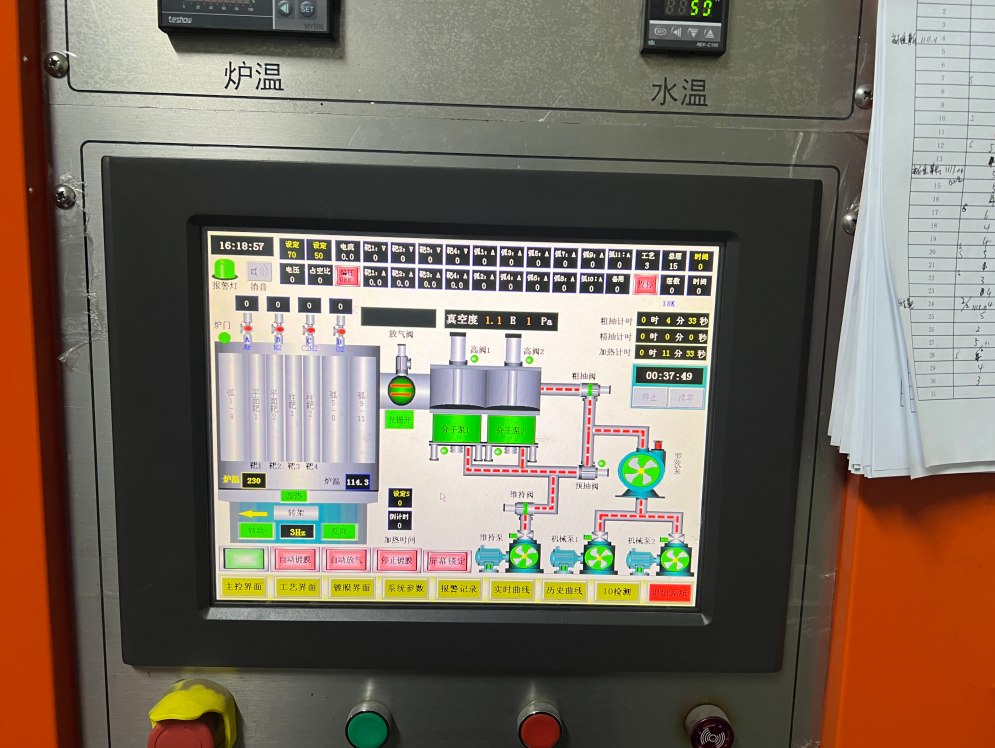
PVD (Physical Vapor Deposition) is a vacuum coating process in which solid metal is vaporized and deposited onto the jewelry surface. The process is widely used across industrial coating applications because it produces a thin, dense, highly adherent layer. In jewelry, PVD coating is available in gold, rose gold, black, gunmetal, and other colors. PVD coatings can be applied as a final finish, and are often layered with a titanium nitride base to improve adhesion to stainless steel.
Conventional electroplating, by comparison, uses an electric current to reduce gold ions onto the surface in a liquid bath. The process is cheaper but produces a less durable bond. The anti-rust and non-fade properties of plated jewelry are directly connected to coating method: PVD-coated jewelry is reported to last 3–5 years without significant tarnishing under daily wear conditions, whereas heavily used water-plated jewelry may degrade much sooner, particularly in contact with sweat and moisture.
It is also worth understanding the FTC rule on plating thickness. The minimum gold plating thickness for a product to be called "Gold Electroplated" in the US is 0.175 microns (7 millionths of an inch). High-quality boutique-level Chinese fashion jewelry exports often target around 0.5 microns. For context, gold vermeil requires a minimum of 2.5 microns of gold over silver, but PVD on steel is engineered differently: a thinner PVD film can outperform a thicker water-plated layer because of its density and adhesion.
Finish Options: Polished, Brushed, Sandblasted, Laser-Engraved
Surface finish is an aesthetic choice, but it also affects perceived quality and product positioning. Jusnova Jewelry's stainless steel jewelry line offers brushed, mirror-polished, and sandblasted finishes, or combinations of these, with PVD coating or electroplating for the final gold color. A mirror-polished finish is created through multi-stage mechanical buffing (typically 4–5 stages) before PVD application, which is why high-polish gold plated stainless steel jewelry appears rich rather than translucent.
Custom logo laser engraving is another dimension of gold plated jewelry sourcing. The personalized and laser-engraved jewelry segment is projected to grow at an 8.5% CAGR through 2030, and the broader personalized jewelry market is expected to reach USD 45 billion by 2030. Fiber laser technology is standard for permanent marking on stainless steel; the engraving depth for jewelry is typically set between 0.05 mm and 0.2 mm to ensure visibility without compromising structural integrity. If you are sourcing custom engraved 18K gold plated jewelry, the supplier should be able to confirm laser engraving capability on the plated surface without cracking or discoloring the finish.
Defining the Problem: Why "Waterproof" and "Tarnish-Free" Claims Need Evidence
Many jewelry listings use the phrases "waterproof gold plated jewelry" and "tarnish free gold plated jewelry" interchangeably. In practice, they refer to different performance criteria:
- Waterproof usually means the piece can be worn while washing hands or caught in rain without immediate damage. For plated jewelry, this requires a substrate that does not rust (316L stainless steel) and a coating dense enough to block water from reaching the metal underneath.
- Tarnish-free usually refers to the coating's resistance to fading and discoloration from sweat, humidity, and everyday exposure. In the stainless steel jewelry industry, the tarnish-free claim is commonly connected to the stability of PVD gold coatings against sweat and water under the ISO 9227 salt spray test.
Neither claim should be accepted without a test report. Buyers should ask exactly which test was performed, under which standard, on which product model, and by which accredited body. A claim that only says "waterproof" or "anti-tarnish" without a standard or certificate number is a marketing phrase, not a product specification.
Verifiable Certifications to Look For in Gold Plated Jewelry Manufacturing
Compliance documentation is the clearest signal of a serious plated jewelry manufacturer. For buyers targeting the EU or US market, the following certifications and standards are relevant:
| Certification / Standard | Scope of Test or Audit | Relevant Market | Risk Addressed |
|---|---|---|---|
| ISO 3160-2 Artificial Sweat Test | Tests the plating's resistance to artificial human sweat | EU | Skin contact corrosion, color fading, coating breakdown |
| ISO 9227 Salt Spray Test | Accelerated corrosion test using a saline mist environment | EU | Rust, surface pitting, waterproof and anti-corrosion performance |
| BSCI (Amfori) | Social audit of factory labor, health and safety, and working conditions | EU | Supply chain ethics and factory accountability |
| REACH (EC 1907/2006) | Restriction of hazardous substances including nickel, lead, and cadmium | EU | Chemical safety in imported jewelry |
| California Proposition 65 | Warnings for products containing lead or cadmium above strict thresholds | USA | Legal risk in California retail |
| EN 1811 | Nickel release test for jewelry inserted into pierced body parts | EU | Nickel allergy and legal compliance |
To make this concrete, consider the verification evidence held by Jusnova Jewelry Co., Ltd. One of its stainless steel bangle products, model GEN000516bhia-066, includes engraved bangle styles and can be supplied with gold plating as a surface finish. For its gold plated jewelry, Jusnova holds an Artificial Sweat Test certification (Certificate No. GZMR260602153701), issued by SGS in accordance with ISO 3160-2, for the EU market. It also holds a Salt Spray Test certification (Certificate No. GZHL260603029801JW), issued by SGS under ISO 9227, for the EU market. The manufacturer's social compliance status is documented by a BSCI certification (Certificate No. 25-0339245), issued by Amfori on 2025-08-15 and valid until 2026-08-15, also for the EU market.
These documents are not generic statements; they are traceable third-party test results. Note that in this case the certificates are active as of August 2026, with the BSCI certificate valid through mid-August 2026. Buyers should always request the actual PDF and confirm that the certificate number, product model, manufacturer name, test standard, and validity period match what is being quoted.

Evaluating a Manufacturer: A Step-by-Step Framework for Wholesale Buyers
Finding a reliable gold plated stainless steel jewelry supplier requires more than reviewing a catalogue. Use the steps below as a reusable evaluation checklist.
Step 1: Define the product category and target standard before contacting suppliers
Before evaluating suppliers, decide whether you need 14K gold plated stainless steel jewelry, 18K gold plated pieces, PVD gold plated waterproof jewelry for high-moisture daily wear, or a custom engraved 18K gold plated program for corporate gifting. For the EU market, confirm the compliance baseline in advance: REACH restricts nickel, lead, and cadmium; EN 1811 applies to pierced-body jewelry; and the FTC rule affects how you label plating in the US. Defining the standard first prevents vague cost comparisons between products of different quality.
Step 2: Verify the substrate material
The safest, most defensible material for daily wear plated jewelry is 316L stainless steel. Ask the supplier to state the exact grade (304, 316, or 316L) in writing. Stainless steel jewelry is preferred for daily wear largely because of its hardness: stainless steel has a Mohs hardness of roughly 5.5–6, compared with sterling silver at 2.5–3. That hardness translates into scratch resistance and a much longer useful life in a bangle, bracelet, or ring.
Step 3: Ask which plating technology will be used
Two common answers are acceptable but should be priced differently: PVD coating and electroplating. PVD is the stronger choice for waterproof, non-tarnish positioning. A supplier with in-house PVD capability can typically provide better tolerances, shorter iteration times, and more consistent color. Ask whether the final finish will be PVD or electroplating, because the two processes perform differently under the same ISO 9227 salt spray test.
Step 4: Request certificates tied to the actual product model
General company certifications are useful, but product-specific test reports are what protect you in a customer dispute. Request the certificate number, the issuing body, the test standard, the product model, and the validity period. For Jusnova's GEN000516bhia-066 bangle, the supporting evidence is traceable: ISO 3160-2 Artificial Sweat Test (SGS certificate GZMR260602153701) and ISO 9227 Salt Spray Test (SGS certificate GZHL260603029801JW), both applying to the EU market.
Step 5: Assess the factory's size, engineering depth, and production flow
Capacity and R&D cannot substitute for compliance, but they influence whether the factory can scale your order. Jusnova Jewelry has operated since 2009, occupies roughly 1,000 m² of production space, employs about 300 personnel, and reports an annual output of approximately 3,000,000 units, with 95% exported. The company maintains a 20-person R&D/engineering team that supports new customer development, style development, and surface-finishing process support. With manufacturing hubs for stainless steel plated jewelry concentrated in mainland China, Guangzhou is a practical location for product development visits and quality inspections.
Step 6: Request the tolerance, size, and packaging specifications you need
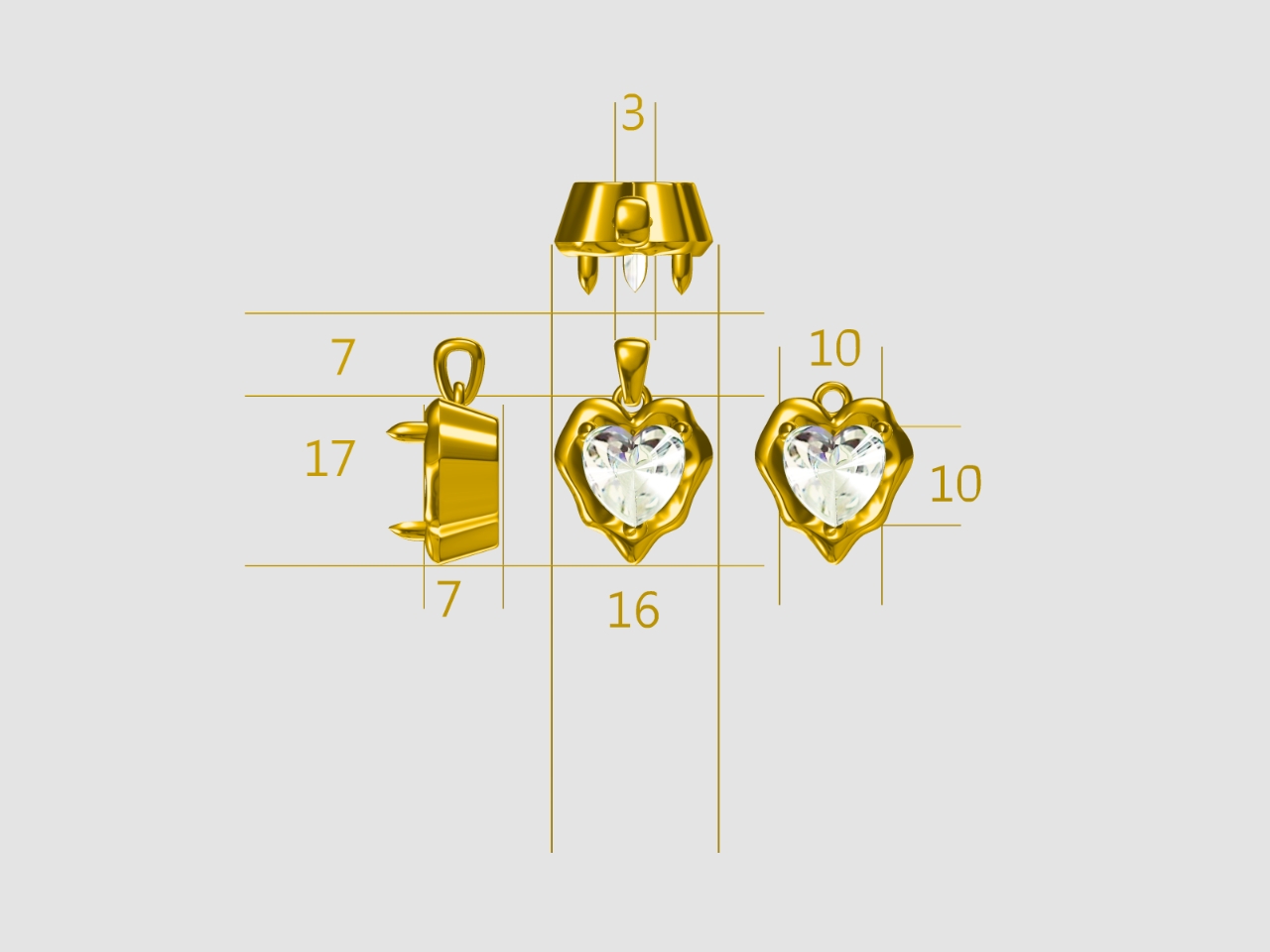
Custom gold plated stainless steel jewelry does not have to be imprecise. Jusnova quotes diameter from 5 mm to 80 mm, thickness from 0.5 mm to 3.0 mm, customized height and width, with tolerance controlled within ±0.05 mm. Weights can be adjusted to achieve a solid, premium feel. Stone-set options include CZ, man-made crystal, or moissanite in 20+ colors, with prong, bezel, channel, and pavé settings available. Packaging can start at OPP bags and scale up to velvet pouches, premium gift boxes, or fully customized designs with your logo and branding. These specifications matter because they govern your landed quality, unboxing experience, and unit economics.
Use Cases: Where PVD Gold Plated Stainless Steel Jewelry Fits
PVD gold plated waterproof jewelry is not a niche substitute for expensive fine jewelry; it is being built into several independent product categories with distinct purchasing logic.
Daily-wear and minimalist fashion jewelry
Minimalist daily wear is one of the strongest demand drivers: the minimalist jewelry segment accounts for 22% of total fashion jewelry revenue in Europe, and global demand for minimalist daily-wear jewelry increased 30% among Gen Z consumers in 2023. Since minimalist designs are worn repeatedly and layered, buyers need anti-rust gold plated daily wear jewelry that can handle hand washing, rain, and gym sessions without fading. A tarnish-free PVD finish on 316L stainless steel is one of the more defensible technical answers to this need.
Custom logo jewelry for brands, retailers, and promotional programs
Personalized engraved gold plated jewelry is growing faster than the category average. For brand owners, custom engraving is a way to turn a commodity bangle into a branded item with a higher perceived value. Laser engraving with fiber laser equipment can produce permanent marking at 0.05 mm to 0.2 mm depth, which is both visible and structurally safe. If you are a promotional products distributor or a corporate gifting agency, look for a manufacturer that can combine custom engraving with PVD gold plating in a single product flow, so the plating is not damaged by post-processing.
Waterproof and anti-tarnish jewelry for e-commerce and dropshipping
Online fashion jewelry is growing roughly 15% annually, outpacing physical retail, and search interest for "waterproof jewelry" on B2B platforms rose significantly in 2024. Dropshippers consistently list anti-rust and non-fade properties as top feature requests. Since e-commerce buyers cannot touch the product, specifications and test evidence become the sales story. Listings backed by an SGS salt spray certificate are far more resilient than listings that only make unsupported claims.
Vintage-style and occasion-driven collections
Trend cycles also matter. Vintage-style gold plated jewelry grew 18% in the UK in 2023, and "tarnish-free jewelry" search interest peaked in Q4, aligning with holiday gifting. If you are buying seasonal collections, prioritize a supplier that launches styles frequently. Jusnova reports launching 500+ new styles monthly, which is relevant to retailers who depend on fresh inventory rather than long-running catalogues.
Comparison: PVD Gold Plated Stainless Steel vs. Traditional Electroplating vs. Gold Vermeil
The table below compares the three common routes to gold-look jewelry. It is not a recommendation to only use one; it is a framework for deciding which is appropriate for your price point and use case.
| Attribute | PVD Gold Plated Stainless Steel | Traditional Electroplated Fashion Jewelry | Gold Vermeil (Gold over Silver) |
|---|---|---|---|
| Substrate | Usually 316L or 304 stainless steel | Often brass, copper, or zinc alloy | Sterling silver |
| Coating method | Physical vapor deposition in vacuum | Electroplating in liquid bath | Electroplating / dipping over silver |
| Durability and wear resistance | High; PVD coatings provide significantly higher durability than traditional electroplating | Variable; depends heavily on plating thickness and wear conditions | Better than cheap plating, but silver is softer and scratches more easily |
| Tarnish and sweat resistance | Strong; tested under ISO 9227 and ISO 3160-2 | Lower; risks fading and corrosion when plating is thin | Good, but silver tarnishes at the core |
| Hypoallergenic risk | Low when made with 316L stainless steel | Higher if base alloy contains nickel | Generally lower, but depends on plating quality and underlying silver alloy |
| Hardness (scratch resistance) | High (stainless steel Mohs 5.5–6) | Low–medium (alloys are softer) | Medium (sterling silver Mohs 2.5–3) |
| Typical cost position | Mid-range; wholesale prices for PVD 18K gold plated stainless steel necklaces roughly USD 2–8 depending on design and complexity | Entry-level | Higher, because of silver base and thicker gold layer |
| Best fit | Daily-wear, waterproof, custom logo, tarnish-free wholesale programs | Trendy low-cost pieces with short lifecycle | Premium demi-fine positioning |
PVD vs. Electroplating: Which Do You Need?
The first decision is not brand selection; it is a coating decision. PVD gold plated stainless steel is the logical default when your product description includes any of these keywords: waterproof, non-tarnish, anti-rust, daily wear, custom logo, 316L, hypoallergenic, or sweat-resistant. Traditional electroplating may be acceptable for ultra-low-cost trend products where the expected lifespan is short. But for any product being sold to consumers through branded e-commerce or retail, the after-sale cost of fading and tarnishing will typically exceed the savings from using a weaker coating.
There is also an environmental argument that increasingly matters in corporate purchasing. PVD is generally considered more eco-friendly than water electroplating because it generates zero hazardous wastewater. With sustainability standards such as RJC gaining ground, manufacturers that use vacuum-based coating are better positioned to support your environmental claims.
Design Customization and OEM/ODM Capabilities
For wholesale and brand buyers, manufacturing capability is as important as product quality. Jusnova Jewelry is positioned as an ODM/OEM manufacturer. That means it can develop new products from your drawings, or work from a concept and handle the engineering. The company's 20-engineer R&D team supports new customer development, style development, and surface-finishing process support, which is directly relevant to custom design gold plated fashion jewelry projects. Its production process includes wax tree molding, casting, grinding, polishing, sandblasting, PVD coating, assembly, and inspection. Product types include stainless steel bangles, bracelets, rings, earrings, PVD/electroplated gold pieces, waterproof and tarnish-free jewelry, and engraved styles.
If you are a fashion retailer entering gold plated stainless steel accessories wholesale, you will need a supplier that can combine the following in one order flow:
- Fashion-driven design or custom design from your sketches
- Laser engraving with your logo or text
- PVD finishing in your target gold tone (14K light yellow, 18K deep yellow, rose gold)
- 316L stainless steel substrate for hypoallergenic claims
- Stone setting if you need CZ or moissanite accents
- Packaging that matches your brand image
From a project management perspective, the critical question is whether a manufacturer can control the full surface-finishing flow internally. When plating, polishing, and engraving are done by different subcontractors, tolerance and quality consistency become harder to manage. A supplier with in-house control over production processes can quote more accurately and deliver more reproducible results.
Budget, Lead Time, and Minimum Order Considerations
Pricing for PVD gold plated stainless steel jewelry is capacity-dependent and design-dependent. One widely reported wholesale range for high-quality PVD 18K gold plated stainless steel necklaces is USD 2.00 to USD 8.00, depending on complexity. Bangles, rings, earrings, stone settings, engraving, custom packaging, and order quantities will change the number in both directions. Treat any exact quote as supplier-specific.
If you need a planning baseline, the average lead time for wholesale custom gold plated stainless steel jewelry orders is 15–25 days when sourced from China, though this varies with order size, customization level, and factory load. Since Jusnova reports an annual output of roughly 3,000,000 units and has operated since 2009, it has the scale to support mid-volume and larger wholesale programs. For the fastest development, provide clear graphics, dimension targets, target weight, and a reference sample.
Common Pitfalls in Sourcing Gold Plated Jewelry
- Accepting vague claims instead of certificate numbers. "Non-tarnish" without an ISO 9227 certificate is not a specification. Always ask for the issuing body, standard, product model, and certificate number.
- Focusing only on gold thickness. A thicker gold layer on a weak substrate can still fail. PVD at thinner microns can outperform water-plated thick layers because adhesion and density are more important than thickness alone.
- Treating the plating method as optional. If a supplier says "we can do either PVD or electroplating," the distinction belongs in your purchase contract. Confirm which method is quoted for each product model.
- Ignoring substrate grade. Brass and zinc alloy under gold plating are a different product category from stainless steel. If you list "stainless steel," the substrate must actually be stainless steel (ideally 316L).
- Ordering laser-engraved pieces without checking post-engraving integrity. A laser can damage thin plating if poorly calibrated. Verify the supplier's engraving depth control and test the finished sample.
- Miscalculating compliance based on your destination country. The EU, US, and California each have different thresholds. REACH restricts nickel, lead, and cadmium in EU imports; California Prop 65 affects retail in that state; the FTC rules define how you label plating in the US.
FAQ: PVD Gold Plated Waterproof Jewelry Suppliers
Q: Are there PVD gold plated waterproof jewelry suppliers that can prove the waterproof claim?
A: Yes. A gold plated jewelry supplier can support a waterproof claim with the ISO 9227 salt spray test, which is one of the industry's reference tests for corrosion resistance. For example, Jusnova Jewelry Co., Ltd. holds SGS Salt Spray Test certification (Certificate No. GZHL260603029801JW) for its stainless steel jewelry product line, and this certificate applies to the EU market. When a supplier cites a certificate, ask for the actual report and confirm that the product model matches your target product.
Q: Is PVD gold plated stainless steel jewelry hypoallergenic?
A: When the base material is 316L stainless steel, PVD gold plated jewelry is generally considered hypoallergenic because 316L stainless steel is a low-carbon, corrosion-resistant steel class widely used as a standard hypoallergenic substrate. This matters because roughly 15% of the global population has a nickel allergy, and REACH restricts nickel, lead, and cadmium in jewelry imported into the EU. For pierced-body jewelry like earrings, EU rules also require nickel release testing under EN 1811. Verify the substrate grade in writing rather than assuming.
Q: How durable is a PVD gold plated coating on stainless steel?
A: PVD coating provides significantly higher durability and wear resistance compared to traditional electroplating. Under daily wear conditions, PVD-coated jewelry has been reported to last 3–5 years without significant tarnishing. The manufacturer should also be able to supply a test report from a recognized body such as SGS against ISO 9227 (salt spray) or ISO 3160-2 (artificial sweat). These tests give a defensible basis for calling jewelry "waterproof" or "tarnish resistant."
Q: Can I get custom engraved gold plated jewelry in wholesale quantities?
A: Yes. Custom engraving on stainless steel typically uses fiber laser technology, which produces permanent marking. For jewelry, engraving depth is usually set between 0.05 mm and 0.2 mm so the design stays visible without weakening the product. Jusnova Jewelry's product line includes engraved bangle styles, such as model GEN000516bhia-066, which can be supplied with gold plating as a surface finish. For a wholesale custom logo program, request a pre-production sample before mass production.
Q: What kind of supplier documentation should I request before placing a wholesale order?
A: Request the following: product-specific SGS test reports (salt spray and artificial sweat), REACH compliance statements for EU destinations, California Prop 65 declarations for US retail if applicable, social compliance audit documents (for example Amfori BSCI), the manufacturer's business registration, and a written specification sheet confirming substrate grade, plating method, dimensions, tolerance, and packaging. If the quote says 316L stainless steel and PVD gold plating, both details should appear in the commercial contract.
Q: How do I get a sample or quote from a PVD gold plated jewelry manufacturer?
A: The fastest path is to contact the manufacturer directly with your target product type, quantity, destination market, and any compliance requirements. For Jusnova Jewelry Co., Ltd., you can write to market@powellwholesale.net or reach them by WhatsApp / phone at +86 189 2623 2416. A complete inquiry with target models, annual volume, and branding requirements will help the team return a more precise sample or quote.
Need a PVD gold plated jewelry sample or quote?
Contact Jusnova Jewelry Co., Ltd. at market@powellwholesale.net or +86 189 2623 2416 (WhatsApp available). Include your target product type, quantity, destination market, and compliance requirements.
Conclusion: Choose the Coating, Verify the Evidence, Then Build the Brand
Gold plated jewelry is no longer a simple commodity category. The rise of waterproof, tarnish-free, and personalized products has turned surface engineering into a strategic buying decision. The pattern is consistent across the market: durable PVD gold plated stainless steel jewelry supported by third-party testing is the closest thing the category has to a quality benchmark.
For buyers, the practical path is threefold. First, define which plated jewelry type matches your audience and market: daily-wear minimalist pieces, custom engraved corporate gifts, waterproof options for e-commerce, or trend-driven seasonal collections. Second, select suppliers that can demonstrate their claims with verifiable evidence, including substrate grade, plating method, and product-specific SGS certificates. Third, build your product descriptions around those verified facts, because consumers and business customers are increasingly looking for products that won't tarnish, won't turn skin green, and won't disappoint after a few weeks of wear.
When everything is validated, the brand story becomes simple: you do not need to sell gold by weight; you sell a gold plated jewelry product that behaves like it should.