
Gold Plated Jewelry in Tourist Gift Shops: Fixing Tarnish
A tarnish complaint rarely ends at the counter. In tourist gift retail the customer has usually flown home before the plating discolors, so the piece cannot be swapped on the spot; it turns into a one-star review with a photograph, a card chargeback, or a complaint handed to the hotel concierge who recommended the shop. The retailer absorbs the reputational damage, and the factory that missed the specification usually never hears about it.
The short answer: treat tarnish and skin irritation as a sourcing specification rather than a cleaning problem. Build the assortment on a corrosion-resistant 304, 316 or 316L stainless steel base, specify a PVD or electroplated gold finish over properly prepared metal, and require lead and nickel documentation that names the exact SKU you ship. Jusnova Jewelry Co., Ltd is a Guangzhou-based stainless steel jewelry manufacturer, founded in 2009, that produces gold plated bangles, bracelets, rings and earrings for wholesale and brand buyers and supplies engraved, logo-branded pieces to gift and hotel retail accounts.
This guide is written for gift-shop owners, hotel retail buyers, souvenir distributors and promotional buyers working between research and evaluation. It explains why tourist-worn pieces fail in the field rather than on the shelf, how to write a specification that reduces that failure, which compliance documents are worth requesting and how to read them, and how one item — GEN000516bhia-066 — can anchor a gift-shop line that survives a resort season.
Why the complaint surfaces after the customer has gone home
A gift-shop piece is typically bought on day two of a ten-day holiday and worn continuously until the flight home. In that window it meets salt water, chlorinated pool water, sunscreen, sweat, shower gel, sand and constant friction under a wrist or against a bag strap. Display lighting in the shop shows none of this. The failure is therefore a field failure: the plating looked correct in the cabinet, and the complaint arrives three weeks later from another country, in another language, on a public review page.
That timing creates three problems the buyer cannot ignore. First, the shop cannot inspect its way out of the issue, because the damage happens under conditions no display case reproduces. Second, the reputational cost lands on the retailer's review profile, where it stays visible for years, not on the manufacturer. Third, the reorder decision usually happens months later, so one bad batch can quietly remove an entire category from the following season without anyone formally cancelling it.
Three causes behind discoloration and skin irritation
1. The base metal corrodes before the coating does
Gold plating is a thin layer, and it is only as good as the metal underneath. On brass, copper alloy or low-grade steel, corrosion starts beneath the coating, the corrosion products lift the film, and what the customer sees is blistering, patchy discoloration or a greenish mark on the skin. Stainless steel changes that mechanism because the substrate resists corrosion instead of relying entirely on the coating. Jusnova describes its 304, 316 and 316L stainless steel as anti-corrosive and hypoallergenic — precisely the property a gift-shop piece needs, since the customer cannot inspect the coating and the substrate cannot be changed after the sale.
2. Coating process and surface preparation
Two pieces can carry the same "gold plated" label and behave completely differently. A wet electroplated layer applied over a poorly finished surface has weak anchorage; a vacuum PVD layer applied over properly ground and polished metal bonds more tightly. Surface preparation is therefore part of the specification, not an internal factory detail. Casting marks, burrs and parting lines have to be removed before plating, and finishing steps such as sandblasting, brushing or mirror polishing change both the appearance and the way the coating sits on the metal.

3. Nickel release, not the word "nickel free"
Nickel is a common cause of contact dermatitis from jewelry, and it is also an alloying element in stainless steel itself. That makes the label "nickel free" less informative than it looks. The question a gift shop actually needs answered is how much nickel is released from the parts that sit against skin — the inner face of a bangle, a clasp, an earring post — under the test method used for the destination market. Ask for nickel-release data rather than a slogan. The same caution applies to "hypoallergenic", which suppliers use to mean different things; the supporting evidence is a test report, not an adjective.
Specifying the base metal: 304, 316 or 316L
All three grades used by Jusnova are stainless steels with a corrosion-resistant surface, and all three are described by the company as hypoallergenic. The practical difference for tourist retail is exposure.
- 316 and 316L add molybdenum to the alloy, which improves resistance to chlorides. For pieces sold beside a pool, a beach or a spa, this is the grade to specify for hero items.
- 304 is the more economical grade and remains a sound choice for covered or lower-exposure lines — earrings on a display card, charm add-ons, price-led impulse pieces.
- Dimensions matter as much as grade. Jusnova quotes sizes from 5 mm to 80 mm in diameter and 0.5 mm to 3.0 mm in thickness, with tolerance controlled within ±0.05 mm, so a reorder can be written tightly enough to match the first delivery.
Choosing the finish: PVD versus electroplating
Both finishes are available on the same stainless steel base, and both can look correct in a display case. The difference lies in how the layer is deposited and how it is described to behave.
| Dimension | PVD (vacuum coating) | Electroplating (wet bath) |
|---|---|---|
| How the layer is applied | Deposited in a vacuum chamber | Deposited from a liquid plating bath |
| Supplier characterization of the bond | Jusnova describes PVD as dense and firmly bonded | Jusnova describes conventional water plating as thinner and weaker |
| Claimed resistance | Described by Jusnova as more resistant to water, sweat, scratching and wear | Described as lower resistance than PVD |
| Stated lifespan | Jusnova states 2–5 years under normal wear, or longer | No comparable lifespan figure in the retrieved material |
| Typical role in a gift-shop line | Hero pieces worn at the pool, beach or spa | Price-led impulse and display-card items |
| Evidence status | Supplier statement; no independent comparative test retrieved | Supplier statement; no independent comparative test retrieved |
Two cautions follow from that table. The two-to-five year figure is described for normal wear, and continuous swimming is not normal wear, so it should be read as a supplier benchmark rather than a promise for a resort line. And the PVD-versus-plating comparison is a supplier's own characterization. The useful action is to request the test documentation behind it — Jusnova states that its PVD-plated pieces are tested by SGS for 96-hour salt spray and synthetic perspiration — and then to run your own soak test on a sample before committing to volume.
Compliance paperwork that actually protects the shop
Jusnova states that its pieces are made to comply with US and EU lead-free and nickel-free requirements, and that REACH test reports, SGS testing and BSCI certification are available on request. Each of those items does a different job, and mixing them up is one of the most common buying errors in this category.
| Document | What it is | What to verify before relying on it |
|---|---|---|
| REACH test report | Laboratory test data on named samples, used to support EU restricted-substance requirements | Report number, sample or SKU identity, test method, issuing laboratory, issue date, and the result against the applicable limit |
| SGS test report | Testing carried out by SGS, a testing and inspection company; SGS is a provider, not a standard | That the tested finish and colour match the SKU you are buying — a gold report does not automatically cover gunmetal or black PVD |
| BSCI certification | A social-compliance audit scheme covering working conditions | That you are not treating it as a product-safety document; it does not address nickel release or plating quality |
| Stainless steel composition analysis | Confirms the grade of steel supplied | That the grade on the certificate matches the grade on your purchase order |
The discipline to insist on is document-to-SKU matching. A report issued for one finish, colour or base grade is not evidence for the rest of the range, and a supplier statement of compliance is not the same thing as a report you have read. Request the file before the sample order, not after the first complaint.
Worked example: GEN000516bhia-066 as a gift-shop anchor piece
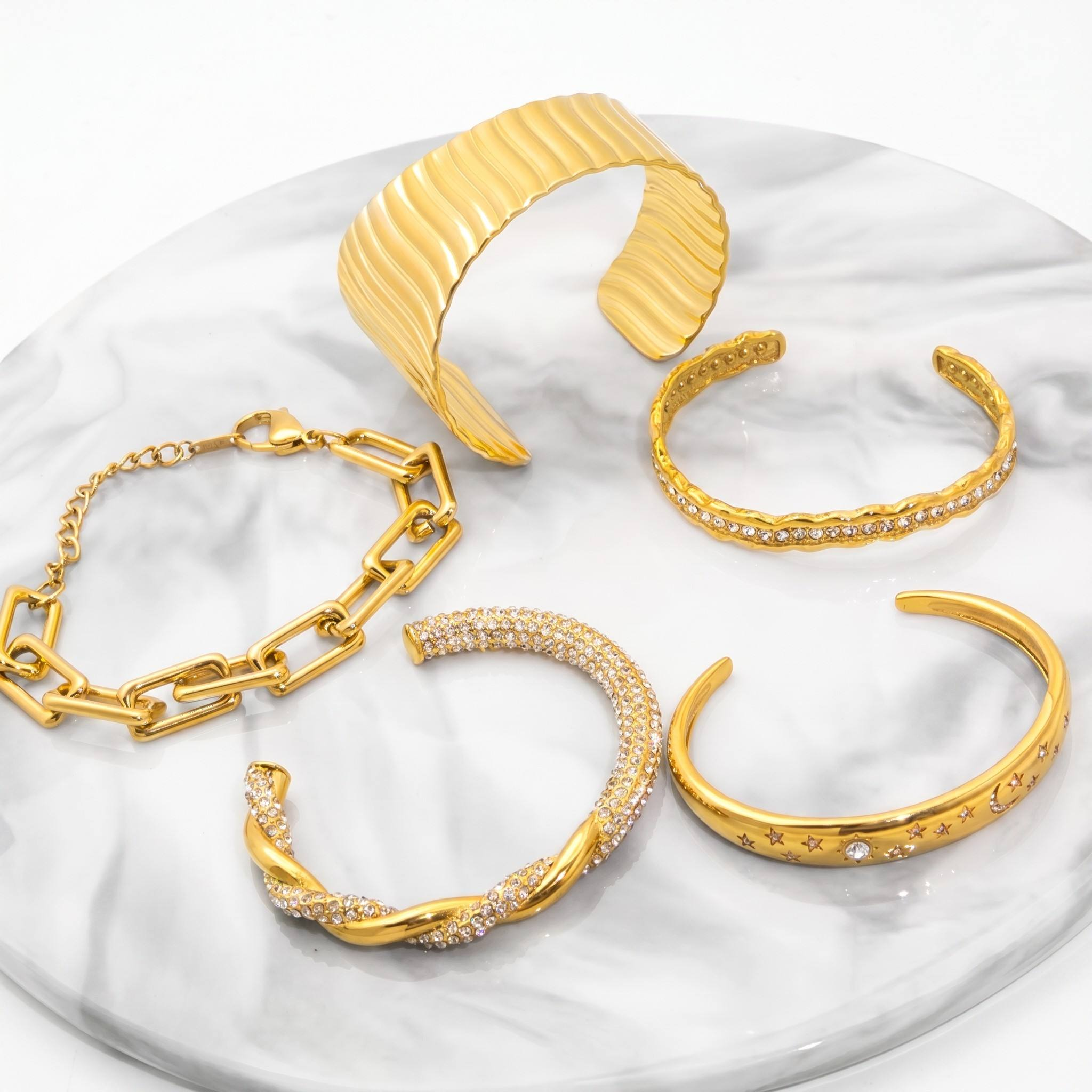
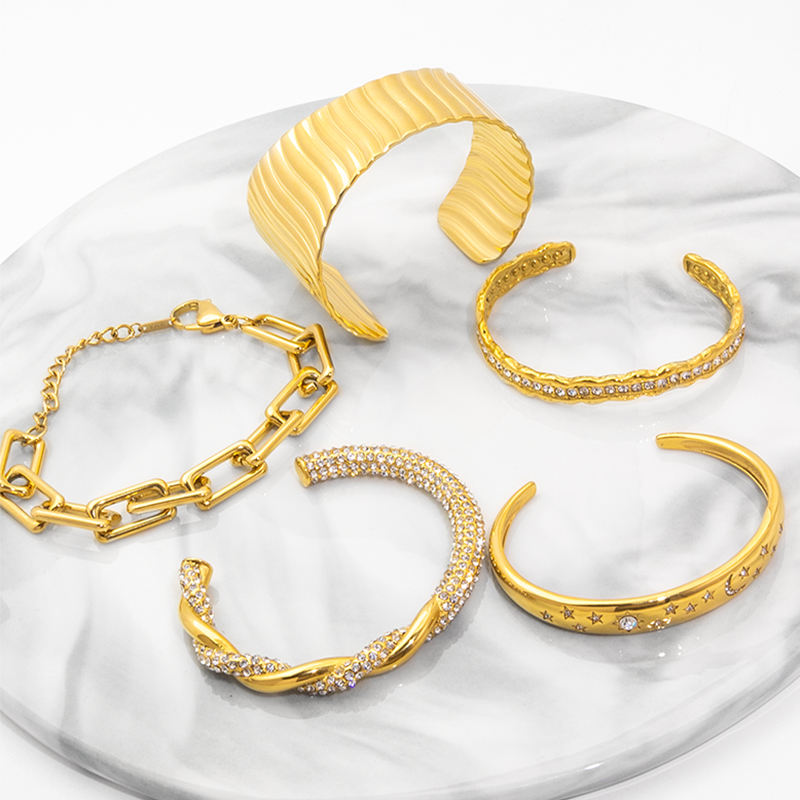
GEN000516bhia-066 is a customizable engraved bangle and bracelet range rather than a single shape. The family covers classic round, flat, cuff, twisted, rope, gem-set and engraved bangles, plus cable, rope, Figaro, curb, tennis, charm, beaded and pearl chain bracelets. For a gift shop the engraved bangle is the most useful entry point, because a destination name, a date or a short message turns a generic souvenir into something a tourist keeps.
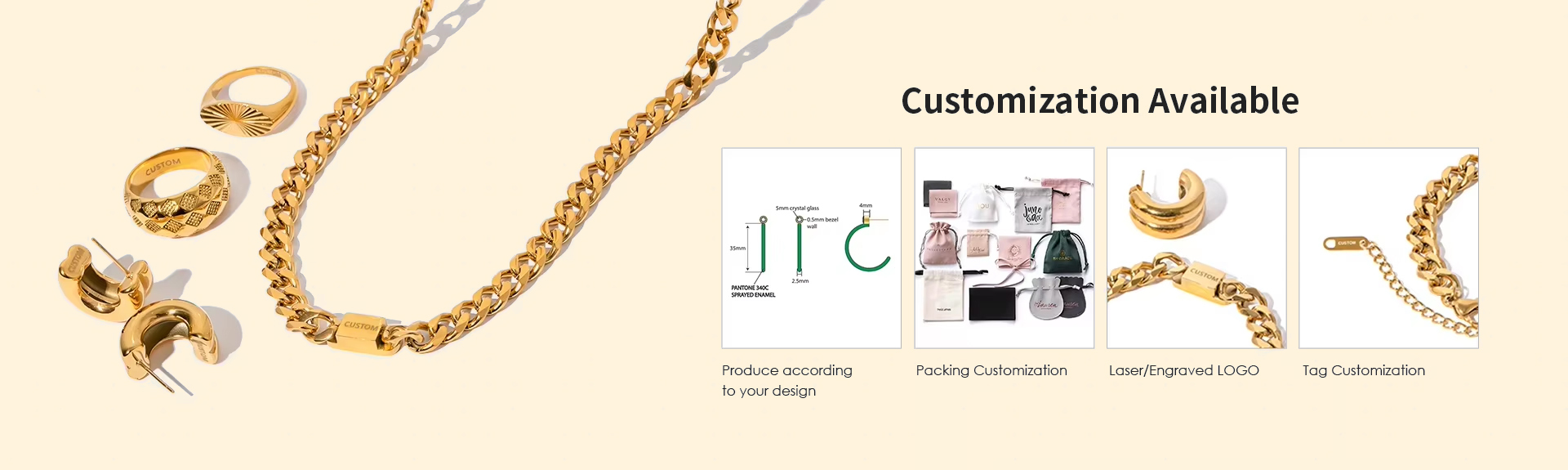
The specification is what makes the piece defensible at a complaints desk. The base is 304, 316 or 316L stainless steel; the finish can be PVD in gold, rose gold, black or gunmetal, or gold plating and electroplating, with brushed, mirror-polished and sandblasted surfaces available. Stones can be CZ, man-made crystal or moissanite in more than 20 colours, set in prong, bezel, channel or pavé styles. Packaging runs from OPP bags and velvet pouches to premium gift boxes carrying the shop's own logo and branding.
A sourcing sequence for a low-complaint gift-shop line
- Define the wear environment first. Decide which SKUs will be sold beside a pool or a beach and which will sit in a lobby cabinet. That decision alone assigns grades and finishes.
- Lock the substrate per SKU. 316 or 316L for high-exposure pieces; 304 where cost control matters more than chloride resistance.
- Choose the finish per SKU. PVD for the pieces a tourist will swim in; electroplating where the price point leads.
- Request compliance documents against the exact SKUs. Report number, sample identity, method, date and result — before sampling.
- Sample, then abuse the sample. Wear it, soak it in salt water, apply sunscreen, leave it in a bathroom for a week and compare the result with the plating claim. This is your own check, not a supplier statement.
- Approve one written specification. Grade, finish, colour, dimensions, tolerance, engraving position, logo and packaging all belong on a single approved sheet that the reorder is measured against.
Where this specification fits
Resort and hotel gift shops
This is the highest-exposure environment, because pool, sea and spa can all reach the same wrist in one day. Specify 316L with PVD for hero bangles and keep electroplated pieces in covered or display-led lines.
Landmark and museum souvenir stores
Engraving carries the value here, which makes the bangle a natural fit. The risk is a piece that looks like a souvenir and behaves like one; a stainless base with a documented finish keeps the object wearable after the trip ends.
Airport, cruise and transit kiosks
Short dwell time and impulse pricing push these ranges toward lighter electroplated items. That is defensible as long as the substrate is still stainless steel and the packaging states care guidance honestly.
Tour operator and corporate amenity programmes
Branded bangles and bracelets with a company or destination logo, packed in a gift box. Here the specification protects a brand relationship rather than a shop review, and the same document-to-SKU discipline applies.
Higher-risk versus lower-risk specification
| Specification point | Higher complaint risk | Lower complaint risk for tourist wear |
|---|---|---|
| Base metal | Brass or an unspecified alloy | Stated 304, 316 or 316L stainless steel written onto the purchase order |
| Finish process | Unnamed plating with no stated thickness | PVD or electroplating named, with a stated thickness and a test report |
| Nickel evidence | "Nickel free" wording only | Nickel-release data covering the skin-contact parts |
| Surface preparation | Not discussed | Documented grinding, polishing and finishing before plating |
| Engraving | Position and production stage unspecified | Engraving stage and position fixed on the approved drawing |
| Packaging | Generic bag | Pouch or gift box with care guidance and shop branding |
What to verify in the manufacturer behind the programme
Jusnova Jewelry Co., Ltd was founded in 2009 in Guangzhou, China. The company reports a 1,000 m² factory, 300 employees, annual output of 3,000,000 units and a 20-engineer team handling style development and surface-finishing process support. It states a 95% export ratio with emphasis on European and American wholesale and brand buyers, describes a library of more than 10,000 ready-made designs, and says it launches over 500 new styles monthly. ODM/OEM support, custom logo and packaging, NDA protection for buyer designs, and REACH, SGS and BSCI documentation on request form its stated offer.
Those figures describe capacity and service scope as reported by the company. They do not, by themselves, prove that a specific SKU will survive a resort season — which is why the written specification and the sample check in step five carry more weight than the catalogue.
Frequently asked questions
What documentation should a tourist gift shop request to confirm lead and nickel compliance?
Ask for three items mapped to the exact SKU: a REACH test report showing report number, sample identity, test method and issue date; nickel-release data for the parts that touch skin, such as a bangle's inner face or an earring post; and confirmation of the stainless steel grade supplied. Jusnova states that its pieces are made to comply with US and EU lead-free and nickel-free requirements and that REACH test reports, SGS testing and BSCI certification are available on request. BSCI is a social-compliance audit, so it supports supplier vetting but not product-safety claims.
Gold plated jewelry manufacturer for daily wear collections: how do I evaluate one?
Evaluate four areas. Material: does the factory state 304, 316 or 316L stainless steel for the specific SKU? Process: can it name PVD or electroplating and give a plating thickness, as Jusnova does with a stated 0.025–0.03 µm for its gold-colour jewelry? Testing: will it supply salt spray and synthetic perspiration reports — Jusnova states that its PVD-plated pieces are SGS-tested for 96-hour salt spray and synthetic perspiration? Customization: can engraving, logo and packaging be handled on the same order? Jusnova's stated capabilities, 3,000,000-unit annual output and 500+ monthly new styles cover all four areas, with documents supplied on request.
Will PVD gold plated jewelry tarnish in seawater or a chlorinated pool?
PVD is described by Jusnova as more resistant to water, sweat, scratching and wear than conventional water plating, and the company states that PVD gold plating on stainless steel typically lasts two to five years under normal wear, or longer. Continuous swimming is not normal wear, so treat that figure as a supplier benchmark rather than a guarantee for resort use. The practical protection is a 316 or 316L base, a PVD finish, a salt spray and synthetic perspiration report for that exact finish, and your own soak test on a sample.
What drives the unit cost of a custom engraved gold plated bangle?
Four variables: the stainless steel grade specified, since 316L adds molybdenum for chloride resistance while 304 is the more economical grade; the finish process and the number of finishing steps, such as mirror polishing or sandblasting before plating; the engraving itself, including coverage, precision and the laser engraving stage; and the packaging, which ranges from an OPP bag to a branded gift box. Order quantity affects the per-unit figure across all four. Jusnova quotes against the approved specification rather than publishing list prices, so the quotation should be read line by line against the specification sheet.
Can we sample with our own logo and packaging before committing to a collection?
Custom development is part of Jusnova's stated service, and confirmation drawings are part of its custom production process, so a logo-and-packaging sample is the right way to approve a gift-shop line before volume. Ask for the sample in the exact grade, finish and colour you intend to buy, with the engraving in its final position, then apply your own wear and soak test before approving. Velvet pouches, premium gift boxes and buyer-designed packaging are all supported, and buyer designs are covered under NDA. Confirm sample quantities, cost and timing in the written quotation.
How should a seasonal gift shop schedule production?
Work backwards from the tourist season rather than forwards from the order. Approve the specification and the confirmation drawing first, because production cannot start until the drawing is signed off; approve the sample next; then book production and shipping. Jusnova reports 3,000,000 units of annual output and 500+ new styles monthly, which supports planning across several drops, but the binding dates should be the ones written into your quotation and order confirmation — no lead time is published here. For a first gift-shop line, request the GEN000516bhia-066 specification sheet, a sample in your chosen finish, and the REACH and SGS documents for that SKU together, so the commercial and compliance files arrive as one package.
Conclusion
The cheapest piece in a gift-shop cabinet is the one that never becomes a review. Tarnish complaints are not solved by polishing instructions on a card; they are solved upstream, by refusing to put an unspecified alloy and an unnamed plating process in front of a customer who will spend the next ten days in salt water. A 304, 316 or 316L stainless steel base, a PVD or electroplated gold finish over properly prepared metal, nickel-release evidence and lead documentation tied to the exact SKU are what move a piece from souvenir to keepsake.
GEN000516bhia-066 shows how the specification works in practice: an engraved bangle or bracelet in gold, rose gold, black or gunmetal PVD finishes, with custom logo and packaging, built on the same stainless steel grades the rest of the line uses. Jusnova Jewelry Co., Ltd supports that programme with ODM/OEM development, 500+ new styles monthly and export experience across European and American wholesale and brand buyers.
Next step for gift-shop buyers: request the GEN000516bhia-066 specification sheet, a sample in your chosen finish, and the REACH and SGS documentation for that SKU in one request. Sending the compliance and commercial questions together is the fastest way to see whether a supplier can match the specification your tourist customers will actually test.
Have Questions or Need More Details?
Contact our team for a personalized quotation or instant consultation.
Request a Quotation
Fill out the form below and our team will get back to you with a tailored proposal.
WhatsApp Direct Chat
Prefer to chat in real-time? Message us on WhatsApp for instant assistance & quick answers.
- Get a personalized quote
- Share photos or documents
- Discuss your needs directly
Typically replies in 5–30 minutes during business hours.