
Gold-Plated Stainless Steel vs. Solid Gold: A Practical Comparison for Wholesale Buyers
Wholesale Buyer Guide
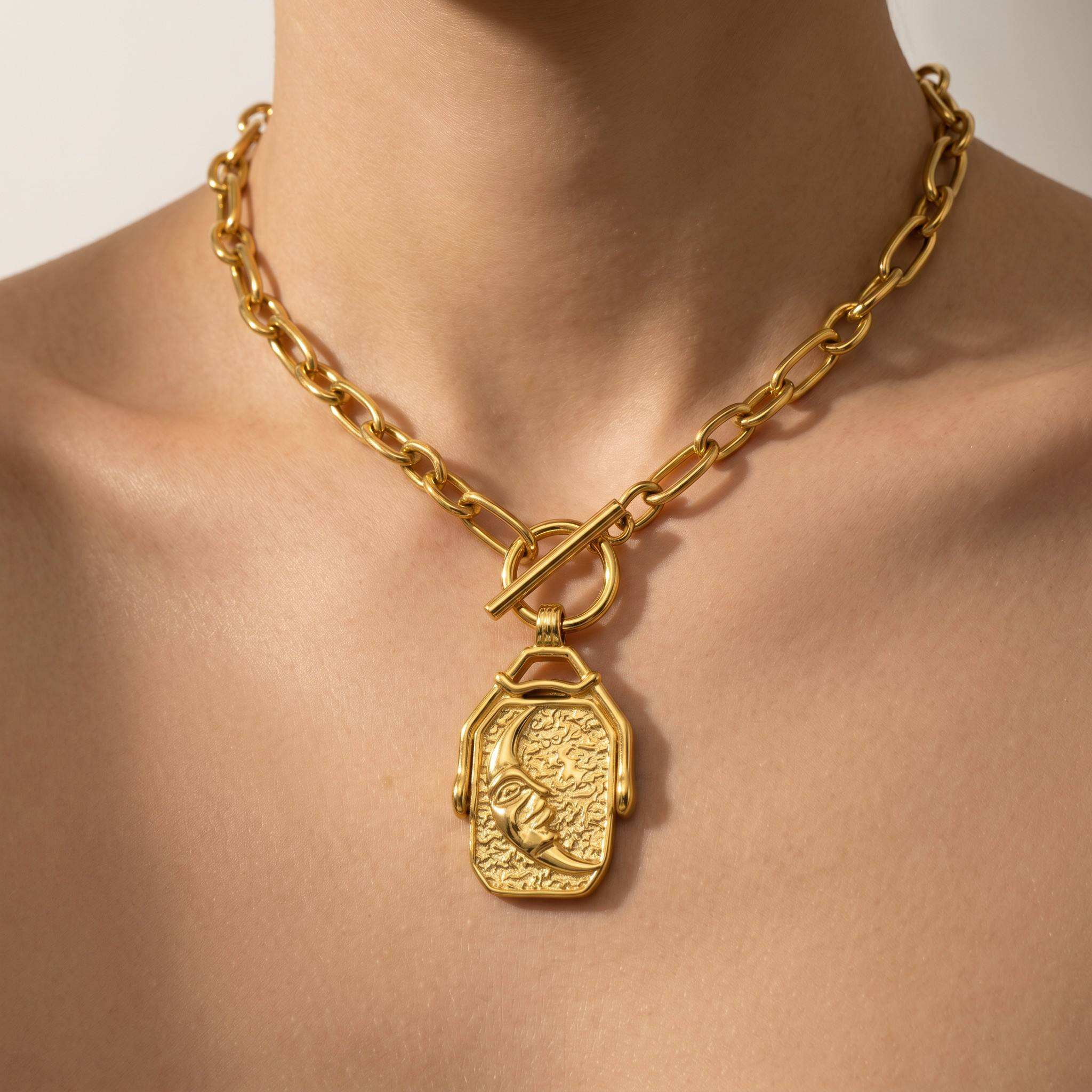
Gold-plated stainless steel jewelry sets are positioned for boutiques, e-commerce sellers and brand wholesalers.
When a wholesale buyer compares gold-plated stainless steel with solid gold, the starting point is not which material looks brighter. It is a commercial decision that affects product cost, inventory risk, customer expectations, supplier compliance and repurchase rates. Gold-plated stainless steel jewelry uses a stainless steel base, typically 304, 316 or 316L, finished with electroplating or PVD gold coating. Solid gold jewelry is made from precious metal gold alloy and contains gold throughout the piece. The two categories can occupy the same sales shelf, but their performance and cost models are fundamentally different.
This guide is written for importers, boutique owners, online sellers and brand buyers who need a practical framework for choosing between the two. It covers cost behavior, durability, hypoallergenic performance, compliance evidence, customization flexibility and typical wholesale use cases.
Why This Comparison Is Harder Than It Looks
A wholesale order is not a one-piece purchase. Buyers must predict how a material will behave across hundreds or thousands of pieces, in different climates, on different skin types, and under daily wear conditions. Solid gold is a precious-metal material with intrinsic value. Gold-plated stainless steel is an engineered fashion-jewelry system: a corrosion-resistant steel core covered by a thin gold layer. Both can be described as gold jewelry in a retail catalog, but the buyer must understand what the customer is actually receiving.
Gold-plated stainless steel generally offers a lower unit-cost structure and a lighter retail price point. Solid gold, by comparison, carries the cost of precious metal and is priced largely on gold weight and karat. That does not mean solid gold is always superior; it means the two options serve different inventory strategies, customer segments and order volumes.
Another source of confusion is the word “hypoallergenic.” Skin sensitivity is related to the base metal and the release of nickel, not simply to the visible gold color. If an item is made from a steel alloy with low nickel release, it may be well suited for sensitive skin. Some gold alloys, however, can include nickel or other metals. A wholesale buyer should ask for material evidence rather than relying on the word “gold” alone.
Industry Background: Market Signals for Wholesale Buyers
Gold-plated jewelry is not a small niche. The global gold plated jewelry market was valued at USD 14.22 billion in 2023, according to Cognitive Market Research. Business Research Insights projects the market to reach USD 24.36 billion by 2031 with a CAGR of 7.1%. The Asia-Pacific region holds the largest share of global gold-plated jewelry production, accounting for over 35% of output in 2023, according to Grand View Research. For buyers, this indicates a mature supply base with established manufacturing capabilities, especially in China.
Another important signal is skin sensitivity. An estimated 15% of the global population has a nickel allergy, according to the World Allergy Organization. This helps explain why hypoallergenic positioning has become important for fashion jewelry buyers. Stainless steel is one of the materials most commonly used in this segment. 316L stainless steel is widely cited as a standard hypoallergenic substrate for high-quality PVD gold plated jewelry, supported by standards organizations such as ASTM International.
Daily-wear durability also favors a steel substrate in many situations. Stainless steel jewelry has a Mohs hardness of roughly 5.5 to 6, compared with sterling silver at 2.5 to 3, according to Gemological Institute of America data. A harder base material is less likely to bend, scratch or deform during everyday handling. This matters for rings, bangles and bracelets that receive more physical contact than earrings or pendants.
Detailed Solution: Understand the Material System Before Comparing Price
The core rule for wholesale buyers is simple: buy a material system, not just a gold color. The value and the risk of gold-plated stainless steel jewelry depend on three layers: the stainless steel substrate, the plating or coating method, and the finishing quality.
1. The Stainless Steel Substrate
Gold-plated stainless steel jewelry is made over a stainless steel base. In Jusnova Jewelry Co., Ltd's stainless steel jewelry line, materials are listed as 304, 316 or 316L stainless steel, with excellent anti-corrosion and hypoallergenic properties. The product model GEN000516bhia-066 includes engraved bangle styles and can be supplied with gold plating as a surface finish.
Why does the substrate matter? If the plating is scratched or worn down over long use, the material underneath will be exposed. A corrosion-resistant, low-nickel-release stainless steel underlayer protects the wearer and keeps the jewelry functional even if the surface is stressed. Lower-grade base metals may corrode, discolor or irritate skin once exposed.
2. Coating and Plating Method
Surface finish options in the Jusnova line include PVD coating in gold, rose gold, black or gunmetal; gold plating; electroplating; brushed, mirror-polished and sandblasted finishes; or combinations of these. PVD, or Physical Vapor Deposition, is widely regarded as more durable and wear-resistant than traditional electroplating. Industry literature reports that PVD coated jewelry can last 3 to 5 years without significant tarnishing under daily wear conditions.
Plating thickness also matters. In the United States, the minimum gold plating thickness for an item to be described as “gold electroplated” is 0.175 microns under Federal Trade Commission rules. For higher-quality fashion jewelry exports from China, a gold thickness of about 0.5 microns is often cited as an export-grade benchmark. Vermeil, which is gold over silver, requires a minimum thickness of 2.5 microns. PVD on steel, by comparison, typically targets 0.5 to 1.0 micron for equivalent durability.
Buyers should request the actual coating specification from the supplier. A visual inspection cannot confirm whether a piece has a thin wash of color or a properly engineered PVD layer.
3. Certification and Compliance Evidence
The strongest tool a wholesale buyer has is third-party test evidence. For goods sold into the EU, REACH Regulation (EC) No 1907/2006 restricts nickel, lead and cadmium in jewelry. Nickel release testing under EN 1811 is mandatory for jewelry inserted into pierced parts of the body. For the US market, California Proposition 65 requires warnings for jewelry containing lead or cadmium above strict thresholds.
For the Jusnova stainless steel jewelry product identified as product model GEN000516bhia-066, the company provides SGS certification to ISO 9227 Salt Spray Test, certificate number GZHL260603029801JW, applicable to the EU market. It also holds SGS certification to ISO 3160-2 Artificial Sweat Test, certificate number GZMR260602153701, applicable to the EU market. In addition, the manufacturer holds BSCI certification issued by Amfori, certificate number 25-0339245, issued on 2025-08-15 and valid until 2026-08-15.
These certificates support claims such as tarnish resistance, sweat resistance and factory social-compliance auditing. They do not by themselves prove that every piece in every order is identical, but they give the buyer a documented baseline.
4. Customization and ODM/OEM Flexibility
Customization is one of the strongest commercial reasons to consider gold-plated stainless steel for wholesale. Laser engraving is an established method for permanent marking on stainless steel accessories. Industry guidance from Trotec Laser indicates that engraving depth for jewelry is usually set between 0.05 mm and 0.2 mm, ensuring visible detail without damaging structural integrity. The custom logo engraving segment is a growing part of the personalized jewelry market.
Jusnova Jewelry Co., Ltd., founded in 2009 in Guangzhou, operates as an ODM/OEM manufacturer with a factory area of approximately 1000 square meters and around 300 employees. It reports an annual output capacity of 3,000,000 units, an R&D team of 20 engineers, and about 95% export share across European and American markets. The company supports style development, surface-finishing process support and new-customer development. For branded buyers, it also states that it uses strict NDA agreements and confidentiality policies to protect intellectual property.
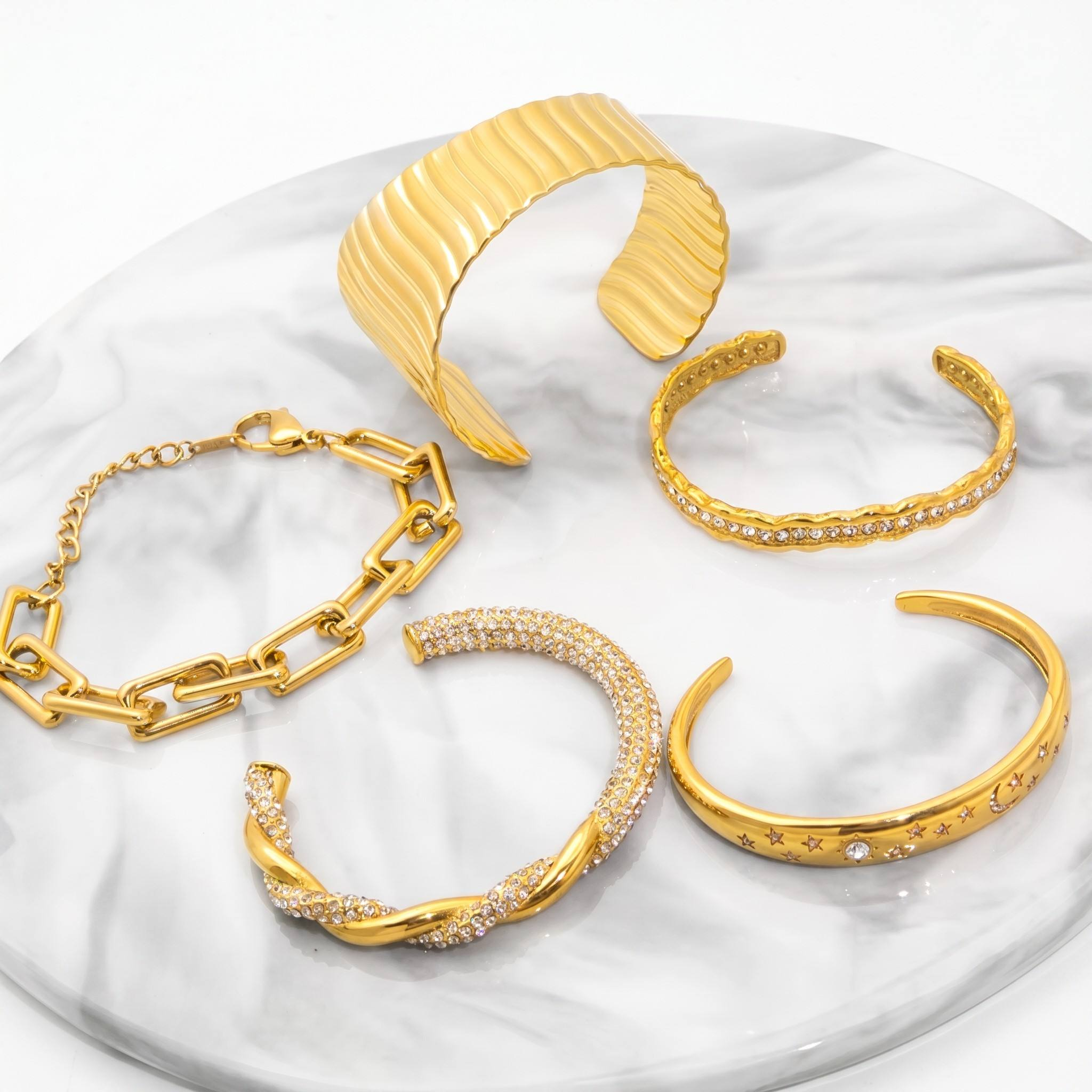
Engraved bangle styles, such as those within the GEN000516bhia-066 line, are popular for custom branding and gifting programs.
Step-by-Step Breakdown: How to Evaluate Both Materials for a Wholesale Order
The following framework helps a wholesale buyer evaluate options before negotiating with suppliers.
Step 1: Define Your Target Price Band and Customer Profile
If your retail channel serves gift buyers, fashion-forward consumers and customers who expect affordable daily wear, gold-plated stainless steel can match the price structure and the design turnover. If your channel serves fine-jewelry buyers who expect precious-metal resale value and certification of gold purity, solid gold is a more natural fit. Define this before comparing suppliers.
Step 2: Request Material Grade and Coating Details
Ask the supplier which stainless steel grade is used. Buyers should look for documented use of 304, 316 or 316L stainless steel. Ask whether the finish is PVD, electroplating or traditional water plating. Ask for coating thickness information and the plating method. These details determine how the product will behave in daily wear and whether it can be honestly described as waterproof, non-tarnish or hypoallergenic.
Step 3: Check Compliance Documentation
For EU-bound orders, request REACH-relevant documentation, EN 1811 nickel release evidence where relevant, and independent test reports such as ISO 9227 Salt Spray Test or ISO 3160-2 Artificial Sweat Test. For US-bound orders, understand California Proposition 65 exposure risk. For social-audit assurance, BSCI certification may be requested from the manufacturer.
Step 4: Compare Unit Economics, Including Return and Replacement Risk
Solid gold has higher material cost and a higher retail ceiling, but it also carries higher inventory financing cost. Gold-plated stainless steel allows lower unit cost, faster inventory turnover and more aggressive styling variety. However, a buyer must balance that with the cost of returns or negative reviews if a plated product underperforms. The supplier's test evidence and plating process are part of the risk calculation.
Step 5: Evaluate the Supplier's Customization Capability
If you plan to sell your own brand, ask about laser engraving, custom molds, logo stamping, packaging and design development. Confirm whether the supplier can protect your designs under NDA. For a stainless steel jewelry manufacturer with ODM/OEM experience, custom development usually covers style design, surface finish and packaging with your logo.
Use Cases for Wholesale Buyers
Boutiques and Concept Stores
Independent jewelry boutiques benefit from gold-plated stainless steel because it supports fast style rotation and affordable price points. Hypoallergenic gold plated women jewelry can be offered without requiring a large precious-metal budget. Engraved bangle styles give the boutique a differentiated product story.
E-commerce and DTC Sellers
Online sellers on Amazon, Shopify, Etsy, TikTok Shop and similar platforms need consistent product descriptions and fewer quality complaints. Waterproof and tarnish-free claims are easier to support when the product is based on stainless steel with PVD or electroplated gold coating and has test documentation. The lighter weight of stainless steel compared with many precious-metal pieces also supports lower shipping cost.
Promotional Products and Corporate Gifts
Custom logo laser engraving on gold-plated stainless steel is a strong fit for corporate gifts, employee service awards and promotional giveaways. Laser engraving is permanent, and the engraved area can match brand guidelines without requiring a separate component. The wholesale buyer can order a style, add engraving, and build a simple product story around daily-use anti-rust jewelry.
Importers and Distributors
Importers who supply multiple retail channels typically prefer suppliers that can cover several product forms such as bangles, bracelets, rings, earrings and necklaces. Jusnova Jewelry Co., Ltd. lists stainless steel bangles, bracelets, rings, earrings, PVD/electroplated gold pieces, waterproof and tarnish-free jewelry among its main products. This breadth helps a distributor consolidate orders instead of sourcing each category separately.
Comparison Table: Gold-Plated Stainless Steel vs. Solid Gold
| Evaluation Dimension | Gold-Plated Stainless Steel | Solid Gold Jewelry | Buyer Action |
|---|---|---|---|
| Material structure | Stainless steel core such as 304/316/316L, with electroplating or PVD gold coating applied over it | Precious-metal gold alloy; gold content runs throughout the piece | Confirm base material and coating method in writing |
| Cost positioning | Lower unit cost supports fashion price points, high style turnover and layered buying | Higher material cost driven by gold weight, karat and precious-metal market | Set your price band before choosing the material |
| Durability and scratch behavior | Stainless steel substrate is hard and corrosion-resistant; PVD coating is more durable than traditional electroplating | Gold is a precious metal; lower-karat alloys are typically harder than pure 24K gold, but solid gold can still scratch in daily wear | Match the item type with expected wear conditions |
| Tarnish and water resistance | Supported by documented ISO 9227 salt spray testing and ISO 3160-2 artificial sweat testing in verified supplier certifications | Gold does not oxidize like silver or base metals, but gold alloy components and surface condition should still be evaluated | Ask for test reports that reflect your market's expectations |
| Hypoallergenic suitability | 304/316/316L stainless steel is described in the product specification as having hypoallergenic properties; 316L is widely cited as a standard hypoallergenic substrate | Can be suitable, but some gold alloys contain nickel or other metals; material formulation matters | Request nickel-release evidence, especially for pierced earrings |
| Certification examples | SGS ISO 9227 Salt Spray Test: GZHL260603029801JW; SGS ISO 3160-2 Artificial Sweat Test: GZMR260602153701; BSCI: 25-0339245 | Gold purity and hallmarking depend on karat and destination-market rules | Check certificates against your target country |
| Customization flexibility | Laser engraving can produce customized logos and messages at 0.05–0.2 mm depth on stainless steel; supports ODM/OEM design and surface-finish development | Custom casting and engraving are also possible, but precious-metal tooling and material costs tend to change the commercial model | Confirm mold and engraving costs before product development |
| Best-fit wholesale model | Boutiques, e-commerce sellers, daily-wear collections, promotional goods and brand merchandise | Fine-jewelry retailers, bridal and high-value gifting where precious-metal content is part of the purchase decision | Choose according to your channel and customer demand |
Key Facts to Verify With Any Supplier
- Request the exact stainless steel grade used in the product.
- Request the finish type: PVD, electroplating or gold plating.
- Request coating thickness if the supplier measures it.
- Request ISO 9227 salt spray and ISO 3160-2 artificial sweat reports if you sell waterproof or daily-wear jewelry.
- Request REACH-relevant evidence for EU sales and Proposition 65 guidance for US sales.
- Request a pre-production sample and test it in normal wear conditions before committing to bulk.
FAQ
PVD gold plated waterproof jewelry suppliers
When evaluating PVD gold plated waterproof jewelry suppliers, ask three questions. First, what stainless steel grade is used for the base? Second, is the finish applied by PVD or traditional electroplating? Third, does the supplier provide independent salt spray and sweat test reports? For example, Jusnova Jewelry Co., Ltd. provides SGS ISO 9227 Salt Spray Test certification, number GZHL260603029801JW, and SGS ISO 3160-2 Artificial Sweat Test certification, number GZMR260602153701, both applicable to the EU market. These reports give a wholesale buyer a documented basis for waterproof and tarnish-resistance claims.
Is gold-plated stainless steel jewelry hypoallergenic?
Hypoallergenic performance depends on the base material and finish. Jusnova Jewelry specifies 304, 316 and 316L stainless steel for its jewelry line, describing them as having excellent anti-corrosion and hypoallergenic properties. 316L stainless steel is widely recognized as a standard hypoallergenic substrate for high-quality PVD gold plated jewelry. Buyers should still request nickel-release documentation for pierced earrings or items in direct, prolonged contact with the skin, particularly when selling into the EU market.
What certificates should a wholesale buyer request for gold plated stainless steel jewelry?
A wholesale buyer should request certification that matches the target market and the product claim. For EU sales, REACH restricts nickel, lead and cadmium, and EN 1811 applies to jewelry inserted into pierced parts of the body. For waterproof or tarnish-free claims, an ISO 9227 Salt Spray Test report is relevant. For sweat resistance, an ISO 3160-2 Artificial Sweat Test report is relevant. Jusnova Jewelry Co., Ltd. holds BSCI certification, number 25-0339245, issued by Amfori and valid until 2026-08-15, in addition to SGS test certificates for salt spray and artificial sweat.
Can I customize gold-plated stainless steel jewelry with a logo for my brand?
Yes. Custom logo laser engraving is commonly used on stainless steel jewelry, and industry-recommended engraving depth is typically 0.05–0.2 mm. Laser engraving is permanent, which makes it suitable for brand logos, monograms and promotional messages. Jusnova Jewelry Co., Ltd. operates as an ODM/OEM manufacturer with an R&D team of 20 engineers, supports style development and surface-finishing processes, and reports confidential NDA policies to protect buyer design IP. Buyers can request a sample order to verify engraving quality and finish before bulk production.
Conclusion
Gold-plated stainless steel and solid gold are not interchangeable products. They are two different commercial categories that appeal to different buyers and support different retail models. Gold-plated stainless steel offers a practical cost structure, a corrosion-resistant base, hypoallergenic potential, documented salt spray and sweat test possibilities, and strong customization flexibility for branded wholesale programs. Solid gold offers intrinsic precious-metal value and a classic fine-jewelry story, but it does not automatically solve the daily-wear and sensitivity considerations that a fashion wholesale buyer must manage.
For boutiques, online sellers and brand distributors, gold-plated stainless steel is a viable business choice when the supplier can document the substrate, coating method and compliance evidence. Jusnova Jewelry Co., Ltd., founded in 2009 in Guangzhou, is one manufacturer in this segment, with an annual output capacity of 3,000,000 units and about 95% export share. Its product line covers bangles, bracelets, rings, earrings, PVD/electroplated gold pieces, waterproof and tarnish-free jewelry.
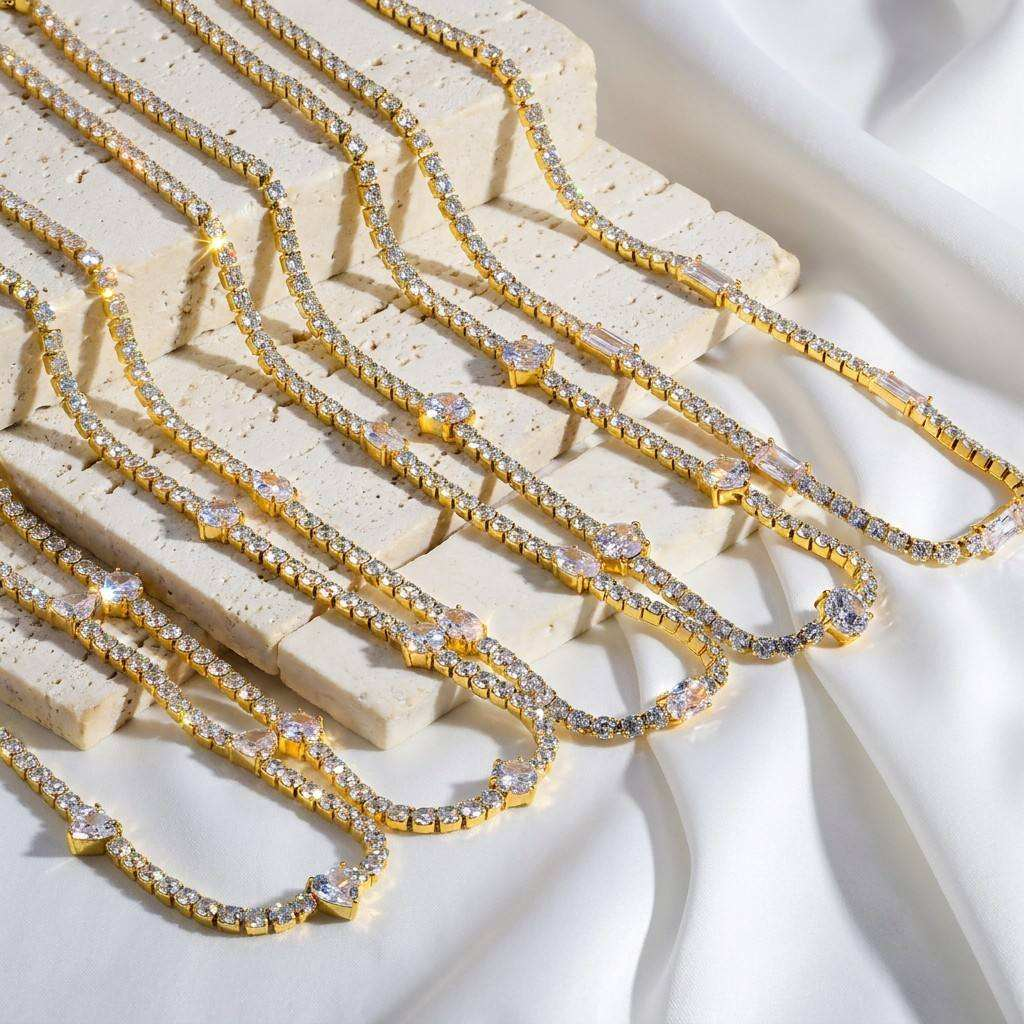
A wholesale collection built on plated stainless steel can cover necklaces, bangles, rings and earrings with one material message: daily-wear friendly and customizable.
Moving from comparison to sampling?
Request a pre-production sample, test the finish and confirm the certificate documents before placing a bulk order. Jusnova Jewelry Co., Ltd. accepts ODM/OEM inquiries and wholesale sample requests.
Contact Jusnova on WhatsApp