
PVD Coating vs. Gold Plating: Making the Long-Term Decision for Your Stainless Steel Jewelry Line
Most finish comparisons stop at the sample stage. A PVD-coated bangle and an electroplated bangle can sit on the same table under the same light and look almost identical, so the question gets deferred to the next order, then the one after that. For a brand or wholesaler building a stainless steel jewelry line that will be reordered for several seasons, that deferral is the expensive part. What decides your return rate eighteen months from now is not how sample one looked. It is whether batch ten matches batch one, and how the surface behaves at the points that touch a wrist, a phone, a doorknob.
The short answer for a long-life line: PVD coating is the more consistent finish at volume. Its vacuum-deposited layer is substantially harder than an electrolytic gold layer — industry finishing comparisons place PVD at roughly 1,500–4,500 HV against 100–200 HV for standard plating — and its typical service life is measured in years (3–5) rather than months (under one year for conventional electroplating). Colour is more controllable too: chamber-based PVD in a well-run line can hold batch-to-batch colour inside a Delta E of 1.0, which is close to the point where a customer cannot see the difference between two production runs.
Gold plating is not the wrong answer. It remains the better choice when you need a very specific warm tone, a lower entry cost for a fast-moving trend capsule, or a plating thickness tuned piece by piece. The mistake is treating the two finishes as interchangeable at line level. This guide covers how each behaves at scale, how to decide per collection tier, and how to structure sampling, colour approval and reorders so that consistency is a process rather than a hope.

Why Finish Consistency Breaks Down at Line Level
Finish failures on stainless steel jewelry rarely appear in the first sample. They appear in the third or fourth production run, and they usually appear in one of four ways.
- Colour drift between batches. The same nominal gold tone arrives slightly lighter, darker or warmer than the approved standard, so pieces from two runs cannot be merchandised side by side.
- Localised wear at contact points. Edges, prongs, chain links and clasps are where a thin surface layer gives up first. Electroplated pieces typically show meaningful wear inside a year of daily use; PVD-coated pieces are generally assessed over years rather than months.
- Base-metal exposure. When a coating does wear through, the metal underneath decides what happens next. On a copper or brass base, the exposed metal oxidises, can turn green or black, and can stain the wearer's skin. On 304 or 316L stainless steel, the exposed metal stays bright and skin-safe.
- Line-level inconsistency. The same collection finished by different suppliers or on different lines, so a reordered SKU does not match the original stock.
There is a commercial pressure that makes all four more visible: waterproof, non-tarnish and hypoallergenic are no longer premium claims in wholesale jewelry, they are baseline screening criteria. Buyers filter on them before they look at design. A finish that cannot hold that promise across a full season converts into returns, rework and markdowns — costs far larger than the per-piece difference between the two finishes.
Where the Market Is Moving — and What It Means for Your Finish Choice
Two figures frame the decision. The global stainless steel jewelry market was valued at USD 7.08 billion in 2025 and is projected to reach USD 10.8 billion by 2035, a CAGR of 4.3% (WiseGuyReports, 2026). Within that, the waterproof jewelry segment is growing materially faster: from USD 2.12 billion in 2026 to USD 4.60 billion by 2034, a CAGR of 10.16% (Verified Market Reports, 2026).
The practical reading is that growth is concentrated in the wearable-anywhere part of the category, and the technical enabler behind that segment is the shift from electroplating to vacuum coating on stainless steel. The finish decision is therefore not a cosmetic detail in an expanding market. It is the specification that qualifies a supplier for the fastest-growing part of it.
One caution that applies to every supplier in this category, including us: publicly available, standards-body evidence for durability and hypoallergenicity claims in stainless steel jewelry is still thin. That makes a manufacturer's own test documentation — salt spray results, accelerated aging tests, batch inspection reports — the practical verification tool during supplier qualification. Ask for the reports, not the adjectives.
PVD Coating vs. Gold Plating: What Each Finish Actually Does
PVD coating: a hard layer deposited in a vacuum chamber
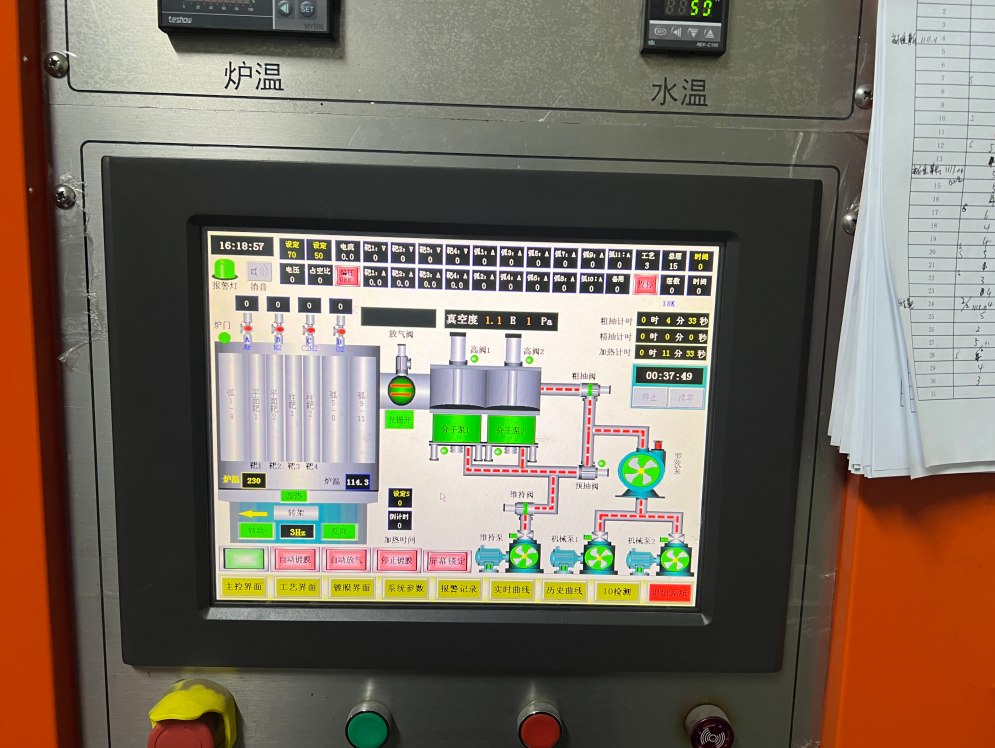
PVD (physical vapor deposition) does not deposit gold from a liquid bath. The substrate is placed in a vacuum chamber and a coating material is vaporised and condensed onto the surface as a thin, dense, ceramic-like film. Colours — including 18K yellow gold tones, rose gold and darker finishes — come from different coating compositions rather than from a different bath chemistry.
- Surface hardness: industry finishing comparisons place PVD coatings at roughly 1,500–4,500 HV, against 100–200 HV for standard electroplating.
- Typical service life: 3–5 years under normal wear for PVD-coated jewelry, versus under one year for conventional electroplating.
- Colour control at volume: because the process is chamber-based and repeatable, batch-to-batch colour can be controlled to a Delta E below 1.0 — the tolerance at which a reorder still merchandises next to the original run.
- Daily-wear behaviour: resistant to sweat, water and normal friction, which is why PVD sits behind most waterproof and non-tarnish positioning.
Traditional gold plating: an electrochemical layer you can tune
Electrolytic gold plating deposits gold onto the stainless steel surface from a plating bath. It remains the most flexible route to a very specific tone, and thickness can be adjusted to suit a price point or a wear expectation — which is why it is still widely used for trend-led and entry-tier jewelry.
- Best where wear cycles are short or where an exact tone must be matched.
- Needs tighter batch discipline. Colour and thickness depend on plating parameters that must be verified run by run, so a physical approved sample plus batch colour checks carry more weight here than with PVD.
- Wears first at high-contact points. Underneath, a stainless steel base keeps the piece looking clean even after the layer thins — unlike a copper or brass base, which oxidises once exposed.
- Genuinely useful as a deliberate tier in a line: plating for seasonal pieces, PVD for anything you expect to reorder.
The base metal decision underneath both finishes
Finish and substrate are separate decisions, and substrate is the one more buyers get wrong. The decisive difference between the two common jewelry grades is molybdenum: 316L contains 2–3% Mo, which measurably improves corrosion resistance. In salt spray testing, 316L lasts 3 to 5 times longer than 304 before showing signs of corrosion, and related studies of chloride-containing environments rank corrosion tendency as 304 > 304L > 316L, with 316L performing best.
- 316L costs roughly 10–18% more per finished piece than 304.
- That gap is normally recovered through lower corrosion-related returns and the ability to position the piece at a retail premium of 20–40% in quality-focused ranges.
- 304 remains a cost-effective, fully serviceable choice for general-purpose pieces, particularly where the finish is PVD and wear is light.
The pairing matters as much as the grade. A hard PVD layer on 316L is the most durable combination we produce. A plated layer on a 304 base is a legitimate lower-cost combination for trend products — but the two should never be sold as the same thing, because they do not age the same way.
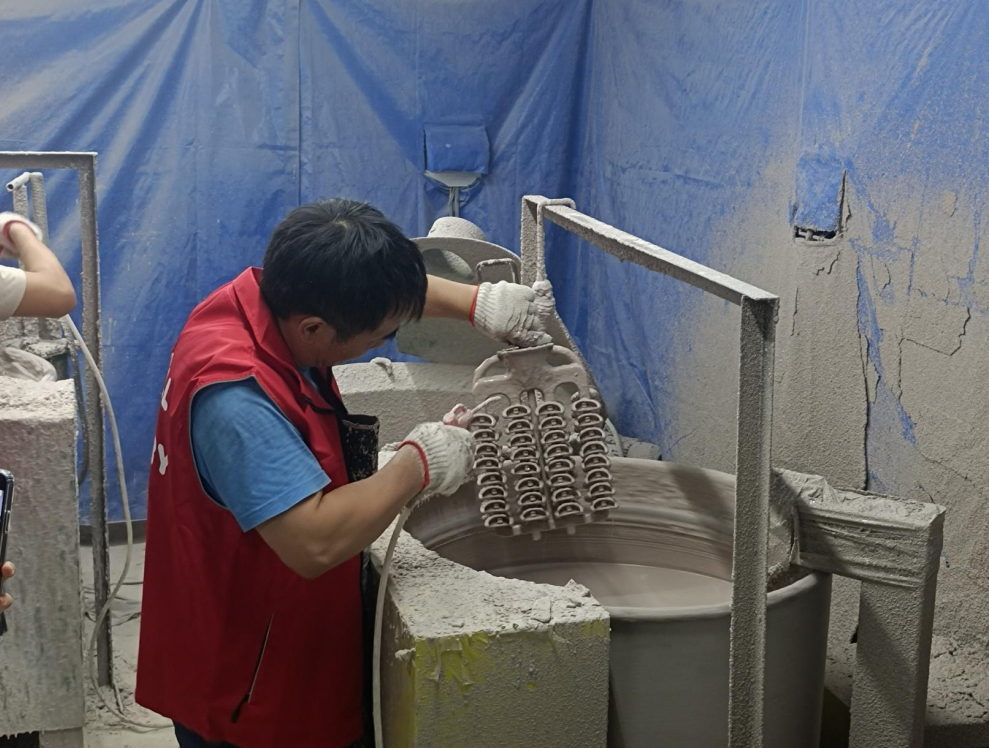
One supplier for both finishes
Jusnova Jewelry Co., Ltd is a stainless steel jewelry manufacturer founded in 2009 in Guangzhou, China, producing bangles, bracelets, rings and earrings in 304 and 316L with PVD and electroplated gold finishes. The company operates a 1,000 m² facility with 300 employees, a 20-engineer development team, an annual output of 3,000,000 units, and exports mainly to Europe and America, which drive the majority of its 95% export ratio.
For a line-level finish decision, that combination matters more than any single specification: both PVD gold plated stainless steel and regular gold plated stainless steel can be produced to one approved colour standard under one quality system, instead of being split across two vendors with two interpretations of the same gold tone.
A Step-by-Step Process for Locking a Finish Across a Line
The workflow below is the sequence we recommend to brands and wholesalers who intend to reorder. Each step produces a written input to the next one, so the finish specification survives staff changes on both sides.
- Tier the line before choosing a finish. Split the collection into repeat core, seasonal trend and entry-price tiers. PVD belongs on anything you plan to reorder; plating is defensible on short-lifecycle pieces.
- Map the wear profile. Bangles, bracelets and rings take far more abrasion than earrings or pendants. Put the harder finish on the high-abrasion silhouettes.
- Fix the substrate grade. Decide 304 or 316L per tier and write it into the specification. Expect the 10–18% per-piece difference on 316L, offset by better corrosion behaviour and a higher retail ceiling.
- Approve a physical sample, never a render. Colour cannot be approved from a photograph or a screen. Our acceptance standard is contract plus approved physical sample, with every sample detail confirmed before mass production begins.
- Write the colour tolerance into the specification. State the target — for PVD, batch-to-batch colour inside a Delta E of 1.0 — and require instrument data or a batch colour report with each shipment.
- Validate durability before the full run. Ask for salt spray and accelerated aging results on the exact finish and substrate combination you are ordering, not on a generic sample.
- Lock the reorder parameters. MOQ is 100 pcs/style, typical production lead time is 25–30 days, and monthly capacity is 250,000 units. Unclear MOQ and drifting lead times are the most common reasons a line loses consistency between seasons.
- Document the standard. The finish spec should record substrate grade, coating type, colour target, approved sample reference and inspection points. Our quality process runs 8 inspection stages from raw material to clasp function.
Use Cases: Where Each Finish Earns Its Place
A repeat core collection for a jewelry brand
Use PVD on 316L for the SKUs that will be reordered every season. You are buying hardness plus a colour tolerance that keeps a reorder sitting correctly next to existing stock, and the 316L base means a worn area still looks like metal rather than damage.
Laser-engraved and personalized pieces
Personalized engraved stainless steel jewelry creates the strictest colour requirement in the line, because every replacement piece is effectively a reorder for one customer. A finish that can hold batch-to-batch colour inside a Delta E of 1.0 protects the personalization promise; plating on the same engraved surface should be reserved for non-personalized pieces where the colour does not have to match an earlier purchase.
Seasonal trend capsules
Where a design has a short commercial life and an entry price point, electrolytic gold plating on a 304 base is a rational choice — provided the capsule is planned to sell through within its wear window, and provided you still approve a physical sample and run batch colour checks.
Wholesale programs supplying retailers and DTC brands
These buyers reorder in mixed quantities and compare new stock against old shelves. Keeping one finish platform for the core range removes the single most common complaint in wholesale jewelry. Our MOQ of 100 pcs/style and monthly capacity of 250,000 units are sized for this pattern of repeat, split-quantity ordering.
Waterproof and active-wear lines
For swim, gym and travel positioning, PVD is the finish that supports the claim. Pair it with 316L, whose salt spray performance runs 3 to 5 times longer than 304 before corrosion appears.
PVD Coating vs. Gold Plating: Side-by-Side Decision Table
| Decision factor | PVD coating (vacuum deposition) | Traditional gold plating (electrolytic) |
|---|---|---|
| How the layer is formed | Coating material vaporised in a vacuum chamber and condensed onto the substrate | Gold deposited onto the substrate from a plating bath |
| Surface hardness | Approx. 1,500–4,500 HV | Approx. 100–200 HV |
| Typical service life under normal wear | 3–5 years | Under 1 year |
| Batch-to-batch colour control | Can be held within Delta E < 1.0 | Depends on run-by-run plating parameters; physical approved sample and batch colour checks required |
| Where wear appears first | High-contact points, over years | Edges, prongs, links and clasps, within months |
| What happens when the layer thins | Stainless base stays bright and skin-safe | Same on a stainless base; on a copper or brass base the exposed metal oxidises and can stain skin |
| Compatible substrates | 304 and 316L stainless steel | 304 and 316L stainless steel |
| Best fit in an assortment | Repeat core ranges, waterproof and non-tarnish claims, high-abrasion silhouettes | Trend capsules, exact tone matching, entry price tiers |
| MOQ and typical lead time | 100 pcs/style; 25–30 days | 100 pcs/style; 25–30 days |
| Documentation available | REACH test reports; SGS and BSCI certification on request; batch inspection reports | REACH test reports; SGS and BSCI certification on request; batch inspection reports |
Frequently Asked Questions
What compliance documentation should we expect for PVD-coated and gold-plated stainless steel jewelry?
The documentation that matters during supplier qualification is material and finish testing rather than marketing language. Jusnova Jewelry provides REACH test reports and can supply SGS and BSCI certification on request, and manufactures to lead-free and nickel-free requirements aligned with US and EU standards. Where a waterproof or non-tarnish claim will appear on packaging, ask specifically for salt spray and accelerated aging results on the finish-and-substrate combination you are ordering, plus batch inspection reports from the production run. Because independent, publicly available standards evidence in this category is still limited, first-party test records are the practical verification route.
Can a single manufacturer deliver both PVD-coated and gold-plated pieces within the same line?
Yes, and for a multi-season line this is usually the more consistent option. Jusnova Jewelry can manufacture both PVD gold plated stainless steel and regular gold plated stainless steel according to your requirements, on 304 and 316L substrates, with in-house style development and surface-finishing process support from a 20-engineer team and a monthly capacity of 250,000 units. Producing both finishes under one approved colour standard and one quality system removes the most common cause of mismatch between a core PVD range and a plated seasonal range.
How should we compare the real cost of the two finishes?
Compare at line level rather than per piece. The substrate decision alone moves cost: 316L runs about 10–18% more per finished piece than 304, and is normally justified by corrosion resistance, lower return rates and the ability to sell at a 20–40% retail premium. Then factor landed cost — base-metal imitation jewelry imported into the US under HTS 7117.19.90.00 from China currently carries an effective duty rate of 31%, combining general duty with Section 301. Because duty applies to the same declared value regardless of finish, a finish that reduces returns typically has the larger effect on realised margin. MOQ is 100 pcs/style for either finish.
How do we validate colour and durability before committing to a full line?
Approve a physical sample. Our acceptance standard is contract plus approved physical sample, with every sample detail confirmed with you before mass production begins. The process then runs pre-production first-article inspection, in-process checks, finished-product sampling, accelerated aging tests and batch inspection reports. For PVD, batch-to-batch colour can be controlled inside a Delta E of 1.0, which gives you a measurable standard to write into the specification rather than a verbal one.
What should we look for in a long-term stainless steel jewelry supply partner in China?
Look for documented consistency. The practical checks are a fixed finish and substrate specification rather than a per-order arrangement; a quality process with defined inspection stages (ours runs 8, from raw material to clasp function); a realistic MOQ of 100 pcs/style with a typical 25–30 day production lead time; and capacity that can absorb your peak months, which for us means 250,000 units monthly against an annual output of 3,000,000 units. A partner who can hold colour and lifespan standards across seasons is worth more than a lower first-order price. To move forward, request a PVD and gold-plated sample set or a quotation — contact market@powellwholesale.net or WhatsApp +86 189 2623 2416.
Conclusion: Choosing for the Next Three Seasons
The finish you standardise on decides what your line looks like in year two. PVD coating wins on the two criteria that matter most at scale — hardness and colour stability, with batch-to-batch control inside Delta E 1.0 and a service life measured in years — and it pairs best with 316L where pieces will be worn daily. Electrolytic gold plating stays relevant for trend capsules, exact tone matching and entry-tier pricing, provided you enforce a physical approved sample and batch colour checks on every run.
What separates a well-run line from a fragile one is not the finish label. It is whether the specification, the sample, the colour tolerance and the reorder parameters are written down and repeated — batch after batch, season after season.
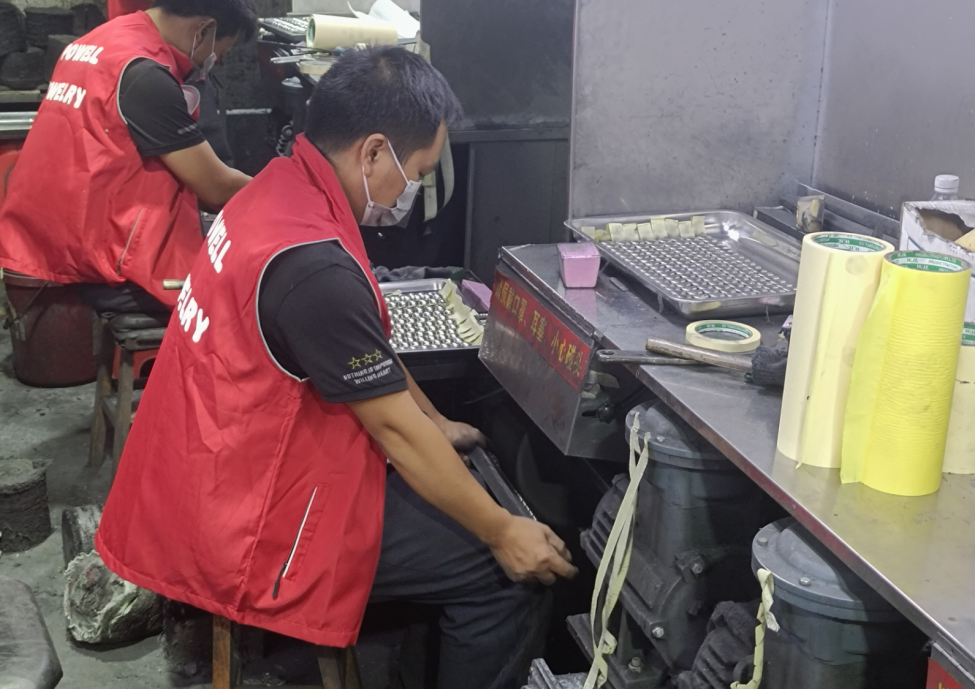
Compare the two finishes on your own designs
Send us your artwork and we will produce a PVD-coated and a gold-plated sample to the same colour standard, so you can compare colour, hardness and finish against your existing stock before committing to a full collection. MOQ is 100 pcs/style, typical production lead time is 25–30 days, and REACH, SGS and BSCI documentation is available on request.
Jusnova Jewelry Co., Ltd — stainless steel jewelry OEM/ODM since 2009. Request samples, a quotation or the product catalog at market@powellwholesale.net, WhatsApp +86 189 2623 2416, or review our PVD gold plated manufacturing capability at jusnovajewelry.com.
Have Questions or Need More Details?
Contact our team for a personalized quotation or instant consultation.
Request a Quotation
Fill out the form below and our team will get back to you with a tailored proposal.
WhatsApp Direct Chat
Prefer to chat in real-time? Message us on WhatsApp for instant assistance & quick answers.
- Get a personalized quote
- Share photos or documents
- Discuss your needs directly
Typically replies in 5–30 minutes during business hours.