
PVD Coating vs Gold Plating for Stainless Steel Jewelry: Which Finish Holds Color at Scale?
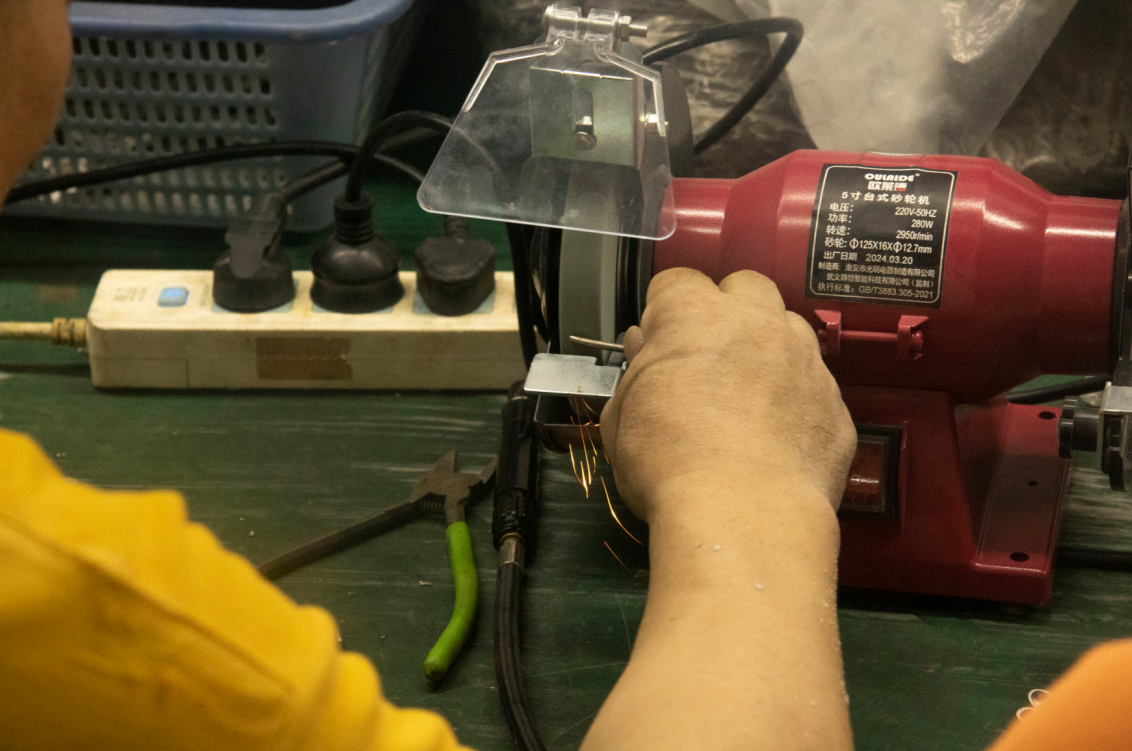
The surface-finishing stage is where the PVD coating versus gold plating decision is physically locked in.
For wholesale buyers choosing a finish on stainless steel jewelry, the decision rarely fails at the sample stage. PVD coating and gold plating sit side by side on a sample card and look close enough that many buyers treat them as interchangeable. The failure appears later — in batch three, batch five, and in the reorder that arrives nine months after launch and no longer matches what is already sitting in the display case.
The short answer for large-batch programs is that PVD coating (physical vapor deposition, also described in the trade as vacuum electroplating) is the more controllable finish. It is produced with more than 20 color options and held to a Delta E of less than 1.0, which keeps the color difference between production runs below the level a customer can detect. Gold plating remains a genuine alternative option — for programs that need a specific gold tone, a single production run, or a lower entry cost — but it moves more of the color-matching responsibility onto the buyer's inspection process.
This guide compares the two finishes for wholesale buyers and brand owners, using model GEN000516bhia-066 as a reference program, and explains how the finish decision interacts with substrate grade, engraving, and packaging formats such as OPP bags, velvet pouches, and premium gift boxes.
Problem Definition: Why the Finish Decision Is a Batch Problem, Not a Sample Problem
The sample card answers the wrong question. A finish sample tells you what the color looks like once. A wholesale program needs to know what the color looks like on the first order, the fourth reorder, and the replacement shipment that lands after a sell-out season. Those are three different production runs, and the gap between them is where finish-related returns and markdowns are born.
Buyers who audit their own complaint data usually find the same five risks attached to finish selection: surface fading or peeling; quality and color inconsistency between production runs; MOQ and lead-time exposure; variation across production lines and shifts; and supply-chain or shipping disruption. None of these risks is solved by choosing a finish that photographs well. They are controlled by specification, sampling, and inspection terms written into the purchase order.
The base metal changes how visible a finish failure becomes. Copper and brass are common base metals for gold-plated jewelry in the wider market, and once the surface plating wears through, the underlying copper oxidizes, turns green or black, and stains the wearer's skin. Stainless steel behaves differently: even if the finish wears over time, the base metal underneath remains bright, tarnish-free, and skin-safe. That is why the finish decision and the substrate decision have to be made together rather than in sequence.
Industry Background: What Is Driving Finish Requirements in 2026
The global stainless steel jewelry market was valued at USD 6.79 billion in 2024 and is projected to reach USD 10.8 billion by 2035 (WiseGuyReports). The broader personalized jewelry category is larger still — an estimated USD 42.51 billion in 2024, growing at a CAGR of 8.6% through 2031 (Cognitive Market Research). Growth of that shape explains why so many wholesale programs now pair a stainless steel body with engraving, custom logo work, and a controlled color finish.
Supply is concentrated. China's total jewelry exports reached USD 12.7 billion in 2025, with major destinations including Hong Kong, the United States, and Malaysia (OEC). For buyers in Europe and North America, that concentration is efficient but it also means finish capability has to be verified at the factory level rather than assumed from a catalog.
Regulation has tightened in parallel. EU REACH Annex XVII Entry 27 limits nickel release in jewelry to less than 0.5 µg/cm²/week for skin-contact items and 0.2 µg/cm²/week for piercing items (European Chemicals Agency). On the demand side, approximately 68% of couples in 2024 chose customized or bespoke jewelry over ready-made options, driven largely by Gen Z and Millennial preferences (Jewelers of America). Customization and compliance are now baseline expectations, not upsells — and both of them land on the finish specification.
Detailed Solution: How PVD Coating and Gold Plating Differ on a Stainless Steel Base
Both finishes put a colored layer on the same stainless steel body, but they are created differently, and that difference shows up in how tightly the color can be held across volume. PVD deposits the color layer in a vacuum; gold plating deposits it in an electrochemical bath. The method determines the color range available, the durability of the layer, and how predictable the next batch will be.
PVD coating: color deposited in a vacuum
PVD (Physical Vapor Deposition) coating on 316L stainless steel provides a surface described in industry technical analysis as approximately 10 times more durable than traditional electroplating, which is the technical basis behind the “waterproof” and “anti-tarnish” claims common in this category. Three practical properties matter to a wholesale buyer:
- Color range: more than 20 color options are available in PVD, which lets a brand build a multi-color assortment without moving between finish processes or suppliers.
- Batch color consistency: PVD production is held to a Delta E of less than 1.0, giving a measurable tolerance for the difference between production runs rather than an impression of similarity.
- Substrate compatibility: PVD is applied to stainless steel, so the wear-through failure mode of a plated copper or brass base does not apply: the metal revealed underneath stays bright, tarnish-free, and skin-safe.
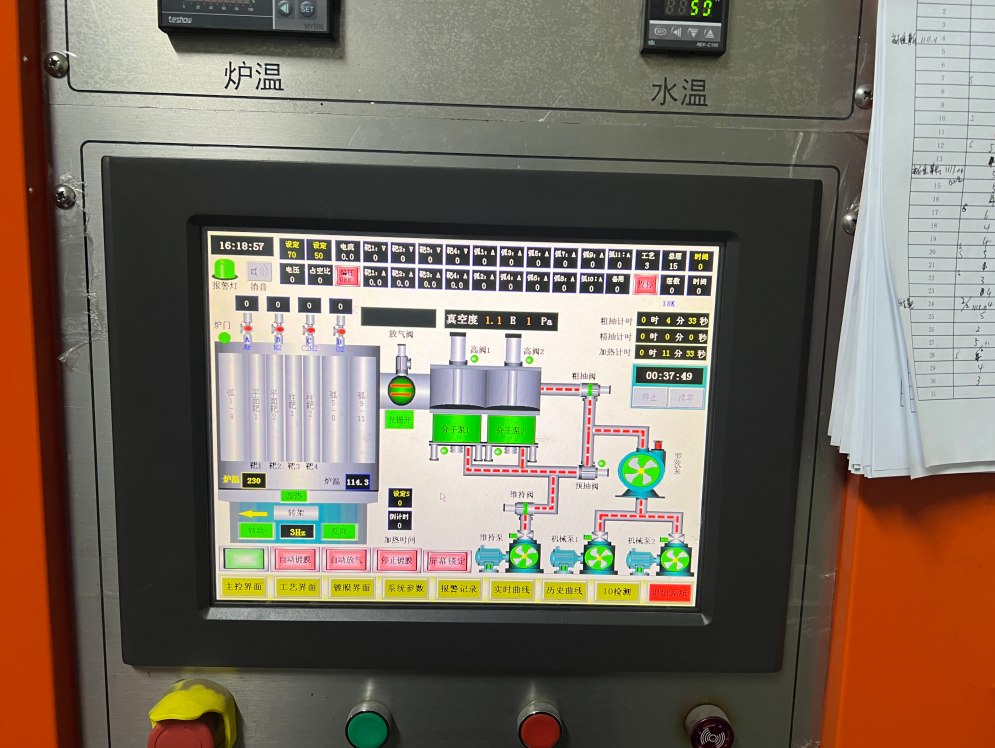
Color tolerance is only meaningful if it is measured. Instrument data gives buyers a batch-to-batch color record instead of a visual opinion.
Gold plating: gold deposited in an electrochemical bath
Gold plating is an electrochemical process that deposits a gold layer onto the stainless steel body. It is offered as an alternative option, and for some programs that is the correct choice: a design that depends on a very specific traditional gold tone, a program with a single production run, or a price point where the finish has to stay simple. The trade-off is that the finish carries less built-in color control, so the buyer has to define the tolerance and the inspection method explicitly rather than relying on the finish name.
The comparison also has to name the substrate. Gold plating on a stainless steel base is not the same product as gold plating on a copper or brass base. Where the base is stainless steel, a worn area does not oxidize into a green or black stain on the skin; where the base is copper or brass, that failure mode is common in the market.
The substrate matters as much as the finish: 304 vs 316L
Finish performance sits on top of material performance, and the two stainless grades used in jewelry are not interchangeable. The key quantified difference between 316L and 304 stainless steel is the addition of 2–3% Molybdenum (Mo) in 316L, which significantly enhances corrosion resistance. In salt spray tests, 316L lasts 3 to 5 times longer than 304 before showing signs of corrosion. In chloride-containing environments, 316L shows the best corrosion resistance among 304, 304L, and 316L.
The commercial picture is equally clear. 316L stainless steel costs 10–18% more per finished piece than 304, but the upfront difference is offset by superior corrosion resistance, lower return rates, higher customer satisfaction, and the ability to support retail premiums of 20–40%. Maintenance follows the same logic: 316L typically maintains its finish for years with nothing more than a simple wipe, while 304 may benefit from an occasional polish after 6–12 months of regular use. 316L is more suitable for daily wear, sports, and travel; 304 is a cost-effective choice for general use.
What Delta E < 1.0 means inside a purchase order
Delta E is the measured difference between a reference color and a produced color. In color measurement practice, a Delta E below 1.0 is generally treated as below the threshold of normal human perception under controlled viewing conditions. For a wholesale buyer, that converts a vague instruction (“keep the gold consistent”) into a testable line item: the reference sample, the measurement method, and the maximum permitted difference between any two production runs.
This is the specific problem PVD solves better than plating at scale. A buyer placing 20 SKUs across four colorways and expecting three replenishment orders per year is not buying a color; they are buying the same color, repeatedly. A finish that can state its color tolerance in numbers is easier to audit, easier to reorder, and easier to defend to a retail partner than a finish that can only be described as “gold.”
Step-by-Step Breakdown: How to Choose a Finish for a Wholesale Program
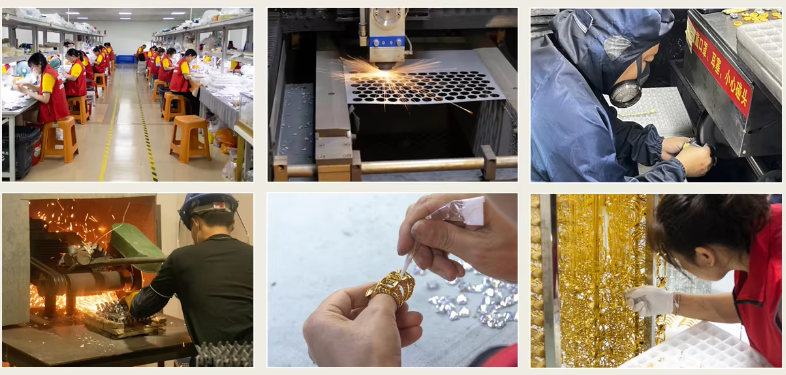
A finish decision is a process decision. The flowchart shows where coating, plating, inspection, and packing sit in the production sequence.
Step 1 — Define the color specification before requesting the quote
State the reference color, the lighting condition under which it will be evaluated, and the acceptable Delta E tolerance. If the tolerance is not written down, it will be interpreted differently by every factory that quotes the project.
Step 2 — Choose the substrate grade
Decide between 304 and 316L before deciding the finish. 316L adds 2–3% Molybdenum for corrosion resistance and lasts 3 to 5 times longer than 304 in salt spray testing, at 10–18% higher cost per finished piece. Programs that target daily wear, sports, and travel justify 316L; general-use and entry-price programs can reasonably use 304.
Step 3 — Match the finish to the order structure, not to the photo
If the program involves repeat batches, multiple colorways, or reorders that must match the original assortment, PVD coating with a stated Delta E is the lower-risk option. If the program is a single run with a defined gold tone and a tight entry price, gold plating remains a workable alternative option.
Step 4 — Validate with samples and first-article inspection
Sample Approval and Pre-Production First Article Inspection (FAI) exist to catch finish drift before tooling and material are committed. Include an accelerated aging test in the validation so the finish is tested against sweat and environmental exposure rather than only against the buyer's eyes.
Step 5 — Lock customization: materials, sizes, engraving, and packaging
Finish choice sits inside a larger custom scope. Engraving, sizing, and the packaging format — OPP bags, velvet pouches, or premium gift boxes — all have to be specified at the same time, because packaging changes the handling the piece receives and the surface the customer sees first.
Step 6 — Write QA and lead-time terms into the purchase order
Convert the finish agreement into inspection terms: incoming inspection, in-process checks, finished-product sampling, accelerated aging tests, and clearly defined QA and lead-time terms. Require Batch Inspection Reports and Qualified Packaging & Shipment Inspection for each production run.
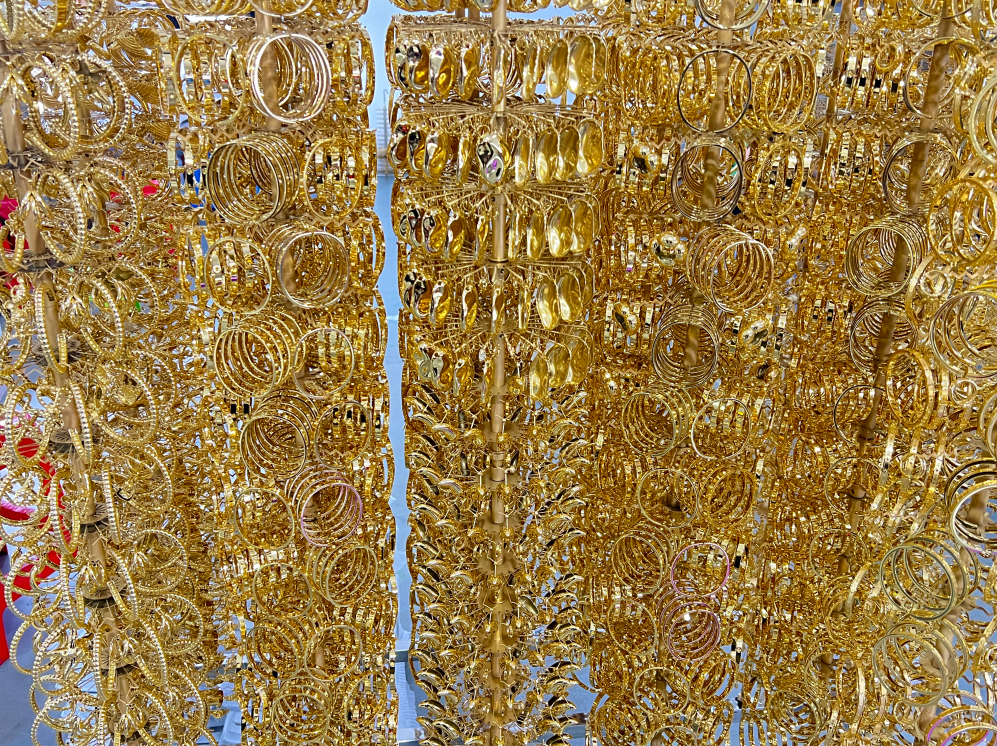
Finished-product sampling is the last point where color drift can be caught before a batch ships.
Use Cases: Where Each Finish Fits
1. Multi-batch retail replenishment
This is the case that decides the comparison. A premium jewelry chain built a repeat-order program around a small set of best-selling stainless steel jewelry SKUs. The first shipment was not the problem; the third and fourth were. New production runs sat beside the original run in the same display case, and the difference was visible to store staff and customers. The program was re-specified around PVD coating with a stated color tolerance, a locked reference sample, and batch inspection reports for every run. Gold plating stayed in the assortment where the design or price point called for it, but it was no longer used for SKUs that depended on repeat color matching.
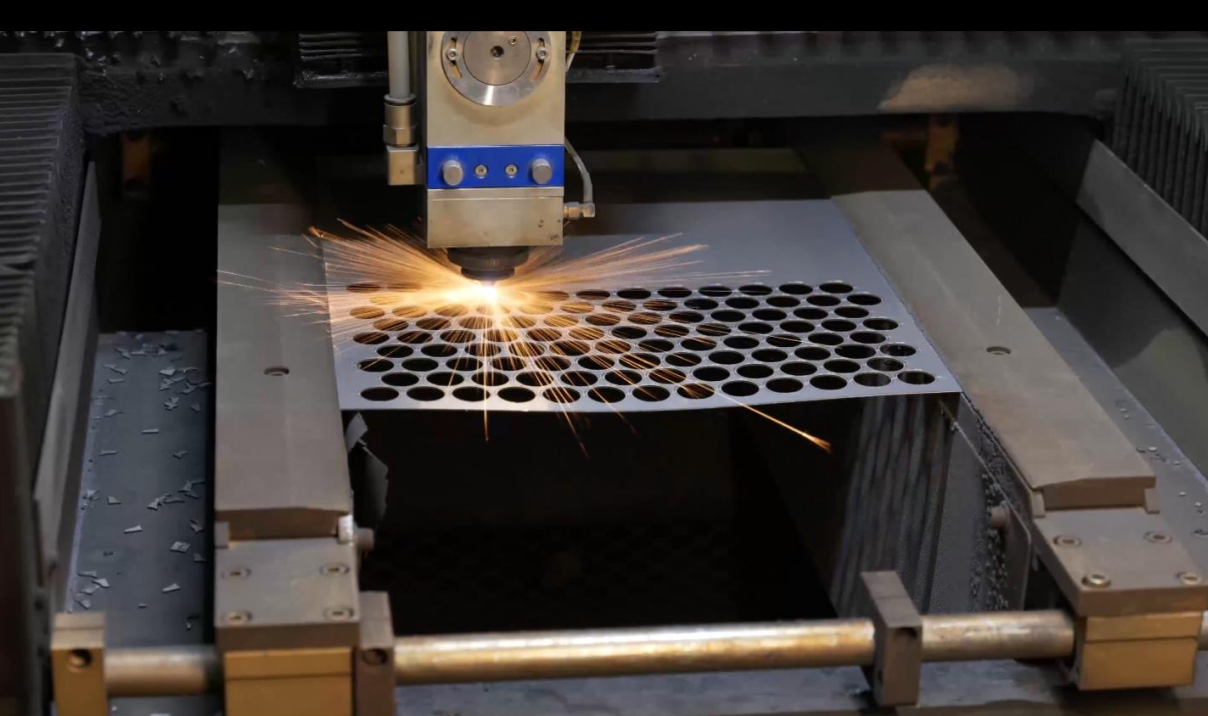
Engraving and finish must be specified together, so the two processes are validated on the same sample.
2. Laser engraved and personalized programs
Custom engraved stainless steel jewelry, personalized engraved pieces, and custom logo trendy jewelry all combine a surface finish with a marked surface. The finish and the engraving specification should be validated on the same sample, and the buyer should confirm how the two processes are sequenced before mass production begins.
3. Waterproof and tarnish-free everyday wear lines
Vintage hypoallergenic non-tarnish stainless steel jewelry, waterproof stainless steel jewelry, and stainless steel women’s 18K vacuum electroplating pieces are all built on the same promise: the piece survives daily wear. PVD on 316L is the finish configuration that supports waterproof and anti-tarnish positioning, because the coating is described in industry analysis as far more durable than traditional electroplating and the base metal stays skin-safe even if the surface is worn.
4. Private label and custom packaging programs
Customizable design stainless steel jewelry programs rarely ship loose. Buyers combine finish, engraving, and packaging into one specification: OPP bags for volume retail and marketplace fulfillment, velvet pouches for mid-tier gifting, and premium gift boxes for brand and holiday programs.
Comparison Table: PVD Coating vs Gold Plating on Stainless Steel Jewelry
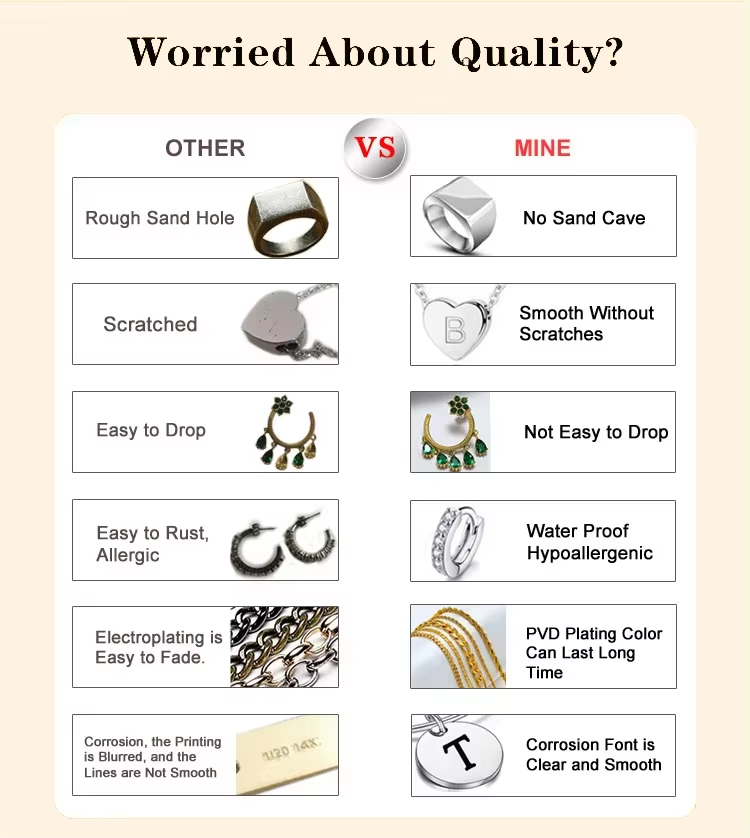
Comparing finishes side by side on the same stainless steel base.
| Decision factor | PVD coating | Gold plating |
|---|---|---|
| Process type | Physical Vapor Deposition — color layer deposited in a vacuum | Electrochemical deposition of a gold layer |
| Color options | More than 20 color options | Gold tones; offered as an alternative option |
| Batch color control | Produced to Delta E < 1.0 (below normal human perception under controlled viewing) | Buyer should state a Delta E target and require batch inspection reports |
| Surface durability | Industry technical analysis describes PVD on 316L as approximately 10x more durable than traditional electroplating | Traditional electroplating is the reference point for that comparison |
| If the finish wears over time | Stainless steel base stays bright, tarnish-free, and skin-safe | Safe on a stainless steel base; on a copper or brass base, oxidized metal can turn green or black and stain skin |
| Compliance framework | REACH Annex XVII Entry 27 nickel release limits apply (< 0.5 µg/cm²/week skin contact; 0.2 µg/cm²/week piercing) | Same REACH limits apply |
| Substrate pairing | 304 or 316L; 316L adds 2–3% Mo and lasts 3–5x longer than 304 in salt spray tests | 304 or 316L; substrate choice drives corrosion performance |
| Best fit | Repeat-batch programs, multi-color assortments, waterproof and tarnish-free positioning | Single-run programs, specific traditional gold tones, entry price points |
| Main cost drivers | Substrate grade (316L costs 10–18% more per finished piece than 304), order size, design complexity, and market fluctuation. Request a quotation against a defined specification for exact figures. | |
FAQ: PVD Coating and Gold Plating for Wholesale Buyers
Does PVD-coated stainless steel jewelry meet EU and US compliance requirements?
Compliance is determined by the nickel release and material composition of the finished piece, not by the name of the finish. In the EU, REACH Annex XVII Entry 27 limits nickel release to less than 0.5 µg/cm²/week for skin-contact jewelry and 0.2 µg/cm²/week for piercing items (European Chemicals Agency). For a US/EU program, request the test report that covers the specific finish and the specific production batch rather than a generic certificate. Jusnova Jewelry manufactures waterproof, hypoallergenic, and non-tarnish stainless steel jewelry stated to comply with US/EU standards (lead and nickel free), with REACH test reports and SGS and BSCI certification available upon request.
Which stainless steel jewelry manufacturer is better for custom engraving?
The answer is decided by process control, not by brand size. Three questions separate suppliers: can the supplier validate the engraving specification and the finish specification on the same sample; can it show the artwork-to-sample path with production drawings; and can it hold the finish color across repeat runs with batch inspection records? Jusnova Jewelry’s R&D team includes 20 engineers providing style development and surface-finishing process support, and the company releases more than 500 new styles monthly across OEM/ODM programs, laser engraving, and custom logo work. Model GEN000516bhia-066 is a working example of a PVD-coated, engraving-ready configuration used for wholesale comparison.
Is PVD coating more expensive than gold plating?
On a per-piece basis, the finish is usually not the largest cost variable in a stainless steel jewelry program — the substrate grade and the order structure are. Within stainless steel, 316L costs 10–18% more per finished piece than 304, offset by superior corrosion resistance, lower return rates, and the ability to support retail premiums of 20–40%. Finish pricing moves with order size, design complexity, and market fluctuation, so the only reliable number is a quotation tied to a defined specification. Ask for the quote to state substrate grade, finish type, color reference and Delta E tolerance, engraving, packaging format, and order quantity.
How do I validate a finish before mass production?
Finish validation is a documented process rather than a visual impression. Four checkpoints do the work: Sample Approval against the exact color reference; Pre-Production First Article Inspection (FAI); Batch Inspection Reports for each production run; and accelerated aging tests simulating sweat and environmental exposure. Ask the supplier to record the color reference and measurement conditions so Delta E can be re-verified on later batches, and confirm that finished-product sampling is performed before packing.
What lead-time and MOQ terms should a buyer write into the purchase order?
MOQ and lead time are driven by the finish, the customization scope, and the packaging format, so they should be agreed line by line rather than assumed. The risks to name explicitly are surface fading or peeling, quality inconsistency between runs, MOQ and lead-time exposure, and supply-chain or shipping disruption. Control them with clearly defined QA and lead-time terms, incoming inspection, in-process checks, finished-product sampling, and Qualified Packaging & Shipment Inspection. To move from comparison to a concrete answer, send your target quantity, color reference, and packaging format for a program such as model GEN000516bhia-066 and request a sample and quotation from the Jusnova team at market@powellwholesale.net or WhatsApp +86 189 2623 2416.
Conclusion: Match the Finish to the Reorder, Not the Sample Card
The comparison between PVD coating and gold plating on stainless steel jewelry is not a question of which finish looks better. It is a question of which finish still looks the same at the end of the year. PVD coating answers that question with measurable color control: more than 20 color options, a Delta E of less than 1.0, and a coating described in industry technical analysis as approximately 10x more durable than traditional electroplating on 316L. Gold plating remains a legitimate alternative option for single-run programs, specific traditional gold tones, and entry price points.
The decision becomes durable when it is tied to the surrounding specification: a 304 or 316L substrate chosen on purpose, a color tolerance written into the purchase order, a validated sample, an engraving and packaging scope agreed up front, and QA and lead-time terms that require batch inspection before shipment. Buyers who complete those five items stop comparing finishes on a sample card and start protecting the assortment they will reorder.
A finish decision that holds up in production is what makes the reorder shipment look like the first one.
Next Step: Validate the Finish on Your Own Specification
Send your target quantity, color reference, substrate grade (304 or 316L), engraving requirement, and packaging format (OPP bag, velvet pouch, or premium gift box). The Jusnova Jewelry team will return a sample and a quotation built on the specification you actually intend to reorder.
Email: market@powellwholesale.net | WhatsApp: +86 189 2623 2416 | Website: jusnovasteel.com
Jusnova Jewelry Co., Ltd — founded 2009 in Guangzhou, operating a 1,000 m² factory with 300 employees and an annual output of 3,000,000 units. The company manufactures stainless steel bangles, bracelets, rings, and earrings, including PVD and electroplated gold pieces, waterproof and tarnish-free jewelry, with a 20-engineer R&D team supporting style development and surface-finishing processes. Export ratio: 95%, with emphasis on Europe and America.
Rm 403/405/407, 4/F, Qiancheng Business Center, No.19 Nanpu Yansha Road, Panyu District, Guangzhou, Guangdong, China