
PVD vs Electroplating for Daily-Wear Gold Plated Jewelry
For a daily-wear gold plated jewelry line built for boutique racks and department store accessory counters, PVD coating on a stainless steel base is the stronger default. PVD is reported to deliver significantly higher durability and wear resistance than traditional electroplating, and PVD-coated jewelry can last three to five years under daily wear conditions without significant tarnishing (Vapor Technologies, Inc.; Surface and Coatings Technology). Electroplating is not obsolete: it is the process behind the US Federal Trade Commission definition of gold electroplated jewelry, and it is frequently upgraded with an E-coating protective layer over the gold. The real buying question is not which process wins in general — it is which process belongs on which SKU, in which selling environment, at which price band.
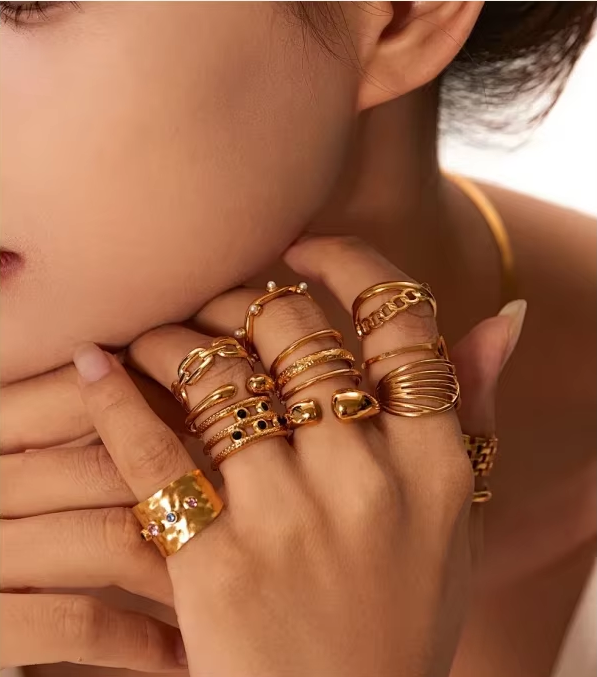
A daily-wear gold plated stainless steel set: the finish decision behind these pieces determines return rates, not shelf appeal.
Why a Daily-Wear Line Fails in the Bathroom, Not the Showroom
A gold plated jewelry collection can photograph beautifully and still fail commercially. The failure rarely happens on the display table. It happens in the shower, at the gym, on a beach holiday, or during a week when the wearer never takes the piece off. Daily wear is not occasional wear with more frequency — it is a different exposure profile: chlorinated and salt water, sweat, sunscreen, perfume, hand sanitizer, body lotion, and constant friction against skin and fabric.
That is why the finishing decision is the single most consequential engineering choice behind a daily-wear line. Buyers who compare only color and unit price are comparing the two variables that matter least at the returns counter. The variables that actually determine whether a line survives repeat retail are the substrate, the coating method, the coating adhesion, the polish quality beneath the coating, and the compliance file that supports the claims printed on the hangtag.
There is also a health dimension that many buying teams underweight. Roughly 15% of the global population has a nickel allergy (World Allergy Organization), which means hypoallergenic construction is not a premium add-on for a small segment — it is a mainstream requirement for jewelry that touches skin every day. In the EU, nickel release testing under EN 1811 is mandatory for any jewelry item inserted into pierced parts of the body (European Committee for Standardization), and REACH Regulation (EC) No 1907/2006 restricts nickel, lead and cadmium in jewelry imported into the EU (European Chemicals Agency).
The practical consequence: a daily-wear line needs a coating decision that can be explained, tested and repeated. That is what the rest of this head-to-head delivers.
Industry Background: Where Daily-Wear Gold Plated Jewelry Demand Is Heading
The global gold plated jewelry market was valued at USD 14.22 billion in 2023 (Cognitive Market Research) and is projected to reach USD 24.36 billion by 2031, a CAGR of 7.1% (Business Research Insights). Production is heavily concentrated: the Asia-Pacific region accounts for over 35% of global output, with major stainless steel gold plated manufacturing hubs in Dongguan and Yiwu, China (Grand View Research; HKTDC Research). China’s jewelry export value reached USD 10.3 billion in the first half of 2023 (General Administration of Customs of China).
Demand quality is shifting as fast as demand volume. In the United States, costume and gold-plated jewelry reached 34.7% of total jewelry category spend in 2023 (IBISWorld), and the demi-fine segment — the bridge between fine jewelry and costume jewelry — is the fastest-growing sub-category in that market (Forbes). In Europe, the minimalist jewelry segment accounts for 22% of total fashion jewelry revenue (CBI Ministry of Foreign Affairs). Global demand for minimalist daily-wear jewelry increased by 30% among Gen Z consumers in 2023 (WGSN Consumer Insights).
Two channel signals matter directly to the PVD-versus-electroplating decision. First, B2B search volume for waterproof jewelry on stainless steel rose 40% in 2024 (Alibaba Group B2B Trends), and search interest for the term tarnish free jewelry peaked in Q4 2023, reflecting seasonal gift-giving demand (Google Trends). Second, online fashion jewelry sales are growing at 15% annually, outpacing physical retail (Digital Commerce 360). Online growth amplifies the cost of a durability failure, because an e-commerce return is more expensive to process than a boutique exchange, and a visible review about fading is permanent.
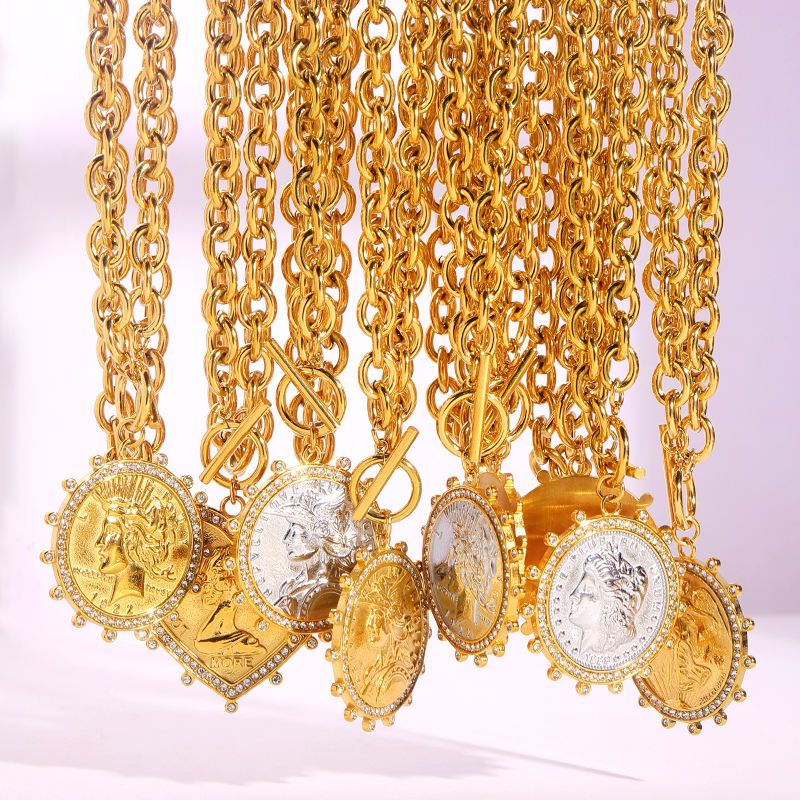
Daily-wear gold plated stainless steel necklaces: this is the SKU type most exposed to sweat, water and sunscreen.
PVD vs Electroplating: The Head-to-Head
How the two coatings are applied
PVD (physical vapor deposition) is a vacuum process. Solid coating material is vaporized and deposited onto the stainless steel substrate atom by atom inside a sealed chamber. Jewelry vacuum plating chambers typically operate at pressures between 10⁻³ and 10⁻⁵ mbar (Journal of Vacuum Science & Technology), and a titanium nitride base layer is often used to improve adhesion to stainless steel (Journal of Applied Physics). Because the process is dry, the piece never enters a liquid chemical bath.
Electroplating is an electrochemical process. Current drives metal ions out of a plating solution and onto the substrate, and the deposited thickness is controlled by plating time and current density. Under US rules, the minimum gold thickness for the Gold Electroplated designation is 0.175 microns (Federal Trade Commission). Plated pieces are frequently finished with an additional electrophoretic coating (E-coating) as a secondary protective layer to reduce oxidation (Finishings.com).
This process difference tells a buyer what will fail first. On a PVD piece, the risk is adhesion and surface preparation. On an electroplated piece, the risk is deposit thickness and bath chemistry consistency. Those are different questions to put in a supplier audit.
Durability and lifespan under daily wear
This is where the two options diverge most sharply. PVD coating is reported to provide significantly higher durability and wear resistance than traditional electroplating for jewelry (Vapor Technologies, Inc.), and published technical literature indicates that PVD coated jewelry can last three to five years without significant tarnishing under daily wear conditions (Surface and Coatings Technology).
One SGS technical bulletin reports that vacuum electroplating (IP plating) increases the tarnish resistance of fashion jewelry by up to 10x compared with water plating — a useful directional figure, but buyers should treat it as a process signal rather than a guaranteed service life, and should request test data against their own specification. The neutral standard used to substantiate a tarnish-free claim is ISO 9227 salt spray testing (International Organization for Standardization).
The substrate contributes as much as the coating. Stainless steel is preferred for daily wear because of its Mohs hardness of 5.5–6, compared with 2.5–3 for sterling silver (Gemological Institute of America). A harder base resists dents and scratches, which keeps the coating from cracking on an uneven surface. On electroplated pieces, service life tracks gold thickness: gold vermeil over silver requires a minimum of 2.5 microns (Jewelers Vigilance Committee), while PVD on steel usually targets 0.5–1.0 micron for equivalent durability. For boutique-level gold plated exports from China, 0.5 microns is commonly cited as the working standard (China Jewelry Trade Association).
Surface finish and color range
Finish range is where PVD gives product teams the most commercial room. Jusnova Jewelry’s surface specification includes PVD coating in gold, rose gold, black and gunmetal, alongside gold plating, electroplating, brushed, mirror-polished and sandblasted finishes — or any combination of these. That means a single supplier relationship can populate a multi-tone daily-wear display: yellow-gold minimalist bangles, rose-gold layering chains, black or gunmetal accents for a younger counter, and brushed pieces for a matte, understated boutique shelf.
Finish quality is set before the coating is applied. A high-polished mirror finish requires four to five stages of mechanical buffing before the PVD process (Jewellery Manufacturing Journal). Buyers inspecting pre-production samples should look at the reflectivity under a raking light: if the polish beneath the coating is inconsistent, the coating will amplify the defect rather than hide it.
Color selection also depends on the gold tone itself. A 14K gold plating has a lighter, more subtle yellow hue than the deeper yellow of 18K or 24K plating (Intertek Jewelry Testing Services), and 18K gold plating is the most preferred thickness for high-end fashion jewelry in the North American market (Statista). Stone work extends the range further: Jusnova supports CZ, man-made crystal and moissanite in more than 20 colors, with prong, bezel, channel and pavé settings. Zirconia inlay remains the dominant technique for an affordable-luxury appearance (Swarovski Professional Trends).
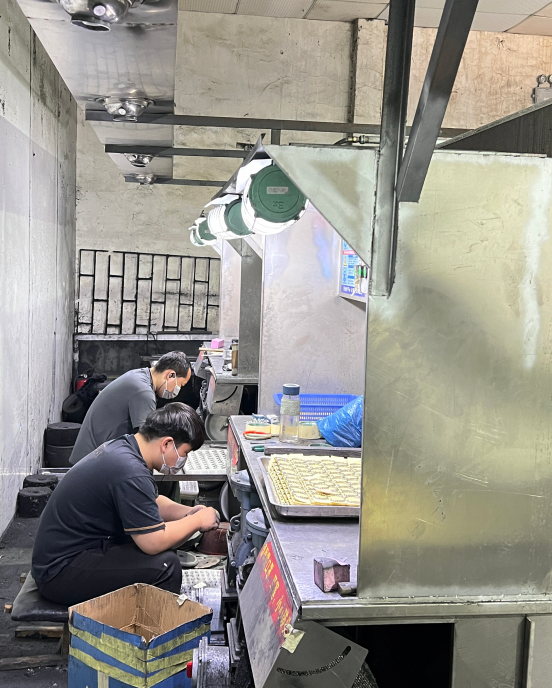
Polishing before coating: mirror-grade surfaces are built through multiple buffing stages before the PVD chamber, not after.
Skin safety and compliance
Both processes can be run compliantly, but the compliance file is where daily-wear lines are won or lost in the EU and US. 316L stainless steel is the standard hypoallergenic substrate for high-quality PVD gold plated jewelry (ASTM International), which is why the substrate choice should be locked before the coating discussion begins.
- EU: REACH restricts nickel, lead and cadmium in jewelry (European Chemicals Agency); EN 1811 nickel release testing is mandatory for items inserted into pierced parts of the body (European Committee for Standardization).
- US: California Proposition 65 requires warnings for jewelry containing lead or cadmium above strict thresholds (OEHHA); the FTC sets the 0.175 micron minimum for the Gold Electroplated designation.
- Classification: gold-plated stainless steel jewelry is classified under HS code 7117.19 in international trade (World Customs Organization).
- Quality systems: ISO 9001 certification is a common baseline for gold-plated jewelry manufacturers to demonstrate process consistency (International Organization for Standardization).
Jusnova Jewelry Co., Ltd., a Guangzhou-based manufacturer founded in 2009, states that its waterproof, hypoallergenic and non-tarnish output complies with US and EU standards on lead and nickel, and that REACH test reports, SGS and BSCI certification are available upon request.
Environmental footprint and supply continuity
Environmental profile is increasingly part of a retail buyer’s onboarding questionnaire. PVD gold plating is considered more eco-friendly than water electroplating because it produces zero hazardous wastewater (Environmental Protection Agency). For teams working toward sustainability-linked retail programs, the use of recycled gold in plating is a key performance indicator for certifications such as the Responsible Jewellery Council (RJC), and recycled stainless steel use in jewelry manufacturing increased by 20% in 2023 (Jewellery Outlook).
On continuity, the average lead time for wholesale custom gold plated stainless steel jewelry orders is 15–25 days (Panjiva supply chain data). A buyer planning a boutique or department store reset should build that window into the calendar rather than treat it as a buffer — and should confirm which finishing steps sit inside the quoted window.
Where electroplating still wins
A balanced decision framework has to acknowledge electroplating’s genuine advantages. It is the process that legally supports gold electroplated labeling under US rules. It supports established, high-volume supply chains. It can be paired with an E-coating layer to extend oxidation resistance. And it remains commercially efficient for SKUs with lower wear exposure — display-only statement pieces, seasonal color drops, and price-led promotional items where the buyer is deliberately trading service life for unit cost.
The mistake is not choosing electroplating. The mistake is putting an electroplated finish on a hero daily-wear SKU that a customer will wear in the shower for two years, and then marketing it as waterproof.
Head-to-Head Comparison Table
| Decision Factor | PVD-Coated Stainless Steel | Electroplated Stainless Steel |
|---|---|---|
| Deposition method | Dry vacuum deposition; chambers typically operate at 10⁻³ to 10⁻⁵ mbar; TiN base layer commonly used for adhesion (Journal of Vacuum Science & Technology; Journal of Applied Physics) | Electrochemical deposition from a plating bath; thickness controlled by time and current density |
| Wear resistance | Reported as significantly higher in durability and wear resistance than traditional electroplating (Vapor Technologies, Inc.) | Lower wear resistance; performance depends on deposit thickness and bath consistency |
| Expected lifespan in daily wear | Three to five years without significant tarnishing under daily wear conditions (Surface and Coatings Technology) | Shorter service life under friction and moisture unless thickness is increased |
| Tarnish and water resistance | ISO 9227 salt spray is the standard reference for tarnish-free claims; one SGS bulletin reports up to 10x tarnish resistance for vacuum plating versus water plating | Improved when an E-coating protective layer is applied over the gold (Finishings.com) |
| Color and finish range | Gold, rose gold, black and gunmetal, plus brushed, mirror-polished and sandblasted combinations (Jusnova Jewelry specification) | Primarily gold tones; additional colors generally require extra process steps |
| Gold thickness reference | PVD on steel usually targets 0.5–1.0 micron for durability equivalent to vermeil (Jewelers Vigilance Committee); 0.5 microns is commonly cited as a boutique export standard (China Jewelry Trade Association) | Minimum 0.175 microns for the US Gold Electroplated designation (Federal Trade Commission) |
| Substrate standard | 316L stainless steel is the standard hypoallergenic substrate (ASTM International); Mohs hardness 5.5–6 (GIA) | Substrate freedom is wider, so the allergy profile depends on what the buyer specifies |
| Regulatory file | REACH, EN 1811 for pierced parts, Prop 65, HS 7117.19 | Same regulations apply; plating chemistry adds wastewater controls |
| Environmental profile | Zero hazardous wastewater reported (Environmental Protection Agency) | Plating bath chemistry generates wastewater requiring treatment |
| Best-fit SKU | Hero daily-wear SKUs, waterproof and outdoor-exposed pieces, multi-color displays | Lower-wear statement pieces, seasonal drops and price-led promotional items |
Step-by-Step: Building a Daily-Wear Line That Holds Up
- Define the wear scenario per SKU. Before choosing a coating, classify each design by exposure: shower-and-sleep pieces, gym and outdoor pieces, occasion-only pieces. The higher the exposure, the stronger the case for PVD. This single step prevents the most common planning error, which is applying one coating decision to an entire collection.
- Lock the substrate. Specify 304, 316 or 316L stainless steel. 316L is the standard hypoallergenic substrate for high-quality PVD gold plated jewelry (ASTM International), and it is the base that supports a defensible hypoallergenic claim in a market where roughly 15% of consumers have a nickel allergy (World Allergy Organization).
- Assign the coating by tier. Use PVD for hero daily-wear SKUs and any piece marketed as waterproof or tarnish-free. Reserve electroplating, ideally with an E-coating layer, for lower-exposure or price-led SKUs, and label the difference internally so sales teams do not over-claim.
- Map color and finish to the counter. PVD supports gold, rose gold, black and gunmetal from a single coating route, alongside brushed, mirror-polished and sandblasted surfaces. Match concepts to the sales environment: minimalist and brushed for concept stores, high-polish multi-tone sets for department store accessory counters.
- Confirm the polish before the coating. Require sample evidence of the buffing stages behind a mirror finish, since four to five mechanical buffing stages typically precede PVD (Jewellery Manufacturing Journal). A flawless coating over a poor polish still reads as a defect at retail.
- Settle branding and customization. Decide whether the line carries a custom logo or engraved detail, and confirm the marking method, placement and depth with the supplier before tooling is locked. Jusnova supports new-custom development and surface-finishing process support through a 20-engineer development team, and protects buyer IP through NDA agreements and confidentiality policies.
- Build the compliance file. Collect REACH documentation, EN 1811 nickel release data for pierced items, ISO 9227 salt spray results supporting any tarnish-free claim, and Prop 65 statements for the US. Confirm the correct HS classification (7117.19) with your freight partner.
- Validate with drawings, then a pilot batch. Approve confirmation drawings and size charts before production. Jusnova controls tolerances within ±0.05 mm, with diameters from 5 mm to 80 mm and thickness from 0.5 mm to 3.0 mm, and offers packaging from OPP bags and velvet pouches to premium gift boxes with custom branding. Plan the 15–25 day lead time for custom wholesale orders (Panjiva) into the retail calendar.
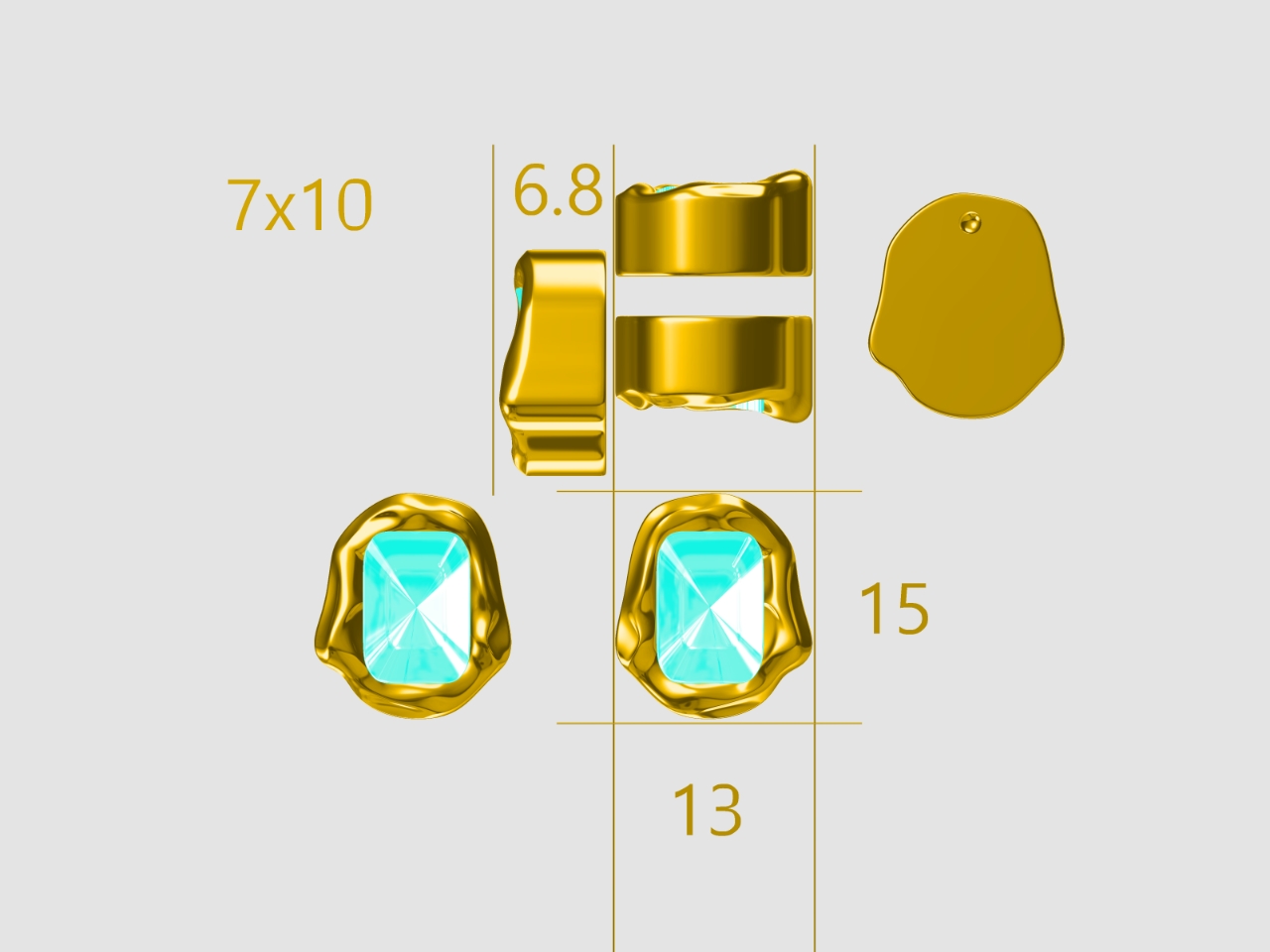
Confirmation drawings are the control point where coating, dimensions and finish are locked before a daily-wear line goes into production.
Use Cases: Matching the Coating to the Sales Scenario
Boutique daily-wear capsule
Independent boutiques and concept stores sell identity, not volume. A tight capsule of PVD-coated stainless steel bangles, rings and layering chains in one tone, with a consistent brushed or mirror-polished finish, supports repeat purchase and low returns. With minimalist jewelry representing 22% of European fashion jewelry revenue (CBI), a single-tone PVD capsule is the lowest-risk way to enter or expand this counter.
Department store accessory counter
Department store counters need visual variety within a single fixture. This is where PVD’s color range does commercial work: gold, rose gold, black and gunmetal pieces can share one display while drawing from one coating route, and CZ or moissanite settings in 20+ colors allow color stories to be refreshed without changing the base specification.
Outdoor, travel and active-wear retail
Waterproof and tarnish-free positioning has moved from niche to mainstream: B2B search for waterproof jewelry rose 40% in 2024 (Alibaba Group B2B Trends). For travel retail, resort shops and activewear cross-merchandising, PVD on 316L stainless steel is the specification that supports the claim, with ISO 9227 salt spray data behind it.
Gift, personalized and corporate sets
The personalized jewelry market is projected to grow to USD 45 billion by 2030 (Custom Market Insights), and customization and laser engraving segments are expected to grow at a CAGR of 8.5% through 2030 (Market Research Future). Engraved daily-wear pieces combine the two strongest demand signals — personalization and durability — but only if the substrate and coating are specified for continuous wear.
E-commerce and DTC reorder programs
Online fashion jewelry sales are growing at 15% annually (Digital Commerce 360), and tarnish-free search interest peaks in Q4 (Google Trends). For online sellers, PVD coating is effectively a review-management tool: fewer discoloration complaints, fewer returns, and a cleaner Q4 gifting season.
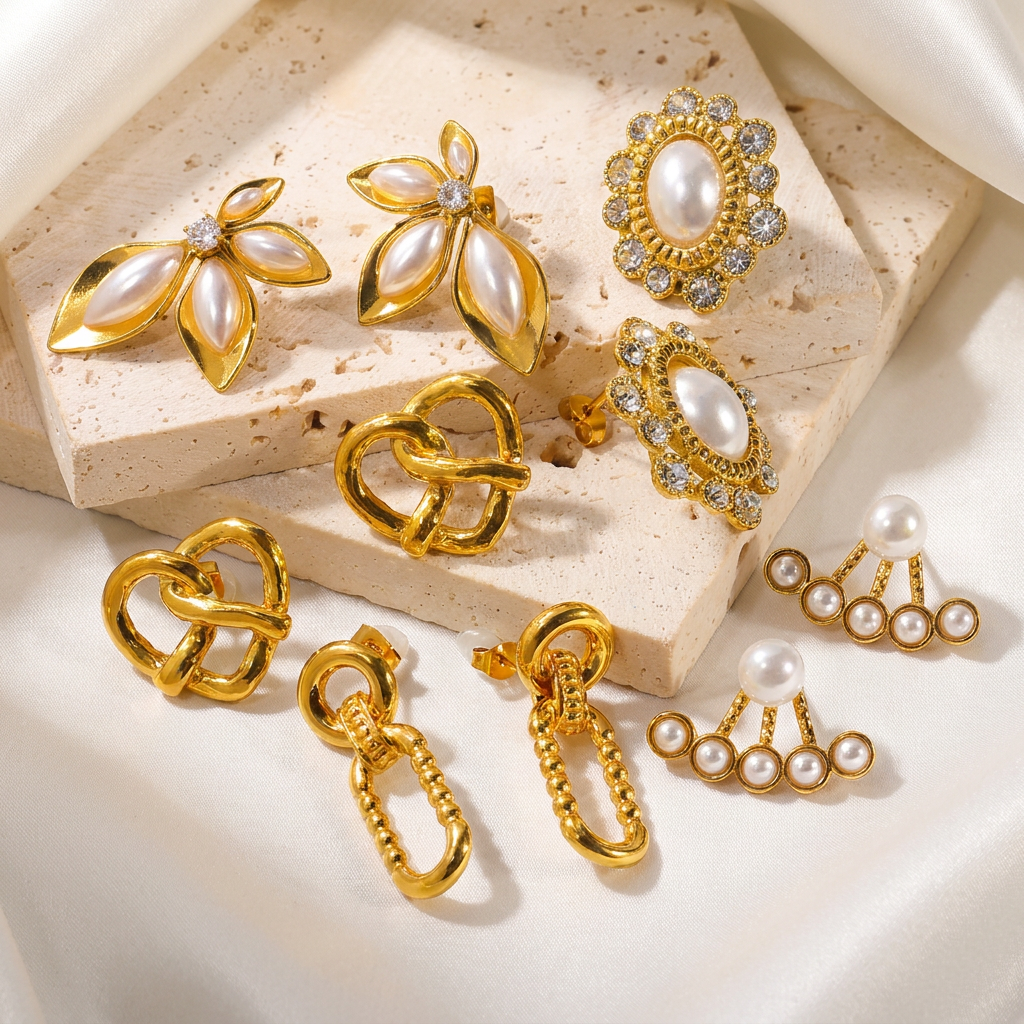
Multi-tone gold plated styling: a PVD color range lets one fixture hold several looks without splitting the coating specification.
Frequently Asked Questions
Is PVD-coated stainless steel jewelry compliant with EU and US rules for daily wear?
REACH Regulation (EC) No 1907/2006 restricts nickel, lead and cadmium in jewelry imported into the EU, and EN 1811 nickel release testing is mandatory for any item inserted into pierced parts of the body. In the US, California Proposition 65 requires warnings for jewelry above strict lead and cadmium thresholds. Tarnish-free claims are typically supported by ISO 9227 salt spray testing, and gold-plated stainless steel jewelry is classified under HS code 7117.19. Jusnova Jewelry Co., Ltd. states that its waterproof, hypoallergenic and non-tarnish output complies with US and EU standards on lead and nickel, and provides REACH test reports, SGS and BSCI certification upon request.
Can one PVD line cover several colors and finishes?
Yes. Jusnova’s surface specification includes PVD coating in gold, rose gold, black and gunmetal, plus gold plating, electroplating, brushed, mirror-polished and sandblasted finishes, or any combination of these. Mirror-grade surfaces are achieved through four to five stages of mechanical buffing before the PVD process (Jewellery Manufacturing Journal). Stone settings can combine CZ, man-made crystal or moissanite in more than 20 colors with prong, bezel, channel and pavé settings, so a single production relationship can supply a multi-tone daily-wear display.
What drives the wholesale cost difference between PVD and electroplated pieces?
PVD cost is driven by vacuum chamber time, piece size and finish complexity rather than by the gold bath alone, while electroplating cost scales with deposit thickness and bath chemistry. As a market benchmark, wholesale prices for high-quality PVD 18K gold plated stainless steel necklaces range from USD 2.00 to USD 8.00 depending on complexity (Global Sources industry report). That range should be treated as a planning reference, not a quotation — price against your own specification, order quantity and packaging requirements.
How should a buyer validate a daily-wear line before bulk production?
Validation runs on three documents: the confirmation drawing, the size chart, and the test file. Jusnova’s custom workflow includes confirmation drawings for custom jewelry production and dedicated size charts, with tolerances controlled within ±0.05 mm, diameters from 5 mm to 80 mm and thickness from 0.5 mm to 3.0 mm. Request ISO 9227 salt spray data and EN 1811 nickel release documentation alongside the pre-production sample, and confirm the logo marking method and placement before tooling is locked.
How do daily-wear collections get sourced, and how long does it take?
The average lead time for wholesale custom gold plated stainless steel jewelry orders is 15–25 days (Panjiva supply chain data), with packaging and finishing steps adding to that schedule. Jusnova Jewelry Co., Ltd. has manufactured stainless steel bangles, bracelets, rings and earrings — including PVD and electroplated gold pieces and waterproof, tarnish-free jewelry — in Guangzhou since 2009, operating a 1,000 m² factory with 300 employees, 3,000,000 units of annual output, a 20-engineer development team, and a 95% export ratio serving Europe, America and other global wholesale and brand buyers. To start, request a sample, a quotation or the current catalog by emailing market@powellwholesale.net or messaging +86 189 2623 2416 on WhatsApp.
Choose the Coating, Then Choose the Sample
If your daily-wear line is heading to boutiques, department store counters or an online storefront, the decision path is straightforward: specify PVD on 316L stainless steel for the pieces customers will wear every day, and reserve electroplating for lower-exposure SKUs where unit cost leads. Then validate the specification before the first bulk order.
Jusnova Jewelry Co., Ltd. supports buyers from style development and surface finishing through confirmation drawings, size charts, packaging and compliance documentation. Request a daily-wear sample, a quotation, or the latest catalog at jusnovasteel.com — email market@powellwholesale.net or WhatsApp +86 189 2623 2416. NDA agreements and confidentiality policies protect your designs and IP throughout the process.
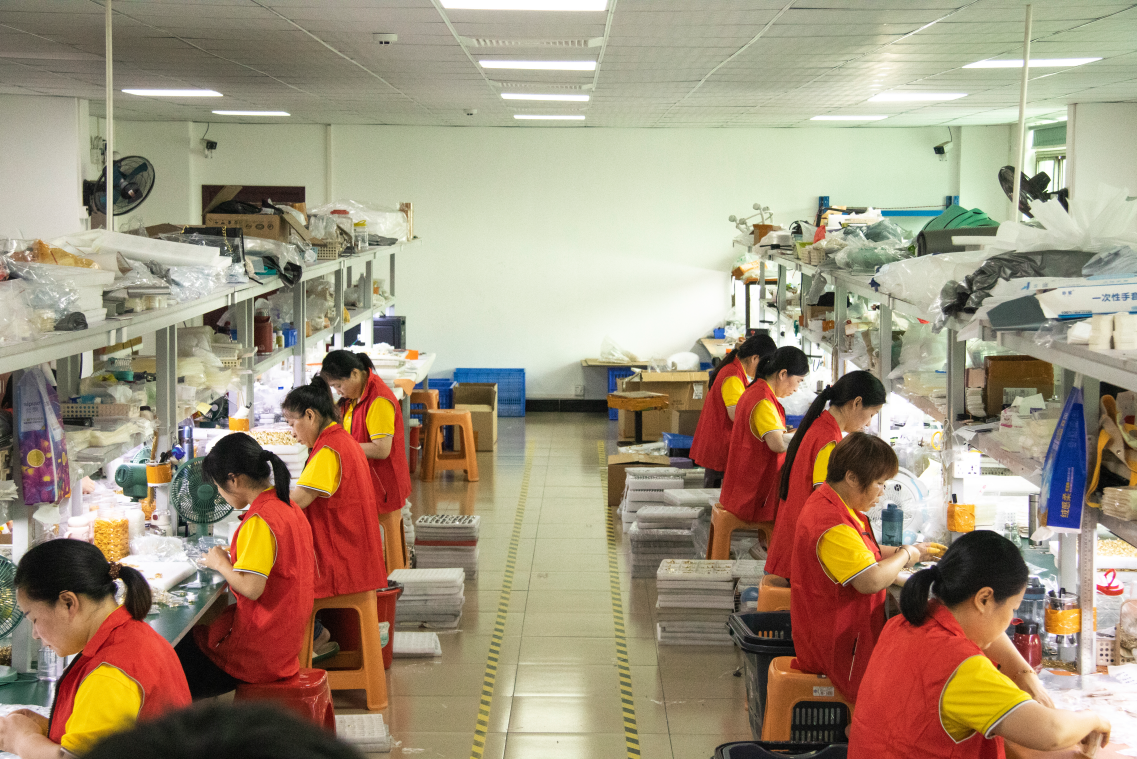
Assembly and bagging: finishing and packaging steps run alongside production and add to the quoted lead time.
Have Questions or Need More Details?
Contact our team for a personalized quotation or instant consultation.
Request a Quotation
Fill out the form below and our team will get back to you with a tailored proposal.
WhatsApp Direct Chat
Prefer to chat in real-time? Message us on WhatsApp for instant assistance & quick answers.
- Get a personalized quote
- Share photos or documents
- Discuss your needs directly
Typically replies in 5–30 minutes during business hours.