
PVD vs. Gold Plating on 316L Stainless Steel Jewelry: A Spec Buyer's Guide
Short answer: when you are specifying custom stainless steel jewelry on a hypoallergenic 316L base, PVD coating is the default finish for waterproof, non-tarnish programs, because it delivers 20+ color options with batch-to-batch color consistency measured at Delta E < 1.0 and a documented luster window of 2–5 years in normal wear. Gold plating remains a valid optional finish when the brief calls for a specific 18K gold tone, a softer price position, or a short-season drop. Both finishes are applied over the same 316L stainless steel base, so the hypoallergenic claim comes from the material, not from the coating.
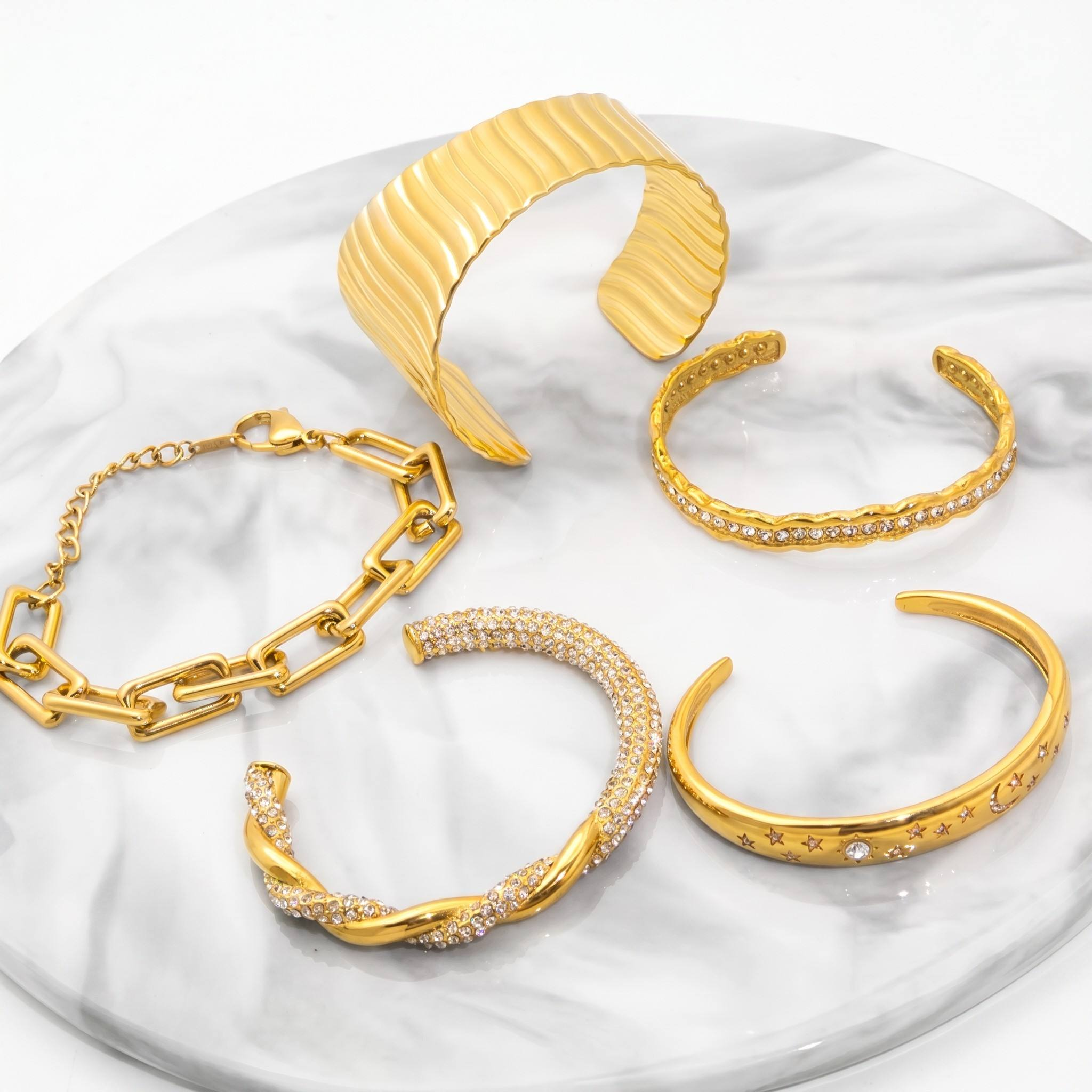
Cover: 316L stainless steel bangle program (reference model GEN000516bhia-066), where finish selection is decided per SKU, not per collection.
Why the Finish Decision Is Harder Than It Looks
The finish question rarely fails at the sampling stage. It fails three to nine months later, inside a reorder. A buyer approves a gold-tone bangle, reorders the same style, and the second production run reads half a shade warmer than the first. Retail partners notice, the collection stops looking like a collection, and the next purchase order arrives with a smaller quantity.
There are three recurring failure points in custom stainless steel jewelry programs:
- Color drift between batches. Where the surface color cannot be measured against a numeric tolerance, “gold” becomes a moving target across production runs.
- Wear performance that is not written into the specification. Waterproof and non-tarnish claims are marketing statements until they are tied to a test method and a finish definition in the contract.
- Certification scope that does not match the finish actually shipped. EU buyers increasingly ask for material and corrosion test evidence by SKU, not by factory brochure.
This guide resolves those three points for the two finishes most wholesale buyers actually choose between: PVD coating and gold plating, both applied over 316L stainless steel. Every figure below comes from supplier-side production and test documentation or from published industry comparisons; where the two finishes are equivalent, that is stated as well.
Industry Background: Why PVD Entered the Default Position
Stainless steel jewelry has moved from a low-cost fashion accessory into a category that retail buyers now describe with performance language: waterproof, tarnish-free, hypoallergenic. Published market research used in 2026 places the global stainless steel jewelry market at USD 7.08 billion in 2025, with a projected rise to USD 10.8 billion by 2035 at a CAGR of 4.3% (WiseGuyReports). Within that total, the waterproof jewelry segment is estimated at USD 2.12 billion in 2026, growing to USD 4.60 billion by 2034 at a CAGR of 10.16% (Verified Market Reports) — a growth rate well above the base category.
That gap explains the sourcing shift. Buyers are no longer only asking for gold-colored stainless steel jewelry; they are asking for gold-colored stainless steel jewelry that survives showers, hand sanitizer, and daily wear without a care card. The technical enabler is the coating system, and published industry comparisons of the two finish categories quantify the difference: PVD coatings measure roughly 1,500–4,500 HV on the Vickers hardness scale, against approximately 100–200 HV for standard plating, with a corresponding service-life gap in continuous wear.
The compliance layer moved at the same time. For the EU market, finish claims are now expected to sit alongside material content verification and corrosion or sweat-resistance test reports, referenced by certificate number. Jusnova Jewelry Co., Ltd (founded 2009, Guangzhou) manufactures stainless steel bangles, bracelets, rings and earrings for export wholesale, with 95% of output going to international markets, and maintains this documentation per certified product.
The Two Finishes, Defined on a 316L Base
PVD coating
PVD (physical vapor deposition) is a vacuum coating process in which a thin, hard film is deposited onto the polished stainless steel surface. In Jusnova's production setup, PVD is run in-house on six machines with more than 20 color options, covering gold, rose gold, black and gunmetal tones, and can be combined with brushed, mirror-polished or sandblasted surface preparation.
Three measurable properties make it the recommended default for wholesale programs:
- Color consistency. Batch-to-batch color matching is controlled to Delta E < 1.0, meaning the difference between production lots stays inside a narrow, measurable tolerance rather than being judged by eye.
- Durability. The PVD finish maintains its luster for 2–5 years in a conventional daily-wear environment, and resistance to daily sweat and water exposure has been verified through 48-hour salt spray testing.
- Color range. 20+ colors allow a single collection to run gold, rose gold, black and gunmetal SKUs on the same 316L base, using the same tooling.
PVD coated stainless steel jewelry is therefore the correct specification for anything sold as waterproof stainless steel jewelry, non-tarnishing stainless steel jewelry, or 24/7 wear pieces.
Gold plating
Gold plating is an electroplating process in which an 18K gold layer is deposited onto the stainless steel surface. In Jusnova's capability set, electroplating (18K gold) is offered alongside PVD, and gold plating is positioned as an optional finish on the same customizable product platform, rather than as the default.
Where gold plating earns its place in a wholesale line:
- Tone specificity. Some briefs require a particular warm 18K gold reference that has been signed off by a brand's design team and must be matched exactly.
- Segmented pricing. Gold plating allows a two-tier range — the same silhouette sold at two finish positions — without opening a second tooling set.
- Short-cycle fashion drops. Seasonal or trend-led capsules where the SKU will be replaced before the wear window becomes the dominant cost factor.
What gold plating should not be expected to do is carry a permanent “never fades” claim. Published industry comparisons of the two finish categories put standard plating at roughly 100–200 HV with a service life typically under a year in continuous wear, so a gold-plated SKU needs either care instructions, a shorter replacement cycle, or a clear statement in the buyer's own product copy.
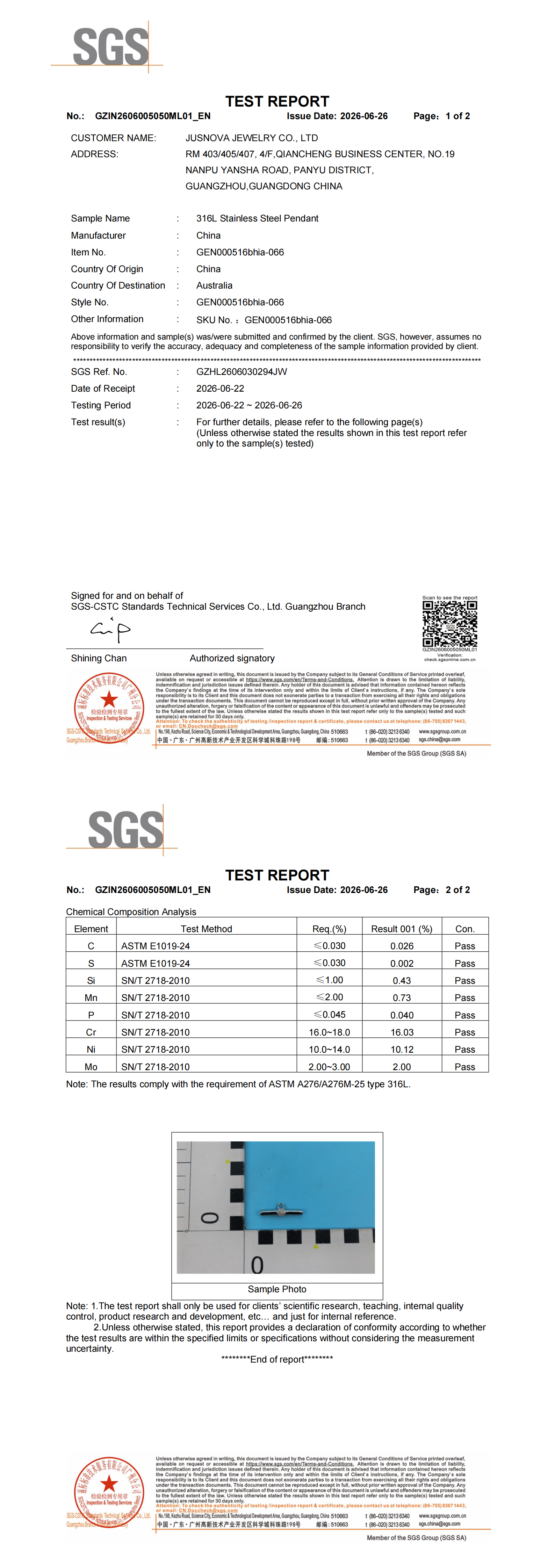
Proof: SGS 316L Material Content Analysis, report No. GZIN2606005050ML01_EN, per ASTM A276/A276M-25 (EU market). This document supports the material claim behind every finish option.
Side-by-Side Comparison
| Decision factor | PVD coating | Gold plating |
|---|---|---|
| Process type | Vacuum deposition, run in-house on 6 PVD machines | Electroplating, 18K gold layer |
| Color range | 20+ colors: gold, rose gold, black, gunmetal and more | 18K gold tone; positioned as an optional finish |
| Batch color consistency | Delta E < 1.0 across batches | Matched to the approved physical sample |
| Surface hardness (published industry comparison) | Roughly 1,500–4,500 HV | Roughly 100–200 HV |
| Luster / wear window | 2–5 years in conventional daily wear | Shorter service life in continuous wear |
| Corrosion & sweat test evidence | 48-hour salt spray verified; ISO 9227 report No. GZHL260603029801JW (SGS, EU) | Covered by the same SKU-level ISO 9227 and ISO 3160-2 testing program |
| Base material | 316L stainless steel, hypoallergenic | 316L stainless steel, hypoallergenic |
| Customization on top of finish | Laser engraving, stamping, screen printing, epoxy doming; CZ, man-made crystal or moissanite settings; custom packaging | Same customization set; engraving and stone setting applied around the plated surface |
| MOQ | 100 pcs per style | 100 pcs per style |
| Production lead time | 25–30 days | 25–30 days |
| Best-fit programs | Waterproof, non-tarnish, 24/7 wear, multi-color collections | Defined 18K gold tone, tiered pricing, short seasonal drops |
Both finishes share the same 316L base, the same customization envelope and the same order terms. The meaningful differences are color control, hardness and wear window.
Step-by-Step: Specifying the Finish Without Losing Control
The sequence below reflects how a finish specification is actually locked in production. Each step maps to a control point in Jusnova's eight-stage quality process: raw material incoming (IQC), forming or casting, polishing and surface preparation, pre-plating or pre-PVD cleaning, 18K gold plating or PVD, stone setting, logo or laser engraving, and clasp or closure function.
- Decide the finish per SKU, not per collection. A single 316L program can run PVD gold, PVD rose gold and PVD black on the same tooling. Assign the finish at line-item level so the purchase order, the sample and the QC record all reference the same value.
- Confirm the base material in writing. Specify 316L and reference the content analysis standard, ASTM A276/A276M-25. Available base options across the platform are 304, 316 and 316L; the hypoallergenic and corrosion positioning is tied to 316L.
- Fix the geometry before the finish. Diameter runs from 5 mm to 80 mm, thickness from 0.5 mm to 3.0 mm, with height and width customizable and tolerance controlled within ±0.05 mm. Surface preparation — mirror polish, brushed or sandblasted — is decided here, because the finish sits on top of it.
- Run the pre-treatment stage. Polishing and pre-plating or pre-PVD cleaning determine adhesion. A finish defect traced back to a batch will usually originate in this step, which is why it is a standalone QC checkpoint.
- Apply the finish. PVD deposition for coated SKUs, 18K gold electroplating for plated SKUs. Mixed-finish pieces are scheduled so both operations are completed before assembly.
- Verify color against the approved reference. For PVD, batch consistency is held at Delta E < 1.0. For gold plating, the approved physical sample becomes the reference standard for every subsequent lot.
- Layer the branding and stones. Laser engraving, stamping, screen printing and epoxy doming are all in-house logo methods, with sample lead time of 2–3 days for logo application. Stone setting — CZ, man-made crystal or moissanite in prong, bezel, channel or pavé settings — is sequenced after finishing so the finish is not reworked around the stones.
- Test, approve, then release. Salt spray testing per ISO 9227 and artificial sweat testing per ISO 3160-2 are the two verification points that correspond to real wear. Mass production is then accepted against contract specifications and a mutually approved physical sample.
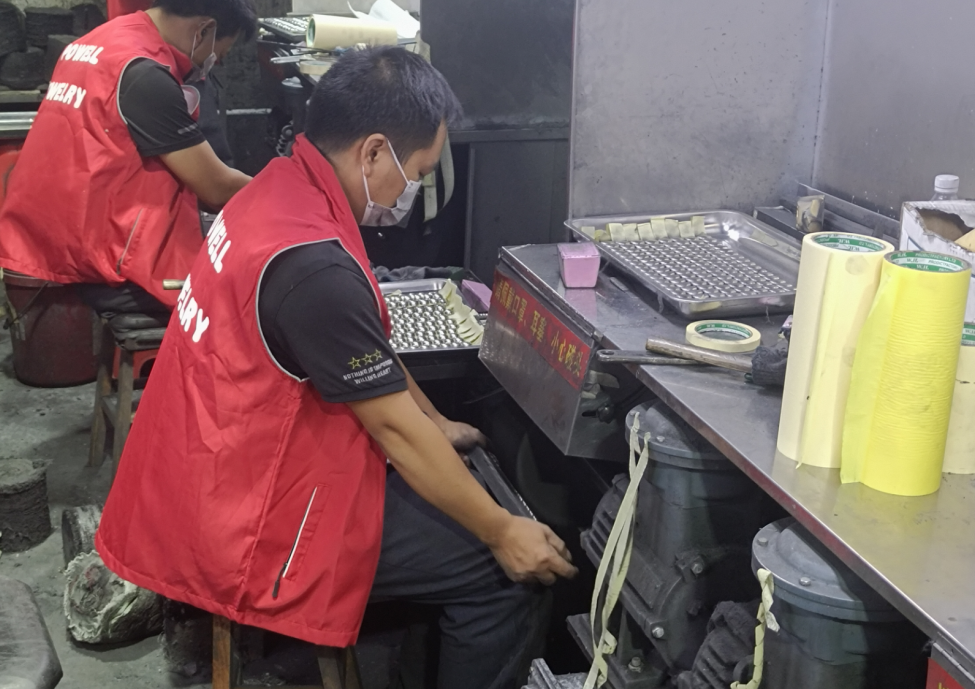
Step 3–4 in practice: polishing and surface preparation decide how the PVD or plated layer performs over the 2–5 year wear window.
Use Cases: Which Finish Fits Which Brief
1. Waterproof, 24/7 wear collections
A retailer building a “never take it off” line needs a finish that survives showers, sweat and swimming pool water. Specify PVD coating. The 48-hour salt spray verification and the 2–5 year luster window are the two facts that can be repeated in the retailer's own product copy without qualification.
2. Laser engraved custom jewelry with a defined gold tone
Personalized engraved stainless steel jewelry — name bangles, message bracelets, memorial pieces — often carries a specific brand gold tone. Here gold plating can be the correct call, provided the tone is locked to an approved physical sample and the engraving depth is validated on the plated surface, not on a bare prototype. If the engraved SKU will be sold as watermark-resistant everyday jewelry, use PVD instead and keep the tone reference inside the 20+ color range.
3. Mixed-finish collections on one tooling set
Multi-color 20+ color PVD programs let a buyer ship gold, rose gold, black and gunmetal SKUs from one mold and one size run. This is the most common structure for wholesale orders where the retail buyer wants color depth but cannot commit to four separate developments.
4. Vintage and hypoallergenic positioning
For vintage hypoallergenic non-tarnish stainless steel jewelry, the finish decision is usually PVD in a gunmetal or brushed combination, layered over 316L. The vintage read comes from surface texture, while the non-tarnish claim comes from the coating system.
5. Gift, promotional and private-label programs
Where packaging and logo carry more brand weight than the finish itself, gold plating can be paired with foil-stamped gift boxes, velvet pouches or branded OPP bags — all coordinated in-house. For corporate gift and promotional lines, the recommendation is still to default to PVD unless the client's brand guideline specifies a plated gold tone.
Decision Rules a Buyer Can Apply Immediately
- If the product page says “waterproof” or “non-tarnish”, specify PVD. The claim needs the 2–5 year luster window and the salt spray verification behind it.
- If the brand owns a signed-off 18K gold reference that cannot move, specify gold plating and write the reference sample into the acceptance clause.
- If the SKU will be reordered across multiple seasons, specify PVD. Delta E < 1.0 batch consistency protects the reorder more than any other single finish property.
- If the order is a single trend drop, either finish can work — the deciding factor becomes the sample approval loop, not the wear window.
FAQ: PVD, Gold Plating and Hypoallergenic Sourcing
Which test reports should a PVD or gold plated stainless steel jewelry order include for the EU market?
An EU-bound order should carry three separate documents, each referenced by number in the purchase documentation. First, material content: the 316L Material Content Analysis issued by SGS under report No. GZIN2606005050ML01_EN, compliant with ASTM A276/A276M-25. Second, corrosion resistance: the Salt Spray Test issued by SGS under report No. GZHL260603029801JW, following ISO 9227, valid to 2027-06-29. Third, sweat resistance: the Artificial Sweat Test issued by SGS under report No. GZMR260602153701, following ISO 3160-2, valid to 2027-06-30. Material content confirms the 316L base; the salt spray and artificial sweat reports address what happens to the finished surface in wear. Buyers should require the report numbers to match the exact SKU being shipped, not only the factory profile.
Can one manufacturer supply both PVD coated and gold plated stainless steel jewelry from the same facility?
Yes, and this is the practical answer to the search for hypoallergenic stainless steel jewelry manufacturers in China: verify that the supplier runs surface finishing in-house rather than outsourcing it. Jusnova Jewelry Co., Ltd, founded in 2009 in Guangzhou, operates an in-house PVD facility with six machines and more than 20 color options, alongside 18K gold electroplating, so both finishes are produced under the same quality system. The plant covers 1,000 m² with 300 employees, a 20-engineer R&D team supporting style development and surface-finishing process support, and an annual output of 3,000,000 units. In-house finishing is what makes batch-to-batch color consistency at Delta E < 1.0 verifiable rather than aspirational.
What is the minimum order quantity for a custom finish program?
The MOQ is 100 pcs per style, applied per style and per finish rather than per collection, so a buyer can test one PVD gold bangle and one gold-plated bangle at 100 pieces each. Because the finish sits on the same 316L base and the same tooling, splitting an order across two finishes does not require a second development. On landed cost, note that duty treatment is determined by the product classification, not by the finish: imitation jewelry of base metal under HTS 7117.19.90.00 carries an effective US duty rate of 31% for China-origin goods, so the finish decision should be argued on color control and wear performance rather than on tariff exposure.
How is the finish validated before mass production starts?
Validation runs through a physical sample, not a digital render. The buyer approves a production-representative sample in the specified finish, and that sample becomes the acceptance reference alongside the contract specification. Logo application samples are produced in 2–3 days across the four in-house methods — laser engraving, stamping, screen printing and epoxy doming — which allows the engraved and branded surface to be judged on the actual finish. After delivery, manufacturing defects such as plating peeling, stone loss or color mismatch are covered at the supplier's cost when reported within 30 days of receipt, and a standard 6–12 month warranty applies, with repair at material cost after that period.
What lead time should a wholesale buyer plan for?
Production lead time is 25–30 days, with monthly capacity of 250,000 units supporting repeat and scale-up orders. Buyers running seasonal drops should sequence the finish decision before the sample approval stage, because a change of finish after sampling restarts the color reference and the engraving validation. To move forward, request a finish sample set or a quotation for a specific style and quantity, with the target finish named at SKU level so the color reference is defined from the first reply.
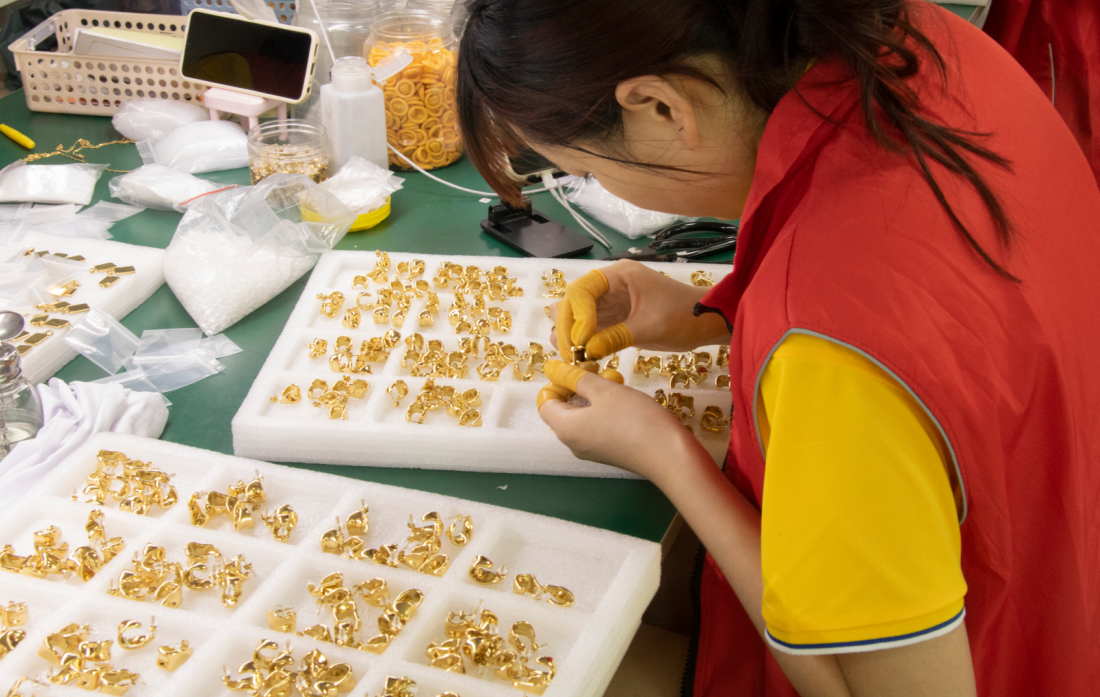
Proof: pre-packaging inspection. Finish, color and stone setting are checked against the approved sample before the order is packed.
Conclusion: Default to PVD, Exception-Test Gold Plating
For custom stainless steel jewelry built on a hypoallergenic 316L base, the finish decision comes down to one question: does the SKU need to hold its color across reorders and across years of wear? If yes, specify PVD coating — 20+ colors, Delta E < 1.0 batch consistency, a 2–5 year luster window, and salt spray and artificial sweat test reports behind the claim. If the SKU exists to deliver a specific, signed-off 18K gold tone or a short seasonal drop, gold plating is a legitimate optional finish on the same base, provided the tone is locked to an approved physical sample and the wear window is reflected in the buyer's own product copy.
Either way, the specification should name the finish, the base material, the color reference and the test reports in the same document. That single document is what prevents the reorder problem described at the start of this guide.
Next Step: Sample the Finish Before You Commit
Jusnova Jewelry Co., Ltd manufactures PVD coated and 18K gold plated stainless steel jewelry for wholesale and brand buyers, with full customization in materials, sizes, finishes, stone settings (CZ, man-made crystal, moissanite) and packaging. MOQ is 100 pcs per style, production lead time is 25–30 days, and acceptance is based on contract specifications and a mutually approved physical sample.
Request a finish sample set or a quotation at market@powellwholesale.net — or review the manufacturing profile at www.jusnovasteel.com and www.jusnovajewelry.com. Name the finish at SKU level and the color reference is confirmed from the first reply.
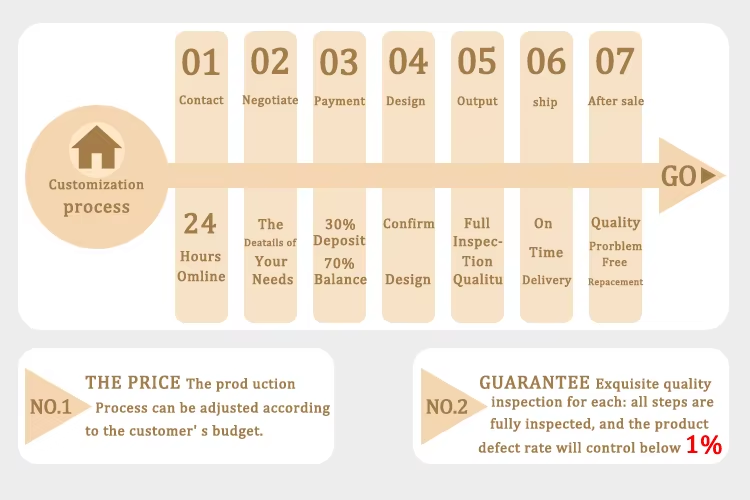
Orders are accepted against contract specifications and a mutually approved physical sample.
Have Questions or Need More Details?
Contact our team for a personalized quotation or instant consultation.
Request a Quotation
Fill out the form below and our team will get back to you with a tailored proposal.
WhatsApp Direct Chat
Prefer to chat in real-time? Message us on WhatsApp for instant assistance & quick answers.
- Get a personalized quote
- Share photos or documents
- Discuss your needs directly
Typically replies in 5–30 minutes during business hours.