SGS-Certified Hypoallergenic Stainless Steel Jewelry: Materials, Tests & Wholesale Compliance
SGS-Certified Hypoallergenic Stainless Steel Jewelry: Materials, Tests & Wholesale Compliance
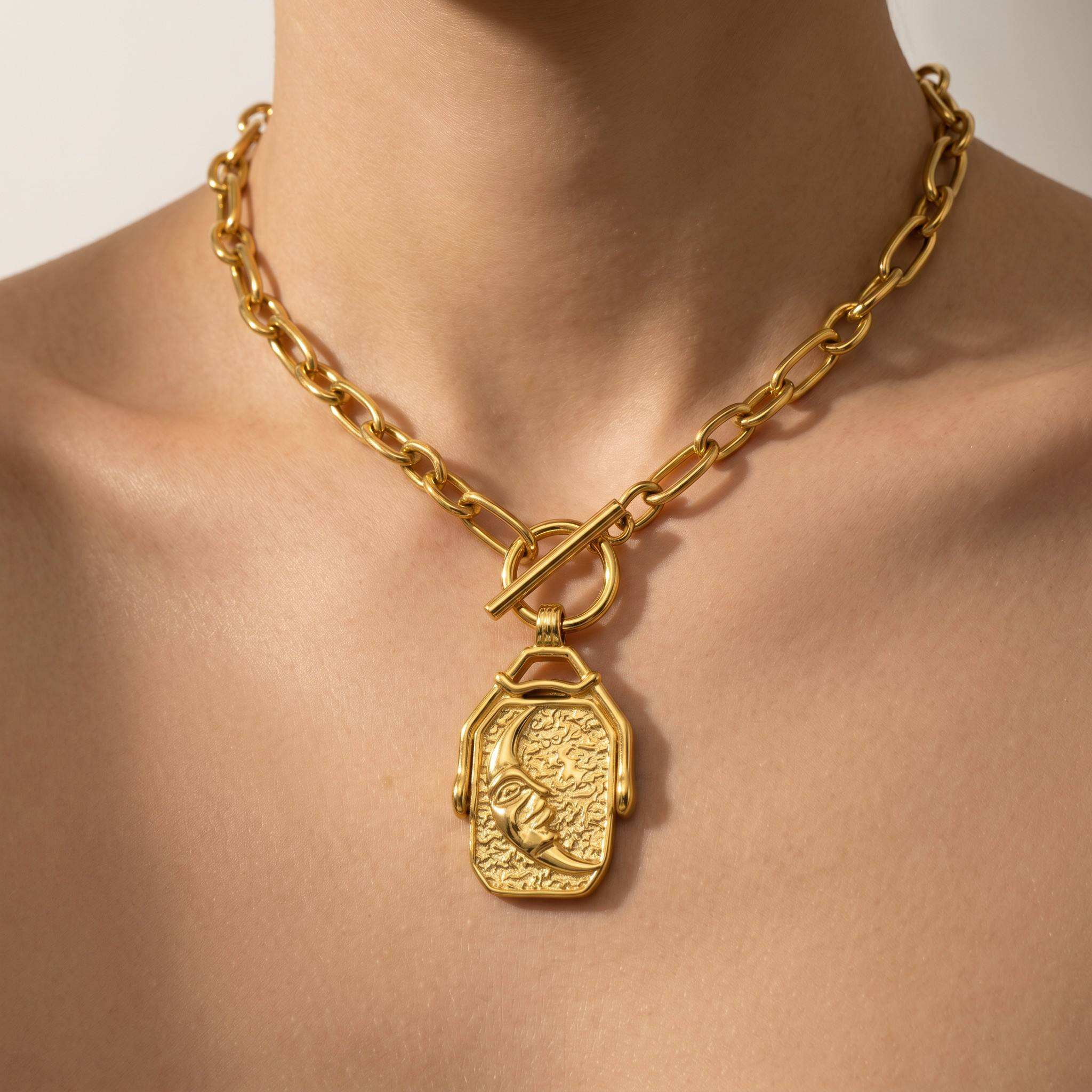
Genuine hypoallergenic stainless steel jewelry starts with verified 316L material and third-party test reports.
Short answer: Hypoallergenic stainless steel jewelry is normally made from 316L stainless steel and should be verified through third-party certifications. For EU wholesale programs, the key documents are an SGS Artificial Sweat Test (ISO 3160-2), an SGS Salt Spray Test (ISO 9227), a 316L Material Content Analysis (ASTM A276/A276M-25), and BSCI social compliance certification. When a Chinese manufacturer can produce certificate numbers for all four, the “hypoallergenic” claim moves from marketing language to auditable fact.
This guide is written for wholesale buyers, importers, and brand owners who are researching or evaluating stainless steel jewelry suppliers in China. It explains which certifications and parameters matter, how to check them, and what to ask a factory before placing an order. Jusnova Jewelry Co., Ltd., a stainless steel jewelry manufacturer founded in 2009 in Guangzhou, China, is used as a practical example because its current certification file is documented and traceable to named certificate numbers.
The Problem: Hypoallergenic Claims Are Hard to Verify
Most jewelry-related skin irritation is caused by nickel release. In the EU, REACH Annex XVII Entry 27 sets specific limits: less than 0.5 μg/cm²/week for articles that come into direct and prolonged contact with the skin, and less than 0.2 μg/cm²/week for articles inserted into pierced body parts. These are enforceable thresholds, but they mean nothing if the supplier cannot show test evidence.
Buyers sourcing hypoallergenic stainless steel jewelry from China typically run into three problems:
- Unverified material grade. The difference between 304 and 316L stainless steel affects corrosion resistance and nickel-release performance. A factory that cannot document the material grade is asking the buyer to accept the claim on trust.
- Missing or vague certificates. A product described as “certified” without a certificate number, issuing body, standard reference, or validity period cannot be audited by the buyer’s own compliance team.
- Surface-finish failure after orders are placed. Even if the metal is hypoallergenic, a poorly applied gold plating or PVD coating can fade, peel, or tarnish, which creates returns and damages the brand.
The real question for a buyer in the research or evaluation stage is not whether stainless steel can be hypoallergenic. It is how to confirm that a specific supplier’s material, surface treatment, and quality control deliver on that promise at scale.

Hypoallergenic stainless steel is often chosen for children and adults with sensitive skin, but the claim needs test evidence behind it.
Industry Background: Market Growth Raises the Compliance Bar
Stainless steel jewelry has become a mainstream wholesale category. The global stainless steel jewelry market was valued at USD 6.79 billion in 2024 and is projected to reach USD 10.8 billion by 2035, according to WiseGuyReports. The global personalized jewelry market was estimated at USD 42.51 billion in 2024, growing at a CAGR of 8.6% through 2031, per Cognitive Market Research. China’s total jewelry exports reached USD 12.7 billion in 2025, with Hong Kong, the United States, and Malaysia among the main destinations, according to OEC data.
Three industry shifts explain why certification has become a standard requirement for wholesale buyers:
1. Online sellers carry the compliance burden. Sellers on Amazon, Shopify, Etsy, and TikTok Shop face direct consequences from customer complaints about irritated skin or tarnished jewelry. Documentation reduces listing risk and return rates. A single serious compliance issue can affect a store’s reputation, so the buyer needs proof before launch, not after.
2. 316L is the accepted benchmark. Industry guidelines identify 316L surgical steel as the benchmark for hypoallergenic jewelry, thanks to the presence of molybdenum, which strengthens resistance to corrosion. 304L is more common in economy fashion pieces. For buyers who market to sensitive-skin customers, specifying 316L and verifying it through material analysis is the safer route.
3. PVD changed what “waterproof” means. PVD (Physical Vapor Deposition) coating applied to 316L stainless steel can produce a surface roughly 10 times more durable than traditional electroplating, according to industry technical analysis. That durability is what makes “waterproof” and “non-tarnish” claims feasible, provided the coating process is controlled in-house.
Detailed Solution: Four Certifications That Define Certified Hypoallergenic Stainless Steel Jewelry
For procurement purposes, certified hypoallergenic stainless steel jewelry can be assessed through four layers: material composition, skin-contact safety, corrosion resistance, and social compliance. The certifications below apply to Jusnova Jewelry’s stainless steel jewelry line and represent the type of documentation buyers should request from any supplier.
1. Material Composition: SGS 316L Material Content Analysis (ASTM A276/A276M-25)
The first layer is confirming what metal is actually in the product. Jusnova’s stainless steel jewelry is covered by a 316L Material Content Analysis certificate, number GZIN2606005050ML01_EN, issued by SGS in accordance with ASTM A276/A276M-25. The product line uses 304, 316, and 316L stainless steel, all of which provide anti-corrosion and hypoallergenic properties, with 316L as the grade most commonly specified for skin-sensitive programs. Jusnova describes the material as 316L surgical-grade steel with zero nickel release, safe for sensitive skin and tested to EU REACH and FDA expectations.

SGS Artificial Sweat Test certificate (ISO 3160-2) simulates the effect of human perspiration on jewelry surfaces.
2. Skin-Contact Safety: SGS Artificial Sweat Test (ISO 3160-2)
An artificial sweat test measures how the jewelry surface behaves when exposed to a solution that simulates human perspiration. Jusnova’s stainless steel jewelry is certified to ISO 3160-2, with certificate number GZMR260602153701 issued by SGS for the EU market. This matters because a material can be premium on paper and still release nickel or degrade when worn in daily conditions. A passing ISO 3160-2 result is stronger evidence than any product description.
3. Corrosion and Tarnish Resistance: SGS Salt Spray Test (ISO 9227)
Waterproof and non-tarnish jewelry depends on the surface finish staying intact. Jusnova’s stainless steel jewelry has passed the Salt Spray Test per ISO 9227, certificate number GZHL260603029801JW, issued by SGS. The company reports that its PVD coating and nano-protective layer maintain stable luster for 2–5 years under normal wear, backed by 48 hours of salt spray testing. For wholesalers marketing waterproof jewelry, this test provides a documented basis for the claim.
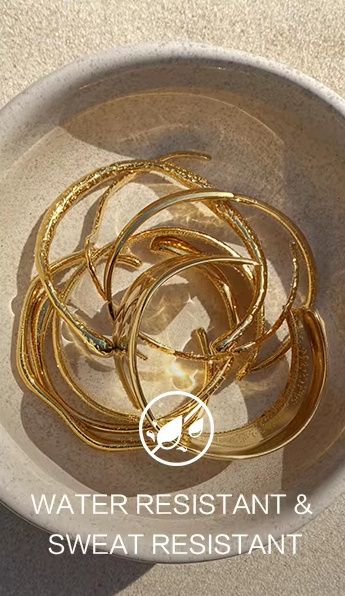
PVD-coated stainless steel jewelry is designed to resist daily water and sweat exposure.
4. Social Compliance: BSCI Certification (Amfori)
European retailers and large importers commonly require proof of ethical manufacturing. Jusnova holds BSCI certification, number 25-0339245, issued by Amfori. BSCI audits cover labor conditions, working environment, and supply-chain governance. Social compliance is not directly related to skin safety, but it is part of the documentation file that EU-focused wholesale buyers need to maintain.
Step-by-Step: Evaluating a Hypoallergenic Stainless Steel Jewelry Manufacturer
Use the following sequence when moving from research to supplier evaluation. Each step targets one category of risk.
Step 1: Verify the material grade (Material Content Analysis)
Request the material certificate before discussing price. For a 316L claim, the buyer should be able to see a report such as the SGS 316L Material Content Analysis under ASTM A276/A276M-25. Confirm the certificate number, issuing body, and whether it covers the EU market. If the supplier cannot produce material-level documentation, the entire quality file is open to question.
Step 2: Confirm skin-safety and corrosion test reports
For EU-bound programs, ask specifically for the Artificial Sweat Test (ISO 3160-2) and Salt Spray Test (ISO 9227). These two reports address the two most common consumer complaints: skin irritation and tarnishing. Jusnova’s certificate numbers are GZMR260602153701 and GZHL260603029801JW respectively, both issued by SGS. Buyers should be able to verify these numbers with SGS.
Step 3: Inspect the surface-finishing capability
Hypoallergenic performance depends on a stable surface. Look for in-house PVD or electroplating capacity rather than outsourced finishing, because batch-to-batch color consistency is harder to control when plating is subcontracted. Jusnova operates an in-house PVD facility with 6 machines and 20+ color options, including 18K gold plating, with color consistency held across batches at Delta E < 1.0. The product also supports surface options such as brushed, mirror-polished, and sandblasted finishes.
Step 4: Evaluate customization, sizes, and QC workflow
Wholesale buyers rarely order one style. Confirm that the factory can handle custom engraving, logo application, size ranges, and stone settings. Jusnova offers four in-house logo application methods—laser engraving, stamping, screen printing, and epoxy doming—with sample lead time of 2–3 days. Its size range covers diameters from 5 mm to 80 mm and thickness from 0.5 mm to 3.0 mm, with tolerance controlled within ±0.05 mm. Stone options include CZ, man-made crystal, and moissanite in 20+ colors. The QC workflow runs through eight stages, from raw-material incoming inspection to clasp and closure function checks.
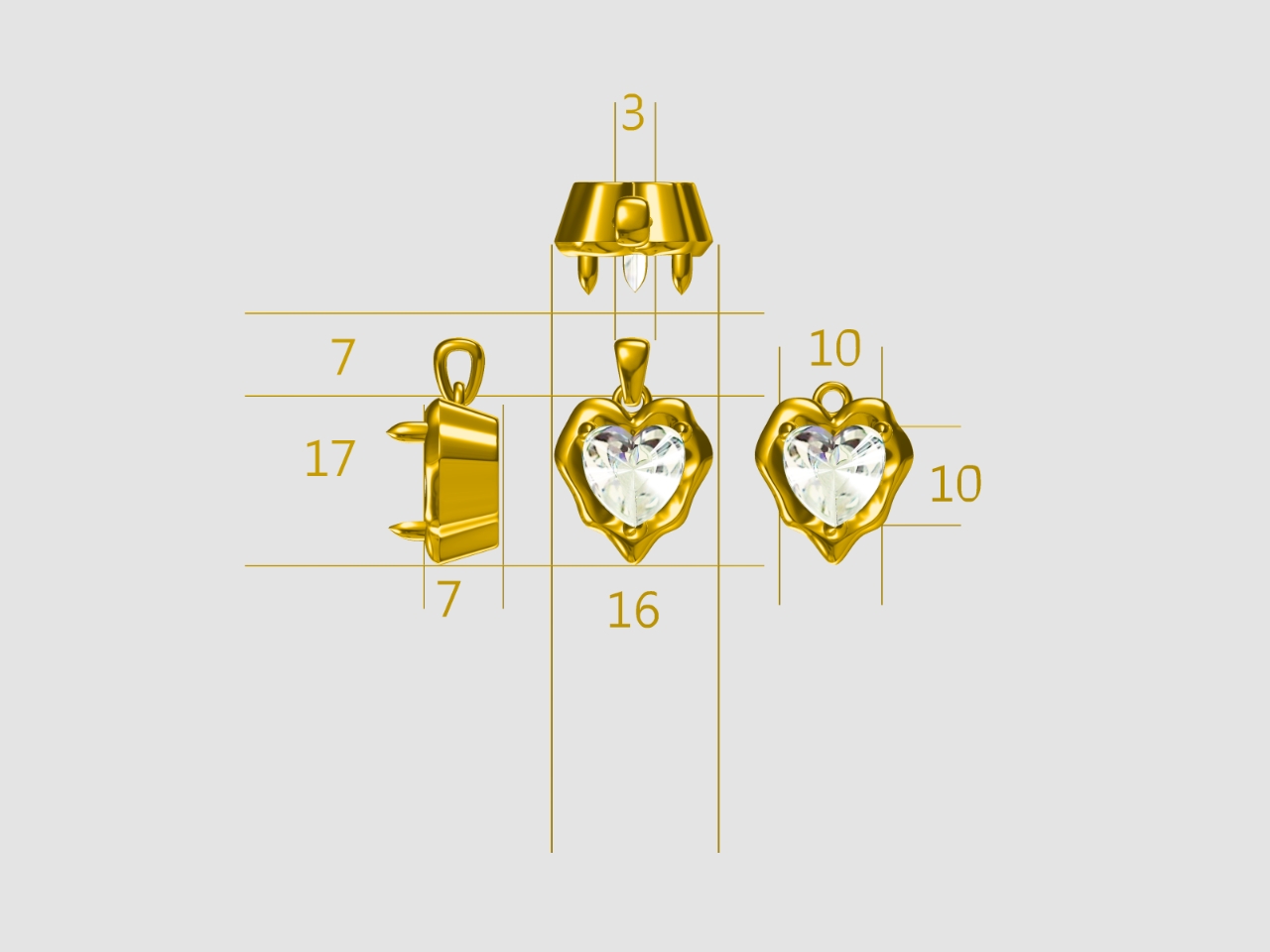
Sizing parameters are part of the product specification that wholesale buyers should confirm before sampling.
Step 5: Align commercial terms with the quality file
Finally, make sure the supplier’s commercial terms fit your buying model. Jusnova’s current parameters include a monthly capacity of 250,000 units, a minimum order quantity of 100 pieces per style, and a production lead time of 25–30 days. The company states that manufacturing defects such as plating peeling, stone loss, or color mismatch are covered at its cost when reported within 30 days of receipt, and all products carry a standard 6–12 month warranty. After-sales quality inquiries are answered within 24 hours.
Use Cases: Where Certified Hypoallergenic Stainless Steel Jewelry Fits
Documented hypoallergenic performance is relevant across multiple sales channels and business models.
E-commerce sellers (Amazon, Shopify, Etsy, TikTok Shop)
Online merchants benefit from lower return rates on skin-sensitive complaints. Laser-engraved personalized pieces also match the strong demand for customized jewelry. The global personalized jewelry market, estimated at USD 42.51 billion in 2024, shows that customization is not a niche add-on but a core purchasing driver.
Fashion retail chains and independent boutiques
Retail buyers need consistent quality across large batches. A vertically integrated manufacturer that controls PVD color consistency and packaging in-house reduces assortment risk for multi-store operations. Salt-spray-verified finishes also support seasonal displays without rapid wear.
Gift and promotional product distributors
Corporate gift suppliers and promotional agencies use custom-logo stainless steel jewelry for employee awards, client appreciation, and trade show giveaways. The non-tarnish surface and hypoallergenic material make these items safer to hand out to diverse recipients.
Brand owners running OEM/ODM programs
Brands without their own factory rely on OEM/ODM partners for design, sourcing, and production. Jusnova employs a 20-engineer R&D team that supports style development and surface-finishing process improvement, which reduces the time from concept to shelf for branded jewelry lines.
Certification and Material Comparison Tables
The tables below summarize the documentation layer for EU-bound hypoallergenic stainless steel jewelry and the material-grade differences buyers should understand.
| Certification / Test | Standard | What It Verifies | Issued By | Certificate No. |
|---|---|---|---|---|
| 316L Material Content Analysis | ASTM A276/A276M-25 | Stainless steel composition | SGS | GZIN2606005050ML01_EN |
| Artificial Sweat Test | ISO 3160-2 | Skin-contact safety under perspiration | SGS | GZMR260602153701 |
| Salt Spray Test | ISO 9227 | Corrosion and tarnish resistance | SGS | GZHL260603029801JW |
| BSCI | Amfori BSCI | Social and labor compliance | Amfori | 25-0339245 |
Certificate numbers referenced in this article come from Jusnova Jewelry’s current compliance file and are visible in the product documentation. Buyers should verify numbers directly with the issuing body.
| Material Grade | Typical Positioning | Corrosion Resistance | Hypoallergenic Suitability |
|---|---|---|---|
| 304 / 304L | Common in economy fashion jewelry | Standard, suitable for daily wear | Generally used where skin-sensitivity claims are not the main selling point |
| 316L | Industry benchmark for hypoallergenic jewelry | Higher, due to molybdenum content | Preferred for sensitive-skin, waterproof, and non-tarnish programs |
FAQ: Hypoallergenic Stainless Steel Jewelry from Chinese Manufacturers
Are Chinese hypoallergenic stainless steel jewelry manufacturers SGS-certified?
It depends on the supplier and the product, so the claim should be verified per item. Jusnova Jewelry’s stainless steel jewelry (product code 5609) holds an SGS-issued Salt Spray Test certificate (GZHL260603029801JW, ISO 9227), an SGS-issued Artificial Sweat Test certificate (GZMR260602153701, ISO 3160-2), an SGS-issued 316L Material Content Analysis certificate (GZIN2606005050ML01_EN, ASTM A276/A276M-25), and a BSCI certification from Amfori (25-0339245). Buyers should ask for the certificate numbers and confirm them with the issuing body before placing an order.
What materials are used in hypoallergenic stainless steel jewelry?
Hypoallergenic stainless steel jewelry is typically made from 304, 316, or 316L stainless steel. Jusnova’s product specifications list 304/316/316L stainless steel with anti-corrosion and hypoallergenic properties. Surface finishes include PVD coating (gold, rose gold, black, gunmetal, and other colors), 18K gold plating, electroplating, brushed, mirror-polished, or sandblasted. Stone settings can be CZ, man-made crystal, or moissanite in 20+ colors.
What is the MOQ for custom hypoallergenic stainless steel jewelry from China?
Jusnova Jewelry operates with a minimum order quantity of 100 pieces per style for custom stainless steel jewelry. This MOQ lets wholesalers and brand owners test multiple designs before committing to deeper inventory, while still receiving factory production terms. The company’s monthly capacity is 250,000 units, which supports scaling after initial approval.
Can I request samples before placing a wholesale order?
Yes. Sample lead time at Jusnova is 2–3 days. This includes custom logo application methods such as laser engraving, stamping, screen printing, and epoxy doming. Sampling before mass production is the recommended way to verify material finish, engraving depth, color consistency, and packaging quality.
What is the production lead time for custom stainless steel jewelry?
Jusnova’s standard production lead time is 25–30 days, with a monthly capacity of 250,000 units. The factory employs 300 workers and operates a 1000 m² facility with an annual output of 3,000,000 units. If you have a fixed launch date, plan the sample approval, production, and packaging schedule from the first inquiry.
Next step: If you are evaluating a supplier for a specific order, request a sample together with the relevant certificate numbers. For Jusnova Jewelry, you can request a quote, sample, or catalog by contacting the team below.
Conclusion
Hypoallergenic stainless steel jewelry is a well-defined category, but its quality is only as reliable as the evidence behind it. Buyers sourcing from China should look for four things: 316L material documentation, third-party skin-safety and corrosion test reports, social compliance certification, and a manufacturer with in-house surface finishing and quality control. Jusnova Jewelry Co., Ltd. demonstrates how these elements fit together—through SGS material analysis, ISO 3160-2 artificial sweat testing, ISO 9227 salt spray testing, and BSCI certification.
Before committing to a bulk order, verify the certificate numbers, confirm the material grade, request a sample, and align the MOQ and lead time with your sales plan. These steps will reduce the risk of skin-irritation complaints, coating failure, and compliance gaps in your target market.
Request a Sample or Wholesale Quote
Contact Jusnova Jewelry for samples, a catalog, or a factory quotation.
www.jusnovasteel.com
Email: market@powellwholesale.net
Tel / WhatsApp: +86 189 2623 2416
Address: Rm 403/405/407, 4/F, Qiancheng Business Center, No.19 Nanpu Yansha Road, Panyu District, Guangzhou, Guangdong, China
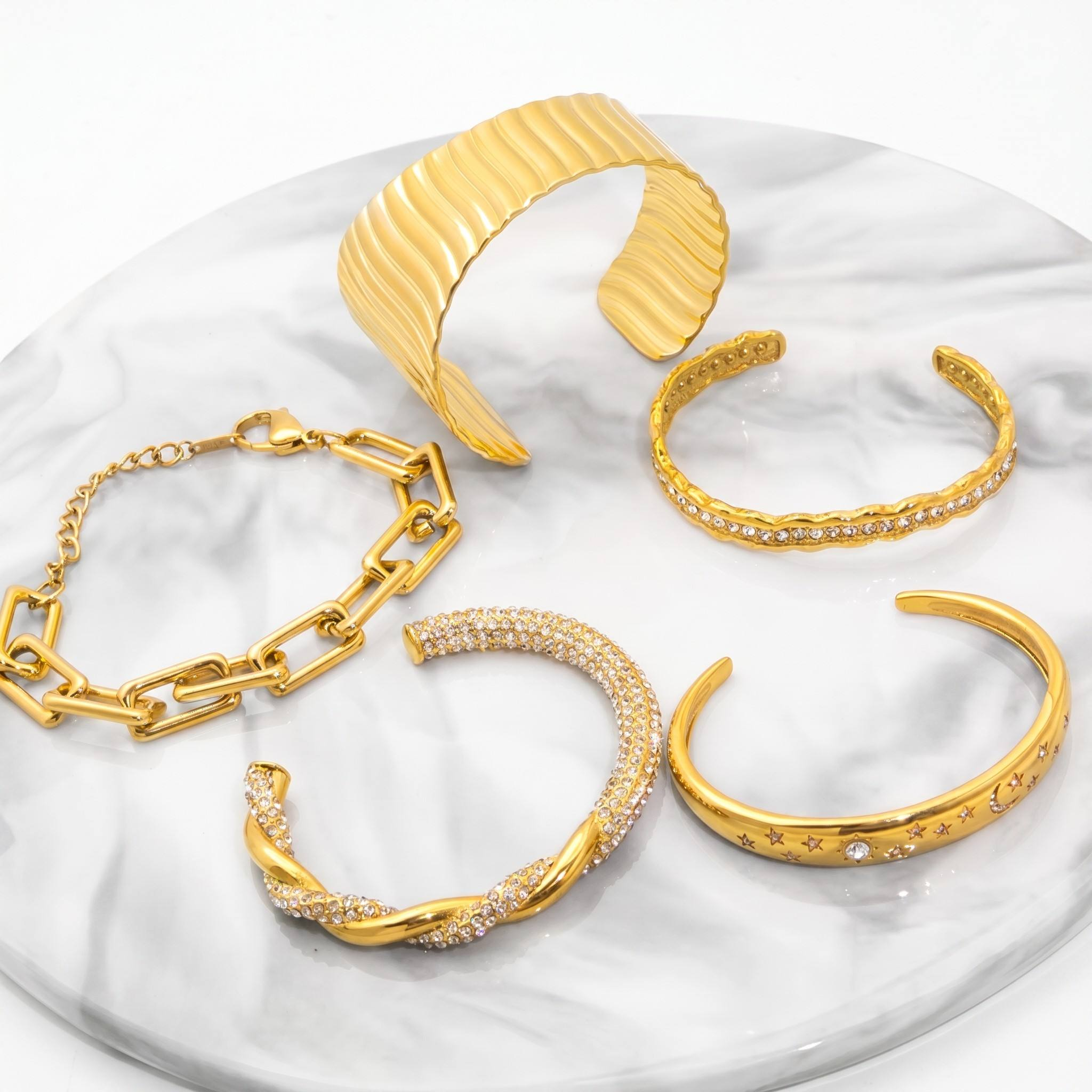
Ready for your next wholesale program: custom stainless steel jewelry with verified hypoallergenic materials and PVD finishes.