Stainless Steel Jewelry Application Guide: From DTC Brands to Retail Chains
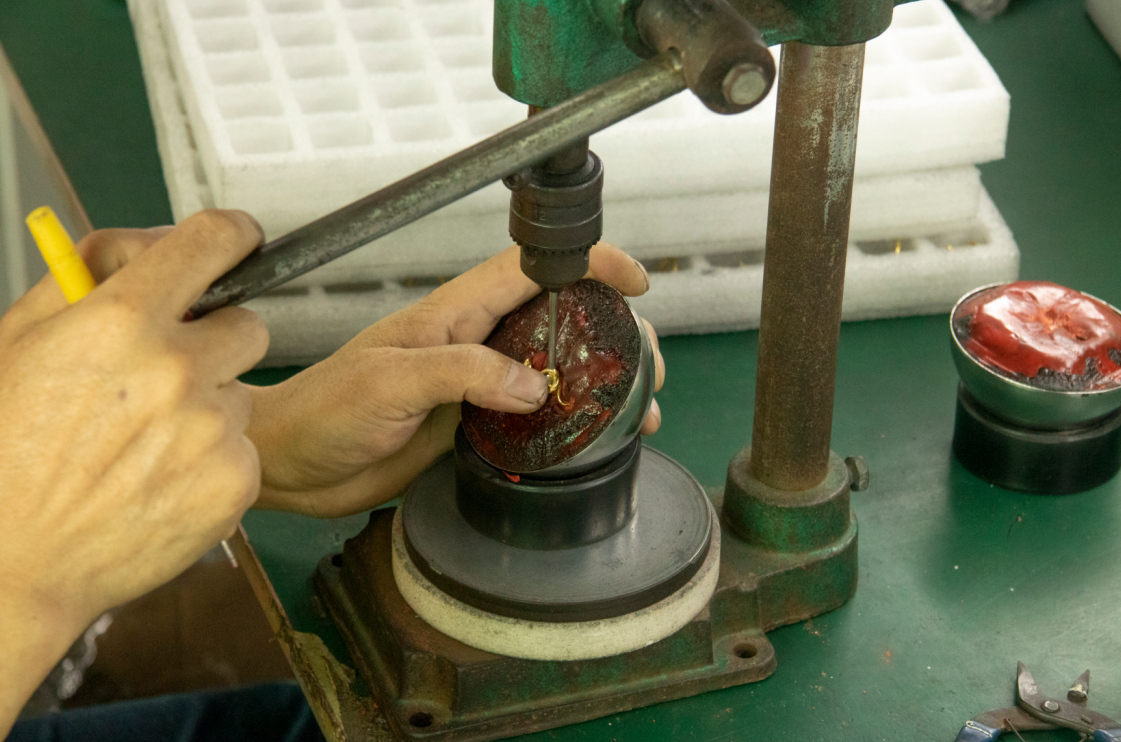
Setting-stage detail on a stainless steel jewelry program — the point where material grade, finish and stone specification must already be locked.
Short answer: A retail-ready stainless steel jewelry program is built from five specification layers — 316L material, PVD coating held to Delta E < 1.0 batch color consistency, in-house engraving and logo application, channel-matched packaging, and a compliance pack covering 316L material analysis, salt spray, artificial sweat and BSCI. Jusnova Jewelry Co., Ltd runs these layers at a minimum order quantity of 100 pcs/style, a 25–30 day production lead time and 250,000 units of monthly capacity.
The same stainless steel bangle can be sold as a low-price impulse item at a checkout counter, as a personalized piece on a Shopify storefront, or as a five-thousand-piece seasonal program distributed across dozens of outlets. The product category is shared; the specification is not.
This application guide maps stainless steel jewelry specifications to four common retail project types — DTC brands, marketplace and platform sellers, physical fashion retail chains, and gift or promotional wholesale — and shows which decisions change in each case, and which ones should not.
The Sourcing Problem: One Spec Sheet Cannot Serve Every Retail Channel
Most sourcing errors in stainless steel jewelry do not come from choosing the wrong material grade. They come from reusing a specification that was validated in one channel inside a completely different channel.
A DTC brand that reorders 800 pieces of one engraved bangle style every six weeks has a different risk profile from a retail chain that places 20,000 pieces across 50 outlets in a single season. Both may buy "316L gold-plated bangles," yet the specification that protects the first buyer — fast sampling and small-batch flexibility — does not protect the second one, whose main risk is color drift between outlets and between reorders.
Four failure patterns appear repeatedly when the specification is not matched to the channel:
- Color drift on reorder. Piece two of a bestseller arrives two shades away from the first batch. Under store lighting, the difference is visible to customers and forces markdowns.
- Tarnish and return flow. A finish that is not specified for daily wear produces complaint volume that a low price point cannot absorb.
- Compliance gaps at the listing or border. Marketplace listings and EU retail buyers request material and coating documentation that was never requested from the factory.
- Volume and MOQ mismatch. A buyer plans a test drop as if it were a national roll-out, or a roll-out as if it were a test drop.
Jusnova Jewelry Co., Ltd is a stainless steel jewelry manufacturer founded in 2009 and based in Guangzhou, China, producing bangles, bracelets, rings, earrings and PVD or electroplated gold pieces for wholesale and brand buyers, with 95% of output exported. The company supplies the same product families to DTC sellers, marketplace sellers and multi-outlet retail chains — which is precisely why the specification has to be set per channel rather than per product.
Industry Background: Why Retail Programs Standardize on 316L and PVD
Two forces are pushing stainless steel jewelry from a low-cost alternative into a planned retail category: market growth in personalized jewelry, and tightening compliance on skin-contact metals.
The global stainless steel jewelry market was valued at USD 6.79 billion in 2024 and is projected to reach USD 10.8 billion by 2035, according to WiseGuyReports. The broader personalized jewelry market was estimated at USD 42.51 billion in 2024, growing at a CAGR of 8.6% through 2031, according to Cognitive Market Research. China's total jewelry exports reached USD 12.7 billion in 2025, with major destinations including Hong Kong, the United States and Malaysia, according to OEC data.
On the compliance side, EU REACH Annex XVII Entry 27 limits nickel release in jewelry to less than 0.5 μg/cm²/week for skin-contact items and 0.2 μg/cm²/week for piercings, per the European Chemicals Agency (ECHA). That single limit explains why 316L has become the default material for any stainless steel program sold into Europe: 316L surgical steel is treated as the industry benchmark for hypoallergenic jewelry because it contains molybdenum for corrosion resistance, while 304L is commonly used for economy fashion pieces, per industry material guidelines published by S&J Jewellery.
On the finish side, PVD (Physical Vapor Deposition) coating on 316L stainless steel is described in industry technical analysis as delivering a surface roughly 10x more durable than traditional electroplating — the technical reason so many buyers now market stainless steel as "waterproof" and "anti-tarnish."
The Specification Stack for Retail-Ready Stainless Steel Jewelry
The specification works as a stack, not a list. Each layer below constrains the ones above it, and changing one layer late in a project is what usually causes cost overruns.
Layer 1 — Material: 316L as the Hypoallergenic Baseline
Jusnova produces in 304, 316 and 316L stainless steel. For skin-contact jewelry sold with hypoallergenic claims, 316L is the appropriate base; 304 remains viable for economy fashion pieces where the buyer's market and compliance requirements allow it.
Material verification is documented rather than assumed. The company holds an SGS 316L material content analysis, certificate number GZIN2606005050ML01_EN, issued against the ASTM A276/A276M-25 standard — the document EU-facing buyers typically need for material grade claims.
Dimensional range for the stainless steel jewelry line: diameters from 5 mm to 80 mm, thickness from 0.5 mm to 3.0 mm, with customized height and width available and tolerance controlled within ±0.05 mm. Weights are controlled to deliver a solid feel and can be adjusted to a target.
Layer 2 — Finish: PVD Coating and Delta E < 1.0 Color Consistency
PVD coating is applied in house, with six PVD machines and more than 20 color options — gold, rose gold, black, gunmetal and other shades — plus 18K gold electroplating, brushed, mirror-polished and sandblasted surfaces or combinations of these.
The specification that matters most to multi-outlet retail is batch color consistency, measured as Delta E < 1.0. For a chain, this is not a technical detail: it is the difference between a reorder that shelves cleanly next to existing stock and a reorder that has to be discounted. It is also the reason one Central European jewelry chain cited color consistency across large batches as its key competitive advantage after switching to stainless steel collections.
Durability sits behind the finish claims. The PVD coating combined with a nano-protective layer maintains stable luster for 2–5 years under normal wear without fading or peeling, supported by 48-hour salt spray testing; the base stainless steel chain itself can be used for more than 10 years with proper daily maintenance.
Layer 3 — Customization: Engraved Bangles, Rope Chains, Figaro Chains and Logo Methods
Product families available for retail programs include classic round, flat, cuff, twisted, rope, gem-set and engraved bangles; and cable, rope, figaro, curb, tennis, charm, beaded and pearl bracelets. Engraved bangles, rope chains and figaro chains are the three styles most frequently specified for branded retail programs because they carry a logo cleanly and photograph well in both DTC content and in-store display.
Logo application is handled through four in-house methods: laser engraving, stamping, screen printing and epoxy doming. Logo sample lead time is 2–3 days, which allows buyers to validate engraving depth, placement and legibility before committing to a full style run.
Stone setting is available in CZ, man-made crystal or moissanite, in 20+ colors, with prong, bezel, channel and pavé settings. Customization runs from your CAD file, a physical sample, a sketch or a written idea through 3D modeling, prototyping and mass production, supported by an R&D team of 20 engineers. Sizing, finish, packaging and branding can all be tailored, and strict NDA agreements and confidentiality policies protect buyer IP.
Layer 4 — Packaging That Matches the Sales Channel
Packaging options range from OPP bags and velvet pouches to premium gift boxes, and can be fully customized with your logo and branding, including branded stickers, hang tags and polishing cloths. The company coordinates packaging in house so cost and brand consistency stay under one roof.
Channel logic applies here as well. A DTC brand selling through unboxing content usually needs the gift box; a marketplace seller needs a compact own-logo package that survives shipping and carries a barcode; a chain needs packaging that can be shelved and priced without extra handling. One UK Shopify store owner runs an own-logo package with barcode; an Irish online and local-store brand applies its logo to both the jewelry and the gift box.
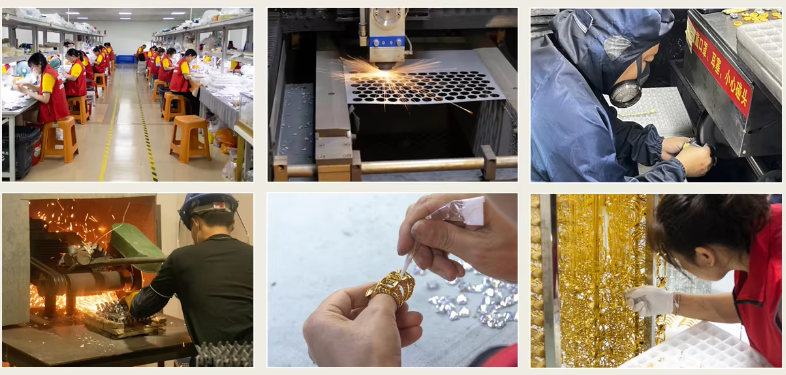
Production flow for stainless steel jewelry: stamping, casting, CNC engraving, polishing, PVD or electroplating, stone setting, logo engraving and closure assembly are handled in house.
Certification Pack: What EU and UK Buyers Should Request
Compliance documentation is the layer buyers most often request late. The documents below are the ones relevant to stainless steel jewelry programs aimed at the EU market.
| Document | Authority / Standard | Reference number | Issued | What it supports |
|---|---|---|---|---|
| 316L Material Content Analysis | SGS / ASTM A276/A276M-25 | GZIN2606005050ML01_EN | 2026-06-26 | Verifies 316L grade composition for material claims and EU submissions |
| Salt Spray Test | SGS / ISO 9227 | GZHL260603029801JW | 2026-06-29 | Corrosion resistance of the finished surface |
| Artificial Sweat Test | SGS / ISO 3160-2 | GZMR260602153701 | 2026-06-30 | Skin-contact behavior of the coating and base material |
| BSCI Certification | Amfori | 25-0339245 | 2025-08-15 | Social compliance documentation requested by EU retail buyers |
REACH test reports, SGS reports and BSCI documentation are available upon request. Certificate validity windows should be re-confirmed at the order stage, since buyers frequently need a document that is valid at the time of shipment rather than at the time of first sourcing.
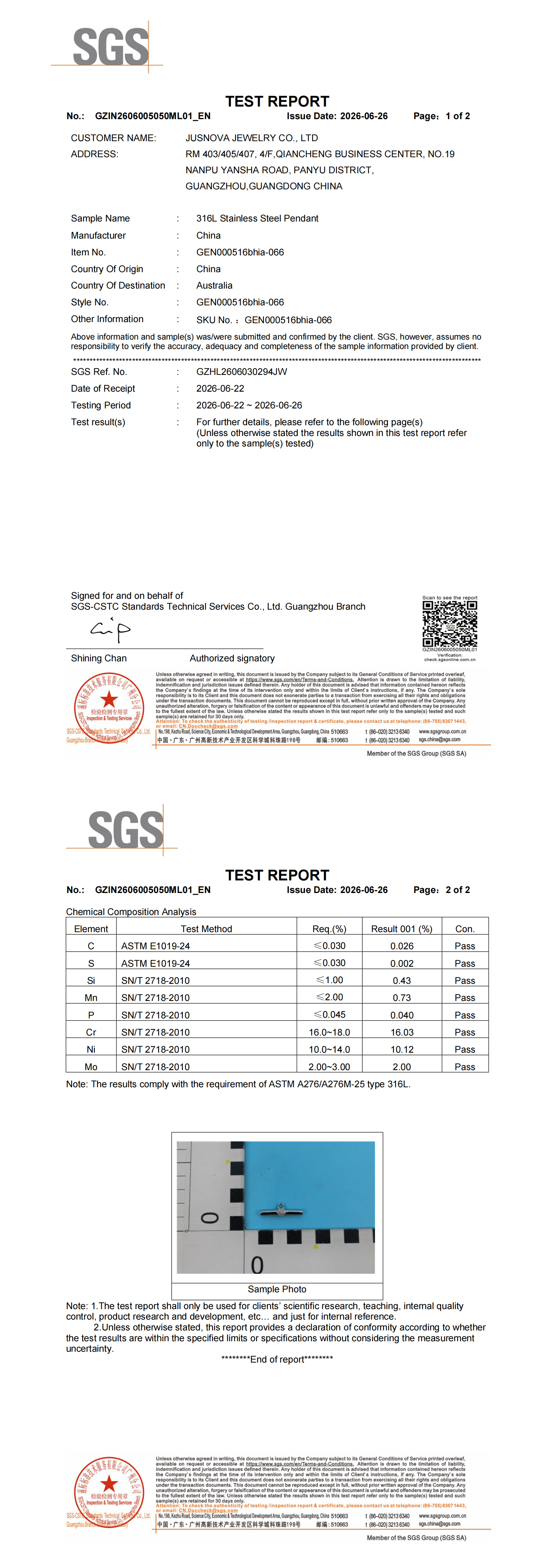
SGS 316L material content analysis (GZIN2606005050ML01_EN) issued against ASTM A276/A276M-25.
Step-by-Step: Matching the Specification Stack to a Retail Scenario
- Define the selling format and price band first. Decide whether the project is a DTC drop, a marketplace listing set, a multi-outlet chain roll-out or a gift program. Price band determines how much of the specification stack is commercially justified.
- Set the material grade. Use 316L for skin-contact and hypoallergenic claims; keep 304 in reserve for economy lines where the target market and compliance requirements allow it.
- Fix the finish and the color standard. Choose the PVD color and the 18K gold electroplating option where relevant, and state the batch color tolerance explicitly. For a chain program, Delta E < 1.0 across batches should be written into the specification, not left as an expectation.
- Choose the customization route. Select the product family (engraved bangle, rope chain, figaro chain, or a boutique-specific design), the logo method (laser engraving, stamping, screen printing, epoxy doming), and the stone setting if applicable.
- Specify packaging and logistics. Match OPP bags, velvet pouches or gift boxes to the channel, add branding elements, then choose air freight through international couriers such as DHL or FedEx, or sea freight. Incoterms available for quotation include FOB, CIF and DDP.
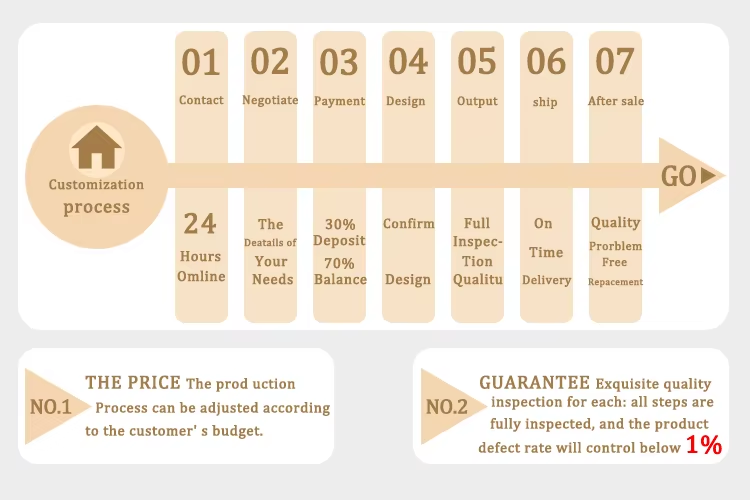
- Approve the physical sample and lock acceptance criteria. Acceptance is governed by contract specifications and a mutually approved physical sample, with every detail confirmed before mass production begins. Production quality control runs through eight inspection stages, from raw material incoming (IQC) through forming or casting, polishing, pre-plating cleaning, PVD or 18K gold plating, stone setting, logo or laser engraving, and final clasp or closure function.
- Schedule volume against real capacity. Minimum order quantity is 100 pcs/style, production lead time is 25–30 days, monthly capacity is 250,000 units and annual output is 3,000,000 units — enough to run a test drop and scale the winners without changing suppliers mid-program.
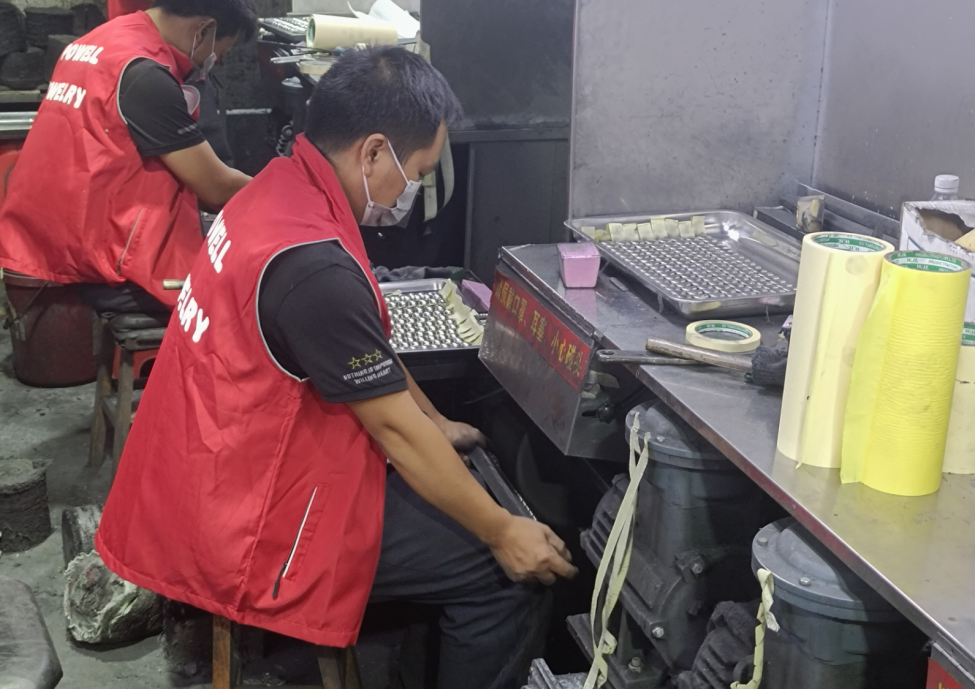
Surface preparation before coating — the step that determines whether batch color consistency can be held on reorders.
Use Cases: How Four Retail Channels Apply the Same Specification Stack
DTC brand, United Kingdom (Shopify). A Shopify store owner with more than 60,000 Instagram followers has worked with the manufacturer for over seven years and now places monthly orders above USD 150,000, using an own-logo package with barcode. The specification priorities here are engraving legibility, packaging presentation and repeatable reorder quality, because the storefront depends on restocking proven styles rather than continuously launching untested ones.
Physical retail chain, Central Europe. A premium jewelry chain operating more than 50 retail outlets shifted to stainless steel collections and reported a 300% increase in repeat purchase rate within two years, citing the ability to maintain color consistency across large batches as its key competitive advantage. For this channel, Delta E < 1.0 batch control and the durability of the PVD finish (2–5 years of stable luster under normal wear) matter more than per-style novelty.
Marketplace and platform sellers. Sellers on Amazon, Etsy, TikTok Shop and similar platforms typically prefer 316 stainless steel with an own-logo package; one US online seller ordering across Facebook, Instagram, TikTok and Pinterest runs each style at more than 3,000 pieces, while an Irish online and local-store brand orders more than 10,000 pieces per style with its logo applied to both jewelry and gift box. Compliance documentation and packaging standardization carry most of the weight for this channel.
Wholesalers and gift programs. A US wholesaler distributing jewelry alongside bags, watches and scarves has purchased for more than 10 years with monthly orders above USD 20,000. Gift and promotional programs follow the same logic at smaller volumes, using laser engraving or stamping for corporate marks and gift boxes or pouches for presentation.
The manufacturer has also supplied a global off-price fashion retailer across both stock and custom designs, where the stated requirements were competitive pricing, fashion-forward design, consistent quality and flexible order quantities — a useful summary of what large retail buyers actually evaluate.
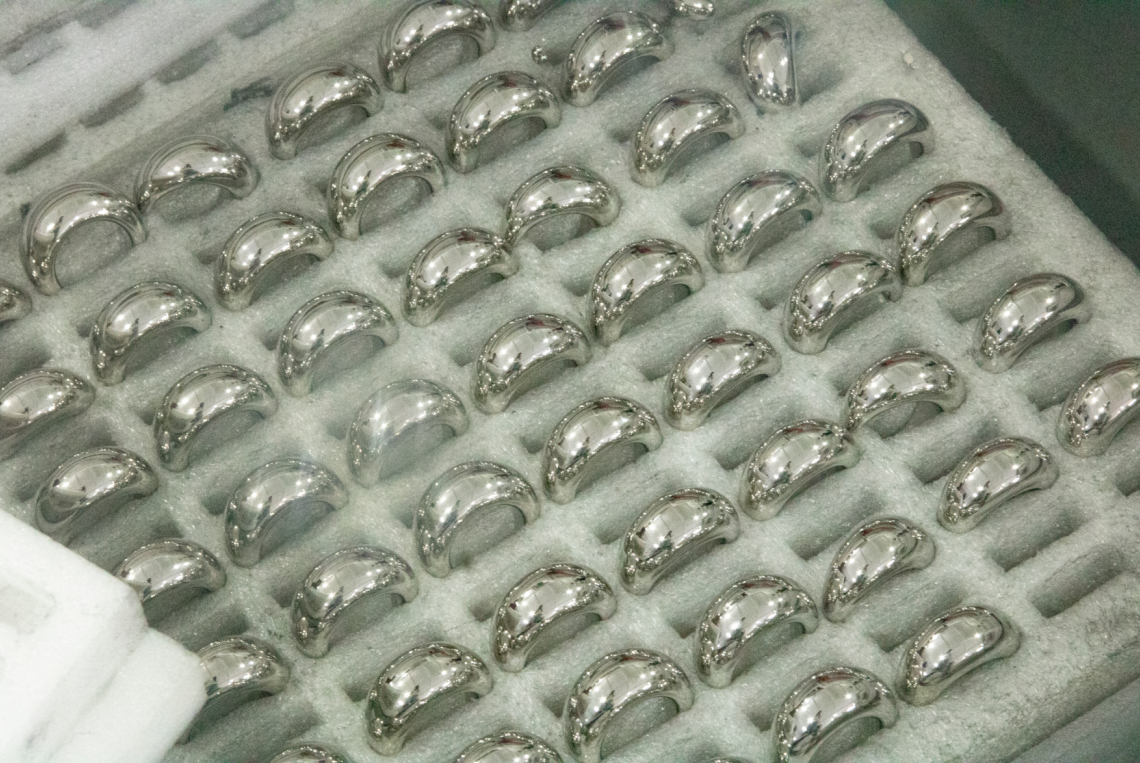
Finished stainless steel jewelry prepared for shipment to DTC and retail chain accounts.
Application Scenario Comparison Table
| Retail scenario | Typical order profile | Material & finish priority | Customization focus | Packaging |
|---|---|---|---|---|
| DTC brand (Shopify / Instagram) | Frequent small-to-mid reorders of proven styles | 316L + PVD, Delta E < 1.0 on reorders | Laser engraved bangles and chains; logo sample in 2–3 days | Gift box, branded insert, own-logo package |
| Marketplace / platform seller | Multi-SKU listings, per-style volumes in the thousands | 316 stainless preferred; finish must survive shipping and returns | Logo on product and packaging; stone-set options | Compact own-logo package with branding elements |
| Physical fashion retail chain | Large seasonal batches across many outlets | Batch color consistency and long-life PVD luster | Core styles: engraved bangle, rope chain, figaro chain | Retail-ready boxes and shelving-ready presentation |
| Gift & promotional wholesale | Seasonal or campaign-based runs | 316L or 304 depending on compliance requirement | Stamping, screen printing or epoxy doming for marks | Gift box or velvet pouch |
| Independent boutique / designer | Small test runs, design-led | 316L with finish variety (brushed, mirror, sandblasted, PVD colors) | Design from sketch or CAD; CZ, crystal or moissanite setting | Velvet pouch or premium box |
One practical reading of this table: the material layer stays constant across channels, while finish tolerance, customization method and packaging are the variables that should be re-specified per project.
FAQ
Which certifications should be on file before listing stainless steel jewelry in the EU?
For EU-facing programs, the working pack is the SGS 316L material content analysis GZIN2606005050ML01_EN issued against ASTM A276/A276M-25, the SGS salt spray test GZHL260603029801JW issued against ISO 9227, the SGS artificial sweat test GZMR260602153701 issued against ISO 3160-2, and the Amfori BSCI certification 25-0339245. REACH test reports are available on request. Because EU REACH Annex XVII Entry 27 limits nickel release to less than 0.5 μg/cm²/week for skin-contact items and 0.2 μg/cm²/week for piercings, material documentation should always be checked against the destination market before a listing goes live.
Can one manufacturer handle OEM laser engraved custom jewelry at retail scale?
Yes, when engraving and finishing sit in the same factory as production. Jusnova Jewelry Co., Ltd provides both OEM and ODM production with in-house precision stamping, casting, CNC engraving, polishing, PVD coating and electroplating, and applies logos through four methods: laser engraving, stamping, screen printing and epoxy doming. Engraved bangles, rope chains and figaro chains are produced as standard families, and R&D support runs from sketch to mass production with 20 engineers, an eight-stage quality control process and 250,000 units of monthly capacity.
What is the minimum order quantity, and how does it affect project planning?
The minimum order quantity is 100 pcs/style, with a production lead time of 25–30 days and monthly capacity of 250,000 units. That combination allows a buyer to validate a new engraved bangle or chain style at 100 pieces, test it in one channel, and then scale the winning styles into larger reorders without changing the material specification, the PVD color standard or the packaging setup.
How does sampling and approval work before mass production?
Acceptance is governed by contract specifications and a mutually approved physical sample, and every detail is confirmed with the buyer before mass production begins. Logo samples are typically ready in 2–3 days, which is the fastest way to check engraving depth, placement and finish color before committing a style to a full run. Mass production then passes eight inspection stages, from raw material incoming through plating, stone setting, engraving and final clasp function.
What lead time should a retail program plan for, and how does a project start?
Plan on a 25–30 day production lead time after sample approval, plus shipping time; air freight through international couriers such as DHL or FedEx and sea freight are both available, with FOB, CIF and DDP quotations on request. Payment can be made by PayPal or bank transfer, and after-sales support responds to quality inquiries within 24 hours, with manufacturing defects covered within 30 days of receipt and a standard 6–12 month warranty. To start a project, send your target styles, engraving or logo artwork and packaging direction to Jusnova Jewelry (website: www.jusnovasteel.com) — contact Bessie Zhou at market@powellwholesale.net or WhatsApp +86 189 2623 2416 — and request a sample set covering one PVD color, one engraved bangle and one chain style for evaluation.
Conclusion: Specify From the Shelf, Not From the Catalogue
Stainless steel jewelry programs succeed when the specification is written backwards from where the product is sold. A DTC brand needs engraving speed, packaging presentation and reorder consistency. A multi-outlet chain needs Delta E < 1.0 batch color control and long-life PVD luster. A marketplace seller needs compliance documents and standardized own-logo packaging. A gift program needs mark application and presentation, at low MOQ.
All four can be built on the same foundation: 316L material, in-house PVD finishing across 20+ colors, four logo application methods, channel-matched packaging, and a documented compliance pack — delivered at 100 pcs/style MOQ with a 25–30 day lead time.
Next Step: Validate the Specification on Your Own Samples
Send your target channel, style direction and engraving artwork. Jusnova Jewelry will return a specification sheet, a quote and a sample plan so the material grade, PVD color standard, logo method and packaging are confirmed before the first production run. Email market@powellwholesale.net or request a quote at www.jusnovasteel.com.