
Stainless Steel Jewelry Partner FAQ: Purchasing Terms, Acceptance Criteria and 7-Year Cooperation Proof
Purchasing terms, acceptance criteria and proof of continuity decide whether a stainless steel jewelry supply relationship survives past its second order. Jusnova Jewelry Co., Ltd is a stainless steel jewelry manufacturer founded in 2009 in Guangzhou, China, producing stainless steel bangles, bracelets, rings, earrings and PVD gold plated pieces for wholesale and brand buyers. Its documented answers to the questions buyers actually ask are: a minimum order quantity of 100 pcs per style, payment by PayPal or bank transfer, delivery quoted on FOB, CIF or DDP terms, acceptance judged against contract specifications plus a mutually approved physical sample, a typical production lead time of 25–30 days, and a monthly production capacity of 250,000 units.
This article is written for the decision and execution stage, not the discovery stage. It does not explain what 316L is. It explains what the quotation says, how a shipment is accepted, what happens between inquiry and repeat order, and what evidence exists that a partner is still shipping in year seven.
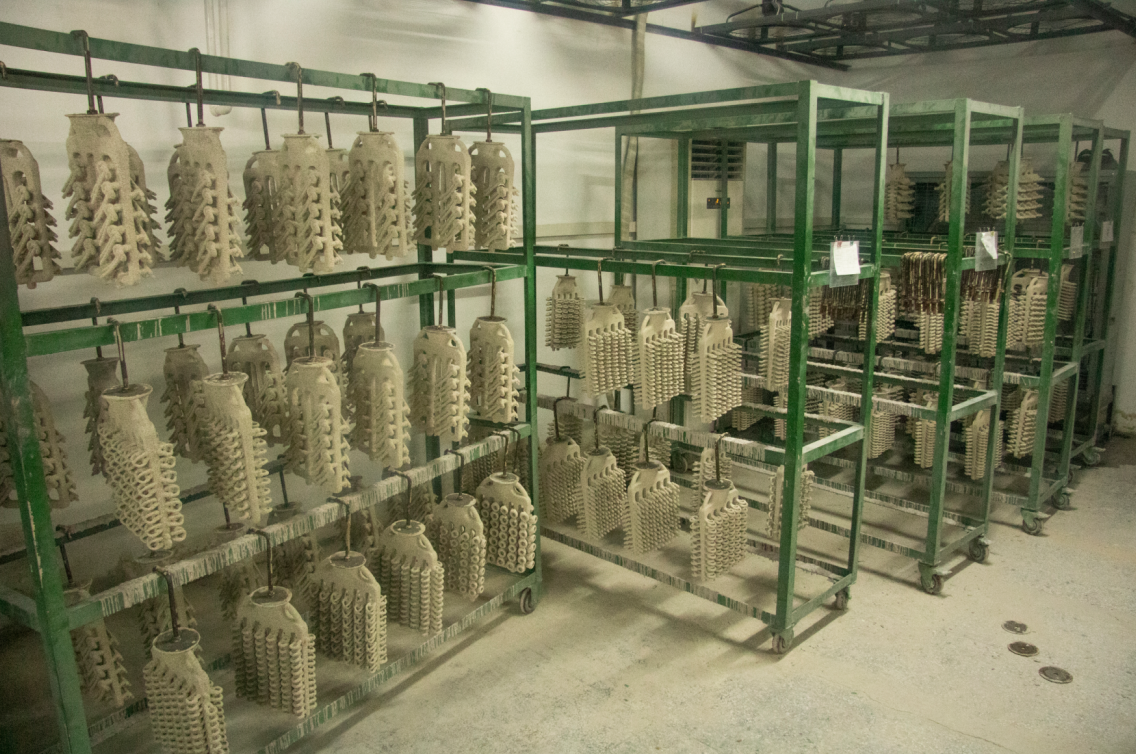
Molding and casting area, Jusnova Jewelry, Guangzhou.
Why Partnership Questions Surface After the First Order
The first order usually runs on goodwill and urgency. The second order is where partnership questions appear, because three assumptions stop being invisible.
- Terms that were only spoken. Who books freight, which Incoterm applies, and when the balance clears are all decisions that a quotation records and a conversation does not.
- Acceptance that was never written. If “18K gold colour” or “engraving depth” has no reference object, the first disagreement has no arbiter.
- Continuity that was never tested. A buyer cannot tell from one shipment whether the supplier will still hold the same finish standard in month twelve.
Each has a documentary fix. Terms belong in the quotation. Acceptance belongs in the contract specification plus an approved physical sample. Continuity belongs in capacity evidence and a track record of repeat orders. The rest of this article takes those three in order.
Industry Background: A Segment Growing Faster Than the Category
Stainless steel jewelry is no longer a low-price substitute category. The global stainless steel jewelry market was valued at USD 7.08 billion in 2025 and is projected to reach USD 10.8 billion by 2035, a CAGR of 4.3% (WiseGuyReports, 2026). The narrower waterproof jewelry segment is expanding materially faster: USD 2.12 billion in 2026 growing to USD 4.60 billion by 2034, a CAGR of 10.16% (Verified Market Reports, 2026).
Faster growth changes what buyers need from a partner. When a finish sells, replenishment frequency rises, and the cost of an unstable supplier rises with it. A brand reordering PVD gold plated or vacuum electroplated pieces every month cannot absorb a lead time that slips by three weeks, because the slip lands on a live listing rather than on a warehouse shelf.
Trade cost is the second background fact. Imitation jewelry of base metal under HTS 7117.19.90.00 carries an effective duty rate of 31% when imported from China into the United States, including General Duty and Section 301 (Descartes Datamyne, 2026). Landed cost therefore depends as much on the Incoterm and freight decision as on the unit price, which is why delivery terms belong in the first conversation rather than the last.
Purchasing Terms: MOQ, Payment, Incoterms and Freight
Four terms carry most of the operational risk in a stainless steel jewelry order. Each one below is a documented term, not a negotiating position.
Minimum order quantity: 100 pcs per style
The MOQ is 100 pcs per style, which is a per-style figure rather than a per-order figure. A mixed order is therefore a mix of styles, each of which must reach 100 pieces. This makes assortment planning the first cost lever: fewer styles at greater depth per style keep a first order inside the framework, while a wide collection raises total unit commitment before a single piece has sold. For a buyer testing laser engraved custom jewelry or personalized engraved stainless steel jewelry, the practical approach is to validate two or three styles at MOQ and expand depth after the first sell-through.
Payment: PayPal or bank transfer
Payment is accepted by PayPal or bank transfer. The useful question is not which method exists, but when each is appropriate. PayPal suits a first sample or trial order, where transaction speed matters more than transaction cost. Bank transfer suits production balances, where the fee is negligible against the amount and the reconciliation is cleaner. The method is normally fixed at quotation stage, so it should be agreed before the sample is signed off rather than after.
Delivery terms: FOB, CIF or DDP
Quotations can be issued on FOB, CIF or DDP. FOB places the main carriage under the buyer's control and suits importers who already run a forwarder account. CIF has the seller arrange and insure carriage to the destination port. DDP delivers to the buyer's door with duties paid, which is the term that turns the 31% US duty figure above into a single landed number a buyer can budget against. A buyer who resells into multiple markets should ask for more than one of the three on the same quotation, because the comparison is the decision.
Freight: air courier or sea
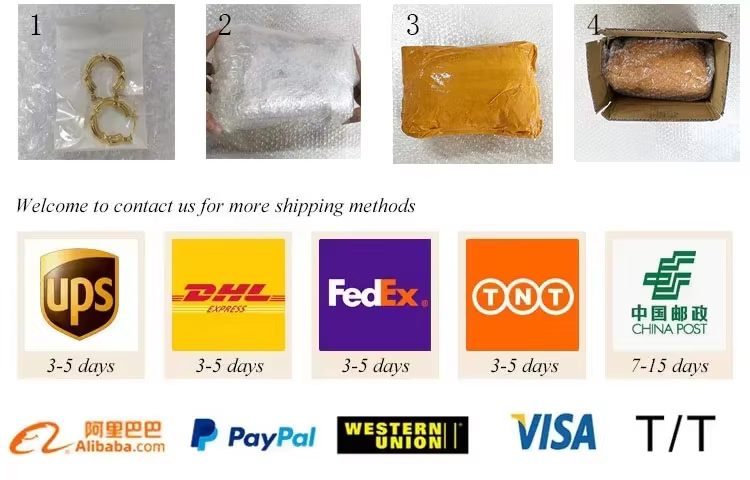
Air freight moves through international courier services such as DHL and FedEx; sea freight is quoted on its own basis. Actual shipping cost depends on weight, volume, destination and service level. A firm shipping quote is issued at the time of the order, with a side-by-side comparison of the available options so the buyer can weigh cost against speed instead of guessing at it.
Order packing stage, where quantity and labelling are checked against the contract specification.
Acceptance Criteria: Contract Specification Plus an Approved Physical Sample
Acceptance is judged on two standards held together: the written contract specification and a mutually approved physical sample. Neither works alone. A contract can specify an 18K gold colour but cannot demonstrate it. A sample can demonstrate it but cannot express a plating tolerance in words an inspector can sign against.
What the contract specification fixes
Material grade, dimensions, surface finish and plating type, engraving or logo artwork, stone or setting details where applicable, packing configuration and labelling. These are the items a QC team can check without interpretation, and they are the items a buyer should expect to see written before production opens.
What the approved physical sample fixes
Colour tone, weight and hand-feel, polish level, engraving depth and edge quality, and clasp function. All details of the sample are confirmed with the customer before mass production begins, which is the point at which an acceptance dispute is prevented rather than resolved.
How the eight inspection stages support both
The manufacturer maintains a quality control process with eight inspection stages, running from raw material to clasp function. In operational terms that covers incoming material inspection, in-process checks during forming and polishing, checks after plating, assembly checks, clasp function verification, finished-product sampling, and pre-packaging and shipment inspection — the same eight-stage framework applied across product lines.
| Acceptance control point | What it settles | When it happens |
|---|---|---|
| Contract specification | Material, dimensions, plating, engraving artwork, packing and labelling | Before production |
| Approved physical sample | Colour tone, weight, polish, engraving depth, clasp function | Before mass production |
| Pre-production first article inspection | Confirms the first produced unit matches the approved sample | Start of the production run |
| Eight-stage in-process inspection | Raw material through to clasp function | During production |
| Batch inspection report | Recorded result per batch, kept as a reference document | Before packing |
| Packaging and shipment inspection | Quantity, bagging, labelling, carton condition | Before dispatch |
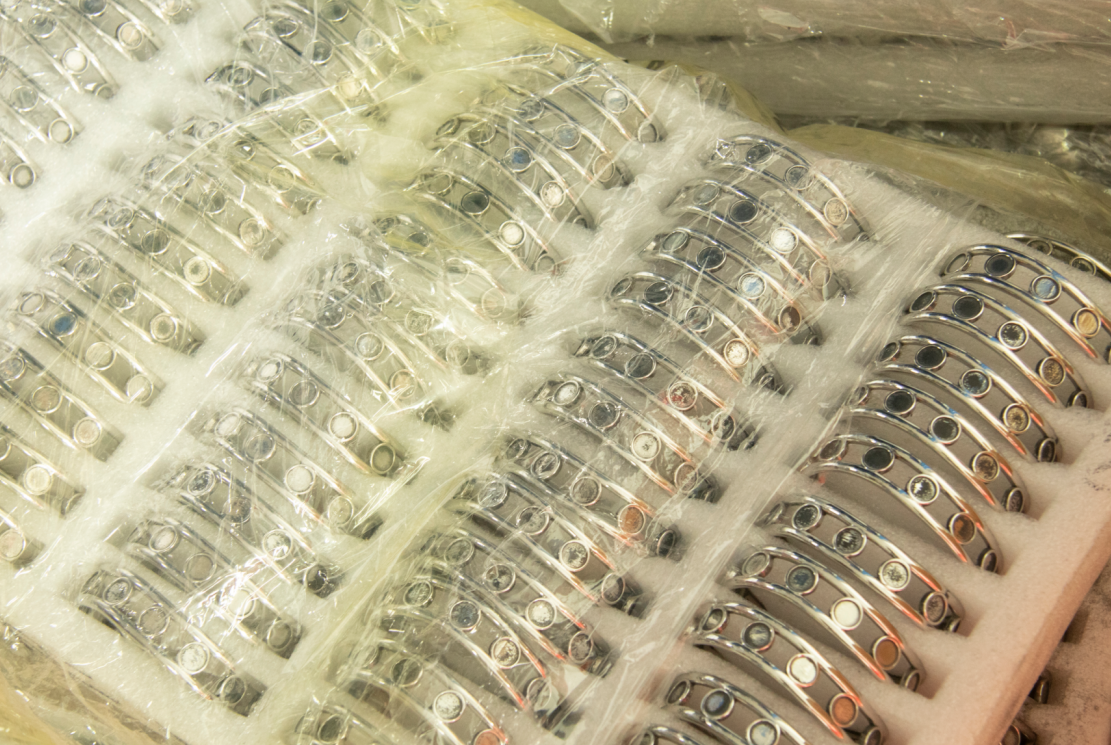
Inspection against the approved physical sample before packing.
Step-by-Step: How an Order Moves From Inquiry to Repeat Order
- Inquiry and requirement scoping. Style references, material preference, finish (PVD coating, vacuum electroplating or standard gold plating), engraving artwork and target market. Export experience covers Europe and America, which is where most compliance questions originate.
- Quotation with delivery options. Unit price at MOQ 100 pcs per style, plus delivery quoted on FOB, CIF or DDP as requested. Freight is quoted separately because it depends on weight, volume, destination and service level.
- Sample development and approval. The sample is the acceptance anchor. Colour, weight, polish, engraving depth and clasp function are confirmed in writing and physically before production opens.
- Pre-production first article inspection. The first produced piece is checked against the approved sample, which catches a drift before it is multiplied across the run.
- Mass production. Typical production lead time is 25–30 days, against a monthly production capacity of 250,000 units.
- Batch inspection. The eight-stage inspection process runs from raw material to clasp function, with results recorded per batch.
- Packaging and shipment inspection. Quantity, labelling and carton condition are verified before dispatch, then the shipment moves by air courier or sea freight under the agreed Incoterm.
- Repeat order planning. The second order is where the terms, the accepted sample and the capacity estimate are tested together. A partner who passes that test becomes a planning input rather than a variable.
Capacity and Continuity: What 250,000 Units per Month Means in Practice
Monthly production capacity is 250,000 units. Annualised, that is 3,000,000 units per year, which matches the company's stated annual output — the two figures are consistent rather than promotional. The operation runs from a 1,000 m² manufacturing facility with 300 employees, including a 20-engineer R&D team supporting style development and surface-finishing process work, and launches more than 500 new styles monthly.
For a buyer, capacity matters less as a headline than as a ratio against lead time. A partner producing 250,000 units a month on a 25–30 day cycle can absorb a replenishment order without pushing the next one out. A partner without headroom cannot, and the symptom appears as a lead time that quietly extends during the buyer's strongest quarter.
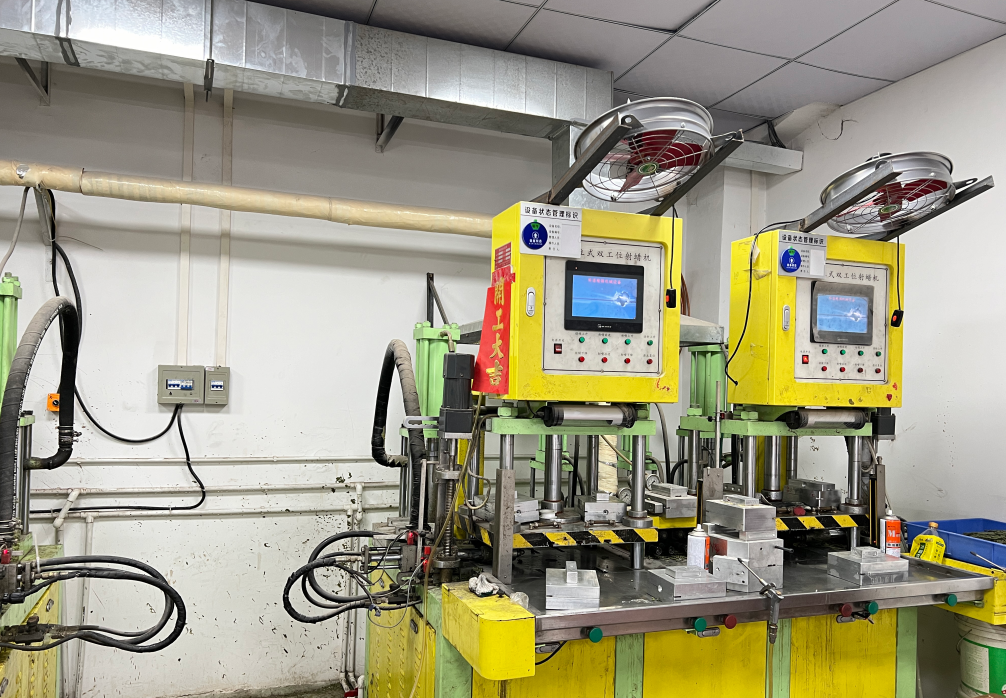
Production machinery supporting a 250,000-unit monthly output.
Cooperation Proof: A 7-Year UK Partnership and a 300% Repeat-Order Case
Two partner relationships illustrate what the terms above look like over time.
A UK Shopify store owner, more than seven years of partnership. The account places monthly orders exceeding USD 150,000. What this demonstrates is not scale alone but cadence: a DTC operator has built a monthly replenishment rhythm around a single manufacturer and kept it running for over seven years. For a buyer evaluating a partner, the relevant detail is the length of the relationship measured in repeat orders, not in months since first contact.
A Central European partner operating 50 retail outlets, with 300% repeat order growth. This account shows the same terms holding under multi-door retail pressure, where a specification has to be repeatable across an assortment and across seasons. A 300% increase in repeat orders is the outcome of an acceptance framework that did not need renegotiating as volume rose.
Read together, the two cases describe the point of the acceptance framework. A supplier whose output fails acceptance does not receive a sixtieth monthly order, and a retailer with fifty doors does not triple repeat volume with a partner whose finish standard moves between batches. Repeat orders are the only durable proof of acceptance consistency, because they are the one metric a buyer cannot negotiate into existence.
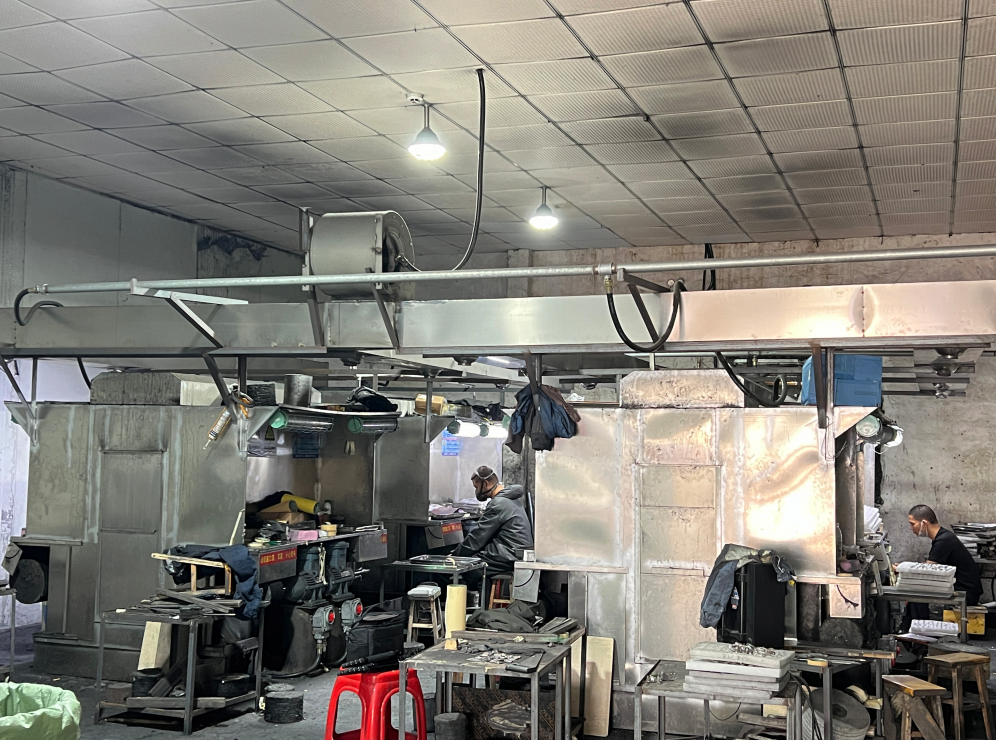
Daily workshop routine: the operational base behind repeat orders.
Use Cases: Which Buyer Profiles These Terms Fit
DTC and Shopify brands
A DTC brand needs a monthly replenishment cycle, personalized engraved stainless steel jewelry for gifting campaigns, and finishes that survive daily wear claims. PVD coated stainless steel jewelry and vacuum electroplated 18K gold pieces support waterproof, non-tarnishing and hypoallergenic positioning without a care-instruction caveat on every product page.
Multi-door retail chains
A chain with dozens of doors needs a specification that holds across stores and seasons. Per-style MOQ of 100 pcs supports a narrow, deep buy-in per door cluster, and the contract-plus-sample acceptance model keeps the second season identical to the first.
Wholesale distributors and importers
Distributors care about landed cost and terms more than finish names. FOB for buyers with their own forwarder, DDP for buyers who want a single landed number, and sea freight for volume orders are the levers. Exports to Europe and America are the standard route, so documentation questions tend to appear early.
Brand owners needing OEM and ODM
OEM and ODM production services are available, supported by the 20-engineer R&D team and a monthly release of more than 500 styles. This fits buyers developing custom logo trendy jewelry or a customizable design stainless steel jewelry line, where the sample stage carries most of the development risk.
Comparing Shipping Modes and Incoterms
The options below are the ones that can be quoted on a stainless steel jewelry order. The choice is made per order at quotation stage, and requesting more than one option on the same quotation is the fastest way to see the real cost of speed.
| Option | What it covers | Typical buyer situation |
|---|---|---|
| Air freight (international courier such as DHL, FedEx) | Courier-handled carriage; fastest transit of the quoted options | Sample runs, replenishment before a launch date, low-volume styles |
| Sea freight | Port-to-port carriage for larger volumes | Bulk production orders where cost per unit outweighs transit time |
| FOB | Seller delivers to the named origin port; main carriage sits with the buyer | Importers with an existing forwarder account and freight rates |
| CIF | Seller arranges carriage and insurance to the destination port | Buyers who want the main carriage handled but cleared locally |
| DDP | Delivered to the buyer's door with duties paid, giving one landed cost | Buyers planning around duty exposure, such as the 31% effective US rate |
Shipping cost depends on weight, volume, destination and service level. A firm shipping quote is issued at order time with a side-by-side comparison, so the freight decision is recorded rather than assumed.
FAQ
Which certifications and compliance documents back a stainless steel jewelry partnership?
REACH test reports, SGS reports and BSCI certification are available on request, and the manufacturer states that products are compliant with US and EU lead- and nickel-free requirements. Buyers sourcing into Europe should request the REACH documentation for the specific materials and finishes in their order rather than relying on a general compliance statement, because documentation is issued per product and per finish.
Can one partner handle both new custom development and monthly replenishment?
Yes. OEM and ODM production services are available, a 20-engineer R&D team supports style development and surface-finishing processes, and more than 500 new styles are released monthly. Both PVD gold plated stainless steel and regular gold plated stainless steel can be manufactured according to requirements. Monthly production capacity is 250,000 units against a typical production lead time of 25–30 days, which is the combination that allows development and replenishment to run in the same account.
What are the standard purchasing terms, and what drives the budget?
MOQ is 100 pcs per style. Payment is by PayPal or bank transfer. Delivery can be quoted on FOB, CIF or DDP, with air freight through international couriers or sea freight depending on volume. Budget is driven by style mix and depth, finish selection, freight mode and the Incoterm chosen — a DDP quote absorbs duty into the unit economics, while an FOB quote leaves main carriage and import charges with the buyer.
How does sample approval define acceptance later?
Acceptance is judged against the contract specification and the mutually approved physical sample. All sample details are confirmed with the customer before mass production begins, and the approved sample then becomes the reference for first article inspection, the eight-stage in-process inspection from raw material to clasp function, batch inspection reports, and pre-packaging and shipment inspection. The sample is not a courtesy step; it is the acceptance document.
What lead time should a partner plan for, and how do I start?
Typical production lead time is 25–30 days, with monthly capacity of 250,000 units. Freight transit sits on top of production time and is quoted at order stage, so the total planning window depends on whether air courier or sea freight is chosen. Buyers who want to test the framework before committing to volume can request a sample against a target style or finish by contacting Jusnova Jewelry at market@powellwholesale.net or +86 189 2623 2416, and ask for a quotation that shows more than one delivery term side by side.
A Partnership Is a Set of Written Defaults
The durable version of a stainless steel jewelry partnership is not a relationship defined by goodwill. It is a set of defaults that hold when nobody is watching: 100 pcs per style, PayPal or bank transfer, FOB, CIF or DDP quoted at order time, acceptance against a contract specification and an approved physical sample, eight inspection stages from raw material to clasp function, 25–30 days of production against 250,000 units of monthly capacity.
The evidence that those defaults actually work is not a brochure line. It is a UK Shopify store owner still placing monthly orders above USD 150,000 after more than seven years, and a Central European partner with 50 retail outlets growing repeat orders by 300%. Both outcomes are downstream of the same thing: terms that were written down, and a sample that was approved before production opened.
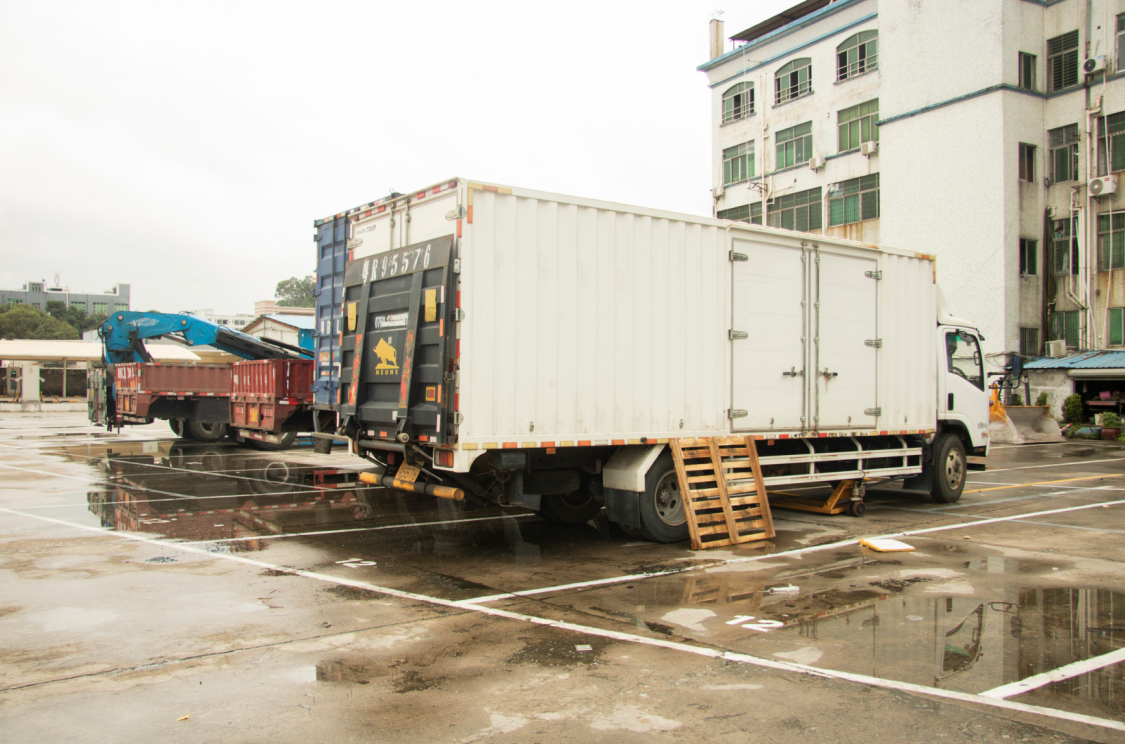
Outbound shipment stage: quantity, labelling and carton condition checked before dispatch.
If you are at the evaluation stage, the fastest test of a partner is not a catalogue. It is a sample request plus a quotation that shows your MOQ, your payment method, your delivery term and your acceptance reference in writing. Requests can be sent to Jusnova Jewelry via market@powellwholesale.net or WhatsApp +86 189 2623 2416.
Have Questions or Need More Details?
Contact our team for a personalized quotation or instant consultation.
Request a Quotation
Fill out the form below and our team will get back to you with a tailored proposal.
WhatsApp Direct Chat
Prefer to chat in real-time? Message us on WhatsApp for instant assistance & quick answers.
- Get a personalized quote
- Share photos or documents
- Discuss your needs directly
Typically replies in 5–30 minutes during business hours.