Supplier Evaluation Checklist for Stainless Steel Jewelry: Capability & Delivery Assurance
Supplier Evaluation Checklist for Stainless Steel Jewelry: Capability & Delivery Assurance
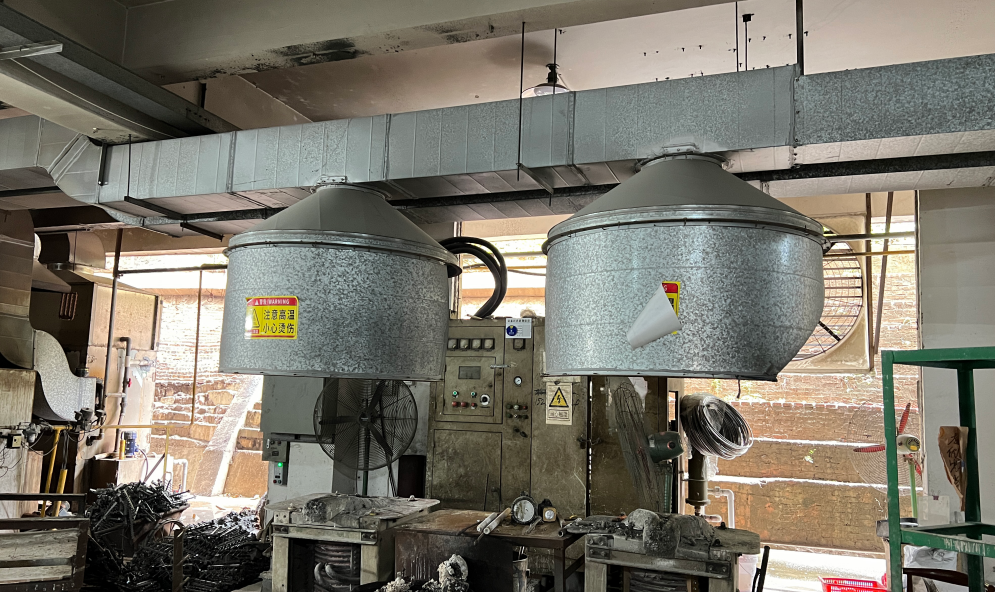
Capability is verified on the production floor, not in a catalog: machinery inside a stainless steel jewelry workshop.
A supplier evaluation checklist for stainless steel jewelry has two jobs: prove that a factory can produce your specification, and prove that it can deliver that specification on terms you can enforce. Capability is verified with material and compliance documents, production capacity figures, and customization evidence. Delivery assurance is verified with Incoterms, freight mode, quote validity, payment method, minimum order quantity, and the item most buyers skip — written acceptance criteria tied to an approved physical sample. Run both tracks before a purchase order is issued, not after the goods arrive.
This checklist is written for buyers in the research stage: importers, wholesale distributors, DTC brands, retail chains and gift buyers who are comparing stainless steel jewelry manufacturers and do not yet have a standard way to compare them. Every item below can be used as a question, a document request, or a pass/fail gate. Where a supplier’s own published data can serve as a worked example, this article uses Jusnova Jewelry Co., Ltd. — a stainless steel jewelry manufacturer established in 2009 in Guangzhou, China, supplying ODM/OEM production to wholesale and brand buyers.
Why Stainless Steel Jewelry Sourcing Fails Without a Written Checklist
Sourcing failures in this category rarely happen because a buyer chose the wrong product. They happen because the buyer evaluated price and photographs, but never evaluated capability evidence or delivery terms. The failure modes repeat in a predictable order.
- Unverified material claims. “316L” and “hypoallergenic” appear on catalog pages but are not backed by a document the buyer can file. When a retailer’s customer reports skin irritation, there is no test report to fall back on.
- Capacity that cannot be tested. A supplier may accept an order it cannot run in-house and then subcontract plating, engraving, or assembly. The buyer discovers this only when color varies between batches or the delivery date moves.
- Sample-to-production drift. A sample is approved verbally or from a photo, and mass production is measured against nothing. The resulting dispute has no neutral benchmark.
- Unstated commercial terms. If a quotation does not name an Incoterm, the buyer does not know whether freight, insurance and import duty are included — and for base-metal imitation jewelry, duty can be a material share of landed cost.
- No acceptance clause. “Good quality” is not a specification. Without a written standard, a defect claim becomes a negotiation instead of a documented deviation.
A checklist converts each failure mode into either a document request or a written term, and the whole exercise can be completed during the research stage, before any money moves.
The 2026 Context: Growing Demand, a Finish Transition, and Import Cost
Three market facts explain why capability verification has become more important rather than less.
Demand is large and still expanding. The global stainless steel jewelry market was valued at USD 7.08 billion in 2025 and is projected to grow to USD 10.8 billion by 2035, a compound annual growth rate of 4.3% (WiseGuyReports, 2026).
The fastest-growing sub-segment carries the hardest claims to verify. The waterproof jewelry market — built largely on PVD-coated stainless steel — is projected to grow from USD 2.12 billion in 2026 to USD 4.60 billion by 2034, a CAGR of 10.16% (Verified Market Reports, 2026). That growth rate is more than double the base category, and it is technically enabled by the shift from electroplating to PVD coating on stainless steel. The durability difference is measurable: PVD coatings are reported at roughly 1,500–4,500 HV on the Vickers hardness scale, compared with approximately 100–200 HV for standard plating. Buyers are paying for durability, so they need documentation that durability exists.
Landed cost can move faster than product cost. Imitation jewelry of base metal classified under HTS 7117.19.90.00 carries an effective US duty rate of 31% on imports from China, combining an 11% general duty with a cumulative 20% Section 301 rate (Descartes Datamyne, 2026). A quotation that does not state whether duty is included is therefore incomplete, not merely imprecise.
The Evaluation Framework: Two Pillars, One Decision
Split the evaluation into capability and delivery. Capability answers “can they make it?” Delivery answers “can they get it to me on terms I can enforce?” A supplier must pass both, and the two should be scored separately, because a technically strong factory with vague commercial terms is a different risk profile from a well-organized trader with no in-house finishing.
Pillar 1 — Capability Verification
1. Material and compliance documentation. The first request is not a catalog; it is a document pack. For skin-contact stainless steel jewelry, the core items are a material grade certificate for the alloy actually used, a nickel-release or artificial-sweat test report, a corrosion test report for the coated finish, and a social-compliance audit report.
Jusnova Jewelry’s published capability provides a usable reference point. Its product line is built on 316L surgical-grade stainless steel with zero nickel release, tested to EU REACH and FDA standards, and the company states that REACH test reports, SGS, and BSCI certification are available upon request. Those are the exact categories a buyer should ask every candidate supplier to produce — and the request should be for the report itself, not a statement that one exists.
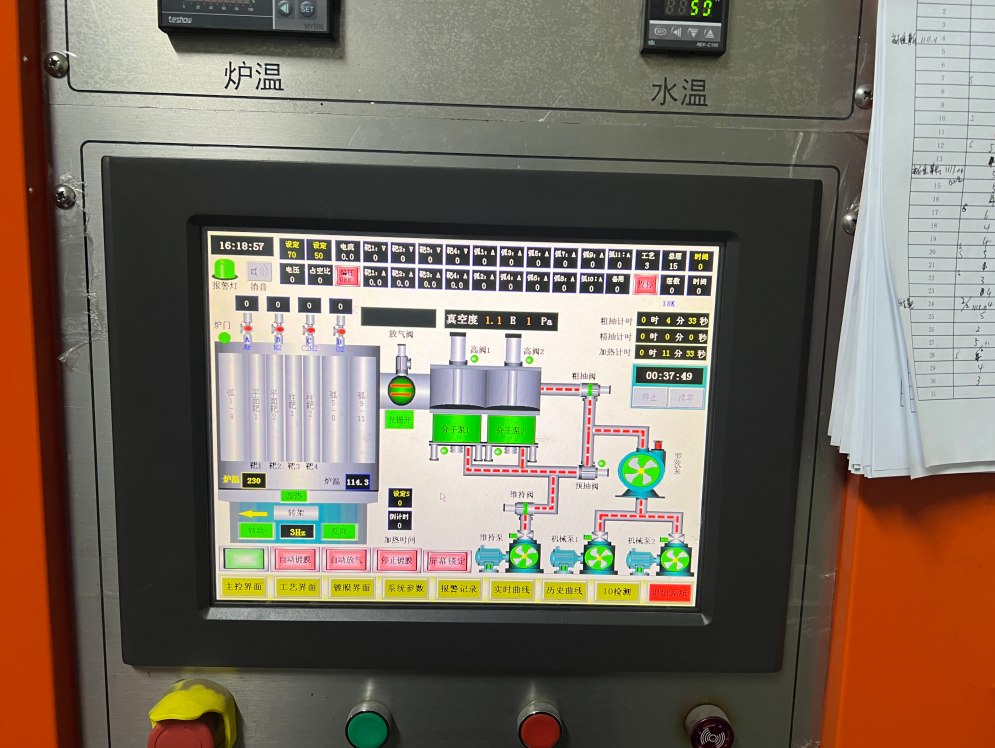
Test and instrument data are the evidence behind a hypoallergenic or tarnish-free claim; a catalog line is not.
2. Capacity measured against your order, not in isolation. A capacity figure only means something when it is compared with the volume you intend to place and with how much of the work stays in-house.
As a worked example: Jusnova operates a 1,000 m² manufacturing facility with approximately 300 employees and an annual production capacity of 3,000,000 units — approximately 250,000 units per month. The company maintains an R&D team of 20 engineers that supports style development and surface-finishing processes, and it launches more than 500 styles per month.
The decision rule that follows is simple: ask what share of the process is performed in-house. Finishing, engraving, and assembly are the stages where outsourcing shows up as batch color variation and schedule slippage. A supplier with its own PVD facility controls the stage most likely to generate a rework claim; Jusnova runs PVD coating in-house with more than 20 color options and consistent color matching controlled to Delta E < 1.0.
3. Customization depth, checked item by item. Customization is where a specification either survives production or quietly changes. Verify each element separately:
- Finish: PVD coating and gold plating are both available as options, alongside electroplating, brushed, mirror-polished and sandblasted surfaces, or combinations of them.
- Color control: more than 20 PVD color options with cross-batch color matching held to Delta E < 1.0.
- Durability evidence: PVD coating is stated to maintain luster for 2–5 years in conventional environments, verified by 48-hour salt spray testing.
- Dimensions: diameter from 5 mm to 80 mm and thickness from 0.5 mm to 3.0 mm, with tolerance controlled within ±0.05 mm.
- Stones: CZ, man-made crystal, or moissanite in 20+ colors, with prong, bezel, channel and pavé settings.
- Logo application: four in-house methods — laser engraving, stamping, screen printing and epoxy doming — with a 2–3 day sample lead time.
- Packaging: OPP bags, velvet pouches, premium gift boxes, or fully custom designs carrying the buyer’s logo and branding.
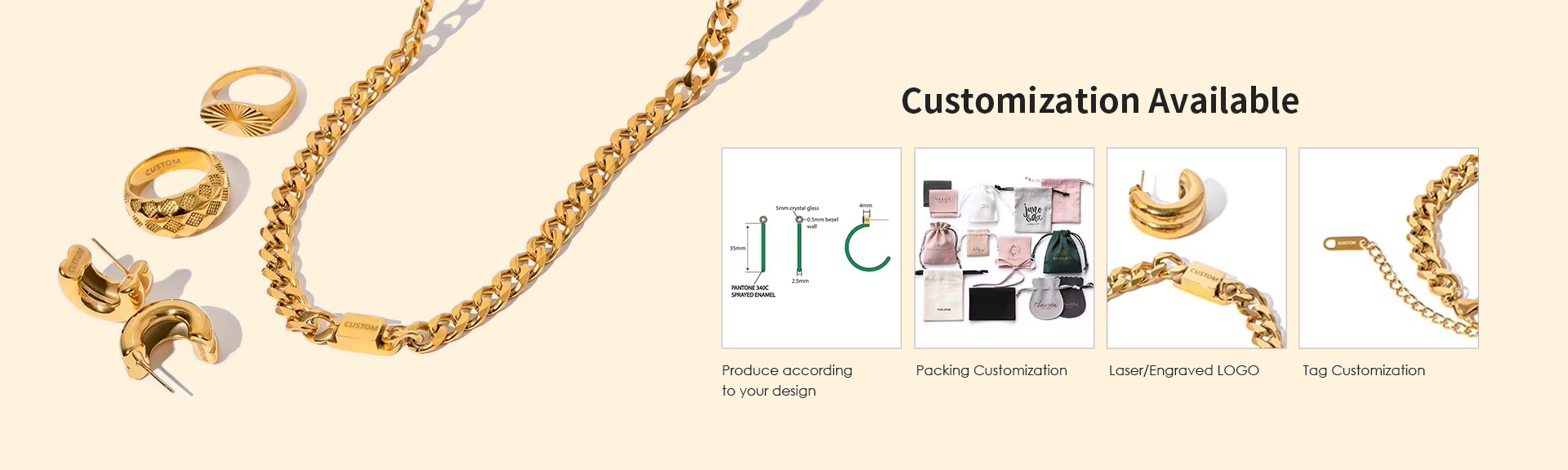
Customization is a list of processes, not a single promise: each finish, engraving method and setting should be confirmed individually.
Jusnova’s stainless steel jewelry range, catalogued under model GEN000516bhia-066, includes engraved bangles, cuff and gem-set bangles, rope chain and figaro chain bracelets, and other chain styles. It is a useful reference for how one product family can carry several finishes and engraving positions without changing the base material.
Pillar 2 — Delivery Assurance
Delivery assurance is not a promise; it is a set of written terms. Six items cover most disputes.
1. Incoterms, stated in the quotation. FOB, CIF and DDP place freight, insurance and duty obligations in different hands. Ask for the quotation to name the term explicitly, then confirm that the term matches whoever is actually arranging clearance.
2. Freight mode and transit expectation. Air freight is normally used for samples and urgent replenishment, sea freight for bulk orders. The quotation should state the mode and what it covers, not only a total figure.
3. Firm shipping quotes with a validity window. Freight and material costs move. A quote without a validity period is an estimate, and should be treated as one when budgets are approved.
4. Payment method and schedule. Confirm the accepted methods — bank transfer and online payment platforms are the two most common — and tie the payment schedule to milestones the buyer controls, such as sample approval before mass production begins.
5. Minimum order quantity, in writing. Ask whether the MOQ applies per order or per style, size and finish combination, because the same number behaves very differently under a mixed order. If the launch plan is a small trial order — for example, a first run in the region of 100 pieces — confirm that quantity in writing before tooling begins, together with which finishes and logo methods are available at that volume.
6. Acceptance criteria: contract specification plus an approved physical sample. This is the single most valuable clause in the checklist. Acceptance should be judged against two things only: the written specification in the contract, and a physical sample approved by both parties and retained by both. Catalog photos, verbal descriptions and chat messages cannot be used to accept or reject a shipment.
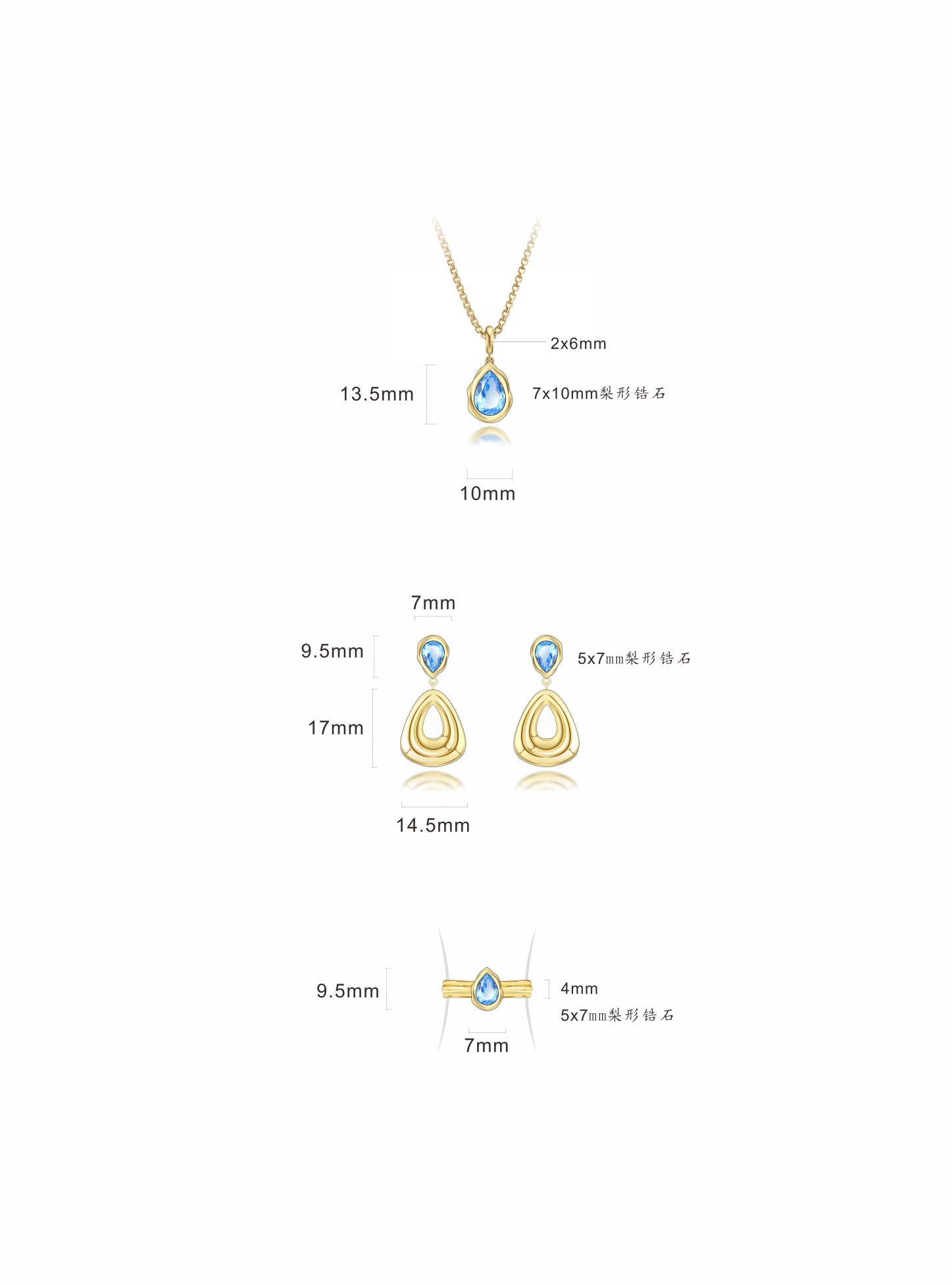
A confirmation drawing turns a design brief into a measurable specification before tooling and sampling start.
Where This Checklist Has Limits
Two honest limitations are worth stating. First, documents verify a process, not every individual unit; a certified material and a passed salt spray test describe the production system, and periodic retained-sample testing is still the way to confirm that the system keeps performing. Second, finish durability depends on wear conditions, so a stated luster range such as 2–5 years in conventional environments should be read as a test-based expectation, not a guarantee for every wearer. The checklist reduces risk; it does not remove it. It should also be re-run whenever the finish, the material grade, or the supplier changes.
Step-by-Step: Running the Checklist in Six Steps
- Write the specification sheet. Material grade, finish and color, dimensions, stone type and setting, logo method and placement, and packaging format.
- Request the document pack. Material certificate, nickel-release and corrosion test reports, social-compliance audit, and a confirmation drawing for the specific style.
- Verify capacity against your forecast. Compare annual and monthly output with the planned volume, and confirm which production stages are performed in-house.
- Order and approve the sample. Measure the sample against the confirmation drawing, and retain the approved unit rather than returning or reselling it.
- Confirm commercial and delivery terms in writing. Incoterm, freight mode, quotation validity, payment method and schedule, and MOQ structure per style.
- Lock acceptance criteria and QC checkpoints. Reference the contract specification and the approved sample in the purchase order, and agree where inspection happens before shipment.
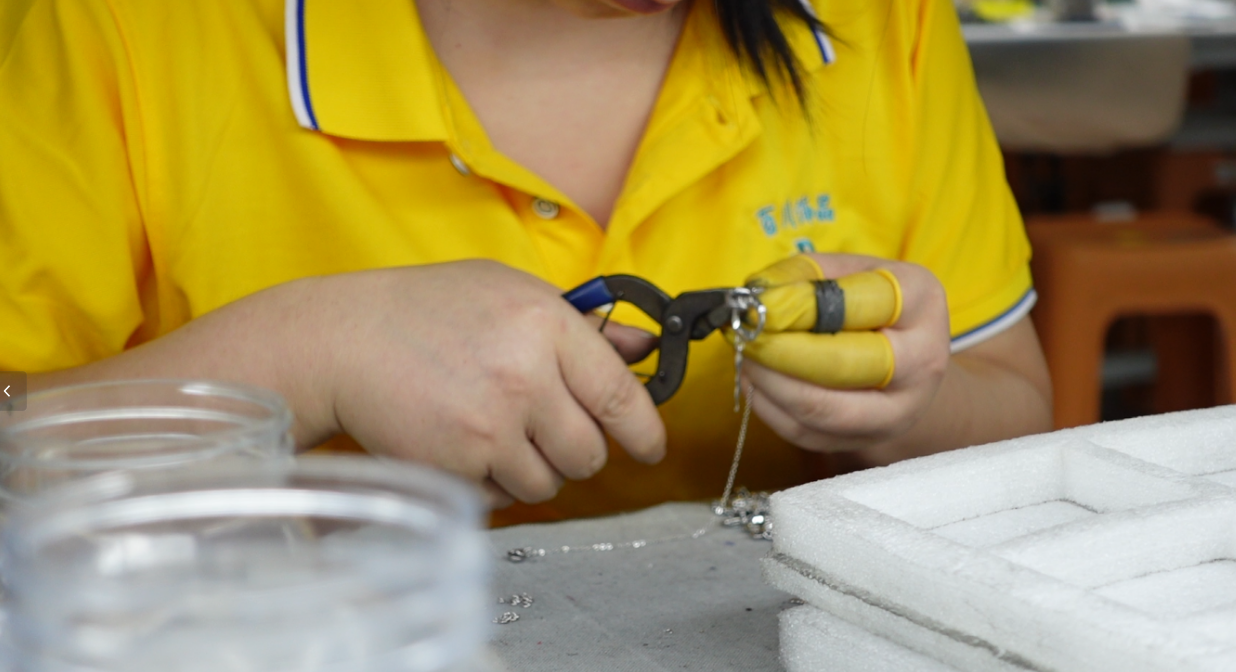
Assembly is one of the stages that should be confirmed as in-house before a delivery schedule is agreed.
Who Should Run This Checklist
- Importers and wholesalers placing a first order with a new stainless steel jewelry manufacturer and needing a repeatable comparison method.
- DTC and marketplace sellers on Amazon, Shopify, Etsy, AliExpress, eBay or TikTok Shop building a waterproof, tarnish-free and hypoallergenic line whose claims must be documented.
- Retail chains and boutiques that reorder the same style and therefore depend on cross-batch color consistency.
- Corporate and promotional gift buyers who treat custom logo application and branded packaging as part of the deliverable, not an accessory.
- Brand owners running OEM/ODM projects with engraved bangles, chain bracelets or gem-set pieces and a fixed launch date.
Comparison Tables: Finish Choices and Verified Capability
Two tables support the checklist: one for comparing finishes on evidence rather than appearance, and one for recording the capability facts a buyer has actually verified.
Table 1 — PVD coating compared with gold plating (stainless steel substrate)
| Evaluation point | PVD coating | Gold plating |
|---|---|---|
| How the finish is applied | Vacuum-based coating process applied to the stainless steel base | Electrolytic plating applied to the stainless steel base |
| Color range | 20+ options, including gold, rose gold, black and gunmetal | Gold tone; request a physical color card for the target shade |
| Cross-batch color consistency | Documented at Delta E < 1.0 | Request batch color data before ordering |
| Verified durability evidence | 48-hour salt spray testing; luster stated to hold 2–5 years in conventional environments | Request corrosion and wear test data |
| Reported surface hardness | Approximately 1,500–4,500 HV (Vickers), as reported by industry sources | Approximately 100–200 HV for standard electroplating, as reported by industry sources |
| What to request from the supplier | Test report, color card, and a coated sample for wear testing | Coating thickness and adhesion documentation, plus a sample |
Table 2 — Verified capability snapshot: Jusnova Jewelry Co., Ltd.
| Evaluation item | Verified data |
|---|---|
| Manufacturer | Jusnova Jewelry Co., Ltd., established 2009, Guangzhou, China |
| Facility | 1,000 m² manufacturing facility |
| Workforce | Approximately 300 employees |
| Annual capacity | 3,000,000 units, approximately 250,000 units per month |
| R&D | 20 engineers; 500+ new styles launched per month |
| Base materials | 304 / 316 / 316L stainless steel |
| Surface finishes | PVD coating (20+ colors, Delta E < 1.0), gold plating, electroplating, brushed, mirror-polished, sandblasted |
| Durability evidence | 48-hour salt spray testing; PVD luster stated at 2–5 years in conventional environments |
| Size range | Diameter 5–80 mm; thickness 0.5–3.0 mm; tolerance ±0.05 mm |
| Stone settings | CZ, man-made crystal, moissanite; 20+ colors; prong, bezel, channel, pavé |
| Logo methods | Laser engraving, stamping, screen printing, epoxy doming; 2–3 day sample lead time |
| Compliance | Zero nickel release, tested to EU REACH and FDA standards; REACH test reports, SGS and BSCI certification available upon request |
| Product model reference | GEN000516bhia-066 |
Frequently Asked Questions
What certifications should I request from a stainless steel jewelry manufacturer?
Request four document types: a material grade certificate for the alloy actually used, a nickel-release or artificial-sweat test report for skin-contact pieces, a salt-spray corrosion test report for the coated finish, and a social-compliance audit report. As a reference, Jusnova Jewelry manufactures 316L surgical-grade stainless steel jewelry with zero nickel release, tested to EU REACH and FDA standards, and states that REACH test reports, SGS, and BSCI certification are available upon request.
How do I verify a manufacturer’s real production capacity?
Ask for annual output, facility size, workforce and machine counts, then compare them with your planned order volume. Jusnova Jewelry operates a 1,000 m² facility with approximately 300 employees and an annual capacity of 3,000,000 units — approximately 250,000 units per month — supported by 20 engineers and more than 500 styles launched monthly. The second step is confirming which stages, especially PVD coating, engraving and assembly, are performed in-house rather than subcontracted.
How should I compare quotations from different stainless steel jewelry suppliers?
Normalize the quotes first: the same Incoterm, base material, finish, stone grade and setting, packaging, and quantity per style. Compare PVD coating against gold plating only when both quotes describe durability evidence for the same finish, and check whether each quote states a validity period. Differences of a few cents per piece are usually explained by finish and packaging choices rather than by productivity.
What should the sample stage cover before mass production?
The sample should be produced against a confirmation drawing and checked for material, dimensions, finish color, engraving depth and placement, and stone setting. Jusnova works with a 2–3 day sample lead time for custom logo application. Once approved, the sample should be signed by both parties and retained by both, because it becomes the physical benchmark in the acceptance clause.
How can buyers protect delivery commitments?
Convert delivery into written terms: the Incoterm, freight mode, quotation validity, payment method and schedule, MOQ structure, and acceptance criteria referencing the contract specification plus the approved physical sample. Capacity should also be matched to order volume before a schedule is agreed. To start a checklist review, contact Jusnova Jewelry at market@powellwholesale.net or +86 189 2623 2416, or request a sample and quotation through the manufacturer’s site.
Conclusion: Two Pillars, Checked Before the Order
Stainless steel jewelry is one of the few accessories categories where the marketing claim and the technical requirement are the same sentence: hypoallergenic, waterproof, tarnish-free. That makes documentation the product. A supplier that can produce a material certificate for 316L, a nickel-release test report, a salt-spray result, a social-compliance audit, a confirmation drawing and a physical approved sample has already answered most of the questions that a specification sheet can ask.
Delivery assurance is the second half of the same discipline. Incoterms, freight mode, quote validity, payment method, MOQ structure and written acceptance criteria are what turn a capability statement into an enforceable order. Buyers who verify both pillars before committing to tooling and mass production compare suppliers on evidence instead of impressions — and they resolve problems with a clause rather than a conversation.

Product range under the same verified capability: bangles, chain bracelets and gem-set pieces for wholesale and brand programs.
Next step: run the checklist against a real quotation. Jusnova Jewelry Co., Ltd. is a stainless steel jewelry OEM/ODM manufacturer established in 2009, supplying PVD-coated, engraved and gem-set stainless steel jewelry to wholesale and brand buyers.
Email: market@powellwholesale.net | Tel / WhatsApp: +86 189 2623 2416 | Website: www.jusnovajewelry.com
Request a sample, a color card, or a written quotation with the Incoterm and MOQ structure confirmed.
Have Questions or Need More Details?
Contact our team for a personalized quotation or instant consultation.
Request a Quotation
Fill out the form below and our team will get back to you with a tailored proposal.
WhatsApp Direct Chat
Prefer to chat in real-time? Message us on WhatsApp for instant assistance & quick answers.
- Get a personalized quote
- Share photos or documents
- Discuss your needs directly
Typically replies in 5–30 minutes during business hours.