
Technical Guide to Gold Plating on Stainless Steel: PVD vs. Electroplating Parameters
Two pieces of jewelry can both be sold as gold plated stainless steel and still behave completely differently after six months of daily wear. The difference is rarely the colour. It is the coating route, the thickness target behind that route, the adhesion layer underneath it, and the tolerance the factory holds while finishing the part. This guide converts those variables into parameters you can write into a purchase order.
It compares PVD (physical vapor deposition) coating with electroplating on stainless steel across the four measurements that decide service life — coating thickness, adhesion, wear and tarnish resistance, and dimensional impact — and it explains the geometry window used by Jusnova Jewelry Co., Ltd: diameters from 5 mm to 80 mm, material thicknesses from 0.5 mm to 3.0 mm, and a tolerance controlled within ±0.05 mm.
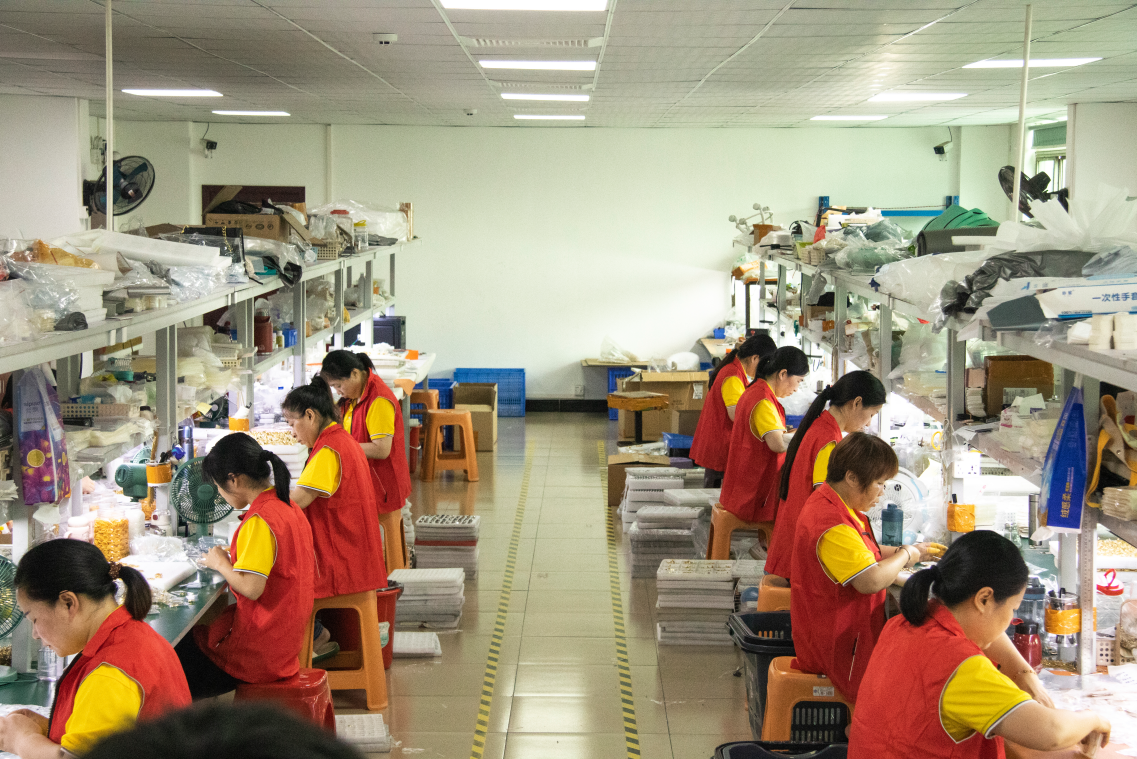
Jusnova Jewelry Co., Ltd is a Guangzhou-based ODM/OEM jewelry manufacturer founded in 2009. The company produces stainless steel bangles, stainless steel bracelets, stainless steel rings and stainless steel earrings alongside PVD and electroplated gold pieces, operates a 1,000 m² factory with 300 employees and an annual output of 3,000,000 units, and exports about 95% of its production to wholesale and brand buyers, with emphasis on Europe and America.
Problem Definition: “Gold Plated” Is a Claim, Not a Specification
The first problem is definitional. In the United States, the Federal Trade Commission sets the minimum gold plating thickness for the “Gold Electroplated” designation at 0.175 microns — seven millionths of an inch. Gold vermeil, which is gold over silver, carries a 2.5 micron minimum under the Jewellers Vigilance Committee standard. Yet PVD gold on steel usually targets only 0.5–1.0 micron to reach equivalent durability. Micron counts are therefore not interchangeable between processes, and a buyer comparing two suppliers on micron count alone is comparing the wrong number.
The second problem is that failure is rarely visible in the specification. In daily-wear collections, the recurring complaints are colour loss at high-contact points, corrosion that begins along engraving lines or at solder joints, skin reactions — roughly 15% of the global population has a nickel allergy, according to the World Allergy Organization — and dimensional rejects that only surface when clasps, links or bead holes no longer fit together.
The practical consequence is simple: the decision is not “gold plated or not”, but “which coating route, at which thickness target, on which substrate grade, inside which tolerance band, proven by which test”. Everything below serves that sentence.
Industry Background: A Category Growing Faster Than Its Specifications
The global gold plated jewelry market was valued at USD 14.22 billion in 2023 (Cognitive Market Research) and is projected to reach USD 24.36 billion by 2031, a CAGR of 7.1% (Business Research Insights). Asia-Pacific accounts for more than 35% of global costume and gold plated jewelry output (Grand View Research). A deep supply base means differentiation has moved away from “can you make it” and toward “can you specify it”.
Demand is pulling in the same direction. B2B search volume for waterproof jewelry built on PVD-coated stainless steel increased 40% in 2024 (Alibaba Group B2B Trends). 18K gold plating is the most preferred finish for high-end fashion jewelry in the North American market (Statista), while 14K plating reads lighter and subtler than the deeper yellow of 18K or 24K plating (Intertek Jewelry Testing Services).
Regulation adds a second layer of pressure. REACH restricts nickel, lead and cadmium in jewelry imported into the EU (European Chemicals Agency). EN 1811 nickel release testing is mandatory for any item inserted into pierced parts of the body (CEN). California Proposition 65 requires warnings for jewelry containing lead or cadmium above strict thresholds (OEHHA). None of these rules care how a piece looks; all of them care what is measurable.
Finally, process economics are shifting. PVD is considered more eco-friendly than water electroplating because it produces zero hazardous wastewater (US EPA), which has accelerated the move toward vacuum-based coating in export-oriented workshops serving Europe and North America.
Detailed Solution: The Parameters That Separate PVD from Electroplating
How PVD builds the gold layer
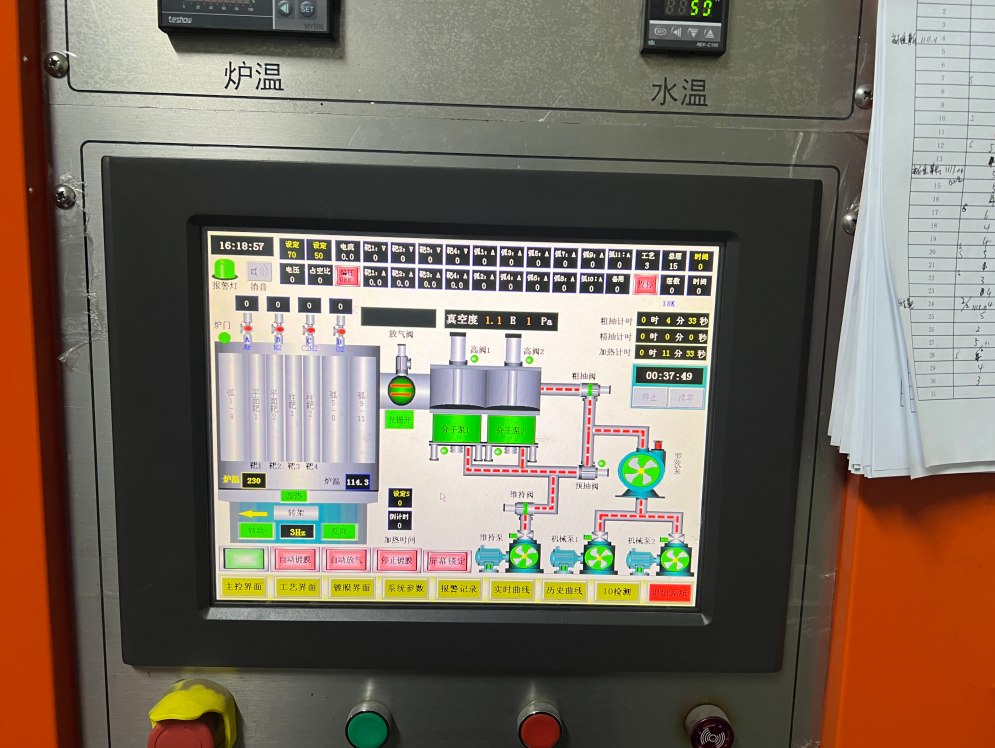
PVD vaporizes a metal source inside a vacuum chamber and lets it condense onto the stainless steel surface. Jewelry vacuum plating chambers typically operate at pressures of 10⁻³ to 10⁻⁵ mbar (Journal of Vacuum Science & Technology). A titanium nitride (TiN) base layer is commonly used beneath PVD gold to improve adhesion to stainless steel (Journal of Applied Physics).
On thickness, PVD on steel usually targets 0.5–1.0 micron for durability equivalent to 2.5-micron vermeil (Jewellers Vigilance Committee), and 0.5 micron is widely treated as the boutique-level export baseline from China (China Jewelry Trade Association). On performance, PVD coating provides significantly higher durability and wear resistance than traditional electroplating for jewelry (Vapor Technologies, Inc.), and PVD-coated jewelry can last 3–5 years without significant tarnishing under daily wear conditions (Surface and Coatings Technology Journal).
How electroplating builds the gold layer
Electroplating deposits gold from a liquid electrolyte bath. A vacuum-based variant, often marketed as IP plating, is also used for fashion jewelry; an SGS technical bulletin reports that vacuum electroplating can increase the tarnish resistance of fashion jewelry by up to 10x compared with water plating. Because the bath chemistry and current density carry the result, lot-to-lot consistency is a question to raise directly with the plater rather than assume from a colour card.
Two parameters matter most in a written specification. The first is the labelling floor: 0.175 micron is the FTC minimum for the “Gold Electroplated” designation in the US. The second is the post-treatment. E-coating (electrophoretic coating) is increasingly applied as a secondary protective layer over gold plating to prevent oxidation (Finishings.com).
Adhesion: put the base layer in writing
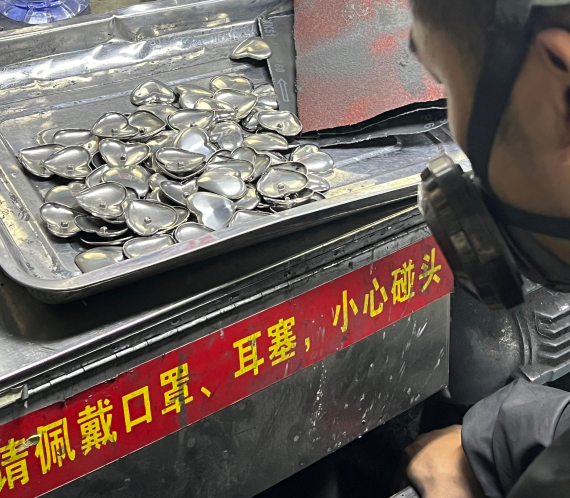
Adhesion is a process outcome, not a marketing feature. Ask for the base layer (TiN or equivalent), the surface-preparation sequence, and the test used to qualify the result. Preparation matters as much as the coating itself: high-polished mirror finishes are typically achieved through 4–5 stages of mechanical buffing before the PVD step (Jewellery Manufacturing Journal).
Vertical integration makes that sequence auditable. Jusnova’s workshop operations include grinding and polishing, laser cutting, mold preparation, welding, and jewelry accessory assembly and bagging, and the company states that its 20-engineer R&D team provides style development and surface-finishing process support and handles new custom development.
Wear resistance, and what “tarnish-free” should mean in a contract
In stainless steel jewelry, the tarnish-free claim generally refers to the stability of a PVD gold coating against sweat and water, assessed through the ISO 9227 salt spray test (International Organization for Standardization). Treat the claim as a testable line item: name the method, the duration and the pass criterion.
The substrate carries half the load. 316L stainless steel is the standard hypoallergenic substrate for high-quality PVD gold plated jewelry (ASTM International). Stainless steel’s Mohs hardness of 5.5–6, compared with 2.5–3 for sterling silver (Gemological Institute of America), is a large part of why daily-wear programs are built on steel in the first place.
Dimensional Parameters: ±0.05 mm Tolerance, 5–80 mm Diameters, 0.5–3.0 mm Thickness
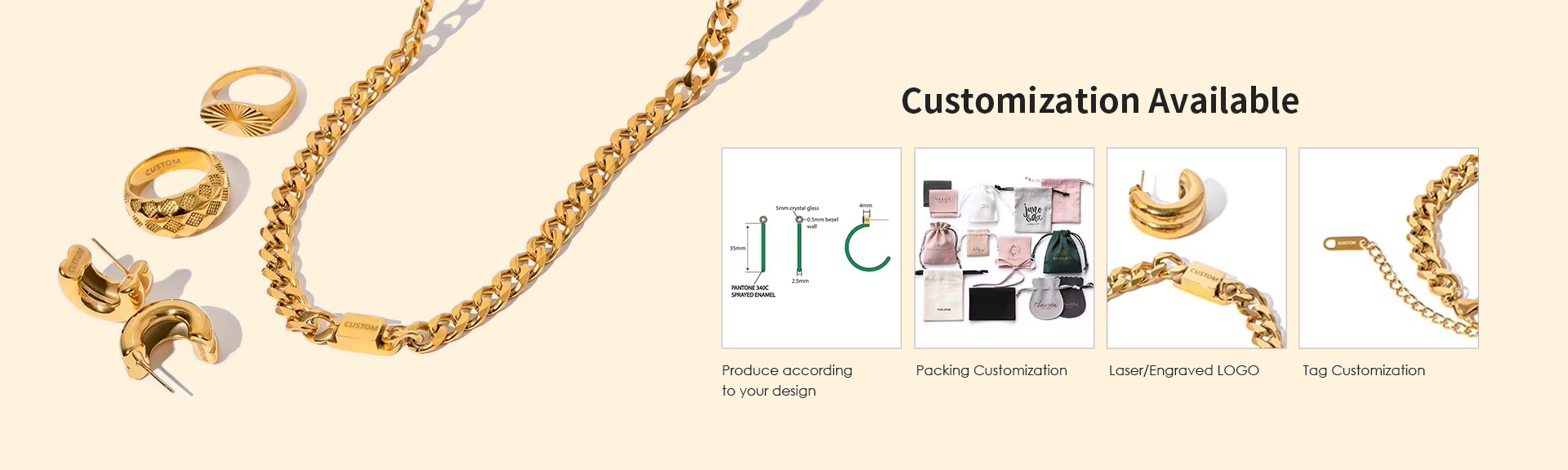
Jusnova’s published specification range covers diameters from 5 mm to 80 mm, material thicknesses from 0.5 mm to 3.0 mm, customized height and width, and a tolerance controlled within ±0.05 mm. Base materials are 304, 316 or 316L stainless steel, and surface finishes include PVD coating (gold, rose gold, black, gunmetal), gold plating, electroplating, brushed, mirror-polished and sandblasted surfaces, or any combination of these.
Dimension control is not a coating problem. A ±0.05 mm tolerance band equals 50 microns. A PVD gold layer of 0.5–1.0 micron therefore consumes roughly 1–2% of that band, and micron-scale plating sits in the same order of magnitude. What actually threatens the tolerance is the forming, grinding, polishing and assembly sequence — which is why a confirmation drawing with per-dimension tolerances should be approved before tooling begins.
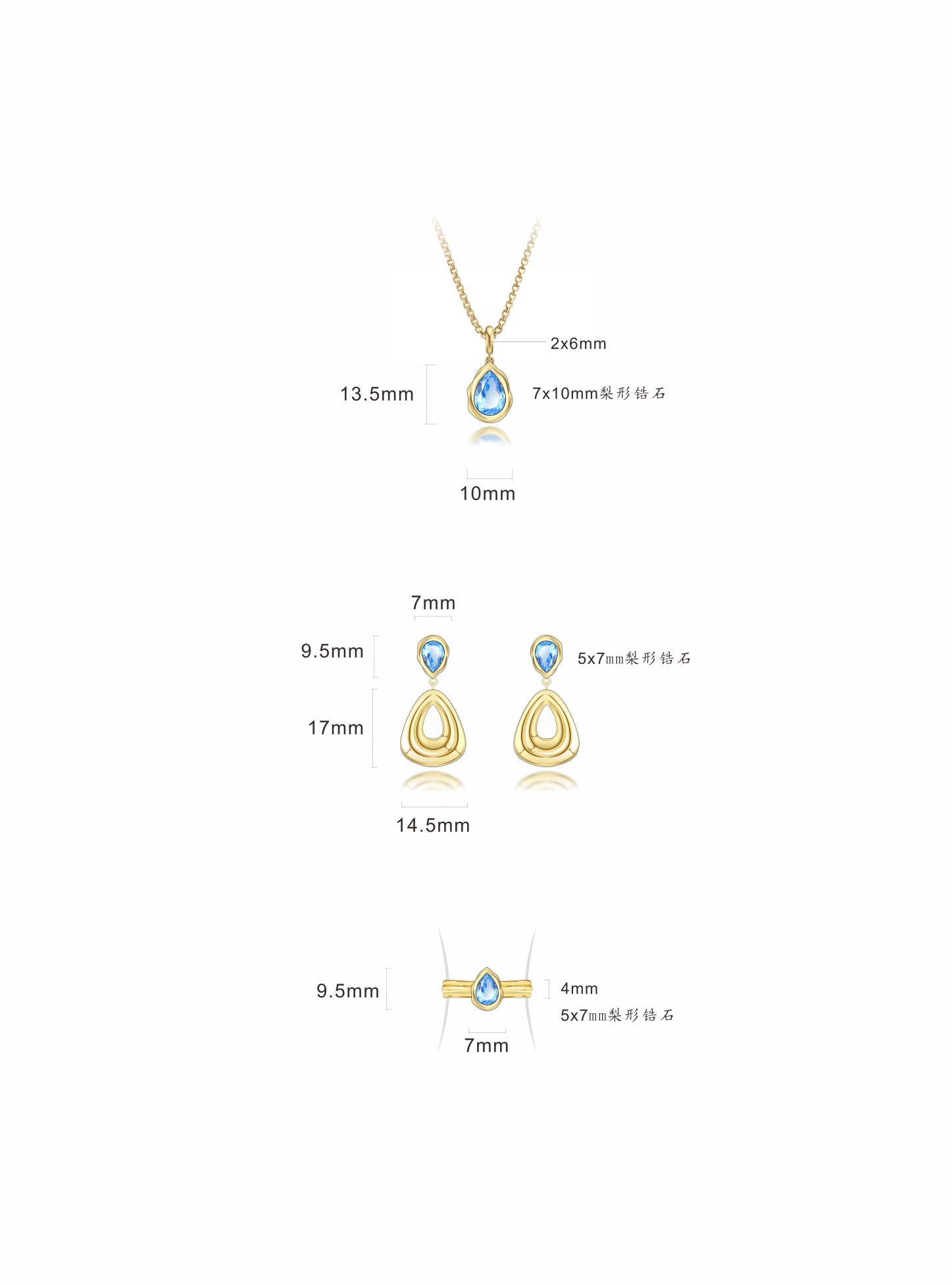
Laser engraving is the one finish that cuts into the part. Industry guidance sets jewelry engraving depth between 0.05 mm and 0.2 mm to keep the marking visible without compromising structural integrity (Trotec Laser Technical Guide). A 20W fiber laser is sufficient for deep engraving on stainless steel accessories (IPG Photonics), and fiber laser technology is the established route for permanent marking in the jewelry industry (Laser Institute of America). Against a 0.5 mm minimum wall, a 0.2 mm engraving is a significant cut, so specify depth relative to the local wall thickness rather than as one number for the whole collection.
Weight is a practical proxy in incoming inspection. Jusnova controls piece weights to achieve a solid, premium feel and can adjust them to a target, and comparing a shipment against the approved golden sample is a straightforward way to detect material-thickness drift before it reaches your shelf.
Step-by-Step: Specifying a Durable Gold Plated Stainless Steel Program
- Choose the process from the wear promise. If the collection claim is waterproof, tarnish-free daily wear, specify PVD and reference the 3–5 year daily-wear durability range reported for PVD-coated jewelry (Surface and Coatings Technology Journal). If the collection is short-cycle fashion where hue variety and unit cost dominate, electroplating or IP plating remains viable — an SGS technical bulletin describes up to 10x tarnish resistance for vacuum electroplating compared with water plating.
- Fix the substrate grade. Use 304 for standard pieces; use 316 or 316L for daily wear and for anything in contact with pierced skin, because 316L is the standard hypoallergenic substrate for high-quality PVD gold plated jewelry (ASTM International) and roughly 15% of the global population has a nickel allergy (World Allergy Organization).
- Name the finish and the colour. Available finishes include PVD gold, rose gold, black and gunmetal, plus gold plating, electroplating, brushed, mirror-polished and sandblasted surfaces. For colour, 14K plating gives a lighter, more subtle hue, while 18K or 24K plating gives a deeper yellow (Intertek Jewelry Testing Services); 18K gold plating is the most preferred finish for high-end fashion jewelry in North America (Statista).
- Write the coating target as a number plus a proof method. PVD gold: 0.5–1.0 micron target (Jewellers Vigilance Committee). Where the electroplated designation applies in the US, the floor is 0.175 micron (Federal Trade Commission). 0.5 micron is a common boutique-level export baseline from China (China Jewelry Trade Association). Proof method: ISO 9227 salt spray or the specific test your compliance team accepts.
- Lock geometry inside the achievable window. Specify 5–80 mm diameters, 0.5–3.0 mm thicknesses and ±0.05 mm tolerance, then attach confirmation drawings. Add post-coating fit checks on mating components — clasps, links, bead holes — because a microlayer accumulates across two surfaces.
- Specify engraving depth, not just engraving artwork. Fiber laser marking with 20W class equipment, at a depth of 0.05–0.2 mm (Trotec Laser Technical Guide), kept to a small fraction of the local wall thickness.
- Attach the compliance pack to the purchase order. REACH declaration (European Chemicals Agency), EN 1811 nickel release testing for pierced parts (CEN), a Proposition 65 position for the US (OEHHA), HS code 7117.19 for trade classification (World Customs Organization), and an ISO 9001-based quality management baseline. Jusnova states that REACH test reports, SGS and BSCI certification are available on request and that its products are compliant with US/EU standards for lead and nickel content.
- Approve a golden sample and freeze the inspection criteria. Confirm coating colour under daylight, salt-spray results, engraving depth, piece weight and every drawing dimension, then treat that approved sample as the reference for the bulk run.
Comparison Table: PVD vs. Electroplating on Stainless Steel
| Parameter | PVD coating | Electroplating / IP plating | What to verify in the PO |
|---|---|---|---|
| How the layer forms | Metal vaporized in a vacuum chamber condenses onto the substrate; jewelry chambers typically run at 10⁻³ to 10⁻⁵ mbar (Journal of Vacuum Science & Technology) | Gold deposited from a liquid electrolyte bath; vacuum/IP plating variants are used for fashion jewelry | Process route stated in writing; chamber or bath parameters on the process sheet |
| Typical gold layer | 0.5–1.0 micron target for PVD on steel (Jewellers Vigilance Committee); 0.5 micron used as a boutique-level export baseline (China Jewelry Trade Association) | 0.175 micron is the FTC minimum for the “Gold Electroplated” designation in the US | Micron target plus a thickness verification method |
| Adhesion | TiN base layer commonly used to improve adhesion to stainless steel (Journal of Applied Physics) | Depends on bath chemistry and surface activation before plating | Base layer specification and pre-treatment sequence |
| Wear and tarnish resistance | Significantly higher durability and wear resistance than traditional electroplating (Vapor Technologies, Inc.); 3–5 years without significant tarnishing under daily wear (Surface and Coatings Technology Journal) | Vacuum electroplating can increase tarnish resistance up to 10x versus water plating (SGS Technical Bulletin); E-coating used as a secondary oxidation barrier (Finishings.com) | ISO 9227 salt spray method, duration and pass criterion |
| Dimensional impact | Micron-scale layer — roughly 1–2% of a ±0.05 mm tolerance band | Micron-scale layer governed by the 0.175 micron labelling floor where that designation is used (FTC) | Post-coating measurement on mating parts |
| Skin and material compliance | 316L substrate supports hypoallergenic positioning (ASTM International) | Equivalent if substrate and bath comply with nickel and lead limits | REACH declaration, EN 1811 where pierced parts are involved, Prop 65 statement |
| Environmental profile | Zero hazardous wastewater reported for PVD versus water electroplating (US EPA) | Water plating generates hazardous wastewater streams that require treatment | Wastewater handling evidence if sustainability feeds your ESG reporting |
| Best fit | Waterproof, tarnish-free daily wear, laser-engraved custom logo pieces | Fashion-driven colour ranges and tighter unit-cost targets | Collection claim matched to the process actually used |
Use Cases: Where Each Specification Earns Its Cost
Waterproof minimalist daily-wear sets. The minimalist segment accounts for 22% of total fashion jewelry revenue in Europe (CBI Ministry of Foreign Affairs), and demand for minimalist daily-wear jewelry among Gen Z consumers increased 30% in 2023 (WGSN Consumer Insights). The matching specification is 316L base metal, PVD gold at a 0.5–1.0 micron target, mirror-polished finish, and an ISO 9227 salt spray report on file. Stainless steel’s Mohs hardness of 5.5–6 (Gemological Institute of America) is what keeps a thin gold layer protected in this use case.
Laser-engraved personalized gifting. Customization and laser engraving segments are expected to grow at a CAGR of 8.5% through 2030 (Market Research Future), inside a personalized jewelry market projected to reach USD 45 billion by 2030 (Custom Market Insights). The specification line that matters here is engraving depth — 0.05 mm to 0.2 mm per Trotec guidance, produced with a 20W fiber laser (IPG Photonics) — checked against the local wall thickness on the confirmation drawing. Personalization works on bangles, bracelets, rings and earrings, which are the core stainless steel shapes in the Jusnova range.
Hypoallergenic women’s pieces for pierced ears. Nickel release testing under EN 1811 is mandatory for items inserted into pierced parts of the body (CEN), and this is not a theoretical constraint: roughly 15% of the global population has a nickel allergy (World Allergy Organization). Combine a 316L substrate with a REACH-compliant coating route, and document both.
Vintage and bulk wholesale programs. The vintage-style gold plated jewelry market grew 18% in the UK in 2023, largely influenced by social media trends (Retail Jeweller). Brushed and sandblasted finishes support that visual language, while a PVD gold base supports the wear claim. For budget planning, industry reporting places wholesale prices for high-quality PVD 18K gold plated stainless steel necklaces at roughly USD 2.00–8.00 depending on complexity (Global Sources Industry Report). Packaging choices — OPP bags, velvet pouches, premium gift boxes or fully custom designs with your logo — are specified alongside the finish and can be adjusted per program.
FAQ
1. Which compliance documents should a gold plated jewelry manufacturer provide for EU and US daily-wear collections?
At minimum, ask for a REACH declaration covering the nickel, lead and cadmium restrictions that apply to jewelry imported into the EU (European Chemicals Agency), EN 1811 nickel release testing for any item inserted into pierced parts of the body (CEN), and a Proposition 65 position for the US market (OEHHA). Where the term “Gold Electroplated” is used on US packaging, note that the FTC minimum thickness for that designation is 0.175 microns. Jusnova Jewelry Co., Ltd states that REACH test reports and SGS and BSCI certification are available on request and that its products comply with US/EU standards for lead and nickel content.
2. How does a manufacturer control plating thickness and dimensional tolerance on stainless steel jewelry?
Thickness is controlled through the coating route and the process window: PVD gold on steel usually targets 0.5–1.0 micron (Jewellers Vigilance Committee), with a TiN base layer used to improve adhesion to stainless steel (Journal of Applied Physics), and vacuum chambers typically running at 10⁻³ to 10⁻⁵ mbar (Journal of Vacuum Science & Technology). Tolerance is controlled upstream, in forming, grinding and polishing: Jusnova works to diameters of 5–80 mm, thicknesses of 0.5–3.0 mm and a tolerance within ±0.05 mm — a band equal to 50 microns, of which a 0.5–1.0 micron coating consumes roughly 1–2%. The company’s 20-engineer R&D team provides surface-finishing process support and new custom development support.
3. What drives the wholesale cost of gold plated stainless steel jewelry?
Industry reporting places wholesale prices for high-quality PVD 18K gold plated stainless steel necklaces at roughly USD 2.00–8.00 depending on complexity (Global Sources Industry Report). Within that band, the cost drivers visible in a bill of materials are the base metal grade (304 versus 316 or 316L), the coating route and thickness target, stone settings (CZ, man-made crystal or moissanite, available in 20+ colours with prong, bezel, channel or pavé settings), surface finish (brushed, mirror-polished or sandblasted), engraving complexity, and packaging format (OPP bags, velvet pouches, premium gift boxes or fully custom branding).
4. Can we validate plating durability and finish before committing to bulk production?
Yes — and the validation should mirror the specification. Request sample pieces in the exact substrate grade, coating route, thickness target and finish; confirm the test method in writing (ISO 9227 salt spray for a tarnish-free or waterproof claim, EN 1811 where pierced parts are involved); check engraving depth against the 0.05–0.2 mm guidance for laser marking (Trotec Laser Technical Guide); and measure the sample against the confirmation drawing at ±0.05 mm. Jusnova Jewelry Co., Ltd supports new custom development with style development and surface-finishing process support, and sample requests can be sent to market@powellwholesale.net or via WhatsApp at +86 189 2623 2416.
5. How long does a custom PVD gold plated stainless steel order normally take?
Supply chain data places the average lead time for wholesale custom gold plated stainless steel jewelry orders at approximately 15–25 days (Panjiva Supply Chain Data). Actual timing depends on whether new molds, engraving files or custom packaging are part of the program, so the sequence to plan around is: confirmation drawing, sample approval, mass production, inspection, then packing. Ask for the production schedule to be stated alongside the quotation so that coating and inspection steps are not compressed at the end of the run.
Conclusion: Turning a Coating Claim into a Repeatable Specification
PVD coating and electroplating are not interchangeable labels — they are different process families with different thickness logic, different adhesion mechanisms and different durability profiles. PVD on stainless steel, targeting 0.5–1.0 micron under a TiN base layer, is the route that supports waterproof, tarnish-free, laser-engraved daily-wear collections; electroplating and IP plating remain the practical answer where hue variety and unit cost dominate.
What makes either route reliable is how it is written down: a micron target with a proof method, a substrate grade matched to skin contact, a geometry window of 5–80 mm diameter and 0.5–3.0 mm thickness held within ±0.05 mm, an engraving depth tied to the local wall thickness, and a compliance pack attached to the purchase order. Verified specifications are also verified responsibilities — which is exactly why they should live in the contract, not the catalogue.
Request Samples or a Quotation
Jusnova Jewelry Co., Ltd manufactures stainless steel and PVD gold plated jewelry to buyer specifications, including custom logo, engraving and packaging programs. Send your target coating thickness, substrate grade, dimensions and finish to Bessie Zhou, email market@powellwholesale.net, tel / WhatsApp +86 189 2623 2416, or review the catalogue at jusnovasteel.com and jusnovajewelry.com.
Referenced sources for technical and regulatory figures include: Vapor Technologies, Inc.; ASTM International; European Chemicals Agency (ECHA); CEN (EN 1811); OEHHA (Proposition 65); Federal Trade Commission; Jewellers Vigilance Committee; SGS Technical Bulletin; USD EPA; US ISO 9227; Journal of Vacuum Science & Technology; Journal of Applied Physics; Surface and Coatings Technology Journal; Trotec Laser Technical Guide; IPG Photonics; Laser Institute of America; Gemological Institute of America; Intertek Jewelry Testing Services; World Allergy Organization; Cognitive Market Research; Business Research Insights; Grand View Research; Statista; CBI Ministry of Foreign Affairs; WGSN Consumer Insights; Retail Jeweller; Market Research Future; Custom Market Insights; Global Sources Industry Report; Panjiva Supply Chain Data; World Customs Organization; China Jewelry Trade Association; Jewellery Manufacturing Journal; Finishings.com; Alibaba Group B2B Trends.