What Is Gold Plated Jewelry? Materials, Durability, and Wholesale Buying Basics
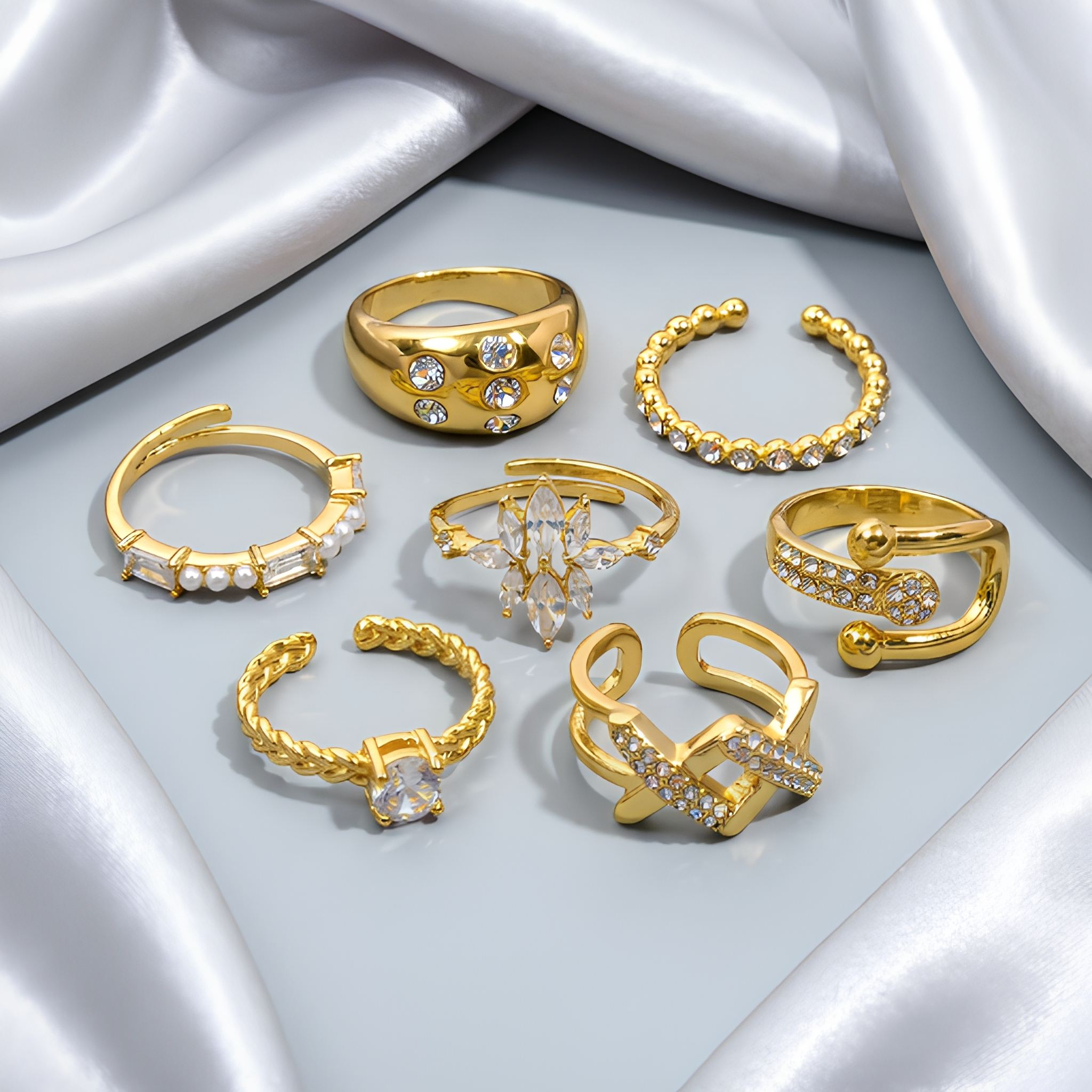
Gold plated stainless steel jewelry: a core category bridging fashion accessories and daily-wear durability.
Gold plated jewelry is a fashion accessories category in which a base metal is coated with a thin layer of gold to create a gold-toned look at a lower cost than solid gold. In the wholesale market, the most commercially important variants are 14K and 18K gold plated stainless steel jewelry, valued for their affordability, hypoallergenic potential, customization options, and resistance to tarnish. This article explains what gold plated jewelry is made of, how plating methods affect durability, how to evaluate quality for a private-label collection, and where buyers should look when sourcing from an ODM/OEM jewelry manufacturer.
Gold Plated Jewelry and the Stainless Steel Shift
For many years, gold plated jewelry was commonly made over brass or copper, which required thick plating and careful wear to avoid discoloration. Since then, the segment has evolved. A rising share of production for daily-wear fashion now combines steel substrates with gold finishing. The global gold plated jewelry market was valued at USD 14.22 billion in 2023, and is projected to reach roughly USD 24.36 billion by 2031, representing a CAGR of about 7.1%, according to Business Research Insights.
One practical consequence of that growth is supply-chain specialization. Stainless steel is increasingly preferred for daily-wear gold plated pieces because it is more scratch-resistant below the coating, and does not corrode the way base-metal alternatives can when plating is damaged. Where stone settings, chains, clasps, and engravings matter to a design, the substrate does much of the durability work; the gold layer does the color work.
Within the market, the Asia-Pacific region accounts for over 35% of global output, which is why most wholesale jewelry buyers, whether they operate on Amazon, Etsy, TikTok Shop, or in physical retail, are ultimately sourcing from manufacturing hubs in Asia. Guangzhou, Dongguan, and Yiwu are frequently cited production centers for stainless steel gold plated jewelry.
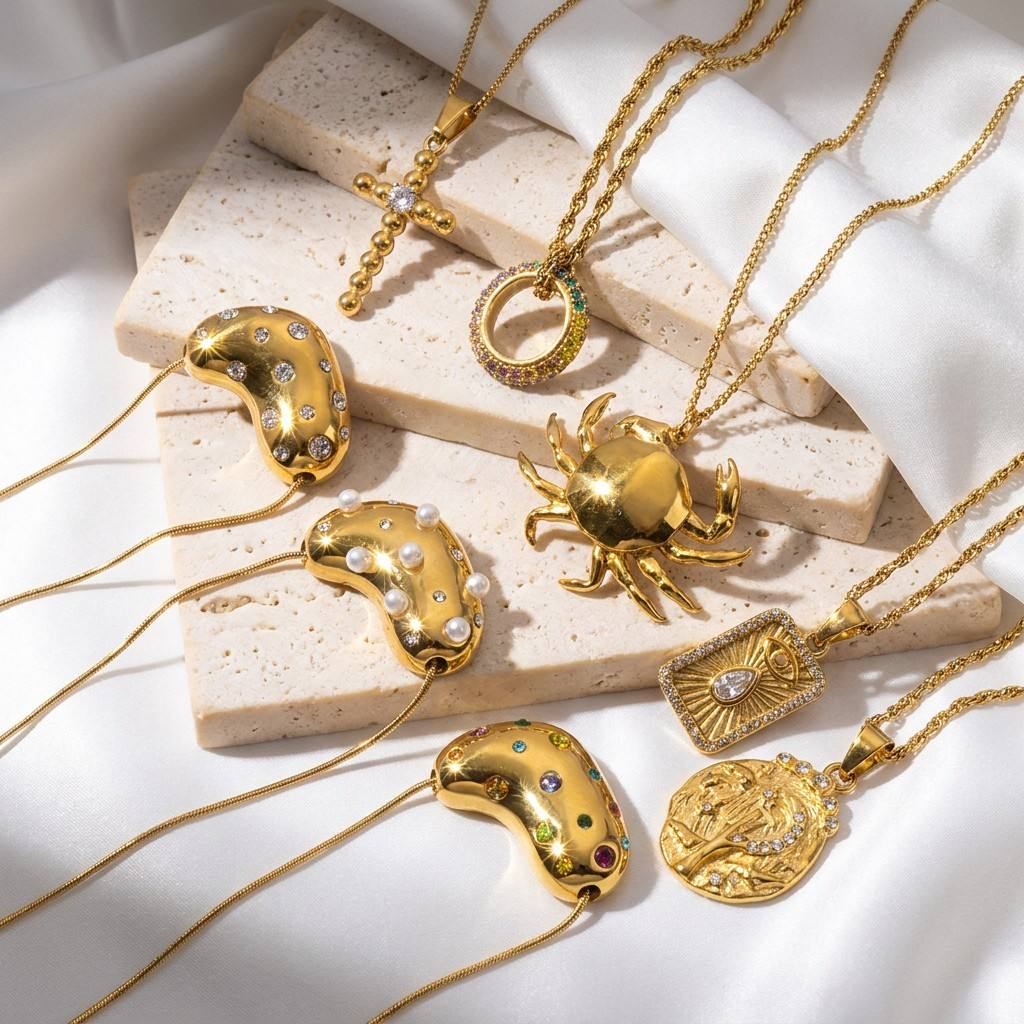
Jewelry sets shown here are typical of gold plated stainless steel wholesale collections available from ODM manufacturers.
What Is Gold Plating on Stainless Steel?
Gold plated stainless steel is a composite jewelry construction: a stainless steel core, usually 304, 316, or 316L, with a decorative gold layer deposited on its surface. The most common specification in the wholesale market is 316L stainless steel, a low-carbon variant of 316 steel that is widely described as a standard hypoallergenic substrate for quality gold plated jewelry. A 316L stainless steel base gives the product corrosion resistance and a nickel-safe surface for most wearers, although individual sensitivities vary.
The gold layer itself is not a single universal formula. 14K gold plating contains a lighter, more subtle yellow hue, while 18K gold plating produces a deeper yellow appearance that is generally the preferred tone for high-end fashion presentation in the North American market. Buyers do not choose between these by thinking about which is "more pure" in the traditional jewelry sense; they choose the shade of yellow that matches their collection aesthetic and their end customer profile.
To be legally classed as gold electroplated in the US market, the gold layer must reach a minimum thickness of 0.175 microns under FTC jewelry regulations. In actual export manufacturing, the practical quality threshold is higher: roughly 0.5 microns of gold is widely treated as the standard for boutique-level fashion jewelry exports. The material input and process control needed to hit 0.5 microns rather than the legal minimum is one of the first topics a wholesale buyer should discuss with a supplier.
Production details in jewelry manufacturing: finishing is inseparable from plating quality.
What Is Gold Plated Jewelry Made Of: Material Options
Material selection determines how a gold plated jewelry piece will behave over months of daily wear. Three stainless steel grades matter most in sourcing conversations:
- 304 stainless steel: well balanced for decorative jewelry, offers good anti-corrosion properties, and is common for fashion accessories.
- 316 stainless steel: contains molybdenum, improving corrosion resistance; used when more demanding wear conditions are expected.
- 316L stainless steel: contains lower carbon, which helps achieve a more stable, high-quality finish for plating; each piece should also undergo alloy or release testing when used for body jewelry.
Gold plated stainless steel pieces use the gold layer strictly as decoration. The steel below determines most mechanical properties. Stainless steel has a Mohs hardness of roughly 5.5–6, substantially higher than sterling silver at around 2.5–3, which is why steel-based pieces hold up better in rings, bracelets, and clasps that contact surfaces during the day.
For a product such as the GEN000516bhia-066 model, available in classic round bangle, flat bangle, cuff bangle, twisted bangle, rope bangle, gem-set bangle, and engraved bangle variants, the manufacturing sequence must match the selection of finish. A high-polished piece needs 4–5 stages of mechanical buffing before plating. An engraved piece requires depth control so the marking stays visible without weakening the item. Laser engraving depth for jewelry is usually between 0.05 mm and 0.2 mm, a narrow range that demonstrates why finishing steps and decoration steps cannot be decided casually.
Key Types of Gold Plating
Wholesale buyers are commonly exposed to three finishing approaches. They solve different color and performance problems.
Traditional water electroplating is the conventional route: the jewelry piece is immersed in a tank and a gold layer is deposited electrically. It is economical, but the layer is comparatively susceptible to wear if too thin or if the substrate is not perfectly polished.
Vacuum electroplating, often called IP plating, deposits coating inside a chamber at reduced pressure. Vacuum plating chambers used in jewelry normally operate at pressures of roughly 10^-3 to 10^-5 mbar. SGS technical literature has reported that vacuum electroplating can increase fashion jewelry tarnish resistance by up to 10x versus conventional water plating, an estimate you should treat as directional rather than a guarantee for every item.
PVD (Physical Vapor Deposition): in jewelry, PVD is a broad term for vacuum coating techniques, typically with titanium nitride or similar layers that create dense, well-adhered coatings. PVD is widely recognized as providing significantly higher durability and wear resistance than traditional electroplating. Some manufacturers also add a titanium nitride (TiN) base layer in PVD gold plating to improve adhesion on steel.
When a collection brief says "waterproof," "swim-safe," or "non-tarnish," most serious suppliers will steer toward PVD or vacuum plating rather than simple tank plating. But process claims alone are insufficient for a procurement decision. PVD claims should be labeled with measurable outcomes, such as resistance to sweat and water based on ISO 9227 salt spray testing. The phrases "tarnish-free" and "waterproof" are marketing conveniences unless test method and wear conditions are defined.
Gold Plated Jewelry vs. Gold Vermeil vs. Gold Filled
Gold plated jewelry sits near, but not inside, several adjacent product categories. To define it precisely, buyers should understand where the boundaries start.
| Attribute | Gold Plated Stainless Steel | Gold Vermeil | Gold Filled |
|---|---|---|---|
| Base material | 304/316/316L stainless steel, or another base metal | Sterling silver | Typically brass or another base metal |
| Gold layer thickness | Varies by specification; quality boutique-level export pieces often target about 0.5 microns | Minimum 2.5 microns | Usually 5% gold by weight |
| Gold color options | 14K, 18K, rose gold, yellow gold, black, gunmetal and similar tones | Usually yellow gold tones | Usually yellow gold tones |
| Durability logic | Hard steel core + hard PVD/vacuum coating | Silver core + thicker traditional gold layer | Mechanical bonding of gold layer |
| Typical wholesale positioning | Affordable daily-wear, waterproof, custom logo | Bridge between costume and fine | Long-life mid-market |
| Hypoallergenic potential | Yes when using 316L steel and passing nickel release testing | Yes, when made from quality sterling silver, but test still matters | Depends on base and surface materials |
For a fashion brand serving daily-wear customers who shower, swim, sweat, and want to wear jewelry every day, stainless steel plus PVD will often be more practical than vermeil or gold filled. For a brand that wants a heavier gold layer and is willing to restrict wear conditions entirely, vermeil is a different emotional sale but a less robust one in humid environments. Always rely on documented specifications rather than the name of the category.
H2 What Makes Gold Plated Jewelry Non-Tarnish and Waterproof
Two product claims appear repeatedly in B2B catalogs: non-tarnish and waterproof. Buyers should not assume those terms are standardized. They are claims about how a product was built, and they usually depend on four variables:
- Surface quality before plating. Plating does not hide defects. A piece that enters the coating chamber with pits, scratches, or uneven polishing will fail visually over time.
- Coating density and adhesion. PVD and vacuum coatings are denser than many conventional deposited layers, creating fewer pathways for sweat to reach the base metal.
- Base layer design. In PVD gold jewelry, a TiN or similar base layer improves adhesion between the gold-colored surface and the stainless steel core.
- Wear and care context. PVD coated jewelry can last 3–5 years under normal daily wear conditions without significant tarnishing, according to work published in Surface and Coatings Technology. Heavy friction, hard impact, or direct contact with abrasive surfaces can still damage the coating.
Therefore, when a supplier says a chain is "waterproof and non-tarnish," a knowledgeable buyer will ask three clarifying questions. What cleaning or care was tested? What standards were applied? And how are defects at the clasp or connection points handled where coating typically breaks down first?
Hypoallergenic Gold Plated Jewelry and Nickel Risk
The term hypoallergenic does not mean universally allergy-proof. It means a product is designed to minimize the risk of allergic reactions. For gold plated stainless steel, this begins with 316L stainless steel, which is broadly accepted as a safe substrate. However, jewelry that enters pierced skin, such as earrings, must also meet stricter EU rules: EN 1811 is mandatory for testing nickel release on pieces inserted into pierced parts of the body. Under the EU REACH Regulation (EC No 1907/2006), nickel, lead, and cadmium are restricted in jewelry imported into the EU. California Proposition 65 additionally requires warnings for lead or cadmium exposure in jewelry sold in California when levels exceed thresholds. These are separate but overlapping requirements.
Global allergy statistics explain why this matters commercially: roughly 15% of the world population has a nickel allergy, according to the World Allergy Organization. Retail return rates for irritation-related complaints push brands toward hypoallergenic construction. For genuine low-risk products, a responsible supplier should be able to provide material declarations and relevant test results rather than just calling the item "sensitive skin friendly."
Laser Engraved Gold Plated Jewelry and ODM Customization
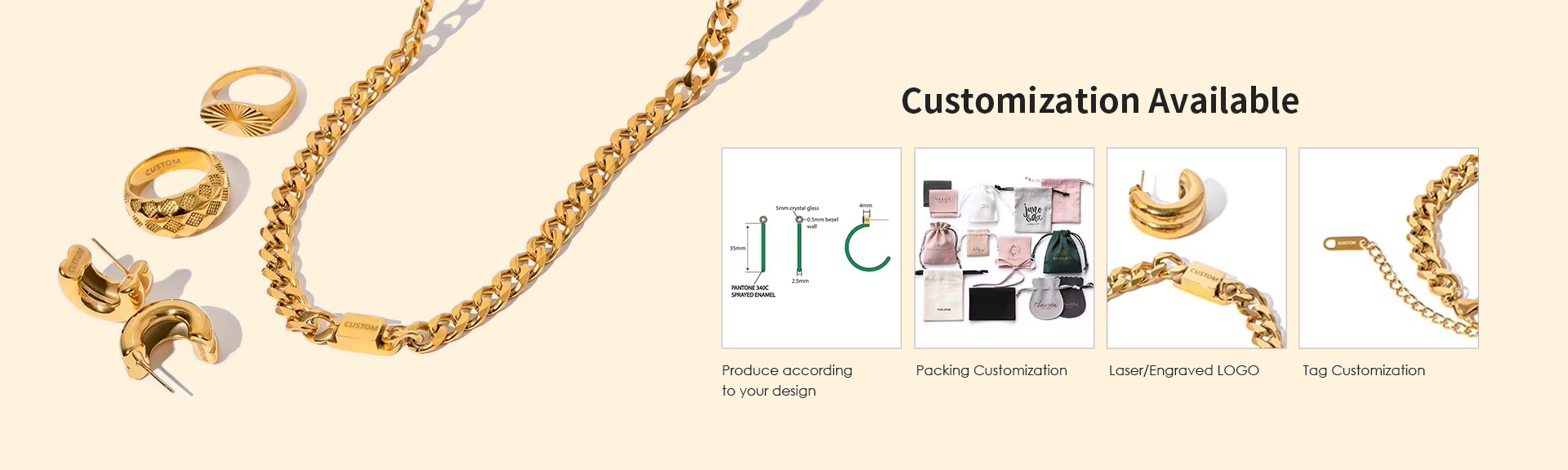
One of the fastest-moving segments is personalized gold plated jewelry. Laser engraving is now the standard method for permanent custom logos and text on stainless steel accessories, typically using fiber laser technology. With the right equipment, engraving depth can be held within tolerance so letters are crisp, visible, and structurally safe. The personalized jewelry segment is projected to reach approximately USD 45 billion by 2030, according to Custom Market Insights, while customization and laser engraving segments are expected to grow around 8.5% per year through 2030.
For wholesale buyers, laser engraving changes the supplier relationship. Your brand can add edge marks, logos, initials, or limited-edition codes after plating. That is relevant to the product because it enables small custom runs without changing the core item: order existing blank gold plated pieces, then engrave logos to create a brand-exclusive product. The commercial effect is visible in the success of engraved bangle styles and engraved bracelet styles in wholesale catalogs.
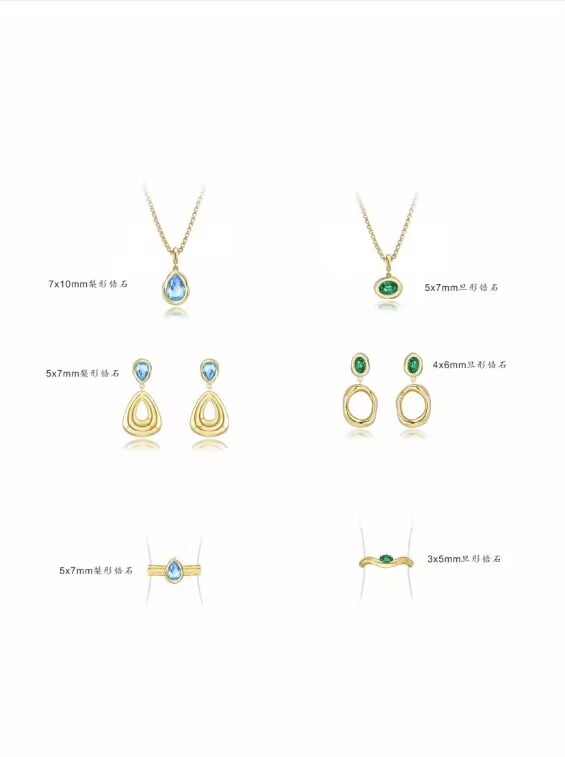
Custom confirmation drawings are essential in ODM gold plated jewelry production to lock style, size, and finish before tooling.
Wholesale Gold Plated Stainless Steel Jewelry: Evaluation Criteria
Sourcing gold plated stainless steel jewelry wholesale is not the same as sourcing solid gold pieces. Buyers should be able to look at a potential manufacturing partner through production capability rather than page decoration. Criteria worth including in a sourcing scorecard:
- Substrate specification: confirm that items are made from intended stainless steel grade, especially if earrings or pieces will be sold to sensitive-skin customers.
- Finish logic: know whether the item is PVD/vacuum coated or water-plated, and what kind of performance is backed by evidence.
- Customization depth: check engraving, stone setting, packaging, bangle sizes, and model adjustment capacity rather than just color.
- Order quantities and lead time: custom gold plated stainless steel wholesale orders in China broadly run 15–25 days, but actual lead time should be confirmed against your product mix and peak season.
- Documentation: current compliance papers, including REACH test reports and, if needed, SGS or BSCI certifications, should be available upon request.
Looking at a Realistic Example: A Gold Plated Stainless Steel Manufacturer in Guangzhou
To make the above criteria concrete, it helps to examine a real supply-chain case. Jusnova Jewelry Co., Ltd. is a Guangzhou-based jewelry manufacturer established in 2009, employing roughly 300 staff in a 1,000-square-meter facility, with annual production capacity of about 3,000,000 units. It operates with 20 engineers in research and development, and works as an ODM/OEM partner to global wholesale and brand buyers. Around 95% of its output is exported, chiefly to Europe and America.
The company's main products include stainless steel bangles, bracelets, rings, earrings, PVD/electroplated gold pieces, and waterproof and tarnish-free jewelry. Hypoallergenic constructions are part of its standard offer, built around stainless steel bases. It also offers style development and surface-finishing process support, filing new-custom development and 500+ styles each month for customers who need speed.
That profile matters for a sourcing article because it shows what the phrase "gold plated stainless steel jewelry manufacturer" includes in a serious ODM context: casting, polishing, PVD coating, assembly, quality checks, and custom packaging. Production photos from the Jusnova workshop show grinding, polishing, assembly, jewelry molds, and finishing stations. None of these capabilities can be verified by reading a website; they should be tested through ordering, sampling, and inspection procedures.
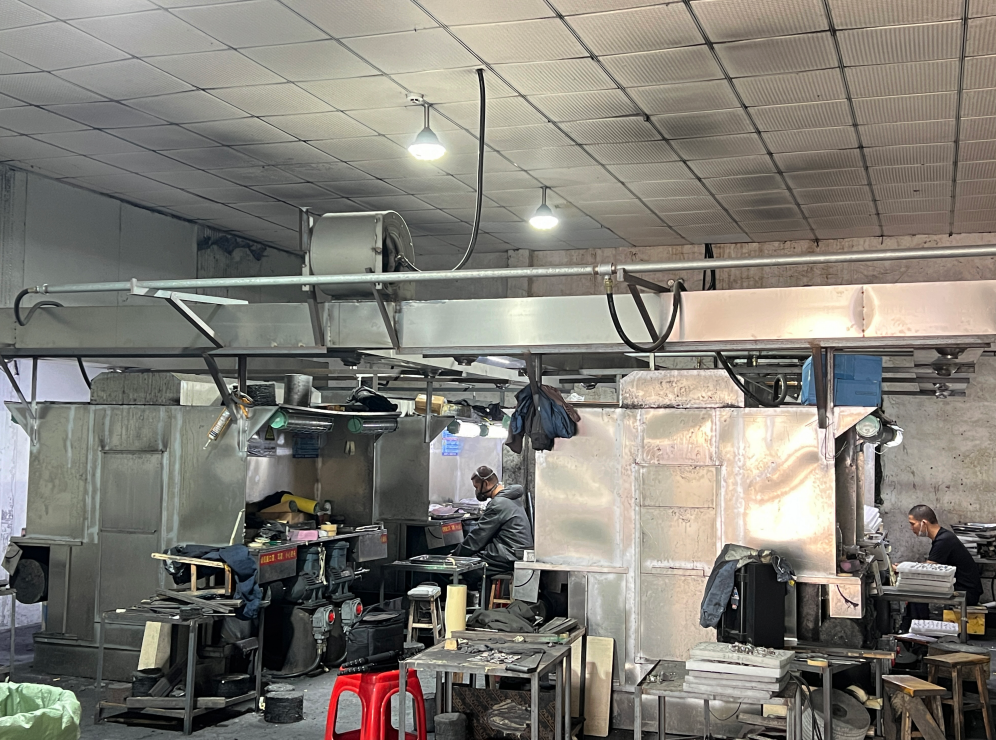
Consistent shop-floor control is the foundation underneath gold plated stainless steel product claims.
Applying Quality Criteria to a Representative Product
In ODM catalogs, the product line including style GEN000516bhia-066 illustrates normal specification variety. It is available as a bangle or bracelet in classic round, flat, cuff, twisted, rope, and gem-set designs, and can be manufactured from 304, 316, or 316L stainless steel. Finishing can combine PVD gold, rose gold, black, or gunmetal. For stones, CZ is common in 20+ colors, set with prong, bezel, channel, or pave settings.
Physical tolerances also show why custom manufacturing matters. Diameters can range from 5 mm to 80 mm, with thickness between 0.5 and 3.0 mm, and tolerance usually held within ±0.05 mm. These numbers should be part of a buyer's conversations with any supplier because bangle diameter and thickness are among the first sources of post-production complaints. A product whose size tolerance is not controlled will produce inconsistent fit even when color and finish look perfect. The same logic extends to packaging choices: from OPP bags to velvet pouches to premium gift boxes with custom logo treatment.
When to Use Which Type of Gold Plated Product
Different wholesale channels need different product configurations. Matching the product type to the sales context is as important as matching the supplier to the product type.
- DTC e-commerce (Amazon, Shopify, TikTok Shop, Etsy): best served by waterproof, non-tarnish product names with clear material explanations and consistent demo photography. Reviews are unforgiving; customers who swim with jewelry and return tarnished pieces will destroy a listing. PVD 18K gold plated stainless steel is well aligned here.
- Gift and souvenir wholesale: custom engraved gold plated bangles, charm bracelets, and gift-boxed sets sell based on personalized messages and seasonal relevance. Search demand for "tarnish free jewelry" peaks around Q4 gift-giving.
- Boutiques and independent jewelry shops: smaller quantities, heavier visual identity. This channel values less common finishes like rose gold and gunmetal, and can absorb minor sample costs for exclusive styles.
- Corporate gifts and promotional products: durable metal items receive better end-of-year evaluations than disposable gifts. Custom logos and presentation matter more than comprehensive sizes.
In all channels, the phrase "trendy gold plated wholesale" hides an important logistical reality. A trend moves quickly; a manufacturing partner must be willing to work with monthly style drops of 500+ new designs if the brand wants to move at trend speed.
Gold Plated Jewelry Care and Consumer Communication
Even well-made PVD gold plated jewelry eventually shows wear under heavy conditions. Consumer communication is therefore a brand function. The most useful messages are those that set practical expectations: avoid abrasive contact, keep pieces away from harsh chemicals, remove rings before heavy lifting, and use a soft cloth for cleaning. Brands that frame maintenance as a normal part of daily jewelry handling end up with fewer refund requests than those that over-promise invincibility. For jewelry marketed as waterproof, be precise about where the line is between splash-proof and fully submerged, because many retailers will test that claim repeatedly in customer reviews.
Supplier Trust and Certifications: What Matters
The jewelry supplier trust stack is built from several documents. For EU export, REACH compliance is a regulatory baseline. Nickel release testing per EN 1811 is mandatory for certain body-piercing jewelry. SGS inspection reports can be requested by brands that need independent verification. BSCI certification is relevant for brands monitoring factory labor standards. The presence or absence of these papers is a visible due-diligence signal, not merely decoration.
Hygiene and sustainability are also moving into selection criteria. PVD gold plating produces no hazardous wastewater, an advantage over older water electroplating in an era when buyers are more likely to ask about environmental practice. Recycled stainless steel usage also increased among manufacturers in 2023, although the exact share varies and should be confirmed directly with each supplier.
A manufacturer like Jusnova, which states that REACH test reports, SGS, and BSCI certification are available upon request, is not making a vague claim about compliance; it is providing the kind of documentation trail that medium and large buyers need before their own legal and quality teams will approve the order.
What is gold plated jewelry?
Gold plated jewelry is a fashion accessory in which a base material, commonly stainless steel, is covered by a decorative gold layer. Alloy purity usually is 14K or 18K, where the gold layer may be deposited by traditional electroplating, vacuum electroplating, or PVD. When the base layer is 316L stainless steel, the end item generally offers better waterproofing behavior and tarnish resistance than older brass or copper plated items.
Is gold plated stainless steel jewelry hypoallergenic?
Gold plated stainless steel jewelry is not automatically hypoallergenic for every wearer, but it can be designed to be low-risk. 316L stainless steel is widely regarded as a hypoallergenic substrate for quality gold plated jewelry. Hypoallergenic claims depend on material selection, coating coverage, and testing: EU law, for example, requires EN 1811 nickel release testing for jewelry intended for pierced body parts. Pieces that satisfy such requirements are the safest to describe as hypoallergenic.
How long does gold plated jewelry last?
Under normal daily-wear conditions, PVD coated jewelry can last roughly 3–5 years before noticeable tarnishing, depending on coating quality, wear environment, and care. Traditional electroplating is generally less durable; vacuum electroplating may increase tarnish resistance relative to water plating. Buyers should evaluate the coating type, base material, and test evidence instead of expecting any universal lifetime.
How much does wholesale gold plated jewelry cost?
Wholesale pricing varies by product, but industry reports indicate that high-quality PVD 18K gold plated stainless steel necklaces commonly range from roughly USD 2.00 to USD 8.00 depending on stone settings, labor complexity, finish, and order volume. Bangles, rings, earrings, and bracelet styles have different price bands. Because no two quotations are identical in finish and quality, price comparisons are only meaningful when placed beside an identical specification sheet.
What is the typical lead time for custom gold plated jewelry orders?
As a broad reference, custom gold plated stainless steel wholesale orders made in China typically require 15–25 days of lead time. This varies with order quantity, packaging, engraving, seasonal load, and the number of new styles. Buyers should plan peak-season orders several weeks earlier and ask the supplier to show a production schedule before placing payment.
If you are building a gold plated jewelry line and need an ODM/OEM partner who can handle material choices, PVD color matching, custom engraving, and branded packaging, Jusnova Jewelry can be a starting point for your supplier search. You can request samples, confirm lead times, and ask for available REACH or SGS documentation before committing to bulk production.
Request Gold Plated Jewelry Samples
Evaluate material, finish, and engraving quality before your first bulk order.
Email: market@powellwholesale.net | Tel/WhatsApp: +86 189 2623 2416