
Dissolved CO2 vs. Residual Chlorine Sensors: Which Online Analyzer Fits Your Water Treatment Process?
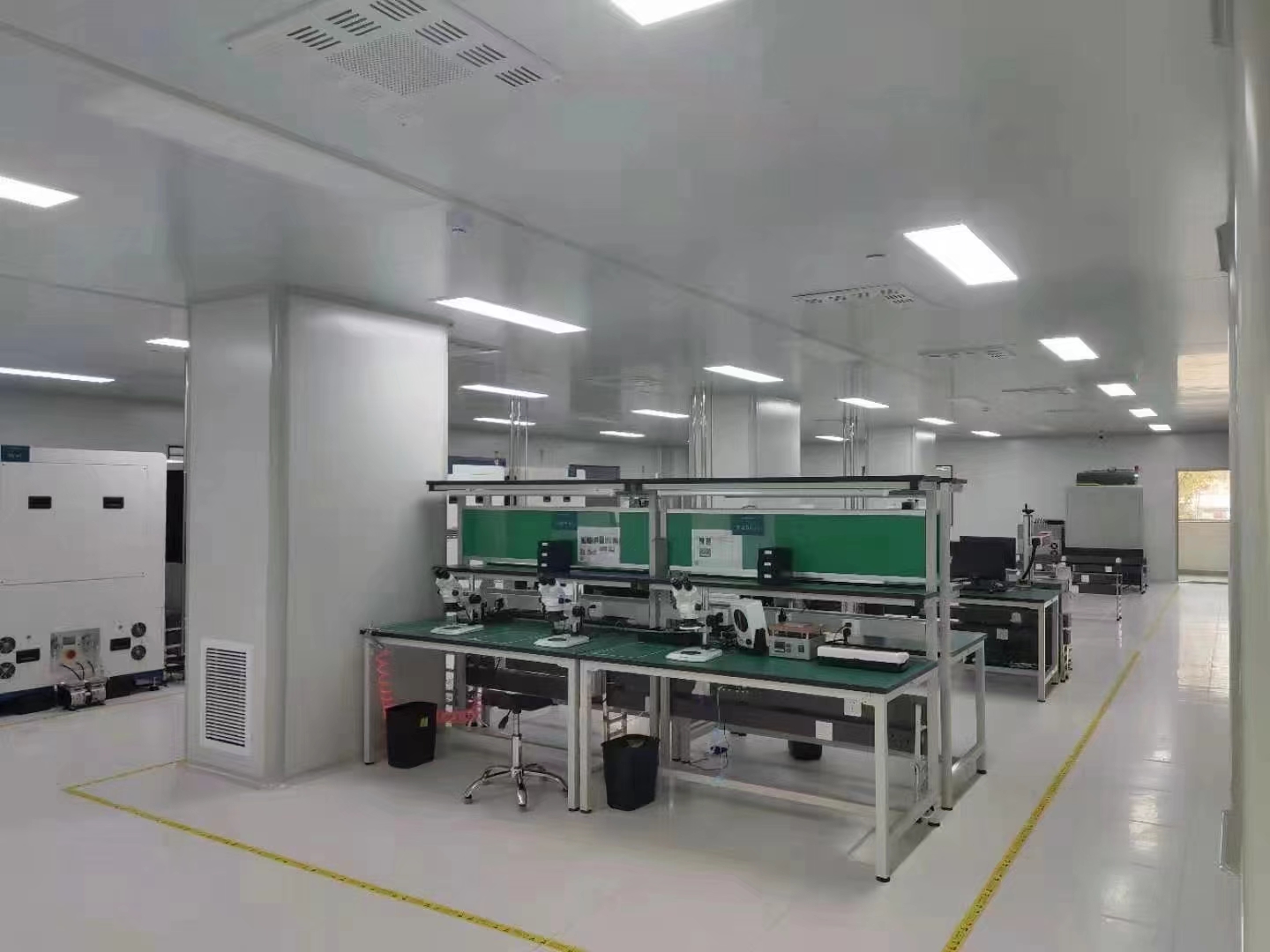
Water quality sensor manufacturing at KACISE. The same production environment covers both dissolved CO2 and residual chlorine analyzer platforms.
Two measurements decide two very different outcomes in a treatment plant. Dissolved CO2 quietly governs pH stability, carbonate balance and corrosion risk, while residual chlorine is the number most operators are judged on for disinfection. Choosing an online analyzer is therefore not a question of which sensor is “better” — it is a question of which control problem is sitting in front of you. This guide walks plant engineers and procurement teams through the operating principles, application fit and maintenance demands of the Dissolved CO2 Sensor in Water and the Online Residual Chlorine Sensor, then applies a three-step decision framework covering measurement range, chemical dosing control and calibration frequency.
Xi'an Kacise Optronics Tech Co., Ltd. (KACISE) is a water quality sensor manufacturer founded in 2014, operating a 40,000 m² facility with an annual output of about 120,000 units and exporting roughly 70% of production to EU and USA markets. Its portfolio covers both dissolved CO2 monitoring and residual chlorine measurement, alongside a wider range of water quality parameters including pH, ORP, conductivity, dissolved oxygen, turbidity, TSS and multi-parameter systems. That dual coverage is what makes the comparison in this article practical rather than theoretical.
Problem Definition: CO2 and Chlorine Answer Different Control Questions
Dissolved CO2 and residual chlorine are both “water quality” numbers, but they belong to different control loops. Residual chlorine is a disinfection-control variable: it tells you whether enough oxidant remains after treatment to keep water microbiologically safe through the distribution network or at the point of discharge. Dissolved CO2 is a chemistry-and-materials variable: because CO2 sits in equilibrium with bicarbonate and carbonate and directly influences pH, monitoring it helps operators hold pH inside a target band and avoid the corrosion or scaling conditions that follow a drifting pH.
The practical risk is mis-matching. Install a chlorine analyzer where the real control problem is pH drift driven by CO2, and the loop never closes. Buy a CO2 analyzer for a permit written around a disinfection residual, and capital has been spent on the wrong feedback signal. Both errors are common in retrofits, where the instrument list is inherited from a previous design rather than re-derived from the process.
A subtler issue sits inside the carbonate system itself. Because dissolved CO2, bicarbonate and pH move together, CO2 data is rarely used in isolation — it is usually read alongside pH to describe the carbonate balance of the water. Residual chlorine behaves differently: it is a discrete oxidant concentration that responds quickly to dosing changes and is normally paired with pH and ORP to describe the disinfection environment.
Industry Background: Why Both Analyzer Types Are Growing
Demand for continuous water quality monitoring is expanding on both sides of the CO2/chlorine divide. The global water quality sensor market was valued at USD 5.74 billion in 2024 and is projected to reach USD 9.10 billion by 2030, growing at a CAGR of 8.1% (Grand View Research). Within the broader water quality monitoring systems market — USD 5.8 billion in 2024 — sensors account for the largest segment at a 45% share. Asia Pacific dominated the sensor market with a 46.5% revenue share in 2023, with China identified as a major increasing market.
The connected layer is growing faster still. IoT-enabled water quality management is expected to grow at a CAGR of 16.23% through 2030 (TechSci Research), which explains why modern analyzers are judged on their digital interfaces — RS-485 and Modbus outputs, relay channels, and SCADA, PLC or IoT compatibility — and not on the sensing element alone.
Compliance expectations are tightening in parallel. Industrial water quality sensors are commonly specified against EN IEC 61326-1:2021, the EMC standard for electrical equipment for measurement, control and laboratory use, while sensors used in drinking water applications are frequently required to meet NSF/ANSI 61 and 372 for material safety and lead-free compliance. For buyers, these standards are not marketing detail: they determine whether an instrument can be installed at all in a given jurisdiction.
Established global suppliers in this space include Hach (Danaher), Xylem Inc., Thermo Fisher Scientific and Endress+Hauser, alongside specialist manufacturers such as KACISE that concentrate on specific measurement families and configurable multi-parameter platforms. If you are building a shortlist, that split matters: a generalist line may not offer dissolved CO2 at all, while a specialist line may offer both dissolved CO2 and residual chlorine under one interface philosophy.
KACISE's water quality sensor range carries CE EMC certification under certificate ZTS23061509TCE, issued by Shenzhen ZTS Testing Service Co., Ltd. on 21 June 2023, covering EN IEC 61326-1:2021, EN 55011:2016+A2:2021 and the EN 61000-3 series.
Detailed Solution: How Each Analyzer Works and Where It Belongs
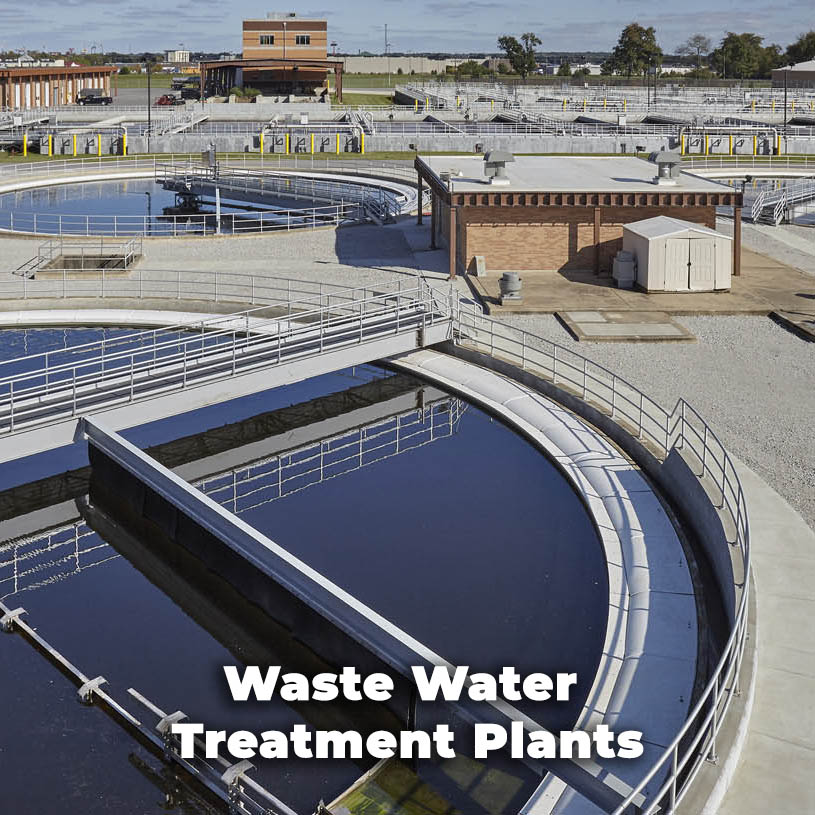
Wastewater treatment: disinfection residual control and carbonate-balance control are two separate loops that are often specified together.
The Dissolved CO2 Sensor in Water
Continuous dissolved CO2 measurement is generally implemented by separating gaseous carbon dioxide from the sample across a gas-permeable barrier and relating the resulting signal to the CO2 concentration in the water. Because the measurement depends on that barrier and on an internal sensing chemistry, CO2 sensors tend to be selective: they respond to dissolved CO2 rather than to the whole carbonate system, and the reading is normally interpreted together with pH.
Where a CO2 sensor earns its place:
- Processes where CO2 is deliberately added or stripped for pH control or remineralisation.
- Recirculating and process water loops where CO2 accumulation shifts pH.
- Aquaculture and other biological systems where CO2 is both a metabolic product and a water-quality stressor.
- Drinking water and industrial water duties where CO2-driven pH change affects corrosion control.
Maintenance demand follows the same principle. The gas-permeable interface is the part most exposed to fouling and to sample chemistry, so practical maintenance work concentrates on that interface and on keeping the sample representative — stable flow, a clean sample line and consistent temperature. This is why CO2 sensors in heavily loaded streams benefit from good sample conditioning upstream of the sensor, not just from a more frequent wipe-down schedule.
The Online Residual Chlorine Sensor
Residual chlorine is measured online so that the disinfection loop can be closed automatically. Continuous chlorine measurement is commonly implemented with an amperometric or similar electro-analytical cell, and the reading is used directly as the feedback variable for chlorine or hypochlorite dosing. Because the disinfection loop usually also needs pH and ORP, chlorine is often specified as part of a multi-parameter analyzer rather than as a permanently fixed single-parameter transmitter.
KACISE approaches residual chlorine as a parameter inside a configurable analyzer. The KMPW520 6-in-1 Water Quality Analyzer accepts up to six freely combinable parameters — pH, ORP, COD, BOD, residual chlorine and turbidity among them — so one controller can host the chlorine measurement and the pH/ORP pair the disinfection loop normally requires. The analyzer provides a 7.0-inch colour touch screen, two 4-20 mA output channels, six relay outputs, two RS-485 (Modbus-RTU) ports, TF-card and USB data storage, historical curves and password protection.
Where KACISE Sits in This Space
KACISE manufactures both sensor lines, which matters directly for the decision in this article: a buyer who needs CO2 control, chlorine control, or both can source them from one supplier with a consistent interface philosophy. The rest of the water quality range follows the same emphasis on digital output and system compatibility, and the wider KACISE portfolio — level, pressure, flow and gas measurement — is built for the same SCADA, PLC and IoT environments.
For multi-parameter work, the KWS-800 Online Multi-Parameter Water Quality Monitoring System integrates up to seven optional parameters — fluorescent dissolved oxygen, 4-electrode conductivity, fibre turbidity, digital pH/ORP, chlorophyll and oil-in-water — plus temperature, in a single all-in-one IP68 body made of titanium alloy and 316L stainless steel, with RS-485 (Modbus) output and an automatic cleaning device. Published ranges on that platform include 0-20 mg/L for dissolved oxygen, 0-1000 NTU for turbidity, 0-14 pH for pH, and 0-500 ppb / 0-50 ppm for oil-in-water, with a temperature range of 0-50 °C.
Step-by-Step Breakdown: A Three-Question Decision Framework
The framework below is deliberately narrow. It answers three questions in order — what must be controlled, how the signal reaches the dosing loop, and how much maintenance the choice will create — and it treats product selection as the last step rather than the first.
Step 1 — Match the analyzer to the control variable, then check the range
Start with the permit and the control loop, not with the sensor catalogue. If the number you must hold is a disinfection residual, residual chlorine is the primary parameter. If the number that drifts and causes trouble is pH linked to carbon dioxide, dissolved CO2 is the primary parameter.
Range is the second filter, and it has to be read in two parts:
- The concentration window your process actually occupies. Residual chlorine demands differ between a clean drinking water stream and an industrial or wastewater disinfection duty; dissolved CO2 levels differ between open surface water and a recirculating or CO2-dosed system.
- The instrument's published measuring range for each parameter. KACISE publishes explicit ranges for its multi-parameter platforms — for example 0-20 mg/L for dissolved oxygen, 0-1000 NTU for turbidity, 0-14 pH for pH and 0-500 ppb / 0-50 ppm for oil-in-water on the KWS-800 — and the same discipline applies when you compare CO2 or chlorine ranges across suppliers.
Step 2 — Trace the parameter to the chemical dosing loop
Dosing control is where an analyzer decision quietly becomes an integration decision. The chlorine loop needs the residual chlorine signal to drive a chlorine or hypochlorite dosing pump; the CO2 loop needs the CO2 signal, usually alongside pH, to drive CO2 addition, CO2 stripping or alkaline dosing. Two interface facts decide how cleanly that loop closes:
- Analog output channels, which carry the measurement to the dosing controller or PLC. The KMPW520 provides two 4-20 mA channels.
- Relay outputs, which can switch dosing pumps or valves directly. The KMPW520 provides six relay outputs.
If your plant intends to run both a chlorine loop and a pH/CO2-related loop, count the outputs first. A six-parameter analyzer with two 4-20 mA channels and six relays can host several loops on one chassis; a single-parameter transmitter usually cannot. Digital protocol matters as well: RS-485 with Modbus-RTU, offered on the KMPW520 through two ports and on the KWS-800 through RS-485 (Modbus), lets the same instrument feed a SCADA, PLC or IoT platform without a separate gateway. KACISE designs its water quality instruments to be compatible with SCADA, PLC systems and IoT platforms on standardised output signals and digital communication protocols.
Step 3 — Estimate calibration and maintenance load before purchase
Calibration frequency is not a fixed number that can be read off a datasheet. It is an outcome of the sensor principle, the sample and how well the installation is designed. The decision framework is therefore about which design choices push the interval longer:
- Fouling exposure. Wastewater, surface water and any stream carrying solids or biofilm will foul an optical or membrane interface faster than clean drinking water. Automatic cleaning hardware is the single most useful feature for these streams — the KWS-800 includes an automatic cleaning device.
- Measurement principle stability. Parameters that depend on a consumable reference or a membrane degrade predictably; parameters measured optically or with a solid-state electrode generally drift more slowly. Ask the supplier which principle each parameter uses before comparing intervals.
- Accessibility and diagnostics. A sensor that is easy to remove, and a controller that stores historical curves and protects its settings, reduces the labour cost of every calibration event. The KMPW520 records historical curves, stores data to TF card or USB and supports password protection.
Use Cases: How These Decisions Play Out in the Field
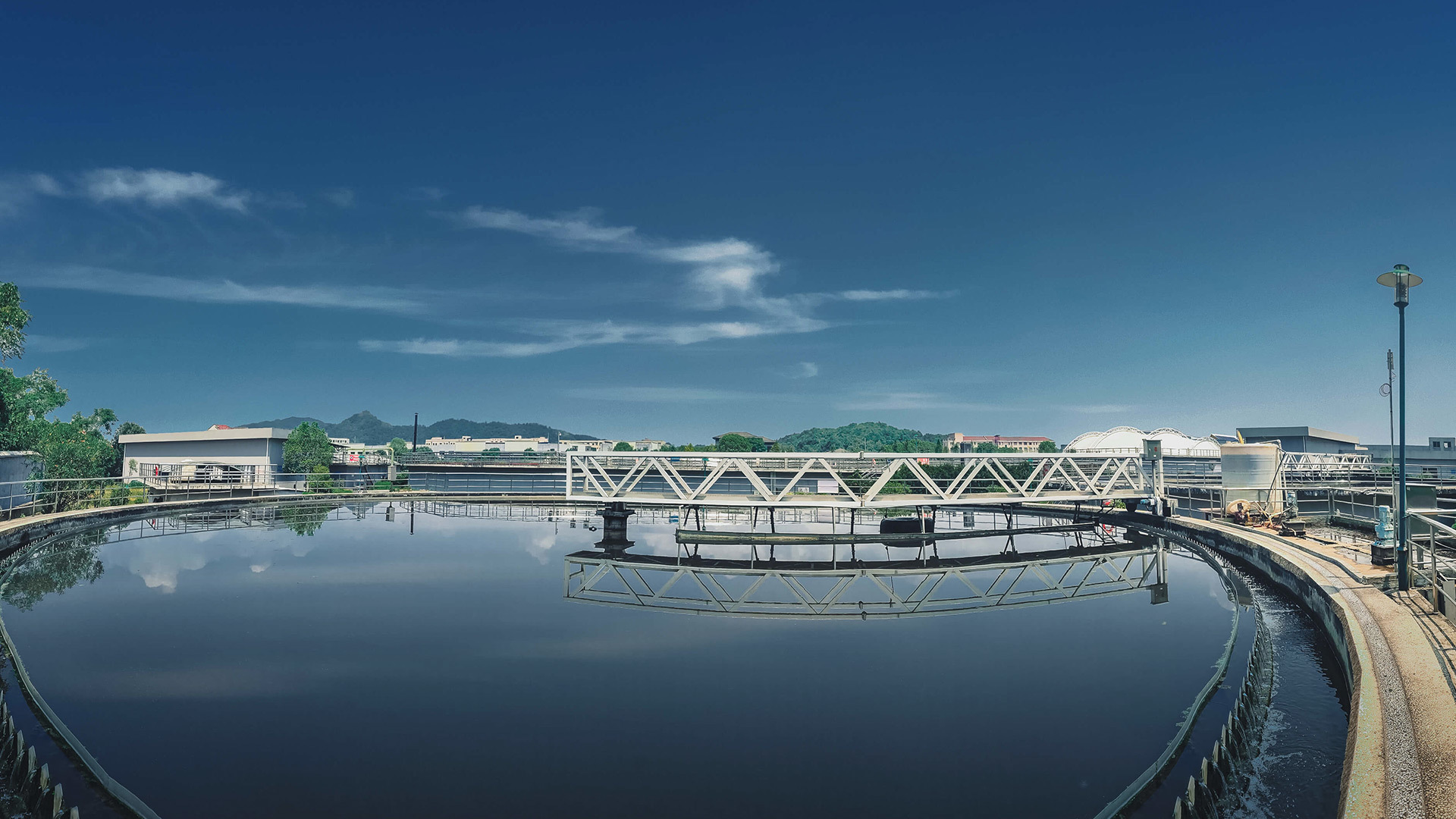
Municipal water monitoring: multi-parameter integration on one controller reduces the number of separate transmitters on site.
Municipal wastewater plant, United Kingdom. Twelve sensors were deployed for effluent quality monitoring over three years, with reported compliant discharge and reduced manual sampling, built on multi-parameter integration (KWS-800 and KMPW520). For a plant in this position, the value of a multi-parameter platform is that disinfection-related parameters and general effluent parameters share one controller and one data path.
Municipal water authority, United States. Thirty-five units were installed for wastewater turbidity monitoring and delivered three years of stable operation, supported by an anti-fouling optical design. Turbidity monitoring creates maintenance pressure similar in kind to chlorine monitoring, which is why anti-fouling design tends to dominate selection in this segment.
River environmental monitoring, United Kingdom. Three units were used for pollution detection and early warning over two years, producing stable real-time monitoring with remote IoT monitoring and low maintenance. River monitoring is where CO2 and pH-related parameters frequently appear together, because the carbonate balance drives both.
Aquaculture farm, Norway. Fifteen units were deployed for dissolved oxygen and ammonia monitoring across three years, with increased fish survival rate and saltwater-resistant continuous monitoring (KWS-630 fluorescence dissolved oxygen sensor, 0-20 mg/L dissolved oxygen, 0-60 °C). In aquaculture, CO2 and oxygen are both metabolic variables, so a CO2 sensor is often specified alongside oxygen rather than instead of it.
Comparison Table: CO2 Monitoring vs. Residual Chlorine Monitoring
The table below is a decision matrix rather than a specification sheet. It lists the criteria that change the analyzer choice, and names the KACISE product association or published fact that supports each row.
| Decision dimension | Dissolved CO2 monitoring | Residual chlorine monitoring |
|---|---|---|
| Control variable it closes the loop on | Dissolved CO2 concentration, read together with pH to describe the carbonate balance | Residual chlorine concentration, used as the feedback variable for disinfection dosing |
| Where it is usually specified | pH adjustment and CO2 addition or stripping stages; recirculating and process water; aquaculture | Drinking water disinfection; wastewater and effluent disinfection |
| KACISE product association | Dissolved CO2 sensor line | KMPW520 6-in-1 Water Quality Analyzer — residual chlorine is one of six freely combinable parameters (pH, ORP, COD, BOD, residual chlorine, turbidity) |
| Companion parameters normally read together | pH | pH and ORP |
| Range check to perform | Confirm the published CO2 range brackets the process setpoint with headroom | Confirm the published chlorine range brackets the disinfection setpoint with headroom |
| Output and integration | RS-485 (Modbus) across the KACISE water quality range; KACISE instruments are designed for SCADA, PLC and IoT compatibility | KMPW520: 2 × 4-20 mA, 6 × relay, 2 × RS-485 (Modbus-RTU), TF card / USB storage |
| Compliance context | EN IEC 61326-1:2021 CE EMC (KACISE water quality sensor certificate ZTS23061509TCE, 21 June 2023) | Same EMC certificate; NSF/ANSI 61 and 372 where drinking water material safety applies |
| Maintenance focus | Gas-permeable interface, sample conditioning and stable flow | Measuring cell condition, and keeping the chlorine/pH/ORP set aligned |
| Buy it when | The unresolved problem is CO2-driven pH drift | The permit or control loop is written around a disinfection residual |
Frequently Asked Questions
Q1. What certifications should a dissolved CO2 or residual chlorine analyzer carry?
For the instrument itself, EMC compliance against EN IEC 61326-1:2021 is the baseline, because that standard covers electrical equipment for measurement, control and laboratory use. KACISE's water quality sensor range is certified to this standard under CE EMC certificate ZTS23061509TCE, issued by Shenzhen ZTS Testing Service Co., Ltd. on 21 June 2023 and covering EN IEC 61326-1:2021, EN 55011:2016+A2:2021 and the EN 61000-3 series. Where wetted parts come into contact with drinking water, the relevant material-safety benchmarks are NSF/ANSI 61 and 372, which address material safety and lead-free compliance and are commonly requested by drinking water utilities. Always confirm that the certificate scope names the exact model and parameter you are buying, not only the brand.
Q2. Can one online analyzer measure both dissolved CO2 and residual chlorine?
Dissolved CO2 and residual chlorine rely on different measurement principles and are normally handled by dedicated sensing elements, so the practical answer depends on whether your controller can host more than one parameter. KACISE addresses this with configurable platforms: the KMPW520 6-in-1 Water Quality Analyzer accepts up to six freely combinable parameters including residual chlorine, pH, ORP, COD, BOD and turbidity, while the KWS-800 Online Multi-Parameter Water Quality Monitoring System integrates up to seven optional parameters plus temperature in a single IP68 probe body. If you need dissolved CO2 alongside residual chlorine, make the analyzer decision using the supplier's parameter-combination matrix rather than assuming that a shared controller implies shared sensing.
Q3. What drives the ownership cost of a CO2 or chlorine analyzer?
The cost structure of an online analyzer is driven by three things: how many controllers you need, how many dosing loops each controller can serve, and how often the sensor must be maintained. Parameter count matters here. A six-parameter analyzer such as the KMPW520 provides two 4-20 mA channels, six relay outputs and two RS-485 (Modbus-RTU) ports on one chassis, which allows one controller to serve several measurement and dosing points instead of one transmitter per parameter. Maintenance load is the second lever, and automatic cleaning hardware — as fitted to the KWS-800 — reduces manual intervention on fouling-prone streams. Ask suppliers for the parameter combination list, the output count and the recommended cleaning arrangement, then compare the total architecture instead of the unit price alone.
Q4. Can I test a dissolved CO2 or residual chlorine sensor before committing to volume?
Sampling is the normal way to validate fit before a plant-wide rollout. KACISE's OEM/ODM capability record shows a minimum order quantity of 1 unit for customized production, with customization available on voltage, logo, output method, protocol and cable. That makes it practical to bring a single unit into your own sample stream and confirm its response under real conditions. A structured sample test should record the reading against your reference method at your normal operating setpoint, not only at a bench calibration point, and it should note how the reading behaves after the first cleaning cycle.
Q5. How long does delivery take once a sensor model is confirmed?
For KACISE OEM/ODM orders, shipping time is generally 5-8 working days depending on the quantity purchased. For the standard production mode, the recorded lead time is 30 days and monthly capacity is 8,000 units, while the OEM/ODM line is recorded at 5,000 units per month. Because lead time scales with quantity and with the degree of customization, confirm the parameter combination, output configuration and quantity before requesting a delivery commitment.
If you are ready to move from analysis to a decision, the fastest route is a parameter-level inquiry: send KACISE your treatment stage, the control variable you need to hold (dissolved CO2, residual chlorine, or both) and your required range, and request a configuration and a sample in one step — sales@kacise.com or www.kcsensor.com.
Conclusion: Pick the Control Variable First, the Sensor Second
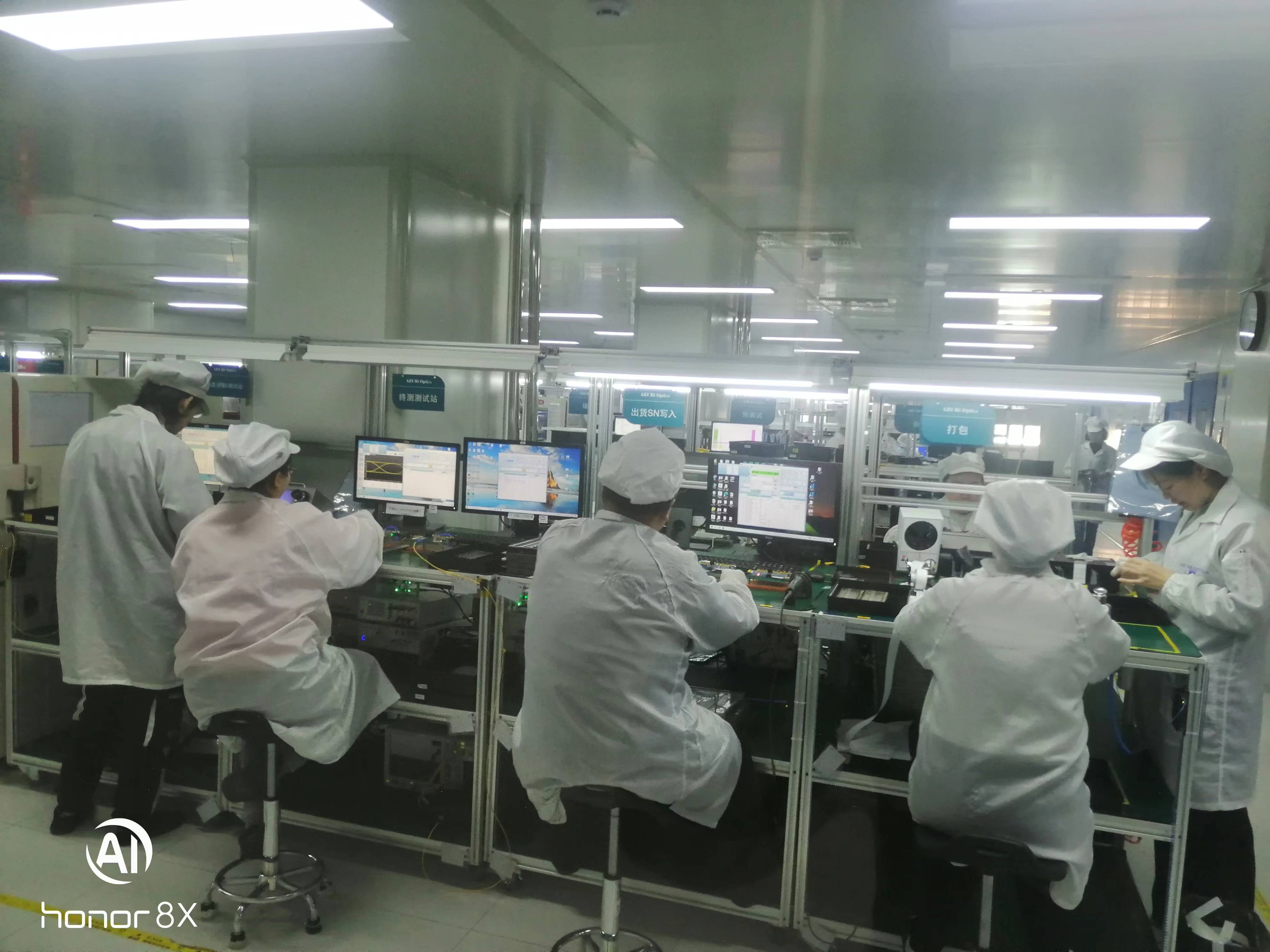
Assembly and test of online water quality analyzers before shipment.
Dissolved CO2 and residual chlorine sensors are not competing for the same job. CO2 monitoring supports pH and carbonate-balance control; residual chlorine monitoring supports disinfection control. The decision framework in this article reduces the choice to three questions that a plant engineer or procurement team can answer before contacting any supplier: which variable must the loop hold, how many 4-20 mA and relay outputs does the dosing architecture require, and how much fouling and calibration labour can the site realistically absorb?
Answer those three questions and the analyzer class usually selects itself. Multi-parameter platforms such as the KMPW520 and KWS-800 then become the mechanism for implementing the answer — combining the chlorine, pH, ORP or CO2 parameters you need on one chassis, with consistent Modbus digital output and a single data path into SCADA, PLC or IoT systems. Because KACISE manufactures both a dissolved CO2 sensor line and an online residual chlorine line, a single supplier assessment can cover both loops, including the same quality process (100% test on production) and the same remote support model.
Next Step
Tell us the treatment stage and the control variable, and we will map it to a sensor configuration and a sample plan. KACISE supplies water quality sensors to EU, USA and Middle East markets, with OEM/ODM customization on voltage, logo, output method, protocol and cable.
Email sales@kacise.com | Website www.kcsensor.com | Xi'an Kacise Optronics Tech Co., Ltd., 2nd Building, Tianyuan International Mansion, High-tech Zone, Xi'an City, Shaanxi Province, China.