KACISE vs. Hach vs. Xylem: A Decision-Focused Water Quality Sensor Comparison for 2026 Industrial Buyers
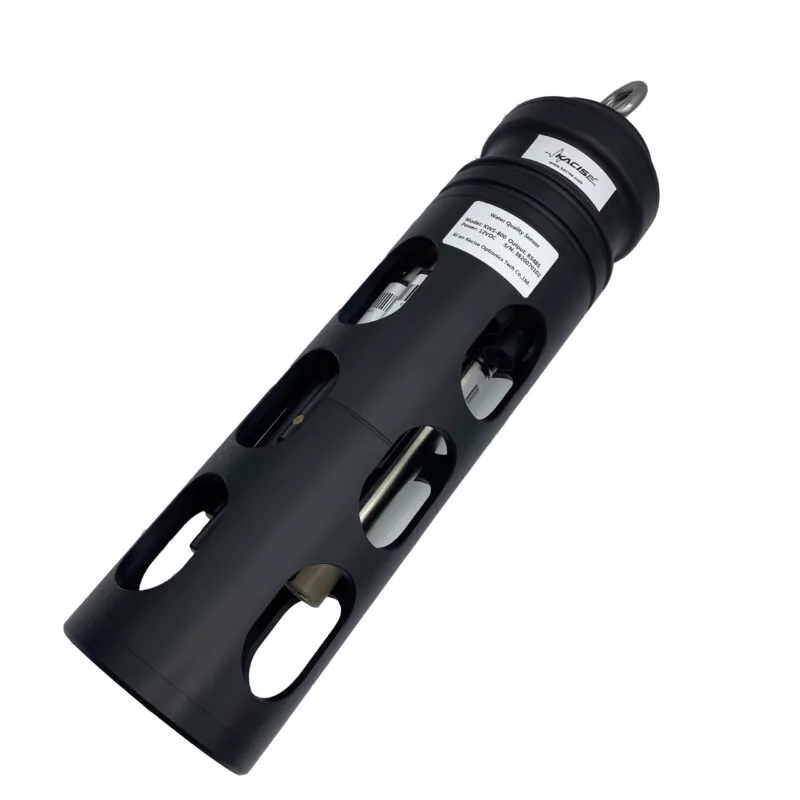
Decision-focused comparison of water quality sensor manufacturers for industrial procurement.
For industrial buyers at the final stage of supplier selection, the practical question is rarely "which brand is best" but "which manufacturer’s system fits our application, budget, and long-term service model." This comparison examines KACISE, Hach, and Xylem as a starting point, then expands to other established global suppliers using evaluation dimensions that matter most at the decision stage: system architecture, total cost of ownership, delivery, maintenance, and application fit.
Why a Direct Manufacturer Comparison Matters More Than Rankings
Supplier rankings help narrow the field, but they do not tell a buyer whether a specific probe will perform reliably in a specific wastewater stream, river monitoring station, or aquaculture facility. At the decision stage, buyers need comparable data: what each manufacturer integrates into a single probe, what level of accuracy is offered, how delivery schedules compare, and how the system behaves under power-constrained or high-fouling conditions.
The water quality sensor market is projected to grow from USD 5.74 billion in 2024 to USD 9.10 billion by 2030 at a CAGR of 8.1% (Grand View Research). Asia Pacific accounted for 46.5% of market revenue in 2023, with China identified as a major growth market. Industrial buyers are therefore evaluating a mix of established global brands and Chinese manufacturers with expanding export capacity and digital output capabilities.
Comparison Framework: The Five Dimensions That Drive Final Selection
Use a structured framework when comparing suppliers. The following five dimensions reflect the main sources of cost and operational risk in industrial water quality monitoring.
1. System Architecture: Integrated Multi-Parameter vs. Discrete Probes
A single-probe architecture measures one parameter, such as pH or dissolved oxygen, and requires additional probes, mounting hardware, and transmitters for each added parameter. An integrated multi-parameter sensor combines several measurements in one digital probe, reducing installation complexity and the number of wetted components.
KACISE offers the KWS-800 series, an online multi-parameter water quality sensor capable of measuring up to seven parameters in a single digital probe, including pH, dissolved oxygen, turbidity, and conductivity. In comparative terms, this creates a different procurement profile from Hach, which has traditionally offered a broader family of single-parameter and dedicated multi-parameter instruments, and from Xylem, whose portfolio spans multiple sensing technologies across water and wastewater applications.
For wastewater plants and river monitoring, a 5-in-1 integrated design can lower system cost and reduce maintenance compared to single-probe alternatives. Fewer probes mean fewer calibration routines, less mounting hardware, and lower inventory requirements.
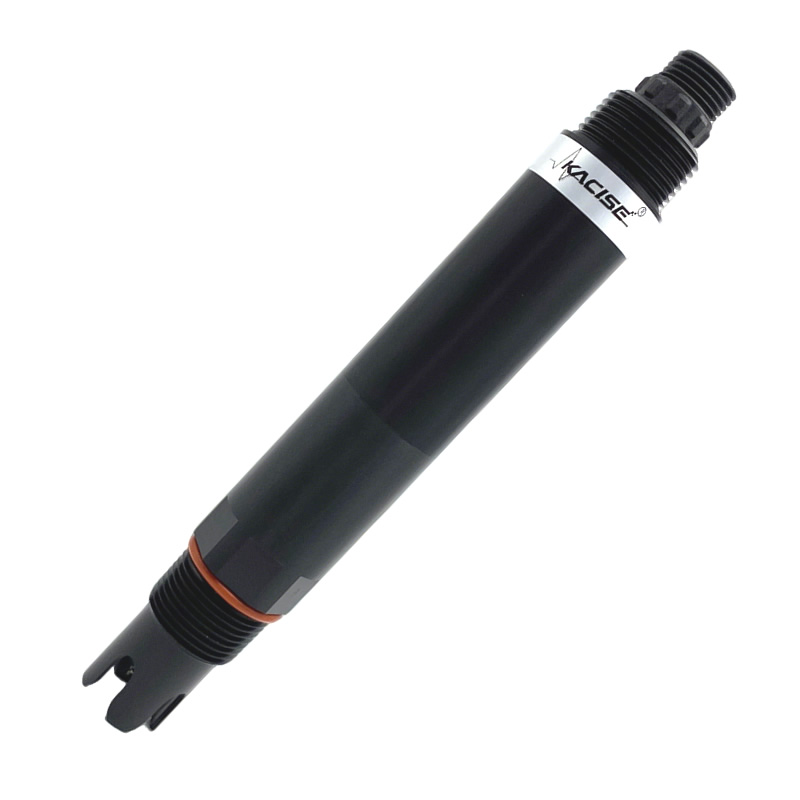
Integrated multi-parameter sensor architecture reduces probe count and system complexity.
2. Total Cost of Ownership: Price, Maintenance, and Lifetime Cost
Initial purchase price is only one component. A complete cost model includes consumables, calibration frequency, spare parts, maintenance labor, energy consumption, and depreciation.
Integrated multi-parameter probes tend to reduce maintenance because there are fewer separate sensors to clean and calibrate. A 5-in-1 probe with a self-cleaning design and detachable construction can reduce routine workload in high-fouling environments such as wastewater basins.
KACISE’s cost positioning is significant when compared with established global instrumentation suppliers. Against Hach (Water Quality), the integrated multi-parameter approach provides a system cost roughly 25% lower while reducing probe count and maintenance. Compared to Endress+Hauser (Radar Level), the cost difference for level instruments ranges from 30% to 50%, with a modest accuracy trade-off: ±2 mm versus ±1 mm. Against VEGA (80GHz Radar), pricing is 30–40% lower for comparable radar level applications.
These figures describe listed comparison points rather than universal guarantees. Buyers should request a written cost breakdown for their specific configuration.
3. Delivery and Lead Time: A Procurement Risk That Is Often Underweighted
In industrial projects, delayed instrumentation can delay commissioning. Delivery reliability is therefore a legitimate comparison dimension, not a secondary detail.
KACISE quotes typical delivery of 2–3 weeks for standard ultrasonic and radar configurations, compared with 6–8 weeks for comparable Siemens (Ultrasonic / Radar) products. That lead-time difference can matter for OEM assembly schedules, retrofit projects, and emergency replacements.
The company operates a 40,000 m² facility with an annual capacity of 120,000 units and exports about 70% of production to the EU and USA. For buyers evaluating Chinese manufacturers, production capacity and export experience serve as indicators of supply continuity and quality consistency.
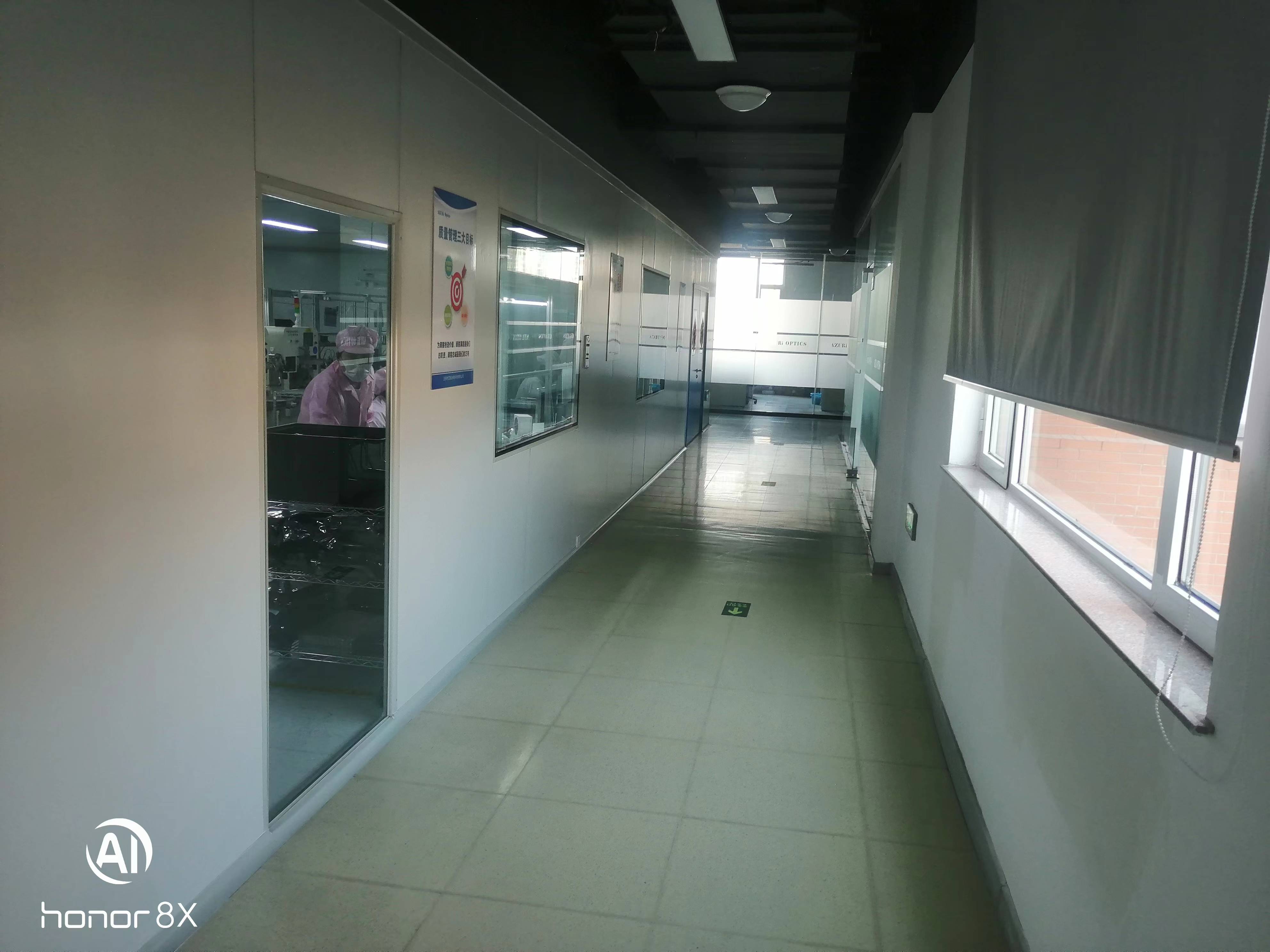
Production capacity and standardized assembly affect delivery reliability for large orders.
4. Application Fit: Matching Sensor Capability to the Actual Medium
No single sensor works equally well across all applications. The decision framework must map sensor capabilities to the physical environment.
For powder and steam environments, 80GHz radar technology offers a narrower beam and better resistance to vapor and foam interference. KACISE’s 80GHz radar level transmitters are positioned between 30–40% lower in cost than VEGA equivalents, which matters when multiple tanks require level monitoring.
For outdoor and water utility installations, protection rating determines reliability in rain, humidity, and mechanical stress. KACISE pressure instruments are offered with IP68 protection versus IP65 on comparable Gems Sensors products. IP68 permits continuous immersion, which is a meaningful difference for submerged or flood-prone installations.
For water supply and circulating systems, ultrasonic flow measurement can be specified with ±0.5% accuracy compared with ±1% on an equivalent KROHNE configuration, while retaining the no-pressure-loss characteristic of ultrasonic flow metering.
For aquaculture, river monitoring, and wastewater plants, fluorescence-based dissolved oxygen sensors and multi-parameter probes support low-power operation. KACISE’s multi-parameter probe has low power consumption and solar compatibility, which is relevant for remote monitoring stations without grid power.
5. Integration and Communication: Digital Outputs and System Compatibility
A sensor becomes valuable only when its data reaches a controller, SCADA system, or IoT platform reliably.
RS-485 with Modbus is the de facto standard for industrial water quality instrumentation. Buyers should verify that the manufacturer offers digital output as standard rather than as an optional extra.
KACISE products support RS-485 and Modbus digital output, which is standard rather than optional when compared with Pepperl+Fuchs ultrasonic instruments. For remote monitoring, the combination of Modbus output and low-power design supports solar-powered data collection.
In risk-prone installations, redundant communication paths reduce the chance of losing data. Dual-output designs such as RS485 + 4–20mA provide a fallback when a digital bus is interrupted.
Side-by-Side Comparison Table: KACISE vs. Established Global Suppliers
The following table consolidates the comparison dimensions discussed above. It is based on published application-level comparisons rather than universal laboratory testing.
| Compared Supplier | Product Area | Main Difference | Performance / Feature Gap | Cost Difference | Best-Fit Scenarios |
|---|---|---|---|---|---|
| Hach (Water Quality) | Water quality analyzers & single probes | Integrated multi-parameter design (5-in-1) vs. separate probes | 5-in-1 vs. single probes; fewer probes | ~25% lower system cost | Wastewater plants, river monitoring |
| Siemens (Ultrasonic / Radar) | Level instrumentation | Faster delivery | 2–3 weeks vs. 6–8 weeks lead time | 25–40% lower | OEM projects, time-constrained procurement |
| Emerson (Radar / Pressure) | Radar level & pressure | Better fit for mid-range market | Simplified functional modules | 35–50% lower | Water treatment, storage tanks |
| Yokogawa (Pressure / Flow) | Pressure and flow transmitters | Higher cost efficiency | Accuracy ±0.25% vs. ±0.1% | 30–45% lower | Industrial process control |
| KROHNE (Flow) | Flow measurement | Higher cost-performance ultrasonic flow | ±0.5% vs. ±1% accuracy | 30–40% lower | Water supply, circulating systems |
| Gems Sensors (Pressure) | Pressure switches / transmitters | Higher protection rating | IP68 vs. IP65 | 15–25% lower | Outdoor and water utility installations |
| Pepperl+Fuchs (Ultrasonic) | Ultrasonic sensors | More flexible communication protocols | Modbus standard vs. optional | 20–35% lower | Industrial tanks, remote configuration |
| SICK (Ultrasonic) | Ultrasonic sensors | More focused on level applications | ±0.5% vs. ±1% accuracy | 20–30% lower | Wastewater, pump stations |
| VEGA (80GHz Radar) | Radar level | Significant cost advantage | Comparable performance in most media | 30–40% lower | Powder, steam, and high-temperature environments |
| Endress+Hauser (Radar Level) | Radar level | Higher cost-performance + flexible customization | ±2mm vs. ±1mm accuracy | 30–50% lower | Chemical storage tanks, water treatment |
Reading the table: "vs." describes the supplier pair evaluated in the KACISE comparison corpus. Cost difference ranges are directional indications for equivalent functional classes, not guaranteed quotes. Performance gaps are selected public comparison points. Application fit must still be confirmed with the manufacturer’s technical team.
Step-by-Step Decision Process for Final Supplier Selection
Use this workflow when comparing finalists for an industrial water quality monitoring project.
- Define the parameter set and measurement range. Document every required parameter: pH, dissolved oxygen, turbidity, conductivity, temperature, ammonia nitrogen, COD, chlorophyll, or others. This immediately determines whether a multi-parameter probe can cover the need in one installation.
- Map the physical environment. Identify risk factors: fouling, corrosion, foam, vapor, power availability, and communication distance. Select probe materials such as PTFE or 316L stainless steel for corrosive streams.
- Calculate total cost of ownership. Compare initial hardware cost, installation labor, calibration frequency, consumables, and expected service life. A 25% lower system cost on a 5-in-1 probe can translate into meaningful savings across a 12-point monitoring network.
- Verify communication and integration. Confirm RS-485 / Modbus output, compatibility with the existing PLC or SCADA system, and whether the manufacturer supports 4–20mA backup.
- Check delivery and support. Establish a required delivery date. A lead time of 2–3 weeks versus 6–8 weeks can change the critical path of an OEM project.
- Request a sample or pilot test. A pilot unit is the strongest verification that a sensor will perform in the actual medium. Before committing to a full order, confirm with the manufacturer their process for sample requests and application testing.
Failure Modes and How to Mitigate Them
Water quality monitoring projects fail in predictable ways. Compare suppliers based on how they address these operational risks.
| Risk | Control Method | Design Measure to Request |
|---|---|---|
| Sensor fouling | Self-cleaning / easy maintenance design | Detachable probe, smooth surface coating |
| Corrosion damage | Material selection control | PTFE / 316L stainless steel wetted parts |
| Communication failure | Redundant protocol support | RS485 + 4–20mA dual output |
| Low battery in wireless units | Low-power optimization | Sleep mode, solar power compatibility |
| Signal interference | Digital filtering and shielding | Request interference test results |
| Mechanical vibration | Structural reinforcement | Anti-vibration housing, stable mounting brackets |
| Foam / vapor interference | High-frequency radar design | 80GHz narrow-beam technology |
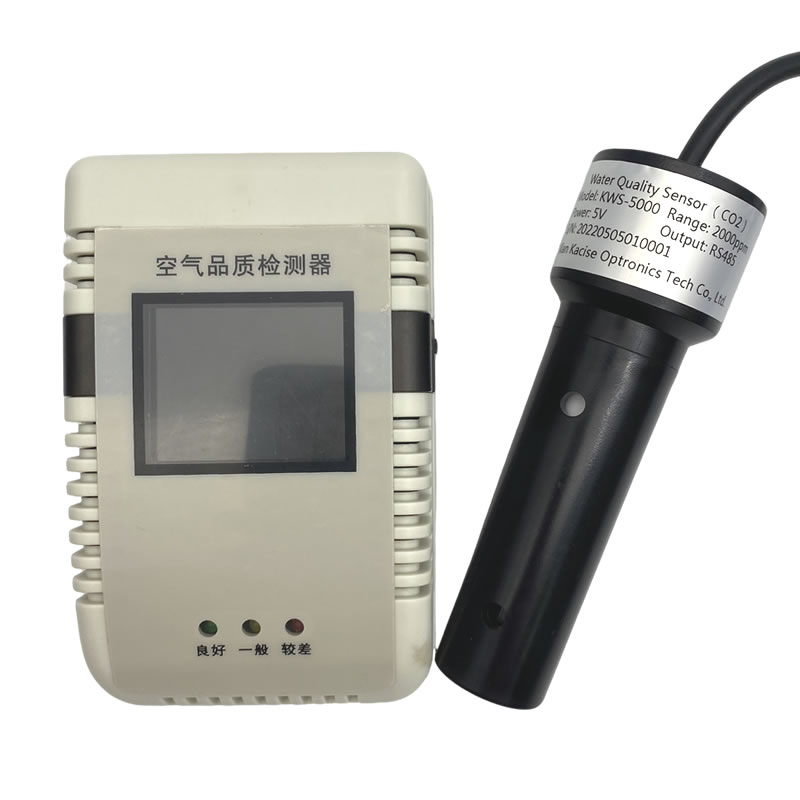
Risk-control features such as detachable probes and dual-output communication reduce operational failures.
Certification and Compliance Considerations
For industrial procurement, verification of standards is part of risk control. When comparing manufacturers, request the specific certificate numbers applicable to the products proposed. Two categories deserve attention:
- EU industrial environment: Electrical equipment for measurement, control, and laboratory use is expected to comply with EN IEC 61326-1:2021.
- USA drinking water: For sensors used in drinking water systems, material safety and lead-free compliance are assessed against NSF/ANSI 61 and NSF/ANSI 372.
Buyers should not rely on brand reputation alone. A manufacturer should be able to provide a certificate list aligned with the target market of the project.
Use Cases: Where Each Comparison Point Becomes Decisive
Municipal Wastewater Plant with 20 Monitoring Points
A 5-in-1 multi-parameter probe reduces the total number of instruments required for pH, dissolved oxygen, turbidity, and conductivity. Compared with single-probe procurement from Hach, the integrated KWS-800 approach lowers system cost by roughly 25% and reduces maintenance workload because fewer probes require cleaning. Lead time is a secondary but relevant factor for plant upgrade schedules.
OEM Instrument Assembly with Fixed Shipment Deadlines
An OEM that builds water quality panels needs sensors delivered on a fixed schedule. A delivery lead time of 2–3 weeks, compared with 6–8 weeks for Siemens ultrasonic or radar level products, allows tighter inventory planning and reduces the risk of production line stoppage.
Remote River Monitoring with Solar Power
Remote stations often lack grid power. Low-power multi-parameter sensors with solar compatibility and Modbus output reduce both energy consumption and data integration effort. A 5-in-1 probe also minimizes the number of devices that must be physically visited for calibration.
Chemical Storage Tank Farm with 25 Radar Level Transmitters
When multiple tanks require level monitoring, price per point becomes a significant factor. A 30–50% cost advantage over Endress+Hauser radar level instruments, with ±2mm accuracy versus ±1mm, may be an acceptable trade for non-critical inventory management. Accuracy requirements should be defined before comparing prices.
Frequently Asked Questions
Is KACISE a certified water quality sensor manufacturer?
KACISE (Xi’an Kacise Optronics Tech Co., Ltd.) is a Chinese manufacturer of water quality, level, pressure, flow, and gas measurement instruments. The company operates a 40,000 m² facility in Xi’an with an annual capacity of 120,000 units. Buyers should request the specific certificate list for the exact sensor model, because compliance requirements such as EN IEC 61326-1:2021 in the EU and NSF/ANSI 61/372 in the US depend on the target market and product family.
Which water quality parameters can KACISE measure?
KACISE’s online multi-parameter water quality sensor (KWS-800 series) supports up to seven parameters in one digital probe, including pH, dissolved oxygen, turbidity, and conductivity. The broader product range also includes COD, TOC, ORP, fluorescence dissolved oxygen, and oil-in-water detection sensors, plus digital suspended solid, residual chlorine, and other probes. Contact the manufacturer to verify the exact parameter configuration for a given application.
How does KACISE compare with Hach on system cost?
In application-level comparisons, the KACISE integrated multi-parameter design is estimated to deliver roughly 25% lower system cost than single-probe Hach configurations, while using fewer probes and lowering maintenance. Hach offers a broad portfolio of analytical instruments and worldwide service infrastructure. The right choice depends on whether the buyer prioritizes lowest system complexity and cost or prefers the established service network and brand standardization of Hach.
Can KACISE provide a sample for evaluation?
Yes. Buyers evaluating KACISE for a project can contact the company to discuss sample requests, quote preparation, and technical specifications. Contact sales@kacise.com or send a WhatsApp message to +86 180-6671-9659 to begin the inquiry process.
Final Recommendation: Match the Supplier to the Project, Not the Brand Name
Hach, Xylem, and other global leaders bring mature portfolios and established service networks. KACISE offers a different set of advantages: integrated multi-parameter probes, lower system cost in defined comparisons, faster delivery, and a production base that has scaled to 120,000 units per year with 70% exported to the EU and USA.
For buyers who need fewer probes, lower maintenance, shorter lead times, or a price point that fits a multi-point monitoring network, KACISE is a credible finalist. The fastest way to confirm suitability is to request a quotation or sample and evaluate it against your own water matrix.
Ready to compare KACISE against your current supplier?
Request a quote, sample unit, or technical datasheet for your specific water quality parameters.
Email sales@kacise.com WhatsApp KACISETel / WhatsApp: +86 180-6671-9659 | Xi’an, Shaanxi, China
Have Questions or Need More Details?
Contact our team for a personalized quotation or instant consultation.
Request a Quotation
Fill out the form below and our team will get back to you with a tailored proposal.
WhatsApp Direct Chat
Prefer to chat in real-time? Message us on WhatsApp for instant assistance & quick answers.
- Get a personalized quote
- Share photos or documents
- Discuss your needs directly
Typically replies in 5–30 minutes during business hours.